
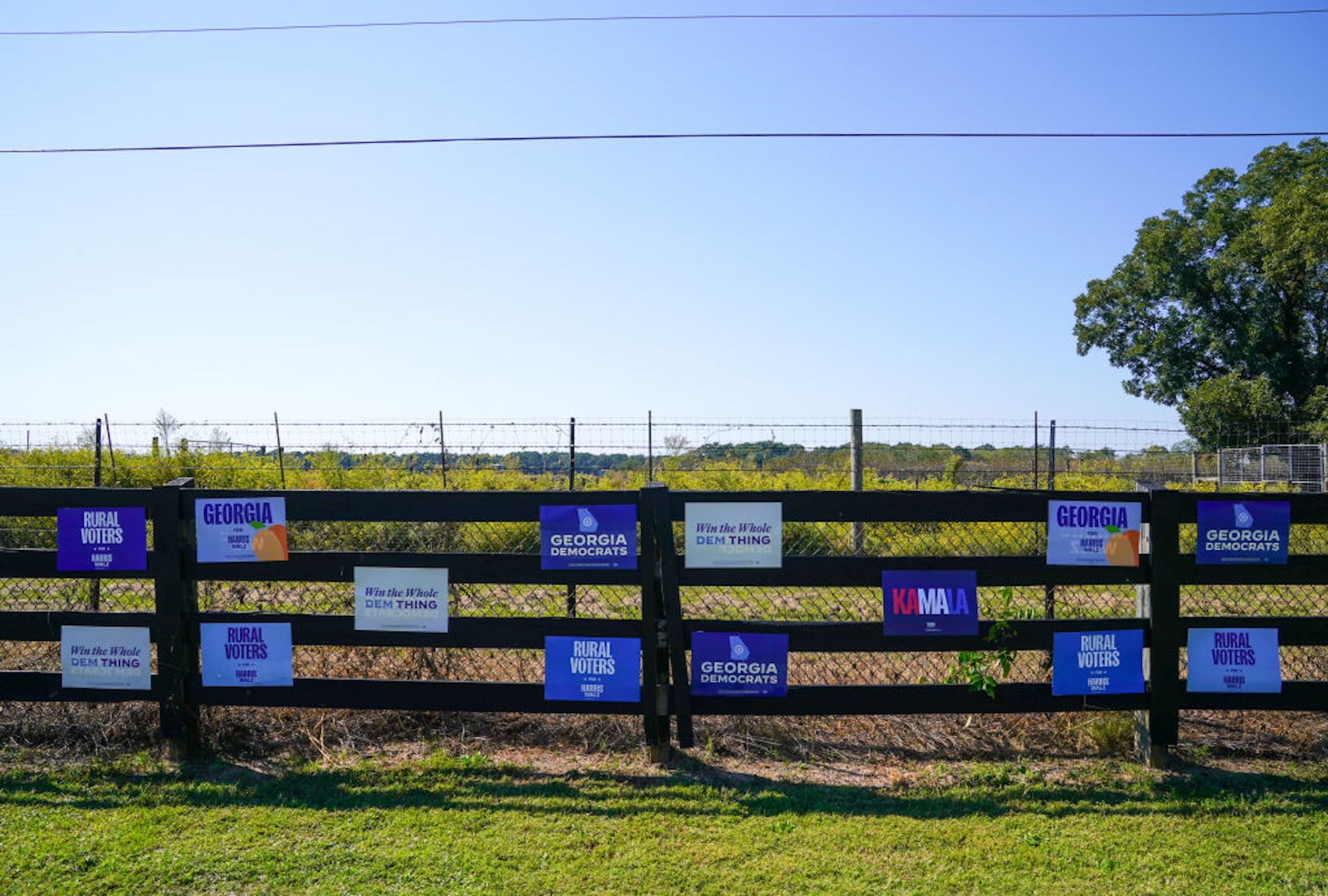

There’s a big misconception that poor white people are Donald Trump’s base. There’s so many images of “hillbillies,” “rednecks,” “white trash” and “trailer trash” used in the media to portray racism in this country, to make the case that poor white people in the South hold all of the racism in the entire nation. Many liberals like to say we are too ignorant and stupid to vote for candidates and issues that relieve our suffering. But during our work in rural North Georgia in the 2020 elections, we saw gains for the Democratic ticket in the poor white communities where Showing Up for Racial Justice, the antiracist organization I work for, called and knocked for the general and runoff elections, because we talked to them. We engaged people who are often ignored, abandoned and scapegoated around issues that matter to them, and they cast a vote against MAGA and for all working-class people.
We had doors slammed in our faces, people who were tired of election talk, but we also had conversations with people who were proudly already with us and were excited we had knocked on their doors. All of these conversations, along with our partners’ work across the state, added up to Joe Biden making gains in Georgia in majority-white counties among whites without college degrees. Our collective work increased the voter turnout of the white Democratic voters who were the least likely to vote by 20%. By our calculations, In the runoff election for the Senate, which pitted Democrat Rev. Raphael Warnock against Republican Kelly Loeffler, and Democrat Jon Ossoff against Republican David Perdue, rural voters and white voters with less education — a common but classist metric for the working class — turned out at higher rates for Democrats than they had in the presidential election. These were the people we called and the doors we knocked on.
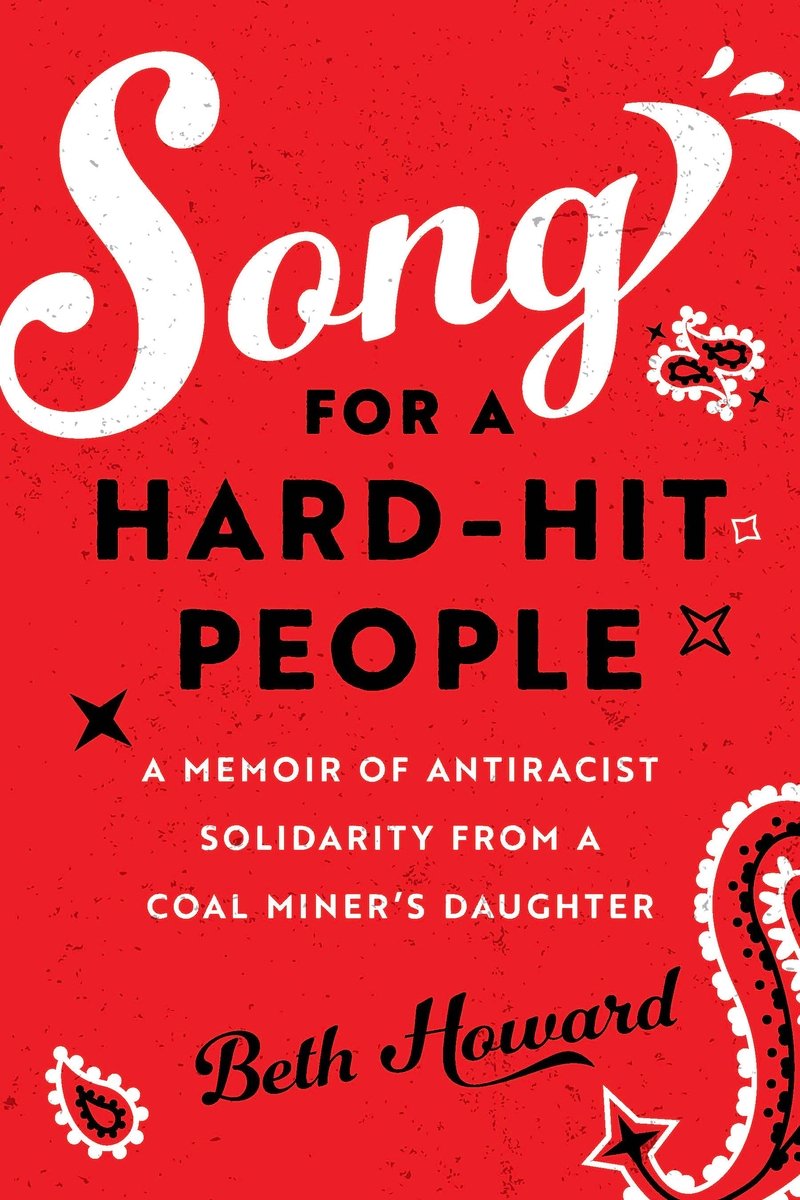
Beth Howard’s “Song for a Hard-Hit People: A Memoir of Antiracist Solidarity from a Coal Miner’s Daughter,” is published April 21, 2026
Roxanne lived in a double-wide trailer with her husband, plus her parents-in-law and brother-in-law. It was during the Covid-19 pandemic, so we sat distanced on her porch to talk. I wore a mask, but she didn’t. Some people might judge Roxanne’s home as messy or unkempt. Her porch was low hanging and served as an open-air storage building. There was an older car in the driveway that was “in need of some work.” Both the car repairs and storage shed were expensive, and they needed a miraculous financial windfall to afford it. But I saw someone who put love into her home, no matter how modest.
When I asked Roxanne how she felt about Georgia going blue, she said she was confused, and she wasn’t sure how to feel. The people on her social media feed, including people she loved and trusted, had vastly different views. Some of them said Biden was the worst thing that could happen to America, while others said they were relieved at the outcome of the election because Trump was evil and had to go. She was open to talking with me because she was trying to sort through all of it for herself, to figure out what she believed. “Regardless, I don’t plan on voting in the runoff election,” she told me. “I don’t think it makes much of a difference.”
When I asked her what mattered to her most, she talked to me about her disability benefits. She and her husband had moved in with their in-laws because all four of them are disabled and it was easier to care for one another and make ends meet being in one household. Roxanne had voted for Trump in the general because she had been told Biden would take away their disability. Now that Biden had won, fear of losing their benefits kept her up at night. “I don’t know how we’d live without it,” she said.
Roxanne said one of the other benefits of moving in with her in-laws was that it gave them more security than renting since all of the rental properties here were owned by the same slumlord. She pointed to the trailers and small homes around theirs. Repairs weren’t made, there wasn’t enough heat in the winter or cooling in the summer, the houses were barely livable, and the landlord didn’t care or listen to the tenants.
“Why do you think affordable, safe housing is hard to find here?” I asked.
Poor and working-class people, especially women, are culturally conditioned to think we aren’t smart, but we are. An organizer’s role is to help us see that and create opportunities for us to share what we know.
“I don’t know,” she said. I let the question hang in the air, not filling the silence. I knew that she knew more than she thought she did. After a few minutes, Roxanne said, “I guess because these landlords want to make money, and there’s no making money off poor people. We don’t have it to give, so landlords don’t offer anything we can afford. For those of us that are lucky enough to find a place, they don’t fix the properties because they can just evict people if they complain. Most of these renters would have nowhere else to go, so it’s easier to just deal with it than complain. Better to have a roof over your head than nothing.” Poor and working-class people, especially women, are culturally conditioned to think we aren’t smart, but we are. An organizer’s role is to help us see that and create opportunities for us to share what we know.
“I think you’re exactly right,” I said. She smiled at me.
While we were talking, her brother-in-law, Jeremy, came outside. He had splurged and gotten his nails done, and they looked fantastic, which I was sure to compliment him on. They were long purple stiletto-shaped acrylic nails. Roxanne told him I was there to talk about the runoff elections, and he quickly told me of his distrust of the Democratic candidates, especially Jon Ossoff. “For someone that young to be that successful, they had to do something crooked.”
“Hold on now,” Roxanne told him. “She’s here to talk about voting for them. Let’s be polite.”
“Well, I don’t hate them,” he said, “but I don’t like any of them — neither side. I won’t vote for any of them anyway.” He toned down his vitriol because he wanted me to still feel comfortable and welcome to stay.
“This is your home. I knocked on your door because I genuinely want to know what you think. Please don’t apologize for sharing your opinion,” I told them. “This is what I’m here for.” We kept talking.
I relied on what I knew about organizing. I kept my ears and heart open as much as I could. Instead of debating or trying to guilt them into voting, I asked more questions. Shaming is ineffective; it shuts people down. But curiosity and open-ended questions are powerful; they open people up. As they talked, I listened for what was underneath their distrust of the political process. They were afraid of losing their health care, their disability benefits and their home. They were worried about losing their family members who were sick. Roxanne grieved the loss of her health. They worried about their neighbors who didn’t have heat in the winter. These problems had only gotten worse over the years, never better, no matter who was in office. “It hasn’t mattered if there was an R or a D after their name,” Roxanne said.
I affirmed their experiences, validated their feelings and pointed out the very real injustices in their lives, the very real failure of either political party to help. And when they wanted to know more about me, I shared.
I told them I was from Kentucky, and I grew up working class in Appalachia, where my family still lived. My mom had worked in a grocery store and factory for decades, and my dad had worked in coal until he became disabled. I had gone to college — undergrad was free on a Pell Grant for low-income students — but borrowed money for graduate school. I’d been working for 15 years after grad school but had barely made a dent in my student loans. I’d worked as a server, an office clerk, an adjunct professor and a retail worker putting myself through school. Thankfully, I found steady work in organizing, which gave my life more stability, a gift many people I know don’t have. I told them about the ways the people in our state were struggling and dying, similar to what Roxanne told me was happening here with her family and community. Thousands of Kentuckians do not have safe, affordable housing. They can’t afford their medicine or to go to the doctor.
Roxanne nodded along with me, empathizing with me along the way. “Shew, I know what that’s like,” she said. Hearing who I was and where I was from seemed to put her more at ease. She relaxed into her body more, more comfortable on the blue camping chair she was sitting in.
“Kentucky! Wow. You’re far from home,” Jeremy said. “Why did you come down here?” A more than fair question. I blended my personal story into our script and started weaving in more of SURJ’s political analysis.
“Mitch McConnell has been our senator for decades. He’s done nothing for our people except ensure more of us suffer so that he and his billionaire friends can stay rich. I swear, I’ve never met a person who votes for him, but somehow he keeps winning.” Roxanne and Jeremy nodded along with me, listening intently. “We tried to get him out of office, but we weren’t able to do it this year, so I wanted to come down here and help out in hopes we can get him out of Senate leadership.”
Want more sharp takes on politics? Sign up for our free newsletter, Standing Room Only, written by Amanda Marcotte, now also a weekly show on YouTube or wherever you get your podcasts.
I told them that people like Mitch McConnell, Kelly Loeffler and David Perdue are some of the richest people in politics, so they aren’t worrying about losing their disability benefits. They don’t have bills piling up because they can’t afford to pay them. The interest on their money adds up without them even having to lift a finger. They don’t have to go without life-saving medicine — they have access to the best doctors and health care in the world. “I’m doing this work because voting them out of office ensures we could have a fighting chance at not just getting Covid relief but expanding Medicaid for all people, securing the social safety net, including disability benefits and creating policies to ensure safe, affordable housing for everyone.”
Roxanne, Jeremy and I talked for approximately 30 minutes. I left because it was getting cold and I needed to hit other doors, not because we ran out of things to say or were tired of each other’s company. Roxanne knew her polling location, but she was still unsure whether she would vote at all. She promised me she would consider it and that she was still thinking things over based on our conversation.
As I headed to my car, Roxanne told me one last thing: “I’m thinking about what you said about them being so rich. One side of my family had a lot more money than we did. They had a lot of money, period. I’m thinking about what you shared about David Perdue and Kelly Loeffler being so rich. If these rich politicians share the same values that the rich people in my family did, then we’re not the same. I’m guessing those politicians aren’t going to do anything for me and my family.”
Driving away, I felt grateful for my conversation with Roxanne and Jeremy, that they shared part of themselves with me. They were wonderful, kind people, who reminded me of my family and neighbors back home. My heart felt full because these are the kinds of conversations that truly matter to me, that are the heart of organizing. But, in the midst of feeling joyful connection, I also felt sadness nestled next to that joy. It lingered with me all night. I didn’t leave their house with the elated feeling I get when I know I nailed it, that the people I talked with were excited to take action, to vote for our candidate, that they were open to getting more involved.
Roxanne and Jeremy weren’t a hard no, but also, I wasn’t convinced they’d vote on election day because it takes more than one conversation when people are hurting that much, when they’ve been let down by those who promised to help.
I knew that if I could’ve had more conversations with them, if I could’ve gotten them to an organizing meeting, things might shift for them. Maybe they would have more community, maybe they’d start talking to their neighbors about organizing a housing campaign, maybe they’d be less susceptible to right-wing rumors on the internet. But that wasn’t going to happen this time around.
As much as I hoped that Jeremy and Roxanne might get politically involved, maybe a campaign for affordable housing or health care, I doubted that there were any progressive groups coming in behind me to keep them engaged. SURJ didn’t have the resources and infrastructure to start a campaign in rural Georgia post-election; it was hard to get donors excited to invest in rural Southern people, and I saw no signs of anyone else organizing that neighborhood. I knew that if I could’ve had more conversations with them, if I could’ve gotten them to an organizing meeting, things might shift for them. Maybe they would have more community, maybe they’d start talking to their neighbors about organizing a housing campaign, maybe they’d be less susceptible to right-wing rumors on the internet. But that wasn’t going to happen this time around. And I still carry them with me, the bittersweetness of that conversation.
Roxanne was just one person. Our team had many conversations just like that one. These conversations made explicit what our folks at SURJ know to be true: The systems we live in depend on working-class people suffering, and we are often considered expendable to those in power. Because progressives have not visited us or listened to us, because the Democratic Party hasn’t delivered material economic relief for our suffering, MAGA is on the rise, white supremacy is openly supported, misinformation is rampant and many rural folks are completely disengaged in the political process at any level. For the many rural people who are aligned with us and looking for a political home, there aren’t many progressive organizations to be found; therefore, when MAGA speaks to the suffering of working-class white people using strategic racism to tell them to blame Black people and immigrants for their suffering, it works.
I wish I could tell you that the Democratic Party came to its senses and delivered material changes for working-class people during their years in office, that they won back working-class voters by focusing on issues that matter to most people in this country, issues like health care, housing, food and safety for all people, instead of focusing on celebrity endorsements. I wish I could tell you that progressive organizing ramped up in majority white rural and Southern communities so that we were out there organizing hundreds of thousands of people like Roxanne on turfs that had once been abandoned. I wish I could say that our organizing meetings are filled to capacity with new people who are being welcomed into our movement with open arms, curiosity, and grace for imperfection so that when racist divide-and-conquer tactics are deployed, they largely fail. But none of that happened. On Nov. 5, 2024, Donald Trump was reelected president, and this country is in a democratic free fall as Trump, JD Vance, MAGA and billionaires like Elon Musk are orchestrating an authoritarian takeover of the federal government.
We need your help to stay independent.
Organizing white people is critical to defeating fascism. As our antiracist Southern ancestor Anne Braden said, “There is only one basis on which real fascism could come to the United States and that basis is racism.” To combat the far-right, we have to get out there and welcome people like Roxanne into our movements. Because of the economic conditions we live in, working-class white Southerners can be some of the fiercest fighters for racial and economic justice in this country, but we have to organize ourselves around our “shared interest,” what we have to gain, by being in true human solidarity with other working-class people, things like health care, housing and food for everyone.
Approaching white people who are living in slum rental trailers, rationing their medications or going without meals by talking to them about their white privilege isn’t the way to build a powerful multiracial movement — it’s a good way to get a door slammed in your face. Instead, we can talk about the ways that racism hurts us all when our organizing campaigns are based around a vision of the future where all of our needs are met. When we talk with white people about their suffering and point their anger where it belongs — toward those at the top, not immigrants, Black people or trans kids — we can build enough power to not just defend against fascism but to also win the world we need. And every time we don’t take this opportunity, we know the far-right does. We can’t leave people like Roxanne behind to be recruited by MAGA.
Read more
about white working-class voters
