
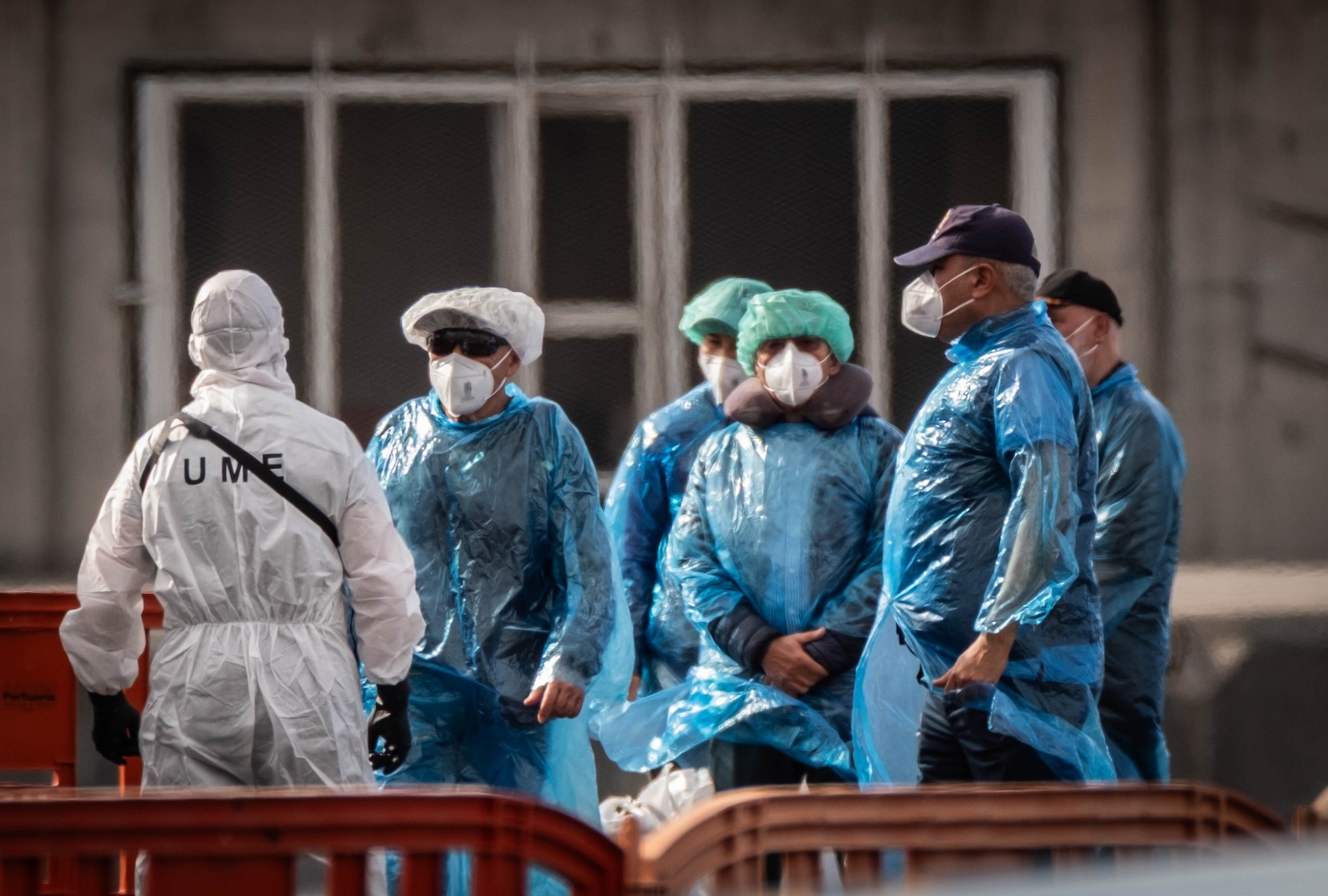

A week ago, most people had probably never heard of hantavirus. Now, millions of people are likely wishing they hadn’t. Judging from a slew of panicked social media posts and endless versions of the same explainers on “how worried should you be?” there is a genuine fear that we could be in for another pandemic. It’s not hard to understand why people freaking out. Even the virus name sounds scary, haunting.
An outbreak aboard a cruise ship in the Atlantic Ocean has so far infected eight people, killing three of them: a German woman and a Dutch couple. They were traveling via the Dutch-flagged MV Hondius, a cruise ship sailing from Argentina to Cape Verde when passengers became ill with high fever and gastrointestinal symptoms. The boat was anchored off the African coast as the World Health Organization stepped in to investigate and passengers were slowly screened and sent home. Of the 17 Americans returning home, two tested positive — one “mildly” and the other with light symptoms.
The culprit, known as hantavirus, causes a severe and deadly disease that can result in heart and kidney failure. A recent autopsy report found that hantavirus (in an unrelated 2025 case) is what killed Betsy Arakawa, the concert pianist and wife of late actor Gene Hackman. Indeed, approximately 35% of people who catch it end up dying, depending on the region. The strain on the cruise ship is mostly spread by long-tailed pygmy rice rats via their saliva, feces or urine. It is presumed that the cruise ship patients encountered rodents in Argentina.
The fact that the outbreak was on a cruise ship, one of the first places COVID-19 started to spread back in early 2020, is giving tons of people déjà vu. But besides both being viruses, the similarities between SARS-CoV-2 and hantavirus actually aren’t close. They infect in different ways and are classed in entirely different phylums, meaning they are not remotely related. Furthermore, hantavirus has been around for decades, it is not spread quickly or easily between people and those who catch it display symptoms, unlike COVID, which can spread between folks unknowingly. The WHO and the Centers for Disease Control and Prevention both report that the current risk to the global population from this event is low.
That doesn’t mean people’s concern is exactly misguided. Although the COVID pandemic is essentially over, it doesn’t mean we aren’t still coping with lingering trauma from global shutdowns and the deaths of an estimated 7 million people worldwide. Yes, SARS-2 is still spreading and maiming people today, but widespread immunity from past infections and vaccines has made the virus much less deadly. There’s always the possibility that SARS-2 could mutate into a new strain that causes a huge surge of cases, something that happened countless times over the last six years, but for now, things are relatively calm. It’s still not great that we let it rip, especially given how long COVID disables so many, but for better or worse, we added it to the list of preventable diseases like flu and HIV that we let kill some people every year and just shrug it off as a society.
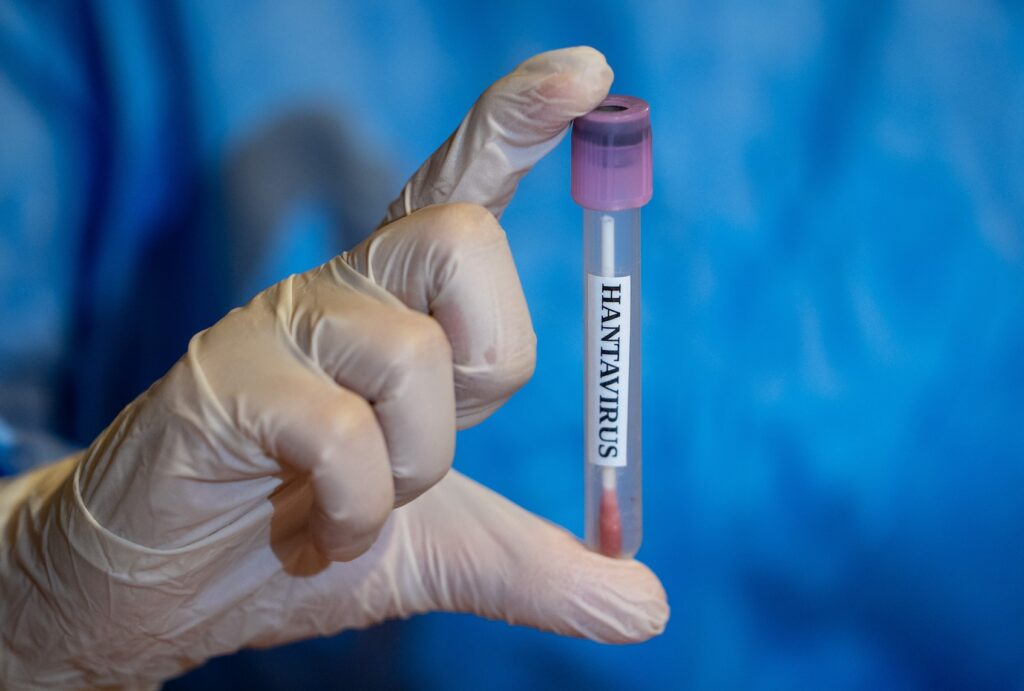
(Photo by Arman Onal/Anadolu via Getty Images) Hantavirus samples are seen in Ankara, Turkiye on May 06,, 2026.
While most experts are predicting this hantavirus outbreak will peter out, it’s not the kind of prediction you want to be wrong about either.
While most experts are predicting this hantavirus outbreak will peter out, it’s not the kind of prediction you want to be wrong about either. Since everyone is so into amoral betting these days, thanks to insidious apps like Polymarket and Kalshi, here’s a wager you’re sure to win: the U.S. will almost certainly experience another pandemic from some highly infectious pathogen in the next 10 years or less.
The reason for this isn’t complicated. Pandemics happen with regularity due to little things like the susceptibility of the human body to illness and international trade and travel. Plus, the destruction of the environment causes viruses to spill over from animal hosts into us. Hey, everyone’s gotta live somewhere, even viruses, and if we burn down a rainforest to plunk down some cows or palm oil farms — a widespread practice across the globe — those jungle-dwelling pathogens will move to the next best thing, even if it’s us.
There are a lot of viruses we should be looking out for, to make sure they won’t cause another pandemic. The WHO tries to keep tabs on these things, listing things like bird flu, Ebola, Nipah, Lassa and yes, hantavirus, as top-ranking threats to global health. That’s one thing all of us humans should be able to agree on: more widespread illness and death is bad for the economy and uh, our mental health. So it’s in our best interest to study and monitor anything that can spread quickly and sicken or kill folks.
Start your day with essential news from Salon.
Sign up for our free morning newsletter, Crash Course.
Though hantavirus isn’t near the threshold for a pandemic yet — we’d need a lot more infections for that — the grifting has already started. On May 6, former Congresswoman Marjorie Taylor Greene boosted a post claiming that the antiparasitic drug ivermectin can treat hantavirus. It can’t. More importantly, couldn’t the “Make America Healthy Again” mob pick a new drug this time around? Many will recall ivermectin from the COVID days, when it was commonly pushed as a “cure” for the disease, which it also does not help. Nothing against ivermectin — if you have roundworms, it’s a fantastic drug and its discoverers won a Nobel Prize in medicine for a reason. But it’s not an antiviral and the evidence just doesn’t support it helping for such infections.
Worse than the off-label prescribing is the fearmongering. Look no further than former Alaska Gov. Sarah Palin, who tweeted “Don’t comply. This time, just don’t.” It really showcases her talent for the English language by fitting so much cruelty and stupidity into just six words. Hemingway, move over. Her revisionist history of the stay-at-home orders and social distancing in COVID’s early days has become about dystopian government overreach (remind me who was president in 2020?) instead of what it really was: a mostly successful attempt to “flatten the curve” so the country’s medical system didn’t collapse. It was about compassion for the most vulnerable — now it’s been twisted into an authoritarian tactic, ignoring the real Gestapo-like actions of immigration enforcement, while telling people at risk of disease to get screwed. Let’s also not forget that detention centers run by the Department of Homeland Security are cesspools for medical neglect and disease, including measles, mumps and hepatitis A outbreaks.
It’s Palin’s attitude, pervasive on the right and to some degree the left, that might be more deadly than any virus nature could throw at us. It’s the idea that we don’t need vaccines if we just exercise and eat our vegetables. It’s the idea that we don’t need government to monitor for diseases or provide functional healthcare, we can give the finger to the WHO and leave it behind and nothing will happen to us. It’s the idea that there is no public in public health.
While acting CDC director Jay Bhattacharya has said hantavirus is not COVID — and he’s probably right — the general response from the agency is not instilling much confidence we’re prepared for bigger, more serious pathogens.
“It’s very much, we hope, under control,” President Donald Trumps said on Thursday when asked about hantavirus. But for many in public health, hope isn’t enough. Experts have expressed concern that many Trump admin officials who are tasked with ensuring there isn’t another COVID — like Robert F. Kennedy Jr., secretary of Health and Human Services — are missing from the public eye while the WHO picks up the slack.
“We have seen large-scale funding and workforce cuts made in the last year, not just to the Centers for Disease Control and Prevention, but to global health. Our withdrawal from WHO, our decimation of USAID and also cuts to scientific research,” Dr. Jeanne Marrazzo, the Infectious Diseases Society of America’s CEO, said on May 7. “So all of these things are having really profound ripple effects. This is a situation where you really are seeing crystallized the need for bio preparedness.”
We need your help to stay independent.
Just because another pandemic is predictable, like hurricane season or Trump ranting about the Strait of Hormuz, doesn’t mean that a major outbreak has to be another COVID. Most people barely remember the swine flu H1N1 pandemic that happened under President Barack Obama because that one was handled with prompt severity, allowing it to be contained. Even President George W. Bush made great strides against HIV, made sure SARS-1 didn’t become a disaster in 2003, and prepped the country for a potential bird flu crisis, which remains a major threat.
In contrast, during Trump’s first term, he fired many people responsible for monitoring pandemics, downplayed the virus as it began to spread in America, suggested it would just go away if we stopped paying attention, hoarded medical supplies and essentially did everything possible to let the situation balloon out control, which is exactly what happened. So people like Palin didn’t like having to stay home for a bit? Does she wonder how the people hospitalized on ventilators or who lost loved ones feel?
While hantavirus isn’t a huge concern to me right now — and many public health experts seem to agree — I am worried about what comes down the line. I wouldn’t be surprised if people didn’t take basic precautions during the next pandemic. No flattening the curve, no masking in crowds, just letting some brutal disease rip through us, as if arrogance and resentment can stop infectious disease — a strategy somehow even less effective than ivermectin! There is already a lack of solidarity in this country, a major crisis would undoubtedly unravel what’s left of it. Every time there’s a weird outbreak of something, it’s a warning that we might not get so lucky on the next one. It’s an open question if anyone is listening.
Read more
about public health
