
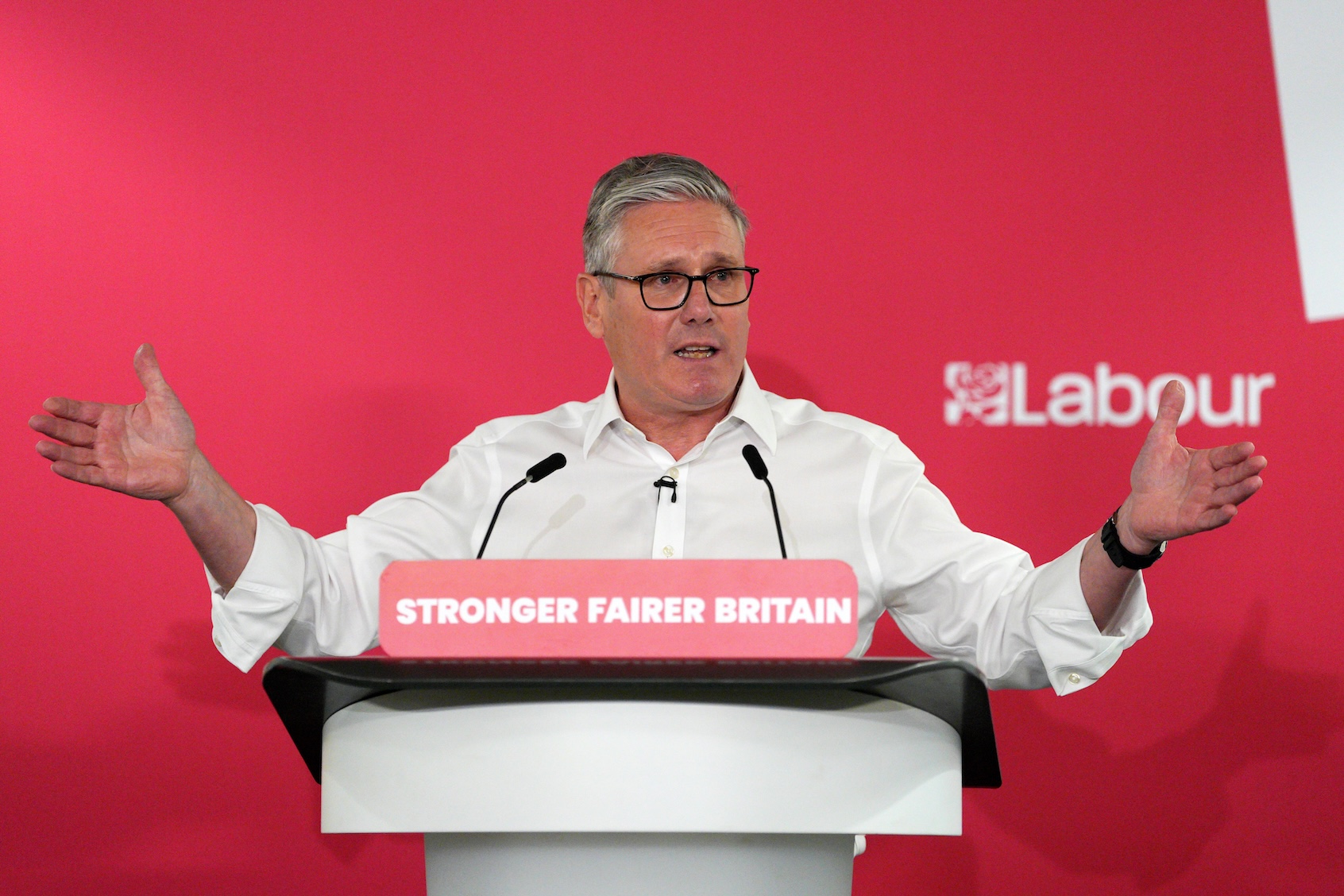

Britain’s embattled prime minister, Keir Starmer, faces a worsening political crisis that may force him from power, days after his ruling Labour Party suffered crushing losses in local and regional elections throughout England, Scotland and Wales.
You could call this a startling reversal, given that Labour won an enormous parliamentary majority in the British general election less than two years ago. But Starmer’s popularity cratered almost as soon as he took office, and he has looked doomed, haunted and fatally indecisive for at least the past year.
As I wrote a few days ago, the inevitable comparisons to Joe Biden are deeply unfair (to Biden). While there’s no way to match the worldwide chaos created by Donald Trump’s second presidency, Britain’s domestic political turmoil is, if anything, worse than America’s. If Starmer leaves office before the middle of July, the U.K. will have had seven prime ministers within the last 10 years.
Late last week, it appeared likely that Starmer might survive in the medium term, not least because no plausible challenger seemed ready to tangle with Labour’s complicated rules for ousting a party leader. That remains true for the moment, but while pleasant spring weather has arrived in London (by all accounts), the political climate has grown increasingly stormy.
At least 90 of Labour’s 400-odd members of Parliament have called for Starmer either to resign immediately or begin planning an “orderly transition,” and four junior members of his Cabinet have resigned.
At this writing, at least 90 of Labour’s 400-odd members of Parliament have called for Starmer either to resign immediately or begin planning an “orderly transition” — the phrasing is politically significant — and four junior members of his Cabinet have resigned. More damaging still, several of his closest advisers have reportedly urged him to announce a timeline for his departure, including Home Secretary Shabana Mahmood and Foreign Secretary Yvette Cooper, the two most senior Cabinet ministers.
If that makes the outcome seem like a foregone conclusion, it ain’t necessarily so, thanks to Labour’s laborious internal democratic process. (Weak pun intended.) Another 100-plus Labour MPs have reportedly rallied behind Starmer at least for the moment, signing a petition arguing that the immediate aftermath of a “devastatingly tough set of election results” was “no time for a leadership challenge.”
We need your help to stay independent.
That appears to be Starmer’s line as well. He delivered a speech at a London community center on Monday, without a jacket or tie and with his shirtsleeves rolled up. If the business-casual look is par for the course in American politics, it’s less common across the pond, and was evidently intended to signal a tough-minded reset. The prime minister accepted responsibility for the dreadful election results but suggested that Labour would “never be forgiven” by voters if they returned to “the chaos of constantly changing leaders” seen under the 14 years of Conservative Party dominance before 2024. He also told the Observer newspaper that he hoped to serve two full terms as prime minister, a total of 10 years, and would fight any leadership challenge.
Although 10 weeks sounds more realistic than 10 years, it’s not impossible that Starmer could delay, obstruct or defeat the various challengers who now seem to be preparing for combat. Under current rules, 80 MPs would have to nominate a specific opponent, which would then trigger a leadership election lasting weeks or months, conducted among the 350,000 or so registered Labour Party members. (Imagine a U.S. primary election, with only the members of local party committees eligible to vote.) Other candidates could get in on the action and, as Labour’s current leader, Starmer could run again by default.
Want more sharp takes on politics? Sign up for our free newsletter, Standing Room Only by Amanda Marcotte, also a weekly show on YouTube or wherever you get your podcasts.
Furthermore, none of the supposed leading contenders comes without baggage. Current health secretary Wes Streeting is clearly raring to take Starmer down. He is young, ambitious and eager, and would become Britain’s first gay prime minister (or at least the first to be out). He’s also widely perceived as a centrist upstart likely to veer right on social issues, and in fact his evident willingness to throw trans people’s rights overboard for electoral advantage has made him hugely controversial within the LGBTQ community.
Most on the Labour left would undoubtedly prefer Andy Burnham, the widely popular mayor of Manchester, but he can’t run for Labour leader at the moment because he’s not a member of Parliament. (So those calling for a gradual transition rather than immediate resignation are likely to be Burnham boosters.) The other “soft left” candidate would be former deputy prime minister Angela Rayner, who was forced to resign from Starmer’s Cabinet last year over a property tax scandal.
In other words, the Labour Party has blundered into the political equivalent of the Slough of Despond, and has no obvious pathway back to solid ground. It’s clear the party’s declining faithful don’t trust Keir Starmer to lead them, but not at all clear they’re willing to trust anyone else.
Read more
on the “special relationship”
