
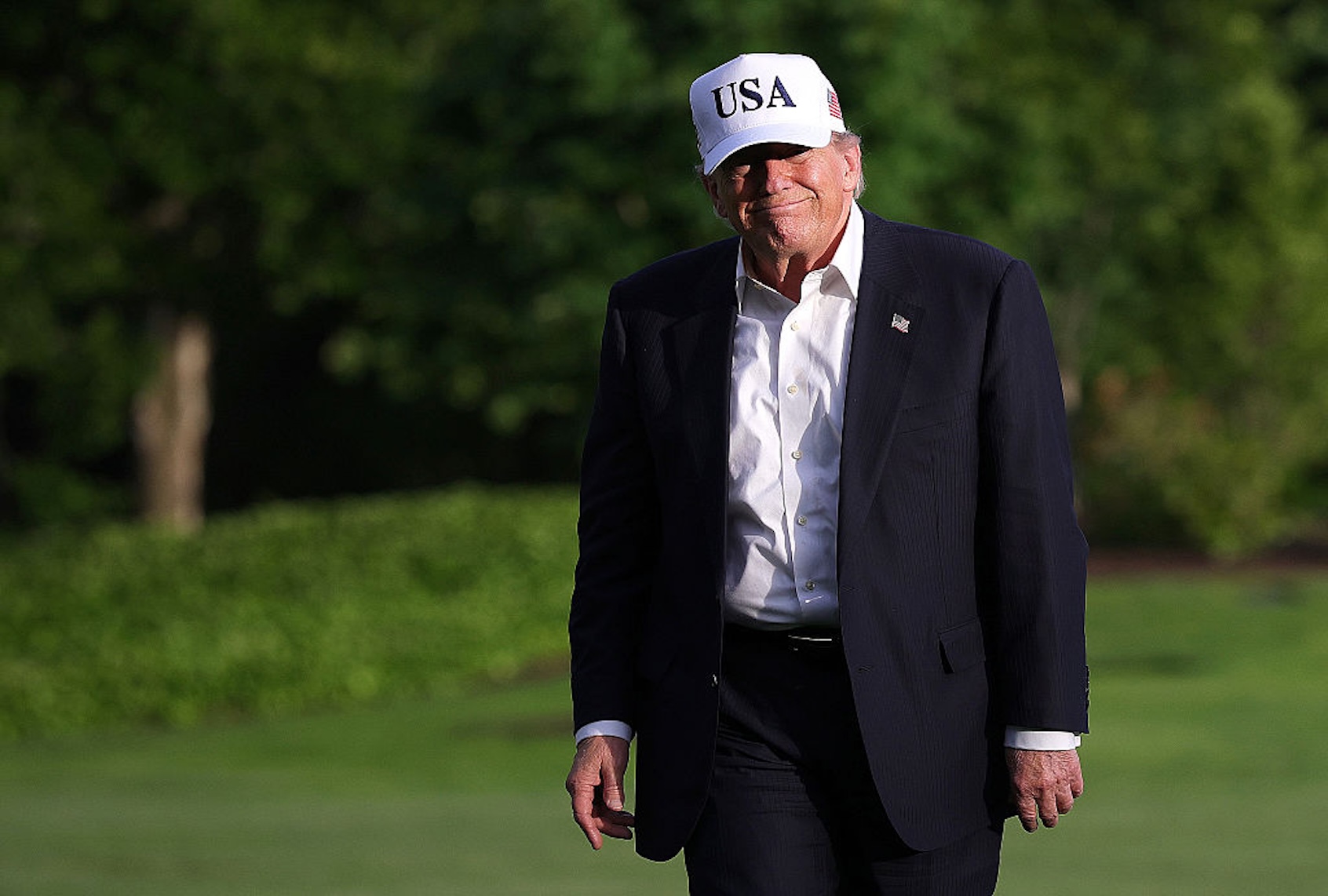

Donald Trump’s war in Iran has created the biggest energy crisis in modern history that the International Energy Agency has described as “the largest supply disruption in the history of the global oil market.” The crisis can’t be spun, no matter how hard Trump, Fox News and Energy Secretary (and fracking magnate) Chris Wright try. Because the big takeaway, ultimately far more significant than any regime change or reshuffling of alliances, is that the president has unintentionally kicked off a global race to renewable energy.
The irony here is rich: Trump, who has relentlessly called green energy a con job, is causing it to proliferate.
The crisis couldn’t have come at a better time, as the costs of solar, wind, and batteries have fallen dramatically. Battery storage costs have fallen 93% since 2010, solar photovoltaic (PV) costs have declined by 90% and onshore wind costs have dropped by 70% in the same period, making them the cheapest energy sources in history. According to the Sierra Club, more than 85% of renewable energy sources now cost less than fossil fuel sources.
With the Iran war now well into its third month, countries are scrambling to circumvent the geopolitical tug of war by transitioning more quickly to renewables.
With the Iran war now well into its third month, countries are scrambling to circumvent the geopolitical tug of war by transitioning more quickly to renewables. Climate change almost seems like an afterthought as calls to speed the transition are now framed as a matter of security and economics, a strategy to avoid the war-driven upheaval of global oil markets. Wind and solar energy, produced entirely within national boundaries, insures against war-driven supply upset. It also insulates allies from future trade sabotage threatened by a president hell-bent on retribution.
In the Trump administration’s unwavering assault on science and fact, climate information has all but disappeared. The president has taken unprecedented steps to halt climate progress and bolster his fossil fuel donors. More than 1,500 scientists at the Environmental Protection Agency have been laid off, reassigned or pressured to retire. Today, only 124 remain at the EPA, and none of them are assigned to climate science.
It’s no secret that Fox News and the billionaires pushing Project 2025’s agenda — think Koch Industries — are financially aligned with big oil. But Trump’s promise to fossil fuel donors that he’d kill environmental regulations if they donated $1 billion to get him reelected is not aging well, for him or for them. In fact, it is backfiring, dusting the world in optimistic, spring-flower pink schadenfreude.
In late April, 60 nations representing over one-third of the world’s economic power met in Colombia to accelerate their shift away from oil, gas and coal due, at least in part, to the effects of the Iran war. The summit, led by Colombia and the Netherlands, was organized outside normal United Nations channels and processes to avoid the kind of bottlenecking often orchestrated by petrostates. Participants met to draft individualized, national transition roadmaps away from fossil fuels; using more laid back question and answer information sessions, they made unusual progress. The United States was not invited.
That allies grasp the existential imperative to bypass Trump’s destructive impulses is reassuring; it confirms that other nations are committed to action — and to securing a healthy future for their children.
But Trump, like a sadist, is obsessed with increasing America’s reliance on fossil fuels, no matter the costs to the environment and people’s health, or the impacts on climate change. His attempts to elevate coal are as economically illiterate and embarrassing as his battle against wind energy. The rest of the world, thankfully, has stopped listening. Instead, reeling from oil and gas price aftershocks from Iran, the industrialized world is now running toward renewable energy.
Want more sharp takes on politics? Sign up for our free newsletter, Standing Room Only, written by Amanda Marcotte, now also a weekly show on YouTube or wherever you get your podcasts.
In China, President Xi Jinping has called for a rapid acceleration of a new energy system, emphasizing massive development in wind, solar and hydropower to safeguard energy security. The European Union has drafted new plans to accelerate clean energy deployment, specifically focused on accelerated investment in solar, wind and heat pumps to reduce dependence on imported fuels, while also reconsidering nuclear power as a “strategic stabilizer.” Saudi Arabia, despite being a major oil producer, has doubled its target to ensure 50% of its electricity generation will come from renewables by 2030. Egypt is planning to transition its electricity supply, which is now only 10% renewable, to 45% in just two years. South Korea has committed to a goal of 100 GW of renewable energy capacity by 2030. India is now focusing on rapid expansion in solar and wind to diversify its energy supply and reduce its dependence on Middle Eastern oil. Vietnam, Thailand and the Philippines are accelerating renewable projects with incentives, and private companies in Vietnam are abandoning liquefied natural gas projects in favor of renewables. Chile is now facilitating tax credits and supports for electric vehicle (EV) adoption to reduce foreign-sourced fuel dependence.
We need your help to stay independent.
These developments should give everyone hope. Even if a ceasefire is announced tomorrow, analysts say damage to the oil industry will last for years.
Donald Trump, the champion of fossil fuels, set the decline in motion.
Fatih Birol, director of the International Energy Agency, told the Guardian that Trump’s war in Iran has permanently damaged the industry. Almost overnight, Birol observed, foreign leaders lost faith in fossil fuels, which will cause “a significant boost to renewables and nuclear power and a further shift towards a more electrified future,” he said, which will “cut into the main markets for oil.”
As an anti-science, anti-information nihilism spreads its rot across the U.S., it is reassuring to know that other nations aren’t similarly afflicted. Idiocracy, it would seem, is not contagious.
Read more
about science
