
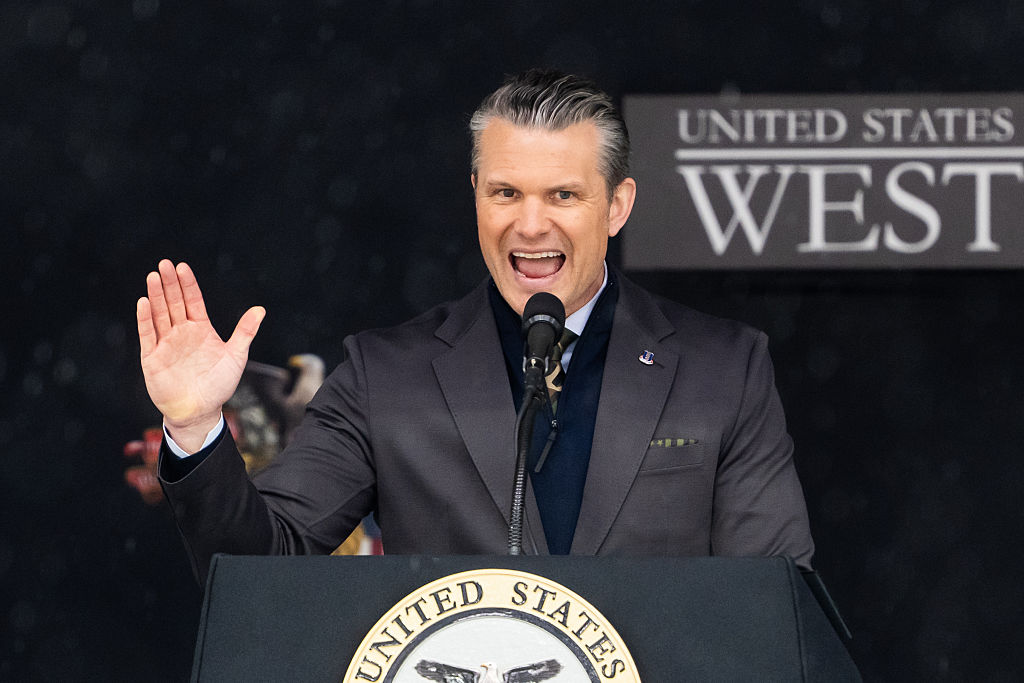

Across this year’s service academy commencement season, senior Trump administration figures used graduation ceremonies at West Point, the Coast Guard Academy and the Naval Academy to deliver a coordinated set of messages about military culture, institutional identity and national strength, turning traditionally ceremonial milestones into politically charged platforms.
At the U.S. Coast Guard Academy, President Donald Trump delivered about an hour of rambling remarks that mixed traditional commencement praise with extended political framing around national security, maritime enforcement, and immigration policy. Speaking in New London, Connecticut, he described the graduating class as part of what he called a broader national “resurgence,” tying their service to border security and ongoing geopolitical tensions.
While the speech began in standard ceremonial form, it repeatedly shifted into unscripted commentary about the cadets themselves, including their physical appearance and fitness. At one point, Trump singled out graduates for praise of their physiques and described the class in terms that emphasized their attractiveness and strength, calling attention to “good-looking” cadets in a manner that drew attention in press coverage. He also invited a cadet onstage to highlight physical fitness achievements, underscoring a recurring emphasis on bodily standards as a marker of military excellence.
The remarks aligned with a broader pattern in which Trump has increasingly incorporated physical appearance into public evaluations of military personnel and officials, blending ceremonial praise with informal commentary that moved beyond traditional graduation rhetoric.
At West Point, Defense Secretary Pete Hegseth offered the most ideologically explicit address of the season, sharply criticizing past military leadership and diversity and inclusion initiatives. He argued the armed forces must return to what he described as a more disciplined, combat-focused identity centered on what he called a “warrior ethos.”
Hegseth drew particular attention for a series of blunt, widely circulated lines that underscored his message. He dismissed the phrase “diversity is our strength” as “the single dumbest phrase in military history,” insisting instead that “unity is our strength.” He also framed the military’s purpose in stark terms, saying, “You can’t throw your pronouns at the enemy,” a line that quickly spread across political media coverage.
In other remarks, he emphasized what he called “lethality over likability,” arguing that military leadership must prioritize combat readiness and battlefield effectiveness over cultural or institutional concerns. Coverage of the speech also highlighted his repeated emphasis on physical standards and fitness as markers of readiness, reinforcing a broader push for stricter military conditioning expectations.
At the Naval Academy, Chairman of the Joint Chiefs of Staff Gen. Dan Caine delivered a more traditional commencement address centered on service, leadership, and duty, offering a contrast in tone to Hegseth’s more explicitly cultural framing while still participating in the same broader graduation cycle. In talking about leadership, he emphasized that the foundation of military command begins with personal discipline.
“Before you can command a ship, a platoon, a flight of fighters,” he told graduates, “you must be able to command yourself.”
The speech mixed humor and ritual with more conventional leadership framing, repeatedly returning to themes of endurance, responsibility and preparation for uncertainty in modern conflict. He even managed to get a more current jest in, teasing the group of young cadets with a “six-seven” joke about making good choices.
Meanwhile, Vice President JD Vance is scheduled to address the U.S. Air Force Academy later this week, continuing the administration’s presence across all major service branches during commencement season. According to academy announcements, his remarks are expected to align with themes of military strength, institutional cohesion, and readiness.
Start your day with essential news from Salon.
Sign up for our free morning newsletter, Crash Course.
Taken together, the ceremonies reflect a synchronized messaging moment across the military graduation circuit. What is typically a ceremonial season for the armed forces has instead become a platform for broader debates over military identity, institutional culture, and the direction of defense policy — with graduation stages doubling as venues for explicitly political messaging about the future of the U.S. military.
Read more
about this topic
