
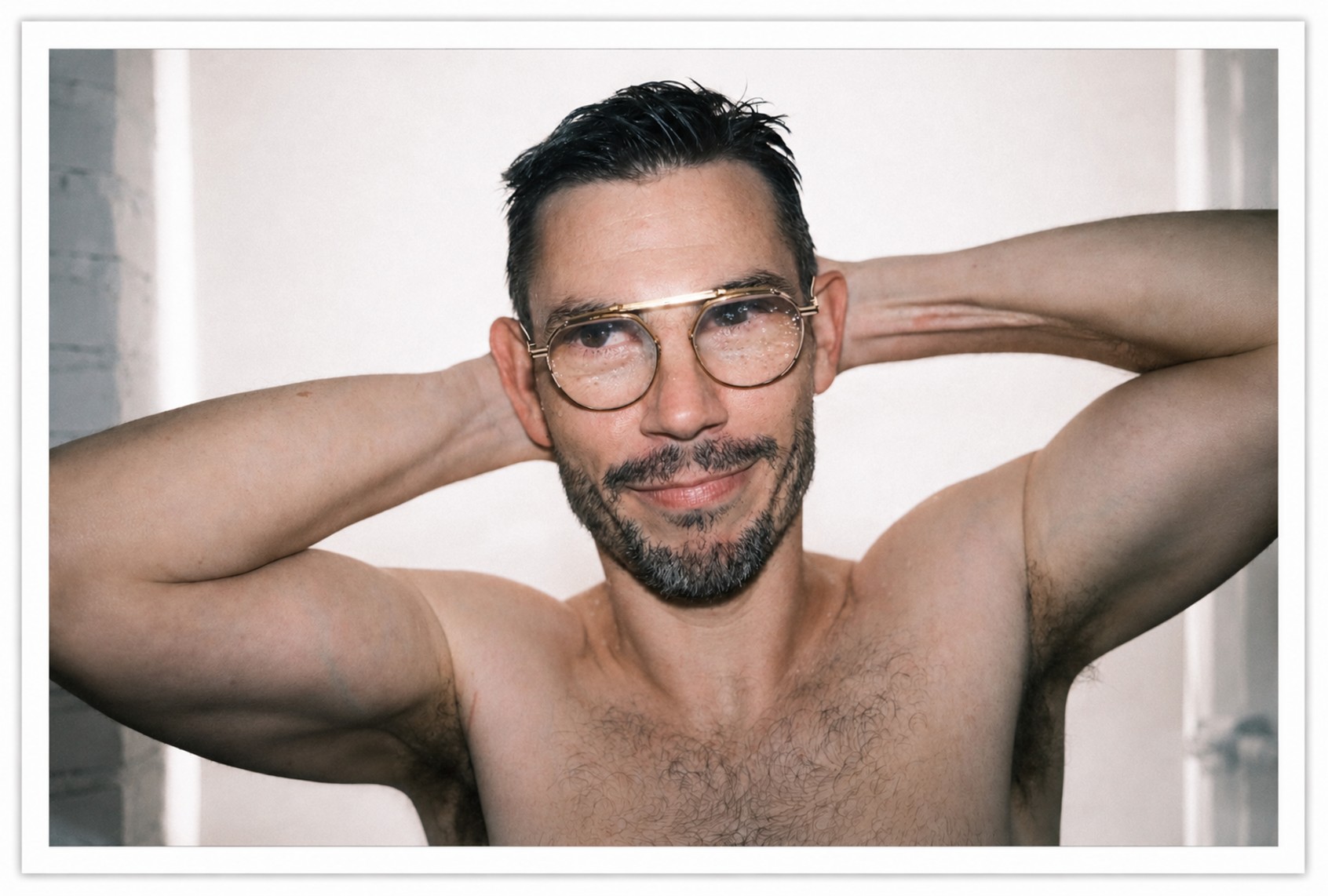

“I’m normalizing taking interviews from bed,” says writer/actor/showrunner Ryan O’Connell, cheerfully and horizontally. “I think it’s time.” The 39-year-old author-actor-screenwriter has definitely earned some serious relaxation: He broke out in 2010 as the star writer at Thought Catalog, the internet’s most notorious repository of Millennial navel-gazing, and was taking meetings in Hollywood almost as soon as his debut memoir, 2015’s “I’m Special: And Other Lies We Tell Ourselves,” was published. After writing the first season of the Netflix adaptation “Special,” O’Connell was surprised to be told he was also starring in it as himself: a neurotic, scabrously funny young gay man who can be candid about everything but the cerebral palsy he plays off as a car-crash injury.
“This title came from me looking at the life I had built for myself in my 30s, compared to the Blumhouse production that was my 20s, and being like, ‘Is it problematic that I am my own inspiration porn?'”
O’Connell’s second memoir, “Inspiration Porn,” chronicles his years in the feast-or-famine trenches of TV writing (his credits include the reboots of “Will & Grace” and “Queer as Folk”) but began as a sex chronicle called “The Slut Diaries” that he began writing in 2021 because, as he told Publisher’s Weekly recently, “I’ve always felt very siloed from the world of intimacy and sex.” In its final form, “Inspiration Porn” has plenty of sex, but it also has a sense of rigor; O’Connell examines the personal and cultural forces that have shaped him – family dysfunction, ableism, shame, ambition – with a determined introspection, holding his own feet to the fire of honesty and authenticity.
We talked via screen a few days after “Inspiration Porn,” whose title plays on the disability community’s shorthand for their objectification, was published. Our conversation has been condensed and lightly edited for clarity.
Has anyone missed the point of the title and called the book inspirational?
They have, but I wouldn’t say it’s missing the point. This title came from me looking at the life I had built for myself in my 30s, compared to the Blumhouse production that was my 20s, and being like, “Is it problematic that I am my own inspiration porn?” I really was proud of myself for achieving things that I never thought were going to be possible. So if someone wants to read this book and find me inspiring, well, I wouldn’t be offended.
You worked for Thought Catalog in the 2010s, [when] the online first-person industrial complex was still emerging and pretty raw. How do you feel these days, when performative vulnerability has become kind of a calling card on social media?
The way vulnerability exists online today freaks me out. It makes me feel very Elder Millennial. Because I made a name for myself being very open and very honest. That, to me, was about a need for survival more than a need to brand myself or my identity. As Thought Catalog exploded in popularity, there was a sort of deadening of the self, like OK, let’s just produce hits. But it started from a very organic, pure place.
“The way vulnerability exists online today freaks me out. It makes me feel very Elder Millennial.”
Now, when I go on Instagram and check out Reels — I’m not on TikTok, because my brain is already diseased enough — and I see people post videos that are literally like “What it’s like to spend Friday night with no friends in New York City” and it’s like a woman coming home from a corporate job and making herself a ginger ale in a wine glass, my bones turn to crushed ice and I become scared for my life. It’s bastardized something that I really love, which is personal writing. I grew up reading people like Elizabeth Wurtzel who were messy and spiky. Now people are literally, like, sitting at home thinking about what aspect of their life they can commodify and turn viral.
As painful as it was to be closeted about my disability until I was 28 — when I started writing for Thought Catalog I’d never written about my CP — I was almost relieved, because I was able to be something beyond my marginalization. I think we’ve [also] really lost our sense of nuance because people have become their avatars more than they’ve become human beings. And when we flatten ourselves online it seeps into real life.
You were closeted about your CP for so long because you didn’t want to stand out in that way. But now, especially on social media, everyone wants to stand out for their differences, everyone wants their own diagnosis. I’m wondering how you feel about that.
Well, it’s complicated. You went from people feeling deep shame about who they were to them becoming their identity, becoming their trauma, becoming their marginalization. I look at disability influencers online and I feel a myriad of things: I feel so happy that they exist [and are] talking about their experiences openly, and there’s a part of me that feels protective and concerned [when] I look at their feeds and everything they post relates back to their disability.
[Disability] is not the main character of my life. Sometimes it’s first on the call sheet, sometimes it never gets called to set. I think it can be a really delicate dance between empowering and kind of living in victimization for your personal brand. I don’t blame anyone for reading the room and trying to create a business of the self under capitalism. But I always feel a little bit concerned because it can be painful to reduce yourself to being one singular thing.
The portrayal of your mother in “Special” is really moving and complicated. How much did you prepare her for it?
You know, my mom and I have had a complicated path, and one thing I always give her credit for is that she has never been like, “You can’t write about this.” She’s always been like, “You need to work through what you need to work through.”
The character in “Special” is different from my mom in real life. There’s a big piece of her — the alcoholism — that I never put into the character of Karen. But emotionally, that relationship is very autobiographical. There’s an episode in Season 2 told from Karen’s point of view, [with] flashbacks of me as a younger kid, that sort of lays out how [our] codependency started. It was me really trying to analyze our dynamic. And I remember calling my mom and being like, “Did you see the episode?” and the only thing she said was, “The kid they got to play younger you doesn’t look like you.”
Want more from culture than just the latest trend? The Swell highlights art made to last.
Sign up here
And I was like, “This is your takeaway?” Now, of course it wasn’t, but I don’t think she had the tools to unpack [the episode] in a meaningful way. I think it was extremely overwhelming. There’s no book written about what to do when your son makes a Netflix TV show about your relationship. I grew up in a family that didn’t talk about things, so I’m like their worst f*cking nightmare.
I spent years of my life, and Netflix spent millions of dollars, trying to help me reach my mom. I was like, “If I can’t reach her through a phone call, maybe if I can reach her through episodes of TV.” It’s very hard for her to see the things she did as an alcoholic to me and to our family, but she knows it’s important to me to create healing in it. We’re in a good place right now.
I grew up when the big sex threat of the time was AIDS. With yours it seems like the big threat was having sex with someone who then blogged about it. Do you have a code in terms of how you write about other people?
Are you saying I’m the new AIDS? [Laughs]
In my 20s, I didn’t. I was pretty boundaryless. And I was stupid! I mean, my prefrontal cortex hadn’t dropped. It was about just writing things as I experienced them without really taking anyone else’s perspective into consideration. But when I was writing “The Slut Diaries,” [and] when I had a negative experience, it was really important to me to judge my own complicity in the dynamic. Like: What was bringing me here? For example, I was having sex with a person who was microaggressing me and telling me really insane things about my body, calling me a toy that was broken — just really weird, odd things that, personally, I would never say to someone. But I kept f*cking him! So honey, what’s that about?
I never want to feel like any of [my writing] is “gotcha.” I want to be able to stand behind everything I wrote, so that if anyone came forward [to say], “I want to talk about what you wrote,” I’ll feel confident in talking about it. Maybe this is tooting my own horn, but everything I wrote was true. I didn’t embellish a single thing. But it’s really important to acknowledge what role I’m playing in things. Even if you’re the person I’m writing about and you didn’t experience things in the exact same way, I don’t think anything I wrote was so off-base that you couldn’t be like, Oh, I understand how he could have felt that way.
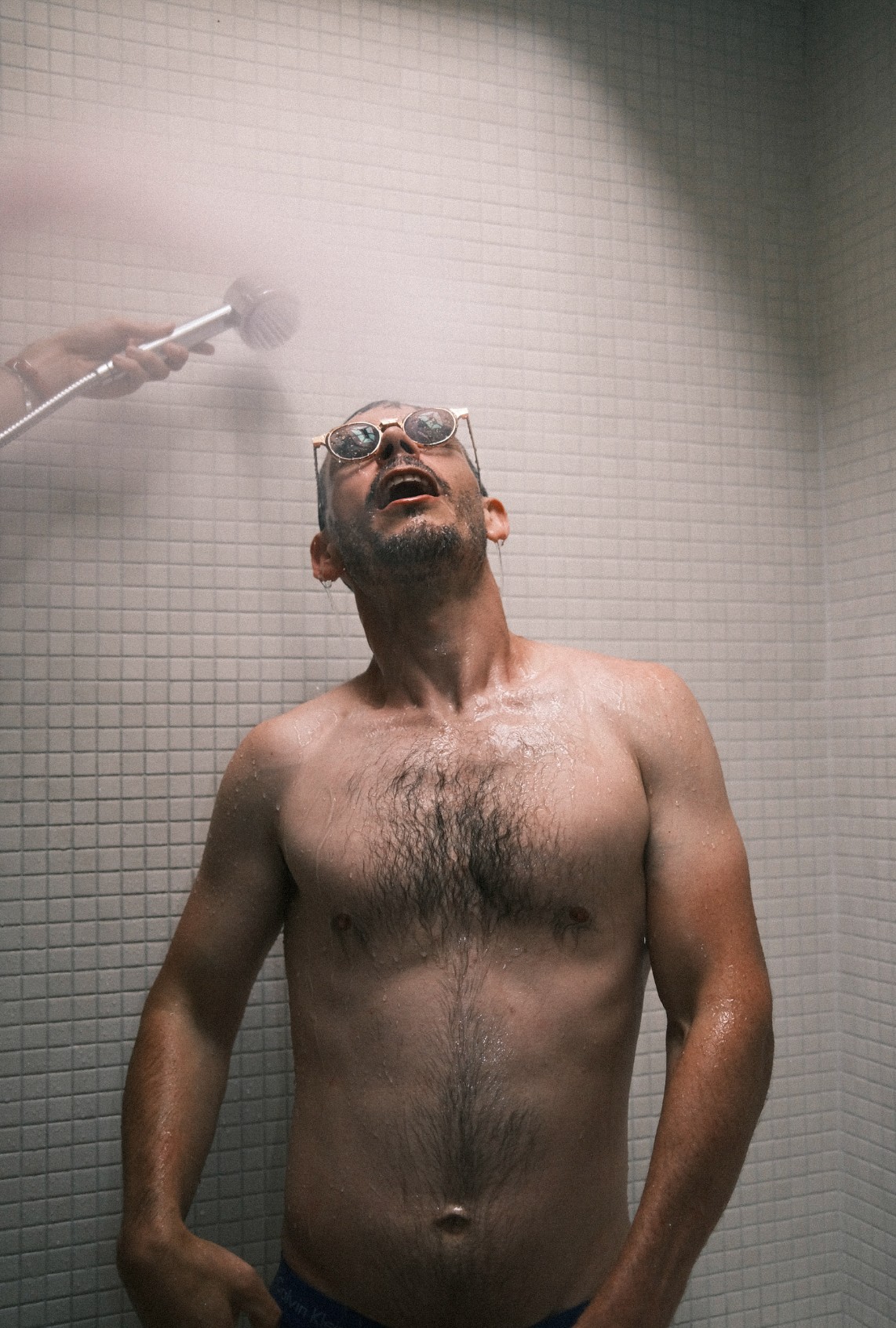
(Ryan McGinley) Ryan O’Connell
What was it like to work with Ryan McGinley on the cover photographs?
Oh my god. Beyond. I was in college at Eugene Lang in probably 2008, 2009, and Ryan McGinley had us all in a chokehold. [He] was kind of famous for doing these road trips with his interns, just like hot naked people jumping off mountains. And I remember being — in my eyes — this disabled troll in the computer lab at Lang, [seeing] these images and being like, I want to be a McGinley boy.
So the cover was this full-circle moment. But also, the way Ryan photographs sex and sexuality is very pure and playful. A lot of times, especially when there’s nudity involved and it’s gay guys, you just think of one thing: capital-H horny. Ryan is able to get at a lot more in his pictures. I wanted the photographs to capture sex in the way I write about sex in the book. I hope I write about sex in a way that doesn’t just feel horny or provocative. I hope it’s emotional, funny, all the things.
We need your help to stay independent.
You write in the book about fame, and the tension between being known and keeping yourself to yourself. Are you open to becoming an icon?
I have profound ambivalence about anything related to fame. I try to get to that in the book’s essay about Hollywood: I have, unfortunately, a really gnarly case of Look-at-me-don’t-look-at-me disease. When I did “Special,” I went from being Nora Ephron to [being] Meg Ryan — [from a] writer who was always going to be behind the scenes to being in front of the camera. And because of that, I was sort of thrust into the ecosystem of Hollywood — the parties, the lists in the trades, publicists, stylists. As much as I loved attention and wasn’t a wallflower, I found the whole experience to be pretty icky.
“I think I have career dysmorphia, where I feel like I’m kind of a flop. So I always think I write things for like 10 gay guys in Bushwick and that’s basically it.”
And then I felt like something was wrong with me for not enjoying it more. When I had to campaign for Emmys for “Special,” it was truly like a political campaign: I was sent to the bowels of the Valley to hang out with Emmy voters. All of it seemed really fake, and I felt disenchanted with the whole process. I remember talking to someone who had won an Emmy in a prior year who was like, “No, you just have to keep going, you have to put your whole pussy into it,” and I was like, I don’t want to do this. I just wanted to be in the writers’ room, making the show.
Even promoting this book is fraught for me. I think I have career dysmorphia, where I feel like I’m kind of a flop. So I always think I write things for like 10 gay guys in Bushwick and that’s basically it. It’s my Virgo, type-A workhorse mentality.
I’m an incredibly ambitious person, but it’s really not about fame. I want to be able to make my work. I do the math, I go beep bop boop boop boop, and I’m like, OK, in order for it to not be hard for me to sell the next thing, I need to be more visible. I need to be a person out in these streets, going to the Oscar Mayer Wiener Pride party, you know what I mean? But I don’t want to go to the Oscar Mayer Wiener Pride party! I want to be in bed!
If it makes you feel better, I think most writers have success dysmorphia.
I didn’t watch “Special” for years. And then I rewatched it last year and [it] felt like the only time I’d achieved distance from it, because it had been so long since I’d seen it. I’ve grown as a writer and as an actor, so there were definitely things I feel like I would change. But I also think that’s really beautiful. Having a body of work is such a privilege. If I saw “Special,” a thing I made at 31 years old in 2018, and was like, “Yep! Wouldn’t change a thing!” I’d be worried for myself.
Read more
about representation
