
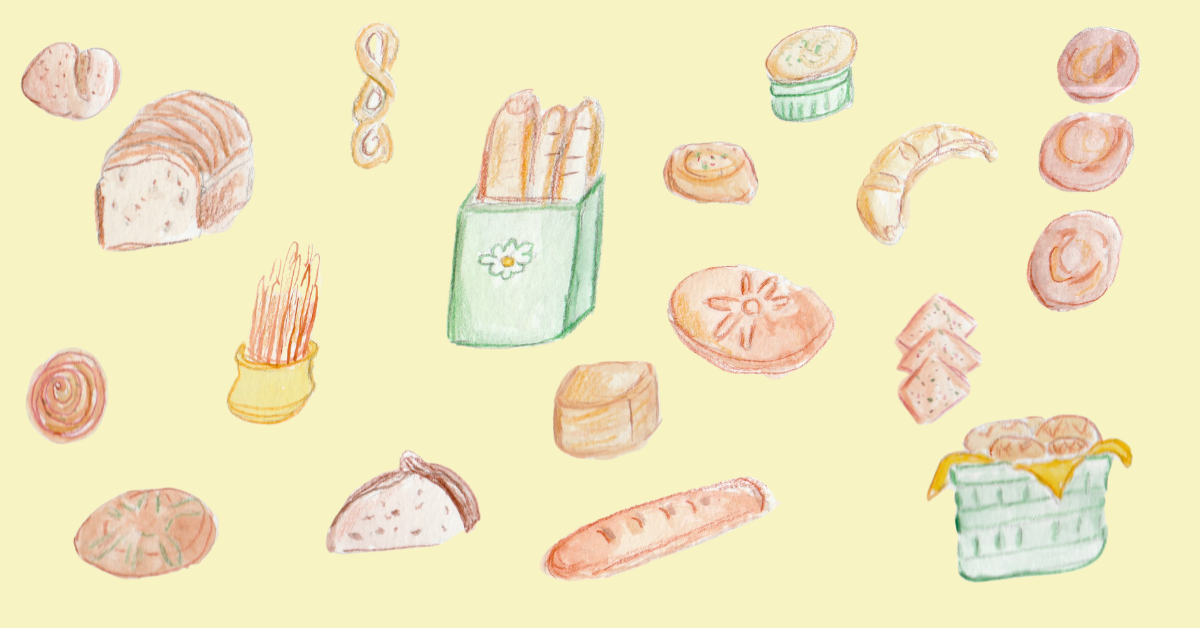

One of the most interesting things about chain restaurants is that the bread is often the point.
Not the entrées. Not the décor. Not even the dessert. The bread.
People don’t just reminisce about their favorite evening at The Cheesecake Factory. They reminisce about the brown bread: those sweet, dark little wheat loaves scented with honey, molasses, cocoa powder and espresso. They’re so beloved that the company eventually started selling them in supermarkets nationwide. The same thing happened with Red Lobster’s Cheddar Bay biscuits, which escaped the restaurant entirely and became a grocery-store product in their own right — first as a boxed mix in 2012, then in frozen form in 2021.
Then there are Olive Garden’s plush breadsticks. The cinnamon-butter-slathered rolls at Texas Roadhouse. The biscuits that once arrived at every table at Cracker Barrel.
In fact, people become surprisingly emotional when bread service disappears (there are multiple disgruntled Reddit threads devoted to the fact that, at Cracker Barrel, customers now have to order a meal that comes with biscuits; they are no longer a complementary given).
Years ago, I witnessed something close to a mutiny at a beloved crab restaurant on the South Carolina coast when management stopped serving its signature lunch bread basket: simple white rolls alongside toasted hushpuppies and fresh cinnamon butter. This is a restaurant situated next to both a Greek sculpture-themed mini golf course and a feral cat colony, so it isn’t exactly unfamiliar with a little chaos. Even so, the outrage seemed to catch everyone off guard.
The problem wasn’t really the bread. Or rather, it was — but not entirely.
Want more great food writing and recipes? Sign up for Salon’s free food newsletter, The Bite.
For many families, those hushpuppies were the ceremonial beginning of vacation. The first thing they ate after crossing onto the island. The opening act of a week spent in flip-flops and sunscreen. The restaurant quietly restored the bread service the following year.
Of course this phenomenon isn’t limited to chains. One of my favorite stories of the past year was Caity Weaver’s delightful Atlantic investigation into America’s best free restaurant bread. After considerable reporting, she crowned the famous cranberry-walnut loaf at Le Diplomate. (A victory I can neither confirm nor deny, as walnuts and I are not on speaking terms.)
When you think about it, there’s a reason bread service appears everywhere from family chains to white-tablecloth dining rooms. Before you’ve even ordered, before you’ve officially become a customer, someone places a basket on the table and says: Here. Have something warm. Have something now.
It’s hospitality in its purest form.
And it’s also one of the easiest entertaining tricks a home cook can borrow.
Over the past few weeks, we’ve spent a lot of time talking about how to make weeknight cooking feel a little easier, a little prettier and a little more satisfying on a budget. Entertaining can feel like a different beast entirely.
Even if you’re perfectly capable of stretching a pound of beans or turning a rotisserie chicken into three meals, there’s something about inviting people over that can trigger a peculiar urge to upgrade everything. Another bottle of wine. A more expensive cut of meat. A bakery dessert. Suddenly, a simple dinner party starts behaving like a small capital project.
We need your help to stay independent.
But if the goal is making guests feel cared for rather than merely fed, it’s worth asking a different question: What actually makes a meal feel luxurious?
My answer, perhaps unsurprisingly, is bread.
Or, more specifically, an unnecessary amount of bread.
The beauty of a generous bread service is that it doesn’t require a generous budget.
A roast chicken dinner becomes more festive when it’s accompanied by a skillet of cornbread and a basket of flaky biscuits. A simple pot of soup suddenly feels restaurant-worthy when surrounded by slices of crusty sourdough, a bowl of whipped butter and a plate of savory muffins. Even a weeknight spaghetti party can feel abundant when there’s garlic bread on one side of the table and a tear-and-share focaccia on the other.
The goal isn’t to serve enough bread to replace dinner. The goal is to create the feeling that there is always one more thing to reach for.
One of my favorite entertaining tricks is to think of bread the way a florist thinks about greenery. The bread fills out the table. It creates volume. It softens empty spaces. A bowl of pantry pasta that might otherwise look a little lonely suddenly looks downright lavish when it’s surrounded by warm rolls, a dish of olive oil and a basket lined with a linen napkin.
In other words: Bread is cheaper than luxury, but it creates many of the same effects. In fact, I’d argue that the fastest way to make a modest meal feel faintly restaurant-like is to serve not one bread, but two or three. Think of it as a bread flight.
A personal starting place for me is with one choice from these three very broad categories.
A sturdy bread: toasted sourdough, dark brown sandwich loaves, cornbread, seeded rye. An airy bread: focaccia, biscuits, Parker House rolls, barbari, anything that tears apart in fluffy clouds. And, if you’re feeling playful, a whimsical bread: miniature muffins, pesto pull-apart bread, chickpea flour flatbreads, cheese straws, popovers — something that makes people point across the table and say, “Wait, what are those?”
Add a bowl of whipped butter and a dish of good olive oil and you’ve created the sort of opening course that feels improbably generous for the cost. Yes, a nice butter and a decent bottle of olive oil might add $12 to $30 to your grocery bill. But unlike another meat entrée or an elaborate bakery dessert, they’re purchases you’ll likely use for weeks afterward.
More importantly, they’re doing the same job as that basket of rolls at a restaurant.
Before anyone has tasted the main course, you’ve already made them feel hosted. Thankfully, you don’t have to start from scratch. The Salon archives are already full of breads worthy of a place on your dinner table. Here are a few favorites, organized roughly according to my entirely scientific bread-service philosophy.
For the whimsical category: Buttery Pull-Apart Bread
Inspired by my late grandmother’s Southern funeral sandwiches, this savory monkey bread is pure crowd-pleaser territory. Soft pieces of bread are drenched in a buttery mixture of Dijon mustard, brown sugar and Worcestershire before being baked into a golden, shareable centerpiece. Place it in the middle of the table and watch people begin absentmindedly tearing off pieces before the appetizers have even landed.
For the sturdy category: One-Hour Rustic Bread
Not every dinner party loaf requires a sourdough starter and a three-day commitment. Inspired by tips from Kitchn writer Faith Durand, Mary Elizabeth Williams developed a rustic homemade loaf that comes together in a single hour. The result is crusty, chewy and deeply satisfying — exactly the kind of bread that begs for a puddle of olive oil and a sprinkle of flaky salt.
For pasta night: The World’s Greatest Garlic Bread
Sometimes luxury isn’t reinvention. Sometimes it’s simply doing a familiar thing exceptionally well. This recipe takes garlic bread — one of humanity’s most reliable pleasures — and pushes it toward buttery perfection. If you’re serving spaghetti, lasagna or baked ziti, your work here is done.
For the Southern table: Cast-Iron Cornbread
As Bibi Hutchings writes, cornbread may seem simple until you start talking to people about it. Then you quickly discover that every family has a fiercely defended version. This one embraces two of the South’s most cherished cornbread traditions: a well-seasoned cast-iron skillet and bacon drippings. The result is crisp-edged, deeply savory and worthy of occupying an entire corner of the table.
For the airy category: Sky-High Biscuits
If abundance had a physical form, it might be a basket of warm biscuits. This version borrows a trick from French pastry, folding the dough again and again until distinct layers emerge. The result is tall, golden and dramatically flaky — the sort of biscuit that makes guests immediately ask whether you made them yourself.
For the basket’s wild card: The Perfect Savory Muffin
Every bread service deserves one slightly unexpected element. These savory muffins, made with buttermilk, cornmeal, black pepper and just enough onion and garlic powder, are tender, fragrant and endlessly snackable. They’re also excellent for using up the buttermilk left behind after making those biscuits.
This story originally appeared in The Bite, my weekly food newsletter for Salon. If you enjoyed it and would like more essays, recipes, technique explainers and interviews sent straight to your inbox, subscribe here.
Read more
about this topic
