
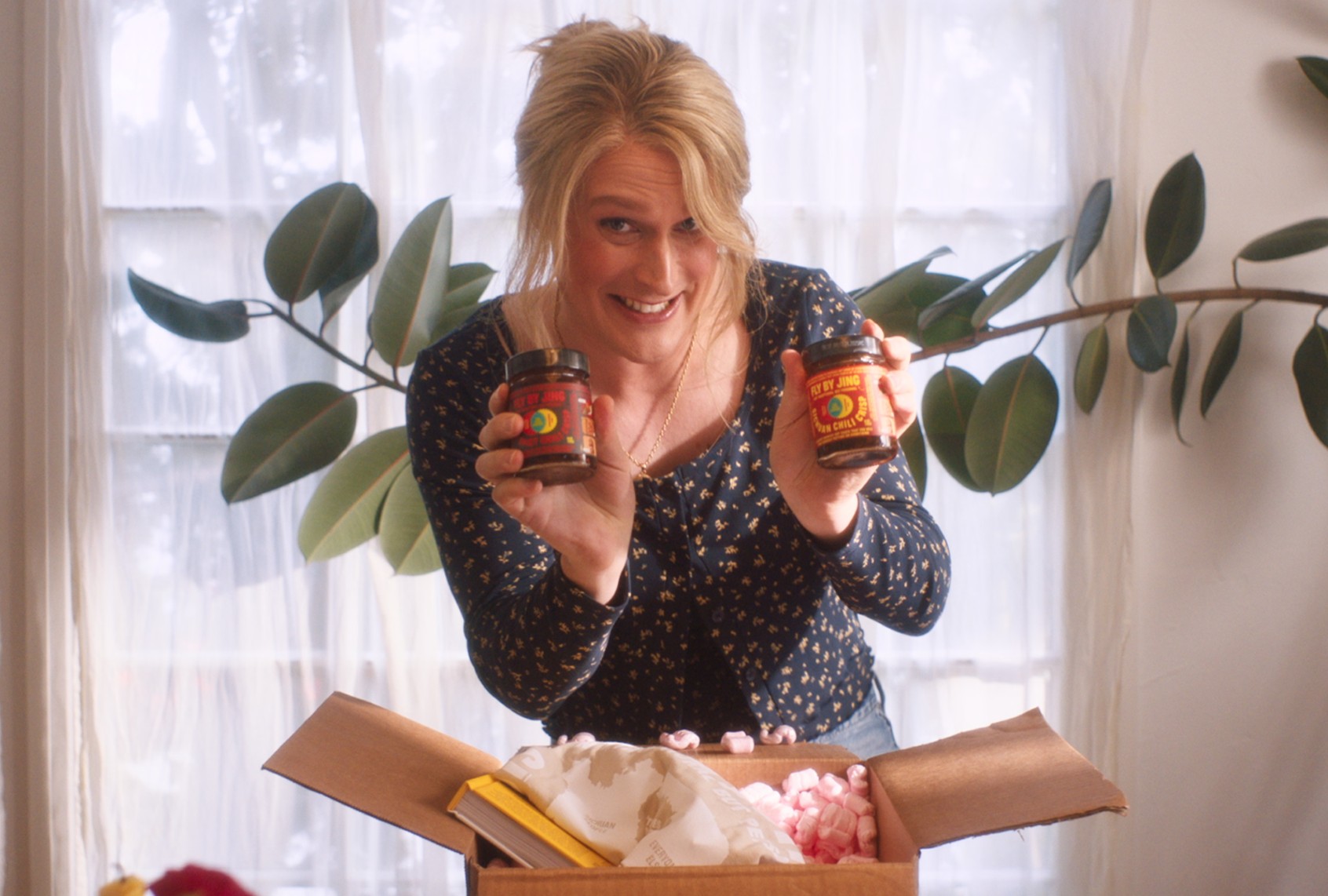

When I was in sixth grade, our science class began its health unit, which was all about the changing body. This portion of the curriculum, naturally, came with plenty of giggles and whispers. Oh, the days when something as simple as the words “breasts” and “penis” were enough to sustain an entire day’s worth of joy, when the numbers 80085 viewed on an upside-down calculator could illicit chuckles from the corner of a room. The only thing better was when, one Friday, our teacher rolled out the TV — sitting atop that old, rickety cart on wheels — to show us a little made-for-television movie called, “For the Love of Nancy.”
Our teacher explained that the film would serve as our introduction to a unit on eating disorders. In 2006, I felt I was already deeply familiar with the concept. Anorexia and bulimia were in nearly every tabloid headline, splashed across the supermarket checkout aisles. Two years after Mary-Kate Olsen checked herself into rehab for anorexia nervosa, eating disorders turned a hypercritical eye toward every young starlet. “Extreme diets: How Lindsay and Nicole got so skinny — but have they gone too far?” the honorable Us Weekly wondered. I assumed that “For the Love of Nancy” wouldn’t tell me anything I didn’t already know. But when the film got started, I quickly began to understand that there was much more to these disorders than my 12-year-old brain could comprehend from a sensational gossip story. They were complicated, secretive, compulsive and potentially deadly, and the film’s gripping melodrama was a stark contrast to any glamorous tabloid portrayal.
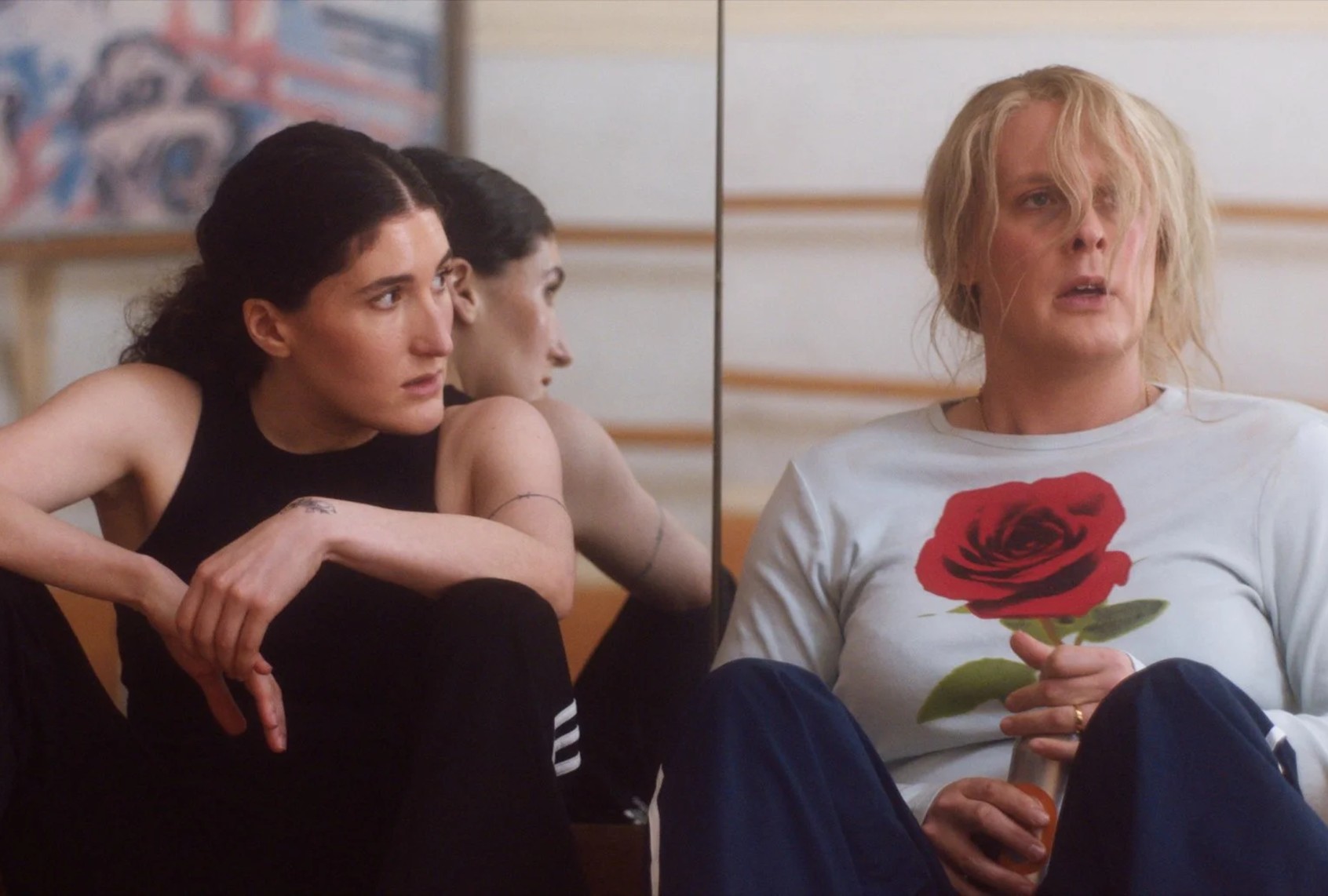
(Magnolia Pictures) Kate Berlant and John Early in “Maddie’s Secret”
Comedian John Early’s directorial debut, “Maddie’s Secret,” is both a parody of and tribute to films like “For the Love of Nancy,” of which there are many — so many that Early had a trove of tropes to pull from, which he moves through with all the dexterity of a TV movie connoisseur. In the film, Early stars as Maddie Ralph, a mousy, modest blonde working as a dishwasher at a Bon Appétit-style test kitchen called GourMaybe alongside her best friend, Deena (Early’s frequent collaborator, Kate Berlant).
It’s as if, when Early dons Maddie’s blonde wig, complete with perfectly placed flyaways that droop into his face, he is neither himself nor the character, but every woman.
Maddie adores food and cooking, inspired by the world around her to create flavorful new vegetarian recipes she shares with Deena and her adoring boyfriend, Jake (Eric Rahill). Despite Deena’s reassurance and Jake’s championing, Maddie can’t see herself as one of GourMaybe’s recipe developers. She’s too soft-spoken, too inexperienced, too . . . Maddie! That is, until one day, when Maddie’s video detailing her “major breakfast sandwich-y hangover vibe” tortang talong recipe goes viral. Suddenly, Maddie gets the chance to step in front of the camera at work. But just as soon as hundreds of new recipe ideas spring into her head, so do all of her teenage insecurities, reminding her of an adolescence spent grappling with bulimia.
“Maddie’s Secret” is the rare comedic parody that can shift into total, gut-wrenching sincerity with the snap of a finger. At one moment, Early delivers a line with such studied assurance and casual wit that its punchline hits harder than any straightforward joke from a comedy in recent memory; the next, his eyes will fill with steely uncertainty, and his face will contort ever so slightly to reveal a depth beyond both Maddie’s carefully constructed veneer and Early’s satirical sensibilities. It’s as if, when Early dons Maddie’s blonde wig, complete with perfectly placed flyaways that droop into his face, he is neither himself nor the character, but every woman. Early has a masterful understanding of both melodrama’s power and its inherent comedy. He sees the TV movie for all its multitude of artistic merits and real-life possibilities; how the form can touch the viewer like a painting can in a single glance, or stir something significant from the burdened soul. And like all great art does in one way or another, “Maddie’s Secret” leads with its heart to create something unexpected and necessary, finding the point where humor and tragedy graze each other in passing, making a home there.
One of the most brilliant aspects of “Maddie’s Secret” is that one needn’t be familiar with TV movies to find Early’s film funny or entertaining. Here, it’s as much about the specific subgenre as it is the characters, whose archetypal forms all exist in some media you’ve seen before. The doting boyfriend, the overzealous best friend, the snide coworker, the absentee mother — played here by Kristen Johnston, whose character’s name is ingeniously spelled “Beverlee.” They’re all here, and they have as much overconfident swagger as a plucky young star on the Disney Channel.
And then there’s Early, who opens the film running through the streets on Maddie’s morning jog to work. Aficionados will get a chuckle recognizing this sequence as a send-up of the many TV movies about eating disorders that begin the same way, with their star huffing and puffing across the sidewalks of suburbia without ever breaking a sweat. And there goes Los Angeles’ sweetheart, Maddie Ralph, with Early perfectly made up in day drag, wig glued down tight and sweat-free, looking eerily like a ’90s sitcom starlet trying to bridge the gap between television and film via the sadly outmoded movie of the week. Wave hello as she passes fruit stands with fresh mango and wheat-pasted street signs advertising erectile dysfunction medication with the eggplant emoji, finding inspiration for her soon-to-be-viral creation. Whoops! She’s late, and the film makes a hysterical cut to Maddie in a near-dead sprint, trying to make it to work on time.
Want more from culture than just the latest trend? The Swell highlights art made to last.
Sign up here
It’s only the first scene, but it’s here where “Maddie’s Secret” establishes a critical distinction between mockery and reverence. Early doesn’t run like the Wayans brothers, dressed like women, trying to retrieve a stolen purse in “White Chicks.” (Though that is hilarious in its context, too.) The big joke is not that Early is a man in a wig, but that Early is so completely dedicated to his character that the point where he ends and Maddie begins is invisible from the film’s very first frame. When the movie’s trailer was first released earlier this spring, many of the commenters didn’t quite understand it. Was this a drag movie? A trans story? A misogynistic parody of womanhood made by an undercover MAGA influencer? But the simple fact is that “Maddie’s Secret” is none of those things. There is no gimmick to “get,” other than the film’s loving lampoon of the TV movie. There is complete and total sincerity throughout. And it’s that type of refreshing, radical earnestness that inspires a deeper conversation about the film’s many virtues.
Anyone who knows Early’s comedy knows that even his most eviscerating jokes have an undercurrent of love and hope. He wants the world to be a better place because he sees that it can be. I’m not sure I’ve ever heard a mean joke come out of his mouth that wasn’t targeted at some monstrous politician who worked to deserve it. One of Early’s other beloved characters, a Southern standup comedian named Vicky with a V who loves Maggiano’s restaurants and frequently misplaces her denim jacket, shares a similar tenderheartedness to Maddie.
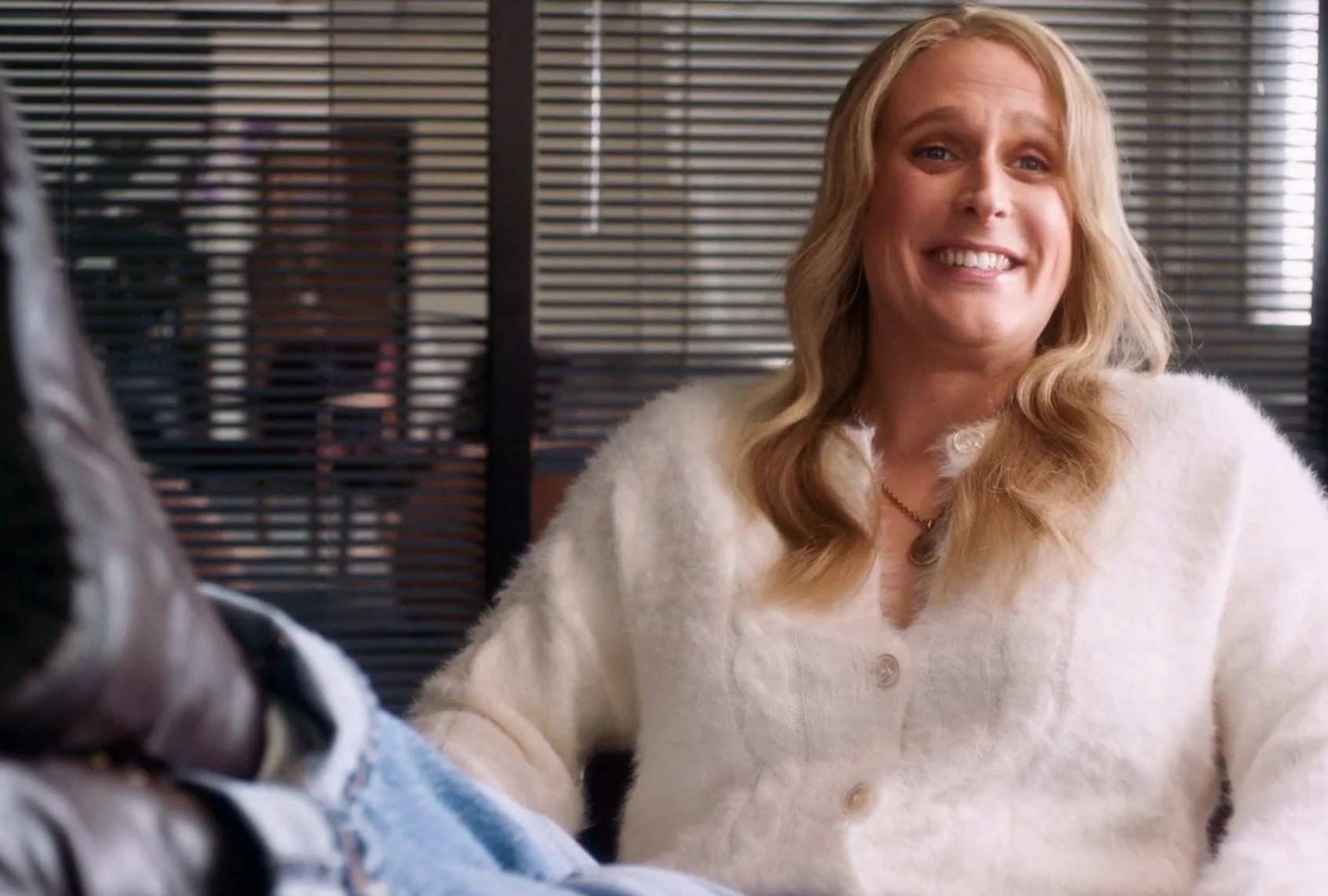
(Magnolia Pictures) John Early in “Maddie’s Secret”
Like all of those after-school specials, there’s a distinct element of gratitude that helps the film transcend accusations of corniness or caricature. Early’s women may be exaggerated portraits, but we live in a hyperbolic world. The mutual melodramas cancel each other out, resulting in a film with more truth than fiction.
Early brings an unmistakable maternal warmth to Vicky, who, as Southern as she is, is also an outspoken progressive. In 2020, Early even rolled her out in a video to endorse Bernie Sanders. “I’m a mom, and I love Bernie Sanders because I love my daughter,” Early says in character. “I want my daughter to live in a country where she’s guaranteed quality healthcare, whether she’s some fancy CEO with shoulder pads, or whether she’s struggling to find work like her father.” Cue Vicky looking into the camera lens.
That Early is so charmed by the TV movie makes perfect sense. As sensational as they could be, most of them were made to didactically teach a lesson of some sort. They were films with intention, aired to millions of viewers in hopes that they’d be entertained, yes, but also that they’d be moved — that they might recognize some part of themselves forgotten for the sake of upward economic mobility and social striving. These movies were gritty and often absurd, sometimes going as far as to rubberneck at a tragedy to convey the immediacy of the moral at hand. As “Maddie’s Secret” continues, and the titular Maddie falls deeper into the grasp of her titular secret, Early perfects that push and pull. When Maddie goes to rehab for her bulimia after a life-threatening relapse, Deena fakes an eating disorder to join her, telling Maddie that she had a dentist friend dye her teeth brown so the doctors would believe that she was making herself vomit. It’s delightfully ridiculous, and Berlant and Early have years of experience playing off each other to generate the biggest laughs possible. But the humor is always amiably balanced with real, essential nuance, like the introduction of Maddie’s rehab roomie, the sweet yet woeful Julie (Vanessa Bayer), whose arc is genuinely heartbreaking.
There’s a wonderful verve to Early’s filmmaking, allowing what would otherwise come off as breakneck tonal shifts to feel remarkably earned. The camerawork is dynamic and the film boasts some of the most beautiful, enchanting lighting I’ve seen in any feature this year, maybe this decade so far. Almost every shot has a new, visually arresting setup, giving “Maddie’s Secret” a style all its own — one that only makes Early’s film all the more singular, an indie standout that casts a long, busty shadow over its studio-produced contemporaries.
We need your help to stay independent.
Early is so certain of everything he wants his debut film to be, and executes those desires with such consistent dexterity and style that watching “Maddie’s Secret” is akin to seeing someone win the lottery. Each frame is meticulously constructed; every beat of the script brims with passion. One can’t help but let their face spread into a big, goofy smile watching Early and his friends make something they’re so clearly excited by, something they’re proud of. Like all of those after-school specials, there’s a distinct element of gratitude that helps the film transcend accusations of corniness or caricature. Early’s women may be exaggerated portraits, but we live in a hyperbolic world. The mutual melodramas cancel each other out, resulting in a film with more truth than fiction.
After “For the Love of Nancy” ended — when the credits rolled, and the tape was spit out of the VCR — my sixth-grade science teacher explained that the film was, in his opinion, one of the more accurate depictions of anorexia. At the time it was filmed, the movie’s lead, Tracey Gold, was recovering from her own public battle with the same disorder. Her experience was key to helping the film feel as real as possible. I marveled at how much courage it must take to turn your real life into art, just for the chance that one person might see it and be impacted by it. “Maddie’s Secret” might not have the same factual background as its selling point, but it’s indisputably authentic nonetheless. This is Early’s life: an affectionate homage to the women he’s so inspired by, who have influenced his comedy and interests, who shaped him into the artist he is today. Sometimes, it’s not enough just to put yourself in someone else’s shoes. You have to throw on their perfectly messy, flaxen hair, too.
Read more
about films you shouldn’t miss
