

I have had the stomach flu this week — the bane of food writers and recipe testers everywhere — which means I haven’t spent much time in the kitchen. Instead, I’ve been slowly sipping sparkling water and wandering the outer reaches of my streaming services, only to land, once again, on a perennial favorite: “Baskets,” which gives me an excuse to finally tell you about one of my favorite television meals.
The FX comedy, which celebrated its 10-year anniversary earlier this year, stars Zach Galifianakis as Chip Baskets, an earnest, lovelorn dreamer trying to readjust to life in Bakersfield after an ill-fated stint at clown school in France. It’s one of the funniest shows ever made. It’s also one of the saddest.
In the penultimate episode of the first season, Chip has just learned that his mother, Christine (the incomparable Louie Anderson), has slipped into a diabetic coma. Standing beside her hospital bed, his mind drifts to Paris and to Penelope, the aspiring musician he married after falling hopelessly in love.
The tragedy, of course, is that Penelope never really hid the arrangement. She wanted a green card. Chip wanted a marriage. Those two things coexisted for a while, but not for long. Christine saw it immediately. In an attempt to protect her son, she contacted Penelope’s father — a famous French music producer — who pressured his daughter to come home.
Chip was furious.
Then he found his mother unconscious.
Which is how we arrive back at the hospital.
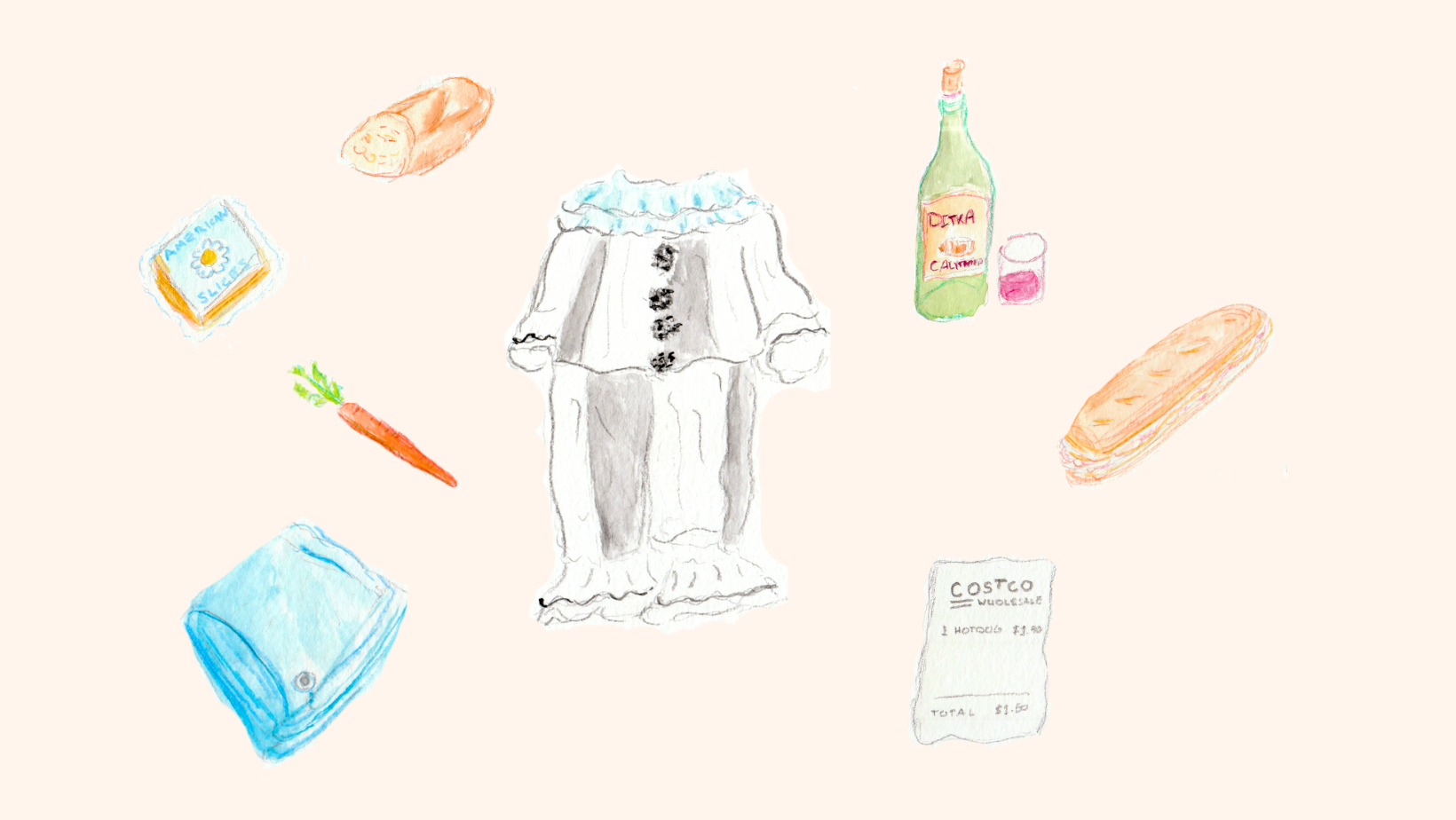
Chip looks at Christine for another moment, silently slips $20 from her purse, tells his friend Martha (played by Martha Kelly) he’ll be back soon, then heads home. In the garage, he begins rummaging through the shelves, looking for something that might pass as a blanket. He briefly considers a bizarre woven tapestry featuring his brothers’ faces rendered in fabric before settling on a blue, crinkly tarp.
It’s the first ingredient in what I believe is television’s saddest picnic — and one of its most beautiful meals.
If you’ve never watched “Baskets,” this melancholy little picnic isn’t representative of its mood so much as its philosophy. For all its clowns and pratfalls, it’s quietly one of television’s great food shows. Christine treats Costco with something approaching religious devotion. A Juggalo-staffed Arby’s becomes a recurring setting. There are dive bar mimosas, strip malls, grocery aisles and cheap canned noodles. Few series have understood more clearly that where we eat is often just as revealing as what we eat.
Which is why this picnic matters.
What follows the tarp is a lovely narrative braid.
One strand takes us back to Paris. Chip falls in with a troupe of street performers, evades the police, juggles along the Seine and eventually wanders into a smoky bar, where Penelope is strumming her guitar. He is utterly, immediately smitten.
Want more great food writing and recipes? Sign up for Salon’s free food newsletter, The Bite.
The other strand follows his grocery run in Bakersfield.
There, Chip stands in front of the cheese case for a moment, brushing past the string cheese and the Parmesan shakers before settling on a packet of American singles. A bottle of Mike Ditka-branded wine goes into the cart. Finally, he stops at a Subway-esque sandwich shop.
“I’m looking for a French baguette.”
“We don’t do French baguettes,” the woman behind the register replies matter-of-factly. “We do hoagies. Do you want a hoagie bread?”
Chip leaves with six feet of hoagie bread.
Back in Paris, he proposes to Penelope — the moment where the series itself actually begins. Here, though, we learn something important: Penelope never lied to him. She was marrying Chip for a green card. Chip simply couldn’t bear to hear it. The two celebrate at a restaurant well beyond Chip’s means. He orders a single carrot.
Penelope notices. “Aw,” she says with an accent, smiling gently at Chip. “I take you a nice place, OK?”
They spread out a blanket. A few candles flicker to life. They uncork a bottle of sparkling wine. She tears into a warm baguette, smears it with chèvre and hands him a piece. “So good,” Chip murmurs, his eyes rolling back.
“I know why I am doing this,” Penelope says. “Do you know?”
Chip doesn’t answer.
“Bad beginnings always have bad endings.”
He takes another bite.
“This is really good bread.”
Then comes the final strand.
We’re back in Bakersfield.
We need your help to stay independent.
Chip has spread the blue tarp across a narrow hellstrip beside four lanes of traffic. He pours the Ditka wine into a plastic cup and unwraps his hoagie, layered with ham and, as the cashier so memorably described it, “limited-time yellow squirt.” As he eats, the memories return. The warm baguette. The chèvre. Penelope’s face in the candlelight.
His eyes begin to well.
Quietly, Chip folds up the tarp, drops it into the trash and walks away. I think it’s one of the most beautiful meals on television. Not necessarily because it makes you hungry. Rather, because it asks a question.
Most of us have, at one point or another, tried to recreate a meal we ate on vacation. Maybe it was the bowl of pasta from Rome, the fish tacos from a beach town or the perfect tomato sandwich you ate on somebody else’s porch You’re not really trying to recreate lunch. You’re trying to recreate a feeling. A possibility. The version of yourself who once sat at that table.
Sometimes it works. More often, there’s a curious little gap between memory and reality. The bread isn’t quite the same. The tomatoes aren’t in season. The kitchen doesn’t overlook the Mediterranean.
The meal becomes something else entirely.
A test.
Could you still belong to that life? Could you still become that person? Was the hope you carried home with you ever really possible in the first place?
Maybe that’s why this picnic lingers with me. Not because it changes Chip. It doesn’t. By the time he folds up the tarp, Penelope is still gone. Christine is still in a hospital bed. Bakersfield is still Bakersfield.
The picnic simply tells him where he is.
We tend to think of memorable meals as celebrations or destinations: the anniversary dinner, the vacation lunch, the birthday cake. But some of the meals we remember most vividly occupy stranger territory. They’re eaten in airports. Hospital cafeterias. Empty apartments with the boxes still stacked against the wall. They’re the bowl of soup after you’ve finally stopped throwing up. The sandwich on the drive to a funeral. The coffee you buy because you aren’t ready to go inside quite yet.
Those meals aren’t remarkable because of what’s on the plate; they’re remarkable because they mark a threshold.
You’re no longer the person who arrived, but you aren’t yet the person who’s about to leave.
That’s the space Chip’s picnic occupies.
He’s not trying to convince himself that Paris can be recreated beside four lanes of Bakersfield traffic. He’s trying to find out who he is now that it can’t. The picnic doesn’t answer the question. It simply makes it impossible to avoid.
So he folds up the tarp, throws it away and goes back to the hospital.
Sometimes that’s all a meal can do. Not transport you somewhere else, but accompany you across the small, quiet distance between one version of your life and the next.
All four seasons of“Baskets” are currently available for digital purchase on Amazon Prime. This story originally appeared in The Bite, my weekly food newsletter for Salon. If you enjoyed it and would like more essays, recipes, technique explainers and interviews sent straight to your inbox, subscribe here.
Read more
about this topic
