


Julian Fellowes and “Downton Abbey” really did a number on our common understanding of the upstairs-downstairs social dynamic. It isn’t entirely their fault, to be fair; Fellowes simply had the good luck to meet a historic moment, the end of the Great Recession, with a fable proposing that old-money British aristocrats might also be kind and generous to their happy servants.
Fellowes carries this ideal into “The Gilded Age” while also creating an aspirational couple, George and Bertha Russell, who came from nothing to conquer old Manhattan society with their wealth and a marriage connection to British nobility.
“A Woman of Substance,” based on Barbara Taylor Bradford’s 1979 bestseller, is being sold to an American audience as a “Downton Abbey” replacement. That’s not quite accurate. Think of it more as an inversion, with a bottom-up view of its heroine Emma Harte’s life viewed through parallel timelines.
Rags-to-riches stories tend to be as fabulistic as tales designed to sell the upper class as fair and solicitous to the needs of working people, or amenable to Cinderella fantasies.
One finds Emma, played by Brenda Blethyn, in the 1970s when she’s one of the richest women in the world, sitting atop a New York retail empire. As she’s being driven to her office, she’s blindsided by the news that her medical records have been leaked, revealing she is in ill health and sending company shares tumbling. A stunned Emma wonders who could have betrayed her so intimately, and why. After all, she surrounds herself with loyal, protective employees, including her own granddaughter (Mara Huf).
For answers, the story reels us back to 1911, when young Emma (Jessica Reynolds) scrubbed floors and toilets for the Fairleys, a family of British nobles. The Fairleys aren’t simply unkind, they’re cruel and cannibalistic. Adam Fairley (Emmett J. Scanlan), head of Fairley Hall, is a self-serving fop whose wife, Adele (Leanne Best), hasn’t left her room in ages and drinks from sunrise to sunset.
Adele’s plainer sister, Olivia (Lydia Leonard), is a spinster with a head for business who strokes Adam’s ego. Meanwhile, their older son, Gerald (Harry Cadby), is an elitist sex pest who abuses the help.
Emma should know better than to put her faith in her employers’ ability to recognize her intelligence and gumption. Still, she’s not immune to desire and, against her better judgment, falls for Edwin Fairley (Ewan Horrocks), Adam’s youngest son.
Rags-to-riches stories tend to be as fabulistic as tales designed to sell the upper class as fair and solicitous to the needs of working people, or amenable to Cinderella fantasies. “Downton Abbey” welcomed Tom Branson, a working-class Irishman, into their home and family when the youngest Crawley daughter, Sybil, eloped with him. It’s a nice story, but what happens to Emma is more common.
Both Emma and Edwin convince themselves that he isn’t at all like the rest of their family. They even exchange rings in secret. When Emma becomes pregnant, Edwin’s refusal to marry her is an ice-water splash to the face, waking her up and kickstarting her climb.

(Courtesy of BritBox) Jessica Reynolds in “A Woman of Substance.”
Emma is not simply heartbroken but angry at herself for allowing romance to distract her. Before we see her secret affair, we meet her dying mother in the cramped cottage she shares with her family. And as Ma gasps her final breaths, she makes her smart little girl promise to never lose sight of her ultimate goal.
Edwin’s slight, then, gives her an additional mission. She decides that her family, including the child she raises alone, will want for nothing. And she will grind the Fairleys into the dust to ensure that happens.
Despite the vast trove of limited series available these days, over-the-top ‘80s-style melodramas like this, sagas laced with delectable malice, simply do not exist today. “A Woman of Substance” reminds me of how much I’ve missed them, and it also makes me wonder if we might be ready for more of its kind.
We need your help to stay independent.
When Bradford’s story was first adapted back in 1985, they set a viewership record for Channel 4, with 13.8 million tuning in for the finale. That was a one-time affair, while the new series has already earned a second season in response to its popularity in the UK, where Channel 4 streaming bragged that it is its most-watched drama in five years, averaging 3 million viewers per episode.
Notably, the show didn’t hook viewers with sex or other salacious material but, rather, plausible portrayals of greed and motivating vindictiveness. The Fairleys’ callousness toward each other mirrors the messy family dynamics of the Murdochs, the Trumps, the Musks and other astronomically wealthy families. We want nothing to do with them, yet they’ve made life worse for us, much like the Fairleys’ inattention to Emma’s dying mother and their role in her father’s death make her vengeance quest impossible to abandon.
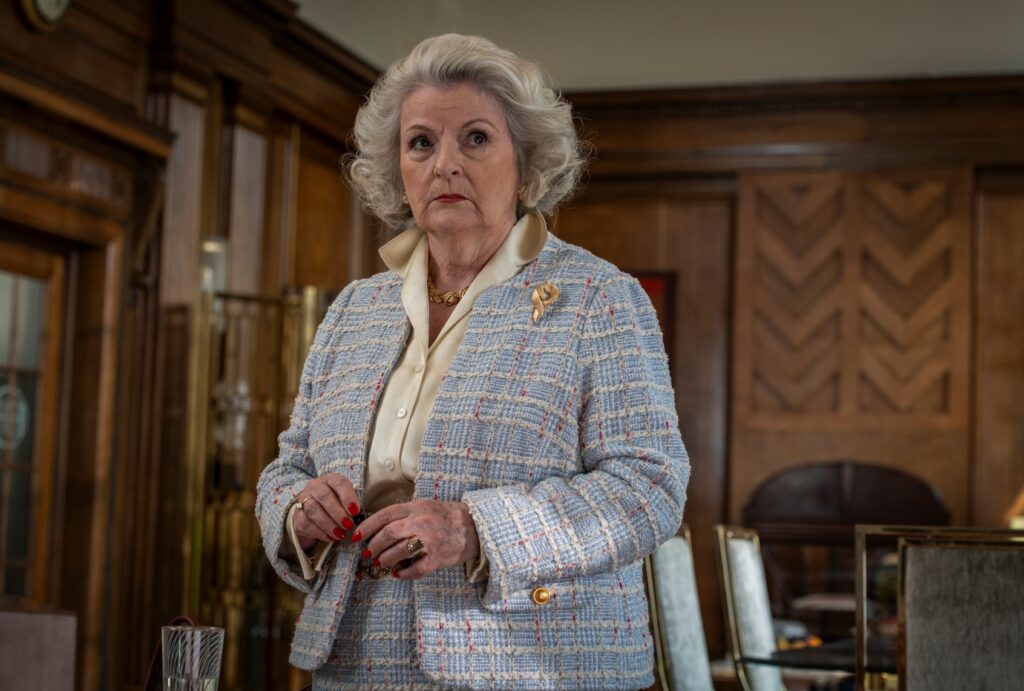
(Courtesy of BritBox) Brenda Blethyn in “A Woman of Substance.”
There’s a price Emma pays for her mission, because there always is. Both younger and older Emma are fiercely admired but close themselves off to love. The most recent episode of “A Woman of Substance” closes with Emma proposing marriage to the man who owns the building housing her successful dressmaking business and curtly dumping a suitor who actually cares about her. Yet for some reason, he and the first good man to propose to her, Mac (Niall Wright), stick around to make sure Emma has strong hands to fall back on.
But that refusal to risk vulnerability comes back to bite her when the daughter she turned herself inside out to spoil pulls a move reminiscent of Veda in “Mildred Pierce,” betraying Emma for vapid reasons.
Want more from culture than just the latest trend? The Swell highlights art made to last.
Sign up here
James M. Cain’s 1941 novel and Bradford’s have that in common, along with a lot of other observations about the price of a woman’s ambition and what she trades to widen the moat between her and privation. Both Mildred Pierce and Emma Harte build their wealth by remaining clear-eyed as to what men can do for them financially as opposed to romantically.
Each story also emerged before decades of wealth expansion, with the movie version of “Mildred Pierce” coming out in 1945, right before the post-war boom. Bradford’s potboiler hit in time to meet the “greed is good” ’80s, a decade when the wealth divide increased sharply and economic survival felt only slightly less Darwinian than it does today.
The get-rich ethos that defines our time may be only rivaled by our perilously tantalizing obsession with vengeance. Mind you, it’s an expensive pursuit most of us can’t afford. That’s why that adage about living well being the best revenge tends to be offered to the party on the losing end of a betrayal. There is plenty of wisdom in that, but more satisfaction, I think, in Emma Harte’s demonstrated rebuttal. She’s determined to prove that brute-force payback is the best revenge, and dining on the carcass of your fallen enemy is the spoils of a life well-lived. It takes endless work and sacrifice, but this show makes her claws-out climb worth our attention.
“A Woman of Substance” is currently streaming on Britbox.
Read more
about rich people dramas
