

For 58 seasons, through wars, impeachments and the corporate dismantling of the network news business around it, “60 Minutes” remained America’s highest-rated newsmagazine. Viewership of the CBS News program was up 9% during the 2025-2026 season and generated more than 2.5 billion social-media video views, according to the network. Yet in a bizarre case of fixing something that does not need fixing, the program became the one CBS property executives chose to radically remake.
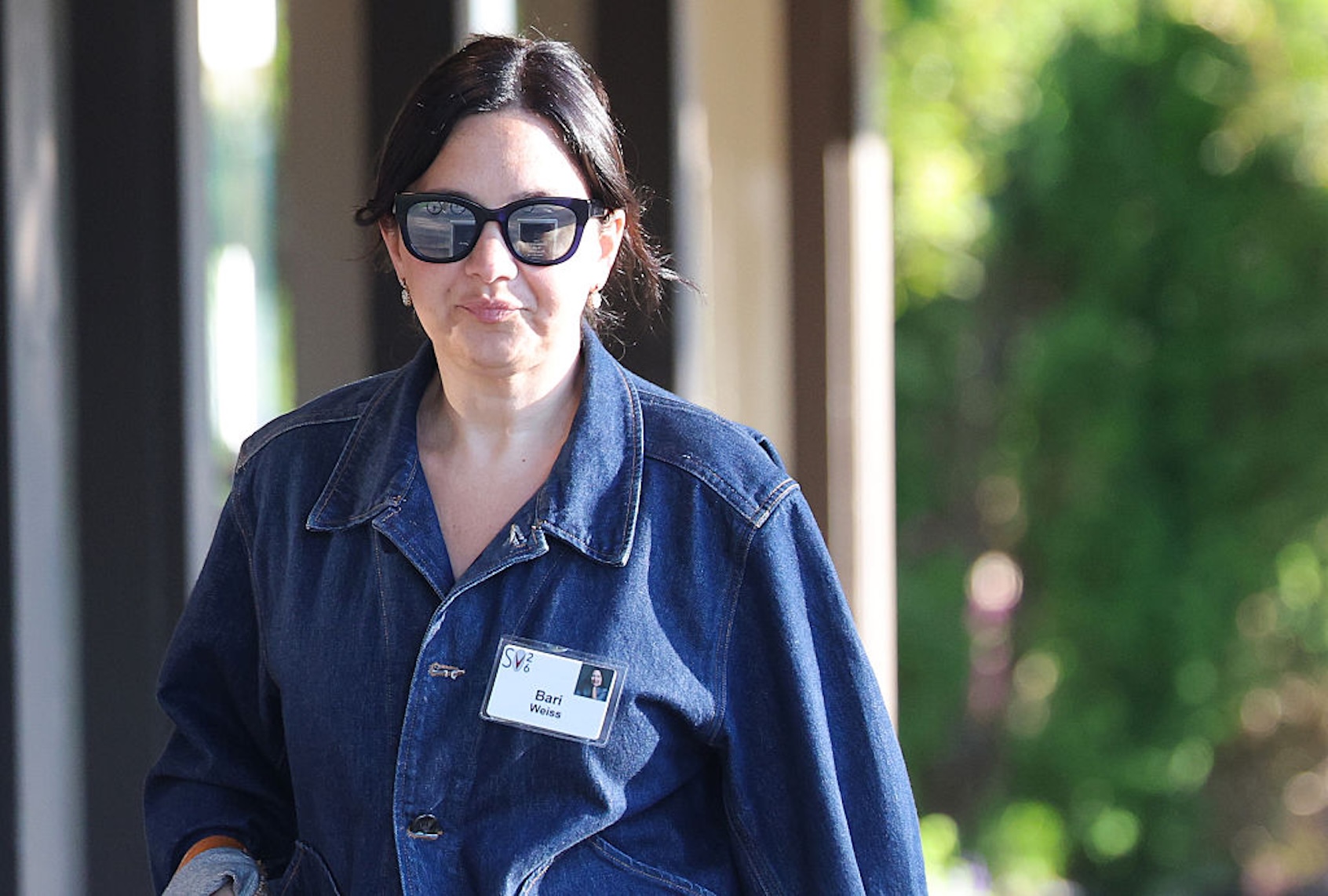
David Ellison, the network’s new owner, appears determined to test whether the rare commercial-news institution that persuaded millions of Americans to spend an hour with investigative reporting can survive the removal of the very people who made it matter. In barely a year, under the ownership of Ellison’s Skydance and the editorial stewardship of Bari Weiss, that legacy has been stripped down, gutted and reassembled as an instrument of political appeasement. By sacrificing seasoned investigative reporters and filling the vacuum with anti-woke contrarians, Ellison and Weiss have defanged a national treasure.
“60 Minutes” was imperfect, sometimes badly so. Every institution with a half-century of history is. But the program retained an essential public purpose.
“60 Minutes” was imperfect, sometimes badly so. Every institution with a half-century of history is. But the program retained an essential public purpose. And in its zeal to purge the newsroom of dissent, CBS and Weiss may have inadvertently triggered the creation of their most dangerous future competitor — and accidentally set the stage for its own undoing.
The journalists Weiss pushed out did not simply disappear. Bill Owens, the former “60 Minutes” executive producer who resigned in 2025 over corporate interference before Weiss even arrived, has reportedly been assembling a business plan and pitch deck for a rival investigative newsmagazine, seeking something in the neighborhood of $50 million to fund two years of programming. The names attached to it read like a “60 Minutes” reunion special. Such a group — joined potentially by Anderson Cooper and the former producers who resigned in protest — could sell itself as carrying the true DNA of gold-standard television news.
There is a reason Ellison spent billions acquiring a legendary news brand. His $8 billion purchase of Paramount and his aggressive right-wing revamp of CBS News is an overt attempt to smooth the waters for an infinitely larger prize — a $111 billion takeover of Warner Bros. Discovery, which includes cable news giant CNN. With Donald Trump long signaling his disdain for traditional media, Ellison’s moves at CBS functioned as a high-stakes litmus test. When the Department of Justice cleared the Paramount-Warner Bros. merger in June, Ellison passed.
But after 12 state attorneys general and the Writers Guild of America filed anti-trust lawsuits to block the merger ahead of a trial next March, Ellison took to the opinion pages of The New York Times on Tuesday to defend his growing empire. Pushing back against speculation regarding his political loyalties, Ellison pledged “independence” for his newsrooms and argued that the combined entity would control only a fraction of the streaming market. But his pleas for personal trust ring hollow. You do not demonstrate a commitment to objective journalism by spending $150 million to acquire The Free Press and handing the keys of a legacy news division to Weiss — an opinion columnist with zero television management experience and a well-documented history of tendentious reporting.
Now, at CBS News, her editorial interference has been disguised as routine management. At her infamous first staff meeting, Weiss vowed to “do the f**king news,” but what followed instead suggests a systematic effort to reshape reality.
When veteran correspondent Cecilia Vega reported on the fatal shootings of Renee Nicole Good and Alex Pretti by federal agents in Minneapolis, network executives pressed her, she claims, to include footage of protesters assaulting undercover officers, despite Vega finding no credible examples of such altercations. She said they also urged her to feature Minneapolis Mayor Jacob Frey declaring he wanted law enforcement to target Immigration and Customs Enforcement officers, a statement that was never made. When covering the conflict in Iran, Vega said she was instructed to open her segment by declaring the nation “totally outgunned by the United States and Israel” — framing that skewed favorably toward the Trump administration’s telling of events. (CBS News has disputed the broader claim that it sought to inject bias, saying its editorial process reflects ordinary review.)
Elsewhere, Weiss personally blocked a deeply reported piece by Sharyn Alfonsi on El Salvador’s notorious CECOT prison, where the Trump administration has deported hundreds of individuals into conditions marked by horrific human rights abuses. Though the story eventually leaked in Canada and later aired on CBS in its original form, the message Weiss sent to the newsroom was unmistakable. The effect was to launder censorship in the language of journalistic standards.
Producers say Weiss was also involved in choosing which correspondent got to interview Israeli President Benjamin Netanyahu, sidelining “60 Minutes” stalwart Lesley Stahl, who is famous for decades of forensic interviews with presidents and world leaders, in favor of Major Garrett. Most recently, it was revealed that Alfonsi had been sitting on a major scoop regarding Jeffrey Epstein’s financial ties to Wall Street giants like Deutsche Bank, JPMorgan Chase and Bank of America — complete with an on-camera interview filmed in March 2026 with Sen. Ron Wyden, D-Ore., who was heading his own investigation into Epstein’s finances — before being fired by Weiss in May. CBS claimed the piece simply was not finished by the end of last season, and has not said whether it intends to air it this fall. Wyden is now pushing legislation to hold individual bankers personally accountable for exactly this kind of institutional silence.
Start your day with essential news from Salon.
Sign up for our free morning newsletter, Crash Course.
The optics are damning regardless of the internal timeline: The network fired the reporter chasing one of the biggest financial accountability stories of the year in the middle of a purge explicitly aimed at correspondents who resisted political pressure, and the story broke three months later, just not on CBS.
This should be the central concern about the Ellison era at CBS. Not whether Ellison privately considers himself a conservative, a liberal or a man above ideology, nor whether Weiss thinks of herself as a dissident or a reformer. The question is whether their actions are creating the practical conditions under which reporters can hold power to account.
The upheaval has been extraordinary. Tanya Simon, the executive producer who oversaw the program’s recent success, was removed alongside correspondents Alfonsi and Vega, as well as senior editors and producers. Scott Pelley was fired shortly after publicly challenging the appointment of Nick Bilton as executive producer and accusing Weiss of “murdering” the broadcast. Cooper had already departed. The result is a “60 Minutes” with a drastically depleted bench heading into a new season.
In place of these decorated investigative journalists, Bilton and Weiss have assembled what the former reportedly referred to as “the Avengers of news.” But, as longtime media critic Eric Deggans pointed out, a look at the roster reveals a strategy straight out of the old Fox News playbook: Hire a token investigative journalist to construct a thin facade of balance while filling the remaining ranks with anti-woke contrarians.
We need your help to stay independent.
Bringing on “The Perfect Storm” author Sebastian Junger provides comfortable camouflage for stocking the rest of the newsroom with figures like Times opinion columnist Ross Douthat and former Free Press staffer Tanya Lukyanova, whose primary qualification appears to be an eagerness to challenge progressive consensus. When an organization hires a conservative columnist known for asking whether liberal feminism ruined the workplace, or a producer whose major contributions include reframing starvation in Gaza through the lens of pre-existing health conditions, it signals a troubling shift in focus.
Yet in their rush to destroy the old guard, Weiss and Ellison have overlooked the fact that they left behind an elite corps of unemployed, highly motivated investigative journalists with nothing left to lose. Whether this exiled team finds a home as the investigative video arm of an outlet like ProPublica, launches a streaming-native newsmagazine or partners with an independent distributor, the potential is staggering. Pelley and Alfonsi are now set to serve as journalists in residence at Columbia Journalism School during the 2026-27 academic year. While that is not a launch announcement, it is evidence that their careers and credibility did not disappear when CBS took away their airtime.
Somewhere out there, a rival show called “Stop Watch” is writing itself, and CBS built the pitch deck for it, one firing at a time.
Read more
by Sophia Tesfaye
