
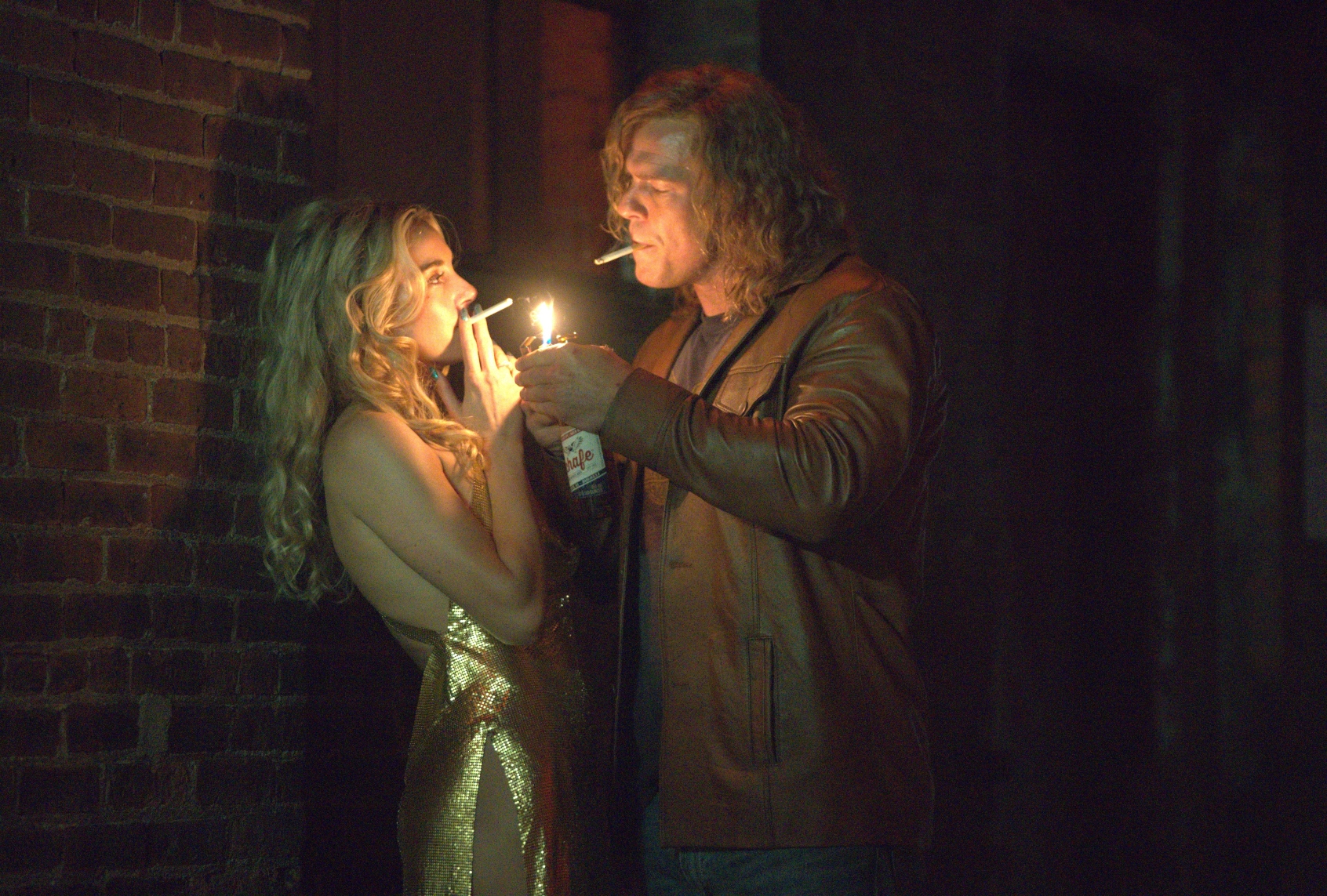

It is bizarre to watch someone like Alan Ritchson follow in the footsteps of Charlie Chaplin. That’s less of a stretch than it seems, I promise. Stick with me.
In case you’re unfamiliar with Ritchson, he’s a muscles-on-muscles behemoth whose bread and butter happens to be skull-drubbing action films. That includes “Reacher,” the Prime Video thriller that’s basically a string of run-and-gun flicks passed off as episodic TV. When Ritchson isn’t barreling through that summertime face-punching tour, he fronts pleasing if unchallenging straight-to-streaming romps like “Playdate” and “War Machine.”
Then there’s “Motor City,” a ‘70s-set vengeance fugue that had brief theatrical release in late July. It casts Ritchson as a Vietnam veteran framed by a mobster with designs on his lady love (played by Shailene Woodley). As soon as Ritchson’s hero emerges from prison, he mounts a bloody rampage to get her back and to get payback.
There have been countless cinematic versions of this setup, but only a handful are virtually speechless. “Motor City” contains around five lines from the opening moments to the end credits. Since there isn’t much in the way of conversation, the bruising combat scenes take center stage to head-spinning effect.
Wordless storytelling, an homage to silent films, is a cinematic scripting choice that demands a deeper level of acting ability we might otherwise overlook in a movie like this. Beefed-up body language, brutal action choreography and a soundtrack packed with needle drops do all the talking. This explains why my brain reflexively associated Ritchson’s latest work in a movie classic cinema buffs would likely dismiss as trash, with one of the greatest performers of early 20th century cinema.
Silent cinema performers used their whole bodies — eyes, gestures, poses — as narrative devices. Intertitle cards bridged some comprehension gaps, but skilled directors used them sparingly. At the era’s height, Chaplin dominated the medium.
Once audio technology caught up with moving pictures, many of his peers embraced the “talkies” or bowed out. But Chaplin continued to intentionally make primarily silent films throughout the 1930s, both as a matter of artistic philosophy and in recognition of marketplace realities.
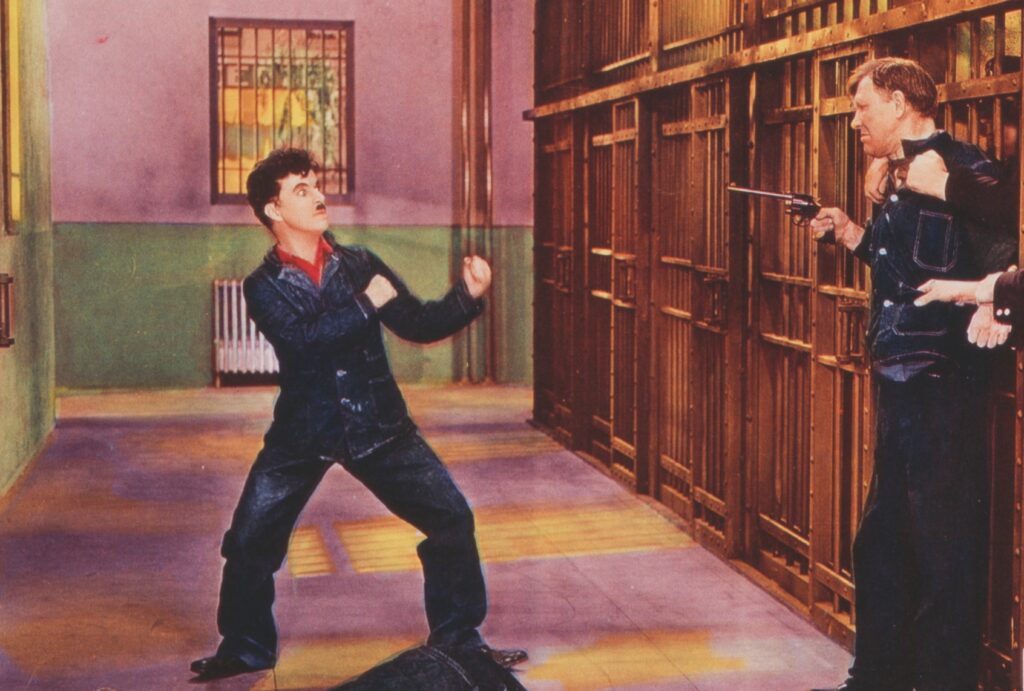
( Movie Poster Image Art via Getty Images) Charlie Chaplin in “Modern Times”
Chaplin was a master of blending political and social commentary with broad comedy. He argued that if characters like his signature, the Tramp, suddenly showed up with a voice, they would lose their universal appeal. Thus, he enjoyed great success with films like 1934’s “Modern Times,” which softly transitioned into the new era by preserving much of silent filmmaking’s expressiveness while incorporating synchronized audio.
By the time “The Great Dictator” came out in 1940, Chaplin had fully embraced cinematic sound. But his performance still emphasizes full-bodied emoting as much as his dialogue delivery, if not more. His intentional balance of silence and audio amplifies one of the movie’s most famous moments, Adenoid Hynkel’s gibberish speech, into a bombastic, hilarious aural onslaught.
I’m guessing that among today’s burgeoning cinephiles, silent movies evoke an ancient vibe that is, in its own way, a little hardcore.
Silents aren’t entirely lost to modernity, of course. In 2011, “The Artist,” a delightful dialogue-free black-and-white feature, won Oscars for best picture, best director and best actor.
We need your help to stay independent.
But show me a city with a vibrant film community and I can almost guarantee it has a regular silent film showcase. In my hometown, Seattle, our Paramount Theatre hosts Silent Movie Mondays quarterly, accompanying each screening with a live performance on the venue’s original Mighty Wurlitzer organ.
Then there are Silents Synced events, which tour the world and bridge the classics to modern musical acts. Past pairings married F.W. Murnau’s 1922 film “Nosferatu” to Radiohead’s hits, and 1925’s “A Woman of the World” to Pearl Jam.
Silent filmmaking has even found its place among up-and-coming directors. Earlier this month, the New York Times profiled the Modern Silent Shorts festival, which has annually showcased short films it commissions from select filmmakers since 2024. The festival’s founders boast quite an industry lineage, having met on the set of a Sofia Coppola movie, where they were production assistants. Their inaugural fest took place on Isabella Rossellini’s Mama Farm in Brookhaven, New York.
Want more from culture than just the latest trend? The Swell highlights art made to last.
Sign up here
This ongoing appreciation of silent movies speaks to a common craving for simple communal appreciation of analog pleasures.
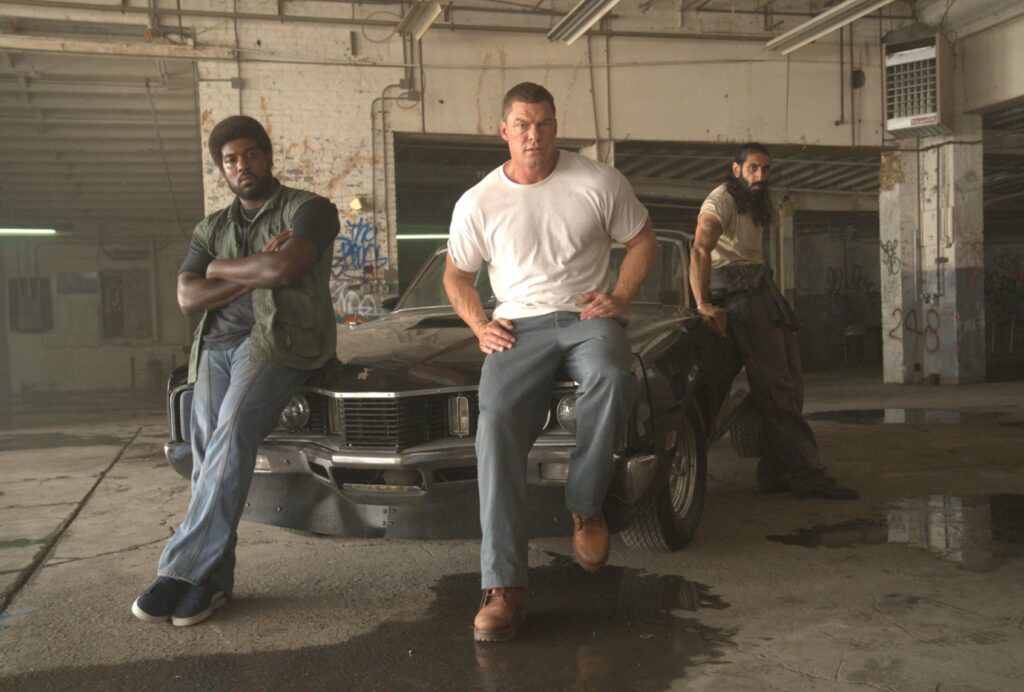
(Courtesy of Independent Film Company.) Lionel Boyce, Alan Ritchson and Amar Chadha-Patel in “Motor City.”
“Motor City” and movies like it — think “Sisu,” “Silent Night” and other screen explosions — are the opposite all that. By deemphasizing dialogue, their stunt work and visual effects seize the spotlight. Most aren’t entirely silent, either; although Ritchson and his co-stars say next to nothing, the film’s sound department makes sure we hear every grunt, scream, propulsive bang and metallic knife slice.
But reducing or omitting speech from a movie’s audio tracks forces viewers to give the screen their full attention, which Netflix and other streaming services assume is a lost cause in the second-screen era.
Silent performance can be an actor’s dream and a real challenge, since it relies on physical performances and visual execution to communicate with the audience. When pulled off successfully, the power of silence raises the volume on everything else that matters. In a theatrical economy defined by divided and shortened attention spans, that can be serious currency.
“Motor City” will be available for purchase or rental on digital platforms Tuesday, Aug. 25.
Read more
from Salon’s Culture newsletter, The Swell
