
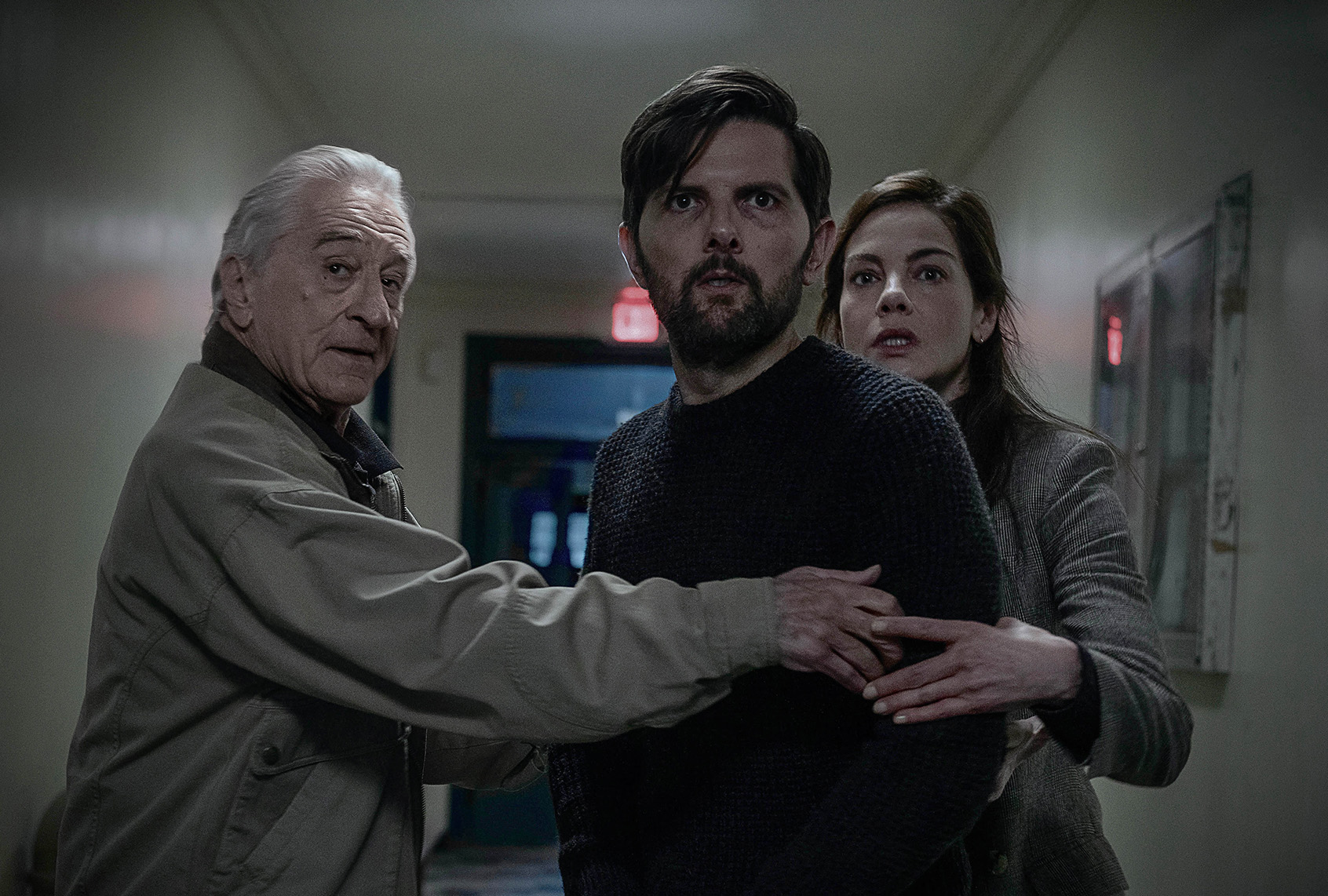

Have you heard the tale of — come closer, we can’t speak too loudly — the . . . Whisper Man? If the beast’s name alone didn’t send shivers down your spine, just wait: He’s like those other cockamamy-named figures like the Bye Bye Man, and the Tall Man, and the Empty Man, only so much worse. The Whisper Man lures you into a false sense of security by showing you visions of things you like, even love, on your television screen before tainting them into nightmares, pulling the rug out from under you, blurring your sense of reality entirely. Just when he’s got you disoriented and distracted, he strikes, boring you to death.
How can you avoid such a horrible fate, you ask? Well, the only surefire way to protect yourself from the Whisper Man and all of his murderous monotony is to listen for the sound of his presence. Luckily, it’s a noise so foul and utterly dread-inducing that it’s unmistakable: TU-DUM!
Or, at least that’s how I’d pitch a meta horror-thriller about watching Netflix’s abysmal new horror-thriller, “The Whisper Man,” a film so painfully, obviously bad that even talking about how terrible it is seems redundant. Granted, the bar for Netflix movies has long since descended past Hell’s ninth circle, burrowing so low that it’s carved out a 10th reserved for the streamer’s original titles. But the optimist in me still gets duped from time to time. A plot that sounds good on paper or a stacked cast of actors can easily pull the wool over my eyes.
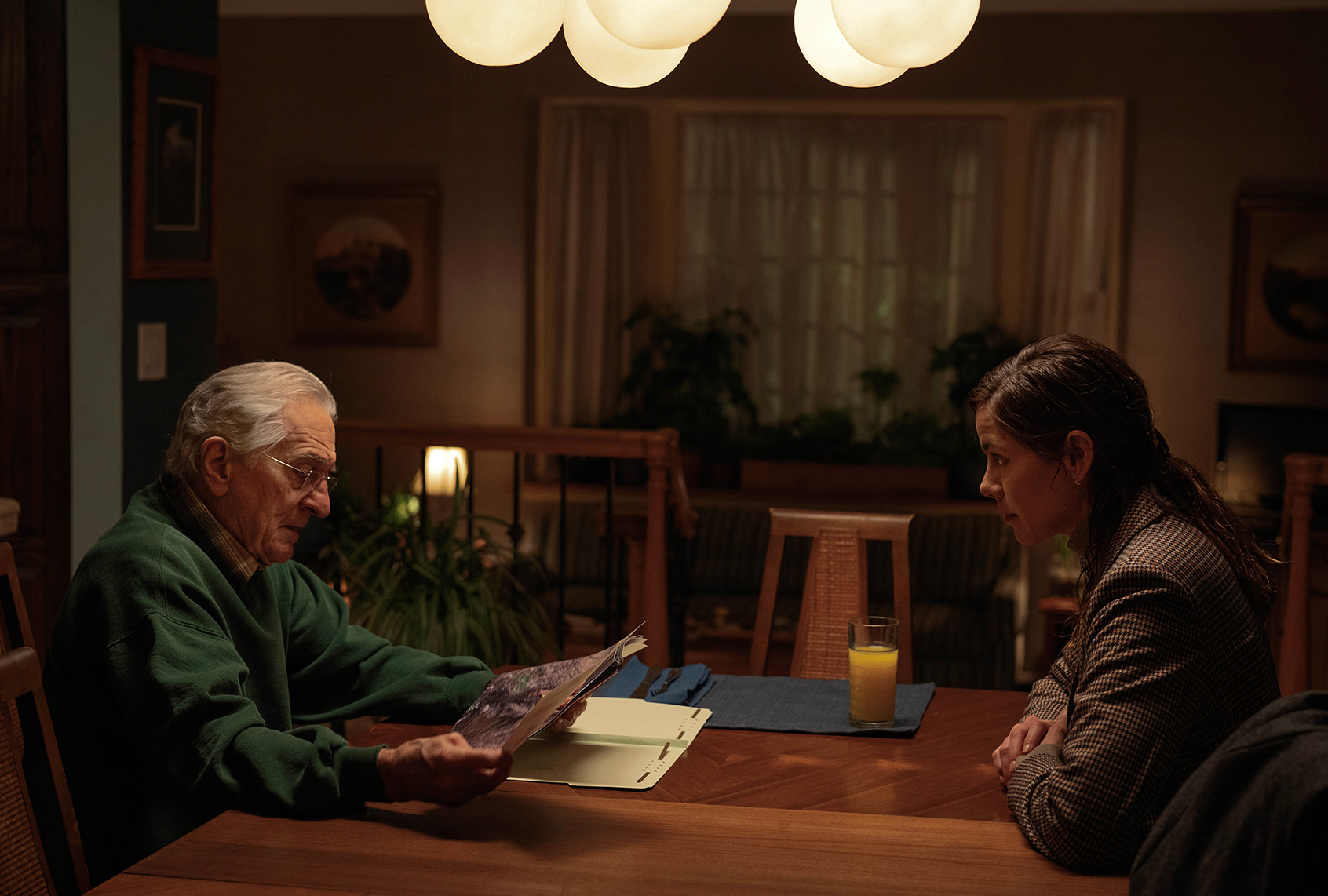
(David Lee / Netflix © 2026) Michelle Monaghan as Amanda Beck consults Robert De Niro’s Peter Willis for his opinion on a case in “The Whisper Man.”
Netflix no longer cares if its users enjoy what they’re watching, only that they keep watching. When mediocrity is the core objective of an extremely powerful company like this one, success hinges on turning the once-discerning viewer into a machine cog as mindless as one of Netflix’s baffling originals.
As a serial-killer procedural starring Robert De Niro and Adam Scott, “The Whisper Man” has both. And yet, the film fails to utilize either to its advantage, wasting great talent and a halfway-decent premise on mind-numbing dialogue, repetitive plotting and dour lighting. Perhaps the production was so focused on making sure all the actors looked pallid, and every scene lifeless, that they forgot to add the thrills and chills. Happens.
But with Netflix, these misfires happen frequently. If you’ve kept up with the streamer’s original lineup over the last few years, none of this will come as a surprise. Poor quality is no longer the exception, but the rule. And the worse the Netflix originals get, the clearer it becomes that artistic inferiority has been baked into the company’s business model. These films are being churned out with lightning-fast turnaround times, and most are lucky to spend three weeks in the platform’s Top 10. August alone saw two other films of varying quality, “The Last House” and “Don’t Say Good Luck,” all but dumped onto the platform with relatively little to no fanfare. The executives in charge of programming know that these movies will get watched simply because they’re on Netflix, and then they will be drowned by another wave of content. In an environment where everything is designed to be ephemeral, nothing can ever truly stand out.
Want more from culture than just the latest trend? The Swell highlights art made to last.
Sign up here
That should frighten audiences — all audiences, even those who only see a handful of movies theatrically in an entire year. Though Netflix movies are largely terrible, the company remains a major player in the film industry. Even as Netflix guns for Oscars year after year, co-CEO Ted Sarandos is open about his disbelief in the theatrical model, opting to release awards contenders for the brief duration of the Oscar-qualifying theatrical run and not a single minute more. And those “prestige” titles are declining in quality, too, leaving one to wonder what a quantity-over-quality business like Netflix stands to gain from putting out stinker after stinker.
If industry accolades and positive responses aren’t a measure of success, one can surmise that Netflix no longer cares if its users enjoy what they’re watching, only that they keep watching. When mediocrity is the core objective of an extremely powerful company like this one, success hinges on turning the once-discerning viewer into a machine cog as mindless as one of Netflix’s baffling originals.
“The Whisper Man” is a particularly egregious example of this stupefaction. Based on Alex North’s 2019 novel, the film follows an alcoholic widower, Tom (Scott), searching for his missing son. The police believe Tom’s son has been kidnapped by a serial killer copycatting the infamous Whisper Man, who was captured years prior by Tom’s estranged father, Peter (De Niro). If the film were as goofy as the killer’s pseudonym, it might be worth the two painful hours it takes to muster through this bloodless procedural. Alas, “The Whisper Man” is merely a collection of defanged genre tropes and equally familiar character writing, tossing paltry scraps to its supporting cast in Michelle Monaghan and Michael Keaton.
The fact that a quartet of such caliber signed on to this dreck would be surprising if Netflix’s M.O. weren’t trapping great actors in middling movies. This is par for the course. Just look at August’s “The Last House,” an equally insipid (if slightly more palatable) sci-fi drama starring Greta Lee and Wagner Moura, about a family trapped in their home by mysterious forces. Banal pandemic analogy aside, “The Last House” is similarly built around an intentionally repetitive plot and thrills that rarely manage to excite or surprise the viewer. And yet, Netflix threw what I imagine to be at least a couple hundred thousand dollars toward a billboard installation in Los Angeles, where a man stuck in a house puttered around and communicated with onlookers via a whiteboard.
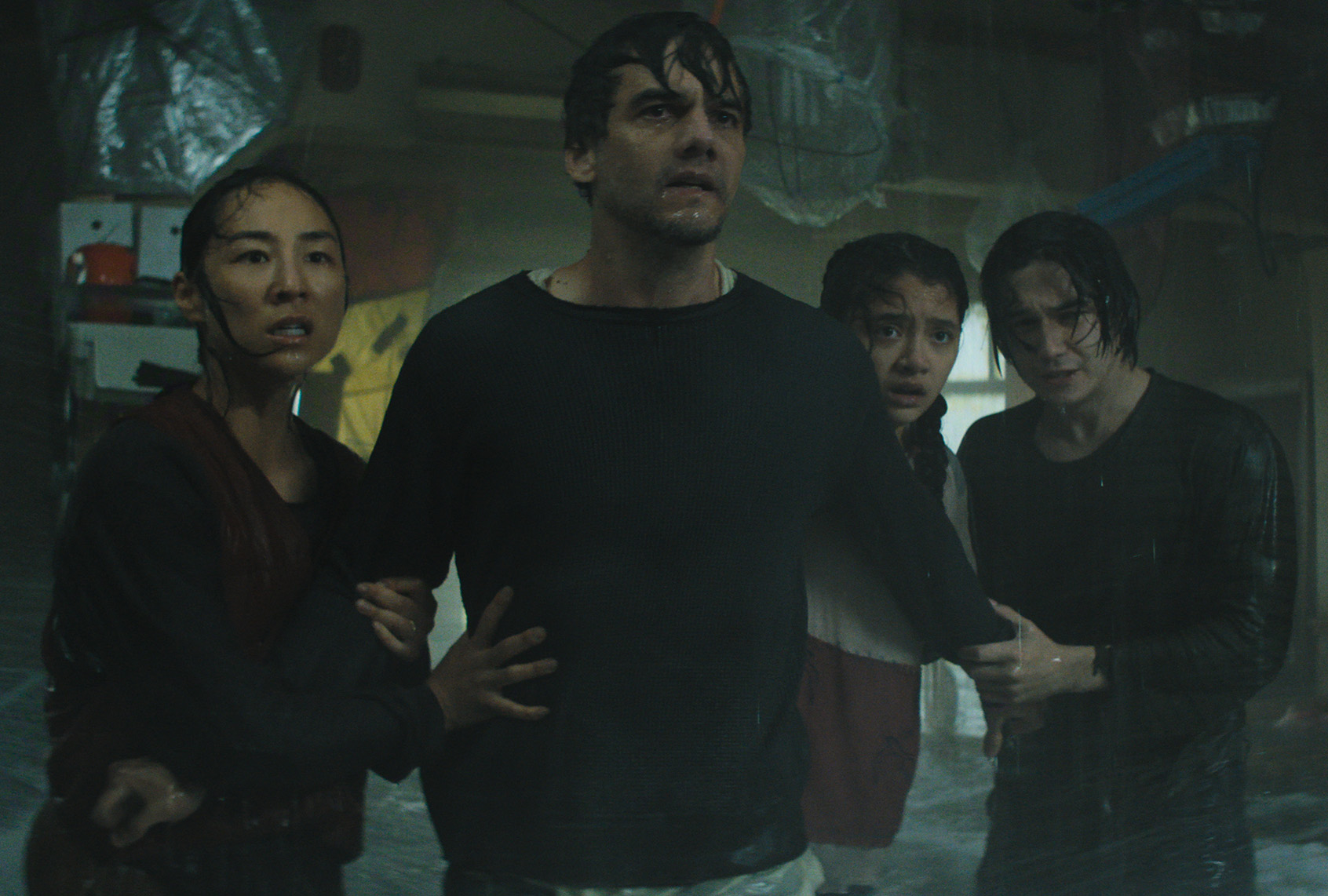
(Courtesy of Netflix) (L-R) Greta Lee as Ann, Wagner Moura as Jason, Emma Ho as Ruth and Gabriel Barbosa as Graham in The Last House
One might think that diverting all that money and time toward a promotional stunt meant that Netflix believed in the film. But no one in their right mind would believe in this film. “The Last House” offers nothing of substance to its audience, going so far as to use every lame emotional manipulation tactic in the book to try to convince viewers they care about what’s happening on screen. But one can’t forge an emotional connection where there is no stylistic resonance, no humanity within the text.
It’s telling, though, that both “The Last House” and “The Whisper Man” are terrible in all of the most common ways. There is no element of either film that stands out as especially awful. Even their directors’ rudimentary visual aesthetics are monotonous. Instead, all of the tedious, disappointing, ridiculous components fuse, creating a viewing experience that is occasionally infuriating in the moment, but leaves the mind the second the credits roll. These aren’t even movies that you’d bring to the water cooler, lest you want a conversation with a coworker to fall flat after 10 seconds.
You might wonder, “If these films are so objectively bad, why do so many actors sign on?” Well, it’s a tough industry, made tougher in part by businesses like Netflix. Actors, writers and filmmakers want to work, and they want to go where the viewers are. And by virtue of longevity, Netflix has the top market share of viewers, meaning it can also offer talent a sizable paycheck. Because the streamer’s standards are low, the screenplays Netflix produces are mediocre. Yet, actors sign on anyway, and viewers will watch regardless, because Netflix has crafted a conniving production model that benefits the indiscriminate philistines in charge. Their ouroboros will continue eating its tail until someone cuts it in half.
“Don’t Say Good Luck” — starring Sunny Sandler as a student preparing for the lead in her high school’s musical just as her mother, played by Melanie Lynskey, learns that her cancer has returned — does a decent job trying to break the cycle. Every so often, a Netflix original will retain just enough promise to keep viewers who’ve sworn off the platform entirely coming back. And while this treacly coming-of-age dramedy might be as formulaic as “The Whisper Man” and “The Last House,” the film boasts something its two peers are missing: a soul. “Don’t Say Good Luck” is predictable but undeniably sweet, aided by a star-making turn by Sandler, who’s already miles past her father in terms of quality Netflix originals. In the right hands, it could’ve become a contender in theaters, especially when theaters are lacking good coming-of-age stories.
We need your help to stay independent.
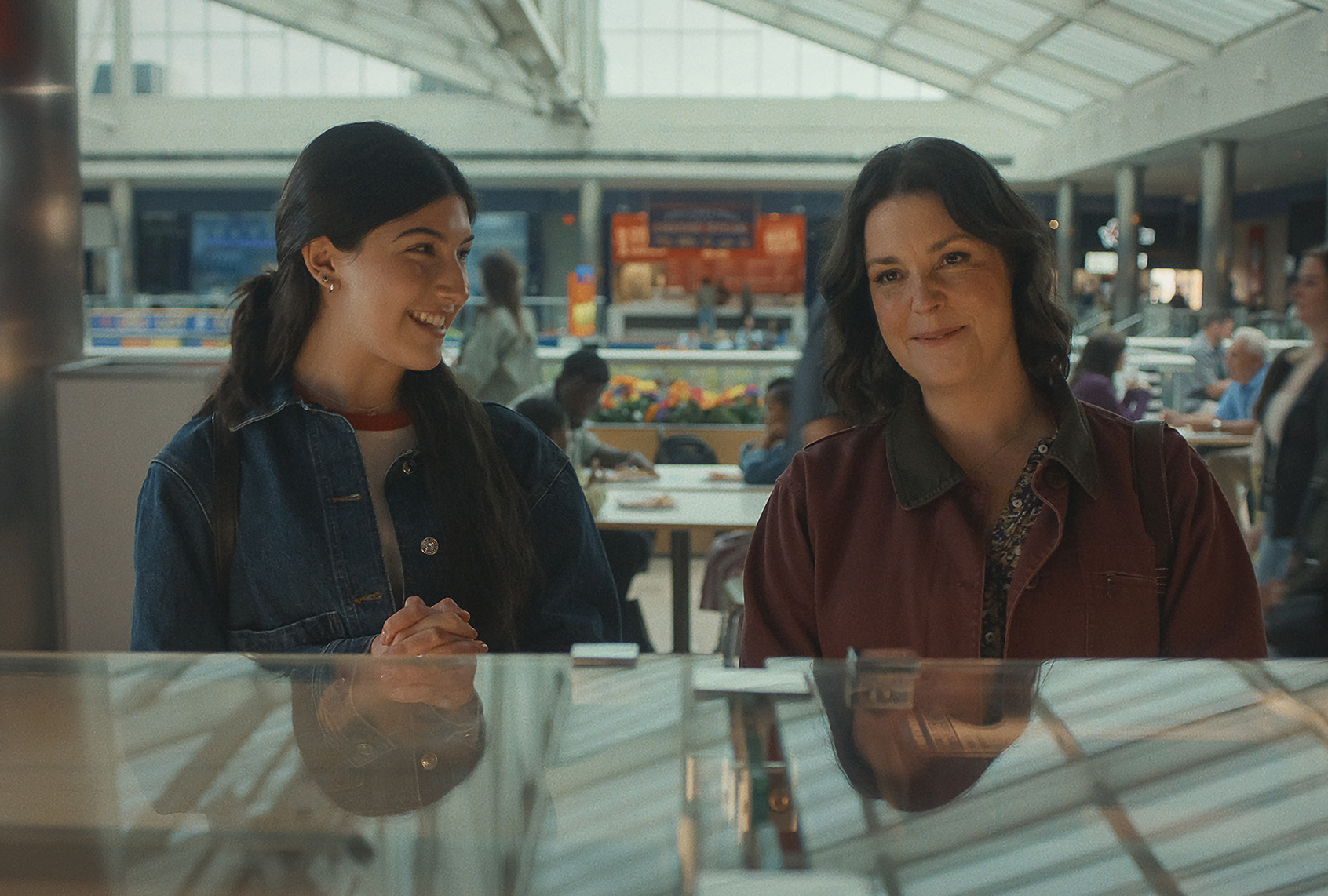
(Courtesy of Netflix) (L to R) Sunny Sandler as Sophie and Melanie Lynskey as Elizabeth in Don’t Say Good Luck
Netflix has crafted a conniving production model that benefits the indiscriminate philistines in charge. Their ouroboros will continue eating its tail until someone cuts it in half.
But a film like “Don’t Say Good Luck” can’t survive on its own — not on a platform like Netflix. “The Last House” and “The Whisper Man” have both outperformed “Don’t Say Good Luck,” with “The Whisper Man” clobbering both in the number of hours viewed after just a few days on the streamer. I’d wager that, in a week, “Don’t Say Good Luck” will be a distant memory. And in that way, it will have fulfilled its Netflix destiny.
This all says nothing about the fact that none of these three movies have an ounce of stylistic merit. Compelling visual flair was one of the first things the Netflix content model did away with — too expensive, especially when viewers won’t notice intentionally stylistic storytelling if they’re looking at their phones half the time or more. These three films may differ in their likability, but they’re united in their plainness.
That all makes a whole lot of sense when you remember that Netflix stumbled into the moviemaking business by nature of trying to revolutionize the movie-renting business. With rentals belly up and access to films democratized, there was no further push to innovate, no concerted attempt to compete with the real Hollywood studios. With years of data showing that people will rent and watch just about anything, Netflix was free to make a home for all the bombs and duds that it previously offered via snail mail.
But therein lies the problem: No one has to wait for movies anymore. Few people actually think about how much value they’re getting from their Netflix subscription because there’s no delay in watching all that their subscription has to offer, no time to think about how much they enjoyed whatever titles they watched last. On Netflix, there’s always something new — but that doesn’t necessarily mean it’s fresh.
Read more
about this topic
