

Few things are more difficult to get down in immutable ink than the history of professional wrestling.
Born on the carnival circuit, the pseudo-sport maintained a here today-gone tomorrow feeling until relatively recently. Promoters scraped out regional fiefdoms where transient performers would fight for a spell before jumping ship in search of better deals. Sometimes they took their name with them; other times they molded themselves to whatever gimmick their new promoter needed on the roster. It makes a mess of any timeline, and that’s before you get to the kayfabe — the illusion — of it all, the fact that all these real men and women are deadly serious about keeping up their fake characters.
Grasping for concrete facts can leave you with two immutable bits of data: when a wrestler was born and when they died, with everything in between being a show on some level. Get enough of those dates together, and it’s hard not to notice a pattern: These sideshow athletes don’t live very long.
Gorgeous George, one of the most famous faces of wrestling’s Golden Age, didn’t make it to his 50th birthday. “Macho Man” Randy Savage and his ex-wife/manager Miss Elizabeth both died before reaching Social Security eligibility. High-flying technical wrestler Eddie Guerrero died at 38. Windham Rotunda, who freaked out the WWE for years as a swamp-dwelling cultist named Bray Wyatt, passed away at the age of 36. And earlier this week, All Elite Wrestling star Pac died in the parking lot of an Illinois chain restaurant, just a day after his most recent match. HIs cause of death is still unknown.
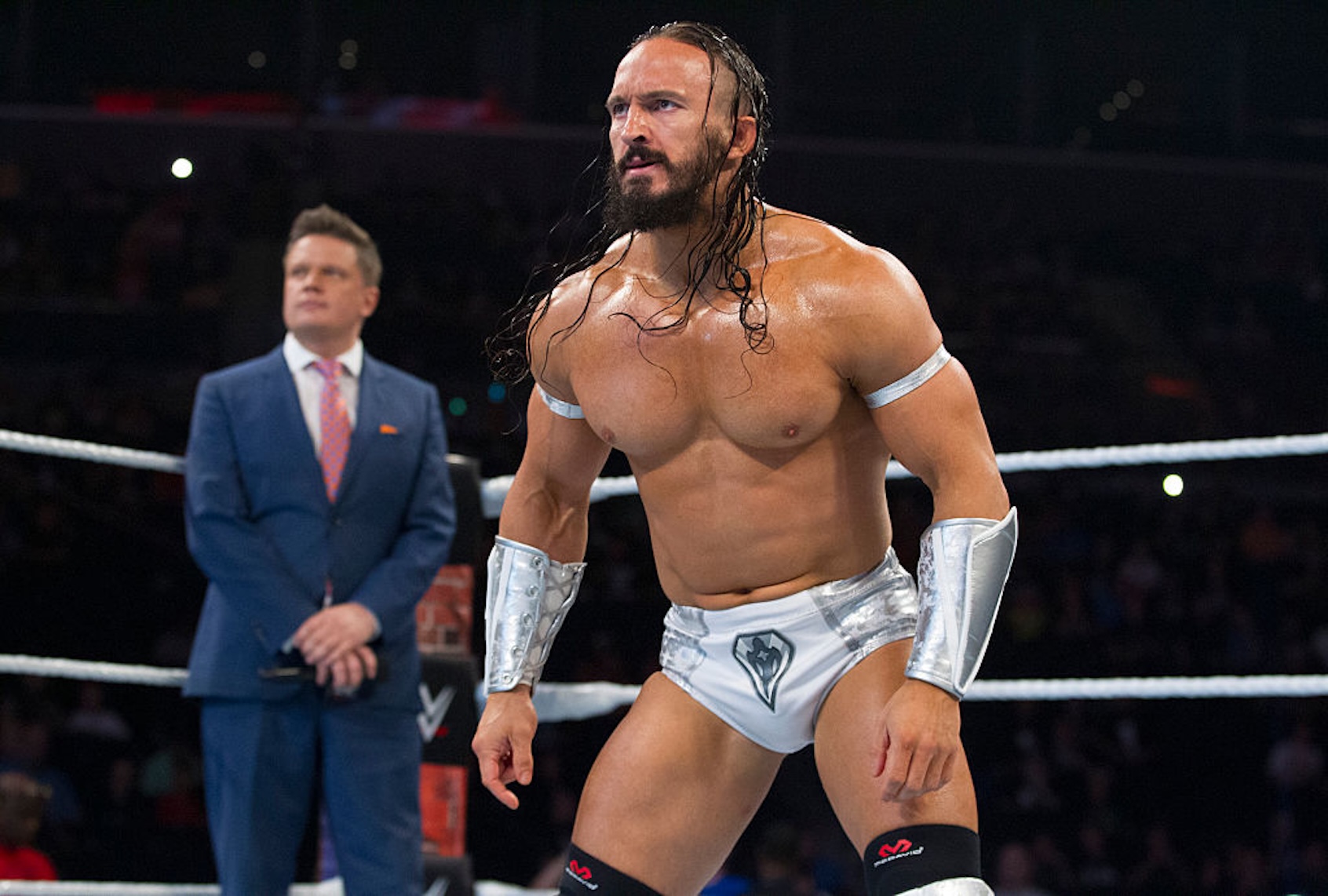
Born Benjamin Satterley in a blue-collar community in Newcastle upon Tyne, England, he first came to national attention stateside in the WWE, where he wrestled under the decidedly English name Neville. He took the cruiserweight title twice before jumping for AEW in 2018. His star rose exponentially as a regular heel for the young promotion. At the time of his passing, he was only 40 years old.
Playing a fake brute who’s willing to take a folding chair to the face to settle a disagreement is hell on a body. Learning how to fall and pretending you have superpowers can’t cancel out physics. If a 240-pound man turns you upside down and drives your head into a padded floor, you’re going to feel it the next day (and probably several days after). The wear and tear is cumulative, adding up over time like it does for all contact sports. Just take a boxer’s blown-out ears and a running back’s trick knee and expand it to account for the fact that, in wrestling, shots to the back of the skull are frequently necessary to move the story along. Recruiting almost exclusively among the huge and jacked — it’s easier to appear larger-than-life on camera if you’re real-world large — makes the list of heart conditions start to pile up. It’s all a recipe for a brief career, and a correspondingly short life.
The average star of WWE or AEW signs on as an independent contractor, meaning they are responsible for their own health insurance and are subject to being fired for nearly any cause.
The situation is exacerbated by wrestling’s employer-employee relationship. Staying true to its seasonal carny roots, almost all professional wrestlers are gig workers. The average star of WWE or AEW signs on as an independent contractor, meaning they are responsible for their own health insurance and are subject to being fired for nearly any cause. The situation has been even worse for wrestling’s women, who spent decades subject to the whims of Mary Lillian Ellison, better known as The Fabulous Moolah, a wrestler-promoter-extortionist who controlled virtually all of women’s wrestling, loaning out talent to regional promotions and taking cuts of stars’ pay.
Unlike the four major professional sports in the U.S., wrestlers have no pension and no retiree health benefits. If you wrestle for a living, you’re faced with significant pressure to perform for as long as you can, through as many injuries as you can. Unsurprisingly, the list of premature wrestler deaths is heavy on accidental painkiller overdoses and acute toxicity from mixing medications with alcohol.
The central role of the promoter — and the lack of genuine athletic competition in matches — puts wrestlers and management on remarkably unequal footing. It’s hard to cause trouble for a boss who can simply write rabble-rousers out of the scripted action. Attempts to unionize the talent were mounted in the 1980s, first by hoo-rah heel Sgt. Slaughter, and then by wrestler-turned-governor Jesse “The Body” Ventura. The latter seemingly bought into some of the era’s storylines and ringside magic, believing that a rousing speech to the wrestlers in the locker room would convince them to strike. But he was ratted on by company star Hulk Hogan, and promoter Vince McMahon quickly summoned Ventura to let him know that any future outbursts of class consciousness would come with walking papers.
Want more sharp takes on politics? Sign up for our free newsletter, Standing Room Only, written by Amanda Marcotte, now also a weekly show on YouTube or wherever you get your podcasts.
“Vince . . . basically threatened to fire me if I ever brought it up again and read me the riot act,” Ventura explained on The Steve Austin Show. ”I then did WrestleMania 2 and immediately left and did ‘Predator’ and was a member of the Screen Actors Guild now, my union that I get retirement from now, healthcare from, all of that from.”
The situation only got worse as WWE muscled out nearly all regional promotions. McMahon’s anti-union behemoth spent decades as the only game in town for professional wrestlers who wanted the reach of a televised promotion. In recent years, AEW has pitched itself as an antidote to the WWE, but its roster is also almost entirely composed of independent contractors. Stars like CM Punk and Ray Fenix have complained loudly about the way the promotion handles wrestler health.
We need your help to stay independent.
Pac is the second wrestler who performed in an AEW ring to have died just this month. Andy Williams, the former guitarist for metal-core act Every Time I Die who wrestled under the name “The Butcher,” died after collapsing during a match with an independent, regional promotion on Sept. 5 at 48. (His contact with AEW expired in April, after which he became a free agent.) Williams’ official cause of death is pending, awaiting final autopsy results.
Wrestling’s treatment of its employees is a bit too abstract to be listed on either man’s autopsy report. Coroners are in the business of endings, putting a neat period on decades of damage with phrases like “cardiac arrest.” Still, anyone who has followed wrestling for years can see the way it hobbles its heels and heroes alike. In a sport that heavily encourages everyone watching to follow the narrative, it’s hard not to notice a pattern.
Read more
about wrestling
