
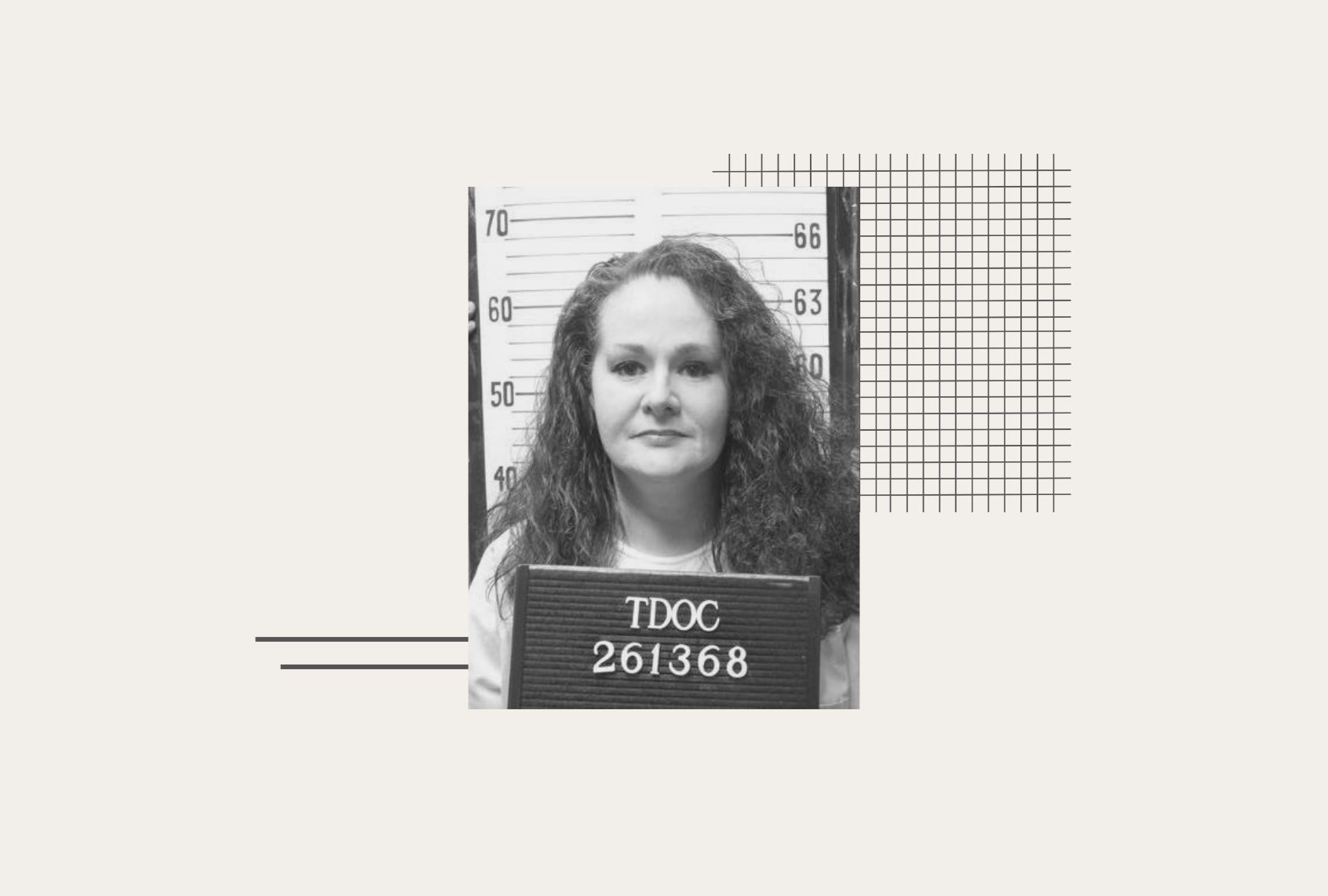

Lethal injection has proven to be a difficult execution method to get right. It is more frequently botched than any other method. Sometimes, the results are catastrophic, as they were in Wednesday’s failed execution of Christa Pike.
The 50-year-old, who was convicted of first-degree murder and sentenced to death for the 1995 murder of 19-year-old Colleen Slemmer, survived a severely botched execution by lethal injection on Wednesday. The drugs meant to kill her did not do their job, and she is now in critical condition, intubated, unconscious and on a ventilator in a Nashville-area hospital. According to her lawyer, Pike’s prognosis is unclear, as is the question of whether she will suffer a serious brain injury and loss of function.
Amid questions and a media storm, Tennessee Republican Gov. Bill Lee ordered a third-party review and paused executions for the remainder of the year. On Saturday he announced that Frank Strada, the head of the state’s prison system, would be stepping down.
Meanwhile, politicians like Sen. Marsha Blackburn, R-Tenn., who is currently running for Tennessee governor, promised that if she is elected and Pike survives, she would try again to execute her — by other means, if necessary. “While there should be a thorough review of what happened and why the process failed,” Blackburn wrote on X, “the answer is simple: bring back the electric chair and deliver justice for these victims. As your governor, I will do just that.”
Not to be outdone, Rep. Tim Burchett, R-Tenn., told NewsNation that he would “Prop her up and bring her to a firing squad.”
Such heartless statements should not distract us from the fact that what happened to Pike might have been prevented had the state of Tennessee paid attention to repeated warnings: that her small veins and history of a blood disorder would make lethal injection a cruel procedure.
Pike’s failed execution also highlights another need. If death penalty states are going to continue to use lethal injections, they should be required to have competent medical professionals on hand to help carry them out. Doctors, good doctors, are needed to help make sure that the process goes as smoothly as possible — and that the condemned person does not suffer needlessly.
In Pike’s case, that did not happen.
The New York Times reported that “The execution team went through at least seven needles trying to find a vein suitable for delivering doses of a lethal drug [and Pike] was left with blistering and burning around the intravenous insertion sites that the execution team ultimately used to deliver the drug.”
According to some outside medical experts, she likely “survived the procedure because the drug, pentobarbital, probably poured into tissue surrounding the insertion sites instead of entering her bloodstream.” If accurate, this apparently happened because the intravenous lines needed to carry the lethal drugs were not placed correctly.
The people tasked with the job of finding a usable vein and securing an IV are not phlebotomists with specialized training or nurses. And in states like Tennessee, which does not carry out many lethal injection executions, members of the execution team do not have the chance to perfect their skill by using it a lot.
Pike’s case was not an isolated event. Such problems have occurred many other times, though generally they have not prevented executions from proceeding. The people tasked with the job of finding a usable vein and securing an IV are not phlebotomists with specialized training or nurses. And in states like Tennessee, which does not carry out many lethal injection executions, members of the execution team do not have the chance to perfect their skill by using it a lot.
As Corinna Barrett Lain, a death penalty expert and professor at the University of Richmond School of Law told CNN, lethal injection is “a highly delicate, error-prone procedure that is done by people who are not trained . . . It’s a recipe for disaster from the start.”
In Pike’s case, a doctor was present — but he had a checkered history with executions. Dr. Mark Fowler was reportedly part of yet another bungled execution in Tennessee only months ago, when attempts to establish an IV line in 57-year-old Tony Carruthers, who was convicted of being involved in a triple murder in Memphis in 1994, failed repeatedly. (Following the attempted execution, Tennessee Gov. Bill Lee gave Carruthers a one-year temporary reprieve.) In the wake of the Carruthers debacle, substantial questions were raised about Fowler’s ethics and competence, but they did not deter Tennessee from calling on him again.
Tennessee is one of 17 states with laws requiring doctors to play some role in the execution process. In those states, “Doctors have signed death warrants, rendered inmates competent, provided intravenous access, monitored vital signs, administered lethal injections and declared death.”
Want more sharp takes on politics? Sign up for our free newsletter, Standing Room Only, written by Amanda Marcotte, now also a weekly show on YouTube or wherever you get your podcasts.
But at the same time, since the dawn of the lethal injection era, the American Medical Association has held that it is a violation of medical ethics for doctors to participate in executions: “Physician participation in execution is defined as actions that fall into one or more of the following categories: Would directly cause the death of the condemned. Would assist, supervise, or contribute to the ability of another individual to directly cause the death of the condemned.”
According to AMA guidelines, doctors involved in lethal injections cannot choose injection sites, start IV lines to administer the lethal medicine or be involved in prescribing, preparing, administering, or supervising injection drugs or their doses or types.” Other professional associations, including the American Nursing Association and the American Society of Anesthesiologists, have established similar regulations.
The result is that states have been forced to turn to unlicensed medical personnel. Hundreds of them have played a role in executions — but they have done so in the shadows.
That is not good enough when someone’s life is being extinguished. As is the case with physician assistance in dying, the choice is between professional purity and the need for expertise in making sure the end of life will be as peaceful as possible.
We need your help to stay independent.
In the wake of Carruthers’ botched execution, a group of more than 40 doctors and nurses came down on the side of purity. They sent a letter to Lee asking him to change the state’s execution process so that medical professionals no longer would have to be involved. “[T]he health care professionals who agree to take part in Tennessee’s executions are those willing to set aside their professional ethics,” they wrote. “The problems that we have seen, such as in Mr. Carruthers’s case, are the predictable result of working with such unscrupulous actors.”
But here’s a thought: Maybe the problem is not with Tennessee law but instead with the ethical standards that keep reputable medical professionals from participating in executions.
The doctors treating Pike know that “[i]f she recovers, Tennessee might try to kill her again [and] that their job is to do the best they can for the patient in front of them and not to think about that.’”
There will be time to do so if the savage cries of politicians like Blackburn and Burchett are heard. But with Pike currently in critical condition from a cruel, mangled procedure, it’s unclear if and when that might happen. But if it does, doctors should do their part to see to it that she is treated with as much compassion in the death chamber as she is in the hospital.
Read more
about the justice system
