

The 1975 film “Jaws,” in which a local government hires a shark hunter to protect the town’s tourism industry, delighted me as a 10-year-old. But other than its infamous opening sequence, I don’t recall being scared. My younger sister, however, developed a years-long fear of deep water, even our 11-foot-deep pool. Maybe I’d just cultivated too much shark knowledge, well aware that these apex predators are docile and do not hunt humans like they do in Peter Benchley’s novel. The book and the film — I consumed both and can report that Steven Spielberg’s adaptation is better — only instilled in me a deeper love and respect for sharks. They are still my favorite fish to observe in aquariums or the ocean.
Outside of the movies, shark bounties are uncommon these days. That’s why news this week that Greenland was planning to cull 1,000 Greenland sharks was so alarming to many online. Officials in the Avannaata municipality on the island nation’s west coast approved the plan, offering fishers 300 Danish kroner, or about $45, per shark heart. The government complained that hungry sharks are eating too much Atlantic cod and Greenland halibut, cutting into what humans can bring home and damaging their gear. Lars Erik Gabrielsen, mayor of Avannaata, told The Guardian, “We need to safeguard the income of fishermen and the catch so that we can continue to eat the foods that we have relied on for generations.”
Conservationists and shark lovers were outraged at the proposal. Nick Dulvy, a professor and marine conservationist at Simon Fraser University in British Columbia, called it a “disaster” and said that biologically, the sharks are “the most sensitive species in the ocean to overfishing.” Marine ecologist Spencer Roberts, whose advocacy work includes calling out shark poaching, posted on X that “There is a psychotic sense of entitlement spreading around the world that imagines humans own the fish in the sea and demands retaliatory killing of predators who rely on these fish. Even centuries-old sages of the Arctic Ocean are not safe from this deranged human delusion.”
Start your day with essential news from Salon.
Sign up for our free morning newsletter, Crash Course.
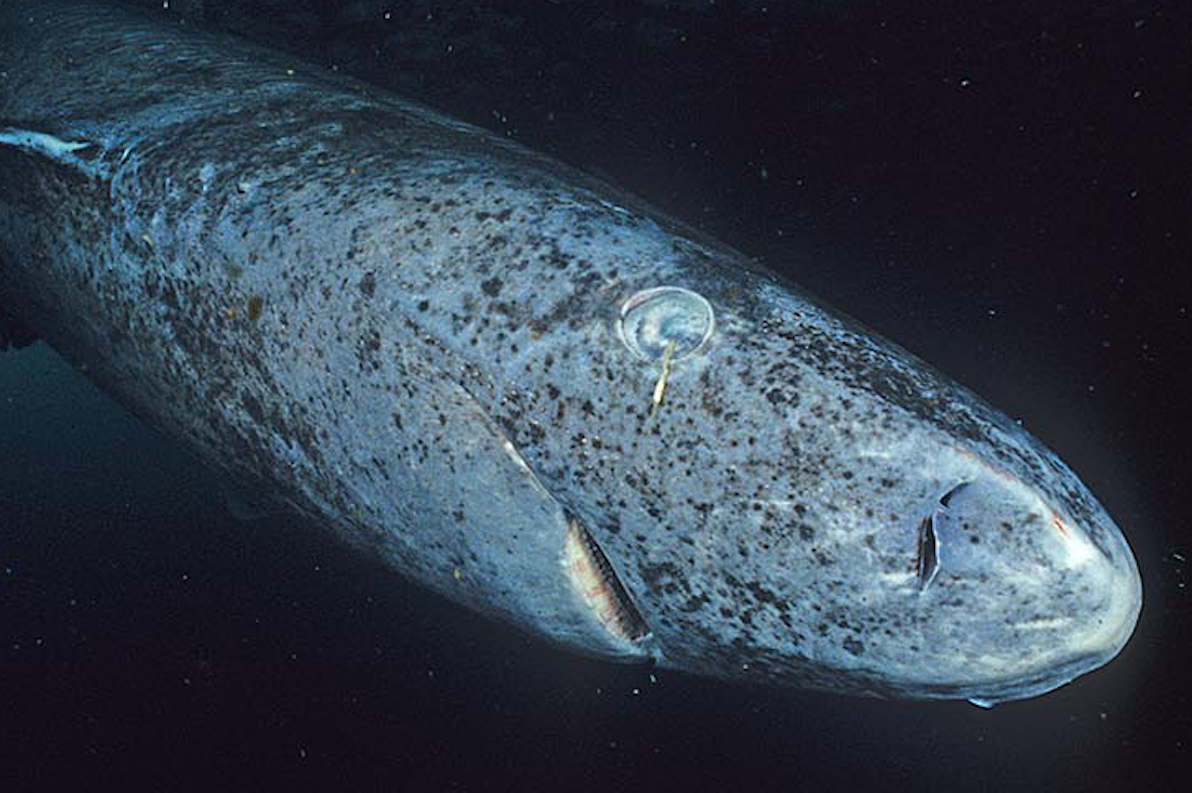
Indeed, the Greenland shark (Somniosus microcephalus) is bizarre and misunderstood, basically being the couch potato of the depths of the North Atlantic and Arctic Ocean, where waters are just above freezing. Known as an abyssal species, it slothfully trawls the shadows like some mournful Lovecraftian being, possessing an especially sluggish metabolism, which isn’t surprising considering its size. Greenland sharks weigh in at one ton and reaching up to 23 feet in length. The maximum lifespan can average 400 years, the longest lifespan of any known vertebrate, meaning there are apparently Greenland sharks that are older than the United States. If that doesn’t blow you out of the water, I don’t know what will. Humans are famously bad at mentally fathoming deep time, so thinking about these ghostly rotund things hiding in the dark of the ocean, outliving empires like an ichthyological Ozymandias, fills me with even more awe than most sharks do.
In a rare spot of good news, the local government dropped the plan after national officials questioned its legality, but a future cull hasn’t been ruled out. Still, it’s worth upholding this turnaround as an example of why speaking out on animal rights can be successful. We don’t need to just sit back and watch the extinction of any species that doesn’t directly benefit us, while of course recognizing that fishers have to eat too. Some have proposed reimbursing fishers or using acoustic deterrents instead of mass slaughter.
We need your help to stay independent.
But it’s more than just Greenland sharks at risk, with an estimated 79 million sharks dying in fisheries in 2019. At least 25 million of those species are threatened. As coral reefs struggle to survive, many sharks are losing their main food source, but humans are to blame for that one. These animals can be dangerous, same as a grizzly bear or elephant, but people tend to value sharks a lot less. This is in spite of their critical role in a healthy environment. Sharks aren’t monsters, they evolved to fill very specific roles in the ocean — a huge block in the Jenga of life — and if they go, our oceans would dramatically tumble in ways that would negatively impact humans too.
“Jaws” is a fantastic film if you can suspend your disbelief about a great white being the menace of the seas. That’s really us, but it doesn’t have to be.
Read more
about our oceans
