

Forty years ago, the United States added territory for the last time.
On Nov. 4, 1986, the U.S. entered into political union with the Northern Mariana Islands, a tiny archipelago in the western Pacific that most Americans could not locate on a map. After more than two centuries of astonishing American growth, this mostly forgotten act completed the nation’s current borders.
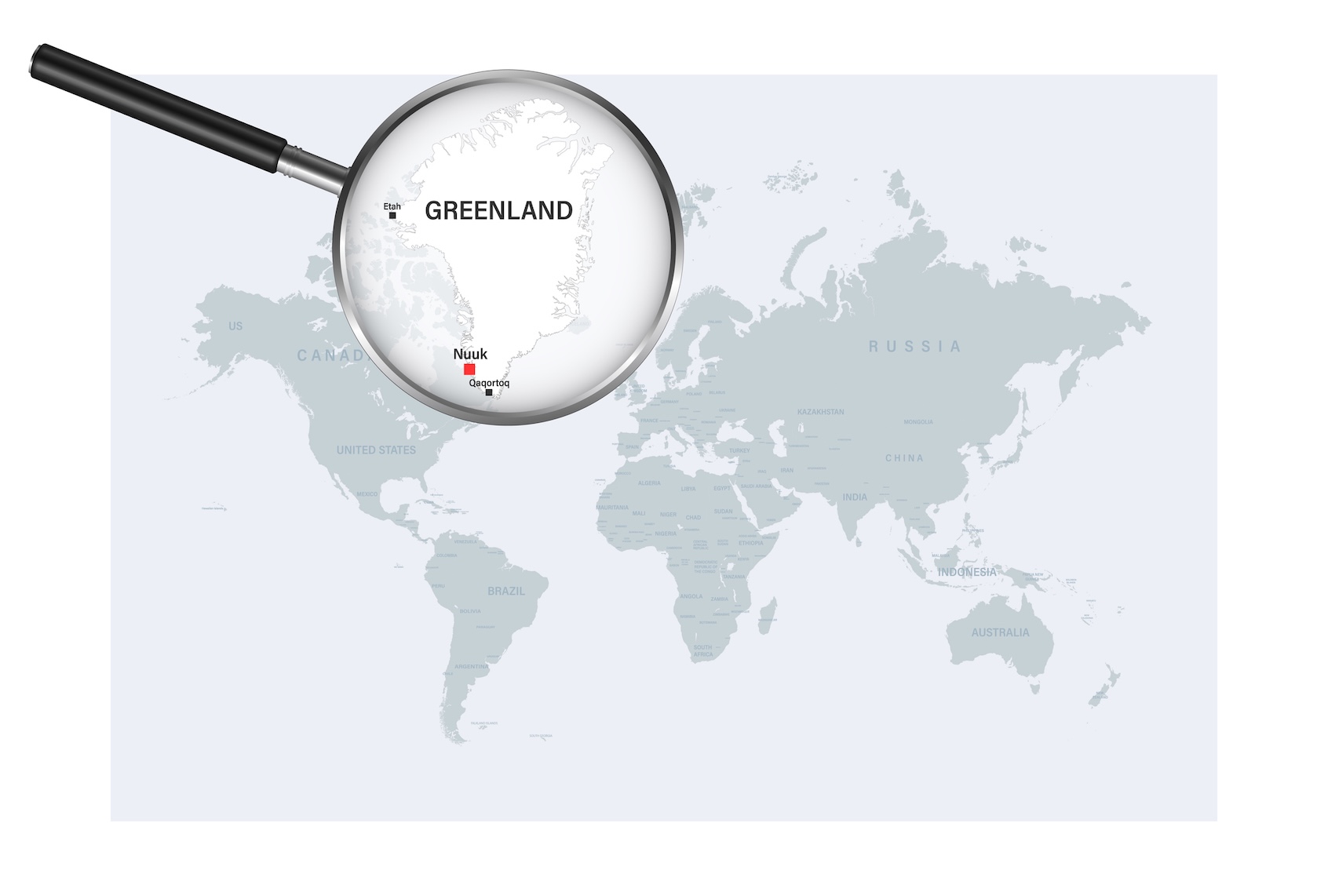
The anniversary is notable in light of the recent security agreement between the United States, Denmark and Greenland. After repeatedly calling for American ownership of Greenland, President Donald Trump now appears prepared to accept expanded American rights there without acquiring sovereignty. The agreement illustrates a historical pattern: The United States no longer needs to annex land to achieve its strategic objectives abroad.
Previous generations of Americans assumed that their nation’s growing power would naturally lead to more territory. And for a time it did. But as the U.S. became the world’s dominant country in the 20th century, its expansion on the map slowed, then stopped.
What changed?
In its early years, the country bounded across a continent with the Louisiana Purchase, the annexation of Texas and the conquest of California. Generations of Americans debated not whether the nation should grow, but where. More land led directly to more wealth and power as the country scooped up farmland, mineral resources and harbors. The expansion came at an enormous cost to Native Americans, who were displaced and deprived of their sovereignty, and to Mexicans, whose country lost half its territory.
America’s expansion slowed in the late 19th century as it became more selective, taking some territories while passing up others. By this time, the nation was big enough that it wanted the most valuable land, not just any land. International conditions were also changing. Most of the world was now divided by fixed borders into independent states and their colonies, and international respect for those borders was growing. The U.S. increasingly exerted control over nearby countries through military interventions and pressure on their governments, but not annexation.
After World War II, the U.S. increasingly relied on military alliances, overseas bases, trade and international institutions to project power. Territorial acquisition was no longer necessary to achieve the objectives that earlier generations had pursued through expansion.
So how did the Northern Marianas become the exception?
Want more sharp takes on politics? Sign up for our free newsletter, Standing Room Only, written by Amanda Marcotte, now also a weekly show on YouTube or wherever you get your podcasts.
After America defeated the Marianas’ colonial ruler in the Spanish-American War, it wanted a base to project power over the western Pacific. So it annexed the southernmost Mariana island, Guam, in 1898. But America declined to take the northern islands, seeing little additional strategic value in them. By this time, America’s territorial growth was winding down.
The Northern Marianas passed from Spain to Germany to Japan, and then back to the U.S. when it captured them, along with other Pacific islands, in World War II. After the war America governed all of these islands temporarily under a United Nations trust while their residents decided their political future. After years of negotiations, most of the territory eventually chose independence as three new countries with strong defense ties to the U.S. The fourth region was the Northern Marianas.
Already closely tied to Guam by culture, kinship and trade, the majority of residents wanted to follow their neighbor’s path as a U.S. territory. Washington didn’t strongly push for this outcome, but it accepted the islanders’ decision and Ronald Reagan completed the process in 1986. After a history of aggressive expansion and conquest, this was a rare example of a territory joining the U.S. through its own free choice, rather than being pursued.
The islands became a self-governing U.S. commonwealth, similar to Puerto Rico, and eligible residents gained U.S. citizenship. They are part of the country, but not a state. Today the islands are home to fewer than 50,000 people and are best known for beaches, diving and some World War II battlefields.
Trump’s renewed interest in territorial expansion has collided with a world in which established borders are much harder to change.
America hasn’t added territory since, and for decades there was little reason to think it would. But Trump upended that understanding during his first term when he proposed that the U.S. buy Greenland. After his return to the White House in January 2025, he has talked about even more annexation targets, including the Panama Canal and Canada.
But Trump’s renewed interest in territorial expansion has collided with a world in which established borders are much harder to change. The international opposition to his Greenland proposal is just one of the difficulties of annexation today. The Greenland security agreement demonstrates another way forward. Rather than annexing the island, the United States appears poised to secure many of its strategic objectives without changing any borders.
Earlier presidents acquired territory because sovereignty itself delivered things they wanted: minerals, ports, military positions and control over trade routes. The modern United States can gain those advantages through military bases, defense agreements, trade relationships and alliances, without assuming responsibility for governing another population.
We need your help to stay independent.
The Northern Marianas may seem like an unlikely place for the story of America’s growth to end, but it is precisely their isolation and lack of global power that allowed them to quietly buck the trend. Unlike Greenland, no countries objected to their joining the U.S. Unlike the Panama Canal, they aren’t crucial to the global economy. And their small population and longstanding ties to Guam made it easier to integrate them into the nation.
Forty years later, Trump is still talking about taking territory. But whether he acknowledges it or not, the president is operating in a world where the conditions that once made annexation attractive and feasible have largely disappeared. It still looks like the distant Northern Marianas will be the final act of America’s long story of territorial growth.
Read more
about Trump’s expansionist ambitions
