
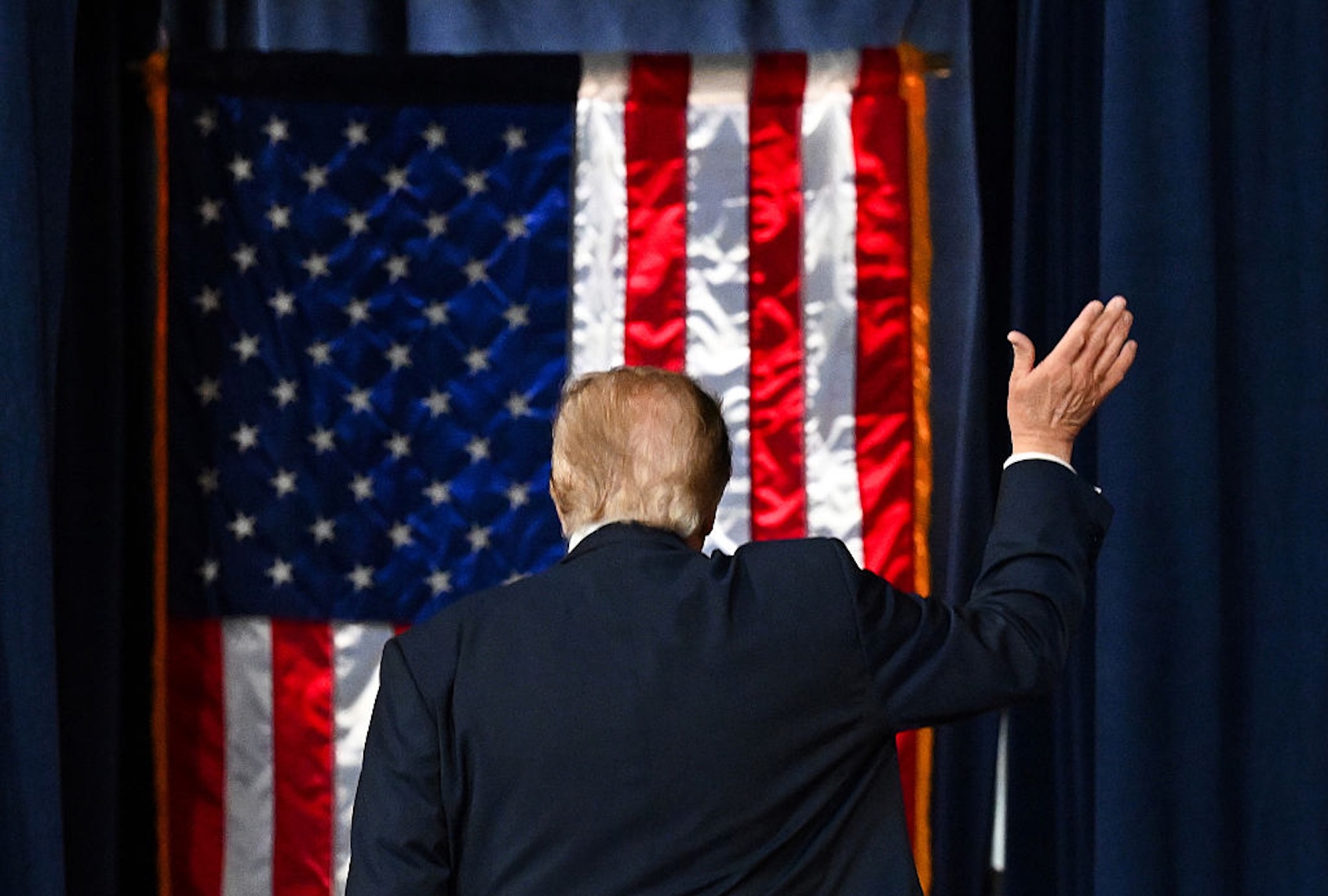

Every president leaves a signature accomplishment. Abraham Lincoln preserved the Union. Franklin Roosevelt rescued capitalism from itself. Donald Trump’s will be something no predecessor ever attempted: He has done more than any American in history to convince his fellow citizens that their votes are not counted honestly. That dubious achievement belongs in the first line of his obituary.
On Oct. 18, “60 Minutes” reported that in the 21 months of his second term, Trump has said, “in so many words, the vote can’t be trusted — more than 150 times.” This is not the grievance of a defeated candidate. It is the drumbeat of a sitting president who won an historic election in 2024, controls the executive branch and still insists that the system that elected him is rotten.
The record is not hard to find. The day before his second inauguration, Trump told a crowd at a rally in Washington, D.C., that he would be president for the 2026 World Cup and the 2028 Olympics — which he would have missed had he won in 2020 — only “because they rigged the election.” In February and again in April 2026, he posted that “America’s Elections are Rigged, Stolen, and a Laughingstock all over the World,” adding, “We are either going to fix them, or we won’t have a Country any longer.” In September, at the Republican National Committee’s Midterm Convention, he told supporters, “I’m going to try to cheat like hell like they do.” He doubled down on those claims earlier this month when he posted that vote counts “take weeks to rig, I mean, calculate. Voting in America is CORRUPT!!!” And on Oct. 16 in Georgia he declared that Sen. Jon Ossoff “lost that election [in 2020], but they gave it to him because it was a rigged election.”
But the centerpiece of Trump’s election lies came on July 16, when he used a primetime address to the nation from the White House to warn that our elections “were left vulnerable to being rigged and stolen” and that the system “falls catastrophically short.” He promised proof. He delivered heavily redacted documents that, according to election officials and security experts, showed vulnerabilities long known and studied, but included no evidence that any American election had been stolen. He cited only some fraudulent registrations in Michigan, which authorities flagged, and no fraudulent voter registrations were processed.
What it all adds up to is this: Six years after Trump claimed that millions of illegal votes were cast against him in 2020, he failed to document a single illegal vote.
I have studied American elections for more than four decades, and during that time I have testified as an expert witness in more than 100 voting rights cases. Let me be precise about where legitimate concern lies. There are serious reasons to question how congressional districts are drawn. Partisan gerrymandering, now escalating into mid-decade redistricting wars between red and blue states, lets politicians choose their voters rather than the other way around. These are real problems.
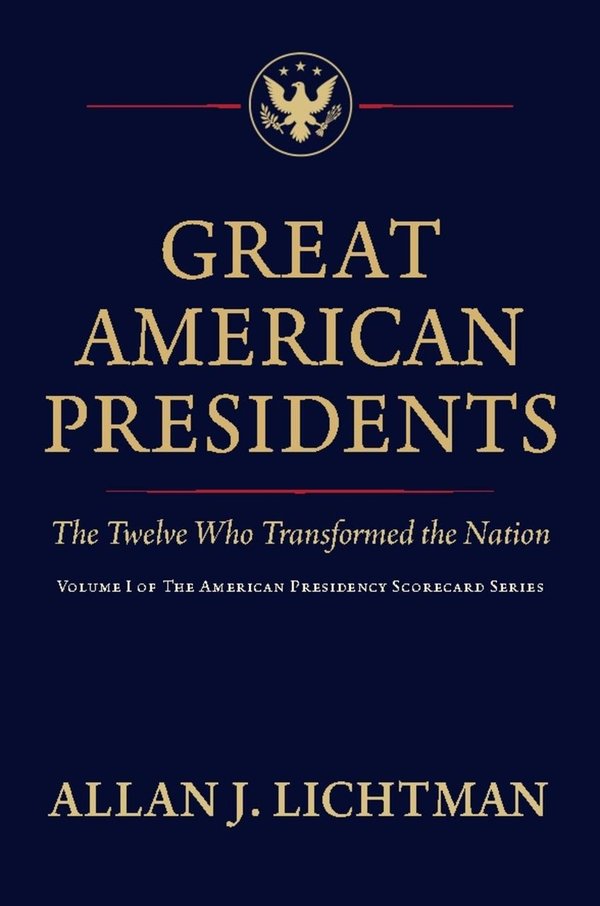
“Great American Presidents: The Twelve Who Transformed the Nation,” was published Sept. 1, 2026.
But the accuracy of the count is not among them. Nearly every American jurisdiction leaves a paper trail for ballots. Bipartisan local officials tally them, audit them and, when margins are close, recount them. After the 2020 election, Trump’s own cybersecurity chief called it “the most secure in American history.” William Barr, his own attorney general, found no fraud on a scale that could have changed the result. Georgia, under a Republican secretary of state, counted its presidential ballots three times. More than 60 lawsuits failed, some before judges Trump appointed. Studies of non-citizen voting find it vanishingly rare.
Compare Trump with the presidents who came before him. In 1800, John Adams handed power to his bitter rival Thomas Jefferson, establishing the peaceful transfer between parties that defines our republic. In 1864, with the nation at war, Lincoln held an election he expected to lose and privately pledged to cooperate with his successor. Herbert Hoover in 1932, Jimmy Carter in 1980 and George H.W. Bush in 1992 all lost as incumbents and accepted the verdict without a word against the count.
Want more sharp takes on politics? Sign up for our free newsletter, Standing Room Only, written by Amanda Marcotte, now also a weekly show on YouTube or wherever you get your podcasts.
Richard Nixon, a Republican, and Al Gore, a Democrat, swallowed razor-thin defeats in 1960 and 2000 rather than tear at the nation’s faith in its elections. Both graciously conceded despite having some basis for challenging results. Presidents have complained about the press, the courts and Congress. None of them made the American voter’s ballot the enemy — until Trump.
That is the damage he has caused. Democracy rests on a simple bargain: The loser accepts the result because both sides trust the count. Each time a president claims, contrary to the evidence, that the count cannot be trusted, he weakens that bargain. He also hands his supporters a ready excuse to reject any outcome they dislike, including the coming midterms. Americans should hold elections to the highest standard and fix what is genuinely broken, starting with how congressional districts are drawn. But they should not mistake a president’s endless repetition of baseless claims for proof of fraud. The evidence shows that America’s votes are counted honestly. The untrustworthy voice comes from the one who keeps telling them otherwise.
We need your help to stay independent.
Trump has said he would accept the midterm results if they are “honest” — code for Republicans winning. He has already interfered with elections by suing Alaska to overturn results if having another Daniel Sullivan on the ballot allegedly defeats the Republican Senatorial incumbent with the same name. He has also sought to compel California to set aside the votes of 20,000 alleged non-citizens based on an error-ridden database and a dubious matching with registration rolls.
As happened after Trump’s 2020 defeat, we can expect more lawsuits and pressure on Republican legislators and election officials to alter results.
Read more
about the 2026 midterms
