
Wall Street
It’s time to break up the big banks
Pushing to reinstate the Glass-Steagall Act would be a smart move for Obama both politically and economically
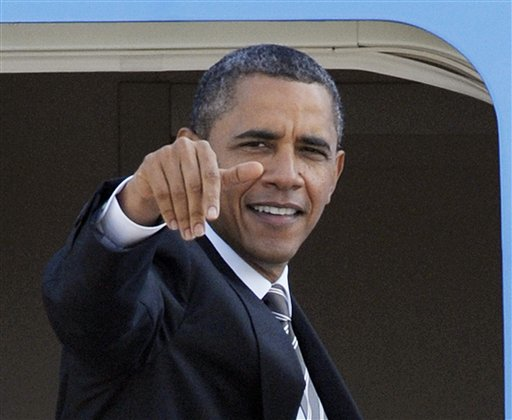
(Credit: AP Photo/Cliff Owen) Next week President Obama travels to Wall Street where he’ll demand – in light of the Street’s continuing antics since the bailout, as well as its role in watering-down the Volcker rule – that the Glass-Steagall Act be resurrected and big banks be broken up.
I’m kidding. But it would be a smart move — politically and economically.
Politically smart because Mitt Romney is almost sure to be the Republican nominee, and Romney is the poster child for the pump-and-dump mentality that’s infected the financial industry and continues to jeopardize the American economy.
Romney was CEO of Bain & Company – a private-equity fund that bought up companies, fired employees to save money and boost performance, and then resold the firms at a nice markups.
Romney also epitomizes the pump-and-dump culture of America’s super rich. To take one example, he recently purchased a $3 million mansion in La Jolla, California (in addition to his other homes) that he’s razing in order build a brand new one.
What better way for Obama to distinguish himself from Romney than to condemn Wall Street’s antics since the bailout, and call for real reform?
Economically it would be smart for Obama to go after the Street right now because the Street’s lobbying muscle has reduced the Dodd-Frank financial reform law to a pale reflection of its former self. Dodd-Frank is rife with so many loopholes and exemptions that the largest Wall Street banks – larger by far then they were before the bailout – are back to many of their old tricks.
It’s impossible to know, for example, the exposure of the Street to European banks in danger of going under. To stay afloat, Europe’s banks will be forced to sell mountains of assets – among them, derivatives originating on the Street – and may have to reneg on or delay some repayments on loans from Wall Street banks.
The Street says it’s not worried because these assets are insured. But remember AIG? The fact Morgan Stanley and other big U.S. banks are taking a beating in the market suggests investors don’t believe the Street. This itself proves financial reform hasn’t gone far enough.
If you want more evidence, consider the fancy footwork by Bank of America in recent days. Hit by a credit downgrade last month, BofA just moved its riskiest derivatives from its Merrill Lynch unit to a retail subsidiary flush with insured deposits. That unit has a higher credit rating because the Federal Deposit Insurance Corporation (that is, you and me and other taxpayers) are backing the deposits. Result: BofA improves its bottom line at the expense of American taxpayers.
Wasn’t this supposed to be illegal? Keeping risky assets away from insured deposits had been a key principle of U.S. regulation for decades before the repeal of Glass-Steagall.
The so-called “Volcker rule” was supposed to remedy that. But under pressure of Wall Street’s lobbyists, the rule – as officially proposed last week – has morphed into almost 300 pages of regulatory mumbo-jumbo, riddled with exemptions and loopholes.
It would have been far simpler simply to ban proprietary trading from the jump. Why should banks ever be permitted to use peoples’ bank deposits – insured by the federal government – to place risky bets on the banks’ own behalf? Bring back Glass-Steagall.
True, Glass-Steagall wouldn’t have prevented the fall of Lehman Brothers or the squeeze on other investment banks in 2007 and 2008. That’s why it’s also necessary to break up the big banks.
In the wake of the bailout, the biggest banks are bigger than ever. Twenty years ago the ten largest banks on the Street held 10 percent of America’s total bank assets. Now they hold over 70 percent. And the biggest four have a larger market share than ever – so large, in fact, they’ve almost surely been colluding. How else to explain their apparent coordination on charging debit card fees?
The banks aren’t even fulfilling their fiduciary duties to investors. Last summer, after Groupon selected Goldman Sachs, Morgan Stanley, and Credit Suisse to underwrite its initial public offering, the trio valued it at a generous $30 billion. Subsequent accounting and disclosure problems showed this estimate to be absurdly high. Did the banks care? Not a wit. The higher the valuation, the fatter their fees.
Just last week Citigroup settled charges (without admitting or denying guilt) that it defrauded investors by selling them a package of mortgage-backed securities rife with mortgages it knew were likely to default, but didn’t disclose the hazard. It then bet against the package for its own benefit – earning fees of $34 million and net profits of at least $126 million. So what’s Citi paying to settle this outrage? A mere $285 million. Its CEO at time (Charles Prince) doesn’t pay a dime.
I doubt the President will be condemning the Street’s antics, or calling for a resurrection of Glass-Steagall and a breakup of the biggest banks. Democrats are still too dependent on the Street’s campaign money.
That’s too bad. You don’t have to be an occupier of Wall Street to conclude the Street is still out of control. And that’s dangerous for all of us.
Robert Reich, one of the nation’s leading experts on work and the economy, is Chancellor’s Professor of Public Policy at the Goldman School of Public Policy at the University of California at Berkeley. He has served in three national administrations, most recently as secretary of labor under President Bill Clinton. Time Magazine has named him one of the ten most effective cabinet secretaries of the last century. He has written 13 books, including his latest best-seller, “Aftershock: The Next Economy and America’s Future;” “The Work of Nations,” which has been translated into 22 languages; and his newest, an e-book, “Beyond Outrage.” His syndicated columns, television appearances, and public radio commentaries reach millions of people each week. He is also a founding editor of the American Prospect magazine, and Chairman of the citizen’s group Common Cause. His widely-read blog can be found at www.robertreich.org. More Robert Reich.
Welcoming Wall Street’s anger
Obama should pick a fight with reckless bankers by beefing up the Volcker rule
Paul Volcker and President Obama (Credit: Reuters/Kevin Lamarque) Jamie Dimon’s Wall Street peers have good reason to be annoyed with him. Over the past several years, the financial sector spent hundreds of millions of dollars lobbying to weaken bank reform. Then came JPMorgan’s multiple-billion-dollar-losing credit default swap blunder. And suddenly, Washington hit the pause button on regulatory rollback. All it took was one reminder of how stupid even the best-run banks can be for everyone to recall that trusting these jokers to act responsibly is a losing game, and, wham, bank regulation was back in the news. Efforts to repeal various parts of the Dodd-Frank bank reform act halted, but more important, pundits and politicians are focusing a brand-new round of attention on the ongoing process of writing the “Volcker rule” into law.
Continue Reading Close
Andrew Leonard is a staff writer at Salon. On Twitter, @koxinga21. More Andrew Leonard.
Corporate criminals gone wild
The maker of the documentary film "Inside Job" has a new book excoriating Wall Street -- and President Obama
A detail from the cover of "Predator Nation" “Inside Job,” Charles Ferguson’s Oscar-winning documentary film on how government, Wall Street and academia colluded to deliver us the worst financial crisis since the Great Depression, made a powerful case that something was very very rotten at the heart of the American political/economic nexus. His follow-up book, “Predator Nation: Corporate Criminals, Political Corruption, and the Hijacking of America,” can be considered the legal brief that dots every “i” and crosses every “t” in his argument. A tightly argued, profusely footnoted and deeply enraged castigation of everyone involved, “Predator Nation” isn’t just a factually unchallengeable account of how Wall Street blew up the global economy. It’s a denunciation, a call for justice and a warning: After getting away with the crime of the century, Wall Street still isn’t satisfied.
Continue Reading Close
Andrew Leonard is a staff writer at Salon. On Twitter, @koxinga21. More Andrew Leonard.
Let’s put Jamie Dimon on trial
JPMorgan CEO Jamie Dimon should explain why a megabank that accidentally loses billions is good for the economy
Jamie Dimon (Credit: Reuters/Keith Bedford) Let’s put JPMorgan Chase chairman, president and CEO James “Jamie” Dimon on trial. Mr. Dimon has a reputation for being the sagest guy on Wall Street and an expert at managing risk. JPMorgan emerged from the financial crisis not just unscathed but secure enough to step in and rescue Bear Stearns when the government asked it to. (He gets very mad when you say that his bank got bailed out by the government, and he insists that the government made him take all that free money.) Then his bank somehow accidentally lost billions of dollars last week, whoops! And he is really embarrassed, but not embarrassed enough to fire himself. So, let’s put him on trial and force him to explain what good he and his bank are.
Continue Reading Close
Alex Pareene writes about politics for Salon and is the author of "The Rude Guide to Mitt." Email him at apareene@salon.com and follow him on Twitter @pareene More Alex Pareene.
Romney’s Jamie Dimon problem
JPMorgan's $2 billion blunder makes Mitt's pledge to repeal Obama's bank reform look dumb
Jamie Dimon (Credit: Reuters/Shannon Stapleton) Here is the most important sentence in Jamie Dimon’s Thursday afternoon conference call discussing JPMorgan’s colossal trading screw-up: “Just because we’re stupid doesn’t mean everybody else was.”
If you’re looking for the most easy-to-understand breakdown of how JPMorgan managed to lose $2 billion, read Marketplace reporter Heidi Moore’s fabulous explainer. Readers who fancy themselves financially sophisticated can ponder DealBreaker’s Matt Levine’s analysis. If all you want is a guide to the critics “flaying” Dimon’s hide, check out the New York Times’ DealBook.
Continue Reading Close
Andrew Leonard is a staff writer at Salon. On Twitter, @koxinga21. More Andrew Leonard.
Wall Street’s infrastructure racket
Mayor Rahm Emanual's new strategy for financing renovations isn't actually new -- and it rewards the greedy
Rahm Emanuel (Credit: AP/Jacquelyn Martin) When Mayor Rahm Emanuel introduced a “new and innovative” financing tool last month to help Chicago renovate failing infrastructure without precipitating another budget crisis, many in the city were understandably critical.
Chicagoans have already endured the notorious 75-year lease of their parking meters to a consortium headed by Morgan Stanley. That sale promulgated a system wherein the public is held hostage by private finance, due largely to the inclusion of arcane legal stipulations like “non-compete clauses” and “compensation events” in the language of the contract.
Continue Reading ClosePage 1 of 86 in Wall Street
