
Super Bowl
Super Bowl ads, now with more beefcake
There are still lots of hot bodies -- but several ads this year finally offer something for the ladies VIDEO
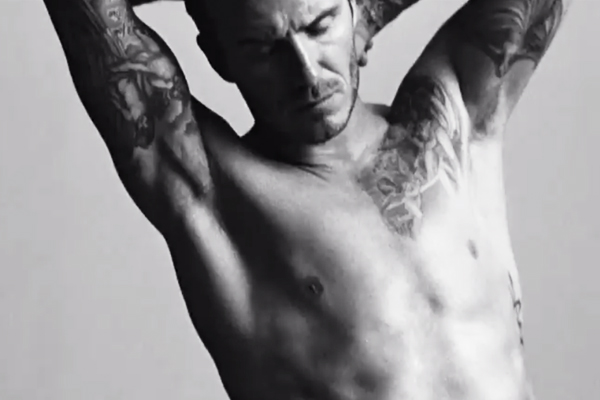
David Beckham The Super Bowl is all about tradition. The chili and beer-soaked parties. The interminable, annoying half-time show. The parade of sexed-up, flesh-flaunting ads. But this year, there’s a twist. This Super Bowl comes with a slice of beefcake. In a surprising move toward righting the gender scales, two of the most already-buzzed about Super Bowl ads feature dudes who are not pouring Doritos down their gullets or smirking as they speed around a racetrack. They’re being sex objects.
For starters, there’s Mr. Posh Spice, aka David Beckham, promoting his new line of bodywear for H&M. He flexes his numerous tattooed muscles to the tune of “Please Don’t Let Me Be Misunderstood,” glowers in an “I mean business here” way that’s remarkably persuasive, and uh, I forget what I was talking about. To quote Emma Stone in “Crazy Stupid Love,” SERIOUSLY? Just watch.
The notion of a hot, barely clad body that happens to be male in a Super Bowl ad has been, until now, nearly unheard of. But far more subversive than the Beckham spot is a Toyota one that really flips sex appeal expectations. In the spot, the car company boasts that after it reinvented the Camry, it decided to reinvent a few other things. Among its creations: a traffic cop who hands out speeding tickets but also invigorating massages, a motor-vehicles department where you can play pinball and get soft-serve ice cream, a blender that plays Lionel Richie, and of course, curtains made of out of pizza. But the real showstopper is Toyota’s “reinvented couch.” A nebbishy man opens his front door to discover his furniture has been transformed into a row of bikini-clad beauties, no doubt just waiting for him to park his rear upon their collective lap. It’s your typical ad-agency-concocted dude fantasy, until the scene changes to a replica row — this time of seven six-pack toting guys and the announcement that “It also comes in male” — prompting the surprised homeowner to give a little shrug of approval.
Just two years ago, Super Bowl ads had been a slew of female-alienating, flat-out hostile spots that chided men for being pussywhipped and defiantly declared “Man’s Last Stand.” (Spoiler: They involved driving fast and not wearing pants.) But last year, the ads began to take on a decidedly less misogynistic tone. The most patently sexist ad back then was a Pepsi spot featuring an abusive female.
Make no mistake, there will still be plenty of old-fashioned T&A to go around during Sunday’s commercial breaks. And you can always count on GoDaddy to be the company that asks the question, “Who won’t notice a hot model in body paint?” But it seems that at last sponsors are catching on to the fact that nearly 46 percent of Super Bowl viewers are female, and that plenty of the game’s male viewers are more inclined to be moved by a shirtless man than Danica Patrick. Sure, it’s still objectification even if a guy is the object, but it does suggest our yearly parade of hormone-driven ads is tilting toward gender equity. Or as Toyota might express it: It’s still the Super Bowl ad, but reinvented.
Mary Elizabeth Williams is a staff writer for Salon and the author of "Gimme Shelter: My Three Years Searching for the American Dream." Follow her on Twitter: @embeedub. More Mary Elizabeth Williams.
Super Bowl ads: The good, the bad and the ’80s
There were cars and babes galore. But in a game that rematched teams from four years ago, retro ruled the ads, too VIDEO
Several months ago, a 45-year-old ad executive drove home in his roomy, fuel-efficient SUV, anticipating the watery beer that awaited in his fridge, and thought, “Dammit, I used to be cool. Cool like Lloyd Dobler.” And then he went on to create the ads for the 2012 Super Bowl. Nostalgic much, Gen-X?
Sure, this year’s crop of ads featured hot babes, cute kids, funny animals and Doritos, but they were also heavily tinged with one overwhelming message: Hey, you. Yeah you, the one who once thought your band was going to be the next Love & Rockets. Can we sell you a car? Herewith, Salon’s picks for the Super Bowl’s best, the worst, and the most likely to make John Hughes roll over in his grave.
Continue Reading Close
Mary Elizabeth Williams is a staff writer for Salon and the author of "Gimme Shelter: My Three Years Searching for the American Dream." Follow her on Twitter: @embeedub. More Mary Elizabeth Williams.
Super Bowl: A tale of two catches
A taut, novelistic game turns in the space of three plays
New England Patriots wide receiver Wes Welker drops a pass during the second half of the NFL Super Bowl XLVI football game against the New York Giants, Sunday, Feb. 5, 2012, in Indianapolis. (AP Photo/Matt Slocum) (Credit: AP) Super Bowl 46 was a tale of two catches – one made, one dropped – that took place within the space of three plays. The catch he dropped will haunt New England Patriots flanker Wes Welker to the end of his days. The one that New York Giants’ wide receiver Mario Manningham caught led to the Giants’ fourth Vince Lombardi Trophy, and will be almost too painful for Patriots’ fans to ever watch. Four years after Giants’ receiver David Tyree’s legendary ball-on-helmet grab led to the Giants’ scintillating victory in Super Bowl 42, the Patriots just got fatally struck by Eli Manning lightning. Again.
Continue Reading CloseGary Kamiya is a Salon contributing writer. More Gary Kamiya.
How Madonna liberated America
As the pop icon prepares to play the Super Bowl, a celebration of the way she changed sexual mores forever
When Madonna takes the stage at halftime of the Super Bowl this Sunday, she’ll be the first female solo performer to do so since Janet Jackson and Justin Timberlake played peek-a-boo in 2004. Ever since Nipplegate, Super Bowl programmers have avowedly played it safe, booking a string of hoary grown-man rockers such as Paul McCartney and The Boss, known quantities not prone to random disrobing.
By and large, the halftime show has become the live-performance equivalent of the Rock and Roll Hall of Fame, an honor bestowed long after an artist’s peak. So Madonna, once the baddest good girl or best bad girl in pop, is now safe prime-time fare? No shocker there. But even if Madonna hasn’t had a mega-hit since Justin Bieber was in diapers, that’s far from the point. Madge will be bringing two other fabulous Ms. M’s — Minaj and M.I.A. — onstage with her, which is exciting, but that’s not the point either.
Continue Reading CloseSara Marcus Sara Marcus is the author of Girls to the Front: The True Story of the Riot Grrrl Revolution." Follow her on Twitter: @thesaramarcus. More Sara Marcus.
Puppies and nostalgia will always sell
In a brand-savvy world, Super Bowl ads attract social media attention with sex and cuteness
(Credit: CNET) “If God manifested himself to us, he would do so in the form of a product advertised on TV.” –Philip K. Dick
So how did you like this year’s Super Bowl ads? You know, the ones that haven’t aired yet? The ones that have been teased, previewed, screened, deconstructed and parodied days and — in some instances, weeks — before their broadcast “premiere” during Sunday’s big game?
Which dancing and/or talking, cute, furry piece of CGI wizardry did you like best? Which retro-celebrity comeback performance? Which piece of brilliantly choreographed boomer nostalgia or crowd-sourced slapstick? What offended you more, the GoDaddy boobs or the boobs that represented the prototypical salt, trans-fat, hops-barley-and-corn-obsessed American male, circa 2012?
Continue Reading CloseJames P. Othmer is the author of the novel “The Futurist,” the memoir “Adland: Searching for the Meaning of Life on a Branded Planet” and the forthcoming thriller, “The Last Trade,” written as James Conway. More James P. Othmer.
The Super Bowl is not a job creator
Despite what civic boosters say, hosting the big game provides few long-term benefits
(Credit: AP/Michael Conroy) Roger Goodell, the commissioner of the National Football League, argued on “60 Minutes” last Sunday that the NFL is one professional organization designed to appeal to the economic interests of the little guy: Its revenue-sharing model, he said, gives a fighting chance to squads from Green Bay and Buffalo as well as to those from large media markets like New York, Los Angeles and Boston.
On the eve of the Super Bowl, Goodell was touting the familiar idea that the sport’s biggest game is a boon to economic development. But with the cost of a ticket now averaging $3,982 and 30-second television spots selling for $3.5 million, the Super Bowl can appear to be more an occasion for ostentatious excess than an engine of development.
Continue Reading CloseAlexander Heffner is a freelance journalist whose writing has appeared in the New York Times, Washington Post, and Boston Globe. More Alexander Heffner.
Page 1 of 17 in Super Bowl