
Writers and Writing
He was our eyes
The tragic death of Anthony Shadid has made the world a little darker
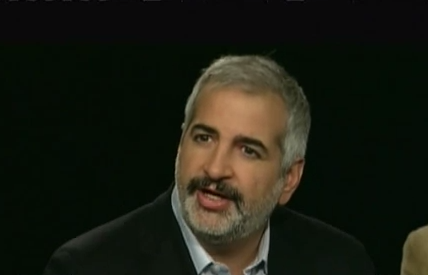
The late Anthony Shadid I was stunned and saddened to learn of the death of Anthony Shadid, the great New York Times reporter who covered the Middle East. Shadid was quite simply the best mainstream reporter working the most important foreign beat in the world. From his superb coverage of Iraq to his groundbreaking reporting on the Arab Spring, he set the journalistic standard. Shadid’s profound knowledge of the Arab world, his even-handedness, his historical sophistication, and above all his empathy for the ordinary people he wrote about, made him indispensable.
His death is not just a terrible loss to journalism: it is a loss to America. Even though the United States is at war with two Middle Eastern countries, and stands on the brink of war with a third, most Americans, including our politicians and many so-called “experts,” know almost nothing about it – which is one of the reasons we embarked upon the disastrous Iraq war. Like all great reporters, Shadid penetrated the darkness. He took us not just into streets and cafes, but into hearts and minds. He showed the impact of decisions made by politicians and generals in far-away lands on housewives and young girls and street vendors, on small human beings just trying to live decent lives. He was our eyes.
In his extraordinary 2005 book “Night Draws Near: Iraq’s People in the Shadow of America’s War,” Shadid wrote about one of those small people, a woman named Karima Salman, and her family. This is from my Salon review of the book:
“Karima, a desperately poor mother of eight, lived in a squalid, cockroach-infested apartment in Baghdad. The first story Shadid tells about her takes place before the war. Most of her family and friends had already fled Baghdad. She was exhausted, lonely, unable to pay the rent, faced with skyrocketing food prices. Her 21-year-old son, Ali, who had been working as a plumber, had been sent north days earlier to man an antiaircraft battery.
At their parting, movingly recounted by Shadid, Karima and Ali simply exchanged the basic phrases of Islam. “There is no God but God,” she told Ali as he boarded a bus. “Muhammad is the messenger of God,” Ali replied, completing the phrase. Her final words to him were prayers of farewell: “God be with you. God protect you.” As she recounted their parting, tears ran down her cheeks. “A mother’s heart rests on her son’s heart,’ she told Shadid. ‘Every hour, I cry for him.”
“Faith for Karima and her family was not a matter of religious zealotry,” Shadid writes. “It was not even piety, really. It gave their lives cadence … It spoke with clarity, offered simplicity, and served as a familiar refuge in troubled times.” As Karima sat with her five daughters on old mattresses on a tile floor and waited for the war to begin, ‘in her voice was the hopelessness that forced so many in the once-proud city to put their faith and future in God’s hands. ‘We only have God,’ she told me. ‘Thanks be to him’ … To Karima, the war that had begun was a play; on its grand stage, people were mere actors. ‘Life’s not good, it’s not bad,’ she told me, as we sipped the bitter coffee. ‘It’s just a play.’”
The fate of small people like Karima and her family, unknown, of no political consequence, is easy to forget as nations rush to war and powerful men plan and redraw maps. “Ordinary people are, as Karima recognized, only pawns on a giant board; if one or one thousand of them are swept off, no one notices.” It is one of the functions of journalism, perhaps the noblest, simply to bear witness to these forgotten ones.
Anthony Shadid bore that witness. He died at the age of 43 on the front lines of his profession, of an asthma attack while reporting inside violence-ravaged Syria. He joins the honored list of reporters who gave their lives to give the world the truth. Every journalist, and every American who cares not just the consequences of American wars, but about humanity, owes him a debt. His loss is incalculable.
Also in Salon, the story of Shadid’s last book: Anthony Shadid yearned for home.
Gary Kamiya is a Salon contributing writer. More Gary Kamiya.
Jonathan Lethem’s “perfect” album
The "Motherless Brooklyn" and "Fortress of Solitude" author's new book explains his fixation with the Talking Heads
Jonathan Lethem In essay collections like “The Disappointment Artist” and last year’s acclaimed “The Ecstasy of Influence,” best-selling novelist Jonathan Lethem brought his sharp critical lens and personal passion to bear on Marvel Comics, Roberto Bolaño, Bob Dylan and the John Carpenter movie “They Live.” Add to that diverse list of cultural artifacts the Talking Heads album “Fear of Music,” the subject of Lethem’s latest book, and published as part of Continuum’s 33 1/3 series of music writing.
Continue Reading CloseBrian Gresko has contributed to The Huffington Post, The Atlantic, The Daily Beast, The Paris Review Daily and The Millions. He lives in Brooklyn. More Brian Gresko.
In Iraq and on “The Wire,” it’s all acting for Benjamin Busch
In a lyrical memoir, a novelist's son discusses his strange path into war -- and David Simon's TV masterpiece
Benjamin Busch Benjamin Busch’s “Dust to Dust” is a remarkable book — part military memoir, part childhood reminiscence, and also an effort to explain his relationship with his father, the celebrated novelist Frederick Busch.
And yet it is also more than all of those things. Busch is filled with complicated and fascinating contradictions. Yes, he’s the son of a famously introspective and domestic writer, who grew up in rural New York obsessed with toy guns and building massive military forts. But he studied visual arts at Vassar, where he confused everyone by joining the Marine reserves — especially his commanders, when he accidentally announced himself in a roll call as part of the “Vassar infantry.”
Continue Reading CloseDavid Daley is the senior culture editor of Salon. More David Daley.
When I sold out to advertising
Like any proper writer and academic, I always shunned the profession. Then I realized I was the delusional one
Peggy Olson of "Mad Men" (Credit: AMC) The best cautionary story I ever heard came from a distinguished man in a snug, hillside coffee shop on a thundery Seattle afternoon.
I was new to the area, trailing a high-tech spouse who worked 14-hour days. The gloom had settled in. It was good weather for writing but after several hours, scenes from “The Shining” would be running through my head. I was slogging away at a second novel (my first was a tiny seller, now remaindered). I’d been a visiting professor in Providence and Minneapolis, but for the first time I couldn’t even find an adjunct job.
Continue Reading CloseAnn Bauer's novel, "The Forever Marriage," will be published by Overlook Press in June. This article came from her blog, which you can read at www.theforevermarriage.com. More Ann Bauer.
Wait, maybe my spy thriller is true …
Fact and fiction mysteriously converge for the author of the best-selling new novel "The Expats"
It has recently come to my attention that some people suspect that my wife is, in addition to being a senior executive at the largest book publisher in the world, also a spy. This misapprehension is almost entirely my fault. To set the record straight:
In my new novel, “The Expats,” a married couple with young sons move to Luxembourg — just as my wife and I did a few years ago (for a job of hers at an American-based technology company) — and it turns out that the wife had been a spy for the entirety of her adult life, and never told her husband.
Continue Reading CloseThe private lives of great writers
Like it or not, Edith Wharton's looks and Saul Bellow's sexual problems do shed light on their work
Edith Wharton and Saul Bellow Just how relevant is an author’s private life to our appreciation or understanding of his or her work? Many would argue that we should disregard it entirely. Others (myself included) might point out that while you can thoroughly enjoy a novel or poem without knowing who wrote it, any deeper grasp requires at least some basic information. It matters that Edna O’Brien is Irish, certainly, and it’s almost impossible to imagine how the writings of Jack Kerouac or Charles Bukowski could be separated from their life stories.
Continue Reading Close
Laura Miller is a senior writer for Salon. She is the author of "The Magician's Book: A Skeptic's Adventures in Narnia" and has a Web site, magiciansbook.com. More Laura Miller.
Page 1 of 57 in Writers and Writing