
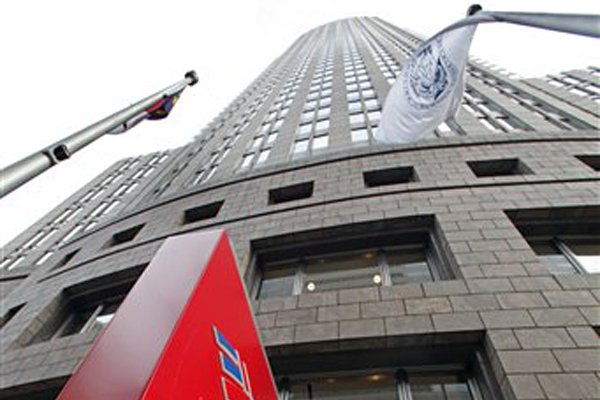

 Bank of America employees regularly lied to homeowners seeking loan modifications, denied their applications for made-up reasons, and were rewarded for sending homeowners to foreclosure, according to sworn statements by former bank employees.
The employee statements were filed late last week in federal court in Boston as part of a multi-state class action suit brought on behalf of homeowners who sought to avoid foreclosure through the government’s Home Affordable Modification Program (HAMP) but say they had their cases botched by Bank of America.
In a statement, a Bank of America spokesman said that each of the former employees’ statements is “rife with factual inaccuracies” and that the bank will respond more fully in court next month. He said that Bank of America had modified more loans than any other bank and continues to “demonstrate our commitment to assisting customers who are at risk of foreclosure.”
Six of the former employees worked for the bank, while one worked for a contractor. They range from former managers to front-line employees, and all dealt with homeowners seeking to avoid foreclosure through the government’s program.
When the Obama administration launched HAMP in 2009, Bank of America was by far the largest mortgage servicer in the program. It had twice as many loans eligible as the next largest bank. The former employees say that, in response to this crush of struggling homeowners, the bank often misled them and denied applications for bogus reasons.
Sometimes, homeowners were simply denied en masse in a procedure called a “blitz,”said William Wilson, Jr., who worked as an underwriter and manager from 2010 until 2012. As part of the modification applications, homeowners were required to send in documents with their financial information. About twice a month, Wilson said, the bank ordered that all files with documentation 60 or more days old simply be denied. “During a blitz, a single team would decline between 600 and 1,500 modification files at a time,” he said in the sworn declaration. To justify the denials, employees produced fictitious reasons, for instance saying the homeowner had not sent in the required documents, when in actuality, they had.
Such mass denials may have occurred at other mortgage servicers. Chris Wyatt, a former employee of Goldman Sachs subsidiary Litton Loan Servicing, told ProPublica in 2012 that the company periodically conducted “denial sweeps” to reduce the backlog of homeowners. A spokesman for Goldman Sachs said at the time that the company disagreed with Wyatt’s account but offered no specifics.
Five of the former Bank of America employees stated that they were encouraged to mislead customers. “We were told to lie to customers and claim that Bank of America had not received documents it had requested,” said Simone Gordon, who worked at the bank from 2007 until early 2012 as a senior collector. “We were told that admitting that the Bank received documents ‘would open a can of worms,’” she said, since the bank was required to underwrite applications within 30 days of receiving documents and didn’t have adequate staff. Wilson said each underwriter commonly had 400 outstanding applications awaiting review.
Anxious homeowners calling in for an update on their application were frequently told that their applications were “under review” when, in fact, nothing had been done in months, or the application had already been denied, four former employees said.
Employees were rewarded for denying applications and referring customers to foreclosure, according to the statements. Gordon said collectors “who placed ten or more accounts into foreclosure in a given month received a $500 bonus.” Other rewards included gift cards to retail stores or restaurants, said Gordon and Theresa Terrelonge, who worked as a collector from 2009 until 2010.
This is certainly not the first time the bank has faced such allegations. In 2010, Arizona and Nevada sued Bank of America for mishandling modification applications. Last year, Bank of America settled a lawsuit brought by a former employee of a bank contractor who accused the bank of mishandling HAMP applications.
The bank has also settled two major actions by the federal government related to its foreclosure practices. In early 2012, 49 state attorneys general and the federal government crafted a settlement that, among other things, provided cash payments to Bank of America borrowers who had lost their home to foreclosure. Authorities recently began mailing out those checks of about $1,480 for each homeowner. Earlier this year, federal bank regulators arrived at a settlement that also resulted in payments to affected borrowers, though most received $500 or less.
The law suit with the explosive new declarations from former employees is a consolidation of 29 separate suits against the bank from across the country and is seeking class action certification. It covers homeowners who received a trial modification, made all of their required payments, but who did not get a timely answer from the bank on whether they’d receive a permanent modification. Under HAMP, the trial period was supposed to last three months, but frequently dragged on for much longer, particularly during the height of the foreclosure crisis in 2009 and 2010.
ProPublica began detailing the failures of HAMP from the start of the program in 2009. HAMP turned out to be a perfect storm created by banks that refused to adequately fund their mortgage servicing operations and lax government oversight.
Bank of America was far slower to modify loans than other servicers, as other analyses we’ve cited have shownspan>. A study last year found that about 800,000 homeowners would have qualified for HAMP if Bank of America and the other largest servicers had done an adequate job of handling homeowner applications.
