
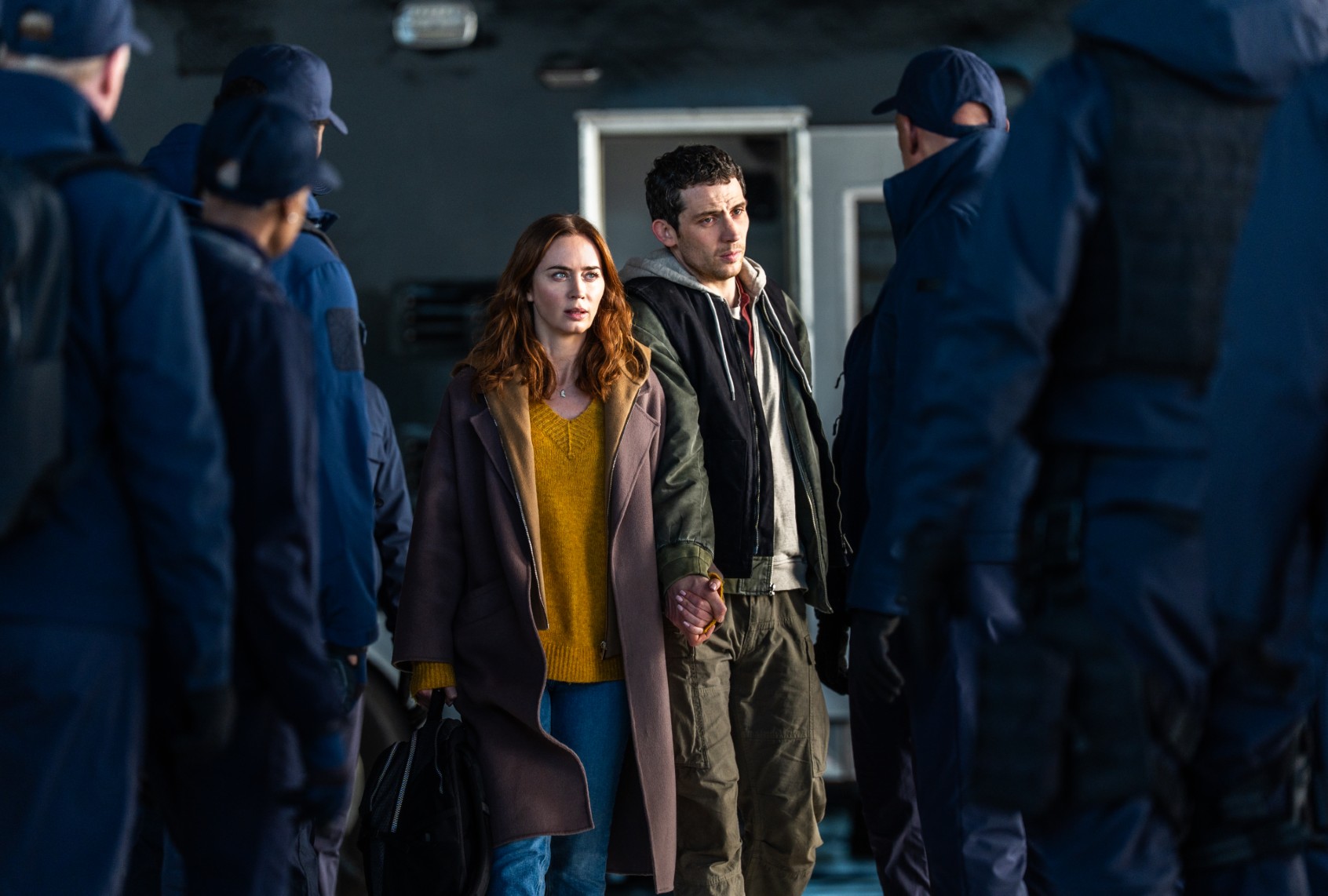

Steven Spielberg is Hollywood’s perennial Pollyanna. Through half a century of creature features, epic disasters, sprawling adventures, quirky character studies and electrifying political thrillers, Spielberg has maintained his hope. He’s also let his hand get heavier, painting his optimism in broad, unmistakable strokes for anyone searching for something to hold onto in an increasingly divided and combative world outside the movie theater. But his highly anticipated return to the sci-fi summer blockbuster, the brilliant and beguiling “Disclosure Day,” is Spielberg’s most shameless appeal toward idealism yet. So unabashed, in fact, that his earnestness makes a familiar allegory take on powerful new resonance, as if Spielberg were trying to convey that humanity can still have a do-over.
Desperately trying to retrieve a trove of stolen government secrets that will prove the existence of extraterrestrial life, Noah Scanlon (Colin Firth) — the director of a secret military contractor, Wardex — warns of the ramifications to a Wardex defector, Hugo (Colman Domingo). “It is a virus for which humanity has no cure,” Noah tells his former colleague, implying the mass hysteria caused by the confirmation of aliens will only drive us closer to ruin. Six years after the COVID-19 pandemic ravaged the world and put society on the fast track for self-destruction, the metaphor initially feels overbearing, another indication that Spielberg is laying it on too thick. But for as transparent as Spielberg’s filmmaking has become over the years, one has to think that a master of his craft is highly aware of what he’s doing. Every detail is considered. We might be trying to move forward and accept the pandemic’s effects on our lives just to survive. But Spielberg wonders: Why must we adapt to harsher conditions if the answer is right in front of us, and all we have to do to thrive is open our eyes?
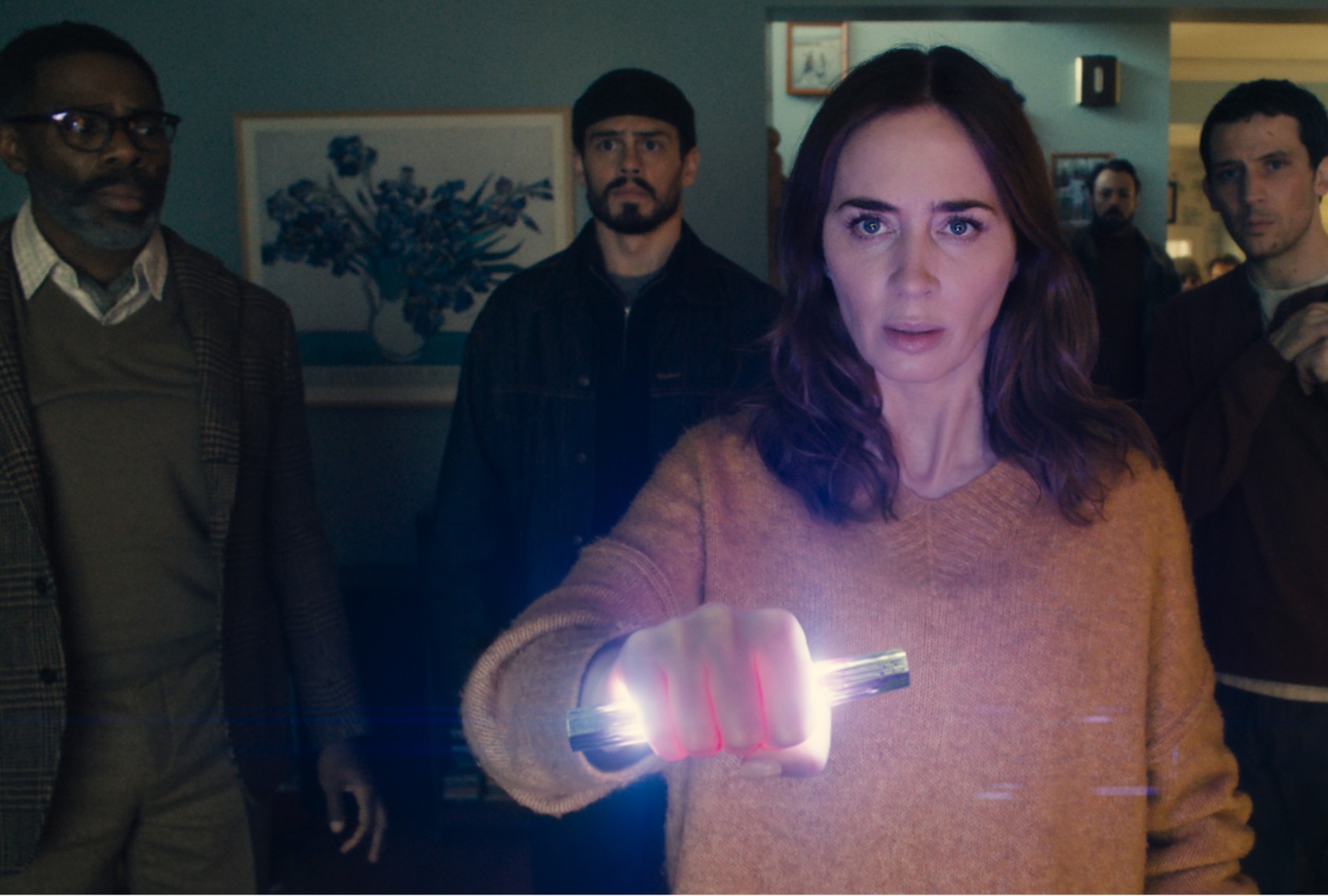
(Universal Pictures/Amblin Entertainment) Colman Domingo as Hugo Wakefield, Tommy Martinez as Santiago, Emily Blunt as Margaret Fairchild and Josh O’Connor as Dr. Daniel Kellner in “Disclosure Day”
Funnily enough, the relative ease of making the world a better place was already in the back of my mind as I headed uptown to see “Disclosure Day.” There, on a crowded train during the evening rush hour, on the night of a Knicks game, I was surrounded by a nuisance I’ve been meeting all too often lately: backpacks. The train was already crammed when another swarm of people pushed their way inside, backpacks of varying sizes and capacities still slung over their shoulders, needlessly pushing into other passengers for God knows how many stops. Removing a large bag and holding it or tucking it between your legs might not always be pleasurable or convenient, but it’s a small, friendly thing one can do to make someone else’s day that much easier. And if something is kind, relatively simple and requires no monetary sacrifice or time commitment, why wouldn’t someone do it?
More than any other director, Spielberg understands the innate power of the movie theater as a town hall — an environment where ideas can be communicated, conversations can be had, and change can begin.
That’s a question I ask myself daily as I watch the pandemic’s effects continue to wash away so many people’s consideration for their fellow humans. The pandemic was and is a blight on compassion. It turned countless people into inconsiderate monsters, even in the most minute ways.
But apart from bolstering the antivax and conspiracy crowds, gluing people to their screens for a year-plus, and sowing all sorts of distrust around the world, the pandemic was proof that, when given the opportunity, many humans will revert to their most repugnant impulses. They will watch the death toll rapidly rise one afternoon and be the first to make reservations for socially distanced indoor dining the very same evening, coughing the whole time. “You simply must try the lobster ravioli, darling, it tastes even better on the brink of global collapse.”
With “Disclosure Day,” it’s clear that this unprecedented, Earth-shattering event brought oft-pondered questions about empathy and humanism back to the forefront for cinema’s great dreamer. The setting of Spielberg’s latest looks awfully similar to our own. Citizens go about their days, anxieties bleeding into their behaviors, trying to wrestle some control from a world that offers them none. Money’s tight, faith is waning, everyone is on edge. The point of no return is already in the rearview mirror, and the road ahead is flanked by pain. If we adjust to this prevailing narrative now — if we calcify our hearts and lead with cruelty, or even just blind inconsideration — maybe life won’t be so hard when it all comes crashing down.

(Niko Tavernise/Universal Pictures) Emily Blunt in “Disclosure Day”
But what if our society didn’t have to fail? What if we weren’t destined to tear each other limb from limb, to yell instead of speaking, or dig our backpacks into each other’s bodies on the train? Perhaps it’s all as simple as finding the right medium to make people receptive to each other’s wants and needs. More than any other director, Spielberg understands the innate power of the movie theater as a town hall — an environment where ideas can be communicated, conversations can be had, and change can begin.
In revisiting his cherished alien subgenre for the fourth time with “Disclosure Day,” Spielberg returns to where his career started, scraping away the classic marks of extraterrestrial intrigue and replacing them with human counterpoints. The eternal fascination with something bigger than ourselves is what can bring us back together. But this time around, it’s not about the declassified information, or even the aliens themselves; it’s about our collective reaction to a global reckoning. Spielberg believes the Earth can stand still again, and that this time, we can get it right.
If there’s one person who can bring us to a halt, it’s Spielberg — even if it’s just for two hours. The director’s trademarks haven’t been this thrilling in years, with Janusz Kamiński’s camera doing tricks that rival his most awe-inspiring work, and John Williams’ score ratcheting the tension in chase scenes and action sequences. But the moment Emily Blunt appears as Margaret Fairchild, a meteorologist for a Kansas City news affiliate, doing her “weather shimmy” and talking about her love for hail, it’s impossible to see anything but her whenever Blunt is onscreen. One morning, Margaret notices a red cardinal in her kitchen, meeting its eyes before it departs back out her window. It’s a strange occurrence, but no stranger than her suddenly speaking an unintelligible language during the morning broadcast, just before collapsing.
When she wakes up, Margaret realizes she has a subtle psychic ability pointing her toward an opaque destiny. Concurrently, Daniel Kellner (Josh O’Connor) — the Wardex defector with a peculiar flair for numbers, who stole mountains of evidence confirming alien life dating back to the Roswell Incident — is on the run from Noah and Wardex’s squad of operatives. After seeing Wardex’s extensive footage of alien life and the lengths they’ve gone to cover it up, Daniel is certain that all of it must be public knowledge, though even he isn’t quite sure why. Margaret and Daniel’s fates are intertwined. They don’t yet know the reasons behind this, only that they have a fiery assurance that what they’re doing is right.
Shadows of Spielberg’s filmography loom large over “Disclosure Day”: the inclination to revisit and fictionalize childhood from “The Fabelmans,” the tests of empathy in “A.I. Artificial Intelligence,” and, of course, all the aliens. But none of Spielberg’s movies are in such direct, constant conversation with “Disclosure Day” as “War of the Worlds,” both of which were written by David Koepp, with “Disclosure Day” based on Spielberg’s original idea. Released in the summer of 2005, Spielberg’s take on H.G. Wells’ classic story was one of the first mainstream studio films to riff on America’s post-9/11 anxiety, where characters assumed the widespread panic was the work of terrorists.
Want more from culture than just the latest trend? The Swell highlights art made to last.
Sign up here
“War of the Worlds” brutally dismantles the widely peddled notion that America would be stronger following 9/11, treating it as propaganda used to mollify citizens and encourage unwavering support of George Bush’s War on Terror. “We live under a veil of fear that we didn’t live under before 9/11,” Spielberg told USA Today while promoting the film. “There has been a conscious emotional shift in this country.” In Spielberg’s eyes, another disaster would cause the stalwart nationalism to crumble. When faced with a legitimate mass threat to human life, many people would abandon mutuality and compassion in favor of self-preservation.
“War of the Worlds” laid the groundwork Spielberg builds upon with “Disclosure Day,” analyzing how humans react when events beyond their control instantly remove their autonomy. Each of the film’s principal characters grapples with a sudden shift in their freedom and responds to it differently. We watch as they navigate these profound changes and how they try to balance their curiosity with their fear of the unknown.
In the film’s staggering final moments, Spielberg sheds every remaining pretense for the sake of one last plea. Even if the 79-year-old director is in good health, I don’t think it’s entirely unfair to say that Spielberg has his legacy in mind.
In a scene where Noah telepathically visits Hugo, who’s constructing a mysterious set in an abandoned warehouse that Margaret and Daniel are being led to, Hugo explains that he saw a shift in Noah’s behavior after Noah’s wife died. Her death made him reclusive and heartless, accelerating his loss of faith in humanity. The cause of her death isn’t explicitly named, but it doesn’t need to be. One can infer by Noah’s virus metaphor that COVID is intentionally embedded in the narrative. It is, after all, the shared sticking point — the destruction of the world as we once knew it, felt by every last person around the globe.
As Spielberg predicted in 2005, humans would choose between doing their part to save one another or prioritizing their own desires, no matter who was affected. Watching egocentrism augment in real time, on a mass scale, is as heartbreaking and destabilizing as death itself. It’s enough for anyone to lose hope. Even if Daniel believes that publicizing the alien footage could unite a broken world, it’s too late for someone like Noah, who is too consumed by his despair to see a way out. It’s the jaded who succumb to violence and hopelessness, dragging everyone down with them.
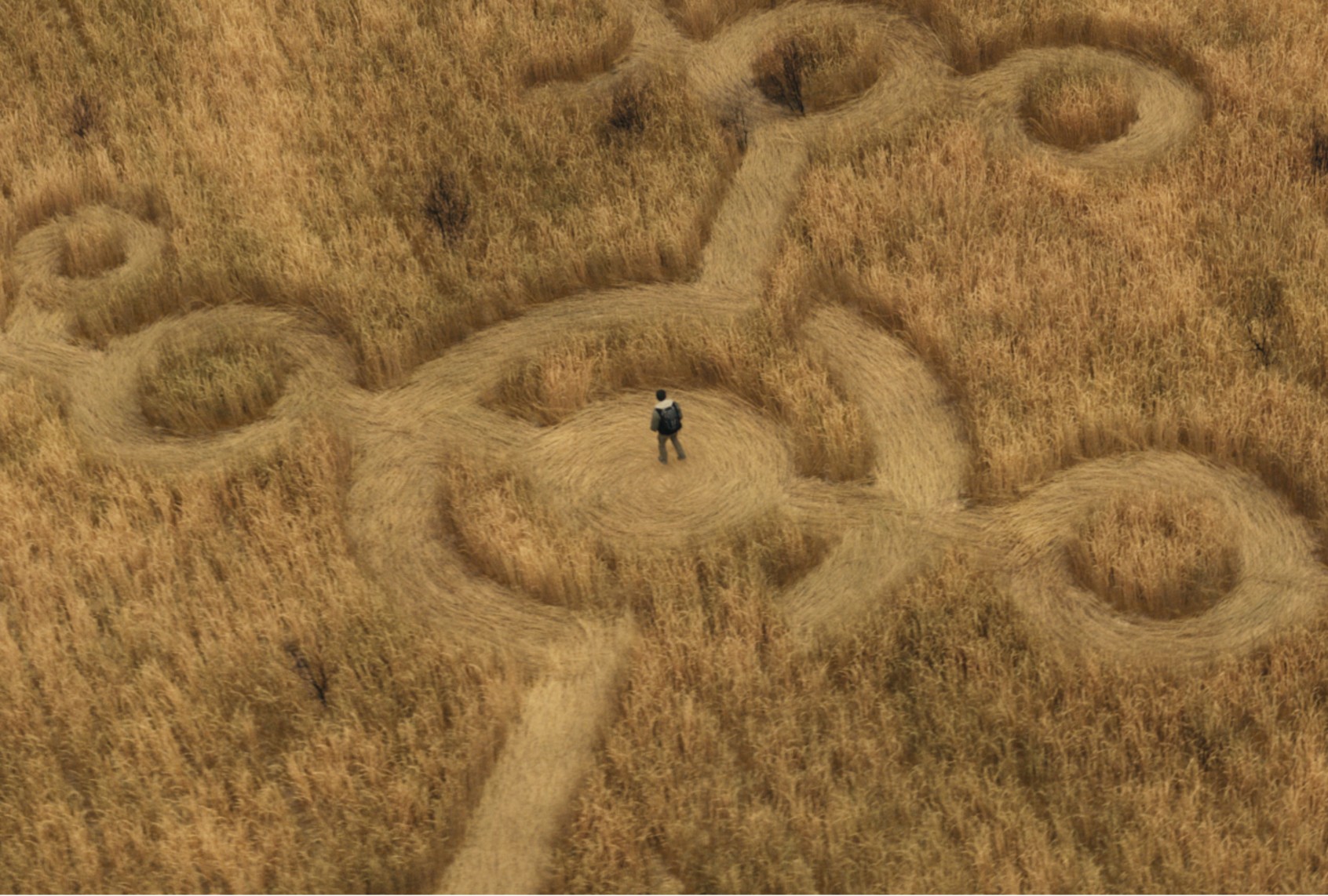
(Universal Pictures/Amblin Entertainment) “Disclosure Day”
Aside from its blockbuster spectacle, “Disclosure Day” is a pertinent reminder that, once we let go of our hope, it’s nearly impossible to get it back. It’s a message crafted with such disarming simplicity that, at first, it reads as obvious, even hackneyed. “Of course, a director like Spielberg would spend his old age making stale hopecore sci-fi,” a cynic might argue.
But “Disclosure Day” makes no qualms about its sanguinity. The film isn’t arguing with cynicism; it’s presenting an alternative. I don’t think it’s fair to say Spielberg and Koepp are spoon-feeding their audience — which implies working to win the viewer over — when “Disclosure Day” is literally crafted to be as on-the-nose as possible. It’s as if Spielberg experienced another tragedy and decided to make his first return to the alien subgenre since “War of the Worlds,” saying, “Here: Since you guys didn’t get it the first time.” There’s a difference between films that pat themselves on the back for their didactic lessons and films that use simple moralistic terms to help as many people understand their messaging as quickly as possible.
Spring savings are here!
Spielberg’s belief has always been that the movie must communicate with the audience through some kind of grand spectacle. That’s how you open their hearts and lower their walls: You dazzle them. When we’re sitting in a dark theater with our snack and drink of choice, that’s when we’re most receptive. If we can become a kid again — our most honest, impressionable, open-hearted self — in that theater seat, we’ll believe anything is possible. If it can happen in a movie, it can happen in life.
In the film’s staggering final moments, Spielberg sheds every remaining pretense for the sake of one last plea. Even if the 79-year-old director is in good health, I don’t think it’s entirely unfair to say that Spielberg has his legacy in mind. His scrappy, mostly lost first feature, “Firelight,” was about pursuing alien life to prove that the impossible is very much possible. In “Disclosure Day,” he takes another stab at demonstrating that there is no limit to the universe’s wonders. Fantasy and reality have collided so often throughout his career that they’ve blended into one. There is no one more equipped to make us believe than Spielberg. All we have to do is sit back and hear him out.
Read more
about summer cinema
