ESPN
Keeping it (kind of) real
Lots of action -- and a little angst -- at ESPN's biggest X Games event ever.
The line snaked alongside San Francisco’s Pier 30 for a half-mile, finally
tapering to a frustrated end in the shadows of the Giants’ unfinished new
ballpark. By the end of a beautiful baseball Saturday, almost 50,000 people had slowly
shuffled away from a temple of major league sports toward a crowded
pier tucked under the Bay Bridge, where ESPN was busy repackaging
adolescent rebellion into a formula acceptable to both corporate sponsors and alternative
lifestyle seekers. Between June 26 and July 3, the pier was home to six of the nine sports in this year’s
X Games competition, where 300 athletes competed for $1 million in prize money.
For those of us who came of age in the ’80s, being at the X Games — a cross between
a rock concert, a circus and a sporting event — was like watching your life in reruns.
The first Saturday would conclude with BMX biking and skateboarding, but the kickoff event
was snowboarding — or rather, snowhoarding: ESPN had built a ramp 100 feet tall and 270 feet long,
covered it with 350 tons of shaved ice and then sprayed the “snow” with enough chemicals to keep the surface slick in the
fierce sun. Watching the snowboarders navigate the ramp was exciting enough, but the real entertainment
came from the announcers, most of whom sounded like a “Point Break”-era Keanu Reeves frozen in time.
When was the last time you heard someone say, “I’m totally stoked” or
“Dude, that was super-cool!” with so much feeling?
But the real flashbacks started later in the day, when the skateboarders
took the ramp. For those of us who traded our boards for real jobs long ago,
the skateboarders had the last laugh. Skaters on the professional tour, which
is currently enjoying its umpteenth revival, can make up to $10,000 a month in
prize money alone. Late that first Saturday night, Tony Hawk — yes, the Tony Hawk,
the one who won his first competition in 1982 and was Thrasher Magazine’s “Skater of the ’80s” –
took the bronze medal in skateboarding vert (that’s “vertical” to the rest of us). For anyone who witnessed Hawk during
his glory days in the ’80s, watching Hawk perform is a little like seeing the Rolling Stones in
concert: sure, they’re still cool, but who knew they could still move like that.
The retro madness began five years ago, when a bunch of ESPN executives decided to
shamelessly pander to the Nintendo crowd by holding something they called the Extreme Games in Rhode Island (the name was changed a year later).
The basic plan was to reheat a bunch of stagnating sports, throw in a few new fads like bungee
jumping and watch wannabe-hip sponsors like Mountain Dew hop aboard. The
plan succeeded beyond anyone’s wildest expectations: The X Games has grown
steadily over the past five years, and the first three days of the games
in San Francisco drew 135,000 people. This year, ESPN, ESPN2 and ABC aired
28.5 hours of the games on their networks, and NBC has planned an X Games spinoff event for the fall.
As the X Games has grown, it has brought an increasing amount of attention
and money to the competitive side of a variety of so-called “lifestyle”
sports. Perhaps the best example is aggressive in-line skating. Since it was
introduced in 1979, in-line skating has grown exponentially, with more than 30 million
participants in the United States today — making it the fifth largest participatory sport in
the country (first among 6- to 17-year-old males). The first in-line skating
tour had just emerged when ESPN held the first Extreme Games. Attracted by the
potential to appeal to the billion-dollar skates market, companies flooded the fledgling tour
with sponsorship opportunities for its young skaters.
With the money, however, has come the predictable angst among the
skaters over whether or not the sport is “selling out.” Aggressive in-line
skating, like skateboarding before it, has an affiliated lifestyle, and
the in-line trade magazines offer as much advice on what music to listen
to as on how to grind down a railing. The magazines shifting advice
on music offers an insight into how the sport has fought to keep itself
distinct from popular culture: Chris Mitchell of Box Magazine, writing
about the increasing mainstream popularity of grunge rock, instructs his
readers, “Plan on ditching Offspring, 311 and Sublime for the new Wu
Tang, Roots or DJ Q-Bert albums. A good indication you’ve succeeded in
choosing the right soundtrack is the frequency of expletives — the more
offensive the lyrics, the more legitimate the sound.” Judging from the music preferred
by many participants at X Games V, his advice wasn’t taken lightly.
Most of the skaters, echoing the magazines, talk without a hint of irony about keeping the
sport close to the “real street scene” — never mind
that most of the competitors have about as strong a connection to the
“real street scene” as Vanilla Ice. And never mind that the
X Games has always been as corporate as a tech conference in Silicon
Valley. The government was even getting in on the action: The Postal Service introduced a new line of
extreme sport stamps at the games, and one of the sponsors of the X Games is the Office of
National Drug Control Policy, under the slogan “Get vertical not high.”
- – - – - – - – - – - – - – - – - – - -
-
While sports like baseball and football are predicated
on organization, competition and discipline, alternative sports are about
finding thrills and showing off to your friends. Andy MacDonald, the
silver medalist in skateboarding vert at this year’s games, says that he
doesn’t train — he just hangs out. “When you start,” he says, “it’s up to
your friends to teach you. It’s completely self-motivated. No rules, no
coaches. Just straight trial and error.” For a generation that views rules
and discipline as fondly as it views higher math, that formula is
attractive.
Even at the X Games, with big money at stake, that relaxed code
still held. During the warm-ups for virtually every event, when music
blared out of the speaker and the athletes were “training,” the scene on Pier 30
felt as familiar and relaxed as a backyard cookout. And when the competition
began and MacDonald put together a spectacular skateboarding routine, it seemed like
perfectly genuine moment when the Hawk stood up to cheer his performance. A similar
dynamic characterized the relationship between the athletes and fans. In these times of petulant professional athletes acting as if they’re doing us a favor
by letting us watch them play, it’s these alternative athletes who have managed
to form a true bond with their fans. Last week, when a stunt-biker nicknamed “Rooftop” gave his
busted BMX bike to a fan at the end of his routine, it was a reminder of how the fans’ fierce loyalty
is reciprocated — and that it’s stronger than any brand loyalty could ever be.
Wes Tooke is an editor and writer at the Princeton Alumni Weekly. More Wes Tooke.
Game over
Keith Olbermann is hanging up his completely weird news gig and returning to the world of sports broadcasting. Now what the hell was that all about?
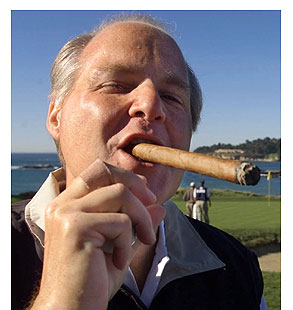
It was on a chilly night late this election season that Keith Olbermann stole my heart. A Republican spokesman on Olbermann’s prime-time MSNBC news program, “The Big Show,” was holding forth with one of those 30-second stump speeches political operatives stencil to the inside of their eyelids before hitting the chat shows, accusing Democratic candidates of “demagoguing Social Security,” among other crimes. After wrapping up the interview, Olbermann paused a beat, looked into the camera and declared:
Continue Reading CloseJames Poniewozik is the editor of Salon Media. For more columns by Poniewozik, visit his column archive. More James Poniewozik.
ESPN: The Magazine kicks sand in SI: The Swimsuit Issue's face
ESPN's glammy print startup courts young sports fans who don't want their fathers' breasts.
Blah blah blah exploitative. Blah blah blah phallocentric. Far be it from me to defend Sports Illustrated’s swimsuit issue (Winter 1998), but it’s hard to take a swing at the voluptuous, heaving piñatas of this ever-popular target without feeling that you’re playing a carefully scripted role — namely, that of the exasperated romantic-comedy starlet stammering, “Oh, you … you infuriating man!” — cueing the audience, with every cute little stamp of your high heels, that you’ll be melting into the rogue’s arms and lifting your shapely ankle by the picture’s end. After all, what the issue brings yearly, besides boffo sales at an inflated $5.95 price tag, is a reliable public reminder that SI still exists.
Continue Reading CloseJames Poniewozik is the editor of Salon Media. For more columns by Poniewozik, visit his column archive. More James Poniewozik.
Salon Daily Clicks: Newsreal – It's a small world after all
Forget Tiger Woods. Miniature golf is aiming to be the next big thing.
tom Dixon, one of America’s top-ranked professional miniature golfers, is tracing the proud lineage of his sport. “All your top pros — like Arnold Palmer — they started out in mini golf. And look where he is now.” He pauses a moment, contemplating the image of the four-time Masters Tournament champion in the mini maze. “Or maybe it was Jack Nicklaus.”
Miniature golf has always been the scorned stepchild of what athletic snobs refer to as “real” golf. While few question the legitimacy of a pastime that puts rich white dudes in go-carts and festively outri pants, many of us still associate its baby sibling with little more than tipsy summer nights spent whacking balls into clowns’ mouths. But what miniature golf lacks in rolling hills, sweeping vistas and millionaire champions it makes up for in cute-as-an-Olsen-twin courses and a family-values appeal that stretches across age, gender and a fair number of talent barriers. Now, in what may be the most challenging makeover since Courtney Love, miniature golf wants to be taken more seriously than a game meant to be played with a bag of Twizzlers. “Look, how many times does anyone want to hit a ball through a teepee?” grouses Skip Laun, the jauntily named executive director of the Miniature Golf Association of America.
Continue Reading Close
Mary Elizabeth Williams is a staff writer for Salon and the author of "Gimme Shelter: My Three Years Searching for the American Dream." Follow her on Twitter: @embeedub. More Mary Elizabeth Williams.
Page 6 of 6 in ESPN