Lenny Kravitz

The Fix

Connie Chung says bye-bye, Kravitz sings with an Iraqi for peace, Capriati eats pizza with De Niro, and "American Idol" may lose a finalist to the war. Plus: Ben is learning Spanish for Jen!

  • more
    • All Share Services

We can’t say we are crying over the loss of the often-inappropriate Connie Chung at CNN, effective immediately. No word on where she’ll land next. She’s already worked at most of the networks, except the one CNN hired her to compete with — Fox! (Washington Post)

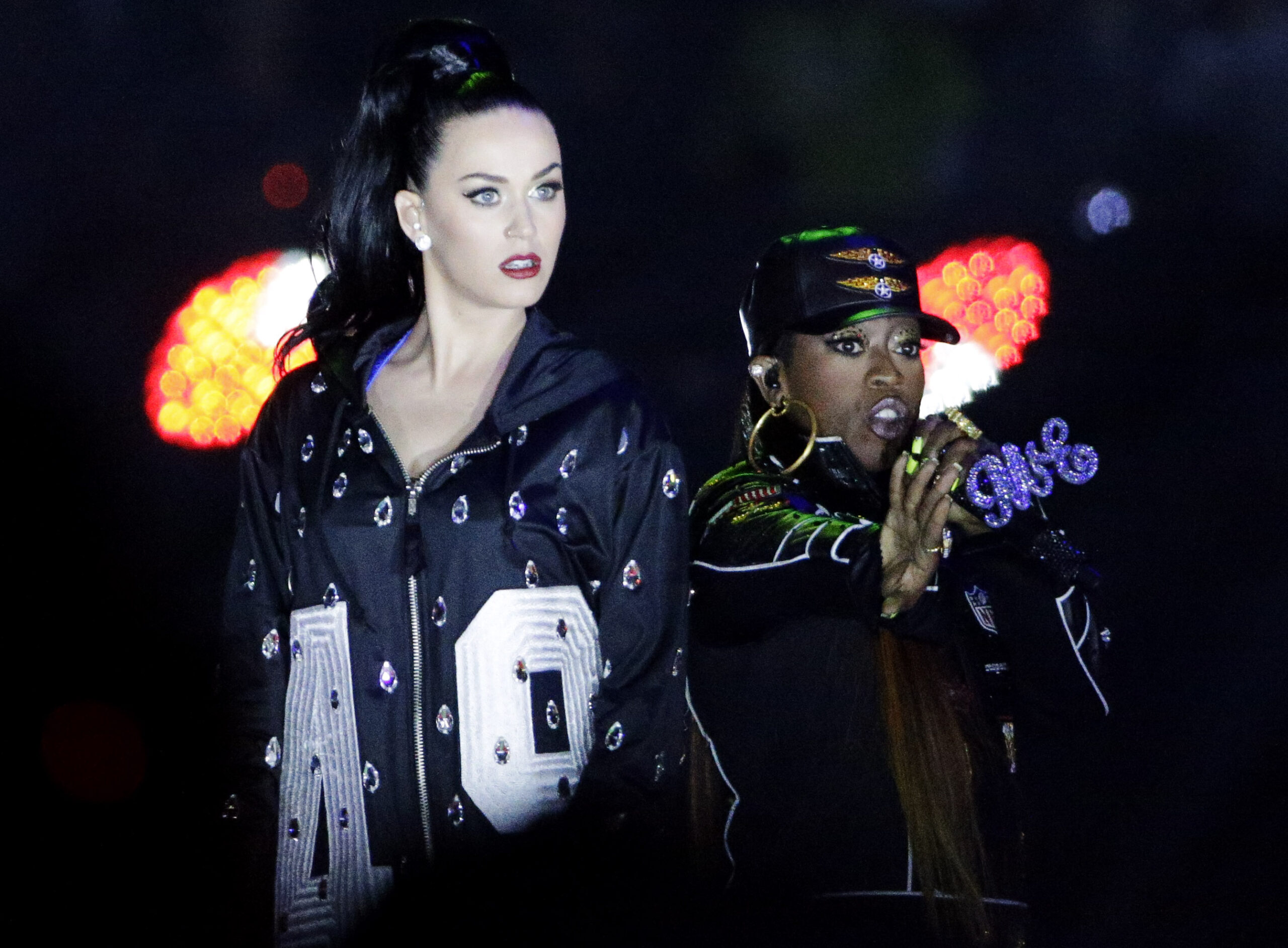
Lenny Kravitz has released an antiwar song called “We Want Peace” as a free download. He recorded it with Iraqi singer Kadim Al Sahir, Palestinian Simon Shaheen on strings and Lebanese percussionist Jamey Hadded. If only the United Nations worked together as well as these guys. (Soundgenerator)

Speaking of music, Jennifer Capriati requested the 1999 Outkast song “Bombs Over Baghdad” be played before her tennis match in Florida Monday. The lyrics include: “Don’t pull the thang out unless you plan to bang, bombs over Baghdad …” Capriati said, “I like the song and I wanted to support the troops.” We’re sure they were listening, Jen. (ESPN) Perhaps just as interesting, Capriati was spotted chowing down on pizza with Robert De Niro, Marisa Tomei and others at a hot spot in Miami. (Page Six)

“American Idol” may lose a finalist to the war. Seems Joshua Gracin is on 24-hour notice and may have to leave for Camp Pendleton any moment. If he is called for duty, producers of the show have assured Gracin that he can return to the lineup when he gets back, without going through the grueling audition again. What a relief. (LA Times)

Love knows no bounds. Ben Affleck is reportedly learning Spanish so he can speak to relatives of his intended, la bonita J.Lo. (MSNBC)

Peter Arnett, one of the media heroes in the first Gulf War, says he is taking “perverse pleasure” in competing with the cable network that canned him. He’s now working for MSNBC and NBC News and offering understated advice to journalists there: “A degree of diplomatic and personal relationships get you through in a place like Baghdad.” (Yahoo)

We hear women of the world weeping: Olivier Martinez (the rather attractive actor from “Unfaithful”) is in love with pop darling Kylie Minogue and some are saying that he’s going to pop the question. We await further details in this space … (WENN)

Bookmark the Fix here. 

Karen Croft is the editor of Salon Sex.

The dearth of cool

Are white hipsters an endangered species? Is sellout just another word for nothing left to lose?

  • more
    • All Share Services

The dearth of cool

During his opening monologue on MTV’s Video Music Awards in September, host Chris Rock surveyed the audience and asked, “Where are all the cool white guys?” Throughout the night, Rock could savor the accumulating evidence for his assertion that they were, in fact, missing in droves. Pretenders to the long tradition of cool white male stars embarrassed themselves on stage or sat in the audience looking like nervous piglets cornered by Rock’s wolfishly scathing wit. The sad display reached the pit of inanity when Limp Bizkit’s front man, Fred Durst, made lewd references to co-presenter Heather Locklear’s breasts. While Durst smirked, a bandmate and fellow would-be homey either pretended to be inebriated or really was stumbling — and neither scenario was all that entertaining.

Then Madonna took the stage, thank God, to introduce the evening’s surprise guest. She called him a talent the likes of which surfaces but a handful of times in a century. Seconds later, when Paul McCartney strutted forward, I was struck by his quiet self-assurance, his apparently secure knowledge that he was all those things the Material Girl had called him. His unimpressed aplomb contrasted neatly with all the young dudes who were so desperate to attract attention. Here at last was a cool white guy.

Ever since Marlon Brando and James Dean taught white men the devil-may-care aspect of cool, when such an attitude was the province of the young, Hollywood and rock ‘n’ roll have done the proselytizing. Everyone — or at least those of us with enough time on our hands to care — can trace their own lineage, and the list is potentially long. But there have been a handful of icons who, through artistry or artfulness, elevated cool to the point of regality — guys like Brando and Dean, Frank Sinatra, Warren Beatty and, of course, Elvis Presley and countless other musicians from a time when “cool rock star” would have been considered a tautology.

The striking thing about them all is that they achieved a kind of princely dominance by the time they were in their 20s and, importantly, they wore it well. Dean was killed in a car crash at 24; The Voice had his first number one single, “I’ll Never Smile Again,” at age 25; the presidentially coy Beatty was 24 when he found “Splendor in the Grass” with Natalie Wood; Elvis had them swooning at 20. And now? Thanks to the current demographic appeal of pre-fab teen movies and sanitized pop music, we are being haunted by the ghosts of New Edition and the Brat Pack.

Is there an entertainment industry-wide problem here? Of course not, if you take a financial viewpoint — the entertainment industry does just fine, thank you. Maybe its finely honed strategy of product positioning leaves little room for iconoclasm. The market’s tastes form a bell-curve, and cool anti-heroes have their place — off to the side of that big bulge in the middle where the innocuous cluster together, where you find the Backstreet Boys, or Garth Brooks, who only pretends to be cool by posing as a rocker. Our oft-lamented media saturation makes celebrities into commodities with the built-in obsolescence of a consumer appliance, but with shelf-lives a fraction as long as, say, a Sony Trinitron.

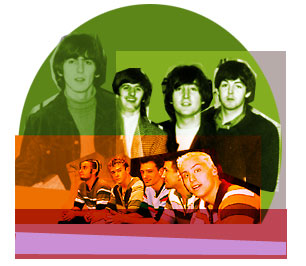
But what about aesthetics? If you use media prominence as a measuring stick (the discussion is, after all, about icons), it doesn’t matter where you look — television, movies or music — we are in short supply of young white artists who possess the kind of lasting qualities we attach to the idea of “cool.” This has happened before, especially in the cyclical music business, which has produced countless other eras of teeny-bop pop. But many earlier teen idols, the best of whom matured emotionally and artistically — Sinatra and the Beatles, for example — only got cooler as they grew up. It’s hard to envision the same kind of creative flowering for N’Sync, the boy group that has performed Christopher Cross’ “Sailing” in falsetto while suspended like circus acrobats over the audience.

Times like these serve to remind us that cool is a white man’s idea of something more purely black, like early rock music. Miles Davis oozed cool. James Brown has it in his bones. Unsurprisingly, then, plenty of hip-hop stars, male and female, exude cool. But what about Lenny Kravitz? He derived his once-cool persona from the same people he mimicked with his music — Jimi and Jimmy, among others. Kravitz’s near-simultaneous release of the song “Fly Away” as a single and in a car commercial — two videos for the price of one (and tidy revenues on the other) — was crass enough to lose him what little credibility he might have once possessed.

Older generations of stars have been similarly losing their cool, refuting the idea that the quality might endure mostly as a generational hallmark. Thanks to the endless promotion and recycling of celebrities like Mick Jagger, we see cool can be squandered through overexposure, even by legends. The Rolling Stones and just about all the other great old rockers — even Lou Reed and Bob Dylan — have also licensed songs to commercials. “Sellout,” once the antithesis of cool, is now just another word for nothing left to lose.

In the hip-hop world, of course, showy materialism can be a cool, in-your-face kind of weapon, but it can’t save white rappers like Durst or Eminem. Vanilla Ice may have died so that Kid Rock could live, but in white hands the overall effect is far more strained than self-assured. In the music biz, cool white guys seem to have gone the way of decent rock ‘n’ roll — MIA. Back in the grunge days, all of eight years ago, Kurt Cobain was a cool shooting star, too conflicted to endure. Eddie Vedder faded quickly, defensively stammering on MTV’s 1998 “Year in Rock” that he didn’t want to become a “blockage” in the music industry’s intestines. Billy Corgan lost his cool when he started hulking around like Uncle Fester. We do have Beck, but he’s a ’90s kind of hero: ironic, a techno-fetishist dressed up like a hipster. (But hey, he can dance like one, and that is cool.) Radiohead’s Thom Yorke heads up a cool white band, but Yorke so pouted his way through their recent documentary, “Meeting People Is Easy,” he became a poster boy for the perils, not the pleasures, of stardom.

It’s been a while since a young and dangerous white male actor has been seen in Hollywood, now that Leonardo DiCaprio, 25, seems to have left town. Vanity Fair may have been in a hurry to confer royal status on Matthew “Naked Bongo Man” McConaughey years ago, but he hasn’t seemed cool since he played Wooderson, the high school graduate still making the old scene in “Dazed and Confused,” in 1993. (“That’s what I like about these high school girls,” Wooderson boasts. “I keep getting older, they stay the same age.”) Nicolas Cage, who wasn’t even 20 when he played Randy in “Valley Girl,” is threatening to turn into a Stallone-clone action hero before our very eyes. Johnny Depp (24 when he arrived at “21 Jump Street”), like Cage, is well into his 30s now. Sean Penn, who was 21 in “Taps,” will be 40 next year.

What about James Van Der Beek, whose head, up close, is said to resemble a breadbox? I suppose it could be generational snobbery, but to me celebrity cool was once exhibited by young princes, whereas Van Der Beek and other so-called Generation Next stars have more in common with the annoying college kids of MTV’s “Real World.” Sure, all the young white celebs display the cockiness and style that can be purchased with megastardom. But true cool is made the old-fashioned way: It’s earned, usually with talent.

Our dearth of cool might be a factor behind another recently spotted trend — the so-called democratization of celebrity. Or it might be the subject of a sad, closing chapter in “The Lost Art of Immortality”
– a sense of living large that the creative geniuses of this century inherited from the Romantics.

A more optimistic viewpoint is that with all the cacophony (white noise?) built into the modern infotainment apparatus, it takes longer for the real stars — the cool ones — to emerge. With so many white males in the industry these days, maybe the young ones have to let their voices deepen before they can be heard above the din. Just look at Edward Norton, an Academy Award nominee who just turned 30. He’s appeared in just a half-dozen films, and he has been a cool chameleon in almost all of them. And besides, Paul Newman didn’t land his first big film role until he was 31, when he played boxer Rocky Graziano in “Somebody Up There Likes Me.” By 42, he was “Cool Hand Luke.”

Continue Reading Close

Frank Houston is a frequent contributor to Salon.

And the little naked man goes to …

Tom Wolfe, Kevin Spacey and Tom Hanks pick up their prizes at the fourth annual GQ Men of the Year Awards.

  • more
    • All Share Services

1999 GQ Men Of The Year Awards

Oct. 21, 1999

Beacon Theater, New York

Grazing at the edges of the red carpet and milling about the seats at the Beacon Theater, at least a half dozen women at the GQ Men of the Year Awards show wore coats made of faux cowhide. It’s astonishing that in the name of a trend, fearless fashionistas will dress up like Ben & Jerry’s mascots. It could have been a pasture out there.

The rest of the crowd, both the privileged, comped and swanky on the lower level and the off-the-rack and paying $65 apiece in the balcony, dressed a little more to code for the venerable men’s magazine. The event was ostensibly held to promote the magazine’s forthcoming Men of the Year issue, which allows readers to pick 16 alpha males in categories like chef, film director, music band and fashion.

But GQ, of course, wins all sorts of points with the men the magazine already writes about — just by giving them little crystal statuettes of a naked man. They also score with the men who read the magazine. (Celebrity journalists are nothing if they don’t get to hang out with the people they write about.) The show, sort of the Golden Globes of the magazine world, was taped for the Web and for VH1. It airs this Friday.

For the most part, the program was standard award fare, with scrambling seat-holders, nervous nominees and presenters like Gwyneth Paltrow, Catherine Zeta-Jones and Tom Brokaw. Because there was no backstage area, A-listers like Cindy Crawford (who presented) and TV star Dylan McDermott buzzed around like celebrity flies.

The night began with a video screen with clips from GQ Awards from past years. The montage played several clips of model Tyra Banks fumbling her lines. For some reason, host Dennis Miller reprised the joke for the rest of the night. Miller was mediocre, if typically sardonic, in his host role. Most of his targets were pretty easy ones. When portly chef Mario Batali took the stage in plaid shorts, Miller glanced over his shoulder. “Well, we know where all the food has gone.”

Some of the winners: Tom Wolfe won for literature; Yankees manager Joe Torre won for coach; Oscar De La Hoya won for individual sport. Kevin Spacey took home a theater award for his role in the Broadway play “The Iceman Cometh.” Tom Hanks beat George Clooney, Jim Carrey, Mike Myers and John Travolta, among others, for film actor.

Calvin Klein won in the fashion category. As presenter Dustin Hoffman handed Klein one of the crystal bod awards, he slipped him a pair of tighty-whitey underwear with “Dustin Hoffman” printed across the waistband. Klein accepted the underwear in good humor, but suggested that having your name printed on briefs across America isn’t always a good thing. His daughter, he said, would rather not see her daddy’s name every time she takes a man to bed.

The Christopher Reeve moment, the segment where the audience swells up in a burst of appreciative pathos, went to Tour de France winner and testicular cancer survivor Lance Armstrong. The short video that captured his trials was actually chilling. Armstrong himself warmed up the crowd a bit when he accepted the award for courage, and talked about being excited to get home to his new baby boy.

A golden angel designed by David Yurman went to Steven Spielberg for his humanitarian work, especially with Survivors of the Shoah Visual History Foundation, a project documenting the experiences of Holocaust survivors. He also won a director’s award for “Saving Private Ryan.” Spielberg accepted both awards with surprising humility, talking about other great directors and crediting his humanitarian side to his wife.

Will Smith wasn’t around to accept his best-dressed award. But he, too, credited his wife from a beamed-in video. “I just wear what Jada lays out on the bed.”

The Goo Goo Dolls, Garth Brooks and Lenny Kravitz all provided musical interludes. Instead of introducing his bizarre Chris Gaines alter ego, Garth sang as Garth. Weirdly enough, he turned in a cover: the Youngbloods’ “Get Together.”

The crowd was more or less still as Kravitz took the stage. Kravitz waved his arms around in an attempt to shake up the audience, which actually worked down front. At least for Kevin Spacey. During “American Woman,” remade by Kravitz for “The Spy Who Shagged Me,” but also a major moment in “American Beauty,” Spacey drum soloed on his lap. At one point, he leaned forward to make eye contact with co-star Wes Bentley. They both lip-synched.

Kravitz played about six songs as the show wound down. The Beacon bouncers, of course, made sure that all of the bottom floor, still packed with celebrity types and models, was able to comfortably exit to their waiting limos. The folks up in the balcony, however, weren’t so lucky. They got held up there like the coach class in “Titanic.” The cow coats started making a lot more sense.

Continue Reading Close

Lauren Weymouth lives in New York and works at Salon.

Mulatto millennium

Since when did being the daughter of a WASP and a black-Mexican become cool?

  • more
    • All Share Services

Strange to wake up and realize you’re in style. That’s what happened to me just the other morning. It was the first day of the new millennium and I woke up to find that mulattos had taken over. Playing golf, running the airwaves, opening their own restaurants, modeling clothes, starring in musicals with names like “Show Me the Miscegenation!” The radio played a steady stream of Lenny Kravitz, Sade, and Mariah Carey. I thought I’d died and gone to Berkeley. But then I realized. According to the racial zodiac, 2000 is the official Year of the Mulatto. Pure breeds (at least the black ones) are out and hybridity is in. America loves us in all of our half-caste glory. The president announced on Friday that beige is to be the official color of the millennium. Major news magazines announce our arrival as if we were proof of extraterrestrial life. They claim we’re going to bring about the end of race as we know it.

It has been building for a while, this mulatto fever. But it was this morning that it really reached its peak. I awoke early to a loud ruckus outside — horns and drums and flutes playing “Kum ba Yah” outside my window. I went to the porch to witness a mass of bedraggled activists making their way down Main Street. They were chanting, not quite in unison, “Mulattos Unite, Take Back the White!” I had a hard time making out the placards through the tangle of dreadlocks and loose Afros. At the front of the crowd, two brown-skinned women in Birkenstocks carried a banner that read FOR COLORED GIRLS WHO HAVE CONSIDERED JEW BOYS WHEN THE NEGROS AIN’T ENOUGH. A lean yellow girl with her hair in messy Afro-puffs wore a T-shirt with the words JUST HUMAN across the front. What appeared to be a Hasidic Jew walked hand in hand with his girlfriend, a Japanese woman in traditional attire, the two of them wearing huge yellow buttons on their lapels that read MAKE MULATTOS, NOT WAR. I trailed behind the parade for some miles, not quite sure I wanted to join or stay at the heels of this group.

Mulattos may not be new. But the mulatto-pride folks are a new generation. They want their own special category or no categories at all. They’re a full-fledged movement, complete with their own share of extremists. As I wandered at the edges of the march this morning, one woman gave me a flyer. It was a treatise on biracial superiority, which began, “Ever wonder why mutts are always smarter than full-breed dogs?” The rest of her treatise was dense and incomprehensible: something about the sun people and the ice people coming together to create the perfectly temperate being. Another man, a militant dressed like Huey P. Newton, came toward me waving a rifle in his hand. He told me that those who refuse to miscegenate should be shot. I steered clear of him, instead burying my head in a newspaper. I opened to the book review section, and at the top of the best-seller list were three memoirs: “Kimchee and Grits,” by Kyong Washington, “Gefilte Fish and Ham Hocks,” by Schlomo Jackson, and at the top of the list, and for the third week in a row, “Burritos and Borsht,” by a cat named Julio Werner. That was it. In a fit of nausea, I took off running for home.

Before all of this radical ambiguity, I was a black girl. I fear even saying this. The political strong arm of the multiracial movement, affectionately known as the Mulatto Nation (just “M.N.” for those in the know), decreed just yesterday that those who refuse to comply with orders to embrace their many heritages will be sent on the first plane to Rio de Janeiro, Brazil, where, the M.N.’s minister of defense said, “they might learn the true meaning of mestizo power.”

But, with all due respect to the multiracial movement, I cannot tell a lie. I was a black girl. Not your ordinary black girl, if such a thing exists. But rather, a black girl with a Wasp mother and a black-Mexican father, and a face that harkens to Andalusia, not Africa. I was born in 1970, when “black” described a people bonded not by shared complexion or hair texture but by shared history.

Not only was I black (and here I go out on a limb), but I was an enemy of the people. The mulatto people, that is. I sneered at those byproducts of miscegenation who chose to identify as mixed, not black. I thought it wishy-washy, an act of flagrant assimilation, treason, passing even.

It was my parents who made me this way. In Boston circa 1975, mixed wasn’t really an option. The words “A fight, a fight, a nigga and a white!” could be heard echoing from schoolyards during recess. You were either white or black. No checking “Other.” No halvsies. No in-between. Black people, being the bottom of the social totem pole in Boston, were inevitably the most accepting of difference; they were the only race to come in all colors, and so there I found myself. Sure, I found myself. Sure, I received some strange reactions from all quarters when I called myself black. But black people usually got over their initial surprise and welcomed me into the ranks. It was white folks who grew the most uncomfortable with the dissonance between the face they saw and the race they didn’t. Upon learning who I was, they grew paralyzed with fear that they might have “slipped up” in my presence, that is, said something racist, not knowing there was a negro in their midst. Often, they had.

Let it be clear — my parents’ decision to raise us as black wasn’t based on any one-drop rule from the days of slavery, and it certainly wasn’t based on our appearance, that crude reasoning many black-identified mixed people use: if the world sees me as black, I must be black. If it had been based on appearance, my sister would have been black, my brother Mexican, and me Jewish. Instead, my parents’ decision arose out of the rising black power movement, which made identifying as black not a pseudoscientific rule but a conscious choice. You told us all along that we had to call ourselves black because of this so-called one drop. Now that we don’t have to anymore, we choose to. Because black is beautiful. Because black is not a burden, but a privilege.

- – - – - – - – - -

My sister and I grew up with a disdain for those who identified as mulatto rather than black. Not all mulattos bothered me back then. It was a very particular breed that got under my skin: the kind who answered, meekly, “Everything,” to that incessant question “What are you?” Populist author Jim Hightower wrote a book called

“There’s Nothing in the Middle of the Road but Yellow Stripes and Dead Armadillos.” That’s what mulattos represented to me back then: yellow stripes and dead armadillos. Something to be avoided. I veered away from groups of them — children, like myself, who had been born in interracial minglings after dark. Instead, I surrounded myself with bodies darker than myself, hoping the color might rub off on me.

I used to spy on white people, blend into their crowd, let them think I was one of them, and then listen as they talked in smug disdain about black folks. It wasn’t something I had to search out. And most white people, I found, no matter how much they preach MLK’s dream, are just as obsessed with color and difference as the rest of us. They just talk about it in more coded terms. Around white folks, I never had to bring up race. They brought it up for me, and I listened, my skin tingling slightly, my stomach twisting in anger, as they revealed their true feelings about colored folks. Then I would spring it on them, tell them who I really was, and watch, in a kind of pained glee, as their faces went from eggshell white, to rose pink, to hot mama crimson, to The Color Purple. Afterward, I would report back to headquarters, where my friends would laugh and holler about how I was an undercover Negro.

There had been moments in my life when I had not asserted my black identity. I hadn’t “passed” in the traditional sense of the word, but in a more subtle way, by simply mumbling that I was mixed. Then the white people in my midst seemed to forget whom they were talking to, and countless times I was a silent witness to candid racism. When I would remind them that my father was black, they would laugh and say, “But you’re different.” That was somewhere I never wanted to return. There was danger in this muddy middle stance. A danger of disappearing. Of being swallowed whole by the great white whale. I had seen the arctic belly of the beast and didn’t plan on returning.

I’m no longer a black girl. At least according to my new driver’s license and birth certificate. The “black” has been smudged out and the word “quadroon” scribbled in. I told the woman at the DMV — auburn cornrows, vaguely Asiatic features — that I wasn’t comfortable with that term “quadroon.” I told her, as politely as I could, that it reminded me of slave days, when they used to separate the slaves by caste. She just laughed and told me to be happy I got “quadroon.” “You don’t know how lucky you are, babe,” she said, puffing on a Marlboro and flipping through her latest issue of Vibe magazine. “They’re being picky who they let use that term. Everybody’s trying to claim something special in their background — a Scottish grandfather, a Native American grandmother. But the M.N. is trying to keep it to first-generation mixtures, you know. Otherwise things would get far too confusing.” Then she had me sign some form, which I barely read, still reeling from my night before the video monitor. It said something about allowing my image to be used to promote racial harmony. I left the DMV in a daze.

These days, there are M.N. folks in Congress and the White House. They’ve got their own category on the census. It says, “Multiracial.” But even that is inadequate for the more extremist wing of the Mulatto Nation. They want to take it a step further. I guess they have a point. I mean, why lump us all together as multiracial? Eskimos, they say, have 40 different words for snow. In South Africa, during apartheid, they had 14 different types of coloreds. But we’ve decided on this one word, “multiracial,” to describe, in effect, a whole nation of diverse people who have absolutely no relation, cultural or otherwise, to one another.

I’ve learned to flaunt my mixedness at dinner parties, where the guests (most of them white) ooh and aaah about my flavorful background. I’ve found it’s not so bad being a fetishized object, an exotic bird soaring above the racial landscape. And when they start talking about black people, pure breeds, in that way that used to make me squirm before the millennium, I let them know that I’m neutral, nothing to be afraid of. Sometimes I feel it, that remnant of my old self (the angry black girl with the big mouth) creeping out, but most of the time I don’t feel anything at all. Most of the time, I just serve up the asparagus, chimichangas, and fried chicken with a bright, white smile.

Continue Reading Close