Privacy

Who owns your tweets?

A judge's decision to uphold a subpoena for an Occupy arrestee's Twitter account raises serious privacy issues

Malcolm Harris (inset) and Occupy Wall Street protesters on the Brooklyn Bridge. (Credit: Sam Margevicius/AP/Daryl Lang)

I tweet a lot. Sometimes I feel like I tweet more often than I have face-to-face conversations — and therein lie multiple issues that will not be addressed here (but perhaps one day, in therapy). However, in the course of constructing these 140-character-or-less nuggets of opinion, information or political agitation, never did I give much thought to whether these tweets were mine. It turns out they’re not, in the eyes of the law. For all the clamor about Twitter’s revolutionary potential in the Middle East, we have a reminder right here in New York of its revolutionary limitations.

On Monday, a Manhattan judge ruled that writer, Occupy Wall Street participant and prankster (and, for the purpose of full disclosure, my good friend) Malcolm Harris will not be able to block a subpoena on his Twitter account, including “any and all user information including email addresses” tied to it because, according to the judge, our tweets are not ours at all.

Harris, like me and more than 700 others, was arrested on the Brooklyn Bridge roadway last October in one of Occupy Wall Street’s most headline-grabbing days of action. He, like most of the bridge arrestees, was charged with disorderly conduct (a violation equivalent in legal terms to a traffic ticket) but, refusing to plea out, is taking the charge to trial. In January, the Manhattan D.A.’s office sent Twitter a subpoena. Twitter promptly informed Harris, who decided to fight the subpoena with his lawyer, Martin Stolar of the National Lawyers Guild.

In his decision Monday to deny the motion to quash the subpoena, Criminal Court judge Matthew Sciarrino Jr. revealed some potentially worrisome issues about how the law views our relationship with our tweets, which raise further questions about speech, privacy and self-representation. As Stolar explained to me, the judge decided that Harris has “no standing” to fight the subpoena in the first place — because his tweets (including direct messages, which are not publicly published) are not his, but belong to Twitter. The judge also rejected Stolar’s claim that Harris has a privacy interest in quashing the subpoena.

The question whether an individual has the standing to intervene on their own behalf to fight a subpoena served to a third party (in this case Twitter) is an interesting one. It should come as no shock that our tweets actually belong to the social media company; we agree to as much when we join Twitter and accept its terms of use. However, as Stolar points out, there’s long legal precedent for individuals intervening in subpoenas relating to, but not served to, them. For example, patients often intervene to quash subpoenas served to doctors regarding their medical records. Stolar plans to argue that Harris should have a standing in whether the government can (without a warrant) go through his accumulated, even in some parts deleted, Twitter history. Indeed, as the laywer also noted, the subpoena is both so broad and so vague that it’s hard to know how much access it would grant to Harris’ private messages and communications related to his Twitter account.

Which moves us on to the issue of privacy. It’s true that our Twitter behavior is in the public domain. But does this mean there’s no privacy interest when it comes to handing over the accumulated records of all our Twitter behavior to the authorities? Stolar offers this helpful but striking comparison: Say you have car — all your actions, driving around, parking, etc., are in public. However, the government would still need a warrant to track your car using a GPS to get an accumulated record of all your driving activity. Stolar argues that our accumulated Twitter activity should be equally considered in terms of privacy and what the authorities can or cannot demand access to.

“It’s very annoying that the judge said that no one has a privacy interest in their own communications here, their own speech,” said Stolar. I’d say it’s more than annoying — it’s downright worrisome. It should have long been obvious that Twitter is a powerful but limited tool for radical political organizing and agitating — the social media leviathan readily admits it will turn over information to legal authorities. (To its credit, Twitter has rejected gag orders in order to inform Wikileaks followers that the government had requested their Twitter information.) However, the fact that we as users are (legally) considered to have no standing or privacy interest when it comes to our own Twitter histories should serve as a chilling reminder that the nuggets of tweeted speech we send out — our very social media identities — are very distinct entities from our legal selves and the protections those selves are granted.

Of course, the lesson to take away is to tweet with caution. It’s also worth keeping in mind that, although throwing up some important insights, this court battle began over a charge for marching on a bridge. As Stolar puts it, “It’s prosecutorial overkill; using a sledgehammer to squash a gnat.” Harris agrees. He is (as he tends to be) disappointed in the state and surprised that a Harvard Law-trained ADA’s time is being used to pursue his minor charge. The precedent set, however, should give pause to those of us who live (perhaps too much of) our lives through Twitter.

Natasha Lennard covers the Occupy movement for Salon. A British-born, Brooklyn-based journalist, she has been covering Occupy Wall Street since before the first sleeping bag was unrolled in Zuccotti Park. One of the first journalists arrested at an Occupy action, she has managed to enrage Andrew Breitbart, Rush Limbaugh and Glenn Beck. You can follow her on Twitter (@natashalennard), and email her any Occupy updates/videos/ideas to natasha.lennard@gmail.com

The drones are coming — to America

Congress has opened up U.S. airspace to the drone industry -- and your privacy is about to be at risk

(Credit: Salon)

A drone is probably heading toward your personal airspace soon. With Congress requiring the Federal Aviation Administration to simplify and expedite drone applications from U.S. police departments by May 15, industry and watchdog groups agree: It won’t be long before cops and first responders put them into action.

Thanks to a law passed without much public debate in March, the FAA must allow law enforcement agencies to operate small drones (i.e., less than 4.4 pounds) at altitudes of less than 400 feet. “The demand is huge,” says Catherine Crump, an attorney for the American Civil Liberties Union. Michael Toscano, president of the Association for Unmanned Vehicle Systems International, a trade group, says there are nearly 19,000 law enforcement entities in the United States, of which only 300 now have aerial surveillance capacities.

“Those departments have helicopters which cost about $1,500 an hour to operate,” Toscano says. “You can fly these drones for maybe less than $50 hour. A lot of smaller departments can now afford this technology.”

It is easy to imagine the benefits of having an eye in the sky. “You don’t have to call off a search for a missing person because of darkness or inclement weather,” Toscano says. Using airborne sensors, a drone could pinpoint the most dangerous areas of a fire for firefighters on the ground.

The downside is obvious too. Drones are mostly known for their use in war zones in Iraq and Afghanistan and in the controversial targeted killing of overseas U.S. citizens allegedly involved in terrorism. The introduction of surveillance drones into U.S. airspace signals an unprecedented conflation of homeland security, counterterrorism and domestic law enforcement, a combination that is galvanizing civil society activists.

Technology developed for attacking armed enemies abroad is being repurposed for enforcing the law at home — without any new safeguards for privacy and civil liberties. Domestic drones can engage in constant surveillance from the sky, which the Supreme Court has ruled does not constitute a violation of the Fourth Amendment strictures against unreasonable search. Photographs of political demonstrators could be fed into facial recognition software on a scale previously unimaginable. Drones can also be weaponized with tear gas or tasers for remote crowd control. Michael Buscher, president of Vanguard Defense Industries, a drone manufacturer in Texas, told the Daily that police drones could have “rubber buckshot better available for large crowd dispersal.”

“With these aircraft hovering above our heads, privacy is at risk as drone technology has far outpaced the development of corresponding regulatory laws,” says Eugene Chow, editor of the Homeland Security News wire.

The ACLU’s Crump adds: “There’s no federal law that controls the use of data [collected via drones].”

“The controlling law [for data] would probably be the state equivalents of the Privacy Act,” says Harley Geiger of the Center for Democracy and Technology (CDT) in Washington. “These are very skimpy protections. Part of the reason is the courts have said we have no expectation of privacy if we are standing in a public place or in a place that is observable from a public place. For a drone hovering at 400 or 500 feet, the airspace is considered public space. So if there is a camera up there that can observe you, you have no reasonable expectation of privacy. It’s a completely outdated understanding of privacy.”

Toscano says the drone industry thinks existing laws are sufficient: ”We believe that your Fourth  Amendment rights are protected. There are laws in place for what you can and cannot do with a drone.”

“The acquisition of more systems”

The opening of domestic airspace to drones has been driven by industry and the Pentagon without much attention to privacy and civil liberties issues. The drones, first developed in the 1990s, became popular with U.S. military commanders in Iraq and Afghanistan as a way of targeting enemies without risking U.S. soldiers. As those wars wind down, the Pentagon is looking to expand their use outside of war theaters.

“The stuff from Afghanistan is going to come back,” Steve Pennington, the Air Force’s director of ranges, bases and airspace, said at a drone conference in February, according to the Los Angeles Times.  The Department of Defense “doesn’t want a segregated environment” for operating drones. “We want a fully integrated environment.”

The integration of drones into U.S. airspace has already begun with the U.S. Customs and Border Protection agency of the Department of Homeland Security, now operating nine drones from sites along the country’s northern and southern borders, according to director Michael Kostelnik, a retired Air Force general. The CPB shares information with Immigration Customs Enforcement and other law enforcement agencies, he said in an interview.

With the emergence of the Unmanned Systems Caucus on Capitol Hill, domestic drones are now backed by the proverbial “iron triangle” of Washington policymaking: congressional committees, executive branch agencies and the private sector. The drone caucus, a group of 53 representatives, 16 of whom come from districts in Southern California and Texas where drone contractors are concentrated, led the push to force the FAA to open the airspace to law enforcement immediately and to the commercial drones by 2015. The caucus defines its mission as educating Congress and the public “on the strategic, tactical, and scientific value of unmanned systems” and to “actively” supporting “further development and acquisition of more systems.”

The caucus enjoys the backing of the defense industry. The co-chairs of the caucus, Reps. Buck McKeon, R-Calif., and Henry Cuellar, D-Texas, received $64,000 and $7,400, respectively, from General Atomics, the firm that developed the first military drones, according to the Center for Responsive Politics. So far during the 2012 campaign cycle the General Atomics PAC has contributed $68,500 to 15 drone caucus members, reports the Texas Independent.

The caucus, in turn, works closely with the drone industry, says Toscano of the Association for Unmanned Vehicle Systems International. “The only changes made to the [unmanned aviation systems] section of the House FAA bill were made at the request of AUVSI,” according to a PowerPoint presentation made by Toscano and obtained by Republic Report. “Our suggestions were often taken word-for-word,” Toscano boasted at the time, a claim he repeated in a phone interview.

And the industry is counting on government agencies to fund the growth of the drone market. For example, Vanguard Defense Industries in Texas advises police departments to obtain Homeland Security funding for the purchase of drones. Vanguard says it helped law enforcement officials in Montgomery County, north of Dallas, obtain money for a drone under the Homeland Security Grant Program, which funds strategies to “address the identified planning, organization, equipment, training, and exercise needed to prevent, protect against, mitigate, respond to, and recover from acts of terrorism and other catastrophic events.”

The open-ended justification of domestic surveillance as “homeland security” is triggering alarm among activists. Knowdrones.com seeks an international ban on weaponized drones and surveillance drones. Code Pink and the Center for Constitutional Rights are sponsoring a Drone Summit in Washington later this month.

“What we have to worry about is closed circuit television or a Trafficam on steroids in which law enforcement can watch everything that is going on in minute detail,” says Geiger. “In the name of public safety, there are lots of people who would be more than happy to put a system like that in the air now.”

The emerging drone market points up the need for a comprehensive privacy law like those of other industrial countries, Geiger says. “If we cannot get baseline privacy legislation, we will need legislation specific to the FAA.” As first steps, he says CDT favors banning weaponization of domestic drones and requiring the FAA to conduct a Privacy Impact Statement. So far Congress has shown no interest in such measures and indeed has barred the FAA from considering any factors other than safety in opening up domestic airspace to drones.

The law is playing catch-up to a revolutionary technology.

“How long will it be before there are enough drones in the sky that the general population starts to notice?” asks Geiger. “There will be thousands of them of them in five years.”

Continue Reading Close
Jefferson Morley

Jefferson Morley is a staff writer for Salon in Washington and author of the forthcoming book, Snow-Storm in August: Washington City, Francis Scott Key, and the Forgotten Race Riot of 1835 (Nan Talese/Doubleday).

The spread of “Suspicious Activity Reporting”

Suspicious Activity Reporting asks citizens to keep an eye out on their neighbors -- and it's spreading

(Credit: Warren Goldswain via Shutterstock/Salon)

Crime in Los Angeles is a gritty enterprise, and donning an LAPD badge has historically involved getting your hands dirty. Long before the New York Police Department was spying on Muslim students, the LAPD was running a large-scale domestic spy operation in the 1970s and ’80s, snooping on and infiltrating more than 200 political, labor and civic organizations including the office of then Mayor Tom Bradley. Today, the LAPD isn’t quite so aggressive, but it still employs a directive titled Special Order 1, which permits police officers to deem what is “suspicious” and then act on it.

SO 1 enables LAPD officers to file Suspicious Activity Reports on observed behaviors or activities. Where things get murky, however, is how SAR guidelines categorize constitutionally protected, non-criminal and commonplace activities such as using binoculars, snapping photographs and taking notes as indicators of terrorism-related activity. The SARs are coupled with the LAPD’s iWatch program, a campaign the police pioneered to encourage regular citizens to report “suspicious” activity, including “a person wearing clothes that are too big or too hot for the weather,” or things that just plain old don’t “look right.”

Far from being merely a local phenomenon, the standardized program that the LAPD developed in 2008 served as the lead model for a National Suspicious Activity Reporting Initiative. “Success” stories from the LAPD’s program are used in national training material, and the LAPD touts it as “the first program in the U.S. to create a national standard” for terrorism-related procedures.

According to the Information Sharing Environment, the nationwide SAR initiative “establishes a standardized process whereby SAR information can be shared among agencies to help detect and prevent terrorism-related criminal activity.” Personal data that is collected on these individuals is treated as criminal intelligence. The rapidly expanding and dangerously intrusive network houses personal data on thousands of Americans. “The level and the rate at which local law enforcement is expanding its intelligence-gathering activity is very alarming,” said Ameena Mirza Qazi, deputy executive director of the Council on American Islamic Relations-LA. “We as community advocacy groups hope to continue to work with law enforcement and encourage them to maintain their community policing models working with communities to identify criminal behavior.”

The SAR program’s broad reach extends into every level of the security hierarchy, from citizen policing to federal intelligence agencies. The Minnesota Joint Analysis Center, one of the nation’s 72 “fusion” centers — information-sharing centers created by the Department of Justice and Department of Homeland Security — is where the SAR report on Najam Qureshi, as well as thousands of others, found its final destination. Qureshi was a kiosk owner at the Mall of America, where security guards stop and question, on average, up to 1,200 people each year.  He was questioned by guards and later visited by the FBI at home after his 70-year-old father negligently left his cellphone at a table in the mall’s food court in 2007. The FBI prodded Qureshi and his family, asking “how many people they knew in Afghanistan” and if “they knew anyone who might want to hurt the United States.”

“The problem with this program is that the behavior range of what can be reported is so broad that it just lends itself to discriminatory application,” said Jumana Musa, deputy director of Rights Working Group, an advocacy group based in Washington. “When it comes to these innocuous activities, what people are reporting on is not necessarily the activity, but who is doing the activity.”

As a counter-terrorism initiative, the SAR program is already in place in major cities like Boston, Miami and Seattle, and is in the process of being rolled out across the nation by September of this year. The Los Angeles model gives citizens in other places an idea of what they can expect. Between 2008 and 2010, the LAPD shared 2,668 SARs with the local fusion center, which only uploaded 2 percent of them to the database — meaning that the majority of the reports did not have a reasonable indication of criminal activity. Though only a fraction were used by the fusion center, the LAPD retained the remaining 98 percent of its SARs in intelligence files, even though they did not serve as evidence of crime.

This is in stark contrast to former LAPD policy, which mandated that any intel amassed to follow a lead had to be destroyed if reasonable suspicion of criminal activity hadn’t been established. “This is such a drain of resources when there are real crime threats out there where these resources could much better be utilized,” said Michael German, a former FBI agent and currently the policy counsel on national security, immigration and privacy at ACLU National. “The real problem with these systems is that they encourage and cause waste and drive resources away from legitimate investigations.”

According to an independent analysis conducted by the Institute for Homeland Security Solutions in April 2011, analysts  “also expressed a desire to obtain feedback on SARs reported to federal agencies on whether the SARs did, in fact, constitute genuine threats; such feedback reportedly occurs rarely, if ever.” The report also found that the majority of thwarted terrorism plots came from investigations into criminal activity as opposed to intelligence gathering. “They’ve created this expensive, and resource-intensive system that has a huge impact on innocent people’s privacy,” said German. “And yet there is no science showing that this is an effective way of going about law enforcement or intelligence gathering.”

The most alarming feature of LAPD’s Special Order 1 is the vague language that lowers the threshold for what can be considered “suspicious,” and does not even meet the already soft federal standards that require “articulable facts and circumstances that [are] …  indicative of criminal activity associated with terrorism.”  Special Order 1 only requires “articulable facts and circumstances that [are] … reasonably indicative of suspicious activity associated with terrorism.” That single word removes a citizen’s safeguards from harassment, eliminates the requirement of probable cause, and encourages officers to investigate non-criminal activity.

“In using different language, it opens the door to somebody saying this is a lower standard,” said German. “What we’re seeing is a lot of people being stopped, harassed, even arrested for doing no more than taking a photograph.” In some cases, police counter-terrorism training has been proven to be blatantly Islamophobic or hyperbolic at the least, which can color an officer’s perception of a “suspicious” threat.

Take, for example, an incident that transpired in December 2009 in Henderson, Nev. An observant bystander called the police to notify them of a suspicious scene — seven Muslim men were praying in a gas-station parking lot. Praying in a public space is a constitutionally protected activity, and though no illegal conduct was described in the tip, the Henderson Police officers detained the seven Muslims for approximately 40 minutes and searched their vehicle. In a recording of the incident, a police officer expresses that he doesn’t know what they could be praying about and suggests that they could be chanting, “I want to kill a police officer today.” The officers later said that “they were not trained well enough to know how to appropriately respond to Muslim religious behavior.”

With recent revelations about the NYPD’s actions, civil liberties groups are concerned that vague criteria provided in SAR policies puts a bull’s-eye on the Muslim American community. “The program absolutely targets the Muslim community,” said Musa. “But I think the issue is that it could really target any community, it depends on what the threat is that people decide they are looking at.”

Continue Reading Close

Uzma Kolsy is an activist and freelance writer based in Southern California. She is the former Managing Editor of InFocus News, the largest newspaper in California serving the Muslim American community.

The rise of Facebook Nation

The social network has become as big and powerful as a country -- and it's time its citizens got a constitution

(Credit: ponsulak kunsub via Shutterstock/Salon)
This article was adapted from the upcoming book "I Know Who You Are and I Saw What You Did," available Jan. 10 from the Free Press.

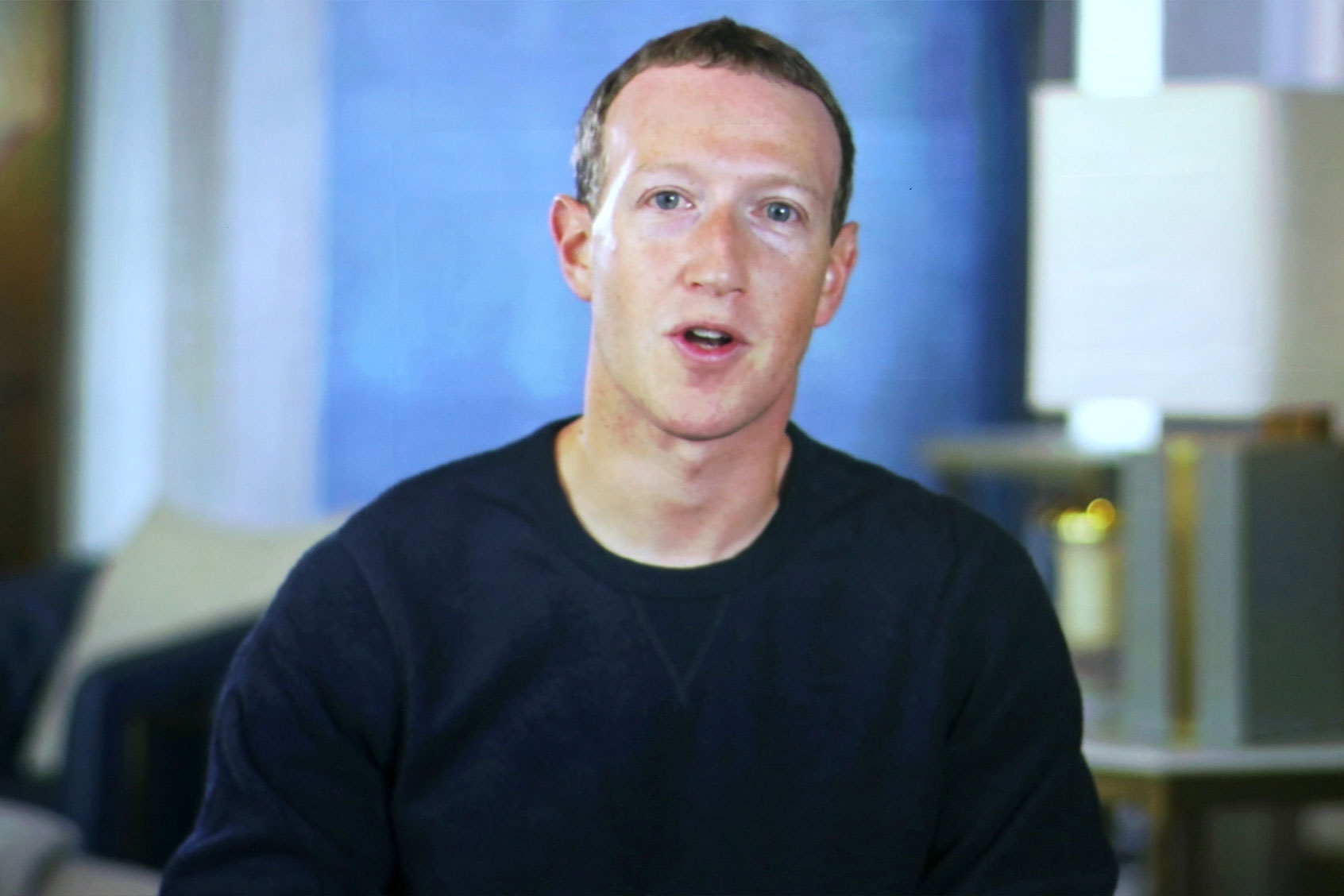
When David Cameron became Britain’s prime minister, he made an appointment to talk to another head of state — Mark Zuckerberg. Yes, that Mark Zuckerberg: the billionaire wunderkind, the founder of Facebook. At the meeting at 10 Downing Street, Prime Minister Cameron and Facebook president Zuckerberg discussed ways in which social networks could take over certain governmental duties and inform public policymaking.

A month later, Zuckerberg and Cameron had a follow-up conversation, later posted on YouTube. Cameron, dressed in suit and tie, chatted with Zuckerberg, who wore a blue cotton T-shirt. “Basically, we’ve got a big problem here,” Cameron pointed out to Zuckerberg, describing the U.K.’s financial woes.

Zuckerberg outlined how Facebook could be used as a platform to decrease spending and increase public participation in the political process: “I mean  all these people have great ideas and a lot of energy that they want to bring, and I think for a lot of people it’s just about having an easy and a cheap way for them too to communicate  their ideas.”

“Brilliant,” Cameron said.

Within a year, Zuckerberg had a seat at the table with government leaders. In May 2011, he attended the G-8 Summit, the annual meeting of key heads of state (named after the  eight advanced economies—France,  the  United  States, the United Kingdom, Germany, Japan, Italy, Canada,  and Russia). The media reported that world leaders from German  Chancellor Angela Merkel to French President Nicolas Sarkozy were more in awe of Zuckerberg than he was of them.

Zuckerberg summarized  how Facebook had played a role in worldwide democratic movements and pressed his own policy agenda — urging European officials to back off of proposed regulation of the Internet. “People tell me, ‘On the one hand, it’s great you played such a big role in the Arab Spring, but it’s also kind of scary because you enable all this sharing and collect information on people,’” Zuckerberg said.

Is it odd to think of Mark Zuckerberg as a head of state? Perhaps. But Facebook has the power and reach of a nation. With more than 750 million members, Facebook’s population would make it the third-largest nation in the world. It has citizens, an economy, its own currency, systems for resolving disputes, and relations with other nations and institutions. After watching the video chat between Cameron and Zuckerberg, I became intrigued by the concept of a social network as a nation. I began to wonder: What kind of government rules Facebook? What are its politics? And, if it is like a nation, should it have a constitution?

People are understandably drawn to social networks. For individuals, social networks allow people to stay in touch, performing some of the same functions performed by telephones and letters in previous eras. But laws protect us against outsiders tapping our phones and reading our private mail. Even prisoners can send mail to their lawyers without having those letters read by prison officials. But everything we post on social networks is fair game for the engineers behind Facebook and any other data miner.

Facebook and other social networks are transforming huge swaths of our lives— how we mate, shop, work and stay in touch with the people we love. They are also changing the political process itself. When John F. Kennedy and Richard Nixon debated on television, concerns were raised that politics would deteriorate into a contest where the most telegenic candidate won. But TV debates took place out in the open — anyone could tune in. And the Federal Communications Commission adopted regulations so that opposing candidates were granted equal time to present their views.

With social networks, it’s not the most telegenic candidate who wins, but the one with the best data crunchers. Barack Obama was swept into office largely because of his presence on the Web. His social network campaign was managed by one of the founders of Facebook, 24-year-old Chris Hughes, who took a leave from the company to help propel Obama into office.

The Republicans did Obama one better and stormed Washington in the 2010 elections through the targeted use of social network data. Data aggregators used data from social networks, such as people’s interest in the Bible, past political contributions, voter registration status, shopping history, and real estate records to identify conservative voters by name and provide that information to Republican political hopefuls. The candidates could then email the people directly, making promises and taking stances that were never revealed to the public — and were shielded from the scrutiny of their opponents.

With not only the rights of individuals at stake, but also the future of the political process itself, it’s time to analyze how we as social network citizens can be protected. What responsibilities should individuals bear? What rules should govern what can be done with our digital selves and our data by the social networks themselves and the third parties who gain access to that information? What rights should social network citizens have?

The complex issues raised by social networks came to the fore after the 2011 British riots. Prime Minister Cameron, who’d previously felt that social network communities were “brilliant,” felt differently once rioters began to communicate with each other via Facebook, Twitter and BlackBerry Messenger to share information about what shops to loot.

“Everyone watching these horrific actions will be struck by how they were organised by social media,” the prime minister told the House of Commons.  “So we are working with the police, the intelligence services and industry to look at whether it would be right to stop people communicating via these websites and services when we know they are plotting violence, disorder and criminality. I have also asked the police if they need any other new powers.”

Member of Parliament David Lammy pointed out that rioters had used BlackBerry Messenger to send encrypted and almost untraceable messages to each other. He urged Research in Motion, the maker of BlackBerry, to shut off that service entirely until order was restored in the streets. The prime minister similarly asked Twitter and Facebook to remove messages, images and videos that could incite riots.

Civil rights advocates reacted immediately. “How do people ‘know’ when someone is planning to riot?” asked Jim Killock, the executive director of the online advocacy organization Open Rights Group. “Who makes that judgment?” Legitimate advocacy and well-grounded protests will be stifled if social networks and websites are pressured to censor their members.

Social networks have stunning benefits. But the  citizens of Facebook  Nation who see those benefits may not realize the downside. The young nation was founded only recently, less than a decade ago. Its original citizens were college students who are probably still too young to have experienced rampant discrimination in jobs, romance or credit lines based on what they’ve posted. They may not yet realize the extent to which their offline self is being overshadowed by their digital doppelgänger.

People came to Facebook Nation for freedom of association, free expression and the chance to present an evolving self. But unless people’s rights are protected, social networks will serve to narrow people’s behavior and limit their opportunities, rather than expand them. Already people are being fired for engaging in perfectly legal activities, such as the wine-drinking employee who is tagged on Facebook. And new norms of behavior are emerging that do not reflect off-the-grid life, such as rules forbidding judges to “friend” lawyers.

Unlike a democracy, Facebook is unilaterally redefining the social contract — making the private now public and making the public now private. Private information about people is readily available to third parties. At the same time, public institutions, such as the police, use social networks to privately undertake activities that previously would have been subject to public oversight. Even though cops can’t enter a home without a warrant, they scrutinize Facebook photos of parties held at high school students’ homes. If they see the infamous red plastic cups suggesting that kids are drinking, they prosecute the parents for furnishing alcohol to minors.

Social networks are taking over many of the traditional functions of government without any legal protections for their citizens. The underlying economic goal of social networks — monetizing personal data — is invisible to their citizens and may in fact be herding them into a land that they wouldn’t want to inhabit.

The U.S. Constitution was penned by philosopher-politicians gravely concerned with the metaphysical question of what was necessary for the flourishing of individuals and society. They understood that living socially and with aspirations meant adopting principles to deal with everything from resolving disputes to encouraging innovation, from structuring relationships with other nations to protecting individual rights.

They recognized the value of protecting people’s privacy and assuring the oversight of governmental actions. They required that the governing rules about the relationship between citizens and the government be clearly stated in advance and not changed without adequate notice and citizens’ input. They favored openness about what the government was doing, believing, as U.S. Supreme Court Justice Louis Brandeis said a century later, that “sunshine is the best disinfectant.” They also saw the value of being able to remake oneself, to start afresh.

Instead of philosophy, computer engineering and data collection are the driving forces behind the policies of Facebook Nation. The quest for more and more information about more and more people is what stimulates the Facebook economy because the service makes its money on data. The executives behind social networks often disregard the values that are central to the U.S. Constitution. The Facebook founders, for example, view the desire for privacy as something to be outgrown. In a 2010 interview, Mark Zuckerberg commented on Facebook’s decision to make certain previously private information public: “People have really gotten comfortable not only sharing more information and different kinds, but more openly and with more people.” Former Facebook programmer Charlie Cheever said, “I feel Mark doesn’t believe in privacy that much, or at least believes in privacy as a stepping-stone.”

And the very structure of social networks prevents you from reinventing yourself. Once information about you and photos of you are on the Web, they can be used against you in perpetuity.

As we each begin to live a parallel life on Facebook, it’s time to figure out, as with any new country, what principles should govern this new nation. Do the principles on which the United States and other democracies were founded still resound with people today? Could they provide guidance for the governance of social networks?

The  project of proposing a Social Network Constitution  may seem foolish. Facebook, Myspace, Google, Twitter, and YouTube are private entities, and the U.S. Constitution  governs only the actions of the government, not private actors. But that is not the case in other countries, such as Germany, Ireland, South Africa and the European  Union, where the fundamental values expressed in the national constitution can apply to companies in addition to governments. After all, companies may be more powerful than some governments — that’s certainly the case with Facebook.

And even in the United States, the fundamental values expressed in the U.S. Constitution  provide guidance for the private realm.  The 14th Amendment’s idea of equal protection under the law provided the foundation for Congress to enact civil rights laws that govern the conduct of corporations and private citizens. The Fourth Amendment’s protections for privacy provided judges with the inspiration to allow lawsuits against individuals and corporations that disseminated a person’s private information without consent.

We needn’t think of a Social Network Constitution  as a set of rules, like the Internal Revenue Code, that would govern in minute detail what a social network should or shouldn’t do. Instead, think of it as a touchstone, an expression of fundamental values, that we should use to judge the activities of social networks and their citizens. These principles could be used to frame the societal debates about social networks — guiding not only the decisions of citizens about what technologies they should reject but also the decisions of courts and legislatures about what principles should govern.

In many instances, the principles would help courts make a determination  in a case, analyze existing laws, and decide whether or not to let evidence in at trial. These values could also guide legislators who are considering adopting new laws to regulate social networks.

The very nature of social networks is constantly changing. New technologies are introduced and individual users face new issues. A set of strict, rigid rules governing the use of social networks might be effective now but will quickly become outdated, just as other laws that are intended to protect people, such as wiretapping laws and consent laws, fail to protect and serve the needs of the current online community. Unlike the rigid, formula-driven Internal Revenue Code, a Social Network Constitution should be flexible and recognize basic principles that we should never outgrow. Its provisions would address the actions of government agencies, social institutions and society at large.

Every democratic nation has governing principles about what rights its citizens have over property, privacy, life and liberty. The citizens of Facebook Nation deserve no less.

Excerpted from I Know Who You Are and I Saw What You Did: Social Networks and the Death of Privacy,” by Lori Andrews. Copyright 2012 by Lori Andrews. Published by Free Press.

Continue Reading Close

Lori B. Andrews is a professor at Chicago-Kent College of Law and the director of the Institute for Science, Law and Technology. She is the author of 14 books, including "The Clone Age: Adventures in the New World of Reproductive Technology."

NYPD eyed U.S. citizens in intel effort

Police reportedly monitored Americans under no suspicion of wrongdoing, simply because of their ethnicity

A uniform from the NYPD is displayed during a special service to commemorate the 10th anniversary of the Sept. 11 terrorist attacks, at a church in New Plymouth, New Zealand, Sunday, Sept. 11, 2011. The US team will play Ireland in their opening Rugby World Cup game later today. (AP Photo/Dita Alangkara)(Credit: AP)

The New York Police Department put American citizens under surveillance and scrutinized where they ate, prayed and worked, not because of charges of wrongdoing but because of their ethnicity, according to interviews and documents obtained by The Associated Press.

The documents describe in extraordinary detail a secret program intended to catalog life inside Muslim neighborhoods as people immigrated, got jobs, became citizens and started businesses. The documents undercut the NYPD’s claim that its officers only follow leads when investigating terrorism.

It started with one group, Moroccans, but the documents show police intended to build intelligence files on other ethnicities.

Undercover officers snapped photographs of restaurants frequented by Moroccans, including one that was noted for serving “religious Muslims.” Police documented where Moroccans bought groceries, which hotels they visited and where they prayed. While visiting an apartment used by new Moroccan immigrants, an officer noted in his reports that he saw two Qurans and a calendar from a nearby mosque.

It was called the Moroccan Initiative.

The information was recorded in NYPD computers, officials said, so that if police ever received a specific tip about a Moroccan terrorist, officers looking for him would have details about the entire community at their fingertips.

The documents show how New York’s rich heritage as a place where immigrants traditionally have blended in and built their lives now clashes with today’s New York, where police see blending in as one of the first priorities for would-be terrorists.

To prevent attacks, police monitored the path that generations of immigrants followed: getting an apartment, learning English, finding work, assimilating into the culture. Activities such as haircuts and gym workouts were transformed from mundane daily routines into police data points.

A U.S. citizen in Queens, for example, starts work each day at what police labeled “a known Moroccan barbershop.”

The AP previously revealed the secret operations of the NYPD intelligence division as it mapped the Muslim community in and around New York, monitored life in ethnic neighborhoods and scrutinized mosques. The Moroccan Initiative was one of the division’s projects.

Such programs began with help from the CIA under President George W. Bush and have continued with at least the tacit support of President Barack Obama, whose administration repeatedly has sidestepped questions about them. It is unclear whether Mayor Michael Bloomberg oversaw the programs. He has refused to comment directly about them.

In response to the AP’s earlier stories, the CIA’s inspector general is investigating whether its unusually close relationship with the NYPD was unlawful.

NYPD spokesman Paul Browne did not return messages seeking comment about the Moroccan Initiative. In an earlier email, he said the department was not involved in wholesale spying, but rather was trying to document the likely whereabouts of terrorists.

“The unit’s personnel would try to establish, for example, what border crossing a terrorist entering New York would use, what flop house he’d use, what Internet cafe he’d frequent to communicate, etc.,” he wrote.

It’s unclear exactly when the initiative began and whether it continues in any form. Current and former officials told the AP that it started in response to the 2003 suicide bombings that killed 45 people in the Moroccan city of Casablanca and the 2004 train bombing in Madrid that was linked to Moroccan terrorists.

In early meetings, police were told there was no specific threat to New York from Moroccans, officials said, but they were instructed to gather intelligence on the Moroccan community because of concerns Moroccan terrorists might strike here too.

NYPD intelligence chief David Cohen, a former senior CIA officer, oversaw the program, current and former officials said. Many of the documents obtained by the AP were prepared for Police Commissioner Ray Kelly but because of the volume of such documents his office receives, it’s unclear whether he read them.

New York City law prohibits police from using race, religion or ethnicity as “the determinative factor” for any law enforcement action. Civil liberties advocates have said that is so ambiguous it makes the law unenforceable. The NYPD has said intelligence officers do not use racial profiling or troll ethnic neighborhoods for information.

The documents obtained by the AP, many of which were marked “secret,” include a list of “Moroccan Locations,” a virtual tour of the city’s Moroccan neighborhoods. Photos of local businesses were accompanied by notes from plainclothes officers, known as rakers, who quietly kept tabs on ethnic neighborhoods and eavesdropped on conversations.

“A lot of these locations were innocent,” said an official involved in the effort, who like many others interviewed by the AP spoke only on condition of anonymity to discuss sensitive police operations. “They just happened to be in the community.”

Sometimes the notes recorded in police files were detailed, such as the officer who reported that a local sandwich shop was close to a mosque and said the store was closed during Friday prayers.

“The restaurant serves only Halal meat,” the document said. “The majority of the customers are religious Muslims.”

Halal meat is prepared under religious rules similar to kosher food.

Other businesses were described with fewer details. But in every case, the officers noted the ethnicity of the owners.

“In America, you don’t put people under suspicion without good reason,” said Rep. Rush Holt, D-N.J., who reviewed some of the documents obtained by the AP and has urged the Justice Department to investigate. “The idea that people in a group are suspect because of being members of a group is profiling, plain and simple.”

Business owners in the Astoria neighborhood of Queens, where many of the pictures were taken, at first expressed amusement at seeing themselves alongside their friends and neighbors in documents compiled by officers hunting for terrorists.

“Police come here for what? We cut hair all day,” said Amine Darhbach, a U.S. citizen barber who charges $12 for a haircut and sends a portion of his earnings to his family in Morocco each month.

As they flipped through the documents, they said they grudgingly accepted the police attention. It is hardly news to them that, since the 2001 terrorist attacks, Muslims are under greater scrutiny by the public and law enforcement.

“We’ve been harassed for so long, it doesn’t make any sense to complain,” said Leo Santini, a cafe owner and U.S. citizen who changed his name from Mohamed Hussein because he thought he would be treated better without such an Arab name. His three American kids, he said, “don’t look Arab, so they won’t have any problems.”

Finally, there was frustration and anger about being included in police documents.

“All I want is the best for my daughter and my community and to be treated like a new American citizen,” said Sanaa Bergha, whose travel agency was among the businesses photographed in the intelligence files.

Like others, Bergha said that, if asked, she would talk to police about how she could help keep the city safe. But she’s only spoken to the police twice, she said. Once was after she was burglarized. The second was when she reported customers she suspected of making fraudulent documents.

The documents on the Moroccan businesses were compiled by a secretive team called the Demographics Unit, which police originally denied existed. After the AP obtained police documents describing the unit as a team of 16 officers with a mission to map and monitor ethnic neighborhoods, the department said the Demographics Unit used to exist but actually never had more than eight officers.

Browne, the department’s spokesman, has said the unit only followed leads. There is no indication in the documents, however, that police were only investigating criminal leads. Information about crimes was included in the Moroccan Initiative files, but these do not appear to be the program’s focus.

“The Demographics Team was instructed by me to re-canvas the city for any new locations and they came across a newly identified hotel that is referred to Moroccan tourists,” an unidentified supervisor wrote in an undated update on the initiative.

One police document, for example, lists taxi companies and Dunkin Donuts and Subway franchises known to hire Moroccans and other Arabs. A local gym and barber shop also are mentioned. The end of the document includes a section about criminal activity and identifies four businesses believed to be involved in marriage and document fraud and drug dealing.

Another document describes 14 restaurants, two travel agencies and a meat market catering to the Moroccan community. Another said the NYPD produced a list of every Moroccan cab driver in the city. Officers tried to interview them, but many were unavailable to be questioned because they were out working 12- to 14-hour shifts, the document said.

Current and former officials said the information collected by the Demographics Unit was kept on a computer inside the squad’s offices at the Brooklyn Army Terminal. It was not connected to the department’s central intelligence database, they said.

When a Moroccan was arrested, according to the documents, a unit called the Citywide Debriefing Team would visit him in jail or at his home. Each was asked how someone coming to the United States from Morocco might keep a low profile. Officers had a list of 13 questions, including where such a person might live, obtain identification cards, eat, worship and learn English.

The questions helped police identify small apartments in Brooklyn where Moroccan immigrants shared rooms soon after arriving in New York. Police visited one apartment in 2007 to meet with someone who had been arrested the prior year, according to the files. The officer noted the number of bedrooms, the layout, the furnishings and a wall calendar from a nearby mosque.

“There was a small table as well as an entertainment center,” the document said. “There were two Korans. One on top of each speaker.”

Police officials said such detailed note-taking was the result of enormous pressure inside the department. Officers assigned to conduct interviews and visit homes were told by supervisors that, if the subject of their interviews one day turned violent, their reports would be scrutinized with an eye for what warning signs were missed, officials said.

It was intended to keep officers sharp and remind them of the seriousness of the job, but officials said it encouraged well-meaning officers to record even innocent details.

Unlike the information from the Demographics Unit, the information from debriefings and personal visits was reported back to headquarters and entered into the police department’s central intelligence database, the Intelligence Data System, officials said.

Because of lawsuits by civil liberties groups, police lawyers have set stricter limits in recent years about information the NYPD compiles about people not accused of any crime, current and former officials said. Lawyers review police reports and sometimes require officers to remove information or rewrite their reports. Some information on innocent behavior is removed. Other information is labeled “sealed,” which means it can be seen only by very senior officials, the officials said.

Meanwhile, police received from the U.S. government regular updates on foreign visitors entering New York, according to documents and interviews. Police departments often receive information on visitors on a case-by-case basis. U.S. Customs and Border Protection, which maintains the federal documents, declined to tell the AP whether such broad access to its immigration files by a city police department was unusual.

Using the documents, known as I-94s, New York police located and interviewed Moroccans and, when possible, the families they were visiting. Often, that would take them to the homes of U.S. citizens.

Police couldn’t force people to talk to them or let them inside their homes, so officers often used a cover story about a crime in the neighborhood or a report of a missing child nearby, officials told the AP.

During such interviews, the officer would make note of the surroundings: What was on television? How many people lived there? What kind of furniture? If possible, police would collect from residents their names, phone numbers and occupations.

All this underscores the NYPD’s transformation from a police department solving murders and muggings to a domestic intelligence agency. It’s a transformation that Kelly, the police commissioner, makes no apologies for. He has credited intelligence efforts with thwarting terrorist attacks, and White House counterterrorism adviser John Brennan has called those efforts heroic.

No police department in the United States is known to employ programs like New York’s. Police in Los Angeles, the nation’s second-largest city, once considered a program that would have mapped the area’s Muslim communities, but it was shut down after news coverage sparked wide criticism.

Other police departments, including those in cities with Moroccan populations, operate differently — whether for philosophical reasons, because they lack the NYPD’s manpower or because their communities haven’t been targeted repeatedly by terrorists like New York.

In Revere, Mass., police did not dispatch officers into its Moroccan community after the overseas attacks. Revere, a city north of Boston, has a small Moroccan enclave of about 800 people, but it ranks among the top 10 largest Moroccan communities in the country, according to the Census Bureau.

“We wouldn’t just go and start interviewing people because of something that happened in another country,” police Capt. James Guido said. “The guys here wouldn’t even get involved in something like that.”

New York sees things differently, not just because its Moroccan community is a population of about 9,000 and by far the nation’s largest, but because Kelly has made it clear that the department will no longer wait for something to happen.

At the barber shop in Queens, Darhbach said he agrees police should keep the city safe but said that as an American citizen, his business shouldn’t be listed in police files just for serving Moroccan customers. But like many of his neighbors, who grew up under the oppressive police forces of the Middle East and North Africa, Darhbach said things could be worse.

“In Morocco,” he said, “police just come and take you away.”

——

Read a selection of NYPD documents on the Moroccan Initiative http://bit.ly/o7VxoR

Contact the AP’s Washington investigative team at dcinvestigations(at)ap.org

Follow Apuzzo, Sullivan and Goldman at http://twitter.com/mattapuzzo, http://twitter.com/esullivanap and http://twitter.com/goldmandc

Continue Reading Close

The shadow of suspicion falls in the Mall of America

Visitors who have done nothing wrong are winding up identified in counterterrorism reports

On May 1, 2008, at 4:59 p.m., Brad Kleinerman entered the spooky world of homeland security.

As he shopped for a children’s watch inside the sprawling Mall of America, two security guards approached and began questioning him. Although he was not accused of wrongdoing, the guards filed a confidential report about Kleinerman that was forwarded to local police.

The reason: Guards thought he might pose a threat because he had been looking at them in a suspicious way.

Najam Qureshi, owner of a kiosk that sold items from his native Pakistan, also had his own experience with authorities after his father left a cellphone on a table in the food court.

The consequence: An FBI agent showed up at the family’s home, asking if they knew anyone who might want to hurt the United States.

Mall of America officials say their security unit stops and questions on average up to 1,200 people each year. With 4.2 million square feet under one roof, the two-decade-old mall is a monument to suburban shopping and entertainment. Nearly 100,000 people from around the world pass through on a given day.

The interviews at the mall are part of a counterterrorism initiative that acts as the private eyes and ears of law enforcement authorities but has often ensnared innocent people, according to an investigation by the Center for Investigative Reporting and NPR.

In many cases, the written reports were filed without the knowledge of those interviewed by security. Several people named in the reports learned from journalists that their birth dates, race, names of employers and other personal information were compiled along with surveillance images.

In some cases, the questioning appears to have the hallmarks of profiling — something that officials at the mall deny. In nearly two-thirds of the cases reviewed, subjects are described as African-American, people of Asian and Arabic descent, and other minorities, according to an analysis of the documents.

Mall spokesman Dan Jasper said the private security guards would not conduct interviews based on racial or ethnic characteristics because “we may miss someone who truly does have harmful intent.”

Much of the questioning at the mall has been done in public while shoppers mill around, records show. Two people, a shopper and a mall employee, also described being taken to a basement area for questioning. Officials at the mall would not address individual cases.

“The government is not going to protect us free of charge, so we have to do that ourselves,” said Maureen Bausch, executive vice president of business development at the mall. “We’re lucky enough to be in the city of Bloomington where they actually have a police substation here [in the mall] … They’re great. But we are responsible for this building.”

Reporters at the Center for Investigative Reporting and NPR obtained 125 suspicious activity reports totaling over 1,000 pages dating back to Christmas Eve, 2005. The documents, provided by law enforcement officials in Minnesota, give a glimpse inside the national campaign by authorities to collect and share intelligence about possible threats.

The initiative exemplifies one of the enduring legacies of the terrorist attacks 10 years ago: Organizations and individuals are now encouraged by U.S. leaders to watch one another and report any signs of threats to homeland security authorities.

There is no way for the public to know exactly how many suspicious activity reports from the Mall of America have ended up with local, state and federal authorities. CIR and NPR asked 29 law enforcement agencies under open government laws for reports on suspicious activities. Only the Bloomington Police Department and Minnesota’s state fusion center have turned over at least a portion of the paperwork.

In 2008, the mall’s security director, Douglas Reynolds, told Congress that the mall was the “number-one source of actionable intelligence” provided to the state’s fusion center, an intelligence hub created after 9/11 to pull together reports from an array of law enforcement sources.

Information from the suspicious activity reports generated at the mall has been shared with Bloomington police, the FBI and, in at least four cases, the federal Immigration and Customs Enforcement agency.

The push to encourage Americans to report suspicious activity began in the aftermath of Sept. 11, 2001, when government officials and citizens found out there had been hints about the attackers that intelligence analysts had missed.

In the decade since, the Justice Department and Department of Homeland Security have launched programs urging citizens to report suspicious activity. The private sector, including the utility industry and other businesses concerned with protecting “critical infrastructure,” have their own surveillance and reporting systems. Homeland Security Secretary Janet Napolitano has made such reporting a priority.

Last year the Department of Homeland Security launched a promotional campaign, “If you see something, say something,” encouraging Americans to report anything perceived as threatening.

Among those formally enlisted were parking attendants, Jewish groups, stadium operators, landlords, security guards, fans of professional golf and auto racing and retailers such as the Mall of America. Visitors “may be subject to a security interview,” the mall’s website says.

The suspicious activity reports from the mall are rich with detail. They contain personal information, sometimes including Social Security numbers and the names of family members and friends. Some of the reports include shoppers’ travel plans.

Commander Jim Ryan of the Bloomington Police Department said shoppers are not under arrest when stopped for questioning by private security. He said even he would walk away if the questioning seemed excessive.

“I don’t think that I would subject myself to that, personally,” he said. Ryan, however, defends security procedures at the mall.

Ryan said such reports are crucial to the nation’s safety in the post-9/11 era. He said the suspicious activity reports could be held by his agency for two decades or longer. He acknowledged that the mall’s methods, and reports the security guards file, may “infringe on some freedoms, unfortunately.”

“We’re charged with trying to keep people safe. We’re trying to do it the best way we can,” he said. “You may be questioned at the Mall of America about suspicious activity. It’s something that may happen. It’s part of today’s society.”

Some national security and constitutional law specialists question the propriety and effectiveness of such reports.

Dale Watson, a former top counterterrorism official with the FBI, said the mall’s reports suggest that anyone could be targeted for intrusive questioning and surveillance.

“If that had been one of my brothers that was stopped in a mall, I’d be furious about it — if I thought the police department had a file on him, an information file about his activities in the mall without any reasonable suspicion to investigate,” said Watson, who played key roles in the investigations of the 1995 Oklahoma City bombing and a 1998 attack on U.S. embassies in East Africa.

Shoppers, who for the most part had no idea that a visit to the mall led to their personal information being shared with law enforcement, reacted with anger and dismay when shown their reports.

“For all the 30 years that I have lived in the United States, I’ve never been a suspect,” said Emil Khalil. The California man was confronted at the mall in June 2009 for taking pictures, and he said an FBI agent later questioned him at the airport. “And I’ve never done anything wrong.”

Monica Lam, Center for Investigative Reporting

Brad Kleinerman, at home with his youngest son, was stopped after Mall of America security guards said he looked at them in a suspicious manner.

Mike Rozin, chief of a special security unit at the mall since 2005, acknowledged that the vast majority of people who come into contact with his unit “have done nothing wrong, have no malicious intent.”

“They just act in a suspicious manner that obligated me to investigate further,” Rozin said. “We talked to them for an average of five minutes, and they’re able to continue their shopping.”

Francis Van Asten’s experience with mall security lasted much longer.

On Nov. 9, 2008, the Bloomington resident videotaped a short road trip from his home to the Mall of America. Van Asten, now 66, planned to send it to his fiancée’s family in Vietnam so they could see life in the United States.

As he headed down an escalator, camera in hand, mall guards caught sight of him.

“Right away, I noticed he had a video camera and was recording the rotunda area,” a security guard wrote in a suspicious activity report.

Van Asten, a one-time missile system repairman for the Army, was questioned for approximately two hours, records show. He was asked about traveling to Vietnam and how he came to know people there. The FBI Joint Terrorism Task Force was alerted. He was given a pat-down search, and the FBI demanded that his memory card be confiscated “for further analysis.”

Authorities were concerned about his footage of an airplane landing at Minnesota’s nearby international airport. They also worried Van Asten was conducting surveillance of mall property.

Exhausted and rattled, Van Asten had trouble finding his car after the ordeal was over.

“I sat down in my car and I cried, and I was shaking like a leaf,” Van Asten said in an interview at his home. “That kind of sensation doesn’t leave you real quickly when you’ve had an experience like that.”

Bobbie Allen, a musician who lives in downtown Minneapolis, was stopped for writing in a notebook. As he waited for a lunch date on June 25, 2007, Allen jotted down some words, which caught the attention of security guard.

One guard wrote in Allen’s suspicious activity report: “Before the male would write in his notebook, it appeared as though he would look at his watch. Periodically, the male would briefly look up from his notebook, look around, and then continue writing.”

Guards asked for his name and for whom he was waiting. Allen, who is black, felt singled out for his race, according to the report. The guard responded that he was “randomly selected” for an interview.

The guards called Bloomington police, after deciding Allen was uncooperative and his note-taking “suspicious.” Allen was cleared, but a suspicious activity report was compiled, complete with surveillance photo, age, height, address and more. Much of that information ended up in a Bloomington police report.

Jeffrey Rosen, a law professor at George Washington University, said such actions trample on traditional civil liberties protections and shift unaccountable power into private hands.

Rosen said the risk of abuses is high, particularly if there turns out to be a lack of proven results. “If all they’re getting for amassing suspicious activity reports on innocent people in government databases is the arrest of a few low-level turnstile jumpers and shoplifters, that doesn’t seem very sensible,” Rosen said.

In Allen’s case, he responded in a way few others have: He complained to the Minnesota Department of Human Rights and filed a lawsuit. Department investigators concluded that there was probable cause to support Allen’s claim of racial discrimination.

Allen declined an interview, citing a settlement agreement reached with the mall.

Not everyone had a negative reaction to being written up. After a report naming him was forwarded to the FBI, Sameer Khalil of Orange County, Calif., said he believed that police and private security have an important job they must do.

“I think [the mall's program] makes America safer,” he said.

Businessman Najam Qureshi discovered how the suspicions at the mall can linger.

The FBI arrived on his doorstep shortly after a run-in with mall security. His family moved from Pakistan to the United States when Qureshi was 8. Police once pulled over their car for a minor traffic violation, and Qureshi remembers his father saying, “You don’t have to fear the police here. They are here to help.”

Qureshi opened a small kiosk at the mall so his aging father, a former aeronautical engineer named Saleem, could keep busy. One day in early 2007, Saleem Qureshi left his cellphone in a mall food court. When he returned for it, security personnel had established a “perimeter” around the phone, along with other unattended items nearby that did not belong to Saleem — a stroller and two coolers.

The “suspicious” objects eventually were cleared by security, documents show. But mall guards pursued Saleem Qureshi with questions.

“Qureshi moved around a lot when answering questions,” security guard Ashly Foster wrote in a report. “At one point, he moved to his kiosk and proceeded to take items off of two shelves just to switch them around. … He seemed to get agitated at points when I would ask more detailed questions.”

Four years after his father ended up in a suspicious activity report, his son was shown the report for the first time.

“Everybody that lives in this country,” said Najam Qureshi, “is a person of interest as far as these reports are concerned.”

– - – - – - – - – -

The Center for Investigative Reporting, the nation’s oldest independent, nonprofit investigative news center, reported this story along with National Public Radio. You can contact the reporters at gwschulz-at-cironline.org, zwerdling-at-npr.org and abecke-at-cironline.org.

Read the extended version on the Center for Investigative Reporting’s project site, americaswarwithin.org.

Margot Williams of NPR contributed to this report.

Continue Reading Close

Page 1 of 21 in Privacy

www.salon.com/topic/privacy/index.html