Barry B. Doyle

Could this picture get me arrested?

A Florida bill would make it a felony to take photographs on or of farms without express written consent

  • more
    • All Share Services

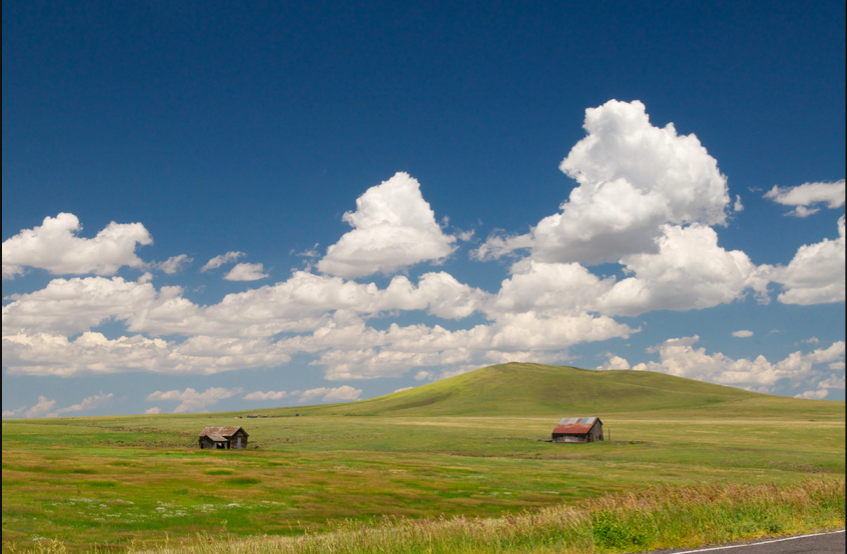
Could this picture get me arrested?An old farm on Johnson Mesa, northern New Mexico. Photo taken by the author.

If Republican Florida state Sen. Jim Norman, from Tampa, has his way, the above image would be a felony. Some more ifs: If I lived in Florida and if Senate Bill 1246 becomes law as written, then I’ve committed a felony by not getting written permission from the farm owner before taking that photograph — or these: 

Cow part, barb wire abstract, larger view here.

Cow crop circles, feeding in the winter near Lake Tahoe on the Nevada side, taken from my brother’s plane. Larger view is here.

If you look on Sen. Norman’s website, you’ll see his proposed bill as the innocuously titled “Farms.” The submitted bill has a slightly more onerous title: 

A bill to be entitled:

An act relating to farms; prohibiting a person from entering onto a farm or photographing or video recording a farm without the owner’s written consent; providing a definition; providing penalties; providing an effective date.

You can see the actual proposed bill here. It’s not very long, comprising three small paragraphs, but it’s a mess. The gist of it is that photographers no longer have the First Amendment freedoms they’ve enjoyed for the past sesquicentennial as established by law and precedent. To wit:

Section 1. 

(1) A person who enters onto a farm or other property where legitimate agriculture operations are being conducted without the written consent of the owner, or an authorized representative of the owner, commits a felony of the first degree…

That’s not the worst of it. The second section is so poorly written, that even an extension art class of octogenarians from the local community college who are painting pastoral and bucolic rural scenes of rolling hills and picturesque farmlands are subject to arrest and felony convictions.

(2)  A person who photographs, video records, or otherwise produces images or pictorial records, digital or otherwise, at or of a farm or other property where legitimate agriculture operations are being conducted without the written consent of the owner, or an authorized representative of the owner, commits a felony of the first degree…

The wording is ridiculous. When the bill states “at or of a farm,” that includes photographs taken while the photographer is on public property. And, wow, GoogleEarth is in a world of hurt. Maybe it can pixelate all Florida farms as it did for Blair House in Washington, D.C., when Dick Cheney was living there — not that anyone really wanted to see Darth Cheney in a bright yellow micro Speedo sunbathing on the back patio.

Here’s the crux: In spite of what people routinely believe, if you are on public property, say, a roadway or a sidewalk or a path next to a roadway, there is no reasonable expectation of privacy for people who are on public or private property or of any building or structure on private or public property. Anything that is presented for view, or is viewable from a public place, can be photographed. 

According to Bert Krages, attorney at law in San Francisco, and regarded as the leading authority on photographers’ rights in the United States, there are many misconceptions of those rights. 

The general rule in the United States is that anyone may take photographs of whatever they want when they are in a public place or places where they have permission to take photographs. Absent a specific legal prohibition such as a statute or ordinance, you are legally entitled to take photographs. Examples of places that are traditionally considered public are streets, sidewalks, and public parks.

…[T]he following subjects can almost always be photographed lawfully from public places: accident and fire scenes, children, celebrities, bridges and other infrastructure, residential and commercial buildings, industrial facilities and public utilities transportation facilities (e.g., airports), superfund sites, criminal activities, law enforcement officers

You can download a free PDF document from Bert Krages that outlines your rights as a photographer. Once printed, and with a few judicious snips with a pair of scissors, you can fold the document so that it becomes a small handy pamphlet that’s easy to carry and provides a quick reference when needed. The download site is here.

Ironically, unrestricted photography by private citizens has played an integral role in protecting the freedom, security and well-being of all Americans. Photography in the United States has an established history of contributing to improvements in civil rights, curbing abusive child labor practices, and providing important information to crime investigators. Photography has not contributed to a decline in public safety or economic vitality in the United States. When people think back on the acts of domestic terrorism that have occurred over the last 20 years, none have depended on or even involved photography. Restrictions on photography would not have prevented any of these acts. Furthermore, the increase in people carrying small digital and cellphone cameras has resulted in the prevention of crimes and the apprehension of criminals.

Krages has also written a comprehensive handbook for photographers. I have it and have studied it and I encourage all budding, semi-pro and professional photographers to get a copy. 

He does make the point that it is not always the smart or judicious choice to escalate a confrontation. Based on the circumstances, it might be better for your own health and well-being to retreat from certain circumstances. But your rights remain nonetheless. There are other subsequent remedies you can take after someone erroneously says, “Hey, you! You can’t take a photo of that.”

So, who the hell is Jim Norman and why has he proposed this legislation? It’s interesting to note that he is not well liked in his district. He is recently elected, and ran unopposed. There was only one name for the seat he now holds. And yet, voting records report that up to an astounding 60,000 people either did not mark the ballot for him or opted for a write-in candidates who spent no money on campaign advertising. One was a pet store employee and one Kimberly Renspie, a North Carolina college student. 

His candidacy was filled with scandal and lawsuits. His primary election opponent filed suit after that preliminary election exposing circumstances that Norman’s wife purchased a $500,000 home in Arkansas with money from a local Hillsborough businessman. Because of the lawsuit, his name was removed from the ballot for the general election. He was able to get it reinstated on appeal, but it has not been smooth sailing for the freshman senator.  

The speculation is that Norman is toting water for large agribusinesses. The kind of companies that don’t want attention, whether it’s because of the hiring of illegal aliens or of the inhumane practices for both people and animals on those farms. It’s assumed his proposed legislation is targeted at animal rights activists who have a history of photographing and providing videos of questionable conditions for both humans and farm animals. 

People for the Ethical Treatment of Animals’ general counsel, Jeff Kerr, suggests that Sen. Norman show people where the food we consume comes from instead of making criminals of those who uncover malfeasance. Sen. Norman is taking aim at farm animal paparazzi. Because of his connections with big agriculture, a special interest law is being proposed. Big Florida agribusiness doesn’t want any unwitting employment of undercover activists who have hidden cameras outing what is on the other side of that bucolic barn door. We’ll see if the baby is also thrown out with the bathwater. 

Heads up, Florida photographers: A first-degree felony in Florida carries a possible 30-year prison sentence. 

(Update: There is a small flicker of light at the end of this myopic tunnel. The National Press Photographers Association (NPPA) general counsel Mickey H. Osterreicher spoke with a member of Norman’s staff and was assured that the bill would be rewritten to exclude felony criminal charges for photographs taken from public property. That was more than two weeks ago, and to date, no changes have been made.)

A closer look at Sarah Palin’s book tour

When the Mama Grizzly hit the Dallas area in 2009, crowds lined up to see her. This time around, it was a non-event

  • more
    • All Share Services

A closer look at Sarah Palin's book tour

The book signing for Sarah Palin in Dallas this past Sunday was a non-event. I showed up about midday to talk with the Barnes & Noble store director, to see if I could get access as a photographer. It was nice that she remembered me from my own book signing at the store some months past, and was gracious in talking to me about what I could and couldn’t do at the store. Basically, she said no, I couldn’t be in the store and take photos while Palin was there. 

Nikki, the director, knew that I had a photo gig the last time Palin was in the area at a competing independent bookstore. But that was the difference. While I was able to get employee credentials at the Legacy Bookstore in Plano for Palin’s first book, Barnes & Noble is a different animal. All requests had to go through its corporate offices, and I was just too late with my requests. To be honest, I didn’t even know Sarah Palin was going to be in town until Friday.

Another reason I couldn’t get inside was that her reality television people were there filming the event. TLC managed to get Barnes & Noble to restrict other media access during the signing. The local news outlets could not videotape during the actual signing of the books; there were to be no print journalists allowed and no questions could be asked of Palin while she was in the store. 

This was a big difference from when I was a part of the last Palin book signing, which I documented in a piece called “Shooting Sarah Palin.” (Folks, I know the title is a bit provocative, but please know that “shooting” is common photo/journal lingo to refer to a photography gig.) At the Legacy Bookstore event, I was granted broader access than even the official journalists, since I had store employee credentials and badges. 

At the Barnes & Noble event, I was a nobody, but I did get permission from the store director to take some shots outside. Not that I needed it, since the property is accessible to the public. The person or entities who could have asked me to leave — the general property management company — since the parking lot and sidewalks outside the upscale strip center were indeed private property, were nowhere to be found.

Another big difference for this most recent bookstore appearance by Palin is that there seemed to be much less interest in her latest book, and perhaps in her. Granted we’re in an entrenched Republican majority state, but Dallas’ apparatchiks are by and large Democratic. Make no mistake, though, the money and power in the city still derives its base and strength from Republican Party sources. There are plenty of Tea Partiers, rednecks, goat ropers and Republicans to go around. They just didn’t show up this time.

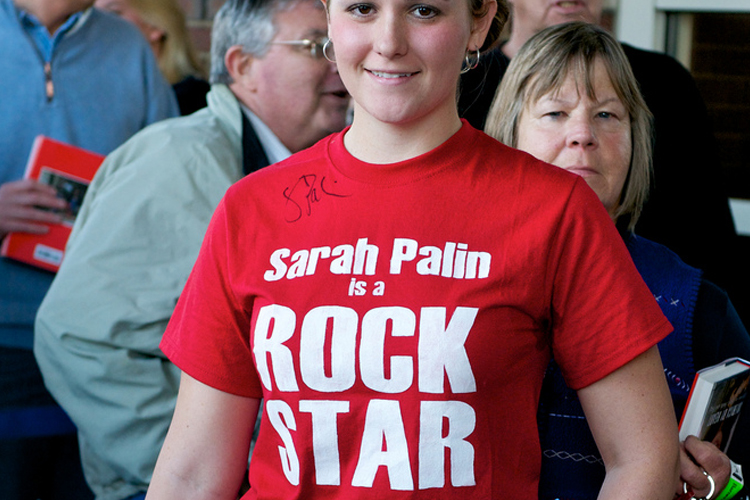
Here’s the waiting line for patrons to get their books signed while Palin was in the store on Sunday:

Compare that with the line waiting outside in 20°F weather at the previous Palin event a full six hours before the doors opened (many waited in line for 14 hours) as seen here in December 2009:

On Sunday, there were about 30 people in line:

At both Dallas-area events, there was a common theme. The people waiting to see her were devoted and enthusiastic followers, and almost all of them were a homogeneous demographic — there were very few people of color, which made that contrast stand out all the more.

The local Fox News affiliate was there, but even it didn’t have much of a presence. You see below a single videographer and fill-in reporter Peter Daut interviewing a waiting supporter.

One last note: At the Legacy Bookstore signing in 2009, Palin signed about 1,300 books. At the Barnes & Noble store, they set aside about 250 books for her to sign.  

It was a non-event. 

Continue Reading Close

Where everything is huge — and deep fried

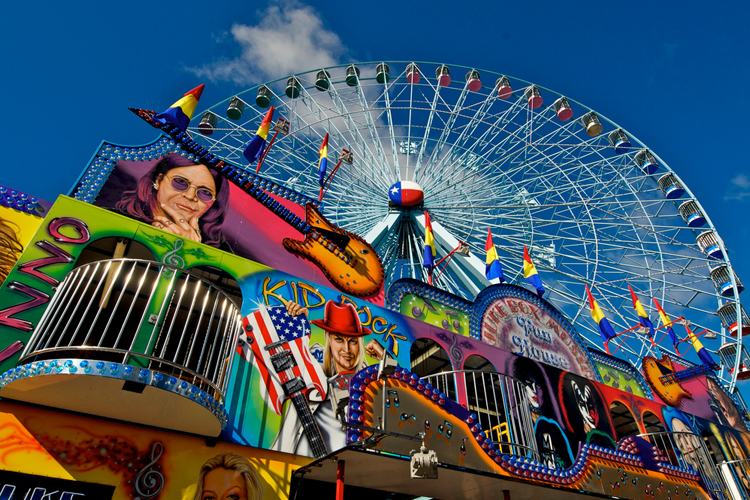
The joys of shooting the one-of-a-kind State Fair of Texas

  • more
    • All Share Services

Where everything is huge -- and deep fried

View the slide show

It’s that time of year again, at least in these parts, for the State Fair. Our northern neighbors have seen their own state fairs come and go, due to pending weather, perhaps, or some other traditions. But in Texas — in our own little infernal ecosystem — it’s finally decent enough to walk around outside by mid-October. It’s a hope anyway — some days can still reach the 90s — but there is the expectation that soon things will not simply melt.

View the slide show