Bernard Starr

Why playing the sex card backfires

Anybody who thinks allegations of infidelity will harm a presidential contender doesn't know the American people

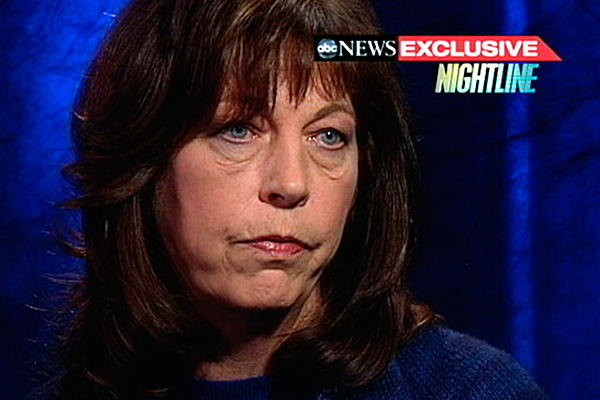
He's a cheater? Who cares? (Credit: ABC screen shot)

First he was down and out — a has-been toting sexually tainted baggage. Then, with an unexpected resurgence, he turned into a viable contender, even showing a lead in the polls. Then came more ugly disclosures about his personal life and a sharp drop below the leading candidate. But surprise, surprise, his numbers begin to soar for the upcoming primary. Wait, hold everything; even more damaging accusations of sexual misconduct from an ex-wife hit the front pages. The media and politicians are outraged and assume that the public is as well. It’s a knockout blow, they forecast. But now they’re puzzled that his standing in the polls continues to rise, with some pundits saying he might win the South Carolina Republican primary. Finally, the results are in and, miracle of miracles, Newt Gingrich is the winner. Big time.

How did this happen? How did a man whose sexual peccadilloes rivaled those of so many others manage to sidestep severe political consequences? The answer is simple. The sex card doesn’t work anymore, particularly when indiscretions are old news and involve consenting adults. Voters of both parties want to hear about affairs of  state, not of the bedroom. A look at the history of infidelity and sexual mores shows why this public shift in priorities has taken place.

Infidelity has risen steadily since the urbanization of societies. This tells us that straying is strongly tied to opportunity. In close-knit agricultural communities, comings and goings of everyone were pretty much an open book. It was tricky to keep infidelity secret. But as we know from literature and famous scandals, men managed to find ways around challenging obstacles. Not so for married women, who were confined to the home, exposing them to closer scrutiny.

That all changed with the Industrial Revolution, which moved families off the farms to anonymous settings in sprawling urban centers. The new work world away from home offered men wider opportunities for sexual liaisons. Women were still more socially restricted than men,  but they too had more prospects for extramarital affairs even though their dalliances might be confined to the butcher, the baker and the candlestick maker.

Not surprisingly, early surveys showed much higher percentages of men than women committing infidelity. Before Alfred Kinsey’s groundbreaking studies of male and female sexuality in the 1950s the preponderance of male infidelity was explained by a prevailing myth: Males were hormonally wired for ravenous sexual arousal while women, with more subdued libidos, grudgingly submitted to male sexual demands.

The sexual revolution that exploded on the scene in the 1960s gave greater license for sexual expression — and awakened women to their equal, if not superior, status as sexual beings. Masters and Johnson and other pioneering researchers added to Kinsey’s findings, confirming the patterns of sexual arousal for men and women throughout the life cycle. These studies showed that males reach peak sexual arousal in their early 20s and, for most men, it remains at that level until about age 30 when physical sexual response begins a slow decline.  In contrast, female sexual arousal capability peaks in the mid-30s and maintains that plateau through the 60s, showing only  slight decline later. Emboldened by awakened sexuality, and greater freedom and independence, women would soon begin to play catch-up with men. But it would take another revolution to ratchet the numbers even higher.

Enter Betty Friedan and the feminist movement of the 1960s. As women began to assume the same work roles as men, the playing fields for infidelity began to equalize. Economic pressure turned more and more spouses into two-paycheck partners. The number of women in the workplace swelled, particularly in male-dominated  professions  like law, banking and financial management. Women whose contacts with men were once  limited to butchers and bakers now found themselves in the company of male professionals and executives every day, often in a highly charged atmosphere that led all too easily to intimacy.  As comedian Rodney Dangerfield lamented, “I asked my wife to have sex. She said, I already gave at the office.”

And indeed women were “playing around,” as the title of  Linda Wolf’s popular book suggests. By 1977, a bestselling book based on research by Shere Hite was able to report that 75 percent of married women had cheated — exceeding the numbers that had ever been reported for their male counterparts. (Kinsey reported that  by age 40, 50 percent of married men were unfaithful.) While Hite’s study is not the most reliable, because it surveyed a skewed sample of upscale sophisticated women, it surely pointed in the accurate upward direction.

More recent surveys say that 30 to 60 percent of married men and women have cheated. But the real rate of infidelity is most likely greater than reported. Even if a questionnaire is “anonymous,” many respondents are unwilling to admit cheating on their spouses. While we can’t be certain of the precise numbers, it’s evident that infidelity is widespread.

And let’s not forget that the advent of drugs to treat erectile dysfunction has given fresh meaning to the old Gene Autry cowboy song “Back in the Saddle Again.” The Viagra revolution has catapulted many older men off the bench and into the infidelity game. According to one report, “one out of ten women says her partner cheated on her for the first time after taking the drug.” Consider  also our highly sexualized society. Some estimates say that Americans spend as much as $12 billion a year on pornography, which is “more than all combined revenues of all professional football, baseball and basketball franchises.” Forbes challenges those figures and comes up with a lower number – a mere $3.9 billion. Not exactly pocket change.

And there’s more. Add the “respectable” sex content on cable television shows that are exempt from network standards. And even  some of today’s PG films would have been censored in previous eras. I recently watched a classic 1958 film — “The Lovers” — by famed French director Louis Malle and was shocked to learn it was considered so scandalous that it was banned in many countries and in communities throughout the U.S. What was so outrageous? A married woman has a one-night stand with an overnight guest at her country estate. She then runs off with him. In the only sex scene, in which the partners are mostly fully clothed, we catch a brief glimpse of Jeanne Moreau’s breasts. Cut those few seconds and the film would get an easy PG rating today, if not a B for boring or an S for silly.

How does all this relate to Newt Gingrich’s victory in South Carolina? People who claim that  errant sexual behavior should disqualify a candidate don’t really vote that position. Bill Clinton’s standing in the polls rose after it was disclosed he had an affair with an intern, even as Republicans sought to impeach him for lying about it. After revelations about Gingrich’s marriage, evangelical voters in South Carolina flocked to the serial polygamist candidate and abandoned the candidate who had been married to the same woman for four decades. Most people are also hypocritical when it comes to their own behavior. There’s a big gap between what people profess and what they actually do.

That should serve as a warning to politicians and the media tempted to play the infidelity sex card against a political foe. Don’t count on raising an enthusiastic hanging posse for cheaters. And if you think you will incite fundamentalists to throw the first stones, think again. The TV series “Desperate Housewives,” which elevates adultery to an Olympic sport, has a loyal following in the Bible Belt.

So what if America is the most religious nation?

if you compare creed and deed, the claim is hollow

Religious America (Credit: iStockphoto/CEFutcher)

Polls consistently tell us that America is the most religious nation in the industrialized world. More that 90 percent of our population say they believe in God, and that they pray regularly. The figure may even be higher when adding the majority of Americans who claim to be atheists but pray, one-third of them often, according to a Baylor University survey.

A Rice University study of 275 scientists at 21 “elite” research universities in the United States found that while 61 percent declared themselves atheists or agnostics, 17 percent have attended church services. Whether genuine devotees, just hedging their bets or doing it for the children (as some say), there’s little doubt that America is a religious nation.

But does professing religious beliefs translate into acting in accord with religious principles? Isn’t behavior the true test? In his New Testament epistle, James expressed the Christian view that “faith without works is dead.” Similarly, Judaism calls for “mitzvahs” — good deeds. And Islam requires acts of charity. Poet Ralph Waldo Emerson offered this challenging formula for sincerity: “Go put your creed into your deed.”

How do creed and deed match up? The 2011 report card for religious America.

More people are slipping into poverty in the United States. The Associated Press recently reported that the U.S. poverty rate rose to a new record of 49.9 million — 16 percent of the U.S. population — based on a more comprehensive Census Bureau measure of poverty. That’s a leap over the 46.2 million previously reported, which was called the highest number in the 52 years the bureau has been publishing figures on poverty.

The number of working poor continues to increase. Today, nearly 1 out of every 3 families in the United States is considered to be “low income” According to the just released 2010-2011 policy brief of the ”Working Poor Families Project” the number of working poor in the United States is higher than ever before seen and “continues to increase at a staggering pace.”

Statistics from the Coalition for the Homeless reveal that 3.5 million Americans are homeless each year with 730,000 homeless on any given night. Of that number, 100,000 are homeless veterans. And children make up 23 percent of the homeless on any given night. Also, 770,000 homeless children are registered in public education systems

In 2009 hunger in the U.S. reached a 14-year high and now, according to Feed America, it’s still increasing at an alarming rate. One in 4 children in the U.S. is living without consistent access to enough nutritious food to live a healthy life. And Americans who use food stamps hit an all time high this past year. Fifteen percent of our population — over 40 million people — now rely on food stamps.

The newly revised more realistic formula for calculating the number of elderly poor is expected to show that the true number is 1 in 5 — more than double the previous estimate. Also with the new formula, overall poverty is expected to increase from 13.2 percent, or 39.8 million people, to 15.8 percent, or 47.4 million, attributable to rising expenses for medical care and several other cost factors. The elderly poor and other seniors on fixed incomes are often forced to choose between food and medicine.

It’s estimated that each year Americans throw away 40 percent of their food. American restaurants toss out more than 6,000 tons of food every day, and grocery stores discard an estimated 30 million pounds of food daily. The Department of Agriculture’s Food Loss Project estimates that Americans throw out 25.9 million tons of food each year. More disturbing: A University of Arizona study reports that 40 to 50 percent of all food ready for harvest never gets eaten.

The United States’ world ranking in life expectancy has fallen from 16th in 1960 to 29th in 2010. A Columbia University study attributes our decline from 11th place in 1950 to the much lower present ranking to our inadequate healthcare system.

“Income inequality in this country is just getting worse and worse and worse,” according to a report on Bloomberg News: ”Since 1980,” the report continues, “about 5 percent of annual national income has shifted from the middle class to the nation’s richest households. That means the wealthiest 5,934 households last year enjoyed an additional $650 billion — about $109 million apiece — beyond what they would have had if the economic pie had been divided as it was in 1980, according to Census Bureau data.”

In the same Bloomberg News report, Howard Buffett, the Berkshire Hathaway Inc. director and son of Chairman Warren Buffett, in speaking sympathetically about the Occupy Wall Street protesters said, “There has never been a larger gap between earnings in this country,” And what is our religious nation’s response? Buffet continues: “There has never been a time in my lifetime when the government is going to cut an incredible amount of programs that support poor people and feed them.”

The wealthiest segment of the population continues to fight ferociously for lower tax rates, tax breaks and, most of all, no increases in taxes on the rich — while joblessness, poverty, homelessness and hunger are rampant in America.

The current federal minimum wage is $7.25 per hour. Several states have departed from the federal minimum wage and have slightly higher rates. The U.S. ranks eighth in minimum wage compared with European countries — just two notches above Slovenia.

Last month President Obama introduced a rule that would extend the federal minimum wage and overtime protections to workers who provide home-based care to the elderly and disabled. Republican legislators and business interests are fighting the rule change, despite the fact that the minimum wage still keeps families hovering at the poverty line. And some favor lowering the minimum wage – to as little as $3 per hour.

Millions of Americans lost their homes in the subprime real estate debacle starting in 2007. Now, a sharp surge in home foreclosures is forecast for 2012 that will bring misery to countless more American families. Meanwhile, banks sit on billions from the public coffers given to them in the great $700 billion bailout — but no one knows for sure where that money is or how it was used. Bank executives have been rewarded for their incompetence with big bonuses, much of which observers suspect were supplied from bailout funds. Adding further insult, banks take no responsibility for their greedy, irresponsible and reckless practices that crashed the economy.

The United States continues to stand out as the only industrialized nation that doesn’t provide healthcare for all its citizens. Efforts to introduce universal healthcare are consistently slammed by conservative Republicans. In September 2011, a New York Times editorial reported the “Bleak News on Health Insurance.” Between 2009 and 2010, the uninsured increased by nearly 1 million. Census bureau figures reported that the number of uninsured rose to 49.9 million from 49 million while those with private health insurance continued to decline. More devastating, employment based policies dropped a staggering 55 percent.

Although the number of uninsured children has declined between 2008 and 2010 due to states expanding access to the Children’s Medicaid Program, the figures, are nothing to boast about. Close to 6 million children remain uninsured.

Religions preach the sanctity of marriage. And the theme of family values abounds in religious sermons. Yet according to the Christian Post, divorce rates in the southern “Bible belt” are the highest in the country. The TV show “Desperate Housewives,” which champions infidelity, has a loyal following in the Bible belt, according to the Chicago Tribune.

Some religions insist on the sexual abstinence before marriage. Isn’t it ironic that the journal Reproductive Health reports a correlation showing that the more religious the state, the higher the rates of teenage pregnancy?

In one area, the United States is indisputably No. 1. The U.S. has the largest prison population in the world. Currently more than 2 million people are incarcerated; and according to the most recent figures, 1 in every 31 adults is in prison, on parole or probation, adding up to a total of 7.3 million at a cost of $68 billion annually. Criminologist Shawn Bushway at the State University at Albany reports that “by age 23, almost a third of Americans have been arrested for a crime.” Our nearest competitor for the No. 1 spot is China. Although China has a far greater total population than the U.S., its prison population is half a million less than ours. Next is Russia with 846,967 imprisoned.

The U.S. military budget for 2012 amounts to $662 billion. That’s greater than the next nine countries combined and accounts for 43 percent of the total world military expenditure, according to the Stockholm International Peace Research Institute. China, the next largest military spender, is a distant second accounting for 7.3 percent followed by the U.K.’s 3.7 and then a tie between France and Russia at 3.6 percent.

Scientists warn that the environmental doomsday clock is ticking. The icebergs are breaking away and melting before our eyes, revealing islands we never saw before. And in 2010, global carbon dioxide emissions that contribute to climate change “jumped by the largest amount on record,” sounding an alarm that we may be approaching a point of no return. We watch and debate but do too little to preserve the environment for ourselves and future generations. In our hubris we forget that we are guests on a tiny rock floating — in an infinite universe of rocks  — that uniquely supports life in a delicate balance of natural and mysterious forces. We have the choice and the responsibility to act. Or, as one theologian cautioned: ”God will not save us.”

What is religion?: Love, caring, serving, giving, sharing, oneness, brother and sisterhood, compassion and selflessness. Summed up: “Thy neighbor is thyself.”

I’m so glad that we are a religious nation.


Continue Reading Close
www.salon.com/writer/bernard_starr/index.html