Brian Libby

Scene stealer

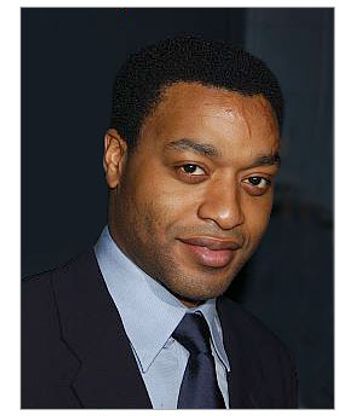
He stole "Love Actually" and "Dirty Pretty Things" and is Woody Allen's first black lead. But don't expect Chiwetel Ejiofor to play the race card.

Chiwetel Ejiofor had his first role in 1997′s “Amistad,” but his true breakout came five years later in “Dirty Pretty Things,” when he starred alongside Audrey Tautou, fresh from her breakout in 2001′s “Amélie.” Director Stephen Frears (“High Fidelity,” “Dangerous Liaisons”) reportedly resisted pressure to consider better-known American actors in favor of the then little-known Ejiofor.

The actor’s profile has risen steadily ever since; he was part of the ensemble cast in 2003′s “Love Actually,” followed last year with a role in Spike Lee’s “She Hate Me,” and this year in Woody Allen’s latest, “Melinda and Melinda,” where he has the largest role ever for a black actor in an Allen film. Though the film has received mixed reviews, he has not. As Stephanie Zacharek wrote in Salon last week, “The only actor who escapes unscathed is Chiwetel Ejiofor … Ejiofor, whose face radiates intelligent guilelessness, makes us believe in him wholeheartedly.”

He is set to star in two action movies in the months ahead: John Singleton’s revenge story “Four Brothers” and “Serenity,” the on-screen continuation of Joss Whedon’s canceled TV series “Firefly.” And at 29, Ejiofor comes across as a man already sure of who he is. As the grandson of a Nigerian miner, he knows how blessed he is to be in the movies. But at the same time, polite as Ejiofor is, he’s not a guy to be pushed around or one to answer questions he doesn’t want to.

Chiwetel Ejiofor spoke with Salon from his apartment in New York’s SoHo neighborhood, to which he recently relocated from his native London.

How do you find the right balance between doing theater and film?

It’s always tricky. Once you’re working in film a lot, it’s hard to book in a time in the future when you’re going to get back onstage, because it takes a much longer lead-in period. But I think it just gets to a point for a lot of actors, especially those who started out in the theater, where you feel this emotional need to get onstage. It kind of takes over, and then it’s just a matter of time before you come back.

What is it about the stage that so appeals to actors?

It’s everything, really. There is the thrill and immediacy in the crowd that brings a level of excitement. But there’s also the whole kind of ritual of the theater: the backstage, the bars — the whole lifestyle — as well as getting to really explore a character over a long period of time. It’s much more of an intense experience.

As opposed to sitting in a trailer for most of the day and running out for a few quick takes?

Exactly. Film just takes so much time with all the setting up of cameras and such. And then suddenly when they’re ready, you have to be there to express these intense emotions at the drop of a hat. It’s more difficult to do emotional scenes on film, I think, because with a play you have that momentum pushing you into it.

On “Melinda and Melinda,” is it true that actors like working with Allen because there’s more opportunity for improvisation?

He did say that if you wanted to, you were free to change the dialogue here and there. But I didn’t really have that morning where I woke up and felt like changing Woody Allen’s dialogue. I was happy pretty much sticking with what he has written.

What’s your take on Ellis, the piano player you play who is a love interest for two characters in the film?

He’s charming and seemingly kind of faultless, but I think the need to charm in Ellis speaks to something less lovable. I think he’s looking for a muse, and he’s happy to move on when that muse no longer suits him.

How does it feel being the first black actor to have that major a role in an Allen film?

I think some people pay attention to that kind of thing, but it’s not a part of the movie. I think it’s a bit of a silly footnote.

But Allen is one of the most important directors of his generation, and the characters in his films have been almost universally white. Does that give you pause?

Any filmmaker can write about what they want to write about. He’s the filmmaker and it’s his film. He should be able to make what he wants. I don’t think I or anyone else should really tell Woody what to create.

Stephen Frears’ “Dirty Pretty Things” was really your breakout role. What did it mean to you?

I loved the script, and when I read it I was very keen to get the part. I had a terrific time making the movie. Incidentally, it’s been great seeing Sophie [Okonedo] get recognition and an Oscar nomination after “Hotel Rwanda.” Audrey [Tautou] and Sergi López are excellent actors, too. And Stephen Frears is what I’d call an insightful director.

That film received a lot of praise for portraying a new era in London, one more culturally diverse and constantly in flux with immigrants. As a native Londoner, how did it strike you?

I do think one of the great joys of London is that it’s a very multicultural place. People just get on with it. They’re not in their own pockets of the city as much, which I think tends to happen more in the United States.

Do you approach your career with particular goals or do you just take it as it comes?

I don’t have a game plan for my career. I’m interested in characters more than anything else. I just read the scripts I’m sent and either I accept the role or I don’t.

I would assume the number of scripts you’re sent has increased these days.

Yeah, there are certainly more of them. But by no means is every one something I fall in love with.

Are there certain scripts you’ve been sent that particularly made you laugh or cringe?

There are certainly scripts that I haven’t responded to, but if I tell you what they were I’d be insulting the people who wrote them. I don’t want to do that. Besides, I don’t have to read every script that is sent to me. I work with my agent and other people, and I read the best of what they see. But even out of those, there are plenty of times where I just don’t feel like the character I’m being considered for appeals to me.

Is there anything common to the roles you have played or want to?

It has to be a journey you want to take. I’m an actor who enjoys a challenge, seeing something different and being able to bring something special to the role. I also enjoy going into a different world. So ideally the script should be something that triggers my imagination. But it’s not to say everything has to be perfect. The details of the character can always be worked out, as long as the story has something of interest.

Do you like playing a strong role in the development of your character, or are you happiest when you are given a script where you think not a word needs to be changed?

It always depends. It’s moment to moment, especially if you’re working with a director who is into improv or rehearsal. It can change organically as a result of that. But it’s great if you can read something and love it for what it is right away.

What attracts you on a personal, emotional level to acting?

It’s an interest in the world and in other people, trying to understand where other people come from as a way of understanding myself. I think there’s something endlessly fascinating about different people’s points of view and what drives them, what their life stories and situations are. What’s great about acting is not only do you go on a journey with them psychologically, but a lot of times physically too. You can really travel the world with this job. I’ve had an extraordinary amount of experiences because of that.

Is there anything about your background, or your upbringing, that helped develop this kind of curiosity about people and the world?

When I first started reading plays it just triggered my imagination. It became almost obsessive for me. I just wanted to tell stories.

When did you first become interested in acting?

I was about 12 or 13 and I was pretty bored with school. But then we started reading plays in class and something clicked. I think it was Shakespeare’s “Henry IV” that really intrigued me. It just caught my imagination. That prompted me to check out what was happening with the drama department and school, and soon I was performing. And that was that.

So you didn’t want to play soccer like most other English kids?

I was never that great a sportsman. Academically I was pretty good, but I was sort of floating. Nothing had my interest until acting. And what’s curious, though, is that after I got into acting, everything else became more interesting. It’s like by discovering acting I discovered something inside myself. I think it’s because as an actor you learn to become more adept at viewing the world.

You were born and raised in London, but your parents and family are Nigerian. Do you still have a connection there?

My family is still there in Enugu, which was formerly the capital of Biafra. And I am often back there. I like to go back and see my grandparents. And there are a lot of old friends and family in Nigeria that I love a lot.

How did your family end up moving to London?

After the war they were both students, and England was seeking out medical students.

That must have been handy considering that in “Dirty Pretty Things” you played a Nigerian doctor who had immigrated to England.

Yeah, I could certainly do the accent.

How does being black affect your place in the movie business? Are you worried about being typecast as “the black guy” or always being the first character to die?

It’s a very complex question. It’s not something that I feel particularly shrouded in. I look for characters. I don’t care what color they are or what they’re doing.

But do you think being a person of color affects the kinds of opportunities you get in the film industry?

I don’t know, because I don’t see what’s not available to me. And what is available to me I have very much enjoyed. Every character that I’ve played I’ve wanted to play.

Hollywood has been abuzz with the success recently of African-American actors like Jamie Foxx and Denzel Washington winning Oscars. Do you feel any particular solidarity with them as an actor of African descent?

I suppose like anybody else I’m very happy to see good performances rewarded, as opposed to some kind of racial complications. I have a solidarity in a sense that it should be about the work.

If I understand you correctly, then, race isn’t necessarily something that you feel a sense of indignation about as it applies to the movie industry?

Race is incredibly fundamental to anybody’s life in the modern world. I can’t narrow it to the film industry in general. I think it extends beyond the borders of Hollywood. I think you misunderstand me if you think I don’t think it’s a big deal. I think it’s incredibly large. But not necessarily within the confines of a script that I read or the behavior of a Hollywood mogul.

Fair enough. You’ve got two big movies coming up: “Serenity,” a sci-fi epic, and “Four Brothers,” a revenge film. How did production go?

With “Four Brothers” I just thought the part was very well written. It was also a great chance to work with John Singleton, who I’ve always admired very much. Before “Serenity” I never really saw myself in sci-fi. But then I read Joss Whedon’s script and I thought it was absolutely brilliant. It’s a character I was just itching to try.

A lot of up-and-coming actors face a familiar predicament: accepting small parts in quality movies versus larger parts in what may be lesser films. Is this something you face?

Not really. I guess if a film is going to have a larger budget, people will want marquee names. So the chance of having a big part in a film that costs, say, $200 million, is pretty unlikely for me right now. But that has nothing necessarily to do with the quality of the film. I don’t think it’s quite as straightforward as you suggest.

What do you like to do when you’re not working?

I love to read and all that, but I would say that I’m one of those people where if I’m at home, it’s very easy to get me to go out. If the phone rings, I’ll probably jump up to get it. I love to go to restaurants and bars, maybe have some dinner and a vodka mix.

And are you single?

I’m not telling you.

Obviously you don’t have to talk about your personal life, but don’t you think to some degree such questions come with the territory when doing interviews?

Not really. It’s very simple: That’s not really the public’s business.

Let me ask this another way, then. You clearly are principled about maintaining privacy. As your career advances and you potentially become more famous, do you worry that your personal life will be more exposed?

No, I don’t think I do. You deal with what happens on the day that it happens to you.

Zombies, smack addicts and Starbucks

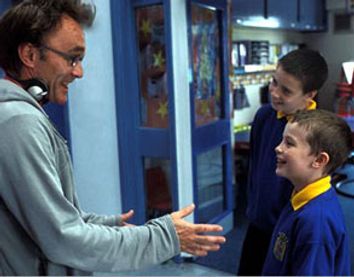
Director Danny Boyle explains the real monsters lurking in his movies, from "Trainspotting" and "28 Days Later" to his latest, "Millions."

British director Danny Boyle first burst onto the scene with the acclaimed Hitchcockian thriller “Shallow Grave” in 1994, and quickly followed it up with a bona fide pop culture phenomenon, “Trainspotting.” Then, Boyle promptly lost his way.

His next two films, “A Life Less Ordinary” and “The Beach,” boasted bigger stars (Cameron Diaz, Leonardo DiCaprio) and fizzled with critics and ticket buyers alike. When he countered with the biggest hit of his career, the thrilling and intelligent zombie picture “28 Days Later,” he had returned to an earlier formula of a lean budget, a cast of largely unknowns and an unapologetically grim story line.

That success has perhaps put Boyle, 48, more at ease, and in control, of his career. His new film, “Millions” (opening wide March 11), is about two young suburban British boys who find a bag of money on the eve of Britain’s conversion to the euro — meaning the money has to be spent right away. The plot might sound familiar, but Boyle turns it into a visually stunning film full of fantasy and dream sequences that question everything from material culture to the existence of God.

After a rough-and-tumble childhood in working-class Manchester, Boyle got his start in the theater, which gave him a knack with actors. But his greatest talent has always been on the visual side. There are so many images in Boyle’s career that are branded on the brain: the squalid rock-club toilet in “Trainspotting” that becomes the unlikely setting for an Esther Williams-esque underwater dream sequence; the haunting view of an entirely empty London that begins “28 Days Later.”

Still, for all his talents, perhaps the best thing you can say about Boyle is that he’s still just an unassuming lad. Directors doing press tours for their movies can get weary fast, but during a recent conversation, Boyle thanked me profusely for driving three hours to the interview, chatted boisterously about soccer (he explained to me why bullying Manchester United better represents the game than the “pretty” style of rival Arsenal), and talked as openly about his failures as his successes.

Your films are very diverse, but to me there’s a connection in how they collectively portray people looking for some kind of escape, whether it’s heroin or society or zombies. Is that intentional?

There’s a British poet called John Betjeman, who was the poet laureate. He used a term called “third way,” way before Clinton and Blair. He said Britain used to be the idealized village society, and then later it became a more bleak industrial landscape. But the third way that’s come upon us was High Street shopping, that commercialization and corporatization of the world where everything becomes the same — a Gap or Starbucks on every corner. I think all my films are about how much that third way of life today has a hold over us: how much you are dedicated to it, and also how much you want to flee from it.

And in all your films the characters are faced with false idols to worship once they do escape, whether it’s heroin in “Trainspotting” or a jungle utopia in “The Beach,” or a squeaky clean but more materialistic suburban environment in “Millions.”

When I was a kid my dad moved us to a better neighborhood just like they do in the film. I could feel him trying to get us out of the path that was set for us. My dad was a working-class laborer. He was a big man and worked all his life with his brawn, really. He worked in a power station at a stove boiler. But he was smart, and he knew enough to make sure that I didn’t follow him. That’s what gave my sisters and me the chance to break from the pattern that all my old school friends remain in. They’re still in Manchester and they’re doing not very interesting jobs, honestly. That’s one of the reasons I made the film. My mom’s dead now, but it was a kind of gesture of love to her and my dad.

The “Millions” script reportedly was tinkered with for years. Was that a sign of trouble or just part of the process?

That isn’t always a good thing, of course, but it was with this film. Frank Boyce [the screenwriter, who also wrote "24 Hour Party People] and I worked together very well. Both of you have to give up a bit of ego. The writer has to take criticism, and as the director you also have to acknowledge that they are the writer, and their imagination created this thing. That relationship often gets spoiled by people wanting to be known as auteurs, who say that scripts are just the skeletal framework for the real film. But I don’t believe any of that. This movie was Frank’s idea. And then we bounced ideas off each other for a long time. I was also able to do that on “28 Days Later” with Alex Garland, and I think that’s why it was successful. With “Millions,” Frank did a lot of drafts over the course of a year, and we completed it together. It was a very personal project for both of us.

Working with child actors can be a real challenge. How did you handle it?

You have to be lucky. Child acting is not a profession that’s well organized. The best people might never walk into the room on their own, and sometimes you have to do this endless searching. And when the filming starts, you can’t let it be just a dreary sort of field trip where they’re just led around. You have to involve them, and make the film feel like a playground for their imagination. It has to feel like the film belongs to them too. Any time I tried to really impose a strong direction with the kids, I’d go back and look at the footage and it was horrible. I was just watching kids say what they were told to say. You have to make it emerge from them, and if you can’t do it, it’s because it’s wrong — not because they can’t do it, but because it’s not a genuine part of their world.

And that worked?

Yes and no. The kids were interesting collaborators, because on one hand they’re just sponges. Their brains are just waiting to soak up knowledge. I didn’t have to tell them anything twice. But on the other hand it’s tough working with kids because sometimes they’re just gone, they’re disengaged. You can threaten them, bribe them, all the things you do with actors when a scene’s not working, and none of it will change things. You just have to close the set and go home for the day.

How do you keep them from turning into the next child-actor tragedy later in life?

Film is a bit pernicious sometimes. It can flatter people and then drop them. I didn’t want that happening to these kids. They’re very vulnerable at this age to the glamour of the world. I remember at the Toronto Film Festival we had this hugely successful screening, and you’d see the kids getting a tiny glimpse of this vain world, and you’ve got a responsibility to protect them from things like that. There are obviously good things to be had in this life of movies, but it can be really cruel to you as well.

What was it like before “28 Days Later,” when you were coming off perceived failure with “The Beach”?

I had a really tough time of it. I was wounded after “The Beach.” I’d really had enough of making a movie on that kind of scale. I went back to Manchester and made a couple of very small TV films with digital technology. And it was out of that, and the relationship I developed with the cameraman, that “28 Days Later” grew. The lesson to me was that you have to keep learning. You can’t blindfold yourself and say, “No, I was right all the time and they’re all wrong.” You learn what you’re good at and what you’re not so good at, and how to harness the best of what you do.

Are you a true convert to digital filmmaking then?

I love digital, but I think your story needs to have a reason to use it.

You’ve also moved away from big stars like Ewan McGregor and Leonardo DiCaprio.

It wasn’t so much them — they are both great guys — as the scale of making a film like “The Beach.” When you have that kind of money involved, all the departments have to know everything in advance. That doesn’t suit me. What I’m good at, or at least I think I am, is making it up on the day. You set certain parameters with people, but the rest you’re kind of doing it on the hoof. And that’s a wonderful feeling, the energy you get from it.

So what if “Millions” made a lot of money and you were offered another big-budget project?

Yeah [laughing], the little man on my right shoulder says, “Yeah, you shouldn’t do it.” But there’s a little man on my other shoulder as well saying the opposite. Because I love big movies as well. There is something about film going all around the world showing on huge screens: It’s an international language that we all celebrate together. You see a big movie like “Gladiator” and you want to make that. One voice is saying, “Do it! Do it!” And the other one is saying, “You’d fuck it up!” So it’s a constant battle, really.

And it’s not as if your style is stripped down. Your movies have a lot of visual sophistication.

I always try to be ambitious, not in terms of budgets but in terms of being imaginative. I don’t want to make documentary-type, socially realistic films. I want them to be bigger than life. That’s what the screen is about.

What about your next film?

It’s called “Sunshine,” and it’s about the sun. It’s written by Alex Garland. There’s a mission called Icarus 2 that is taking a bomb to the sun to try and reignite a section of it. The bomb is the size of Vancouver and it’s been built in space. There’s been an earlier mission, Icarus 1, which has failed. And what’s happened to it is a mystery. There’s a religious element to the film — the sun is God, really.

It sounds expensive — so much for not getting sucked into big-budget films, eh?

Well, we’re trying to keep the price down, so it’s nowhere near “The Beach” level. It’s going to be somewhere between 20 and 25 million pounds (about $40 million). It also is probably going to have an ensemble cast without any really big stars. But it’s hard to make it under budget because the dollar is so weak. There are all these bribes to go to Moscow or New Zealand or Toronto, because it’s way cheaper, but we want to make the film in England and it’s very expensive to do that right now.

Ewan McGregor was unknown when he began working with you, and now he’s Obi-Wan Kenobi — a real star. What are the chances of you working together again?

We fell out a bit over “The Beach” [McGregor was reportedly miffed that Boyle chose DiCaprio as his lead] but I’ve seen him a couple of times since then just to say hello. And there is a plan, a very long-term plan, to do a sequel to “Trainspotting.”

You don’t seem like the kind of director who’d make a sequel.

It’s not an easy, cash-in sequel. It’s to try and take those characters and look at them when they’re about 40, when they’re losing their hair and they’ve got all these decisions facing them about what they’ve done with their lives. But we don’t want to shoot it until those guys really look like their best years are behind them. I think it will take another 10 years still before they’re sufficiently middle age. I want to look at these guys who’ve abused themselves so much and how they deal with the crisis of getting old.

How did you get interested in film originally?

When I was a kid I used to go to this cinema in Manchester called the Aaben that showed these really weird films from Europe, partially because they had a lot of nudity, but also I loved the films — at least at the time. I’ve looked at some of them since and they’re rubbish. But that’s definitely where I got the bug. I couldn’t get into the British film industry because it was very fenced off at the time, very clubby. And it still remains that way, I’m afraid. Our music industry on this little island has produced the most amazing bands, but our films are rubbish compared to music.

Why is that?

Basically working-class kids join bands. You don’t need money and you can just do it. The film industry isn’t like that, but it needs to be. But it turned out well for me. I went into theater, because it was a lot more open. And theater gives you a lot of experience working with actors. A lot of film directors don’t like actors. They think they’re impenetrable and stupid. But I love actors, and I think that’s become a strength for me.

Continue Reading Close

Are you talking to me — again??

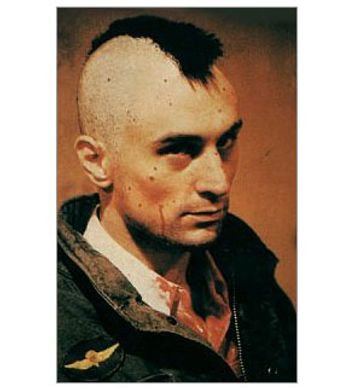
Please, Mr. Scorsese, just let Travis Bickle rest in peace!

Dear Mr. Scorsese,

On behalf of millions of film geeks and movie buffs who know all too well that the defining characteristic of the Academy Awards is their injustice, let me begin by saying that all of us Marty maniacs have our fingers crossed that this will finally be the year your movie wins the Oscar for best picture.

Is “The Aviator” your best film? No way. By my admittedly biased count, somewhere between four and 10 of your previous works are arguably superior. This movie is also not the kind of gritty, personal filmmaking associated with you in the past. Instead, it seems to represent a subtle shift in your career that some trace to Michael Ovitz signing on as your agent some years back: toward larger-scale, more often mainstream Hollywood fare. People don’t say “fuck” nearly as much, and that’s a shame. And watching “The Aviator,” one also doesn’t get the usual sense one associates with your films — that nobody else could have conceivably done it.

That said, “The Aviator” is a Hollywood biopic in the recent tradition of Oscar winners “Gladiator,” to cite a pretty good example (also penned by “Aviator” screenwriter John Logan) and “A Beautiful Mind,” to cite an overrated one. Your ode to the rise and initial descent of Howard Hughes makes for a riveting three hours, and it’s got enough trademark Scorsese touches (the quick zoom, the explosion of a flash bulb filling the screen) to remind us that our favorite motor-mouthed, massively eyebrowed prodigy from Little Italy is behind the camera.

Besides, the real reason so many of us are rooting for you to finally win the Oscar this year is to right previous wrongs. We haven’t forgotten that “Goodfellas,” your masterful 1990 mobster epic, lost the award for best picture to that trite p.c. western “Dances With Wolves.” Or then there’s 1980′s “Raging Bull,” which a majority of critics hailed as the best movie of the entire decade, let alone that year, but which lost to the bland tearjerker “Ordinary People.” And let’s not forget “Taxi Driver” from 1976, which many of us believe is your greatest film of all. It lost the best picture award to “Rocky.” To “Rocky”!

But now, as you appear on the verge of success — of redemption — there have been rumors circulating that you’re about to make a big, big mistake. Reports have been circulating over the last several days that you and Robert De Niro are giving consideration to a “Taxi Driver” sequel. (After, presumably, you’ve completed “The Departed.”) Or, as De Niro eloquently told a reporter last week, “We’re planning a sequel built around the character when he is older.”

Do you remember the opening scene from Robert Altman’s scathing Hollywood satire “The Player”? Studio executive Griffin Mill (Tim Robbins) is listening to a movie pitch from Buck Henry (playing himself), writer of “The Graduate.” Now, here’s the punch line: In the film, Henry pitches a sequel to that earlier classic film. This was Altman’s and screenwriter Michael Tolkin’s shorthand for all that is absurd, ill-advised, and just plain blasphemous in Hollywood. Imagine, a sequel to “The Graduate”! The joke would’ve had the exact same bite had they used “Taxi Driver.”

It’s not so much that we, your most loyal fans, doubt you and your old friend De Niro are up to the task of a worthy “Taxi Driver” sequel (more on that later). It’s that by making this new installment, you are inevitably changing the meaning of the original film. And that’s a risk that we can’t let even the movie’s creators take.

It should go without saying that “Taxi Driver” is one of the greatest works in the history of cinema. It follows the classic mythological template that Joseph Campbell has described, of a reluctant hero called forth on a quest that will test his endurance, strength and even sanity. But like its unofficial cinematic inspiration/antecedent, John Ford’s “The Searchers,” “Taxi Driver” twists that timeless formula by making its hero more of an anti-hero. Travis Bickle is not the kind of guy you pin medals on or take home to Mom.

Not only does De Niro’s sleepless, porn-obsessed protagonist come dangerously close to assassinating a presidential candidate, but he may have also been a little misguided in the heroic act that forms the movie’s climax. (Iris was certainly better off at home with her parents and attending sock hops than turning tricks and popping pills, but nobody was holding a gun to her head. And don’t forget, Travis killed a lot of people to “rescue” her.) But his madness vividly distills the collective moral crisis felt amid the age of Vietnam and Watergate. You filmed it all with a feverish intensity, a kaleidoscope of grimy asphalt and blurring neon. Watching it, one almost wonders if you and screenwriter Paul Schrader were going to go on a killing rampage of your own once postproduction was complete. And don’t get me started on that brilliantly caustic soundtrack, the last ever composed by the late, great Bernard Hermann.

It is, to say the least, a little unsettling to imagine catching up with Travis after all these years. Does he live in the suburbs, married to Iris? She was a good 20 years Travis’ junior, but that’s about the ratio Hollywood prefers anyway. Is Travis still driving a cab, or has he graduated to some kind of chartered limo or town car by now? What of New York itself: Was Travis a Giuliani man, or more the Hillary type? What would he say walking through a Times Square that’s gone from porno to Disney?

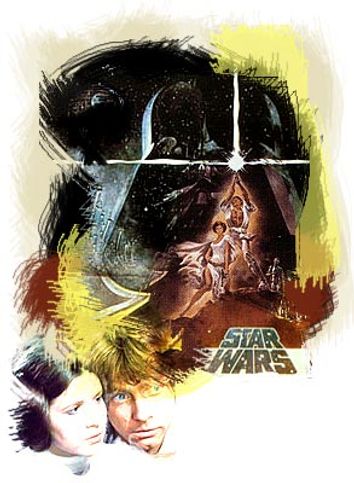
The more important point is, part of “Taxi Driver’s” enduring power is that we don’t know what ever became of Travis. Imagine a future for him, and you’ve spoiled that precious ambiguity. That tragedy has already befallen the ’70s classic at the other end of the stylistic spectrum, “Star Wars,” yet one can understand it of George Lucas, who (even considering “American Graffiti”) never had the ability to forge a varied body of work as you have.

But also consider that the early 1970s golden age to which “Taxi Driver” belongs has already been tarnished by more than one decades-later sequel. Peter Bogdanovich may not be counted as a top-tier director anymore, but back then, he was as promising a wunderkind as you. His greatest onscreen achievement was his first: 1971′s “The Last Picture Show.” Well, now that classic film is forever compromised by its 1990 sequel, “Texasville.” Not one of Bogdanovich’s countless ascots can mask the stench of disappointment in that film. Then there’s “Chinatown,” which its star, Jack Nicholson, directed a lame sequel to some 16 years later: 1990′s “The Two Jakes.” I’m not sure Jack could handle the truth about that movie. Even Francis Ford Coppola got into the misguided sequel act — not with “Godfather II,” which is at least as masterful as its predecessor, but with the vastly inferior third chapter in the Corleone saga. It came long after the moment when his creative bulb shone brightest. (Anyone remember “Jack”?) Do you want to suffer the same fate?

Please, Scorsese-san, don’t think this plea is implicitly an assumption that you don’t have it in you. Clint Eastwood, your main competition for best director, can tell you that people qualifying for the AARP can still do their best work. Every one of the films you’ve made in the 15 years since your last widely acknowledged masterpiece, “Goodfellas,” has included at least moments of greatness. “The Age of Innocence” possesses a poetic stillness and uncompromising sense of restraint that forms an ironic and striking counterpoint to the inferno of passion its characters try vainly to mask. “Casino” lingers unfairly in its predecessor’s shadow, although you may have to admit there’s a lesson in its predicament — it’s not unlike what even a good “Taxi Driver” sequel would face. Although “Cape Fear” isn’t going to be mistaken for an art film, it is a thrilling ode to mid-century American pulp cinema with an extra dash of Pentecostal fire and brimstone. “Kundun” is mesmerizing, and it made for a refreshing, and deeply personal, departure. Oh, and the massive fight scene that begins “The Gangs of New York” is your answer to Coppola’s helicopters-and-Wagner scene from “Apocalypse Now” — not to mention a timely post-9/11 ode to your hometown.

Making a sequel to one of your most acclaimed works all these many years later has the feel of reuniting with your high school sweetheart — it would be endearing if it didn’t smack of desperation. Virtually everything you’ve done artistically and professionally throughout your career has demonstrated the opposite.

Actually, this feels like a quintessential Scorsese movie moment: After a journey of deep discovery and ample penance, your moment of greatness is threatened by a moral crisis. Thankfully, your movies don’t always have happy endings, but we’re hoping this reality-based moment does.

Continue Reading Close

“I’m still in shock”

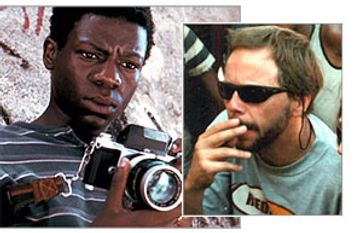
"City of God" director Fernando Meirelles talks about how his little-seen but critically lauded film from Brazil rose up from the slums and art houses to snag three major Oscar nods.

Each year, the Academy Award nominations bring at least a few surprises: Maybe a certain superstar actor or actress doesn’t get the nomination everybody expected, or a previously unheralded writer or director sneaks into the pool of nominees. But this year in particular a crop of truly fresh-faced contenders from foreign and independent cinema have gained entrance to Hollywood’s premier bash. And some of the most interesting names gracing the Oscar ballot are ones most moviegoers don’t even know at all.

Keisha Castle-Hughes of the art-house favorite “Whale Rider,” for example, is at 13 the youngest best-actress nominee ever. And Castle-Hughes is joined in her category by Shohreh Aghdashloo, the heretofore all but unknown actress in “House of Sand and Fog,” as well as by Patricia Clarkson, whose role in “Pieces of April” comes after she starred in seemingly every film to be entered last year at Sundance.

Meanwhile, a little-seen but critically acclaimed picture from Brazil, “City of God,” has earned three major nominations: for best director, best cinematography and best screenplay (Adaptation). Although it’s worth noting that “City of God” has been distributed by Miramax, easily the most successful studio when it comes to guiding (some might say “bullying”) its films to Oscar success, it remains outright astonishing that a foreign film that doesn’t pander to its audience with sappy feel-good moments can register this resoundingly with the notoriously conservative academy, which also can be pretty lazy when it comes to seeking out obscure films en masse. If you’d predicted before Tuesday’s nominations that “City of God” would be more honored by Oscar than, say, a studio epic like “Cold Mountain,” you’d have been laughed out of the room.

In the hours just after Oscar nominations were announced, Salon spoke with “City of God” director Fernando Meirelles, who has already garnered comparisons to Martin Scorsese, about film, architecture and conquering his nervousness when it’s time to head to the Kodak Theater next month.

A little-seen foreign film like “City of God” getting three big nominations seems like a real coup. Were you surprised?

I’m still in shock. We had previously been in the running for best foreign film last year and were not selected, so I thought it just wasn’t the academy’s kind of film. To have it nominated now is a huge surprise. I’m working in London now on a new project, and my day today was full of meetings. I didn’t even pay much attention [to the announcement of nominations], because I never thought it would be nominated.

Will you attend the Oscars?

Of course I’m going to the ceremony, especially since my three best friends are being nominated as well: César Charlone (cinematographer), Daniel Rezende (editor) and (co-writer) Bráulio Mantovani. We’re like a gang in Brazil, the people I hang out with on Saturday night. But I’ve already been to the Golden Globes, because I was nominated for best foreign film, and it’s not a very good feeling to be there. I get so nervous. If they could send me the award by post, it’d be much less pressure.

Do all the superstars at the Oscars make you nervous too?

No, it’s all people. I’ve been talking to a lot of stars this week because I’m casting my actress for this next project. At the end of the day, talking to them is the same as talking to everyone else.

“City of God” is very violent, but in past interviews you’ve distanced yourself and the film from mainstream Hollywood blockbusters. How do you make that distinction?

I try to picture violence not as a show or as entertainment. If you watch “City of God” carefully, you’ll see that every opportunity I had to show violence I tried to avoid. We had a rape sequence, but I didn’t show the rape. We have a war between two gangs, and in a regular U.S. studio film it would be the most exploited sequence in the film, but when I show this it’s far away, it’s nighttime. You barely see the violence. Usually when people compare my film with the films of somebody like [Quentin] Tarantino, I think they have nothing to do with each other. It’s really the opposite intention. I don’t think violence is funny, and I don’t think it’s entertaining.

Most of the cast in “City of God” is nonprofessional actors. How did you find them and what’s your recollection of working together?

It was the most incredible experience I’ve ever had, and I couldn’t have done this film without that kind of casting. I used people from all those slums, and some of the boys even used to be drug dealers before getting involved with our project. So they knew much more than me about the film I was shooting. Sometimes I would come to some of the boys and say, ‘What should we do here? What would this guy say?’ In the dialogue I had written, I was always telling them the intention for each scene and encouraged them to improvise dialogue. I wanted it to be as authentic as possible, because they knew much more than me. I really think we were partners in the project. They were able to teach me what my film was about.

Do you think places like the “City of God” slums are better or worse today?

I think today it’s worse than it was in the ’70s, in which the film is set. Drug trafficking is worse. There are some really strong factions controlling things right now. It’s more difficult to deal with them than 10 years ago because they’re so well organized. But I think Brazil is just changing a lot, just like how the academy is finally nominating subtitled films. [Laughs.] We have a president really focused on social issues, and I think the country will be much, much better. And corruption used to be the biggest issue in Brazil, and it’s not such a big deal anymore. Things are really getting better.

You’ve said that poverty and crime were foreign to you before making “City of God.” What’s your background?

I’m a middle-class guy from São Paolo, the son of a doctor. I was trained originally as an architect, but in university I got involved working with experimental video, and that led me to independent productions and then commercials. And then my life became boring. I wanted to do something else. So that’s what led me to shooting this film.

“City of God” is very sophisticated visually, with lots of moving camera work and quick editing. Is it safe to assume commercials are where you developed your style?

I think all I know about cameras, lenses, editing I learned doing commercials. It was a great way to learn and get paid for it. I think I must have done a thousand commercials before directing “City of God.” The last 10 years I’ve been shooting every week. So all the kinds of problems you can have in production lighting or actors or whatever, I’d been through it already. I’m really an old director even though this is only my second film.

What about your training in architecture — has that influenced your filmmaking?

I think so. I have really good relation with space: setting up the camera and trying to picture a set. I’m very comfortable imagining everything laid out. If you watch “City of God” only trying to understand what happens to the city and not the characters by watching the background, there’s a story being told there too. In the beginning you see a lot of open landscapes. You can see the horizon. Towards the end there’s only boys running through corridors, trapped inside their world. There’s a story being told through the architecture. It feels totally different from beginning to end.

You mentioned working in London right now. What are you directing next?

I’m working on “The Constant Gardener,” a film adapted from a book by John Le Carré. It’s about a British diplomat whose wife was killed in Kenya. He tries to find out why his wife was murdered, and along the way he comes to love her like he never did while she was alive. It’s also about how the pharmaceutical industry profits from health problems around the world. And it’s also a thriller.

It sounds like a departure from “City of God.” Do you enjoy directing a wide variety of films?

I’m really moved by challenges. Actually, I don’t know how to do this new film, and I’m trying to learn along the way. That’s usually how I like to do it. I really like to learn things as I’m doing them. With “City of God,” I had never been to that slum, and I knew nothing about drug dealers. I think that when you’re getting into a new situation, something you don’t know that much about, you have really a fresh look. You’re very turned on to everything that’s happening, and you’re paying attention to the details.

Are you interested in the interest you’ll probably receive from Hollywood after the nominations “City of God” received?

I’ve already been offered something like 60 or 65 projects from American studios in the last year. But at the time, I was working on a personal project, a film called “Intolerance,” about globalization. So I read the scripts they sent me, but mostly just to learn how to write them, not because I was really interested in directing them. But by the end of the year I realized that my script for “Intolerance” just wasn’t ready to shoot yet, and that’s when I decided to do something else. That’s when I was offered “The Constant Gardener,” and I thought it was an interesting project with good people involved, so I decided to do it. It was just the right script at the right moment. Some of the scripts I’d been offered before were actually really good, and they were hard to turn down. But it’s about timing, and “The Constant Gardener” was the script that came to me at the right time.

Continue Reading Close

The Coppola clan’s best director?

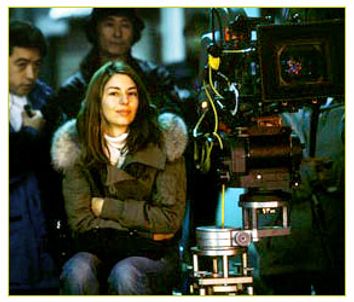
Sofia Coppola talks about her crazy childhood, the "Dolce Vita" energy of Tokyo, and casting Bill Murray as a romantic lead in "Lost in Translation."

When Sofia Coppola’s directorial debut, “The Virgin Suicides,” wowed critics and audiences in 2000, there was an unspoken sense of surprise. Before then, her only public involvement in film had been a much-maligned supporting role in her father’s 1991 film “The Godfather Part III.”

Now Francis Ford Coppola’s daughter has bucked expectations again. The dreaded sophomore slump has been avoided with her acclaimed “Lost in Translation.” For starters, the picture does the wonderful service of creating a great role for Bill Murray, allowing the actor to blend his genius for absurdist improvisation with an underrated, untapped ability as a serious lead, seen only in the disappointing “Razor’s Edge” and for fleeting moments in two fantastic Wes Anderson pictures, “Rushmore” and “The Royal Tenenbaums.” More than that, though, “Lost in Translation” shows a filmmaker of exceptional control, able to fuse the simple acts of photography and writing in a subtle and elusive manner. How many movies can you say resemble the poetic, contemplative work of Japan’s midcentury master Yasujiro Ozu one moment and an irreverent Harold Ramis comedy the next?

As the daughter of one legendary filmmaker, the wife of another very talented one, Spike Jonze, the sister of up-and-coming director Roman Coppola, and the cousin of actors Nicolas Cage and Jason Schwartzman, Sofia Coppola has had to claim a place of her own. And she’s done just that.

With apologies to the man who made the “Godfather” trilogy, “Apocalypse Now” and “The Conversation,” not to mention Jonze, the mind behind “Being John Malkovich,” “Adaptation” and some superb music videos, Sofia is arguably the one in her family making the best movies. (Where has Francis been lately? Has he exiled himself from the director’s chair after “Jack”?) Her style is unquestionably distinct; her pictures aren’t the pageants of Francis Ford Coppola, nor the bizarre struggles for sincerity amid an ocean of irony that characterize her husband’s movies. As slight and soft-spoken as her father is burly and boisterous, Sofia Coppola is beginning to cast a shadow of her own.

What was your environment like in the Coppola household as a child? Were you told things like, “Daddy can’t make it to your birthday party because he’s losing his mind in the Philippines shooting ‘Apocalypse Now’?”

Actually, I was in the Philippines with him. We were always around my dad, so he wasn’t absentee at all. I don’t think it was normal, but it was exciting. You always had lots of creative people around, and my parents took us everywhere. I got exposed to so many different cultures and people. I mean, I got to go to Kurosawa’s house as a child.

So when other kids your age were obsessing over “Star Wars” as a child, did you just think to yourself, “That’s Dad’s friend George?”

I was pretty excited too. I had all the action figures.

I know you wrote “Lost in Translation” with Bill Murray in mind. Can you tell me what films of his you were a fan of over the years?

I always loved “Groundhog Day” and “Tootsie.” Of course “Rushmore.” And I remember watching “Saturday Night Live” when I was little. Oh, and “What About Bob?” too. Not so much the older ones like “Meatballs” or “Stripes,” though, to tell the truth.

Was it a conscious move on your part to give Murray the chance to play a more serious romantic lead?

Yeah, definitely. I thought he often showed that side but hardly anyone framed a whole movie around that. The one time someone did, in “The Razor’s Edge,” I thought he was really good. I thought you could just tell he had the depth to pull it off, not just doing slapstick but showing a more touching side. I think he’s really romantic, but not in a cheesy way.

There are a lot of famous relationships on- and off-screen in Hollywood involving older men and younger women, be it Harrison Ford and Calista Flockhart or the sort of “Autumn in New York” genre. How did you negotiate the potential for that kind of cliché with “Lost in Translation”?

I know what you mean. I don’t mean to put down movies like “Autumn in New York,” but that doesn’t appeal to me at all. I wasn’t thinking of making a May-December romance. That wasn’t the point. But I did like the idea of these characters that were on the opposite ends of their lives, looking at these same kinds of issues. It really came from me looking back on my early 20s, and that kind of angst that had me in crisis. I think this movie is romantic, but it’s not about an affair.

In fact, this movie is ambiguous enough, especially at the end, that you could interpret it as strictly platonic — or just the opposite.

I like that you don’t hear everything they express to each other in that final resolution. It’s a moment of acknowledgement, but viewers can make up their own minds about it. I like that better than spelling out how they feel. My niece, who is 16, told me, “I hope he gave her his e-mail address.”

I understand you worked in Japan as a photographer in your 20s. How did that inspire the movie?

I remember going there at a time in my life when all the choices about what to do with myself seemed overwhelming. Then there was the jet lag; it was the worst I’ve ever had. And it was just so foreign that it felt like being on another planet. It was exciting, but it also felt daunting. I knew I wanted to set a movie there, because what I’d experienced I didn’t feel like I’d seen in another American movie. Just the whole energy of the city reminded me of some “Dolce Vita” kind of feeling, where there’s always something interesting happening, but it’s more a mood or an atmosphere. Everything there is really extreme, either really modern or really ancient. It’s fascinating to observe all those idiosyncrasies.

Both “Lost in Translation” and “The Virgin Suicides” are about alienation from society, due in part to forms of unhealthy adoration. Is it reading too much to wonder if this comes from your own experience growing up around celebrity? Have you ever wished your last name wasn’t Coppola?

Oh, that’s interesting, I’ve never thought of that. There is always that kind of romantic sense of alienation that I think is interesting to me, but I can’t tell you that because of my name I feel alienated. I can walk down the street and not be noticed. And so far, when somebody in public does tell me “I love your movie,” that’s nice.

You’ve given some musicians with no experience in soundtrack work great opportunities, whether it’s the French electronica duo Air in “The Virgin Suicides” or Kevin Shields from My Bloody Valentine for “Lost in Translation.” How do you approach the question of music in your films?

I really wanted to work with people in my films who don’t normally work in movies. I wanted there to be a different context, so it didn’t just feel like a typical movie. It never even occurred to me to use a more traditional score or composer. For this one I loved working with Kevin Shields to create this kind of romantic melancholy, with a sort of droopiness too. It’s such a huge part of the atmosphere.

Who are you listening to now?

I’ve been listening to a lot of the Jesus and Mary Chain. Brian Reitzell, our music supervisor for “Lost in Translation,” got me into them. I’ve also been listening to a band called Darkland. Brian loaded up my iPod with a bunch of stuff like that. I like New Order a lot. Then my guilty pleasure is that Beyoncé song “Crazy in Love.”

Because you come from such a film family, with your father and husband being directors and your cousin being a famous actor, it’s easy to think of you only in that context. What are your other interests?

I like to travel a lot. That’s why I went to Japan. And I’m going to Italy next week, and Vienna. We went to Iceland this year, which was really incredible. I also like going to see bands and to see art shows. I just went to a Philip-Lorca diCorcia show, and I just got a painting by Elizabeth Peyton. I like her a lot.

People are naturally inclined to wonder about your father’s influence on your filmmaking, but who are some of the other people who have inspired and helped you become the artist you are?

My mom was always encouraging me to be true to myself. And my brother Roman is someone I’ve always been able to talk things over with. My photo teacher, Paul Jasmine, really encouraged me. Or the guy who plays Charlie in the movie, years ago he was at a fashion magazine and hired me to do photos. He liked the way I saw things through the camera, and that was really encouraging to me when I was younger.

Do you feel vindicated by the acclaim you’ve received as a filmmaker after the unduly harsh criticism you got after “Godfather III”? Or do you consider it apples and oranges?

I just don’t even think about that. It was 12 years ago. I didn’t really care then and I don’t care now.

Continue Reading Close

A Python in the desert

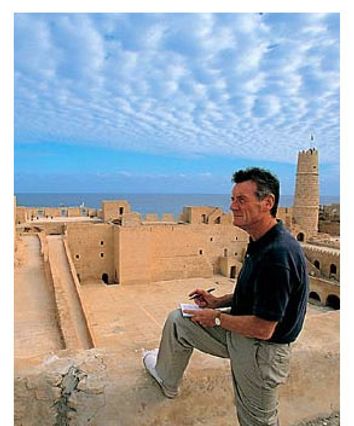
Monty Python co-founder Michael Palin on eating camel meat, being recognized by Inuit in the Bering Strait, and becoming a sex symbol at 60 in his new travel series, "Sahara."

The last time we saw Michael Palin in the African desert, he was nailed to a cross — in a movie, that is: “Monty Python’s Life of Brian.” Some 24 years after crooning “Always Look on the Bright Side of Life” while crucified alongside fellow Pythons John Cleese, Eric Idle, Terry Jones and Graham Chapman on a location shoot in Tunisia, Palin has returned to Africa for his latest in what’s now a long line of televised travel series and books: “Sahara.”

Although on previous journeys Palin has circumnavigated (“Around the World in 80 Days”) and bisected (“Pole to Pole”) the globe, ventured round the Pacific Rim (“Full Circle”), and retraced the multi-continental whereabouts of his favorite writer (“Hemingway Adventure”), “Michael Palin’s Travels: Sahara” is in some ways his most ambitious effort yet. (The series airs on Bravo through June 1 — check local listings — and will soon be available on DVD. The accompanying book was published last month by St. Martin’s Press.) After all, this is the most unforgiving natural environment on earth, and the journey comes at a time when Westerners (especially Britons and Americans) are not very popular in the Islamic world. And yet Palin still has time to cheerfully barter for yellow slippers in Morocco, watch a sheep sacrifice in Mali, play a marbles-like game using camel droppings in Mauritania, survey ancient Roman ruins in Libya, and trek for weeks without even a road to follow.

Of course Palin’s travel series are but one component in an incredibly diverse career that started with what’s easily the best comedy troupe of the last 50 years and that has seen him incarnated as a comedian, actor, novelist, playwright and political activist. Hell, he even demonstrated how to make homemade sausage during an appearance on “Late Night With David Letterman.” Ever smiling and witty, Michael Palin gives dilettantes a good name.

More than that, Palin is also simply a nice guy, full of boundless good nature and optimism, whether his boat has run aground in Timbuktu or he’s enduring yet another fan who wants to talk about a Python sketch from three decades ago. That’s right: Michael Palin always looks on the bright side of life.

What’s the most remote place you’ve ever been recognized as a member of Monty Python?

It did happen on a small island called Little Diomede in the Bering Strait, between Russia and Alaska. It’s an utterly remote place, just a rock in the ocean with about 60 Inuit Eskimos who live there. Some Eskimos were gathered to take us across the strait in this whaleskin canoe. As we embarked to get on board, there was this clearing of throats, and I thought I was about to get this sort of Eskimo farewell or something. In fact, one of them points at me and says, “Hey! Aren’t you the guy from ‘Monty Python and the Holy Grail’?” They apparently had just seen the movie on satellite two nights before.

Is the Python legacy ever a burden to you, always having to smile when someone mentions a skit you’ve already heard about a thousand times?

Yes, it does happen, but I wouldn’t say it’s a burden. It’s a tremendous relief, and quite a pleasure, that Python is still remembered. We thought it would be fairly transitory and replaced later by some other comedy show. I love that it’s endured. Unfortunately, though, people expect me to remember all the sketches, and I never do. None of us do! I think we were at the Aspen Comedy Festival and there was a Python quiz they held. Even with all of us together, we couldn’t get more than 60 percent right.

I must say that while watching “Sahara,” I kept expecting you to stumble over a sand dune toward the camera and say, “It’s…” like you did at the beginning of almost every “Flying Circus” episode.

It’s very much “It’s” territory. I remember the very first one on “Flying Circus.” I scrambled out of the sea and up the sand of the south coast of England. And of course you may remember Python did a sketch called “Scott of the Sahara,” a remake of “Scott of the Antarctic” in the Sahara. The leading actor had to act out of a trench because he was too tall for the love scenes.

Is there anything on your travels you’ve been asked to do and said “No way”?

The only thing I’ve ever refused to do is bungee-jump. That was in New Zealand. I’d just passed my 50th birthday, and I thought, “I don’t need this.” To plunge headfirst into the gorge wasn’t very tempting. There are other things I’ve never wanted to do, but have always been persuaded by the director that it would be quite good if I had a go at it. Particularly with food — I’ve eaten some very strange things. Food is used as a welcome; it’s quite rude to turn it down. So I’ve eaten some odd things indeed.

Did you really eat camel in the Sahara? How does it taste?

Sure! There isn’t much else to eat in these refugee camps of Algeria. It was actually very nice the first night, and then after about four nights it becomes slightly repetitive. Everything’s supposed to taste like chicken, but it didn’t in this case. It’s sweetish meat, more like mutton.

How did Sept. 11 and its aftermath affect the filming of “Sahara”?

We were actually filming out in the desert on 9/11. We were in one of the most inaccessible places, a town called Agadez in the heart of Niger. We’d hear from BBC News and I talked on a satellite phone to my family at home. But it’s very, very poor and they don’t have newspapers and magazines, and there were no televisions where we were. All you could do was just imagine from these images what you’d heard had happened. I had a couple nights of very bad dreams.

After that, I thought, “That’s the end of this series.” But it was quite the opposite. The people in Algeria actually asked if we would come to their country. They said, “Now you’ll know what we’ve been going through for 10 years with our own extreme radical Islamic movements here.” And to a certain extent, for a while, it did make things better. We had no problems after 9/11, no problems after the Afghanistan bombing, anywhere that we went.

It’s a good time for this series now — a chance to humanize the people of Islamic countries whom it’s all too easy for Westerners to vilify.

I think it’s a way of looking at the world that tends to disappear in times of war. You tend to forget that the people hit by collateral damage are the sort of people I’ve met on my travels, people who are immensely tolerant, hospitable and proud of the lives they’re leading. To me the saddest thing about war is that people like that, who we’re trying to help, are the ones whose lives are ending. When I travel it really comforts me how little actually divides us. Of course there is a huge gulf in our material welfare, religious upbringing, and things like that. But things like your family, your house, your children’s education, your hope for the future, are things that throughout the Muslim world they would share very easily with their counterparts in America.

Do you view the United States with the same sense of wonder as exotic locations in your specials, or does it feel more like home?

New York I feel quite familiar with, and I like Chicago very much. I also know a few people in L.A. But in between I don’t know a great deal about. I spent some time in Montana recently, and that was such a different sort of land out there. It’s just ridiculous the size and scale of it, but also there’s still this kind of frontier spirit and mentality out there. So there are some places where I feel reasonably at home and the rest is a discovery to me.

Your feelings about the world really come through in your travel writings and shows. How do you balance expressing yourself and advocating for what you believe with not getting preachy?

I try not to preach. I realize some people are extremely good with arguments and can put them very cogently. I’m not very good at that. I’m a rather instinctive person. I know if I feel something is wrong, but I can’t always express exactly what the alternative might be. I have to be the way I am. It’s a bit like doing the travel programs. I’m being myself. That’s what makes it work: People are aware this is not some expert trying to make judgments. It’s just the way someone is. In public life I like to get involved with things where I can directly influence the outcome of something, where I can be involved with a small group of people and make it work. I don’t particularly like being a name on a huge list.

You have traveled all over the world and left your wife at home. Is she jealous?

No, my wife is not an adventure traveler at all. She likes to get to a place, preferably with a lot of sunshine, and stay there for a week — not immediately go climb the mountain or find the nearest headhunter and interview them. But she’s quite happy to let me go as long as I come back.

There’s a chat room on your “Palin’s Travels” Web site in which a lot of women seem to talk about how sexy you are. How does it feel to be a sex symbol at nearly 60?

It’s kind of weird. All I can say is, it’s about 40 years too late. At the time I really wanted to be treated like a sex symbol, there was not a whisper. Now? Oh, great, some 18-year-olds think I’m sexy. I’m very pleased to be thought sexy by anyone.

What do you think of the explosion in travel literature and shows?

It pleases me when I see a few more shelves at the bookstore devoted to travel. It used to be down on the bottom with gardening and erotica. And I think some of the best modern writing comes now from travelers. This is a golden age of travel again. So many more places are available to us now, especially after the collapse of communism.

You’ve been a comedian and an actor, and you’ve written a novel, a play and children’s books. What’s your true love?

I suppose I enjoy writing most of all. It’s something that I’m still always learning. I always felt the great thing about Python was that we wrote all our material. Acting to me is always subordinate to that. And when you’re writing while you travel, it really concentrates your mind on what you’re seeing.

Continue Reading Close

Page 1 of 3 in Brian Libby

www.salon.com/writer/brian_libby/index.html