Chuck Leddy

Grant’s last victory

A new biography explores the final year of the president's tumultuous life

This article appears courtesy of The Barnes & Noble Review.

Ulysses S. Grant’s life was punctuated by highs and lows. Before the Civil War catapulted him to global fame, Grant had left the army to eke out a living as a store clerk. As the Union’s top general, he saved the nation and leveraged this success to win the White House. As a two-term president, Grant was largely a failure; he trusted friends who would betray him and the public, making corrupt bargains behind his back. In “Grant’s Final Victory,” biographer Charles Bracelen Flood examines the once-mighty general’s tumultuous last year, 1884-85, which he sees as a microcosm of Grant’s entire life.

Barnes & Noble ReviewThe former president thought he’d become rich as a partner in an investment firm founded by his friend Ferdinand Ward, who exploited Grant’s name to attract investors. As Flood explains, “Ulysses S. Grant remained naïve about matters of money.” In an echo of his presidency (and today’s Madoff scandal), Grant’s trust was misplaced. Ward, it turned out, was operating a pyramid scheme, absconding with Grant’s (and his fellow investors’) money. The retired military man was psychologically devastated and financially bankrupted, admitting, “I don’t know how I can ever trust any other human being again.”

Flood follows the trail of bad news from humiliation to death sentence. Newly ruined, the cigar-loving Grant was then diagnosed with tongue and throat cancer. Here we see firsthand his never-give-up resilience, a lifelong trait. Desperate to regain a financial foothold for his family, Grant negotiated a book contract with author/publisher Mark Twain to pen his “Personal Memoirs.” Flood shows us how Grant, staring down penury and cancer, finished writing his book through “amazing effort … he had written an average of seven hundred and fifty words every painful day,” delivering a manuscript to Twain just four days before his death. Even in the face of foes like betrayal and mortal illness, Grant’s fighting spirit endured.

“Fur, Fortune, and Empire”: How the fur trade shaped America

Animal pelts helped create our nation -- and spawn a global power struggle. A fascinating new book explains how

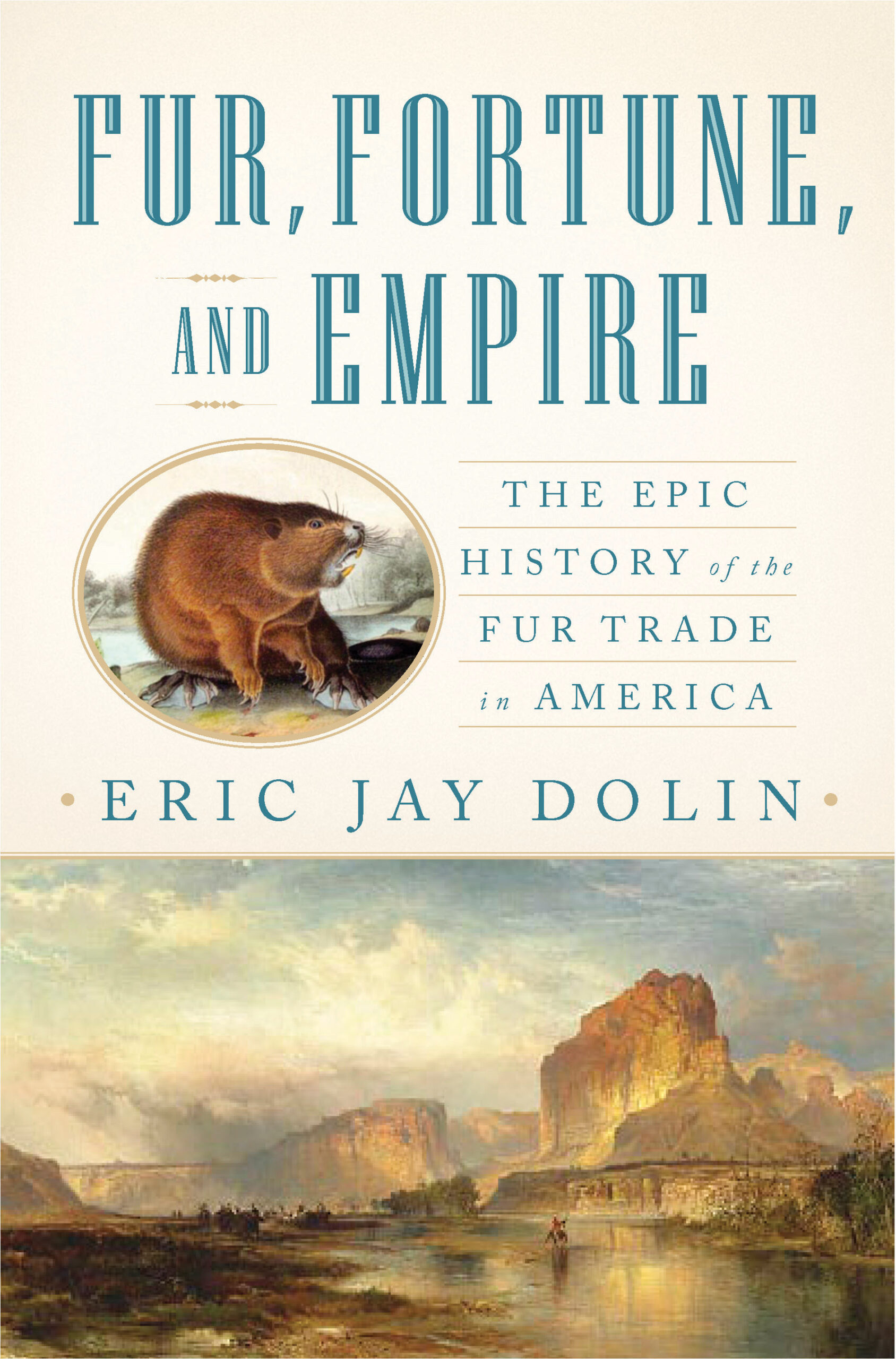
"Fur, Fortune, and Empire" by Eric Jay Dolin

Historian Eric Jay Dolin brilliantly argues that the trade in animal skins turned colonial America into a tumultuous frontier where global powers battled for control. From the 17th century right on up to the Gilded Age, the developed world’s appetite for fur and its unique qualities made the new continent, with its wealth of fur-bearing wildlife, a seemingly inexhaustible resource. The result, as laid out in Dolin’s new book “Fur, Fortune, and Empire: The Epic History of the Fur Trade in America,” was a major boost in the evolution of the colonies into a powerful new player on the world stage.

Barnes & Noble ReviewModern-day Manhattan, for example, owes its existence to the Dutch eagerness to establish dominance in the fur trade: New Amsterdam was first settled in the early 17th century as a trading post where they could exchange European metal goods for beaver pelts brought in by Native Americans. The Dutch wielded military power to oust rival Sweden from the colonial fur trade, yet the popularity of their wares proved their undoing. The intense competition from the English colonies and from French fur traders came with armed backing, and the English Navy ultimately ousted the Dutch from New Amsterdam in 1664.

Dolin sheds insight on the ways the fur trade created international tensions — in New England, the Great Lakes and the expanding West. As traders clamored for access to land controlled by Native Americans, tribes were pushed off their land, then given guns and liquor, wreaking havoc on their traditional way of life. The fur trade also triggered exploration more generally; fur traders were often the first white men to map major rivers, forests and mountains. The trade and the broader economy that followed in its wake pulled people west, including Lewis and Clark and Kit Carson, culminating in the monopoly of the 19th-century fur trader and celebrated philanthropist John Jacob Astor, whose American Fur Co. opened up trading posts across America (and whose fortune would endow the library that became a national icon). For all of fur’s contentious position in American culture today, Dolin has skillfully illuminated its centrality in our nation’s ever-surprising history.

Continue Reading Close
www.salon.com/writer/chuck_leddy/index.html