Cynthia Joyce

New Orleans hearts fried chicken

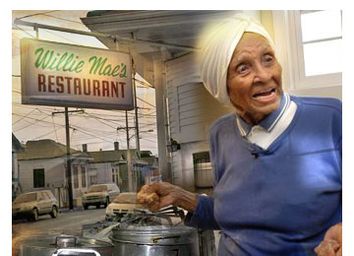
Willie Mae, the matriarch of Creole cooking, lost everything in Katrina. Now the 91-year-old is frying drumsticks again, thanks to John Currence and other top Southern chefs.

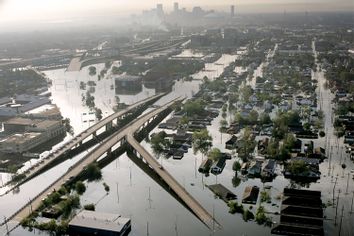
In New Orleans, most people have long since lost their sense of urgency about the state of emergency Hurricane Katrina left behind, and on a midweek afternoon in March, there were long, slow-moving lines everywhere you went: at the still-understaffed post office; in front of the many taco stands that have sprouted up post-storm; in front of the Army Corps of Engineers headquarters, where people were filing billions of dollars in damage claims. The only place where impatience was palpable was in the line of cars that was pulled over so a presidential motorcade could pass.

John Currence was in line at Lowe’s. Wearing his trademark bandanna and work boots, the chef-owner of City Grocery in Oxford, Miss. (and recent nominee for a James Beard Award, the country’s highest culinary honor), looked every bit the construction crew chief he’d become over the last year and a half. Along with hundreds of donors and volunteers recruited by the Oxford-based Southern Foodways Alliance, Currence has led the effort to restore Willie Mae’s Scotch House, a local restaurant and culinary landmark in the historic Treme neighborhood that was all but destroyed by flooding post-Katrina.

While the revival of Willie Mae’s Scotch House may have all the hallmarks of a made-for-TV movie — young white chef celebrated for his updated interpretations of Southern cuisine returns to his native city to aid one black matriarch of Creole cooking — as anyone rebuilding in New Orleans will tell you, it’s hard to feel like a hero on your 400th trip to the hardware store.

Indeed, for Currence, the campaign to save Willie Mae’s — which finally concluded earlier this month after more than a year of work and upward of $200,000 in private donations — began not as an attempt to memorialize Southern food but as a way to battle the helplessness the chef felt watching his city waste away. “This is about me and New Orleans,” he said. “This is about helping a friend in need.”

For decades, the self-determination of New Orleans has been undermined by the economic imperatives of its tourism-based economy — and even before Katrina city planners and politicians were confounded by the question of how to take the ruins of something old and precious and turn it into something new yet timeless. Such paradoxes have only been exaggerated since the storm. The ups and downs of the SFA’s efforts have formed a kind of Cliffs Notes on post-Katrina reconstruction: Expenses will be grossly underestimated; pledges of aid will never materialize; contractors will be impossible to find and will disappear before work has been finished (and after they’ve been paid); new appliances will be bought, looted, then replaced for a second time; and just when you’ve fooled yourself into thinking you’re in the homestretch, you’ll realize you’re just getting started.

Still, despite the pitfalls, from the start the Scotch House project gave people something that was absent from leadership on every level for months after the storm: a singular focus and a clear sense of purpose. Whether those efforts go down in the books as a fairy tale or, better yet, as a how-to, they remain emblematic of an entire region’s recovery effort.

- – - – - – - – - – - – - – - – -

Before the flood, Willie Mae’s Scotch House had been frequented by in-the-know New Orleanians for almost 50 years; her wet-battered fried chicken, in particular, was the trump card of both city bigwigs and serious eaters from around the region, and the stark white “double shotgun” (Willie Mae lives in the adjoining side) remained a bright spot in an area better known for its urban blight. She burst onto the radar of the culinary elite in early 2005 when she was honored by the James Beard Foundation, an organization she’d never heard of prior to receiving its American Classic Award.

Less than four months later — just two weeks after the storm, when the city was officially closed off to all residents — police found her sitting in a folding chair in front of her flooded home with nothing but the clothes on her back and the Beard medal in her bag. She had evacuated to Houston with her children, but snuck away from them and back into the city by herself. (“I know I didn’t have no business coming back in here by myself, but that’s what I done,” she says in “Above the Line: Saving Willie Mae’s Scotch House,” Oxford filmmaker Joe York’s documentary about the project, revealing a sauciness that was still well intact.) The Beard medal was the breadcrumb that allowed friends from the Southern Foodways Alliance back to find her.

In the past, Willie Mae’s business practices were as old school as her cooking: There was never a payroll, just the promise of a full plate — and even now, Willie Mae’s secret recipe for fried chicken exists only in her memory. (Not even the team of chefs who showed up to help cook during the Scotch House’s grand reopening were allowed to watch as she made more batter.) To Currence, such habits are both charming and also cause for concern. “The way that she does business is going to have to change pretty dramatically — [Willie Mae's] is going to be a destination place now, and she’s going to have to adjust.” And therein lies the irony of life in New Orleans post-Katrina: The entire enterprise of preserving a tradition necessitates that you have to ask a 91-year-old woman — whom you love in large part because of her old-fashioned ways — to change.

Certain cultural aspects of New Orleans — such as its architecture — have been saved because, not in spite, of a lack of resources to do things any differently, and bringing Willie Mae’s up to code while saving its aesthetic essence required a commitment to the future, as well as a serious stubbornness on Currence’s part. (How to explain to a 91-year-old eager to get back to the kitchen that she needs to be patient while a wheelchair ramp is added to the back door?) “Now, the central air system alone is worth more than the entire building was before the storm,” Currence says.

When work on Willie Mae’s started in January 2006, volunteers and chefs from across the Southeast showed up in droves and were feted by five-star chefs; early work site lunches included rabbit po’ boys served on white linen tablecloths by Restaurant August’s John Besh. But as initial sponsors backed out and early time estimates turned from five weeks into an equally unrealistic five months, expectations had to be adjusted across the board. On the work site, rabbit po’ boys gave way to tallboys bought from the aptly named Busy Bee corner store.

“Honestly, after a while, it would probably have been more cost-effective to take the $1,000 each person spent coming here and paid for more contract labor, because it’ll be the country’s most expensive fried-chicken joint,” said Southern Foodways Alliance associate director Mary Beth Lasseter. Like many flooded New Orleans homes, Willie Mae’s old shotgun double on St. Ann Street suffered as much from time and termites as it had from the five feet of water it took on after the storm. “But bringing all these people here to see firsthand what happened was a deliberate decision on our part. It’s been the subtext throughout, honestly: How can we use this project to keep the plight of New Orleans in the public eye and yet still keep people’s spirits up? Telling that story without being dishonest and still hopeful — that’s been real tricky.”

“If you’d told us in the beginning how much it was gonna cost and that it would require Currence coming down here all those hundreds of hours and that it would take more than a year, I don’t know that we would have made the same decision,” said Lolis Elie, a New Orleans writer and SFA member who was largely responsible for first bringing Willie Mae’s cooking to the attention of his colleagues. “Luckily, we backed into this without all the facts.”

Scale and proportion have always had a strange relationship in New Orleans — in any other city, six boys with brass instruments marching down the street might not stop traffic, but here it happens almost every weekend. A fully dressed fried oyster po’ boy is occasionally served up so tall that in another city it might require a building permit. So by New Orleans’ peculiar logic, it made perfect sense to have an entire region’s culinary community focus their efforts on one little old lady’s corner restaurant — even if, or maybe especially if, it was in a neighborhood most of them had never frequented before.

Still, as red tape and ruin wore down the sense of collective rage that was felt across the Gulf Coast after Katrina — a rage that for many was impetus enough to start the rebuilding process — individuals were forced to find more personal reasons for overcoming doubt and facing the drudgery that starting over demands.

Louise Terzia, a museum director from Little Rock, Ark., had spent much of her childhood in New Orleans and has always maintained deep ties to the city. For her, working at Willie Mae’s was like a salve on an open wound. “It’s a reconciliation, I think,” Terzia said. “We’re dealing with 150 years of racist policies and politics and greed, and we’re trying to deal with all that now on top of everything else in New Orleans, and it is profound. I don’t know if there’s a right way to put this, but I grew up having these wonderful black women working for my family, and I loved them like they were my own family, and I felt like I was somehow honoring them by working at Willie Mae’s. These women had been a part of my life, and I loved them dearly, and there’s never been a way to recognize them, but helping Willie Mae felt like helping them.”

For Bill Smith, chef-owner of Crook’s Corner in Chapel Hill, N.C., the reasons were straightforward. “One of the things you love about New Orleans is that you have these old favorites, and sure, we feel a sense of urgency about them now that they’re imperiled, but saving them is not just for historical purposes — they’re just things you don’t want to lose. I am glad the Southern Foodways Alliance is so scholastic about recording it for the books, but that’s not why I’m there. I just want it to be there the way I like it.”

Ann Cashion, another Beard winner and chef-owner of Cashion’s Eat Place and Johnny’s Half Shell in Washington, D.C., held a fundraiser for the Scotch House last year shortly after relocating Johnny’s into the space formerly occupied by La Colline, a Capitol Hill institution for more than 20 years. That process in turn made her more sensitive to the changes being made at Willie Mae’s. “To say to [Willie Mae], ‘We’re going to redo your place, and it’s going to be better’ — I don’t think that’s what she necessarily would want, or what people would want.”

The fact that Willie Mae survived not just the flood, but the painful interruption of her life for an additional year and a half since, is testament to a rare kind of resilience. As her daughter-in-law Carolyn Seaton put it, “A lot of the older ones left this world while waiting to get their place back together.”

For John Egerton, an SFA co-founder and author of “Southern Food: At Home, on the Road, in History,” it’s a harbinger of hope for a 300-year-old city. “I find myself believing for the first time in a very concrete way that her presence there, her return — and Leah Chase’s return around the corner — are like two lights that came back on in a real dark place,” Egerton said. “For her finally to be able to walk into her own home again, and go to bed in her own bed, and get up in the morning and begin the day working in her restaurant — to have all that happen has got to be a better sign of New Orleans’ rebirth than anything else. I can’t imagine a better symbol than if Louis Armstrong came in and ordered some fried chicken.”

But much in the same way that since Katrina, the entire city of New Orleans has been asked to defend its right to exist, not everyone in town has understood the rationale of championing — let alone improving upon — a just-getting-by business in a less than vibrant neighborhood far off from the beaten tourist track. Brett Anderson, food critic for the Times-Picayune, says he has heard plenty of grumblings of doubt and skepticism along the way from people who resent the attention Willie Mae has received.

“I get calls all the time, ‘Why all this help for her when everyone’s hurting here?’ — as though there’s something unseemly about coming to the aid of an elderly woman,” he said. “From where I’ve sat and the ways it has been expressed to me, it’s racism.” Still, Anderson allows that such comments are generally made by people who have suffered enormous losses of their own. “Who knows what their emotional state is — but they’re slipping into a hurt that manifests as bigotry, which is as American as apple pie. No one down here knows if what they’re doing is quote unquote worth it, but why, at the end of your life, would you [want to] see your entire life’s work wither and die? Here’s a woman who has lived through the civil rights era, and you have to imagine she has suffered injustice in her life, and in some ways the SFA is just trying to get her the credit she deserves. She deserves to see that place up and running.”

- – - – - – - – - – - – - – - – -

In Uptown New Orleans — many parts of which stayed dry during Katrina — the pace of the city’s recovery has something approaching momentum: On Magazine Street alone, you can find gelato every four blocks, and specialty stores like the St. James Cheese Shop serve an eager, upscale clientele. On a Sunday morning in mid-March, a woman in line at Stein’s, a new Jewish deli, whispered to her friend as she waited for her sandwich to be served on an H&H bagel: “This is so exciting — it’s like being in the East Village!”

But across town on the same afternoon, there was no mistaking Willie Mae’s for any other place in the world. Looking natural though not quite yet at home, Willie Mae passed plastic plates around to family members and the crew of volunteers and without ritual or ceremony dropped chicken into a brand-new frying pan. Cameras trained in on her knotty knuckles as she stood with one hand on her hip and with the other held a drumstick up to her mouth. “I just want to see if the seasoning’s right,” she said.

Carolyn Seaton stood in the doorway, seemingly nonplussed by the commotion, and as she started listing other favorite menu items, it almost became a meditation: “Her shrimp — real good. Her fried shrimp especially. Her pan-fried fish — out of this world. Her chicken is good — she got a different batter from anybody — but she’s got a good veal chop, too. And red beans, um-hmm, yes. Her pork chop … everything she has is really good.”

None of those items appeared on the menu of the Scotch House benefit held by the SFA on April 1, but servers working the event did wear “I Heart Fried Chicken” T-shirts as they passed out duck confit fritters made by Donald Link of Cochon (yet another Beard Award nominee). After a four-course dinner, one of which was prepared by Currence — and before a screening of “Above the Line” — Currence handed the keys to the new Scotch House over to Willie Mae. “I’ve made so many incredible friendships during this process, I’m almost looking forward to the next hurricane,” Currence joked.

The next day, he, along with several chefs who showed up to lend a hand, joined Willie Mae and her son and daughter-in-law in the kitchen for the restaurant’s opening day.

It’s a challenge to keep a restaurant afloat in any city at any time. No one knows how much longer Willie Mae will be able to work in her new kitchen, or who might eventually take over for her at the stove. But even if the casual passersby, seeing Willie Mae standing proudly beneath the Scotch House sign, doesn’t know anything about the long journey that got her back there, one hopes they’ll know they’ve stumbled onto something special when they hear her call out to them, “Pass by again, soon, baby, and I’ll take good care of you.”

John Edwards makes it official

The first major Democratic '08 contender throws his hat in the ring from the Crescent City's devastated Ninth Ward.

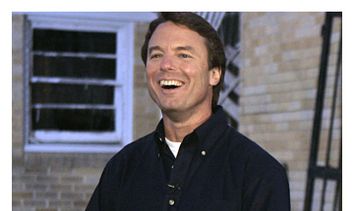
Sixteen months after Hurricane Katrina, many of the street signs are still down in the hard-hit Ninth Ward of New Orleans, but it wasn’t hard to find former Sen. John Edwards there on Thursday morning. The satellite dish of the CNN Gulf Coast Bureau truck was a beacon for reporters trying to pick Orelia Tyler’s house out of all the other gutted houses with FEMA trailers parked outside.

So was the mere presence of a crowd. In this nearly deserted swath of the city, where few locals have returned and screen doors dangle from abandoned houses, a gathering of more than three people is pretty conspicuous. At least 40 people, mostly members of the media, had converged on the house on Stemway Drive to hear the fresh-faced ex-trial lawyer from North Carolina announce his bid for the Democratic nomination for president. Outgoing Iowa Gov. Tom Vilsack and Ohio Rep. Dennis Kucinich are already on the campaign trail, but with Hillary Clinton and Barack Obama not expected to signal their intentions until early next year, Edwards is the first high-profile Democrat to make it official.

“It’s a symbol of two Americas,” said Edwards, explaining why he’d chosen the Ninth Ward as the backdrop for his announcement. “Something I feel very personally.” Echoing the same themes of poverty and inequality he introduced as a 2004 presidential candidate on the eve of the Iowa caucuses, Edwards, dressed in blue jeans and a work shirt, proposed an extreme makeover for the country, one that would start with “grass-roots, ground-up efforts,” like those of the often faith-based volunteer groups he has witnessed in New Orleans.

In addition to reiterating his well-established antipoverty agenda, Edwards laid out a progressive platform that addresses issues such as global warming, the removal of troops from Iraq, universal health coverage and “getting America off its oil addiction.” Edwards plans to present that platform over the next three days in six states, including Iowa, which he almost carried in 2004 and where early polls consistently show him running strongly. (He got an unexpectedly early start on his campaign swing on Wednesday, when his official campaign Web site briefly went live ahead of schedule.)

Edwards has been twitted on the right for feeling the pain of one America while living in the other. A recent New York Post article said his North Carolina estate “makes the famed Kennedy compound look like a seaside cottage.” But Edwards, who had spent Wednesday afternoon shoveling dirt in the same yard with volunteers from his “One Corps” group, was pursuing an antipoverty agenda before he was a vice presidential candidate in 2004, and long before Katrina.

His message Thursday also emphasized self-reliance, both for individuals and for the country as a whole. “I think that’s why I’m in New Orleans, to show what’s possible,” he said. “This is an example of what all of us can do. Instead of sitting at home and complaining, we take action — not just after the election. We take action now.”

Even in New Orleans, where a sort of poverty pornography has taken hold over the last year and a half — everyone from Brad Pitt to Juvenile has paraded through to pimp their pet projects — “people feel forgotten,” Edwards said. He urged Americans to “get their hands dirty.”

The bustle of rebuilding, so palpable in other parts of the city, is hardly evident in the Ninth Ward. One particularly notable indication of the stalled recovery is the nearly total absence of advertising, save for a few signs offering the services of demolition crews and trial attorneys. The lack of organized activity of any kind is so startling that the 20 or so kids standing behind the senator as he made his announcement, each clad in bright blue “One Corps: John Edwards” T-shirts, actually inspired as much of a sense of order as did the National Guardsmen still on duty in the area.

“We’ve seen what happens when we wait to see what the government is going to do for us,” Edwards said. “It’s not like we don’t know what needs to be done — this isn’t rocket science. We can’t wait for someone else to do something for us. There’s just too much at stake.”

Making a seamless transition from Katrina to Iraq, Edwards added, “We have to show that we have the moral authority to lead — we can’t lead on raw power. We need to set an example. We’re not the only ones who saw the photos of New Orleans after Katrina. The whole world saw them. When America doesn’t lead, there is no stability. We need to maintain our power — but we also have a responsibility to show our “better angels.”

Asked whether he hoped to shift the playing field away from the Clinton/Obama battle, Edwards said, “I hope the entire earth shifts in a different direction. I hope someone is running because they want to serve. I want the best human beings possible to run. But change has nothing to do with candidates — it has to do with getting Americans involved.”

Steve Medlin, a former law school classmate of Edwards’ at the University of North Carolina, looked on from behind the news crews, smiling. Medlin was visiting from Concord, N.C., with his three sons, two of whom are Marine sergeants who did yearlong tours in Iraq.

“This is one of the finest men I know in the world,” Medlin told Salon. “I was so happy when he ran for senator, because he was a fellow everyone knew was an honorable, straight-up guy.” Comparing Edwards with Al Gore, another good-looking ex-senator from the South and possible 2008 contender, Medlin offered, “Al Gore came across as so sanctimonious … Johnny’s not gonna lecture anybody. Does he have a chance? Absolutely. Obama is premature. Hillary’s negatives are phenomenal. He’s gonna slide right in.”

The only time Edwards came even close to a negative tone was when he was asked about his lack of experience. “It’s a fair question,” he allowed, and certainly one he was prepared for. “Look at [Donald] Rumsfeld and [Dick] Cheney,” he said. “Both of them had extraordinary experience — but we’ve seen that experience does not equal good judgment, and experience is not the same as having a vision, and experience does not guarantee adaptability. We’ve seen absolutely no capacity to adjust, to move with the world’s changes.”

But Edwards, perhaps in an attempt to appeal to Southerners and moderates, seemed to put limits on what any president, and the federal government in general, should be expected to do. Nevertheless, he criticized President Bush for his failure to respond to Katrina.

“If I’d have been president, I would have had someone coming in my office every day, and I would have asked him, “What did you do yesterday? What do we need to do today?”

And he urged people to look beyond the government for solutions. “We don’t want to hope that the next leader of America will solve all of our problems.”

Again and again, he returned to what could be done by the kinds of private organizations often touted by the current administration. “I’ve walked around New Orleans and I’ve seen a lot of good work being done, and most of it has been by faith-based, charitable organizations and volunteers.”

Such sentiments, and the scattered projects of faith-based organizations, were probably cold comfort to local residents who were hoping for something a little more tangible. Cathy Roberts, a Ninth Ward resident whose house was also destroyed by the floods, had walked over to Orelia Tyler’s house to see who had won the latest media-attention lottery. Eyeing the camera crews around her, she said, “I get so angry when people tell me I ought to call Oprah, or Ellen, to try to get some help rebuilding my house. But I can’t even find Internet service, how am I supposed to find them?”

Although Roberts says she paid almost $200,000 for her home, Louisiana’s Road Home program valued it at only $160,000 — and offered her $88,000 to rebuild it. “How do you do that math?” she asked. Before the cameras were turned off, a group of volunteers went busily back to work on her neighbor’s house. But Roberts didn’t approach them to ask for help. “I don’t need extra hands, baby,” she said. “What I need is money.”

Continue Reading Close

The cat comes back

"A lot of people think my music is sad. It's not sad, it's triumphant. I'm triumphant," says Cat Power. And now, wondrously, the soulful, intimate singer is delivering onstage.

Prior to the arrival of this year’s polished and sweetly upbeat “The Greatest,” listening to any one of Chan Marshall’s six previous records required bracing yourself to get seriously bummed out — though, if you were depressed already, well, you weren’t likely to find more soulful solace anywhere.

Marshall, the itinerant chanteuse who performs under the name Cat Power, chalks up her Southern gothic sensibility to an unusual and unstable Southern childhood in the ’70s. “Did I grow up eating government cheese? Yes,” she said during a recent interview with Salon. “Did I go dumpster diving while my parents were at Charlie Daniels Band concerts? Yes. And did I grow up in the tobacco fields of North Carolina and in youth groups singing Christian hymns? Yes.”

Marshall, 34, got her start as a singer touring and collaborating with giants of the indie rock genre. After moving to New York from Atlanta, she opened a few shows for Liz Phair in 1994, signed to Matador Records soon thereafter, made a bona fide indie classic when she paired up with Dirty Three’s Jim White and Mick Turner in 1998 for “Moon Pix,” and later recorded with Eddie Vedder and Dave Grohl on 2003′s more bombastic “You are Free.” She became a critical favorite based on the strength of her recordings, and cultivated a cult following in spite of her legendarily unpredictable performances. In a 2004 New Yorker profile, the accompanying Richard Avedon photo revealed her for the helpless eccentric she is — topless but hiding behind a Bob Dylan T-shirt, her jeans unbuttoned revealingly as if to say, There are still some taboos worth breaking here.

Her music inspires an intense, brooding intimacy, but listening to it at home is one thing and seeing her perform is another — her notoriously spotty live shows have driven many fans to swear off seeing Cat Power altogether: “She’s great. I love her. I can’t ever see her again.”

So when Marshall put on two sold-out, back-to-back knockout performances at New York’s Irving Square Plaza in mid-September, it felt like a historic event, the triumphant turnaround that had long been hoped for. Finally, the Queen of Sadness seemed happy to be onstage and capable of delivering a performance that matched the nuance and depth of her recordings.

Predictably, some longtime Cat Power fans argued that the full-band production of “The Greatest” has taken away from her signature sound — the album was recorded in Memphis with some of the original architects of the city’s R&B sound — but talking to Salon two days before the New York shows, Marshall largely credited her collaborators for her newfound confidence.

“They’ve been around the block quite a few times, have played with all these amazing people — James Brown, Aretha Franklin — and they have all these amazing stories,” she said. “One of my favorite musicians of all time is Otis Redding, and to actually have somebody like Teenie [Hodges, the guitarist] who knew the guy — all I can say is, good, good, good. Just to know that they survived that lifestyle, and that they’re still, like, youthful in their hearts, and in their love for playing, just keeps me … you know, it just opens a whole new idea of a life for me.”

Marshall’s made no secret of the fact that sobriety is a big part of this “whole new idea of a life, ” though when she appeared onstage at the first of the Irving Plaza shows — a verse late, lighted cigarette and coffee in hand — it seemed for a moment like the old Cat Power had returned, and the audience’s apprehension was palpable. But when the band launched into the title song from “The Greatest,” an amazing thing happened — the backup vocalist went ahead and sang the harmony line without her, and it was as though with that simple gesture she had given Marshall just the boost she needed to come out of herself. Marshall started out affecting cockiness — gesticulating erratically, prancing and self-mockingly fluffing her breasts before she finally made her way to the microphone for a tentative finish. But by the time the band moved into “Living Proof,” a song well suited to the lush instrumental accompaniment, Marshall’s confidence was real, and she took a moment afterward to greet the audience with a broad smile and a Southern drawl that was not self-mocking at all: “Heyyyyy Y’all!”

Watching her newly discovered self-assurance onstage, it was hard to believe that just a few months ago, her label, Matador, was forced to cancel her scheduled tour due to her long-running battle with alcoholism. She says she quit drinking early this year, though, and has been mostly sober since (she admitted to having seven drinks in as many months in a recent New York Times interview). By talking about her alcoholism, it does seem as though Marshall is offering, if not an apology, at least an explanation to loyal fans.

And there was certainly a lot to explain. She often performed wasted, and yet she was still capable of captivating an audience. At one Knitting Factory show in 1999, she genuinely seemed to want the audience to know the full schedule for some great roller skating rink in the Bronx, telling them all the details: “Thursdays are Old Soul night — that’s the best night — although they have a Friday night hip-hop night, and that’s pretty fabulous, too…” It was partly nerves masquerading as stage patter, but it was almost maniacal, and like many other Cat Power shows of the pre-”Greatest” era, not a single song was sung in its entirety at the show.

At a show in New Orleans in 2004, Marshall at one point came down from the stage and curled up into a ball on the floor — still singing something, not a song exactly, more like the dregs of a dirge — and several fans gently reached their arms around her in a futile attempt to be consoling. “Oh, I remember that show,” she says now. “God, was I depressed. I was having a really rough time at that time in my life. Things are a lot better now. I’m sober since February.”

There are still some ghosts to exorcise, of course — her recent show in Chicago did not, and perhaps could not, live up to the recent hype surrounding the new Cat Power. And when asked what her favorite song to perform is, she answers without hesitation, “I Don’t Blame You.”

“I’ll never tell you what that song is about,” she says, and then immediately starts to. “That feeling of not being understood, but supposedly being understood by everyone … being inside of a spectacle, it’s like being a prisoner of war. I don’t know if that makes sense. It would be like being in an insane asylum, where you are who you are, and the only person you’ve ever been is yourself, but then they want you to be someone else.

“What it’s about is very simple,” she continues. “It’s about someone who plays the guitar, but to me it signifies sort of Everyman’s feeling. I just like it, because I can feel like that, like ‘I didn’t want to play this fucking song tonight,’ and it can translate to the audience. There’s a lyric in it, ‘You never owed it to them, they never owned you anyway.’ I like saying that to the audience.

“I like that I can look at them and say that to them. It makes me feel good about being a musician. Because maybe I didn’t sound good that night, or maybe I didn’t [sighs heavily] give a good performance. But at least I was able to look at the 14-year-old kid and maybe somewhere it resonated — maybe that kid got the words, that nobody owns me.

“A lot of people think my music is sad. It’s not sad, it’s triumphant. I’m triumphant,” Marshall says. “If people can be open enough with themselves to be creative and let things like that come out, you know, allow themselves to feel things enough to be that honest with themselves — I feel like that’s really positive. Even though that might sound sad.”

Marshall has a tomboy’s troubled attitude toward being beautiful. When during the Irving Plaza show she did another mock fluffing of her cleavage, she excused her antics by saying, “We all try, right?” When the audience laughed appreciatively, it was the cue she was hoping for: “Guys don’t have to try, and it pisses me off. But we all have to wear perfume and makeup, because we stink and we’re ugly, right?” It was an effective device, comic relief from the gravitas that would immediately follow as she sat down at the piano to play a heartbreakingly beautiful solo, Nina Simone’s “Wild Is the Wind.”

Asked about whether all of her songs are about love, she offers some insights into her writing process.

“All creativity comes from a place in everyone where we don’t have love,” says Marshall. “The people that love to receive that creativity — listen to it, feel it, interpret it — it comes from the same place. I’ve felt that for about 15 years, that the space where love is, that’s where creativity comes in. It’s creating — creating is from love. People say that sex isn’t love, but it sure as hell feels like it, right?”

In the song “Good Woman” from “You Are Free,” Marshall expresses all of the humility of heartbreak without a trace of hardness:

I will miss your heart so tender
And I will love this love forever.
This is why I am lying when I say
That I don’t love you no more.

As if no adult could possibly project such innocence, she’s backed up by two little girls on vocals.

“I had just been with someone I’d known since I was 18, and I was deeply in love with him for a long time, and I was just sad, you know, and I couldn’t do it anymore,” Marshall says, explaining the song’s origin. “I was sad. I was all the way across the world, calling him — two friends of ours had just passed away in Atlanta, and I was just really sad. He was an alcoholic — he’s now since sober, has a family — but he couldn’t love me in that state. I don’t know. He was a drunk. He loved me, but he couldn’t find the responsibility to respect me the way I needed to be respected — I mean, it was just half-steps and backslides all the time. It wasn’t like he was mean or hurtful. He was a really big part of my life. I couldn’t be angry with him, but I needed to move on, you know what I mean? I just had to move on.”

She’s moved on in other ways, too. During the best moments of the Irving Plaza show, it sounded less like Marshall was carrying a tune than riding one, at times getting tugged away by subtle melodic nuances as though at any moment she might be swept away onto another song entirely. Her guitar solo of “Love and Communication,” for instance, sounded at one point like it might become Leonard Cohen’s “Hallelujah.” She can also take a song you’ve heard literally a thousand times before and make it sound totally new — a feat she pulled off with a heart-wrenching cover of “Rising Sun,” another version of which was released on a four-song live EP. She made it her own by switching up the lyrics slightly to more closely match recent history:

My mother was no tailor
She stole my everything
My father was a music man
Do you really know what that really means?

There are many houses in New Orleans
We call the rising sun
It’s been a life of sin and misery
Oh god, I am done

She took off a pair of pumps she’d put on during an earlier song and played air drums with them before bowling them off the stage while moving into an encore of “Satisfaction.” On the recorded version of “Satisfaction,” in a voice that sounds certain of failure, Marshall trails off while repeating the refrain “I’m trying, I’m trying…” During the Irving Plaza show, the words became the chant of someone who was actually enjoying the work, a cheerleader on a chain gang. That night, Marshall actually sang the refrain, “I can’t get no satisfaction,” which was funny both for being so raucous, and because it seemed so obvious that she finally has.

Continue Reading Close

N.O. better blues

Watching Spike Lee's four-hour epic on Hurricane Katrina in the New Orleans Arena with my neighbors, I felt awed, exhausted and heartbroken -- and more convinced than ever that somebody should go to jail for what happened here.

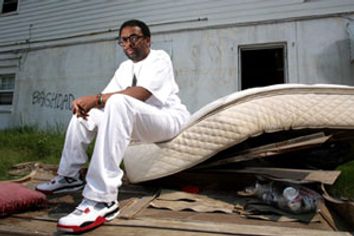
People had been talking for weeks about how the New Orleans premiere of Spike Lee’s much anticipated Hurricane Katrina documentary, “When the Levees Broke,” was sold out, so it was a little eerie when we arrived at New Orleans Arena Wednesday night to find that fewer than half of the 14,000 who’d reportedly snatched up the free tickets actually showed up for the event. Maybe they’d heard there would be no alcohol sold in the arena. Certainly Lee’s ambitious film — sweeping in its scope, emotionally intense and a challenge to watch in one sitting — could drive just about anyone to drink. It’s also possible that all those people who didn’t show up don’t live here anymore. The new New Orleans can be a pretty lonely town sometimes.

Which is partly why watching a Katrina documentary with thousands of other local residents — certain to be a gut-wrenching experience — also carried with it the possibility of catharsis. All summer long, apprehension about the first anniversary of “The Storm” (First? Really? Why does everyone look 10 years older already?) has been steadily building. With so many people still assessing their losses, coming up with a meaningful commemoration can be difficult. I know that 11 months ago I would never have predicted that I might be sitting in the arena across the street from the Superdome — eating nachos, no less — eager to watch more footage of what I thought I’d witnessed too much of already.

Lee kept his introductory comments brief, thanking the audience for the opportunity to tell their story. He encouraged people to laugh at the funny parts. Given how common inexplicable weeping spells are around here (as I write this from my neighborhood coffee shop, there is a man next to me reading his e-mail and sobbing intermittently — I don’t even ask anymore) everyone seemed relieved to hear that there would be funny parts, even if they did turn out to be few and far between.

Lee has frequently stated that at four hours  apparently the longest running time ever for an HBO original movie — “Levees” is still not long enough, nor complete, and he’s right. But through hundreds of interviews, “Levees” admirably covers an entire spectrum of events and circumstances. Starting with Katrina’s landfall and the flooding from levee breaks, Lee moves quickly into the rapid spread of conspiracy theories and the government’s refusal to address them. We see familiar footage of the botched evacuation, as Americans became refugees in their own country, and witness, again, how it was the inaction of elected leaders, not bad weather, that led to the subsequent breakdown of their lives.

Lee also addresses every major aspect of the storm’s aftermath, from insurance fraud to mental health breakdowns to the Army Corps’ admissions of error to life in FEMA trailers (“I’ve got water, but no electricity,” says one interviewee, even though it’s now months after the storm. When Lee asks her when she thinks she might have power, she says, point-blank, “I guess when I decide to give somebody a blow job”). The result is a sort of Cliffs Notes to Hurricane Katrina, Volume 1, and though the subject is dense, the conclusions drawn are as simple and straightforward as Kanye West’s “George Bush doesn’t like black people” comment (which also gets full treatment here): Louisiana needs to stop being an oil colony for the rest of the country. And, oh yeah — somebody ought to go to jail over this.

On the day of the premiere, Times-Picayune television critic Dave Walker wrote that “Levees,” while frequently brilliant, didn’t tell the whole story. “Those who were here know that, in virtually every way, Katrina was an indiscriminate storm that killed and destroyed without regard to ethnicity or economic condition. That is not the impression that the nation received watching coverage of the immediate aftermath of the storm, nor the one viewers will take away from Lee’s documentary.”

Lee’s intention wasn’t to make “Levees” the document of record for just the black experience (lots of whites weigh in here as well), but for the death of what was a mostly black American city. There’s no other director who would have even attempted to do that so thoroughly. So what if he interviews CNN’s Soledad O’Brien (her replayed eviscerations of then FEMA chief Mike Brown won lengthy applause from the arena audience) but not Anderson Cooper, and Wynton Marsalis but not Harry Connick Jr., or for that matter the Rev. Al Sharpton but not the Rev. Billy Graham? Those were valid choices, not oversights, and when most reports from New Orleans over the last year reflexively equated black with poor, a film like “Levees” provides some much-needed balance by portraying many members of New Orleans’ often overlooked black middle and professional classes.

“Levees” establishes early on, for instance, that it wasn’t just poor blacks who chose not to evacuate — prominent local luminaries like actor Wendell Pierce (of “The Wire”) and jazz musician Donald Harrison Jr. both talk about how hard it is to get New Orleanians to leave town. When Pierce says “New Orleans people, we don’t venture very far,” he’s just stating the facts, not offering an explanation.

For the most part, Lee adheres to a standard documentary format — interviews strung together with recent news clips and archival footage — and his stylistic trademarks are employed only sparingly here. But there’s no narration here, although we hear his voice off-camera, prompting his subjects to answer what are often painful, intimate questions. It’s not necessarily the drama inherent in these stories that moved some to tears — and it’s possible that some audiences won’t recognize the restraint Lee exercised in rendering them — it’s the heartbreaking matter-of-factness with which they’re being retold.

A Ninth Ward resident talks about seeing his dead neighbor floating in the water for days and remarks how “he was all blown up.” Herbert Freeman Jr. tells us how he sat outside the Ernest N. Morial Convention Center with his elderly mother in the heat with no water for days while waiting for buses that took too long arrive. “She was asking me questions like every five, 10 minutes, and then I noticed she had nodded off.” When a soldier ordered him at gunpoint onto the bus that finally came, he was forced to leave his mother’s body behind with only a handwritten note identifying her. “I had to pray for my own salvation,” he says, and his voice never once breaks — but his face shows a man who still can’t believe that was the choice he had to make.

The tedium of tragedy has prevailed here for so long now that many people are saturated emotionally. But twice during the premiere, dozens of people filed out of the arena as if on some emotional-overload cue — one time after we witness the funeral of a 5-year-old girl who drowned, and another after a wordless photo montage set to haunting chamber music shows scores of dead bodies, some slumped over and dried out, others floating by, bloated and with eyes bulging. One photo even shows a body being eaten by wild dogs. When you remember that one of the photographers who captured some of those images recently snapped, you don’t wonder why — you just wonder why more people haven’t.

Lee gives his subjects full rein to teasingly discuss Kanye West’s outburst, and it’s the only funny part of the film that leaves no bitter aftertaste. At first, West maintains his bravado — “If you don’t want me to say what I feel, then don’t put me in front of the camera” — but moments later, he admits how scared he was. “I was like, ‘Oh shit.’ I thought the CIA might come take me away.” And Mayor Ray Nagin is even more macho than usual here, boasting about taking a longer shower than was probably polite in the president’s “pimpmobile,” otherwise known as Air Force One. The arena crowd hissed anytime President Bush’s name was mentioned.

The mock second line funeral of a “Katrina” casket at the end was meant to provide closure, and it was a nice gesture. But on our way out of the New Orleans Arena, as we looked down to see the train depot where prisoners had been kept in makeshift cages after the storm, the central post office where some people still have to pick up their mail, and the dents where flying debris had struck the side of the now mostly repaired Superdome, I’m not sure closure was what people felt. It was now after midnight, and this crowd was tired. When a white kid with dreadlocks, one of many freelance vigilantes who flocked here after the storm, started chanting, “You’ve seen the film, now it’s time to do something!” a lady in front of me harrumphed back at him, “Yeah? Why don’t you do something — like build us a levee.”

“When the Levees Broke: A Requiem in Four Acts” will air in two two-hour segments on HBO on Monday and Tuesday nights. It also will be shown in its entirety Aug. 29, the one-year anniversary of Katrina’s landfall.

Continue Reading Close

Bamboom!

It's long, strong and pleasing to the eye. So -- who needs wood?

I asked my lady what could I do
to make her happy and to keep her true
she said my friend one thing I need from you
is a little tiny piece of the big bamboo

She wanted big bamboo four feet long
big bamboo so full and strong
big bamboo stands up straight and tall
only big bamboo pleases one and all…

— from the Calypso traditional “The Big Bamboo”

Get a bamboo enthusiast talking, and it’s not unusual for the excitement — about the plant’s miraculous properties and environmentally important uses — to get a little out of hand. Even a casual investigation quickly reveals that bamboo doesn’t just attract admirers, it inspires a heavy-breathing obsession, as the following tome from American Bamboo Society pages illustrates:

“Bamboo feels so good. Grasp a culm and energy is defined. A strong culm advances from underground to sky, often many tens of feet, many meters, in a matter of weeks. All of it is there from the moment it breaks ground. Every thrusting inch, foot or meter, from node to node, every future leaf is compactly folded in place ready and willing to come out.”

And so forth.

Since they were first introduced in the mid-’90s as an alternative to regular hardwood floors, bamboo floors have grown in popularity at a rate rivaled only by their astounding vertical growth. (A new shoot of Moso bamboo, the type used for flooring, can grow up to eight inches in diameter and 80 feet tall in two months.) As recently as five years ago, bamboo floors were distributed primarily by a small handful of U.S. manufacturers who imported the bamboo from China, but today, American imports of bamboo products have exploded. What briefly had been the province of architects, interior designers, high-end hotels and exclusive health spas, bamboo floors are now available almost everywhere: Lumber liquidators sell them online, big box giants Home Depot and Lowe’s offer them in many of their stores, and they even debuted on MTV recently, when the “Pimp My Ride” crew installed bamboo floors in a yoga instructor’s Land Cruiser.

A modern innovation on a timeless resource, bamboo flooring is “an ideal product,” says Taryn Holowka, a spokesperson for the U.S. Green Building Council, a building industry coalition. The council oversees LEED (Leadership in Energy and Environmental Design) certification, which sets the standard for sustainable designs among architects and developers. The use of bamboo floors qualifies project designers for points toward LEED certification. “Bamboo flooring is attractive and it can grow anywhere,” she says. It’s also promoted by the Sierra Club. In other words, it’s that rarest of innovations — good looking, and good for the world.

Ann Knight, who has watched her Bainbridge Island, Wash., manufacturing company, Teragren, double in size almost every year since she co-founded it in 1994, said that since bamboo has begun to flood the market it’s becoming more affordable; with bamboo floors offered at $3 to $7 per square foot, Teragren’s products are comparable in price to conventional hardwood floors such as oak or maple, she says, and are often even cheaper than more exotic woods, such as cherry. Thanks to competitive pricing, and an increased interest in creating healthy homes, bamboo floors have steadily seeped into more mainstream markets.

Bamboo, which is actually a woody grass, is one of nature’s most naturally abundant and renewable resources. Compared with most trees, which can take anywhere from 40 to 100 years to harvest, bamboo can be harvested in about four to seven years. Then, only the shoots are removed — the root system will continue to generate new shoots. Also, comparatively, bamboo can produce about twice as much fiber as a fast-growing pine forest, the fastest-growing wood crop, according to the Green Resource Center.

Although bamboo flooring makes up only 1 percent of the $2 billion hardwood flooring industry, any time bamboo is used over hardwood, it takes pressure off of rapidly dwindling forests. But its durability, delicate visual detail, and sleek aesthetic appeal are what has captivated designers.

David Hertz, an architect with the Santa Monica, Calif., firm Syndesis, has used bamboo floors in designs for several private clients, including the Santa Barbara home of TV producer Brad Hall and his wife, actress Julia Louis-Dreyfus. He says his clients are drawn to bamboo out of a concern over resource efficiency. “When we’ve used bamboo flooring, we haven’t had anything other than happy clients,” Hertz said. “We did a floating stair for Julia Louis-Dreyfus’ house where we wrapped bamboo over steel — we had to do some very complicated mitering, but it held up, it has a very good, sharp edge … And in fact it’s dimensionally more stable than wood; it has the same thickness throughout — it has integrity.”

Darrel DeBoer, a California architect and author of the book “Bamboo Building and Culture,” has found that the green factor adds value for those already eco-conscious buyers, but it’s not the primary factor motivating most choices. The broad aesthetic appeal and affordability of bamboo floors, in fact, permits him to introduce it to even those clients who haven’t specified an eco-friendly dwelling.

“I sometimes think of myself as being the mole — I’ll be trusted by a client to pick out any and all of the hundreds of different materials they’ll need because a lot of them don’t want to go through that,” he said. “So you sometimes pick out eco-friendly materials and you hope it won’t come back and bite you in the nose. Bamboo floors are one of those materials — they’re easily found, the price is good, the installation effort is pretty much minimal, and it’s something you can control the look of — the grain is very predictable, very uniform, it’s a very clean look.”

Most bamboo is found in China’s Zhejiang Province, also known as the “bamboo sea,” where a bamboo forest roughly the size of Texas has for centuries supported peasants and farmers. Today, thanks in large part to the increased demand for bamboo flooring, those same farmers are quickly being drawn into the global economy.

Right now, there is no bamboo industry in the United States. Marler Spence, a member of the American Bamboo Society and a self-styled bamboo guru who has cultivated more than 100 varieties of bamboo on his 25-acre farm in south Louisiana, once entertained the notion of manufacturing flooring himself — his biggest “crop” is several acres of the towering Moso bamboo. But after several visits to Chinese factories, he realized it would never be practical. “I don’t see it ever working here like it’s working in China,” he says of the 21-step, mostly hands-on process. “These farmers have grown bamboo for many years. What’s changed is that because of these products — the biggest is flooring — peasants are now becoming businessmen, farmers are now factory owners.”

Marler decided he was better off selling his plants for landscaping purposes, although his Bamboo Gardens serves as a sort of botanical education center.

“Bamboo is enjoying popularity in gardens and flooring, and interior design, but that’s kind of faddish,” he said. “There’s also sort of a groundswell of people who are learning about a plant that is very useful. It’s a natural process of people learning, where more and more people are finding out about its versatility. ‘Bamboo is more than a plant, it’s a philosophy,’” Marler says, quoting Wolfgang Eberts, Europe’s largest bamboo grower. (“He’s very big in bamboo circles,” Marler assures me.) “And it really can be. It appeals to those, uh, you know, the green people.”

Certainly eco-consciousness seems to have infiltrated almost every purchasing decision we make, but there are, of course, always trade-offs — like the sweatshop labor used to produce those $2 rubber-soled shoes you love so much. Bamboo flooring’s biggest trade-off is formaldehyde, a highly toxic adhesive used in varying levels in almost all of the most widely available brands of bamboo flooring. The off-gassing of formaldehyde, which can be detrimental to humans, will continue throughout the life of the product. Only two companies, Bamboo Mountain and Teragren, use glues that are essentially formaldehyde-free. And as the market floods with more importers who have little control over the manufacturing process, consumers have to be especially careful about whom they’re buying the product from.

DeBoer says his own motivation in choosing only green materials has as much to do with sustaining his career as it does sustaining the environment.

“I enjoy what I do and I’d like to be able to continue to do that,” he says. “So in some ways, it’s sort of a selfish motivation to find materials that we’re not going to run out of. Sure that vertical-grain Douglas fir and old redwood would be lovely, but a lot of those trees are better off just being trees.”

Continue Reading Close

Beyond the fringe

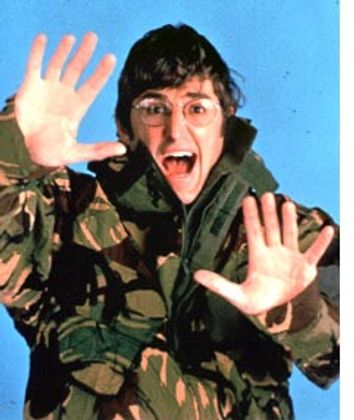
Louis Theroux, host of "Weird Weekends," talks about cutting across cultural margins, straight into the worlds of porn stars and roller-skating survivalists.

Just when you thought we’d reached the saturation point with TV veriti, along comes a bumbling Brit to breathe new life into the well-worn “cultural travelogue” genre. Louis Theroux, son of author Paul Theroux and host of the hilarious new Bravo series “Louis Theroux’s Weird Weekends,” delves into a different American subculture every week on a quest to understand people’s idiosyncratic passions. Whether he’s dealing with televangelists or porn stars or drag-car racers, the genuine respect Theroux shows his subjects has a very humanizing effect, and it’s ultimately what makes the series so winning.

Theroux, 29, came to television by way of “TV Nation,” the predecessor to Michael Moore’s “The Awful Truth.” (Fans of that show may recall how Theroux distinguished himself
with a brilliant segment in which he waged “psychological warfare” on the media circus surrounding the O.J. Simpson murder trial.)

But Theroux’s distinct charm — and, indeed, the success of his show — depends largely on his lacking any clear agenda, political or otherwise. “Weird Weekends” is more
about Theroux’s earnest explorations than it is any kind of satirical exposi — though he’s not above using provocation for the sake of good footage. (In one segment, a pissed-off pro wrestler worked him over until he threw up.) He walks the line between being brave (sleeping in an underground mountain shelter with an armed survivalist) and brazen (asking a wannabe porn actor to show him his penis), but he never forgets his well-bred manners — in a show about born-again Christians, Theroux accompanies his “date” to a religious revival, and shows up in a suit and tie.

There’s a touching moment at the end of the show about anti-government survivalists in Idaho where Louis bids farewell to his host and advises him “not to do anything
silly.” “Seriously, Mike,” he intones,
“I’d hate to hear that something terrible happened to you because of something silly.” He reprises the sentiment in the closing voice-over, and just when you think he’s taken it to the point of mockery, comic relief kicks in and the following readout appears on-screen: “Since the taping of this episode, Mike hasn’t done anything silly.” Ultimately, Theroux makes more fun of himself than anyone.

“One of the weird things about doing the series is that I’m making the program,
but the program’s also about me, to a degree,” Theroux explained during our interview. “So I’m both scientist and laboratory animal.”

The Oxford-educated Theroux cut his teeth at the Spy school of satire, working briefly at the magazine as a writer and editor in 1992. “It was fun, but it was difficult, because it was definitely after the glory years.
I think we felt a bit like ancient Britons in the ruins of the Roman baths, you know, looking around at these monuments to a lost civilization and peeing in them, crapping in the Forum.”

You worked with Michael Moore, who is a pretty controversial character, especially among
American lefties. So it’s interesting that he seems to have found an audience in Britain. What’s the appeal for British audiences?

For me what it comes down to is, Do you find his shows funny or not? Do you enjoy watching the shows or not? And if you think that there’s something bogus about the political analysis, then that’s because you’re not enjoying the show. But I
personally do enjoy his shows. I like Tom Green. I can’t justify it; I don’t think [Green's] really doing a huge amount for the environment, but you’re either laughing or you’re not.

Michael’s a polemicist, and a satirist, so he’s going after corporate targets. It’s not really what
I would do. But I applaud him for doing it. I don’t consider the people I cover to be targets, just subjects.

So how do you pick your subjects?

I haven’t totally pinned this down, but they tend to be worlds which I find to be, on the face of
it, self-contradictory. Americans have this unusual degree of commitment to things that just don’t
square — they seem based on a misunderstanding of objective reality. That isn’t true for all of the
shows, but I think that’s probably true for the best ones — the male porn stars, the born-again evangelists.

There’s a refreshingly unscripted feel to the shows. How much of it is mapped out ahead of time?

The first time I meet people, it’s always taped. We have, obviously, a director and producer who have contacted people and pre-interviewed them to see what they’re like. But I meet people for the first time on camera. I had a lot of war stories from working on “TV Nation,” a lot of behind-the-scenes anecdotes, and I always felt like that was the sort of thing that should be going on air. So that’s one of the primary impulses behind “Weird Weekends,” that there be no “behind-the-scenes.”

It seems your subjects tend to be working- or middle-class. Is that by coincidence, or are you
making some commentary about class in America?

It’s less about class; it’s about people on the cultural margins — who almost by definition are not upper-class. Because people on the cultural margins don’t have power. You could say Ted
Turner is marginal in the sense that he’s kind of eccentric, but he’s not really marginal in the broader cultural sense.

I think the reality of it is, the show is about the relationships that form between me and people
who are alien to me and my way of thinking. And for that friendship to develop, I think we sort of rely on quite a lot of goodwill from the people
I talk to. And it may just be that upper-class people have better things to do than hang out with
TV crews and British people. I mean, most of the people we do stories on are pretty excited or flattered to have us there. And so a lot of the goodwill and bonhomie that comes out of the programs, I think, flows from that.

Would a show exploring English subcultures be as interesting?

It would be a lot harder to do. For one thing, I think maybe Americans like British people a
bit more than British people like Americans. It sounds harsh to say it, but there’s a huge
Anglophilia over here, because America’s got nothing to fear from Britain, really. America’s
the most powerful nation on earth and so it has this luxury of being able to not feel threatened
by other countries. Whereas Britain, this former empire, is now reduced to inferior second-class
status in the world. So British people console themselves with the idea that maybe they’re a
bit more cultured and sophisticated.

There’s a long tradition of programs in Britain that cater to that sense of cultural superiority.
And I think some of the people in Britain who watch “Weird Weekends” get a sense of “Oh, those Americans, they’re so vulgar and tacky and weird and stupid.” I happen to think there’s more to the shows than that.

You do walk a tightrope between taking a satirical approach with your subjects and seeming
genuinely engaged by them — and occasionally it seems as if you’re about to fall off.

This has been a weird journey for me, because I’m not someone blessed with a tremendous amount
of self-knowledge. And I think the first couple of stories I did, I was definitely being faux-naive. I was, what we call in England, taking the piss out of people. I did a story on some neo-Nazis in
Montana, and they were talking about the “race war” and different planets the different races were
going to go to. And I’d say, “Well, what’s the black people’s planet going to be like? What sort of facilities will it have?” And I just strung them along for a long time in this way, asking in ludicrous detail about their theology.

After that show, I tried to rein it in. But I’m actually aware now that, when I look at it, I’m
capable of being insincere without really realizing it. Which is troubling. Sometimes I think the other
people are being faux-naive also, and it’s just part of the theme — people know that I’m doing it, so it’s OK. And other times I’m just being sincere. Sometimes the funniest stuff with people is stuff
where I just don’t get it, and I’m just being normal. You know, if you look at the shows, I’m usually laughing quite a lot. It’s really about me
being amused by people and them being aware of me being amused, and I suppose both of us being aware
of a culture clash. It’s not supposed to be satirical. It really is supposed to be about my authentic reaction to people.

There was one particularly tense moment during the show on male porn stars, when you ask a straight porn star if he enjoys being “gay for pay” — if he actually enjoys the gay sex he’s having on-screen — and it really seems like he might clock you.

A lot of people say that.

It was pretty unsettling to watch.

At that moment I didn’t feel like he was about to hit me, quite honestly. And maybe he was — a lot of people have asked me about it — and I just wasn’t aware of it. But we actually had quite a good rapport going. If you analyze what is happening in the moment, I got slightly irritated with him because he was bragging about how much money he’d made. And I said, “Yeah, but you are
going down on guys, right?” He’d told me he was straight. You know, if you’re gay, that’s
absolutely fine, but if you’re straight, that seems to me going against your nature, contradictory.

Because my take on him was that actually he was gay, but that he had kind of a homophobic streak and didn’t want to admit to being gay. And so when he said, “Yes, unfortunately,” I thought, that’s unnecessary — why say “unfortunately,” like
that? When he said “unfortunately,” I felt like he was saying, “You and I both know that we don’t like gay people,” and he was trying to bond with me over the fact that gays are gross or whatever. So that’s basically why I said, “Come on, you enjoyed it,” and that was the bit where he flinched.

There’s a certain mundane reality revealed beneath a lot of the more extreme behavior you
stumble onto, so that by the end of each show, you really feel like you understand how, for instance, a roller-skating, Holocaust-denying survivalist came to be the way he is.

Yeah, it’s really true. To me, one of the weirdest things about meeting weird people is how normal they are. I just thought of an analogy this morning: It’s kind of like if you saw a naked person wearing a little leather cap — that little bit of clothing makes them seem even more naked.

Continue Reading Close

Page 1 of 9 in Cynthia Joyce

www.salon.com/writer/cynthia_joyce/index.html