Daniel Asa Rose

“Suddenly, a Knock on the Door”: Absurdist Israeli stories

Etgar Keret explains how growing up in a tiny country shaped his work and the difference between irony and cynicism

This article appears courtesy of The Barnes & Noble Review.

Fans of public radio’s “This American Life” have endured no shortage of the breezy yet fully imagined vignettes of Israeli life written and read by Etgar Keret, but long-suffering readers have had to wait four years for his latest collection, “Suddenly, a Knock on the Door.” They can be reassured that far more pleasures than perils will reward their patience. In its seemingly random, absurdist pages, a counterfeit shekel ends up having more value than a genuine one, a goldfish possesses the ability to confer magic wishes for good or ill, and stories fold back on themselves so that they present their own sense of déjà vu — a strange, bedeviling, and often (but not always) happy sensation. Readers may be either put off or enchanted by the playfulness, but at their best the stories convey a sense that the world is knowable on some level we can’t verbalize.  Nevertheless, we couldn’t help but try, and in a flurry of recent emails, we managed to entice Mr. Keret to say a few words about his process.

Barnes & Noble Review
The Barnes & Noble Review: Your characters are always running into people they know — someone’s grandma or dentist. There’s a sense that people are yoked closely together. How much is this the result of hailing from a small nation, or does it predate Israel and perhaps smack of a shtetl sensibility?

Etgar Keret: It is a very Jewish thing to know everybody. It is impossible to become a serial killer in Israel because everyone you try killing will be in the end the brother or the cousin of someone you went to school with.

BNR: Would you be a very different writer if you’d been raised in America, where we sometimes fancy that we have six degrees of separation, as opposed to Israel, where there seem to be only two or three?

EK: What do you mean “two or three”? If I don’t know the guy personally he must be an Iranian mole.

BNR: In several of your stories, your male characters are always having sex “on the side” almost as a matter of course. Is that how it is in Israel today?

EK: Why? You are considering immigrating? When I write about adultery I mostly use it as a metaphor. Living comfortably with something that is immoral and problematic is, sadly, very human and yes, it is also very Israeli.

BNR: This book arrives with a lot of P.R. hoopla — even something called an “Etgar Keret Art & Design Contest.” Is that fun for you or a drag?

EK: A few weeks ago my mother called my home while I was giving an interview. My wife told her I couldn’t take her call because I was working, and my mother corrected her, saying that talking to somebody about yourself isn’t exactly work. P.R. is fun most of the time, and when it isn’t it is something slightly unpleasant you are doing for something you really believe in, which is a much better deal than most people get.

BNR: In the story “A Good One,” you suggest that some airline passengers befriend their neighbors solely so that they can appropriate the armrest. Are you cynical?

EK: I hope I’m not, but I am very ironic. The big difference between irony and cynicism (at least the way I use these terms) is that cynicism is built on alienation, while irony can make fun of things but at the same time can be also empathic and warm. It is the difference between making a joke about a total stranger and making one about your mom.

BNR: Is your intention to move readers, to amuse them, to cast things in a different light for them, or what?

EK: It’s “or what” for certain. Writing never has a pragmatic purpose for me. It doesn’t have any purpose, at least not one which I’m able to grasp or articulate.

BNR: Do you ever know how a story will end before you start?

EK: I never know what is going to happen in my story. The strongest drive I have for writing is curiosity. I write like a reader who … wants to know what will happen next. When the first draft ends I many times change the structure but when I first write it, it is a complete mystery.

BNR: Have you achieved the proper amount of success for your talent? Not too little, not too much?

EK: I don’t think anyone deserves success. It is like a gift and when you get one, you don’t weigh it, you just say “thanks.”

BNR: Some reviewers have detected anger in your work. I get wistful bemusement. Am I missing something?

EK: Oh, I am angry, but not with you. You are nice.

BNR: But maybe I’m just a naturally shallow person.

EK: There is nothing natural about being shallow.

BNR: Was that a dumb thing for me to say?

EK: It wasn’t, and you are not shallow.

BNR: Reviewers sometimes use violent expressions to describe your writing. It “swings around and hits you in the back of the head” (Tikkun); “whaling at the ice with a Wiffle ball bat” (the Forward). If you were reviewing yourself, what imagery would you use?

EK: “Massages you with aromatic oils”? “Embraces you with hairy warmth”? Man, I’m not good at this.

BNR: Your male characters have been described as “trapped in stasis,” but I see them more as floating upside down in midair like in a Chagall painting. Do either of these ring true?

EK: I think both are true. Believe me, one has to be trapped in stasis for a very long time to start floating upside down in midair.

BNR: How much do you polish?

EK: A lot, for much, much longer than I actually write.

BNR: You don’t strike me as a particularly tortured person. Care to comment?

EK: Thanks. I have already learned that I pass as very happy and easygoing in email interviews.

BNR: There’s a sense of effortlessness to your stories, as though they easily flow out of you. Do you ever get the feeling readers or reviewers resent that?

EK: A reader once told me disappointedly, “I could have written those stories,” and I answered, “But you don’t need to, I’ve already written them for you.” When it comes to writing I try not to sweat a lot, and when I do I try my best to hide it.

Inside “Maus”

25 years later, Art Spiegelman gives us a behind-the-scenes look at his seminal Holocaust graphic novel

This article appears courtesy of the Barnes & Noble Review.

Among those of a certain age, is there a soul who doesn’t remember how brilliantly “Maus” lit up the night when it burst upon the scene in 1986? A deeply serious comic strip of the Holocaust before the category of graphic novel was common coin, with Jews depicted as timorous mice and Nazis as bestial cats, “Maus” was scandalous in concept, jaw-dropping in execution, and, beneath its transgressive exterior, humbling in its rigorous yet gentle understanding of the victims of one of the seismic events of the 20th century.

Barnes & Noble Review
Lest you’ve forgotten any part of this, “Maus” mastermind Art Spiegelman is publishing “MetaMaus” to mark the 25th anniversary of the original. And after a quarter of a century, the work still provokes spellbound fascination and anguish in equal measure.

As a fellow member of the so-called Second Generation, or children of survivors, who’ve written books on the subject so central to our lives, let me attest to how handily the original “Maus” beat us all to the punch. Spiegelman’s first version was actually published 14 years earlier as a three-page underground strip in 1972. To put it in the proper time frame, this was during an era when the word “Holocaust” was scarcely spoken in polite society. The general public was locked in ignorance. Survivors were choked by a sort of guilt-by-association shamefulness. The Eichmann trial was only 11 years in the past; the taboo-breaking Holocaust TV miniseries six years in the future. As a measure of how traumatic the events of World War II were, the American Jewish community as a whole remained so shell-shocked that they had barely begun the supernatural task of processing it. Along came Spiegelman’s distinctly un-Disney-like hordes of mice to jolt us from our complacence, its first volume (“My Father Bleeds History”) in 1986 and its second (“And Here My Troubles Began”) five years later.

Like a director’s commentary track, the new “MetaMaus” provides a kind of behind-the-scenes “Inside ‘Maus’” that rewards us with insights this reviewer, for one, was too blown away to perceive the first time around. It’s built on a very distilled and definitive four-year-long interview with “associate editor” Hilary Chute, who deserves more credit than she receives (she’s not even listed on the front or back covers) for posing exactly the right questions, such as this one: “Were there times when you felt that perhaps comics wasn’t the best medium for your father’s story?”

Answer: “I came up against things in ‘Maus’ that involved imparting general information, and those were the moments when I would despair and think: Well, maybe I should just do something that’s a combination of prose and comics, use comics when it’s appropriate, and just typeset pages of prose when that seemed appropriate. But that would have been a real cop-out.”

And this: “Aside from Expressionism, what aspects of visual or literary modernism have you found productive?”

Answer: “I was interested in the fact that us low artists [i.e.. cartoonists] were the only artists still interested in drawing the human figure when all of modernism was moving away from that.”

The book is filled with similar revelations, such as the eccentric nature of Spiegelman’s influences. These embrace not only the German-born American artist Josef Albers (his “concern with retinal information rather than drawing per se”), but also “Little Orphan Annie” (which “offered me a more direct validation that comics could actually carry emotional resonance despite, or probably because of, the abstraction of the language and visuals”), as well as Mad magazine pioneer Harvey Kurtzman, whose sensibility Spiegelman credits with radicalizing “what we now think of as humor.”

Along the way, Spiegelman provides a glimpse into his years of apprenticeship, as well as a graduate-level course in comics semiotics: not only how eye movement works on the page, frame by frame, but how the graphic architecture serves in specific cases to deliver the narrative. As such, it is nothing less than a treatise on the rhythm and grammar of comics storytelling. The visual vocabulary he utilizes turns out to be more ingenious than you (or I, at least) ever suspected. Who knew, for instance, that on one page the smoke from the narrator’s cigarette was meant to be subconsciously seen as smoke from the crematorium in the panel below? (Another throwaway revelation: “I do believe that the self-destructiveness of my smoking is not totally unrelated to the secondhand memories of secondhand smoke” his parents breathed from the crematoria.)

In fact, Spiegelman doesn’t so much rapid-fire his replies as he chain-smokes them, one after the other, torching one eye-opener from the spark of the previous. On how he managed to condense such encyclopedic information into two volumes: “‘Maus’ could have been ten times longer if I’d just not tried to pack it as tightly.” On why he chose this most daunting of topics to begin with: “My work life has mostly consisted of finding the hardest thing I’m capable of doing to placate the Hanging Judge within. I wanted a challenge worth meeting as I turned thirty, and ‘Maus’ qualified.”

(More about that Hanging Judge: “Drawing doesn’t come easily to me — maybe I’m lazy like my father always told me I was.”)

Most important, he manages to explore the fluidity of the fiction/nonfiction divide that inevitably plagues historic narrative, and to confirm that they are not as easily segregated as naive commentators would have us believe. Acknowledging that “memory is a very fugitive thing,” he cobbles a workable reply to those who insist on its rigidity. “I still puzzle over what fiction and nonfiction really are. Reality is too complex to be threaded out into the narrow channels and confines of narrative and ‘Maus,’ like all other narrative work including memoir, biography, and history presented in narrative form, is streamlined and, at least on that level, a fiction.” To flesh out his point he shares the delicious anecdote of how, before the New York Times Book Review saw the light and acceded to putting the book on the nonfiction side of the bestseller ledger, one benighted editor argued, “Well look, let’s go out to Spiegelman’s house and if a giant mouse answers the door, we’ll move it to the nonfiction side of the list!”

Fortunately, more enlightened minds prevailed. The result has forever helped redefine our attitudes toward history and the art that attends it.

Continue Reading Close

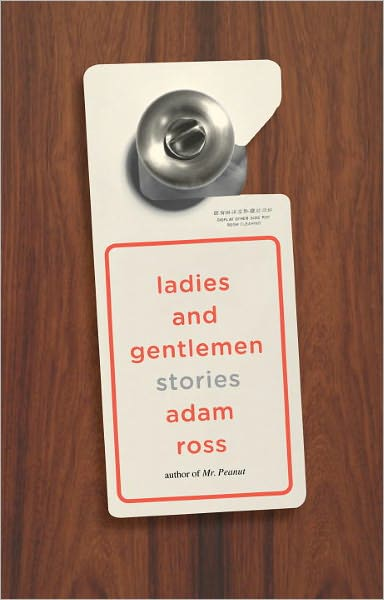
“Ladies and Gentlemen: Stories”: Human cruelty, explored

A new book from the author of "Mr. Peanut" delves into the dark interactions between men and women

Cruelty comes in all kinds of colors. There’s blithe cruelty that makes light of itself. Gross cruelty that makes no excuses for itself. Passive-aggressive cruelty (which is really just aggressive cruelty without the courage to admit it). And the coup de cruelty: careless, casual cruelty that cuts so finely it barely leaves a surface wound. But beneath the surface, the damage can be deep indeed.

Barnes & Noble Review All these kinds, but mostly the last, are on dark display in the interactions between the characters of Adam Ross’ collection of stories, “Ladies and Gentlemen,” his first book to be published since his debut novel, “Mr. Peanut,” landed last June to wildly mixed reviews. In keeping with his theme, he has chosen the perfect epigraph to introduce a work that addresses the issue in all its guises: “Cruelty, like every other vice, requires no motive outside of itself; it only requires opportunity” (George Eliot).

Opportunity there is. The first story, “Futures,” features 43-year-old David Applebow, a feckless job seeker who stumbles upon an ad that is enticing for its vagueness. “THE FUTURE IS NOW. Are you perceptive, analytical, a troubleshooter? Have excellent interpersonal skills you were never sure how to parlay into $$$?” The fact that neither the ad, nor the subsequent interviewers, ever get around to stating what the job actually entails only adds to its allure. Sharing with most of the other protagonists in the book a debilitating self-criticism (call it self-cruelty), from which he rallies with only the most excruciating effort, Applebow jumps at the job opportunity, permits himself to feel his fortunes rise, and ends up making an ass of himself. Corporate cruelty, specifically the cavalier type of the entertainment industry, is the culprit this time, though we don’t know it until the final annihilating few pages.

None of the other stories are pulled off quite as well. Some deliver a crushing wallop, while a couple curl up and mew to be put out of their misery — pages before they finally are. The level of observation is not always as keen as you might wish (“Donato … took off his glasses — a piece of electrical tape holding one of the hinges together”), nor are the insights as resonant (“Their jet simply dropped out of the sky … Heraclitus says a man’s character is his destiny, but there were a hundred sixty-eight passengers on that plane. An aphorism like that makes no sense after such an inexplicable event: too many characters involved; too many destinies”).

But when the stories work, and the majority of these seven do, they offer pitch-black morality tales about vivid characters: a dilettantish professor who samples real life to his peril, a lawyer lashed to a deadbeat brother who brings them both down. Bravura touches abound: “An interval of time passed — certainly no more than five seconds — but it was unlike anything Thane had ever experienced in his life. He imagined it was something a hummingbird must feel: an awareness of moving with great rapidity while the surrounding world remains stuck in slow motion.”

What keeps these besieged protagonists from being everyday, sad-sack victims is that they are never resigned to their fate but fight to the end for something better. After Applebow the job supplicant (more supplicant than applicant) suffers his awesome humiliation, he goes back to his lonely apartment and commits an out-of-character act that can only be called noble. The stories as a whole offer a grueling tug-of-war between cynicism and redemption — frequently comical, but with rope burns for all concerned.

Can there be something redemptive about this world of hurt for the reader as well as the characters? At its best, the book achieves a level of tragic hilarity that will mist your eyes with bitterness, as sometimes happens to the protagonists themselves, the butt of these random cruelties. From the first story again, after the final lacerating cut has been delivered: “Applebow laughed along with them, despising himself for it … with tears in his eyes, his face flushed with rage and shame, and it was cripplingly typical, he thought, that when he had the perfect moment to lash out, he did nothing but go along with the joke, as if none of this mattered at all.”

Continue Reading Close

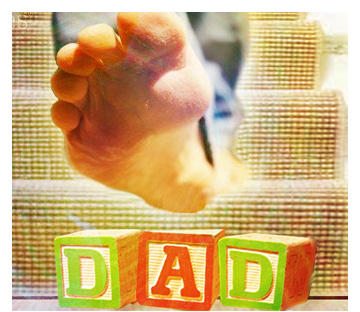
Bad news dad

Twenty years after raising two boys with my first wife, I'm doing it again with my second. So don't call me a grump if I'm not charmed by every damn Little Leaguer or cute story about spitting.

I rather enjoy having kids. Again. All over again. After having two boys with my first wife, to raise to adulthood, having two more boys with my new wife, to raise to adulthood. Doing the same things. Mostly the very same things. Day after day. Year after year.

Don’t get me wrong, I’m mostly rapturous about doing it again in my 50s. And, it goes without saying, I hold them more dear than life itself. So back off, OK, and let me tell you the few things I rather … disenjoy … about doing it again?

Bone-dissolving baby wail in lieu of a drum roll, please.

The devoted attention required for details.

I’m one of those dads who’s pretty good at seeing the big picture. Like kids need an inoculation every 10 or 20 years or so. It isn’t vital that I be kept in the loop of every detail, say when I’m on the phone trying to assure a prospective baby sitter’s mother that there are no molesters in our household while my offspring is talking at me, as follows:

“You know Chandler? That kid in my class? The really, really, really, really, really fat one? With the rat tail hair cut? Who’s a pitcher? Well, a really bad pitcher? I mean, he walked 23 batters in a row? Mostly by pitching to the wrong side of them?”

Especially when the payoff, when it finally comes, is something earth-shattering like this: “He scraped his knee today.”

Being forced to look at things I don’t want to.

It’s not necessarily that I’ve seen it all before. It’s just that, um, yeah, I’ve seen it all before.

“Dad! Dad! Come quick! There’s a cigarette butt in the toilet!!!”

“Dad, whoa Dad, hurry! You gotta see that billboard! It’s like 20 feet high!!!!”

“Dad, Dad, I’m not kidding, you won’t believe this! That guy’s wearing a RED SHIRT!!!

Being forced to look at things I don’t want to two inches from my face.

Nothing against hissing potato bugs, personally.

Needing to employ painstaking logic to explain things about the world that most civilized human beings understand instinctually.

Such as why it’s not advisable to dribble milk on vintage photographs. And so forth. Do I really need to list them all?

Being forced to play games that bored me light-years ago.

Simon says take two giant steps.

Simon says do a backward somersault.

Simon says eat shit, OK?

Listening to the music of pots banging.

Listening to the music of pots banging two inches from my face.

Tripping over squeaky plastic things way, way, way down at ground level.

Why is the floor so far below me this time around? Why does it come up and hit me on the chin so quickly? Why is it so hard to rise from it, all the way back up to where I belong? These and many more are questions I have absolutely zero interest in thinking about.

I’m too tired to make up a category for this one. And I realize it’s, like, blasphemous? Doting dads are not supposed to even think such thoughts?

But the truth is that, after a lot of soul-searching, I’m just not as fascinated as they are to see which part of the fern plant they can spit their 15th cherry pit into. I’m also not fascinated by accompanying their mother to the doctor for the annual dose of wisdom, especially when the doctor was a rubber band-chewer my first boys used to beat up in third grade, and double especially when there’s a broken stick left by some other child in the waiting room. “Dad! Dad! Look! You gotta see this! A stick! A broken one!!!”

Speaking of their mother, whom, it goes without saying — so may I forgo saying it from now on? — I hold more dear than life itself: 1) She is 10 or 20 years younger than I. 2) She was wearing braces when I was experiencing the miracle of diapering my first babes. 3) She doesn’t quite grasp the notion that the incoming generation is engineered specifically to supplant the outgoing one. So could someone please gently convince her that she won’t have her union pass yanked if she doesn’t exclaim over each knuckle scab: “What happened!?!? Did it hurt? Was there a lot of blood? Did you cry? Are you positive you’re OK?”

Bone-dissolving baby wail to signal conclusion.

And so the question arises. Am I a grouch this time around? Just because I will no longer subject myself to any more moon bounce contraptions, preferring to have my center of gravity where I can keep an eye on it? Just because I devise games like chase-the-flashlight-beam where I maintain a sedentary position while they jump about like caffeinated chimps? Just because I cut off less promising conversations with a strategically strong word or two? (“Who the bloody hell cares why the WalMart lady didn’t give you a damn sticker this time?”), or because I’m no longer charmed by the spectacle of Little Leaguers missing every single grounder (get your mitt down there, rubber band-chewer!), or because I no longer find myself gasping when the boys choke on a Rice Krispie — not because I don’t care, but because I am in possession of the readily available yet seemingly arcane knowledge that it’ll wash the fuck down?

Yes, well, I would relish the opportunity to discuss these issues at length. But I happen to be a mite preoccupied at the moment … by a competition … stand back, please … to see how well I can spit this cherry pit into that fern plant? Wait, wait, you gotta see this! I’m not kidding! LOOK!!!

Continue Reading Close

Is “doggie style” hyphenated?

My stint as a copy editor at a skin mag taught me more than I ever wanted to know about the sexual proclivities of the American public.

Let us call him “Mr. Green”: a varnished old rogue in a stained ascot. At a New York writers party featuring various penniless scribes crushed into a room the size of a janitor’s closet, Mr. Green watched as I spoke touchingly of my wife’s second pregnancy and the financial burdens presented thereby. Then he asked if I wanted freelance work.

“Copy-editing jerk-off letters for a skin mag,” Green said. “Your eyes will glaze over but the money’s grand.”

It started off pleasantly enough with a phone call the next day.

“Good morning, Daniel. My name is Chastity. I work for Mr. Green at Joystick” (the name of the magazine has been changed).

“Ah yes, how do you do, Chastity.”

“Would you prefer ‘Butt Busters’ or ‘Cluster Fuck’?”

We were off to the races.

- – - – - – - – - – - -

Within two days I found myself developing category preferences: No masturbation scenes — the writer’s lot was lonely enough without having to deal with someone else’s isolation. Also, no orgies — they were the equivalent of sweatshop labor. I had to draw diagrams to keep the positions straight (Peg’s on the left, Roger’s on his knees, but where’d Yvonne go? Quick, call 911! How’d we lose Yvonne?). Fetish Frenzy was good: expanded my thinking. Handicap Parking was lovely: nice to see that amputees got love, too. I was given the magazine’s style sheet to refer to and a copy of Canada’s guidelines to memorize. Since American issues were exported to Canada, the entire industry had to oblige Canada her narrow views. No pain of any sort, no handcuffs, not even a harmless little enema here and there. Anal play in particular was verboten. Didn’t matter how much you may have thought Dudley Do-Right was in need of a grape juice enema, he wasn’t going to get one in the pages of Joystick.

Within a week I had my routine down. First thing after a dinner of pot roast and kasha, I’d retire to my sun porch to download files and get my dose of American vernacular. He was packing some heat in his meat … She had nipples you could dial a phone with … She came so hard I felt the waves … Some of the unself-conscious vitality I was being paid to correct was actually more colorful in the original: I burst my pants instead of burst out of my pants. She was sucking on his dick, instead of just plain sucking.

I also enjoyed the addition of too many commas, a stylistic idiosyncrasy that gave the text a breathless quality. I kept her underwear, and, allowed her to get dressed … When I finally saw my wife, with her legs spread wide around Mike, I thought my heart would pound, out of my chest. And the absence thereof. She began licking between her breasts removing my spunk. I appreciated the stiltedness that resulted from the letter writers’ reluctance to contract: Sophie licks her to orgasm every time she has finished shaving her. Frequently this gave the raciest sentences an incongruously Puritan flavor, especially during moments of passion. “I am feeling myself relax,” she purred softly. “Now I am ready to have some fun with you.” Other times it made the dialogue sound like Bert and Ernie. “Let me see,” said Jane as she leaned over to see the love juices winding down her cousin’s thigh. “Ernie, look at the mess you have made!”

Tackling a new letter, I’d first hit the find and replace key and change every “cum” to “come” (an average of 19 changes per letter). As per my style sheet, I’d make sure every “doggie-style” was hyphenated, every “bunghole” was not, every “blowjob” was one word, every “daisy chain” was two. Picture, if you will, all of this being dispatched with a 10-month-old baby draped over my lap. In our cozy, kinky domesticity I enlisted my wife to proofread, which she’d do during commercials of “20/20.” “Honey,” I’d call out from my study, “is ‘dream cock’ hyphenated?” Nor would the picture be complete if I didn’t confide that I was performing this editorial duty at a time when my wife and I weren’t getting any, due to a combination of pregnancy and other perils of middle-aged matrimony. Two of the most celibate people on the East Coast were doing some of the dirtiest editing in history, then going to their separate bedrooms to sleep. To my thinking, this gave the venture a poetic justice it otherwise might have lacked.

- – - – - – - – - – - -

“Good morning, Daniel. Name your pleasure: I have ‘Meatballs,’ I have ‘Gang Bangs,’ I have ‘Three-for-All.’”

“Chastity! Those are my least favorite! What happened to ‘Blow the Man Down?’ Something I can sink my teeth into!”

“Well, I didn’t want to bring this up,” Chastity said. “But as long as you’re proving intransigent, I may as well tell you that you let a little pain slip through.”

“I did? Where?”

“When he screws her in the ass. And I quote: ‘My ass felt like it was being split in two.’”

“But doesn’t she go on to say she liked it like that?”

“Doesn’t matter. And remember: No coming on anyone’s face or hair, and two men can’t come at the same time on the same place.”

Truly she was my guru, my guide through the netherworld of copy editing. And more, through life, in a certain sense.

“Let me get this straight, Chastity. A guy can come on a woman’s breasts and two seconds later another guy can come on her belly, but both guys can’t come on her breasts at the same time.”

“I don’t make the rules, Daniel.”

Pause.

“Hey, how’s that darling little baby of yours?”

“He’s lying right here.”

“Awww, kootchie kootchie koo!” she said, ringing off.

The towering giantess could suck very good, I read. I left it uncorrected.

- – - – - – - – - – - -

The remuneration was indeed grand, as Green had promised. Never before having sold out in large degree or small, I was gratified to discover that smut editing filled up the larder with jars and jars of organic baby food. At a rate that boiled down to something like $150 per hour, it purchased the extended afternoon session at day care. I was fast becoming the envy of colleagues who had to supplement their incomes by appearing as expert witnesses on “Larry King.”

Another benefit was that my computer was developing street smarts. I had loaded into its spell-checker all manner of esoterica such as “suckfest” and “cockhead,” which it thereafter allowed without so much as a red flag. And I myself was becoming proficient in certain arcane areas of copy editing that otherwise might have escaped my expertise, such as the difference between “lie” and “lay.” Thus, the buxom blonde lies spread-eagled, but the muscle-bound black lay down in the leaves.

Speaking of which, I thought it peculiar how blacks were able to ignite so much passion in normally reserved white women — Henriette K. loved to look in the face of her coal-black lovers as they slid their ebony rods between her lips — until I studied the magazine’s demographics. Turned out that a high percentage of Joystick’s readers were not only college students and concert pianists (because they’re good with their hands?), but also black prisoners of state and federal penitentiaries.

So the readers were real. But were the writers? This question — the very one asked by concert pianists as well as jailhouse sodomites all over the nation — went unanswered. It was conveyed to me, by coughs and silences over the phone, that this was something we didn’t talk about. I decided to put it to Chastity in a roundabout fashion.

“Morning, Chast, I was just wondering. Is it kosher to change the letters a great deal?”

“In what sense?”

“In the sense of padding, or changing beyond recognition; y’know, fictionalizing? ”

Chastity cleared her throat, a holdover from her days as a doctoral candidate at Radcliffe. “As long as the original text’s understandable, we don’t need to add such traditional literary devices as rhythmic build, picaresque characters or peripeteia.”

“Peripeteia?”

“‘A sudden change of events or reversal of circumstances.’ It’s from the Greek word ‘peripiptein.’ Capiche?

“Capiche, mistress.”

“But as long as we’re on the subject, Daniel, I may as well ask you, purely theoretically: What would you say if I were to ask you to compose some letters from scratch?”

Figuring it was some sort of test I could always get out of later, I said sure. It was never brought up again.

As the months rolled by I remained impressed. By the ingenuity of the fantasies (the black man tying up the white husband with his necktie and riding the wife to fruition two inches from the husband’s nose). By the sheer kinkiness (the husband who arranged to sniff his girlfriend’s feet while she was fellating other fellows). Like reading Voltaire or Nabokov, it enlarged my sense of the possible. From my dubious perch outside America’s bedroom window, I found myself in a position to be able to monitor national trends. I was astounded by the amount of sheer animal sensuality that was abroad in the land: the hot summer air caressing the bikers riding to an assignation, the sexualization of the cigarettes they smoked afterwards ( She rolled her cigarette around that pouty wet mouth of hers like it was a small erect cock). The ayatollahs were right: We were a shamelessly sensual culture. Brawny, lunatic, infantile and brave: By evidence of these letters, America was a force of nature.

- – - – - – - – - – - -

Did it get old? Hell, what doesn’t? Abetting the process were repeated phone calls during dinner telling me I had “trespassed considerably.”

“How do you mean?”

“It’s close-trimmed pussy, Daniel. With a hyphen! Whenever you have two adjectives describing something, you have to hyphenate.”

My wife passed the jar of strained pears for me to open. “I’ll try to remember, Chastity.”

“Please do. And ‘S&M’ has an ampersand. Haven’t you memorized the style sheet yet?”

Problem was, I had it too memorized. I went over the rules in my sleep. “G-spot” was always capitalized. “Cocksucker” was one word, but “cock-tease” was a hyphenate. “Ass-cheeks” was hyphenated, but “asshole” was not. Mine was not to question why. Mine was to see if I could get health benefits.

My computer was also acting up, auto-correcting such words as “cumputer.” The evidence was mounting that I had polluted my hard drive, and this the machine upon which I transposed my fears and dreams. It felt a little like I’d lent my high school sweetheart out to a motorcycle gang for the weekend. Nor was my grammar immune. At a black tie dinner party, I heard myself say “suck on” instead of “suck.” When talking to the lady at 411, I was adding and subtracting commas inappropriately (What is, the number, of Richard Spunk please?).

But much worse than this, much, much, much worse, was the fact that I was no longer aroused by the pinups in Joystick. I would glance at a cover girl and see with the curse of clarity that she was just a heavily made-up dropout pushing her sun-freckled boobs together rather pitifully. My eyes were beginning to glaze over, just as Green had warned. I would stare at a video capture of a dirty movie in the review section and think, “Is his face covered in pussy juice or covered with pussy juice?”

- – - – - – - – - – - -

“Morning, Chastity, how’re tricks?”

“Everything’s fine, except we’re letting go of all freelance copy editors …”

A thrill went through me that was almost sexual. To be fired by Chastity: Here was a sadomasochistic buzz that was almost a category by itself: Cut Off by Editrix (she was strangulating my income and I was staring into her sea-green eyes … she hoisted me in chains above my creditors as I sputtered my innocence … ).

“Fired, Chastity! Was it something I said? Was it something I didn’t say?”

“Well, to tell the truth, all you copy editors were getting a little literary there.”

“Literary?”

“Peripeteia. Onomatopoeia, up the wazoo. Whatever. It was like you couldn’t control yourselves.”

“I guess this means you won’t be paying those chiropractic bills I forwarded, huh?”

“Pretty definitively not, I’m afraid …”

So I was history. And just when Canada was loosening up, too. The day I got my walking papers I also received a bulletin from the Canadian Customs Department revising “the administrative guidelines contained in Memorandum D9-1-1 elucidating Tariff Code 9956 with respect to the provisions dealing with anal penetration.” Butt-surfing, in other words, was at last OK by the Canadians.

Too late for me. Dudley Do-Right could force-feed it to Chastity, for all I cared. The kid came out of extended day care. The new kid arrived on the scene, doubtless armed with enough prenatal X-vibes to scandalize his future shrink. Style sheet in hand, stained ascot in place, my wife and I ventured back to the nuptial bed where — a happy ending for you, and a good night to all — we proceeded to hyphenate like bunnies.

Continue Reading Close
www.salon.com/writer/daniel_asa_rose/index.html