David Kipen

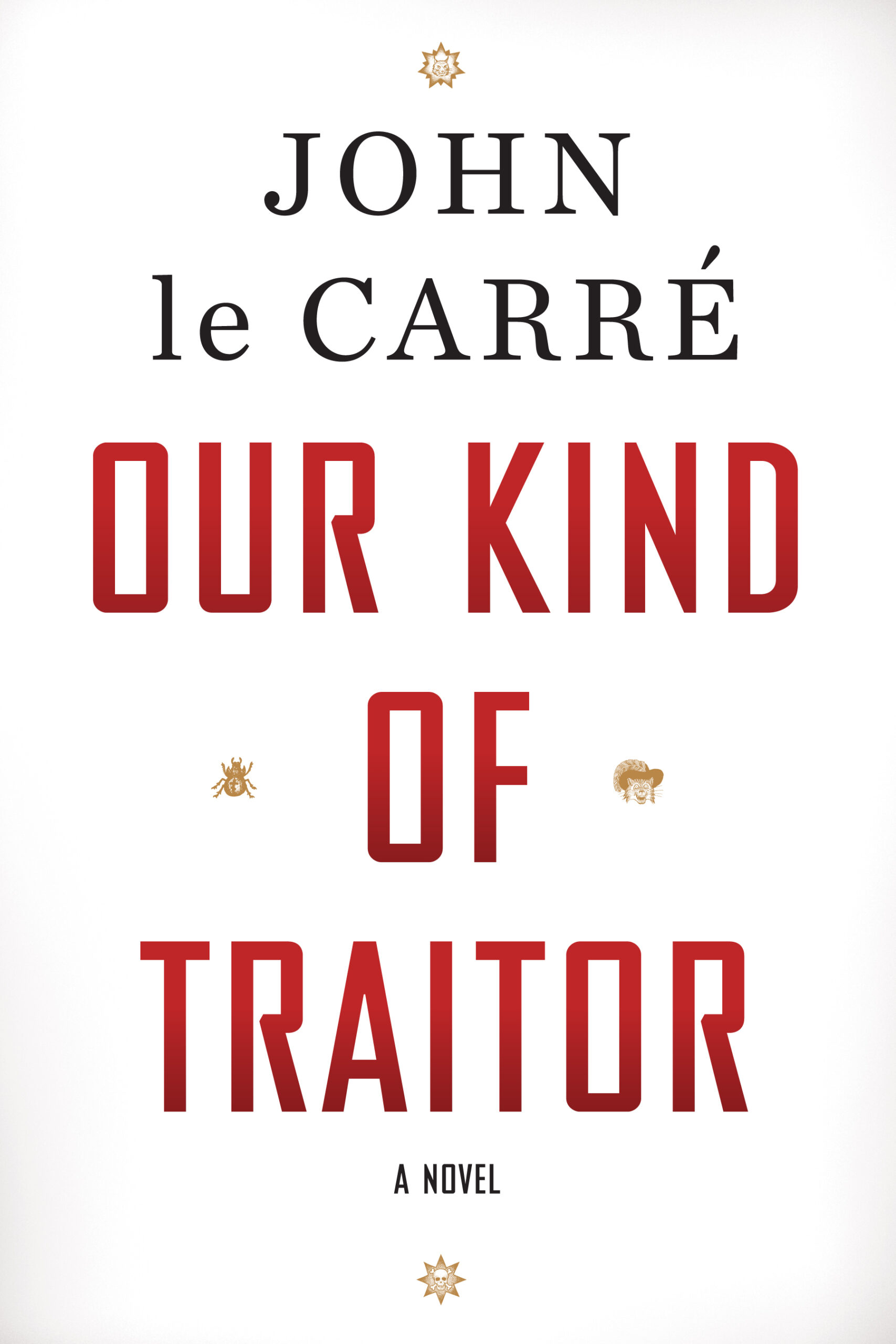
“Our Kind of Traitor”: Has John le Carr

The latest book by the "The Perfect Spy" author is exquisitely written -- but is the espionage writer out of ideas?

  • more
    • All Share Services

It’s hard enough when presidents younger than you get elected. Imagine the day in almost every popular writer’s career when he starts writing heroes younger than he is. That day came long ago for John le Carré, who used to write about older men, like his famous spymaster George Smiley. Now, turning 79, le Carré creates mostly more youthful protagonists, like the brilliant, idealistic, naive amateur spy Perry Makepiece in his 22nd novel, “Our Kind of Traitor.”

Barnes & Noble ReviewPerry — and he’s always, fondly, Perry, more like a son than a hero — is likable enough, but there’s something unformed about him. We don’t want to suspect commercial motives in a writer as strong as le Carré, any more than we care to suspect lechery in a friend’s May-December affair. But there’s something less than seemly when a writer of le Carré’s pedigree and maturity keeps writing main characters playable by movie stars instead of character actors. It’s as if the author of “The Perfect Spy,” after a career spent making literature out of espionage, has decided he wants to be Ian Fleming after all.

To be fair, no one would ever mistake “Our Kind of Traitor” for “Thunderball.” It’s too well-written for that, and too structurally tricky besides. Like his beloved touchstone Joseph Conrad, le Carré tells his story here through nested narrative filters. Roughly the first third of the book recounts how a lapsed academic like Perry came to be brokering the defection of a billionaire Russian money launderer named Dima to Great Britain. At first we find them in Antigua, as a friendly tennis match with the comically boorish Russian evolves into the makings of an international incident. Gradually we learn that we’re getting the story secondhand, recapped alternately by Perry and his plucky girlfriend, Gail, to their MI5 debriefers. At first this is complicated verging on baroque, but le Carré has the nuances of their interrogators’ separate voices down perfectly, and it’s all tidy enough in retrospect.

The middle third of the book focuses on Perry and Gail’s indoctrination into the ways of the British Secret Service. They learn the finer points of tradecraft from experts who can only dream of the access that our heroes have blithely lucked into. A defection in Paris is planned, and we learn more about the destabilizingly massive amounts of money that Russian oligarchs have been shunting around the planet lately.

Shining a spotlight at corners of the world we ignore to our cost is where le Carré usually excels, but Russian billionaires aren’t exactly untrodden ground in recent fiction. (Martin Cruz Smith, in particular, has been doing a sturdy job of translating thorough research into palatable thrillers.) Even if a certain freshness of subject is lacking here, le Carré can still write circles around most novelists, spy or otherwise. The climax partakes of the author’s signature nonchalant authority about espionage, with excruciatingly tense vigils punctuated by absurdly brief, confident action. It all invites credulity, though by now whatever we do or don’t find believable in such an esoteric profession owes a lot to previous work in the genre, the best of it le Carré’s own. If it’s hard for him to sound a false note, it may be because he tuned the piano himself years ago.

Repeating himself is harder for le Carré to avoid. We’ve met and loved his overmatched naifs before, and seen many of them introduced, as here, playing at some innocuous pastime: riding a wonky bicycle in “The Spy Who Came in From the Cold,” docenting antically for bored tourists in “Absolute Friends,” doing a birthday-party magic act in “Single & Single,” and now playing boyishly energetic tennis in “Our Kind of Traitor.” A le Carré hero exists to be comeupped by the world for his innocence.

Dima, too, for all the blood on his hands and the rubles in his Swiss bank accounts, cherishes some endearingly childlike illusions about the superiority of a British public-school education. Alas, like the infighting spymasters back in London, he registers more strongly than le Carré’s hero. Perry’s nice enough, but as readers we’d much rather hear Dima stipulating about his daughter, “My Natasha go to Eton School, OK? Tell this to your spies. Or no deal.” Over Perry’s demurral he adds, “I pay good. I give swimming pool. No problem.”

No problem is right, either with le Carré’s assured dialect comedy or his usual fine, understated internal monologues, tightly clipped as a military mustache. A veteran novelist’s wee impatience with the mundane bricklaying of fiction is detectable in a paragraph that reads, in its entirety, “Business with the bottle and water jug” — but let it stand.

The problem, what there is of it, lies with a focus so ripped from the headlines that the author concludes with an actual 2009 story reprinted from the Observer. Time was, we looked to le Carré for next year’s news, not last year’s. Over the last few books, sadly, le Carré’s grown more reactive. As a result, many of his fans have gone from rabidly anticipating his next effort to more respectfully marveling at his undiminished productivity.

It’s a measure of how much longtime readers owe the man that we keep returning to le Carré’s work expecting revelations instead of his usual simple, undervalued proficiency. For him to astonish us again, as he once did with “The Spy Who Came in From the Cold” or “Tinker, Tailor, Soldier, Spy,” he may need a fresh story more worthy of his gifts, his energy and his doughty outraged liberalism. Is it too greedy to hope that this precise anatomist of the world’s most ruthless bureaucracies might yet turn his twilight powers to the great slow crisis of our time — the one that, by its very incremental pace, has so far bested all attempts to turn it into bracingly cautionary fiction? In other words, wouldn’t it be just too perfect if the arch-poet of the Cold War could yet perform the service of writing us the great unwritten novel of global warming?

Former book editor/critic of the San Francisco Chronicle and director of literature at the National Endowment for the Arts, David Kipen recently opened Libros Schmibros, a lending library/used bookshop for the once majority-Jewish, now majority-Latino Los Angeles neighborhood of Boyle Heights.

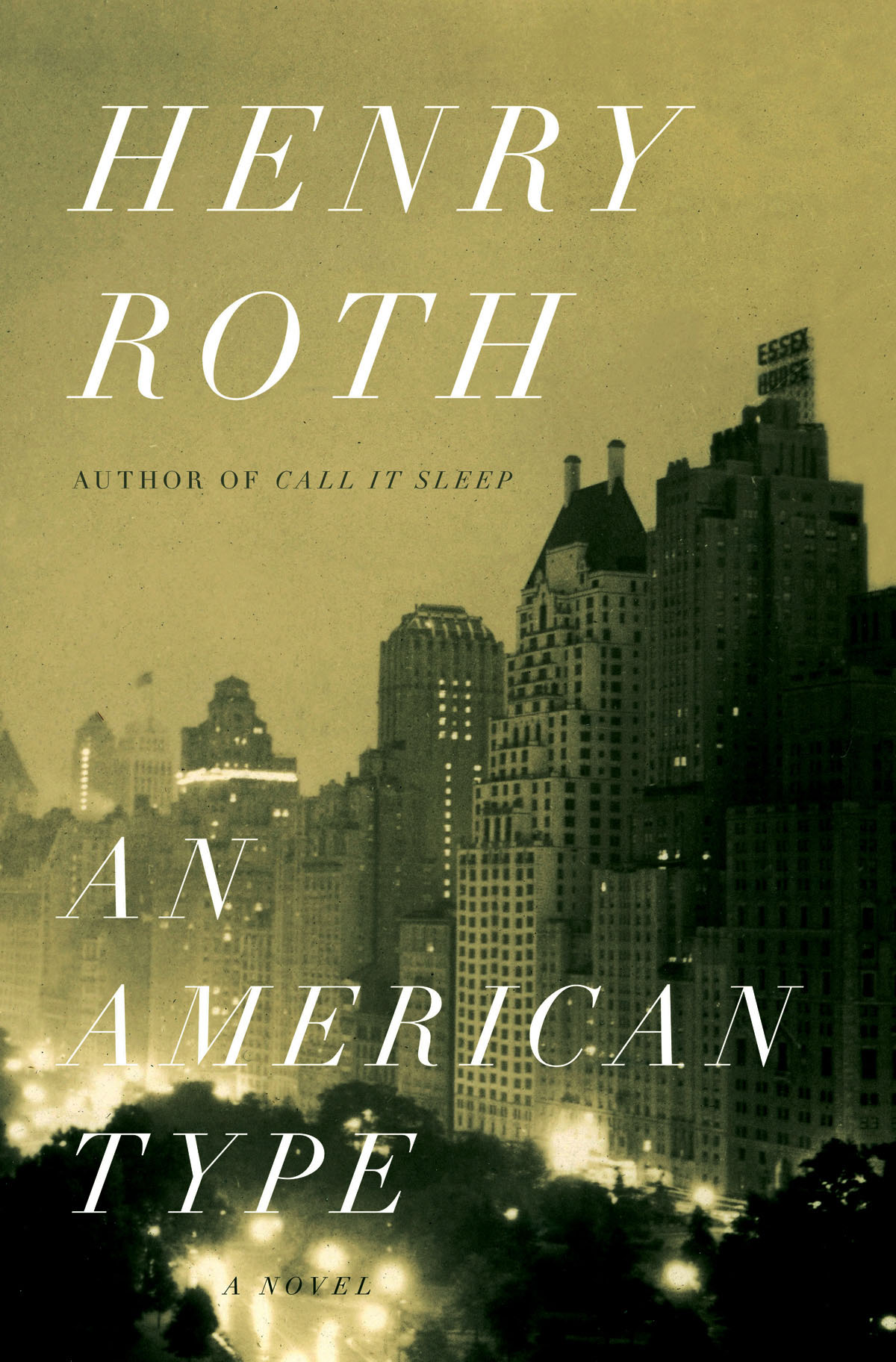
“An American Type”: The end of Henry Roth

The latest book from the author of "Call It Sleep" brings his posthumous resurgence to a bittersweet conclusion

  • more
    • All Share Services

"An American Type", by Henry Roth

Over the last 20 years, Henry Roth has evolved from an elderly long-silent prodigy, after the manner of Harper Lee, to a posthumous prolific cottage industry — a kind of upmarket L. Ron Hubbard, but with genius instead of E-meters. Roth’s great autobiographical immigrant novel “Call It Sleep” came out in 1934, that hinge year for American literature when Dashiell Hammett published his last novel, Raymond Chandler his first short story, and Upton Sinclair left off writing just long enough to run a doomed but influential campaign for the California statehouse. Amid all these doings and more, a 28-year-old son of the Lower East Side created what for many remains the first classic novel of becoming an American.

Barnes & Noble ReviewAnd then … nothing. For complicated reasons touching on, but not limited to, communism, incest, and sheer cussedness — and best left to Steven Kellman’s terrific, fluent biography “Redemption: The Life of Henry Roth” — only well into his eighties did Roth write the first of an eventual four volumes in his epic second autobiographical fiction, “Mercy of a Rude Stream.” Roth’s death — in an Albuquerque hospital near his home in 1995 — slowed his belated productivity not a whit, and the last two volumes were published soon after. Now, with publication of the likewise autobiographical “An American Type,” this late second flowering of Roth’s prodigious talent may have finally reached its bittersweet, fitfully brilliant end. No one should mistake “An American Type” for an equal bookend to “Call It Sleep,” nor foolishly read it first. But the new book nevertheless has the kind of freshness and energy that long-awaited follow-ups are often said to have, but too rarely do — in this case, passages that rival the artist’s early work for grouchy music and pure, grammar-stripping poetry.

“An American Type” follows Roth’s alter ego, Ira Stigman, through the eventful year of 1938 when, discouraged partly by the mixed reception to a novel a lot like “Call It Sleep,” he (and Roth) jilted his longtime poet benefactress, drove to Los Angeles and hoboed back, and married his (and Roth’s) wife of the next fifty years. This boomerang structure gives to an otherwise nakedly autobiographical book a shape, if not always a direction. Plenty of things happen here because that’s how they actually happened, rather than for any narratively needful reason. Yet Roth seems wise to this shortcoming, and even puckishly tricks us by introducing a non sequitur of a traffic accident in the late innings, only to turn it into the basis for the proficient New Yorker piece Ira then writes.

About Roth’s long silence, Ira vouchsafes hints only. A writer colleague at Yaddo called Daniel F, based on that other fine New York Jewish writer of the immigrant experience, Daniel Fuchs, “lectured Ira on the futility of writing novels, of receiving so little remuneration for all one’s striving.” Meanwhile Edith, Ira’s erstwhile literary Svengali, self-servingly suggests that leaving her for his shiksa pianist fiancée “would mean the end of his art.” She predicts he’ll become another of those has-beens who “let the best years of their lives go into doing all kinds of practical things … until it was too late.”

But there’s little indication that Roth fell silent soon after 1938 for Fuchs’ simple mercenary reasons, particularly, or for the marital and workaday demons Edith warns him against. Of course his brutal father, no more effortfully disguised here than in “Call It Sleep,” can’t have helped any. Nor, come to think of it, could his sainted mother, whose ferocious, all-devouring love wouldn’t have been the first or last to convince an autobiographical writer son that his every experience was historic, his every excretion gold, his every utterance news. In the end, a great literary silence remains as much an enigma — as a great outpouring. The miracle is that anyone could — even once — write reveries as hypnotically interior, yet magnificently pictorial, as this one, upon watching the mighty presses of Julia Morgan’s beautiful “Los Angeles Examiner” building crank out the Sunday color supplement:

The fluorescents shone on the Hearst printing presses within the great square plate-glass windows of the Examiner Building, flooding the corner. He paused, the anguish within him seeking to cleave to anything, whether purposive, fatuous, anything. Slowly, the great, black machines behind the plate-glass window started moving, reeling out a Sunday comic sheet … Accelerating, they flew past, swifter still and swifter, until gone were Jiggs and Maggie, lost in a multihued ribbon of paper and a high-pitched hum. And banality was gone, triviality was gone, gone the strip’s silly postures and problems. All had become a freshet of blended color, diving downward and leaping upward in strict angle, and again, as if the artist’s palette had become a cataract.

That Henry Roth could summon such power twice — the second time many silence-struck decades after his legendary debut — is as much a marvel as the Examiner Building itself, still standing after all these years, awaiting a second act as miraculous as that of the writer who once stood outside.

David Kipen is the author of “The Schreiber Theory: A Radical Rewrite of American Film History,” and translator of Cervantes’ “The Dialogue of the Dogs.” Until January 2010, Kipen was the literature director of the National Endowment of the Arts, where he directed the Big Read and the Guadalajara Book Festival initiatives. He also served from 1998 to 2005 as book critic, and before that book editor, for the San Francisco Chronicle.

Continue Reading Close

Last exit to book land

An ex-book critic finds hope in the current campaigns to save newspaper book reviews and restore reading to the heart of American life.

  • more
    • All Share Services

Last exit to book land

“May I take your newspapers?”

The flight attendants always make it sound like they’re doing you a favor. I fly a lot nowadays, and I know the poor attendant is only trying to save cleanup time later. But this question always riles me, because lately everybody and his Aunt Lillian wants to take away our newspapers. Circulation is down. Newsroom paranoia, never exactly dormant even in the best of times, is up. And editors are cutting book reviews like they’re going out of style — which, if we’re not careful, they just might be.

To its credit, the National Book Critics Circle is not taking any of this lying down. It has posted a list of tips on how to help save book reviews here. It’s circulating a petition here to reinstate Teresa Weaver, the Atlanta Journal-Constitution’s gifted, recently cashiered book editor. Most enjoyably, the NBCC’s already compulsively readable blog, Critical Mass, has posted jeremiads about the crisis not just from critics but from a steadily massing murderers’ row of authors: Nadine Gordimer, George Saunders, Richard Ford, Roxana Robinson, Andre Codrescu, Rick Moody, Stewart O’Nan.

Will this campaign work? The facile answer is, say you’re a newspaper publisher. You’ve got some bolting stockholders on line 1 and some angry brilliant midlist writers on line 2. Which call would you take? But the intelligent answer is, as always, nobody knows. Newspaper publishers aren’t stupid, just scared. I’d be scared too if I suspected my readers were dying off unreplaced. Come to think of it, as editor of the San Francisco Chronicle Book Review from 1998 to 2000 and the paper’s book critic until ’05, I used to suspect exactly that.

It was only a hunch, because a newspaper prefers its journalists to not know too much about their readership, just as it prefers them to not know too much about their relative salaries. So long as a paper withholds this information, it can still theoretically tell every employee that his or hers are the least-read, best-paid bylines in the building. Newspaper Web sites are only too happy to divulge the top 10 most read or e-mailed stories of the day; the bottom 10, not so much. Still, to judge by the torrential hemorrhaging of book coverage in just the past couple of months, you might think that book coverage owned a lock on last place.

Instead, strong anecdotal evidence suggests that book reviews fall somewhere near the middle. So why don’t editors feel as sentimental about them as they do about plenty of other stories that won’t ever knock terrorist attacks or wardrobe malfunctions out of the top 10? For one thing, freelancers contribute most of the copy to newspaper book review sections, and freelancers cost a few extra bucks. For another, trying to publish a review of every halfway interesting new book each week is like trying to review every new video on YouTube. It’s beyond hopeless. So why should we blame some harried arts editor for thinking, “That beat’s uncoverable. Let’s just give up and run sudoku-plus instead.”

That editor might almost have a point, if book reviews and the people who write them weren’t what biologists like to call an “indicator species.” An indicator species is the newt or worm in an ecosystem that nobody much notices until it starts to disappear. And even then, who really misses another polliwog — until six months later when, suddenly, even the buzzards are dead?

Like it or not, the indicator species for American daily journalism is the book review. Newspapers were cutting book coverage before the current flurry, among other places in Detroit, San Jose and Boston. Without exception, losing their book pages failed to stanch either reader loss or red ink. Were these papers already in trouble before they started cutting book coverage? Of course, but what did their publishers expect by further alienating people who like to read — the one constituency no newspaper can survive without? Put another way, how can institutions that cover electoral politics be so deaf to every campaign’s first commandment, namely, “Shore up your base”?

Sometimes it seems as if embattled newspapers took the “Reading at Risk” report put out by the National Endowment for the Arts (where I work these days) as a rationalization for further cuts instead of a call to action. The study showed that only about 47 percent of Americans can say they read a book for pleasure the previous year. That marked a decade-over-decade swan dive from 1992, and a power dive from the decade before. Worse yet, as fast as the reading numbers are sinking across the board, for teenagers they’re absolutely cratering. And teenage boys? Check out those demoralizing numbers, if you have a fainting couch nearby.

So maybe it’s not surprising that the population of stand-alone Sunday book review sections in America is now down to about four: the Washington Post Book World, the New York Times Book Review, my dear old incredible shrinking San Francisco Chronicle Book Review, and would you believe the plucky, sainted San Diego Union-Tribune? Add in the Chicago Tribune, if you can get used to Saturday delivery. And if you don’t mind a new reversible Books/Opinion hybrid (which looks a little like an old Ace Double sci-fi paperback), don’t count out my hometown Los Angeles Times.

Less remarked on is the utter disappearance of regular, non-editing book critics outside Washington and New York. Three of the surviving half-dozen have won Pulitzers, which helps. But since 2001, Pulitzer criticism juries have stiffed the book beat and recognized automotive and fashion writers. This only testifies to the diminishing cachet of book reviewing in American journalism, even among that journalism’s supposed guardians at Columbia University. Of course, there aren’t that many ungarroted necks left to hang a medal around.

So in 2005, I became what may turn out to be the last full-time book critic in America to leave his job voluntarily for anything other than semiretirement. Since my departure, the Chronicle certainly hasn’t felt the urge to find a new one. To that newspaper, as to almost every other paper in America, a book critic is like a fancy antique car — almost a relief when it finally gives out. They cost so much to insure.

What I left book reviewing to do isn’t, I hope, completely irrelevant to this conversation. I joined the NEA mostly to direct a new initiative called the Big Read, which aims to restore reading to the heart of American life. Under it, cities and towns apply to run a one-city, one-book program, sometimes called a CityRead. Since their earliest annual incarnations in Seattle and Chicago a decade or so ago, CityReads have brought people together to celebrate and argue about all sorts of books in a kind of monthlong festival. Bookstores sell the chosen title like crazy, libraries check it out by the hundreds, and suddenly strangers have something in common more interesting to talk about than the weather.

Only problem is, not every city or town is blessed with a library budget the size of Chicago’s or Seattle’s. (Jackson County, Ore., is voting on a measure this month just to keep its libraries’ lights on.) So the NEA hatched the Big Read, whereby burgs as small as Wallowa County, Ore. (population 7,000), or as big as Miami choose a book from our growing list and apply for a modest chunk of the green and crinkly. On top of the grant, we create and ship readers and teachers guides and educational CDs of a caliber that most communities might never manage on their own. Our growing menu of books to choose from started out looking fairly canonical — F. Scott Fitzgerald, Zora Neale Hurston, John Steinbeck — but lately everybody from Dashiell Hammett to Cynthia Ozick is crashing the party.

I bring all this up for two reasons, one big, the other enormous. First, none of the 21 writers so far on the Big Read list would be there if it weren’t for timely attention from at least a couple of long-forgotten book reviewers. Where would Steinbeck be — a man so unpersuaded of his own genius that he wrote “The Grapes of Wrath” and then seriously considered becoming a marine biologist — if not for early championing by another San Francisco Chronicle book critic, Joseph Henry Jackson. More important, where would American literature be without all the great writers who got a leg up from a smart critic when they needed it most?

Still, as important as the crisis in American book reviewing is, the underlying crisis in reading is practically sawing the country in half. Forget red states and blue states. The implications of a republic where half reads and the other doesn’t — not can’t, just doesn’t — are simply horrifying.

This would all be bad enough if it weren’t for one further filthy secret: Too many of us, subconsciously, like it this way. By “us,” I mean the people who still read books, book reviews, newspapers and, yes, Salon. There’s a furtive, beleaguered, unacknowledged glamour in feeling like the last bastion of civilization, the saving remnant beset on all sides by the forces of ignorance and greed. Who lives for baseball more than a Cubs fan? Everybody loves a lost cause — sometimes so much that we forget to fight for it.

But the fight to get America reading again is too important, the stakes too high, to resign ourselves to failure. That’s why I’m about to abandon all pretense of seemliness and exhort everybody within sight of this page not just to join the NBCC’s campaign to save book reviewing but to help bring a Big Read to town. Agitate for book reviews, absolutely, but while you’re at it visit neabigread.org and help your local library or nonprofit pull off a Big Read. Over and over, what makes the program work every time is the dedication of all the volunteers and librarians and teachers and, frequently, newspaper people who pitch in.

It would be so easy to wax cynical about high-minded, uphill campaigns like ours and the NBCC’s. Take it from me, dyspepsia used to be my stock in trade. But imagine a country where readers aren’t even a minority, but an aberration. Picture a country where newspapers gut book coverage and everything else that made them worth saving in the first place — like Fogg at the end of “Around the World in Eighty Days,” burning his own boat piecemeal for fuel. Imagine all that, and pretty soon writing a letter to the editor, or helping gin up a Big Read application for spring by the July 31 deadline, starts to look less like a sacrifice and more like a mitzvah.

OK, so enough guilt, already. That flight attendant is still waiting: “May I take your newspapers?” The question only chafes because something so precious to us looks, to the attendant, as disposable as the foil bag your honey-roasted peanuts came in. But it’s not the attendant’s fault if nobody ever showed him or her that a decent paper and its readers can knock an autocrat off the throne, or put an unheralded writer on the map. So the next time that attendant asks to take your newspapers, instead of your wanting to snap, “No, you may not,” maybe something a tad more conciliatory is in order. Something along the lines of “No, but you can borrow them.” Or my new, less obnoxious comeback: “All except the book page. I’m not done with that yet.”

Continue Reading Close