Dieter Bednarz

Americans in Green Zone under siege

Fighting between militants and the Iraqi government has threatened what was once the best-secured district in Baghdad.

  • more
    • All Share Services

Sarah is not the type of woman who loses her cool very easily. As an employee of the U.S. State Department, she has seen too much for that. Her superiors in Washington have repeatedly sent her to the world’s hot spots. Now Sarah works as a “special agent” in the personal protection unit of the U.S. Embassy in Baghdad, where she is responsible for the security of high-ranking guests.

Since Tuesday, it has been Sarah’s job to look after German politician Elke Hoff. And, since Wednesday afternoon, Sarah has occasionally had to address her charge — “Sorry about that, ma’am!” — more forcefully than usual: “Hurry up! We have to duck and cover.”

Sarah already has helmets and bulletproof vests at the ready when she and her security team urge a small delegation of members of the German parliament, the Bundestag, to board an armored personnel carrier. The sound of incoming rockets and grenades isn’t long in coming.

The security team doesn’t tell the German delegation where exactly the missiles have landed. Having to admit that attacks are taking place in the Green Zone, the best-secured district in the Iraqi capital, is already embarrassing enough. And because the attacks continue into the afternoon, long-scheduled meetings between parliamentarian Hoff, a member of the liberal Free Democratic Party, and high-ranking Iraqi politicians, including former Prime Minister Ibrahim al-Jaafari, have to be canceled “for security reasons.”

The attacks on the “I.Z.,” or “International Zone,” as the U.S. military has dubbed the former Karkh neighborhood, represent one of the biggest challenges to the American forces in Iraq to date. The enclave covers fewer than seven square kilometers (2.7 square miles) and houses the headquarters of the U.S. armed forces and their allies. Until the beginning of the week, the enclave was considered the safest place in a country plagued by violence and terror.

Former Iraqi dictator Saddam Hussein chose the area, which is strategically located along a bend in the Tigris River, as the site for his palaces. The hangers-on of the regime lived there, and only the despot’s most loyal henchmen were allowed in.

The country is still ruled from this neighborhood today, and access hasn’t become much easier. Tens of thousands of soldiers and diplomats live and work behind roof-high concrete walls. An estimated 4,000 people, most of them soldiers and security personnel, live on the grounds of the U.S. Embassy in a former Saddam palace.

The huge area is like a “Little America” in the midst of this hostile country. Even though the number of attacks has declined by about half compared with what it was like during the height of insurgent activity three years ago, Western news agencies still counted 455 attacks throughout Iraq last week. Foreigners — and especially Americans — can only feel safe in their I.Z.

The unrest in the Green Zone continued Thursday. Reuters reported that a giant column of black smoke could be seen near the U.S. Embassy after what was believed to be a mortar strike on a former palace of Saddam that is being used as a headquarters for American civilian and military personnel. However, an embassy spokeswoman said there had been no serious injuries or deaths as a result of the attack. Four people, including two U.S. civilians, were wounded by mortar attacks in the Green Zone Wednesday.

The special zone also has room for some privileged Iraqis. The Green Zone is home to Prime Minister Nouri al-Maliki, who has his office there, and to the most important ministries. The Iraqi parliament has taken up temporary quarters here, in a former conference center Saddam had built in the early 1980s. It is also home to influential Iraqis such as Sunni member of parliament Mithal al-Alusi. Al-Alusi is one of the most popular politicians in postwar Iraq and hence one of the people the Hoff delegation had arranged to meet.

Al-Alusi has gotten used to the fact that his life is in danger. It used to be threatened by Saddam and his intelligence services, and today it is threatened by insurgents such as the militia headed by Shiite cleric Muqtada al-Sadr. Al-Alusi also blames the Badr Brigades for the rocket and mortar attacks of the past few days. The attacks, says an outraged al-Alusi, are a “targeted provocation.”

Al-Alusi is also one of the few to hazard an explanation: America’s two highest-ranking representatives in Iraq — Gen. David Petraeus, the top commander in Iraq, and ambassador Ryan Crocker — are scheduled to deliver their reports on the situation in Iraq in one week. According to al-Alusi, the security analyses destined for Washington will not conclude that “the Americans have the situation under control,” at least not if “Sadr and his backers in Iran have their way.”

No one doubts that the fanatical cleric hates the Americans more than anyone and wants to drive them out of the country as quickly as possible. It is also considered likely that Sadr is in league with his fellow Shiites in Tehran. According to Western security experts, the most recent proof of al-Sadr’s Tehran connection is the fact that the projectiles landing in and around the Green Zone are Iranian made.

The attacks on the high-security zone are also intended to strike the Iraqi government of Prime Minister al-Maliki, a Shiite. Some political observers in Baghdad are even convinced that the mortars and rockets are aimed more at the prime minister than at the Americans. The secular al-Maliki declared war on religious fanatic al-Sadr a few days ago.

Since last weekend, government troops have started energetically pursuing “terrorists, bandits and a few foreign elements,” as government spokesman Ali al-Dabbagh cautiously puts it. Al-Dabbagh, an experienced diplomat, falls short of saying that the true target of the government’s attack is al-Sadr’s militia, which has apparently developed its bastion in the south and has received reinforcements in the form of Iranian fighters.

Nevertheless, al-Dabbagh is quick to emphasize the successes of the Iraqi government troops. In the capital there are increasing reports that the government’s enemies are retreating across the border into another country. No one mentions that the country in question is Iran, probably out of consideration for Baghdad’s new partnership with the regime in Tehran.

Iranian President Mahmoud Ahmadinejad’s visit to Baghdad early this month was still a “historic event” for the Iraqi government, especially in light of the fact that former dictator Saddam plunged both countries into an eight-year war that claimed millions of lives. Now, though, Baghdad and Tehran are planning economic cooperation programs worth billions of dollars — much to the chagrin of George W. Bush.

Washington also appears to be doomed to impotence when it comes to the attacks on its only true stronghold in Iraq. The attacks are said to come from the city’s eastern part, which is controlled by al-Sadr and his militia. The insurgents apparently launch their rockets and mortars from movable ramps and then immediately disappear into the densely populated neighborhoods.

Officials on the grounds of the U.S. Embassy say that the insurgents are trying to draw the Americans into a trap that would force them to launch “aerial attacks with many dead and wounded.” Besides, the Americans can hardly afford grueling house-to-house combat in the al-Sadr-controlled neighborhood, especially after the U.S. armed forces reported this week their 4,000th death in Iraq.

As a result, the Americans have limited themselves to ducking, at least for the time being, even in front of political visitors like German parliamentarian Hoff, to whom it had hoped to present a picture of progress in Iraq.

On Tuesday evening, the “esteemed guest” from Berlin, whose safety the U.S. Embassy had assumed responsibility for, was moved to new quarters — from the Al-Rashid Hotel on the edge of the security zone, where government guests stayed in the days of Saddam, to the U.S. Embassy. The small German delegation will be flown out Thursday — ahead of schedule.

Translated from the German by Christopher Sultan.


This article has been provided by Der Spiegel through a special arrangement with Salon. For more from Europe’s most-read newsmagazine, visit Spiegel Online or subscribe to the daily newsletter.

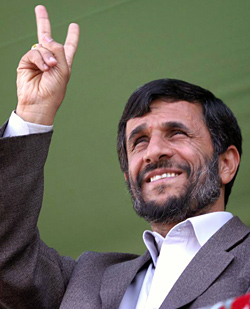
“We don’t want to confirm or deny the Holocaust”

Iranian President Mahmoud Ahmadinejad talks about Israel, his letter to Bush and Iran's nuclear ambitions.

  • more
    • All Share Services

Spiegel: Mr. President, you are a soccer fan and you like to play soccer. Will you be sitting in the stadium in Nuremberg on June 11, when the Iranian national team plays against Mexico in Germany?

Ahmadinejad: It depends. Naturally, I’ll be watching the game in any case. I don’t know yet whether I’ll be at home in front of the television set or somewhere else. My decision depends upon a number of things.

Spiegel: For example?

Ahmadinejad: How much time I have, how the state of various relationships are going, whether I feel like it and a number of other things.

Spiegel: There was great indignation in Germany when it became known that you might be coming to the soccer world championship. Did that surprise you?

Ahmadinejad: No, that’s not important. I didn’t even understand how that came about. It also had no meaning for me. I don’t know what all the excitement is about.

Spiegel: It concerned your remarks about the Holocaust. It was inevitable that the Iranian president’s denial of the systematic murder of the Jews by the Germans would trigger outrage.

Ahmadinejad: I don’t exactly understand the connection.

Spiegel: First you make your remarks about the Holocaust. Then comes the news that you may travel to Germany — this causes an uproar. So you were surprised after all?

Ahmadinejad: No, not at all, because the network of Zionism is very active around the world — in Europe too. So I wasn’t surprised. We were addressing the German people. We have nothing to do with Zionists.

Spiegel: Denying the Holocaust is punishable in Germany. Are you indifferent when confronted with so much outrage?

Ahmadinejad: I know that Der Spiegel is a respected magazine. But I don’t know whether it is possible for you to publish the truth about the Holocaust. Are you permitted to write everything about it?

Spiegel: Of course we are entitled to write about the findings of the past 60 years’ historical research. In our view there is no doubt that the Germans — unfortunately — bear the guilt for the murder of 6 million Jews.

Ahmadinejad: Well, then we have stirred up a very concrete discussion. We are posing two very clear questions. The first is: Did the Holocaust actually take place? You answer this question in the affirmative. So, the second question is: Whose fault was it? The answer to that has to be found in Europe and not in Palestine. It is perfectly clear: If the Holocaust took place in Europe, one also has to find the answer to it in Europe.

On the other hand, if the Holocaust didn’t take place, why then did this regime of occupation …

Spiegel: … You mean the state of Israel …

Ahmadinejad: … come about? Why do the European countries commit themselves to defending this regime? Permit me to make one more point. We are of the opinion that, if a historical occurrence conforms to the truth, this truth will be revealed all the more clearly if there is more research into it and more discussion about it.

Spiegel: That has long since happened in Germany.

Ahmadinejad: We don’t want to confirm or deny the Holocaust. We oppose every type of crime against any people. But we want to know whether this crime actually took place or not. If it did, then those who bear the responsibility for it have to be punished, and not the Palestinians. Why isn’t research into a deed that occurred 60 years ago permitted? After all, other historical occurrences, some of which lie several thousand years in the past, are open to research, and even the governments support this.

Spiegel: Mr. President, with all due respect, the Holocaust occurred, there were concentration camps, there are dossiers on the extermination of the Jews, there has been a great deal of research, and there is neither the slightest doubt about the Holocaust nor about the fact — we greatly regret this — that the Germans are responsible for it. If we may now add one remark: The fate of the Palestinians is an entirely different issue, and this brings us into the present.

Ahmadinejad: No, no, the roots of the Palestinian conflict must be sought in history. The Holocaust and Palestine are directly connected with one another. And if the Holocaust actually occurred, then you should permit impartial groups from the whole world to research this. Why do you restrict the research to a certain group? Of course, I don’t mean you, but rather the European governments.

Spiegel: Are you still saying that the Holocaust is just “a myth”?

Ahmadinejad: I will only accept something as truth if I am actually convinced of it.

Spiegel: Even though no Western scholars harbor any doubt about the Holocaust?

Ahmadinejad: But there are two opinions on this in Europe. One group of scholars or persons, most of them politically motivated, say the Holocaust occurred. Then there is the group of scholars who represent the opposite position and have therefore been imprisoned for the most part. Hence, an impartial group has to come together to investigate and to render an opinion on this very important subject, because the clarification of this issue will contribute to the solution of global problems. Under the pretext of the Holocaust, a very strong polarization has taken place in the world and fronts have been formed. It would therefore be very good if an international and impartial group looked into the matter in order to clarify it once and for all. Normally, governments promote and support the work of researchers on historical events and do not put them in prison.

Spiegel: Who is that supposed to be? Which researchers do you mean?

Ahmadinejad: You would know this better than I; you have the list. There are people from England, from Germany, France and from Australia.

Spiegel: You presumably mean, for example, the Englishman David Irving, the German-Canadian Ernst Zündel, who is on trial in Mannheim, and the Frenchman Georges Theil, all of whom deny the Holocaust.

Ahmadinejad: The mere fact that my comments have caused such strong protests, although I’m not a European, and also the fact that I have been compared with certain persons in German history, indicates how charged with conflict the atmosphere for research is in your country. Here in Iran you needn’t worry.

Spiegel: Well, we are conducting this historical debate with you for a very timely purpose. Are you questioning Israel’s right to exist?

Ahmadinejad: Look here, my views are quite clear. We are saying that if the Holocaust occurred, then Europe must draw the consequences and that it is not Palestine that should pay the price for it. If it did not occur, then the Jews have to go back to where they came from. I believe that the German people today are also prisoners of the Holocaust. Sixty million people died in the Second World War. World War II was a gigantic crime. We condemn it all. We are against bloodshed, regardless of whether a crime was committed against a Muslim or against a Christian or a Jew. But the question is: Why among these 60 million victims are only the Jews the center of attention?

Spiegel: That’s just not the case. All peoples mourn the victims claimed by the Second World War, Germans and Russians and Poles and others as well. Yet, we as Germans cannot absolve ourselves of a special guilt, namely for the systematic murder of the Jews. But perhaps we should now move on to the next subject.

Ahmadinejad: No, I have a question for you. What kind of a role did today’s youth play in World War II?

Spiegel: None.

Ahmadinejad: Why should they have feelings of guilt toward Zionists? Why should the costs of the Zionists be paid out of their pockets? If people committed crimes in the past, then they would have to have been tried 60 years ago. End of story! Why must the German people be humiliated today because a group of people committed crimes in the name of the Germans during the course of history?

Spiegel: The German people today can’t do anything about it. But there is a sort of collective shame for those deeds done in the German name by our fathers or grandfathers.

Ahmadinejad: How can a person who wasn’t even alive at the time be held legally responsible?

Spiegel: Not legally but morally.

Ahmadinejad: Why is such a burden heaped on the German people? The German people of today bear no guilt. Why are the German people not permitted the right to defend themselves? Why are the crimes of one group emphasized so greatly, instead of highlighting the great German cultural heritage? Why should the Germans not have the right to express their opinion freely?

Spiegel: Mr. President, we are well aware that German history is not made up of only the 12 years of the Third Reich. Nevertheless, we have to accept that horrible crimes have been committed in the German name. We also own up to this, and it is a great achievement of the Germans in postwar history that they have grappled critically with their past.

Ahmadinejad: Are you also prepared to tell that to the German people?

Spiegel: Oh yes, we do that.

Ahmadinejad: Then would you also permit an impartial group to ask the German people whether it shares your opinion? No people accepts its own humiliation.

Spiegel: All questions are allowed in our country. But of course there are right-wing radicals in Germany who are not only anti-Semitic but xenophobic as well, and we do indeed consider them a threat.

Ahmadinejad: Let me ask you one thing: How much longer can this go on? How much longer do you think the German people have to accept being taken hostage by the Zionists? When will that end — in 20, 50, 1,000 years?

Spiegel: We can only speak for ourselves. Der Spiegel is nobody’s hostage; Spiegel does not deal only with Germany’s past and the Germans’ crimes. We’re not Israel’s uncritical ally in the Palestinian conflict. But we want to make one thing very clear: We are critical, we are independent, but we won’t simply stand by without protest when the existential right of the state of Israel, where many Holocaust survivors live, is being questioned.

Ahmadinejad: Precisely that is our point. Why should you feel obliged to the Zionists? If there really had been a Holocaust, Israel ought to be located in Europe, not in Palestine.

Spiegel: Do you want to resettle a whole people 60 years after the end of the war?

Ahmadinejad: Five million Palestinians have not had a home for 60 years. It is amazing really: You have been paying reparations for the Holocaust for 60 years and will have to keep paying up for another 100 years. Why then is the fate of the Palestinians no issue here?

Spiegel: The Europeans support the Palestinians in many ways. After all, we also have a historic responsibility to help bring peace to this region finally. But don’t you share that responsibility?

Ahmadinejad: Yes, but aggression, occupation and a repetition of the Holocaust won’t bring peace. What we want is a sustainable peace. This means that we have to tackle the root of the problem. I am pleased to note that you are honest people and admit that you are obliged to support the Zionists.

Spiegel: That’s not what we said, Mr. President.

Ahmadinejad: You said Israelis.

Spiegel: Mr. President, we’re talking about the Holocaust because we want to talk about the possible nuclear armament of Iran — which is why the West sees you as a threat.

Ahmadinejad: Some groups in the West enjoy calling things or people a threat.

Spiegel: The key question is: Do you want nuclear weapons for your country?

Ahmadinejad: Allow me to encourage a discussion on the following question: How long do you think the world can be governed by the rhetoric of a handful of Western powers? Whenever they hold something against someone, they start spreading propaganda and lies, defamation and blackmail. How much longer can that go on?

Spiegel: We’re here to find out the truth. The head of state of a neighboring country, for example, told Spiegel: “They are very keen on building the bomb.” Is that true?

Ahmadinejad: You see, we conduct our discussions with you and the European governments on an entirely different, higher level. In our view, the legal system whereby a handful of countries force their will on the rest of the world is discriminatory and unstable. One hundred thirty-nine countries, including us, are members of the International Atomic Energy Authority in Vienna. Both the statutes of IAEA and the Nuclear Nonproliferation Treaty as well as all security agreements grant the member countries the right to produce nuclear fuel for peaceful purposes. That is the legitimate legal right of any people. Beyond this, however, IAEA was also established to promote the disarmament of those powers that already possessed nuclear weapons. And now look at what’s happening today: Iran has had an excellent cooperation with IAEA. We have had more than 2,000 inspections of our plants, and the inspectors have obtained more than 1,000 pages of documentation from us. Their cameras are installed in our nuclear centers. IAEA has emphasized in all its reports that there are no indications of any irregularities in Iran. That is one side of this matter.

Spiegel: IAEA doesn’t quite share your view of this matter.

Ahmadinejad: But the other side is that there are a number of countries that possess both nuclear energy and nuclear weapons. They use their atomic weapons to threaten other peoples. And it is these powers who say that they are worried about Iran deviating from the path of peaceful use of atomic energy. We say that these powers are free to monitor us if they are worried. But what these powers say is that the Iranians must not complete the nuclear fuel cycle because deviation from peaceful use might then be possible. What we say is that these countries themselves have long deviated from peaceful usage. These powers have no right to talk to us in this manner. This order is unjust and unsustainable.

Spiegel: But, Mr. President, the key question is: How dangerous will this world become if even more countries become nuclear powers — if a country like Iran, whose president makes threats, builds the bomb in a crisis-ridden region?

Ahmadinejad: We’re fundamentally opposed to the expansion of nuclear-weapons arsenals. This is why we have proposed the formation of an unbiased organization and the disarmament of the nuclear powers. We don’t need any weapons. We’re a civilized, cultured people, and our history shows that we have never attacked another country.

Spiegel: Iran doesn’t need the bomb that it wants to build?

Ahmadinejad: It’s interesting to note that European nations wanted to allow the shah’s dictatorship the use of nuclear technology. That was a dangerous regime. Yet those nations were willing to supply it with nuclear technology. Ever since the Islamic Republic has existed, however, these powers have been opposed to it. I stress once again, we don’t need any nuclear weapons. We stand by our statements because we’re honest and act legally. We’re no fraudsters. We only want to claim our legitimate right. Incidentally, I never threatened anyone — that, too, is part of the propaganda machine that you’ve got running against me.

Spiegel: If this were so, shouldn’t you be making an effort to ensure that no one need fear your producing nuclear weapons that you might use against Israel, thus possibly unleashing a world war? You’re sitting on a tinderbox, Mr. President.

Ahmadinejad: Allow me to say two things. No people in the region are afraid of us. And no one should instill fear in these peoples. We believe that if the United States and these two or three European countries did not interfere, the peoples in this region would live peacefully together as they did in the thousands of years before. In 1980, it was also the nations of Europe and the United States that encouraged Saddam Hussein to attack us. Our stance with respect to Palestine is clear. We say: Allow those to whom this country belongs to express their opinion. Let Jews, Christians and Muslims say what they think. The opponents of this proposal prefer war and threaten the region. Why are the United States and these two or three European nations opposed to this? I believe that those who imprison Holocaust researchers prefer war to peace. Our stance is democratic and peaceful.

Spiegel: The Palestinians have long gone a step further than you and recognize Israel as a fact, while you still wish to erase it from the map. The Palestinians are ready to accept a two-state solution, while you deny Israel its right to existence.

Ahmadinejad: You’re wrong. You saw that the Palestinian people elected Hamas in free elections. We argue that neither you nor we should claim to speak for the Palestinian people. The Palestinians themselves should say what they want. In Europe it is customary to call a referendum on any issue. We should also give the Palestinians the opportunity to express their opinion.

Spiegel: The Palestinians have the right to their own state, but in our view the Israelis naturally have the same right.

Ahmadinejad: Where did the Israelis come from?

Spiegel: Well, if we tried to work out where people have come from, the Europeans would have to return to East Africa where all humans originated.

Ahmadinejad: We’re not talking about the Europeans; we’re talking about the Palestinians. The Palestinians were there, in Palestine. Now 5 million of them have become refugees. Don’t they have a right to live?

Spiegel: Mr. President, doesn’t there come a time when one should accept that the world is the way it is and that we must accept the status quo? The war against Iraq has put Iran in a favorable position. The United States has suffered a de facto defeat in Iraq. Isn’t it now time for Iran to become a constructive power of peace in the Middle East? Which would mean giving up its nuclear plans and inflammatory talk?

Ahmadinejad: I’m wondering why you’re adopting and fanatically defending the stance of the European politicians. You’re a magazine, not a government. Saying that we should accept the world as it is would mean that the winners of World War II would remain the victorious powers for another 1,000 years and that the German people would be humiliated for another 1,000 years. Do you think that is the correct logic?

Spiegel: No, that’s not the right logic, nor is it true. The Germans have played a modest, but important role in postwar developments. They do not feel as though they have been humiliated and dishonored since 1945. We are too self-confident for that. But today we want to talk about Iran’s current mission.

Ahmadinejad: Then we would accept that Palestinians are killed every day, that they die in terrorist attacks, and that houses are being destroyed. But let me say something about Iraq. We have always favored peace and security in the region. For eight years, the Western countries provided arms to Saddam in the war against us, including chemical weapons, and gave him political support. We were against Saddam and suffered severely because of him, so we’re happy that he has been toppled. But we don’t accept a whole country being swallowed under the pretext of wanting to topple Saddam. More than 100,000 Iraqis have lost their lives under the rule of the occupying forces. Fortunately, the Germans haven’t been involved in this. We want security in Iraq.

Spiegel: But, Mr. President, who is swallowing Iraq? The United States has practically lost this war. By cooperating constructively, Iran might help the Americans consider their retreat from the country.

Ahmadinejad: This is very interesting: The Americans occupy the country, kill people, sell the oil and when they have lost, they blame others. We have very close ties to the Iraqi people. Many people on both sides of the border are related. We have lived side by side for thousands of years. Our holy pilgrimage sites are located in Iraq. Just like Iran, Iraq used to be a center of civilization.

Spiegel: What are you trying to say?

Ahmadinejad: We have always said that we support the popularly elected government of Iraq. But in my view the Americans are doing a bad job. They have sent us messages several times asking us for help and cooperation. They have said that we should talk together about Iraq. We publicly accepted this offer, although our people do not trust the Americans. But America has responded negatively and insulted us. Even now we’re contributing to security in Iraq. We will hold talks only if the Americans change their behavior.

Spiegel: Do you enjoy provoking the Americans and the rest of the world now and then?

Ahmadinejad: No, I’m not insulting anyone. The letter that I wrote to Mr. Bush was polite.

Spiegel: We don’t mean insult, but provoke.

Ahmadinejad: No, we feel animosity toward no one. We’re concerned about the American soldiers who die in Iraq. Why do they have to die there? This war makes no sense. Why is there war when there is reason as well?

Spiegel: Is your letter to the president also a gesture toward the Americans that you wish to enter into direct negotiations?

Ahmadinejad: We clearly stated our position in this letter on how we view the problems in the world. Some powers have befouled the political atmosphere in the world because they consider lies and fraud to be legitimate. In our view that is very bad. We believe that all people deserve respect. Relationships have to be regulated on the basis of justice. When justice reigns, peace reigns. Unjust conditions aren’t sustainable, even if Ahmadinejad does not criticize them.

Spiegel: This letter to the American president includes a passage about Sept. 11, 2001. The quote: “How could such an operation be planned and implemented without the coordination with secret and security services or without the far-reaching infiltration of these services?” Your statements always include so many innuendos. What is that supposed to mean? Did the CIA help Mohammed Atta and the other 18 terrorists conduct their attacks?

Ahmadinejad: No, that’s not what I meant. We think that they should just say who is to blame. They should not use Sept. 11 as an excuse to launch a military attack against the Middle East. They should take those who are responsible for the attacks to court. We’re not opposed to that; we condemned the attacks. We condemn any attack against innocent people.

Spiegel: In this letter you also write that Western liberalism has failed. What makes you say that?

Ahmadinejad: You see, for example, you have a thousand definitions of the Palestinian problem and you offer all sorts of different definitions of democracy in its various forms. It does not make sense that a phenomenon depends on the opinions of many individuals who are free to interpret the phenomenon as they wish. You can’t solve the problems of the world that way. We need a new approach. Of course we want the free will of the people to reign, but we need sustainable principles that enjoy universal acceptance — such as justice. Iran and the West agree on this.

Spiegel: What role can Europe play in the resolution of the nuclear conflict, and what do you expect of Germany?

Ahmadinejad: We have always cultivated good relations with Europe, especially with Germany. Our two peoples like each other. We’re eager to deepen this relationship. Europe has made three mistakes with respect to our people. The first mistake was to support the shah’s government. This has left our people disappointed and discontent. However, by offering asylum to Imam Khomeini, France earned a special position that it lost again later. The second mistake was to support Saddam in his war against us. The truth is that our people expected Europe to be on our side, not against us. The third mistake was Europe’s stance on the nuclear issue. Europe will be the big loser and will achieve nothing. We don’t want to see that happen.

Spiegel: What will happen now in the conflict between the West and Iran?

Ahmadinejad: We understand the Americans’ logic. They suffered damage as a result of the victory of the Islamic Revolution. But we’re puzzled why some European countries are opposed to us. I sent out a message on the nuclear issue, asking why the Europeans were translating the Americans’ words for us. After all, they know that our actions are aimed toward peace. By siding with Iran, the Europeans would serve their own and our interests. But they will suffer only damage if they oppose us. For our people is strong and determined. The Europeans risk losing their position in the Middle East entirely, and they are ruining their reputation in other parts of the world. The others will think that the Europeans aren’t capable of solving problems.

Spiegel: Mr. President, we thank you for this interview.

- – - – - – - – - – - -

This article has been provided by Der Spiegel through a special arrangement with Salon. For more from Europe’s most-read newsmagazine, please visit Spiegel Online at http://www.spiegel.de/international or subscribe to the daily newsletter.

Continue Reading Close

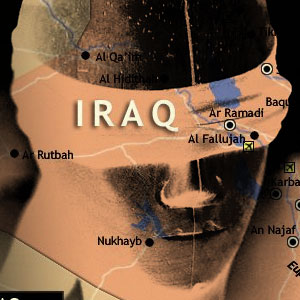
Fear and loathing in Iraq

Nightly shootings, daily suicide attacks, deadly kidnappings and a hundred-headed insurgency have made life increasingly unbearable.

  • more
    • All Share Services

Fear and loathing in Iraq

The road to Baghdad’s airport, long considered the city’s most notorious deathtrap, is flanked by the two neighborhoods Jihad and Amiriya. They have never been considered as exclusive as the area along the banks of the Tigris River, where the cronies of deposed dictator Saddam Hussein once lived. But the districts were nevertheless refuges for members of the Iraqi middle class, who lived there in small villas from the 1970s. At a comfortable distance from the perilous center of power, there were plenty of green spaces, shops, ice cream parlors, schools, parks and mosques. Life was pleasant in Jihad and Amiriya.

But anyone returning to the two neighborhoods these days will have difficulty recognizing the western sections of the Iraqi capital. Within half an hour after sundown, the streets are pitch-black in an area where there is no electricity, and where the only houses with lights are those with rattling, fume-belching generators in their front yards. In the old days, Baghdad’s streets came alive at night, but nowadays the day comes to an end by early evening. No one dares set foot outside, since taking a walk means gambling with one’s life. Shots can be heard every night, and every morning more people are dead.

Handwritten black mourning banners have been fluttering for days on Amal al-Shabi Street in Amiriya. The banners are there to commemorate Bakr Mohammed, who was shot in his grocery shop; Abu Ahmed, who was murdered while on his way to his auto repair shop; and goldsmith Sharif Abd al-Khalid, whose shop was blown up.

“In the name of God the All-Merciful,” begins the obituary for “Dr. Amal al-Mansuri, Martyr,” a pharmacist. According to the obituary, “she was murdered by the cowardly hands of filthy criminals. Condolence visits from November 25-28. We all come from God and we all return to God.”

Only six months after the U.S.-led invasion, the last shop in Amiriya that still sold beer was forced to close its doors. Selling alcohol is a mortal sin for the gangs of young Iraqis who now control the neighborhood. In the changed reality of life in Baghdad today, even male hairdressers who cut women’s hair risk losing their lives unless they abandon their profession.

The killers who forced their way into Sadia Abd al-Hussein’s hair salon weren’t looking for Western customers. Instead, they had their sights set on Hussein himself and his regular Iraqi customers. Three people were dead by the time the terrorists left his shop.

Many hairdressers have switched to the mobile phone business, but that too has become a dangerous profession. Mobile phones play music, and music is “haram” — forbidden under the religious rules the fundamentalist militias seek to impose.

One in four houses in Amiriya is now for sale, as western Baghdad’s once-mixed neighborhoods gradually become more segregated. Shiites are fleeing in droves from primarily Sunni neighborhoods like Jihad and Amiriya, while Sunnis are getting out of majority Shiite areas of the city as fast as they can. But none of Iraq’s religious groups can feel safe as the violence in the once-peaceful neighborhoods spins out of control. “Sunni gangsters shoot faster,” says English teacher Hussam Ali, a Shiite. “That’s the only difference.”

Three weeks ago, another section of the city saw angry protests against the Shiite-dominated government after U.S. troops discovered a secret interrogation bunker run by the Iraqi interior ministry. The soldiers freed about 170 emaciated Sunni torture victims, terrorism suspects the Iraqis had arrested weeks and months ago.

Despite the fact that the prisoners were fellow Muslims, no one in Amiriya expressed outrage over the discovery. “I didn’t hear a single complaint,” says retiree Muhannith Kassim, a former employee in Saddam’s oil ministry. Indeed, Kassim believes that the government does far too little against terrorists in his own neighborhood. “It’s not enough to torture these people in some bunker,” he says. “They should be strung up on the open street, the way Saddam used to do it. They should put the fear of death into these people.”

According to an American study just released, Iraq sees more than a hundred attacks a day — twice as many as last year. Forty-six major bomb attacks, each claiming several lives, were committed in September, making it the deadliest month since the beginning of the Iraq war. About 400 people died in November 2005, more than four times as many as in November 2004.

Criminal statistics in Iraq no longer distinguish between politically motivated killings and conventional murder — and no one even bothers to count the numbers of thefts, blackmailings, muggings and kidnappings. The abyss of violence seems bottomless, and the victims are almost always Iraqi citizens. “There are currently 48 Iraqi victims for each American death,” says Kamran Karadaghi, the chief of staff of Iraqi President Jalal Talabani.

Despite the buzz of commerce in some parts of the country, like the northern Kurdish region, Iraq today is anything but the model democratic state the Americans promised and the Iraqis had hoped for after the fall of Saddam.

Instead, today’s Iraq is the scene of daily horrors. Anyone who spends time standing in front of a police station or near a public institution, a hospital, for example, runs the constant risk of being killed by a suicide bomber. Most attacks are committed by Sunnis, and most acts of revenge by Shiites. The motive of revenge is a tremendous recruitment tool for all terrorist groups in the country — revenge for the destruction of a house, revenge for having to lie in the dust for hours in front of the occupiers, revenge for the death of a friend or relative.

The situation is so bad that some officials in Washington have found it necessary to pay for positive coverage by the Iraqi press. A Pentagon propaganda unit has reportedly made million-dollar contracts with American P.R. firms hired to place pro-American articles in Baghdad newspapers. The questionable approach toward press freedom even has many in the U.S. Department of Defense concerned.

According to Ayad Allawi, a former Iraqi prime minister and considered a leading candidate for the office again in the upcoming Dec. 15 election, there has not even been any progress when it comes to human rights. “They are doing the same things we saw in the Saddam days and even worse,” he complained about the new government authorities in a recent interview with Britain’s weekly Observer.

The kidnapping business is an especially dark facet of violence happening daily. Although abduction for ransom money began in Iraq in the first few days following the invasion, it was hardly noticed because the group most heavily affected was small and shrinking every day — wealthy Iraqis who had not managed to get out of the country in time.

One of them, textile merchant Yassin al-Rubai, 49, comes from the Jihad neighborhood. After much soul-searching, Rubai finally decided to sell his business and move with his family to Egypt. He had expected the drive to the Rafidain Bank in the Mansur neighborhood to be one of his last drives in Baghdad before selling his old BMW. But he was wrong.

A few hundred meters from his house, a red Toyota pulled in front of Rubai, blocking his way. Three men got out, calmly pulled him from his car and threw him into his trunk. “Empty your pockets,” said one of the men, holding a pistol to his head as he lay in the trunk. “You won’t be leaving here before you pay us a lot of money.” Rubai gave the men the $11,000 he had just withdrawn from the bank, and then they shut the trunk and began driving away in the BMW.

Rubai knew that his car’s trunk lock was broken and he was able to open the trunk and jump out. Despite breaking one of his legs and his shoulder, he barely noticed the pain and hobbled from the scene as quickly as he was able, likely saving his life in the process.

He now knows that the men had been spying on him for weeks. Ever since the attempted kidnapping, he has been living with relatives in Sadr City, a Shiite slum on the other side of Baghdad. His leg cast has been removed, but he has already had four surgeries to repair his shoulder. Rubai and his wife have taken their children out of school, fearful that they could be harmed en route. Rubai’s wife spends most of her day sitting apathetically at the kitchen table, sometimes weeping. But the family can no longer afford to flee to Egypt.

As the wealthiest Iraqis have left the country, ransom payments have come down but the number of kidnappings has not. “Ten to 15 kidnapping cases are reported to us each day in Baghdad alone,” says police colonel and Interior Ministry official Adnan al-Hajali. On some days that number is twice as high and Hajali doesn’t even venture to speculate over how many cases go unreported, adding that countrywide statistics are being compiled.

The Interior Ministry has established a department dedicated to tackling the kidnapping epidemic, but few believe it can solve the problem, especially now that its agents’ propensity for torture has been exposed. Even Iraqi police officers have little regard for the new department. “That would be the last place I would go if someone in my family had been kidnapped,” says one police officer. His comment reflects the widespread suspicion that Interior Ministry officials have their own fingers in the pot when it comes to the flourishing trade in human lives.

About half of the abduction cases Hajali lists took place in the relatively affluent western section of the city, especially in the Jihad and Amiriya neighborhoods. The typical victims are Iraqi employees of Western firms — interpreters and employees of the U.S. military, politicians, police officers and security officers. Even children have become targets, reflecting a general decline in moral thresholds.

Saad Jamil is 10 years old and was a pupil at the Ibn al-Heitham elementary school in Adhamiya. In early November, a group of masked men abducted him while he was waiting for a school bus and took him to a warehouse in the Sheikh Omar neighborhood, where they were also holding other children. When the kidnappers called his father, an engineer, and demanded a $100,000 ransom, he barely managed to stammer a sentence, one for which he is ashamed today: “Then kill the boy. I don’t have that much money.” His son was released in mid-November — for a tenth of the original ransom demand.

Over the millennia, violence has always played a major role in what is now Iraq. But kidnapping is a new and increasingly popular weapon, next to more pedestrian crimes, in the growing conflict between Sunnis and Shiites. Nowadays, whenever a prominent Sunni or Shiite disappears, retaliation increasingly comes in the form of another kidnapping. The hostages in these retaliatory abductions are not always exchanged, nor do they always survive.

Iraq’s booming abduction business only entered the global consciousness in April 2004, when a foreign hostage fell into the hands of terrorists for the first time. Whereas Iraqis are kidnapped almost exclusively for monetary gain, the kidnappings of foreigners are often tied to political demands, at least initially. But despite the hundreds of abductions of non-Iraqis to date, it remains difficult to discern any consistent patterns of behavior. Kidnappers are becoming as inscrutable as the terrorist milieu itself.

But almost all cases have one thing in common. Whether the kidnappers are gangs of thugs driven by money or supposedly politically motivated groups affiliated with Iraqi al-Qaida leader Abu Musab al-Zarqawi, none of them hesitate to kill, especially when their hostages are American or British.

As if to convey the message that they must be severely dealt with as punishment for their countries’ invasion of Iraq, American or British hostages are not only humiliated, but their deaths seem to be a foregone conclusion from the moment they are abducted. Especially when they fall into the hands of terrorists like Zarqawi. This only heightens the sense of horror Americans feel when they see images of terrified U.S. citizens captured by terrorists, citizens like 21-year-old U.S. soldier Matthew Keith Maupin. He was abducted on April 9, 2004, in an attack on his convoy and then paraded before the world as a helpless hostage on a video taken by his captors. Since then the fate of Pvt. Maupin is unknown, at least officially, although a poor-quality video released weeks after his abduction appears to show his execution.

The more professional video images of British hostage Kenneth Bigley, 62, are quite the opposite. They reveal a perfidious effort by the terrorists to dramatize the kidnapping and its aftermath. A group affiliated with Zarqawi kidnapped Bigley, an engineer, together with U.S. citizens Jack Hensley and Eugene Armstrong, in September 2004. In an apparent allusion to the al-Qaida detainees in the U.S. camp at Guantánamo Bay, the men, all involved in the Iraqi development effort, were forced to wear orange prisoners’ jumpsuits. The murder of Bigley, whose throat was slit on live video after he had been held for three weeks, remains one of the most gruesome acts recorded during the Iraqi conflict to date.

The relatives of German hostage Susanne Osthoff hope that her close personal ties with Iraq could save her life, but they may not have reason to be too optimistic. Polish hostage Teresa Borcz Khalifa, abducted in October 2004 by a group calling itself the Abu Bakr al-Siddiq Fundamentalist Brigades, probably owes her life to the fact that she had been living in Iraq for 30 years and was married to an Iraqi. After all, the Polish government refused to comply with the terrorists’ demands that it withdraw all Polish troops from Iraq. But the 59-year-old British citizen Margaret Hassan’s relatively strong ties to Iraq did not help her. Her kidnappers were not even impressed by the fact that Hassan, head of Baghdad operations of the British aid organization CARE International, was widely respected in the country for her work on behalf of Iraqis.

“Please help me. Please help me,” stammered Hassan in a video released by her captors. Hassan, who like Susanne Osthoff, was widely seen as a person who would prove resilient under pressure, wept and appealed to the government in London to withdraw British troops, but her efforts were in vain. She was shot on live video. British Prime Minister Tony Blair called the murder of the first female hostage in Iraq “abhorrent,” but he rejected the idea of giving in to the kidnappers’ demands, just as almost every other government affected by kidnappings has.

So far only one head of state, Philippine President Gloria Arroyo, has capitulated to kidnappers. When a group called the Khalid Ibn al-Walid brigade kidnapped Filipino truck driver Angelo de la Cruz, Arroyo came under intense domestic political pressures to meet the terrorists’ demands. She announced publicly in Manila that she would withdraw 51 Filipino soldiers and police officers from Iraq “a few days earlier” than planned. Her efforts paid off for de la Cruz, who was released.

But a government’s unwillingness to yield to kidnapper demands isn’t necessarily a death sentence for a hostage. For example, both France and Italy refused to give in to the terrorists and nevertheless managed to save the lives of hostages. After being held for 157 days, French reporter Florence Aubenas, 44, and her Iraqi driver Hussein Hanun were released unharmed, as was her Italian colleague Giuliana Sgrena, 57. In both cases, the respective governments used their intelligence connections and also did not hesitate to deal with shady middlemen.

The shocking death of Italian agent Nicola Calipari revealed the extent to which Italian intelligence pulled strings to gain the release of reporter Sgrena. The Italians had picked up the journalist from her kidnappers near Baghdad, but Calipari was accidentally shot by U.S. soldiers at a roadblock on the way to the airport. The events surrounding the incident remain a source of tension between Rome and Washington.

Although Sgrena still believes that her kidnappers were “very political,” they didn’t seem to mind that Rome refused to meet their demands, which included the withdrawal of Italy’s troops from Iraq. Sgrena’s release was allegedly brought about primarily by the delivery of up to 8 million euros in ransom money to middlemen in Abu Dhabi. But if Susanne Osthoff has fallen into the clutches of an al-Qaida group, even Sgrena believes that the chances of her release are slim. The former hostage believes that “one murder more or less makes no difference” to people like Zarqawi.

Terrorism expert Mustafa Alani from the Gulf Research Center in Dubai believes the Sunni fundamentalist Zarqawi usually doesn’t kidnap for money. “For al-Qaida, as well as for the larger groups of Iraqi insurgents, it’s the propaganda value of a hostage that’s so important — both to the Western public and to their own supporters,” says Alani, who is originally from the Iraqi city Fallujah.

Alani explains that Osthoff is a hostage of “little political value” for religiously and politically motivated groups, because a German isn’t a particularly attractive trophy for al-Qaida or the Iraqi nationalists. “Germans have no impact on the market in this segment of the kidnapping business,” he says.

Although the overwhelming majority of kidnappings and murders in Iraq are committed for criminal reasons, those crimes by both local insurgents and the religious fundamentalist terrorists will ultimately determine whether Iraq ends up slipping into the chaos of civil war. This is why it is so unsettling to see how little Iraqi officials, as well as American and British intelligence agencies, truly know about an insurgency that has been raging for two years and is increasing in intensity.

Part of this lack of knowledge arises from the fact the guerrilla movement in Iraq is not a homogeneous, national revolt. Comparisons between the Iraqi insurgency and other guerrilla wars in history are of little use. It has no Ho Chi Minh, Castro or Mao, at its helm and the specific political objectives for the daily attacks remain a mystery. The Washington-based SITE Institute, which monitors the activities of Iraqi insurgents on the basis of their publications on the Internet, counts more than 100 resistance and terrorist groups. This increasingly bewildering array of organizations has “no focal point, no leadership and no hierarchy,” says Bruce Hoffman, a terrorism expert with RAND in Washington. “It’s more of a constellation than an organization, and these groups have assumed a structure that guarantees them long-term survival.”

The supporters of former dictator Saddam Hussein have grouped themselves under names like “Flag of Iraq” and “Islamic Army in Iraq.” They liken their struggle to the anticolonial rebellion against the British in 1920. Their goal is to secure the influence of the Sunni minority, and they fear dominance by the Shiites and the Iranian mullahs with whom some Iraqi Shiite leaders have aligned themselves.

The Jordanian terrorist Zarqawi has both latched on to this insurgency and propelled it forward, and he is today considered al-Qaida’s point man in Iraq. His role model Osama bin Laden has dubbed the Iraq conflict the “decisive battle” in a third world war. Zarqawi is able to commit his bombings and murders with the help of a small army of foreign volunteers, religious fanatics who have found their way to Baghdad — and not just from the Arab world but increasingly from Islamic circles in the West. Indeed, there were likely more al-Qaida supporters in Brooklyn than in Baghdad before the war. It is a bitter irony indeed that the once very secular Iraq has become such a hotbed for the spread of jihadist fundamentalist ideology.

The remnants of that secular tradition are reflected in those Sunni groups who are just as attracted to Iraqi nationalism as to fighting non-Muslims. According to a study by the U.S. Army War College, the many-faceted Iraqi resistance movement is “more explosive than in Vietnam, a many-headed snake, incapable of unifying but difficult to kill.”

Statistics on the size of the terrorist organizations in Iraq are just as confusing. According to U.S. military estimates, their numbers range anywhere from 5,000 to 50,000 fighters, and they run the gamut from hotheads willing to fire a Kalashnikov or a grenade launcher for as little as $20 to highly specialized explosives experts with the skills to trigger Russian-made land mines with a mobile phone. Nowadays even children are apparently willing to die as suicide bombers. And in a recent suicide bombing near Baghdad, a Belgian woman who had converted to Islam before marrying a Moroccan became the first European woman to blow herself up for the insurgency.

To save their own skins, some Iraqis have even taken to selling the addresses of members of the new Iraqi security forces to terrorist death squads for a few dinars. The security situation has become so precarious that some Iraqi civil servants wear ski masks on their way to work.

The U.S. ambassador to Iraq, Zalmay Khalilzad, is using generous political concessions to the Sunnis, thick bundles of cash for the Sunni clans, and offers of amnesty for Saddam’s officers in an effort to thin the ranks of the insurgents. His tactics are a reflection of Washington’s aim to divide the rebels. “My philosophy is that we must isolate Zarqawi and those who want to see Saddam back in power from the rest of the country,” Khalilzad says. Officials are already considering issuing a wide-reaching amnesty for any insurgents that do not fall within either of those two categories.

But so far these efforts have not led to a return to normality. The one goal that unites the various insurgent groups is still too tempting: handing a devastating defeat to the American occupiers. Indeed, some Sunni nationalists claim that this is the only reason they have been willing to align themselves with Zarqawi. “Once the Americans are gone, we will fight the jihadists,” promises Abu Kaka al-Tamimi, a former officer in Saddam’s elite Republican Guard who now trains suicide bombers. The holy war against the infidels and the promise of a place of honor in paradise holds little allure for him and others who apparently would be perfectly happy with a decent life in this world.

The American strategy of isolating Zarqawi’s core group of Islamists could still work, says terrorism expert Alani. The group of Iraqi nationalist fighters is increasingly distancing itself from Zarqawi’s cohorts, because they disagree with the goals of the ally of bin Laden. According to Alani, “Zarqawi wants to start an Islamist global revolution on Iraqi soil. The fate of Iraq means nothing to him.”

But the United States’ divide-and-conquer strategy also has its risks. “The leaders of the nationalist groups are concerned that more and more angry young Iraqis are joining Zarqawi’s group,” says Alani. “They see the leaders of the nationalist resistance as too weak and too willing to compromise.” According to Alani, these young recruits are attracted to Zarqawi out of a conviction that “no one can punish our enemies more effectively” than he does.

Jordan’s King Abdullah II has also commented on this fundamental shift in the Iraqi insurgency. Although Zarqawi ordered the series of attacks on three luxury hotels in the Jordanian capital Amman on Nov. 9, they were carried out by four Iraqis — as was confirmed by a woman from Ramadi, the only surviving attacker.

King Abdullah said that he believes that the al-Qaida terrorist network in Iraq, which previously consisted almost exclusively of non-Iraqi Arabs, is increasingly attracting locals. More and more Iraqis are being discovered among the ranks of killed or arrested jihadists, says Abdullah, and at some point this will also apply to the al-Qaida leadership in Iraq. “If Zarqawi is eliminated one of these days, he won’t be replaced by a foreigner,” the king believes. “It will be an Iraqi.”

Washington’s attempts to reduce the number of attacks, control crime and ultimately make the country a safer place have another significant defect: They have met with resistance within the Shiite-dominated government. Muafaq al-Rubai, national security advisor to the government of Prime Minister Ibrahim al-Jaafari, believes that U.S. concessions will only encourage the insurgents to keep up their attacks, threatening to plunge Iraq into a decades-long conflict. Influential Shiite cleric Abd al-Aziz al-Hakim, leader of the Supreme Council for the Islamic Revolution in Iraq, has even asked the U.S. to give Iraqi troops free rein to stage tough counterattacks on the insurgency.

If the Shiites are in fact given carte blanche to fight the insurgents, it would likely remove one of the last remaining obstacles to civil war in Iraq. The country would then descend into years of the kind of carnage that once consumed Lebanon, bloodshed on a much greater scale than the attacks, kidnappings and general increase in lawlessness seen today.

Translated from German by Christopher Sultan

- – - – - – - – - – - -

This article has been provided by Der Spiegel through a special arrangement with Salon. For more from Europe’s most-read newsmagazine, please visit Spiegel Online at http://www.spiegel.de/international or subscribe to the daily newsletter.

Continue Reading Close

Page 2 of 2 in Dieter Bednarz