Ed Park

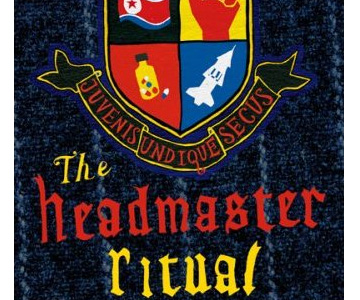
“The Headmaster Ritual”

Move over, "Prep" and "Harry Potter" -- Taylor Antrim has written the great American (or is that Korean-American?) boarding school novel.

The appeal of the boarding-school bildungsroman is contradictory. The classics of the genre, at least in its modern incarnation, aren’t really about the privilege that permeates the setting. Indeed, an anti-materialist tone generally creeps in, and the reader is pretty much guaranteed that the protagonist will be having a miserable time. The books, then, resonate because they make geographic and social isolation stand in for the loneliness of the soul in formation. The dorms are emotional pressure cookers; the quad and dining hall and field house are stations of the cross. Mid-century offerings like “The Catcher in the Rye” (1951) and “A Separate Peace” (1960) are still in currency alongside more recent examples such as Curtis Sittenfeld’s exquisite mope-fest “Prep” and the Harry Potter books, which for all their magical invention have an angst-filled hero at their core.

Set at the fictional Britton Academy in Massachusetts, Taylor Antrim’s debut, “The Headmaster Ritual,” initially appears to be a modest entry into the field. With its shades of Andover (“The country’s current president, at least two senators he knew of, the secretary of state: all Britton alumni”), the school is “a game preserve for New England Wasps,” according to Edward Wolfe, the recently arrived headmaster. But Wolfe’s pedigree is both Harvard and Students for a Democratic Society, and it soon becomes clear that he has his sights set on activities and causes beyond the school’s — and country’s — borders: namely, the plight of North Korea.

One of the book’s two main protagonists, Dyer Martin, has left behind an imploding relationship in California to teach history at Britton, and his first meeting with Wolfe should have tipped him off that he wasn’t signing up for the Mr. Chips role: The headmaster invites Dyer to his daily six a.m. Korean martial arts exercises. (Later that day, a fellow teacher refers to the headmaster as “Comrade Wolfe.”)

The other central character is James Wolfe, a smart, awkward kid who also happens to be the headmaster’s son. This year he’s forced to live in a (reliably savage) dorm in order to find his own feet, or else to accommodate his father’s extramarital carousing — which might explain Wolfe’s departure from Harvard for the world of secondary education. Hazed and humiliated by jocks and legacies, and hopelessly drawn to Jane (the ex of a popular student whom his father booted last term), James muddles through what is shaping up to be a high-school year that’s even more of a minefield than usual.

Though “The Headmaster Ritual” never makes you laugh out loud, it’s aerated with a steady current of institutional black humor of the “Lucky Jim” variety. The novel eventually clears its own weird path away from its illustrious and popular forebears by dint of its surprising engagement with North Korea. Wolfe, with convoluted (and indeed, quite insane) educational, fundraising and revolutionary ideas in mind, asks Dyer to assemble a shock troop of his students — including James — into a North Korean delegation for a Model United Nations conference (held at the real U.N. building), where a bizarre, violent spectacle has been staged.

“The Headmaster Ritual” has a pop veneer, nodding to Wes Anderson’s “Rushmore” (the ultimate prep school movie) and cadging its title from one of the Smiths’ bleaker songs (which is saying something). The novel’s international touch is initially disorienting, an apparent shift in scope and tempo, but it soon becomes unusually satisfying, as much for adding brio to the plotting (how else are you going to top Hogwarts’ VI-form wizardry?) as for its rich metaphorical possibilities.

The North Korean principle of “juche,” developed by the country’s founding father, Kim Il Sung, translates roughly as “self-reliance.” As Dyer coaches his students in the country’s tormented worldview, we can see how such a philosophy — not to mention the extremes of rhetoric and behavior — might strike a chord with his students.

Dyer synopsizes North Korea for his team: “Speak out against the Dear Leader, and you get sent to a gulag,” to which one student responds, “Cool.” Dyer continues, “But we don’t have unrest. We’re not racked by revolution. We’re not yearning for international investment, and we don’t want tourists. We don’t like people telling us what to do, or showing us how to live. We like our misfit status.”

It’s grandiose, of course, to compare a teenager’s emotions to a country that seems, to most Western eyes, to be in a constant tailspin. But this is Model U.N. — a simulation and simplification — and “self-reliance” emerges as a viable code. Everyone at that age identifies with the misfit.

Cut off by pride and circumstance from the rest of the world, North Korea also works as a symbol for Britton and boarding schools in general, with their antiquated traditions about which nobody outside its halls — save alums — can expect to care.

James gives an impromptu, impassioned speech at the U.N. (“Provoke us at your peril”), a performance designed in part to impress his father. This resonates with a central North Korean drama during Kim Il Sung’s life: the perception by critics that his son, Kim Jong Il, couldn’t match up to his father — a kink in the idea of dynastic succession. And James isn’t the only one with daddy issues. Before coming to teach, Dyer, abandoned by his father as a child, ineptly lost half a million dollars of his would-be father-in-law’s money on a bad real estate transaction. Having a successful career at Britton means pleasing Wolfe, acceding to his bizarre demands.

Antrim capably depicts campus life, from the “wingbone-shaped, iron and steel-cabled sculpture” (hilariously titled “Stress”) to Dyer prepping for class late at night, listening to a student “drilling the opening licks of Led Zeppelin’s ‘The Ocean’ on an unplugged Fender next door.” Occasionally a cluster of descriptions surfaces where one would suffice. Britton is “a hushed refuge, a ringed enclave. A fresh start”; Dyer’s flight from domesticity is a matter of “patrimony, of DNA, of blood-borne instinct.” But mostly the writing is assured, fluid without being flashy. This restraint allows for subtle connections, as in this passage in which James contemplates the dashing of his modest dreams:

That future he’d imagined on the bus, all the possibilities on the horizon, like a distant sparkling skyline, now looked like a fragile mockup, a thin, Disneyland diorama of the years to come. He was scared.

The metaphor seems too simple at first glance, but as the scene shifts from tawdry utopia to nightmare, Antrim is also conjuring the desperate billboard optimism of North Korea, of its capital in which, some say, only good-looking people are allowed to live. (“Pyongyang is like a huge stage set,” wrote Ian Buruma in 1994.)

It’s strange and perversely inspiring to think that Antrim, an editor for ForbesLife (CapitalistToolLife?), has written a book in which one of the world’s last communist holdouts, a perpetual pariah state, gets something amounting to sympathetic treatment. I suspect most readers will learn more about that country’s agonizing history here than they ever have. Without intending to, Taylor Antrim has written the great Korean American boarding school novel.

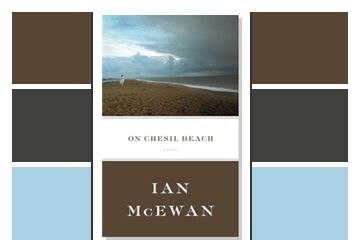
“On Chesil Beach”

Two virgins face down fear and disgust on their wedding night in Ian McEwan's slender new novel.

Ian McEwan‘s recent work has been a master class on the elasticity of time in fiction. The first half of 2002′s “Atonement” unfolds, in voluptuous and horrifying deliberation, with the disastrous events of a fateful summer day in 1935, while “Saturday” (2006) transpires on Feb. 15, 2003, in the shadow of a giant antiwar demonstration. His latest novel, “On Chesil Beach,” goes this life-in-a-day conceit one better. Up until the last few pages, the frame of reference is a single evening, from dinner till dawn, in the lives of two nice — even boringly nice — people, “polite to a fault”: Florence, an aspiring violinist, and Edward, a university grad originally from the sticks with budding authorial ambitions.

It’s not just any night, but Florence and Edward’s wedding night; and not just any wedding night, but one shared between two virgins. (The Lennon-Ono title would have been snappier than “On Chesil Beach,” which, at least to the American ear, sets up lingering associations to the codgerfest “On Golden Pond.”) Slim enough to gulp down in one sitting, “On Chesil Beach” could double as an effective pamphlet on the benefits of premarital couples counseling.

The setting is an English seaside hotel in 1962 — one year, as we know, before Philip Larkin’s annus mirabilis when “sexual intercourse began” for the poet (“Between the end of the “Chatterley” ban/And the Beatles’ first LP”). Florence and Edward first meet at a ban-the-bomb rally, but during their year of courtship, physical contact has been a matter of slow conquest: “The evening in the cinema at a showing of ‘A Taste of Honey’ when he took her hand and plunged it between his legs set the process back weeks.”

Indeed, it is Edward’s certainty of the impossibility of sex out of wedlock that spurs him to pop the question. In love with Edward, Florence understands the course that their affections should take, and “in optimistic moments she tried to convince herself that she suffered from no more than a heightened form of squeamishness,” yet she finds it difficult to shake her distaste and dreads the impending mattress matters. Her new husband is, of course, eager to consummate the union, but in truth both are petrified by their inexperience, each entertaining the notion that the other will have a sense of how to proceed with the actual mechanics of the deed.

In lieu of plot, McEwan applies a fine brush to character. He toggles between the tensions of the night in question and his protagonists’ lives up to this point, apart and together. Though both have attended college, they are products of subtly different classes. Rougher-edged Edward — he’s an occasional brawler — is the son of a primary school headmaster and a mother left brain-damaged as a result of a senseless accident. His home is in perpetual disarray, whereas Florence’s house is grand enough that Edward gets his own room when he comes to stay. Her father manufactures scientific equipment, and her mother — in sharp contrast to Edward’s invalid mom — is a philosophy professor. Yet both feel stifled by their families; in one of the book’s more delicate constructions, McEwan puts them on a gentle collision course as both wander away from home one afternoon and meet for the first time.

The familiar, alas, is the one thing that might help them on their wedding night. How to get back to their previous amiability? The fear of what’s to come, so to speak, is overwhelming. During and after a grandly presented but singularly unappetizing dinner (“slices of long-ago roasted beef in a thickened gray, soft-boiled vegetables, and potatoes of a bluish hue”), the two flounder in silence, descending into a sort of prisoner’s dilemma. They lack the vocabulary. Anything they can think to say is inadequate to their situation, to the quelling of opening-night jitters; the twist is that silence is somehow worse. When Edward manages to say, “I’m so happy here with you,” and Florence responds with “I’m so happy too,” the mirroring sentences show that they’re both trapped, on an island the size of a bed, in an ocean the size of a life. All their previous conversations cannot help them, and with frightening swiftness everything is on the verge of ruin.

“English is a beautiful language, full of misunderstandings,” says Robert, the sinister presence in McEwan’s second novel, “The Comfort of Strangers.” Published over a quarter-century ago, “Comfort” is roughly the same length as “Chesil” and makes for a tantalizing precursor. Mary and Colin are travelers in an unnamed city, where every turn is the wrong one and irritation runs high. After one too many encounters with Robert and his odd wife, Caroline, the couple banter to keep the dread at bay, but in vain: What’s left is unspeakable. Though “Comfort’s” elegantly (or inhumanely) sustained tone of menace couldn’t be more different from “Chesil’s” tear-damp saga of failure, both are snapshots of couples free-falling into terror. The physical S/M of the first book finds a counterpart in the unintended emotional cruelties of the latter.

“Comfort” takes place in the equivalent of a Giorgio de Chirico painting, all harsh sun and enigmatic corners, a place of erasure and anonymity. “On Chesil Beach” is, by contrast, meticulous in its specificity of time and place. The historical coordinates aren’t simply important, but indeed are integral, to the success of McEwan’s project. The tension is between what happened and how it has been interpreted — something he did to dramatic effect in “Atonement.” The first two sentences of “Chesil” immediately display a shifting of tense: “They were young, educated, and both virgins on this, their wedding night, and they lived in a time when a conversation about sexual difficulties was plainly impossible. But it is never easy.” They were; they lived; it is. Who, exactly, is telling the story — and when?

Sometimes the constant contextualizing is welcome (“This was not a good moment in the history of English cuisine”); occasionally it gets fuzzy (“How did they meet, and why were these lovers in a modern age so timid and innocent?”) or keeps the reader at arm’s length, as though siphoned from a textbook: “In the early nineteen fifties, [Edward's father's] homecoming routines were hardly typical of a professional man.”

But after “On Chesil Beach” climaxes, the masterfully modulated denouement fast-forwards through the decades to come to our present day — and prods us to consider what this book really is. For Edward’s early pipe dream was to write “a series of short biographies … of semi-obscure figures who lived close to the center of important historical events.” Sir Robert Carey, anyone? Another possible subject: A 14th century “flagellant Messiah” named Konrad Schmid. “As Edward saw it, each history would be no longer than 200 pages and would be published, with illustrations, by Penguin Books, and perhaps when the series was complete it could be available in a special boxed set.”

Could it be that the little-big book in our hands — which totals 200 pages on the nose — is written by Edward, the historian at last, his subject none other than himself?

Continue Reading Close