Of all the thankless jobs in show business, producing the annual Academy Awards must rank below being Bruce Willis’ hair wrangler. The executive producer is responsible for coordinating hundreds of needy, high-profile egos, choreographing a four-hour mix of introductions, film clips, performers and host material and making sure that, in the end, the right envelope makes it to the stage at the right time.
Putting together one show takes three months, and each year, the spectacle of a show names 24 winners. At the same time, nearly 1 billion people are examining the show with a magnifying glass, looking for the screwups of live television and the miniature scandals set off by this winner or that. At the end of the day, the news shows don’t talk about the logistics that go into scripting the stars into fairly seamless live television, with almost every conceivable reaction shot readied, with fail-safe after fail-safe preparation for emergencies. Instead, they talk about the ever-increasing running time, the vapidity of the dance numbers and a few tasteless dresses. The producer can’t win.
You’d never know it listening to Gil Cates.
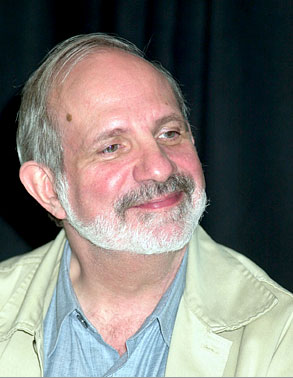
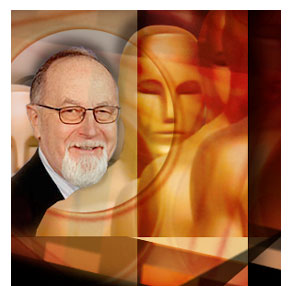
The seasoned director has more than 20 movies to his credit (including “Oh, God Book II” and the Oscar-nominated Gene Hackman tear-jerker “I Never Sang for My Father”). He will be directing his 11th Academy Awards telecast Sunday night. Cates, who says he loves the gig as much as he did when he started directing the show, is a maestro of self-congratulatory pomp and circumstance, a man with a Zen-like armor of nonchalance that protects him from the slings and arrows of Oscar bashers.
I recently chatted with Gil Cates via phone. He diplomatically danced around questions on Joan Rivers, his most egregious Oscar show and the top-secret list of hosts to replace Billy Crystal.
You’re the Michael Corleone of Oscar telecasts — every time you think you’re out they just pull you back in. Why do you keep doing this to yourself?
Oh, that is so funny. I love that. Well, when I did the first show [back in 1990], I was sure I was only going to do one. The truth of the matter is, the people with whom I work are very nice and it’s just a fun show to do — even though the climate has gotten a little testier over the years.
And by “testy” you mean …
Well, the level of caring and kindness has somehow diminished throughout the country and I guess we reflect that as much as anything else.
As someone who spent the majority of his career directing movies and plays, what was the lure of doing an awards show in the first place?
Essentially what happened is that I was on the board of the Academy of Motion Picture Arts and Sciences the year after the ’89 show Alan Carr had produced. The then president of the academy was Richard Kahn and he appointed a committee of academy board members just to look into the show in terms of ways of improving it and things to watch out for. Also on that committee was Karl Malden, and when he was made president of the academy the following year, he said to me, “OK, big shot. You got all these ideas, so why don’t you produce it?” I had been asked to do it before and just wasn’t able to, so this time I thought it would be fun. It was quite accidental and quite innocent.
What’s the most creatively fulfilling aspect of doing a program like this?
One is, of course, getting all these people together to do the show live. There’s no retake on that, there’s no tape delay — it’s totally live.
Part of the excitement is around the fact that all this happens live at that given time. I think essentially people watch us because they like horse races — they like to see who won and who lost.
There is a certain satisfaction that my colleagues and I get from presenting these 24 awards or so in a way that seems as painless as possible. Time, regardless of the length of the show, seems to go fast. I know a lot of the folks who watch the show would [disagree] that anyone is making an attempt to do that, but I can assure them that we all do.
The other thing is to try each year to somehow surprise the audience with something that you do or educate them about something they’ve never seen before. I take great pleasure out of the fact that one year we did a year devoted to women and one of the film packages was on women in editing. People in our industry, let alone the lay world, were surprised to learn that until the ’50s editing was done mostly by women.
[Or] take dance, for example. Dance is in deep trouble in the United States, so some people get their first opportunity to see dance of any kind on the Academy Awards show. All those reasons make it fun to do the show, plus the fact that it’s nice to have a period of a couple of months where people return my phone calls.
You’ve received a lot of flak in the past for overloading the telecast with too many of the aforementioned film montages and dance numbers. How do you respond to this criticism? And feel free to address your detractors by name.
My favorite critic story is about a show five years ago. We got a review in the New York Times that called us one of the best awards shows in recent memory and said that it went along quickly and flawlessly, etc. The Los Angeles Times called it a lengthy bore. Frankly, and you want my honest-to-God opinion …
We expect nothing less.
I don’t spend much time listening to what the critics of Academy Awards show say. You know, the critic’s view is based generally on preconceived notions or ignorance. I still meet people who tell me they’re annoyed at the fact that the Academy Awards show explains the rules in great detail — the show hasn’t explained those in 15 years! People tend to slobber one show onto another show and they really kind of forget the differences between the two. Basically, the issue for me is, Can we make the show entertaining given its length and the number of awards that are mandated to be presented? The show is very much like the World Series; its length is the length necessary to do the job.
Of all the Oscar shows you’ve done, which one would you most like to forget?
[Laughs] Oh, God. I don’t think I even want to go there. What I can tell you without reservation is that I like some shows better than others, clearly.
Do you feel the show David Letterman hosted back in ’95 got a bad rap? To this day, the man still seems to be flagellating himself over the job he did.
I thought that was a pretty good show. David did a pretty good job. Listen, it’s like if you had two children. One’s the tall one, one’s the short one, one’s the outgoing one. People tend to speak in hyperbole: “This show’s much better than last year” or “It’s terrible compared to last year.” David followed Billy Crystal, who’s naturally a brilliant, terrific host. That’s a tough act to follow.
This year you’ve tapped Steve Martin to host. What makes you think he’s up to the task?
Steve Martin’s humor is unique. It’s very different from Whoopi [Goldberg's] and David’s and Billy’s. Basically, it’s intellectual and it’s thought-provoking. I think his unique persona will present the show in a special way that is going to be terrific. Technically speaking, he was for many years a stand-up comic and he knows how to work a room. He’s quick on his feet, he’s mentally agile and alert. I think he’ll be a great host.
Just out of curiosity, who else was on that list to replace Billy Crystal?
Oh, I’ll never tell. I will answer your question this way: There are only a half-dozen people who can really do that job in my opinion — who are well-known. Obviously, the person should be a movie star. Go look through the list of stars who are so uniquely known by the American people that they have their own special dispensation.
How much creative control do you have over the host’s material? Have you ever gone toe-to-toe with a writer over a joke you found particularly offensive or unfunny?
Well, I don’t have that kind of relationship with the writers. If someone shows me a joke they have and I think it’s in questionable taste, usually they’ll change it or come back with another idea or just cut it. Essentially, you’ve really booked that host to get what that host does best. I’ve had hosts in the past who would come to me and say, “What do you think about this joke or what do you think about that?” I’ll give them my honest opinion about it, but basically the host is the host. You have to give the host enough latitude to do his job properly.
Considering that Hollywood has long been branded a politically liberal community, what effect do you think the presidency of George W. Bush will have on the tone of this year’s telecast?
I think there’s a larger part of your question, which is that each year is different than the year before. The first year I did the show, the Berlin Wall came down and there was euphoria and happiness around the world which was reflected in that show. One year when Dianne Feinstein and Barbara Boxer were running for senator in California, it was quite obviously the year of the woman, so we had a show that reflected women in film. Each year is reflective of the movies and the time in society, so it’s sure to reflect the fact there’s a different administration. It’s not a purposeful reflection — it’s in the water.
Watching the Oscars, I sometimes get the sense that the host’s monologue doesn’t go over well with the audience — regardless of how funny it may be. Do you think actors, in general, have a hard time laughing at themselves?
No. I think the actors are very comfortable laughing at themselves, and some of the biggest jokes and biggest responses have come from that. I think what you’re referring to is that many of them are nervous and scared to death. If you have 25 awards, you have 100 people — all of whom are centered in the best seats in the house. There’s a lot of tenseness and anxiety. I mean, they love laughing at themselves for the most part. I’m sure I’ve hurt people’s feelings in the past, but it’s not our intention.
Having worked with the biggest names in the business, which celebrities won’t be invited back anytime soon? What’s the biggest power trip one of your presenters has ever pulled?
I know you’re going to find this difficult to believe, but when people come down to the show they’re generally so overwhelmed by the size of it and all the other stars that are there, they’re usually very, very easy to deal with. Honestly. There really have been no power trips. Occasionally, you’ll find an actress who’s nervous about the dress she’s wearing and she’ll say, “Can I see both dresses on camera before I decide?” Or someone will come down and say, “Ohmigod, I’ll be too nervous to read this stuff.” You’ll find things like that. Let’s face it — they don’t get paid for it. You don’t have to deal with their agents or lawyers to book them. There’s no billing clause in it. It’s a very simple deal. “You want to present one of the best-picture clips — yes or no?” It’s a no-brainer. You’re interested or you’re not interested.
How about the seating assignments? You’d think that in a community so ego-driven, you’d have performers saying, “I want to sit closer to the stage” or “Make sure I don’t get a seat next to so-and-so.”
No, no, no. But I’m conscious of not putting a performer next to his recently divorced spouse. [Laughs] I’ve been asked to write a book on my experiences in the Academy Awards show and I’ve been trying to store material — it’s mostly funny and positive stuff. Like Mike Myers, whom I asked to take an envelope from Bart the Bear. Bart weighs 1,800 pounds, he eats a hundred roasted chickens, he’s 11 feet high — so Mike Myers is gonna have to go up to this fucking monster and get an envelope. I mean, he would be stupid not to be nervous about that.
In the past, several actors (famously Tim Robbins and Richard Gere) have used the Oscar stage as a bully pulpit for their personal causes. To all those presenters and award recipients considering going on a soapbox, what do you have to say?
Well, I divide that question into two parts. As far as the presenter is concerned, that’s someone whom I’ve asked to be on the show. I find it unconscionable that they would use that time for their own personal view. Because, in effect, they have made a deal with me to come on the show and present best cinematography. If they say something that’s personal, I think that’s in bad taste; I think it’s inappropriate and would strongly censor that. However, if a person wins an award and they have 30 seconds to say “Thank you” and they elect instead to say “Save the trees,” it’s totally fine with me.
What are the criteria for being a seat filler, and are they unionized?
Troublemaker. [Laughs] They’re not unionized, and it’s very difficult to be a seat filler because of security reasons. We only take seat fillers who work for the academy, and they’re vetted by many people just to make sure that the security concerns are met.
Do these people have to have a certain look? Are they models?
No, they’re everyday-looking people, and that’s what I like about them.
Do you feel the glut of advertiser-friendly award shows in recent years has diminished the prestige of the Oscars or reinforced it?
I look at every award show as a buildup to the Oscars — honest to God. I wish there were fewer of them only because I wish there were other things on television. It really makes no difference. Why do people go to the Golden Globes? They go to the Golden Globes obviously because it’s a lovely party, but they also want to know who the front-runners for the Oscars are. It all pays off on the Oscars. You’ll notice that there’s no award show that follows the Oscars. What are you going to do after the Oscars are given? That’s it.
Approximately a billion viewers tune in to the Academy Awards every year — what do you believe accounts for the universal appeal of this ceremony?
It’s been said so many times, but film is the new art of the 20th century — it transcends language and it really transcends culture. Film stars are the common denominator, the common language. You’re talking about something [the Oscars] that’s 75 years old now, and there’s a sense of a global village and a sense of belonging.
What are your thoughts on the incessant hype machine that surrounds the Oscars? How do you deal with the pressure to live up to the network’s and the viewers’ high expectations?
Well, I love the hype because I think that’s what generates the audience. Obviously, the most appealing thing to me is to have a big audience. But with regard to the hype and how it affects me personally, frankly, it really doesn’t affect me very much. To tell you the truth, I run a theater here in Los Angeles called the Geffen Playhouse and we have 500 seats — I get as nervous on opening night with 500 people watching as I do with 500 million. There’s a point at which it’s not the number, it’s the quality of the work.
What’s the most outrageous thing anyone’s ever done to attend the Oscars?
Well, there’s one time when someone snuck in, which was outrageous because he got himself into big trouble, and I don’t think I should even get into that. I mean, I get dunned all the time for tickets — it’s bloody awful.
I’m going to give you a few names and I want you to tell me the first word that comes to your mind:
Jack Valenti.
Short.
Jack Nicholson.
Important.
Joan Rivers.
Uh … [Laughs] I can’t think of one word that would encompass her. I may not be a good player for this game. She’s a friend of mine, so I don’t want to say the first word that comes to my mind.
Melissa Rivers.
[Stutters] This is not a good game for me.
Richard Gere.
Thoughtful.
Dick Clark.
Active.
Do you ever find yourself selfishly rooting for certain nominees to win?
Absolutely, all the time — if I think someone will be a more colorful recipient of an award or if someone will make a better speech. I have that feeling when the academy presents me with a list of people who are going to get honorary Oscars or the Thalberg award. I’m very much interested in what will make the show a better show, which is not always in the academy’s interest.
I want you to come clean now: Do you know who’s going to win beforehand or not?
Everyone who’s gonna win — weeks beforehand.
[Pause]
Will you get a life, for Chrissakes? Of course I don’t know! Are you kidding me?
I’ll give you an example of how little I know. We occasionally have a short action film presentation and a studio will make an animated introduction. So the person says, “And the winner is …” Well, we have the little animated thing drawn to have five separate winners and we have someone from Price Waterhouse come into the truck. Right before it’s announced, he tells us which number tape machine to roll. No one knows!
After all these years, do you still find it amazing how many celebrities walk off the wrong side of the stage and have trouble opening the envelopes?
No, because I filter it all through the sense of astonishment, surprise and just plain uniqueness of that experience. I mean, there you are up there and there are 3,000 in the hall looking at you; there’s 500 million people watching you. There’s no preparation for it. Some celebrities do get a little dry-mouthed. They make mistakes. I understand Elizabeth Taylor’s appearance at the Golden Globes. She’s not reading that [teleprompter] — it’s just nerves.
On a scale of 1 to 10, what are the chances a young journalist can get a pair of Oscar tickets if he writes a very flattering and complimentary piece about you?
Is “1″ no chance or is “10″ no chance?
“1″ is no chance.
I’m afraid the answer is “1.”
Hollywood is a capricious town, run by people who often defy rational analysis. Rather than try to understand why they do what they do, it’s better to let their actions speak for themselves. What the following 10 most disturbing trends are saying right now is that it’s time to chlorinate the Hollywood talent pool.
1) From “The Pen” to prime time
Doing their part to curb the recidivism of prison-prone celebrities, studio honchos have benevolently turned their soundstages into refuges for addicts, ex-cons, wife-beaters, drunk drivers and other pathological lowlifes. While criminal scandal once ended a performer’s career (Fatty Arbuckle, Lenny Bruce), nowadays legal skirmishes and lawless behavior only seem to up a star’s professional appeal. This regressive phenomenon is typified in the continuing employment of scandal-plagued celebrities like Rob Lowe and Hugh Grant and the recent reinstatement of actor-jailbirds Robert Downey Jr. and Charlie Sheen. In any other vocation, Downey and Sheen would have doubtlessly been shit-canned after their first court appearance. Are these men talented? No question. Are there sober SAG members who could have just as capably carried off the same roles? No question.
At the risk of sounding like a do-good prude, there’s something troubling about a convicted drug offender (coke, crack and black tar heroin were all found on Downey) signed to a $75,000-per-episode “Ally McBeal” payday hardly a week after being released from the clink. Even more troubling is that his checks are being signed by prolific über-producer David E. Kelley. Someone of Kelley’s standing endorsing Downey sends a disquieting message to all those fuckups-in-the-making that a job will always be waiting for them regardless of what felonious acts they may commit.
2) Celebrity sob stories
Using the media as their own personal psychiatrist’s couch, attention-deprived celebs have resorted to public therapy as a means of drumming up buzz for upcoming projects. This wanton promotional ploy has become practically de rigueur, making it impossible to turn on a TV or pick up a magazine without seeing some neurotic star spilling his psychic guts about some woebegone emotional calamity (e.g. molestation, alcoholism, suicidal tendencies, etc.). Listening to these self-pitying jet-setters bitch and moan, it would seem that sitting on top of the world is an insufferable burden worthy of Job. Melanie Griffith, who is still getting leading roles, even if they come from her husband, still can’t stay away from the painkillers. Meanwhile, we learn that love “depresses” Jim Carrey, who makes $20 million a movie and dates babes like Renée Zellweger. Anyone notice his timing?
Now maybe I’m just jaded, but are we honestly expected to waste our sympathy on ingrates hellbent on pissing away their own prosperity when there are people out there who actually warrant it? Instead of pandering to the hoi polloi with a “celebrities are people too” spiel, I would have more respect for ersatz tragedy cases like Jewel (whose much-ballyhooed early years were spent in log cabins and vans) if they stopped insulting our intelligence and reveled in their immodest success without apology or qualification. Just once, I would like to hear them publicly confess that given the choice between poverty and wealth, it’s a damn sight better to be wealthy.
3) Familiarity breeds contempt
Steven Weber, Delta Burke, Craig T. Nelson, Victoria Principal, Tony Danza — with these corpses resurrected from the television graveyard to head up this season’s prime time lineup, is it any wonder network viewership is tanking? While whip-smart cable series like “The Sopranos” and “Sex and the City” favor nonconformist casting (James Gandolfini and Sarah Jessica Parker have benchmarked small-screen thesping with authentic, nuanced characterizations), the Big Four networks insist on playing it safe by stocking shows with war horses from series past. Living up to their reputation as myopic slaves to convention, programming heads have converted the medium into a recycling bin for has-beens, erroneously convinced that famous faces do good ratings make. The new strategy: Move overdone movie stars to the little screen. So far, the ratings for both “Bette” and “The Geena Davis Show” are disappointing at best.
4) The cult of famosity
Gratuitous violence in video games, explicit lyrics in rap music, steamy love scenes on daytime soaps and Jerry Springer have all been cited at one time or another by pious, self-righteous politicos as contributing to the moral degradation of this country’s youth. Yet there remains an even more virulent threat to the emotional welfare of our children that is consistently overlooked during those star-studded dog-and-pony shows on Capitol Hill. The name of this societal blight is celebrity worship and its ill effects can be seen on everyone from horny, post-menopausal housewives storming the barricades at a Brad Pitt movie premiere to yokel tourists waving “Marry me Matt” signs outside “The Today Show.”
The deification of entertainers is hardly a modern invention, but it has begun to metastasize in recent years in concert, I think, with the proliferation of fluffy, gossip-oriented newsmagazine shows like “Entertainment Tonight.” Such programs exist for the sole ignoble purpose of kowtowing to Tinseltown’s narcissistic elite. Stroking the gold-plated fantasies of homebound celebutantes, they inundate us with teasing glimpses into a world we can never inhabit - a place where graying leading men boink nubile starlets 20 years their junior and everyone makes 100 times what they’re worth.
Earning his place alongside preeminent ego coddlers Oprah Winfrey and Larry King, nobody exemplifies this age of unabashed star-fucking better than “Access Hollywood” co-host Pat O’Brien. Once a reputable journalist, O’Brien has willingly reduced himself to being a professional toady shilling for his higher-ups at Warner Bros. In a country supposedly founded upon the ideals of individuality and creative expression, how paradoxical that a cerebral artist/provocateur like Marilyn Manson is persecuted for speaking his mind … while an ineffectual phony like Pat O’Brien is all but praised for shelving it.
5) “Inside the Actors Studio”
As the hirsute, groveling host of Bravo’s chat fest, James Lipton is closing in on Kathie Lee Gifford’s status as the most reviled personality on television - an honor backed up by scathing parodies on “Saturday Night Live” and “Mr. Show.” With his unctuous interview style, haughty inflections and shameless sycophancy, Lipton is every guest’s dream — and every viewer’s rotten lunch. The only thing more wince-inducing than Lipton are his obsequious MFA students, a motley, pretentious bunch of would-be Brandos, Kazans and Monroes. By trotting out illustrious, Method-acting alumni like Robert De Niro and Meryl Streep to regale this crowd with ingratiating anecdotes, “Inside the Actors Studio” gives a deceitful air of legitimacy to what is effectively a moneymaking scam intended to feed the dreams of desperate, aging acting students.
Lipton shirks his mentorial responsibility and offers his captive audience an unrealistic sense of hope (“If you work very, very hard, this is the kind of actor, writer and director you may turn out to be,” he once gushed in reference to Alan Alda). Curious to see just how many New School grads have made good on Dean Lipton’s lofty expectations, I visited the student news list on the Actors Studio official Web site. As it turns out, the bulk of the current class can either be found toiling in the impoverished obscurity of repertory theater or no-budget indie films. Not to diminish the value of anyone’s work, but after $60,000 and three years of laborious, Stanislavsky-style training, shouldn’t they expect more for their investment than, say, a negligible part in a production of “Bunnicula” at North Carolina’s Raleigh Little Theatre?
6) The cast of “Survivor”
Pity the poor starving artist honing his craft in an off-off-off-Broadway production of “The Cherry Orchard” while some no-talent from a reality show is inundated with the agent deals, party invites and job offers he spent the better part of his life training for. So far, a seeming moron has been appointed “Extra’s” medical correspondent, a homophobic Neanderthal has gotten his SAG card, a cheesehead truck driver has her own Hollywood Square and a fatuous ex-waitress has landed a leading role in a feature film. When the second go-round of “Survivor” pollutes the airwaves this January, heaven help us. We can only hope the Hollywood cognoscenti will be a little more discerning when it comes to which castaways receive the star treatment. Instead of serving up fame and fortune on a silver platter to these neophytes, here’s a novel idea: How about making them pay their damn dues like everybody else?
7) The sequel fetish
Hollywood, bastion of creative bankruptcy that it is, never met a remake or a sequel it didn’t like. In Y2K, no fewer than 15 releases based on previously mined material made it to the multiplexes. With the possible exception of “M:I-2″ (and even that was botched by John Woo’s flashy, self-parodying direction and Robert Towne’s generic script), none of these entries managed to surpass the critical or commercial success of its predecessors.
“Book of Shadows: Blair Witch 2″ was a superfluous follow-up to arguably the most over-hyped and underwhelming movie of the past decade. Then, relegating the eternally cool Richard Roundtree to a thankless supporting role, Columbia went the obvious route and tapped the nauseatingly overexposed <a href="/Samuel L. Jackson to play private dick “Shaft” - even though he lacked both the class and unaffected machismo of his leather-clad progenitor. And “The Flintstones: Viva Rock Vegas” gave every burger flipper and cocktail waitress in the country a dream that they too could one day get paid millions of dollars to run a studio into the ground.
Unfortunately, the future does not look any better: There are nine retreads coming in 2001, including Steven Soderbergh’s retake on the Rat Pack’s “Ocean’s 11,” “Jurassic Park 3″ and Tim Burton’s “Planet of the Apes.” Look on the bright side though: At least we won’t have to sit through another “Doctor Dolit” … Oh, wait. Never mind.
A-list actors, C-list roles
Actors, by their very nature, are a masochistic lot. Left to their own devices and an inattentive agent, sooner or later they’re almost guaranteed to machine gun their tennis trainers. Taste (or lack thereof) is the most common bane. Whereas some have the Midas touch when it comes to choosing scripts (see Tom Hanks’ filmography), others are congenitally hopeless in their decision-making prowess (see Nicolas Cage’s CV).
Conventional wisdom would suggest that they ought to know the difference between shit and sugar, but, judging from the once bankable names who are now in career life-support, that’s hardly the case. John Travolta, for instance, is notorious for being his own worst enemy, someone whose inimitable gifts as an entertainer are invariably undermined by his own undiscriminating palate. After nostalgia fiend Quentin Tarantino singlehandedly returned him to superstar status with “Pulp Fiction,” Travolta uncharacteristically sidestepped the minefields of his past by starring in a string of back-to-back hits. Whether out of complacency, idiocy or just plain greed, he eventually went back to his old ways and began delivering performances undeserving of his bloated, perk-heavy contracts. Coming full circle, Travolta reached his second occupational nadir this summer with the embarrassing flop “Battlefield Earth” - an ill-advised vanity project so atrocious it makes you long for “Perfect” and “Two of a Kind.”
Then there’s Robin Williams, a brilliant performer who fell to the fated Oscar curse. Since snagging the best supporting actor trophy for “Good Will Hunting,” Williams has senselessly jettisoned comedy for schmaltzy clunkers like “Jakob the Liar.” Seemingly disgruntled by the lukewarm response to his last few flicks, Williams has gone into a self-imposed exile from the movie biz and was last seen misspending his superlative improv skills on “Whose Line Is It Anyway?”
9) The fame game
How is a star born? In many respects, the process by which one achieves stardom is about as abstruse and defective as the process by which our presidential candidates are chosen - oftentimes we have no clue who these people are, what exactly they did, why we should pay any attention to them and how they even got there in the first place. Hollywood is the land of illusion, after all, and there is no greater illusion than convincing members of the public that they actually have a say in who makes it. In reality, those decisions are made by a clandestine ad hoc committee of publicists, agents, editors, producers and other sundry big shots long before we ever get a chance to exercise our will.
If anyone doubts our impotency to influence the course of popular culture, I encourage them to recall the media hype surrounding Matthew McConaughey’s “overnight” explosion onto the scene back in 1996. Months before McConaughey’s first major release (“A Time to Kill”) even hit theaters, his shit-eating mug was plastered across every magazine from Vanity Fair to Newsweek - all of which egregiously touted him as the Second Coming of Paul Newman. Taking their cue from the omnipotent wizards behind the curtain (Joel Schumacher, Bob Daly, et al.), the press slavishly hopped aboard the McConaughey bandwagon and executed a P.R. blitz tantamount to brainwashing. By the time we found out whether or not he could deliver, our collective minds had already been made up, conditioned by a subliminal advertising campaign that essentially told us that McConaughey was a new golden boy. The scary thing is that it worked: “A Time To Kill” was the tenth-highest-grossing movie of that year.
Catering to a marketplace increasingly geared toward the fickle tastes and attention spans of the MTV set, the studios have begun to churn out flavors-of-the-month with the regularity of Baskin-Robbins. Every time we turn around these days, there’s a new hottie shoved down our throats (is there any magazine cover Sarah Michelle Gellar hasn’t appeared on yet?). It’s gotten to a point where all these cosmetically impeccable teen queens have become indistinguishable from each other - blended together into one giant mass of silicone and collagen. For every Kate Hudson (the nepotistically aided offspring of Goldie Hawn) who manages to defy the beauty stigma and rise above the muck of mediocrity, there are a hundred expendable Tara Reid and Shannon Elizabeth clones ready to be blackballed come the first sign of mammary droopage.
10) The bubblegum pop resurgence
Thanks to their hackneyed lyrics, ungainly choreography, ludicrously hep stage outfits and grating personalities, boy bands like the Backstreet Boys and ‘N Sync have become such glaring and overused targets of ridicule I’m almost tempted to hold my tongue … almost. The TV industry is already addicted to this kiddie crack, banking big with awards shows and concert specials. Can the big screen producers be far behind? Not since the rule of the Osmonds and the Bay City Rollers in the ’70s has there been such an infestation of milquetoast teenybopper groups onto the Billboard charts. The latest strain of this musical epidemic can be traced back to shrewd Svengali Lou Pearlman - a corpulent, repugnant-looking character with the skeevy manner of a prowling pederast. Say what you will about Pearlman’s questionable business practices (‘N Sync sued him over his creative accounting), but give the man his props for building a multimillion-dollar cottage industry out of the assembly-line packaging of pretty, fresh-faced goy boys who individually possess utterly marginal singing, dancing and songwriting abilities. To rock-starved purists who yearn for the day when musicianship once again becomes in vogue, Pearlman’s Frankensteinian monsters are the epitome of what’s wrong with the record biz - soulless, synthetic pop acts designed strictly to prey on the pocketbooks and hormonal longings of pubescent girls.
Continue Reading
Close
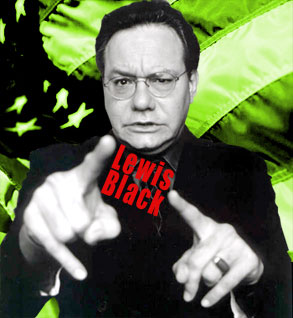
Watching Lewis Black perform live is like watching a schizophrenic having a mental breakdown — you’re not quite sure whether to laugh or run. Stuttering with Tourette’s-like constipation, his twitching fingers splayed to their contorted ends, the comedian is an aneurysm waiting to happen, an apoplectic fireball burning with cynicism, contempt and misanthropy. From weathermen to the White House, no individual or institution is exempt from his harangues.
Best known as the acid-tongued correspondent from Comedy Central’s “The Daily Show With Jon Stewart,” Black manages to stand out among other comics with his subversive, distinctly manic personality. He also has brains. He’s a playwright and a graduate of the Yale School of Drama. But unlike fellow ranter Dennis Miller, who uses smug references to show off his intellect, Black vents with the exasperation of an everyman. His cathartic routines — performed live, on television and on his CD, “The White Album” — are literate without being esoteric, didactic without being condescending.
I recently sat down with the grumpy gadfly prior to a sold-out show at the Gotham Comedy Club. If he’s irascible onstage, he was perfectly affable and generous off.
I’m going to give you a few names and I want you to tell me the first word that comes to mind:
Charlton Heston.
Syphilis.
George W. Bush.
Arrogant.
Oprah.
Oprah.
Hillary Clinton.
Bitch.
Monica Lewinsky.
The only Jewish girl I know who gave a blow job.
Being in an industry that promotes diplomacy, have there been any professional repercussions to being so honest?
Early on as a writer, I met [former segment producer] Frank Gannon, who was doing Letterman — a great guy. He said, “The good news is you’re really intelligent. The bad news is you’re really intelligent.” Then I found out that he was a speechwriter for Nixon and I said, “That’s like telling me you’ve worked with Himmler.” He laughed out loud, so I know he got it, but I also know it’s not the thing I should have said.
One of the reasons I didn’t do as well in the theater community is that I told people to go fuck themselves and I shouldn’t have. You have to learn that part of the job. You have to smile and nod your head and not say anything. I’ve never really been good at it. My advice to any young comic is — when in doubt, don’t drink.
You’re very critical of the state of American culture, especially when it comes to our political system. In your professional opinion, where in God’s name did we all go wrong?
Part of it is education. I really believe that the bottom line of the culture is education. They can talk about family values and all that crap all they want, but it’s a matter of how you transmit knowledge from one generation to the next, and we’re not doing it anymore. Now don’t tell me you can’t come up with an educational plan you can speak about passionately that we will understand.
These people out there are not stupid. I don’t know why there’s a certain gutlessness to both parties, why it’s so difficult to speak your mind. This society has grown tenfold and I don’t think the leadership has grown at all. If we’re gonna teach kids wood shop, I think leadership training skills should be taught since I don’t think these people know how to lead.
With so many worthy targets out there, who has given you the best material?
Dan Quayle — because he was so consistent. He was unbelievable. I had almost 50 minutes of material on him.
How do you think we ever got to a point where people like that could get into office?
The media has scared a lot of people out of the business. People don’t want to talk about their lives, the way they’re being exposed. Like in the case of [former Texas governor] Ann Richards, who I have a great amount of admiration for, she loses to George W. Bush ’cause she’s honest, so they pick her apart. Once you start becoming honest they pick the shit out of you — unless you’re Jesse Ventura, who’s very, very honest, but isn’t really saying anything.
If you were the emperor of Rome and could throw one person to the lions — who would it be?
It would’ve been Newt Gingrich, but at this point I’d have to say Trent Lott. He’s a moron.
When did you first realize you had the talent to make people laugh and get paid for it?
Basically after killing myself. Actually, I was shocked when I found out I could get paid for it, cause I always did this for fun. This is as much fun as being paid could be.
Did you initially get discovered, or did you have to go through the whole rigmarole of finding an agent?
Oh, Christ — it was a combination of it all. I ran the West Bank Cafe Downstairs Theatre Bar and opened every show that we did for eight years. That room really shaped me and then the folks at Catch a Rising Star saw me and got me on the road. Then from there, I’d stumble onto other work. I had an agent from the beginning, thanks to the writing, but even when I started going on the road it was hard to find someone who would book me. I was really on the road for like eight years … just really lonely.
So you’re a glutton for punishment?
I think anybody is who chooses to go into a profession where you learn by failure — unless you’re a natural. The real punishment is the business of it. It’s like a salmon going upstream — you hit the rock, you hit the rock and then finally you go by the rock, and you don’t really know why.
Even after all these years, do you ever fear tanking on stage?
Only if the situation is wrong — if I’m at a corporate event or in one of those idiotic Holiday Inn conference rooms. I once did a thing for Muscular Dystrophy in Amarillo, Texas, and I was literally 30 yards from the audience in a room that was probably 80 yards wide. Even when it was silent, it had two waterfalls going — so you know you’re gonna die. You just go up there and die.
Your expressive delivery style is very unique — did it come naturally to you?
Yeah, it was ultimately very natural. It would’ve been nice if I’d known it [laughs]. It’s what I was really like as a kid, the personality I had when I was angry. For me, I had this persona that was part of me and I brought it on stage only to a point. Once I took it to the next level, myself to the seventh power, then it really worked.
Here’s a Barbara Walters question. If Pfizer created a “happy pill” that could get rid of all that rage you project in your act, would you take it?
On weekends.
Traditionally, stand-up comedians often transition into television. If it meant watering down your persona, would you star in your own sitcom?
Well, if it was an interesting character. All of my training leads to the next step to be that. I was a playwright and I worked in theater and I’m a comic — all of that ends up being vaudeville and that’s what a sitcom is. There’s a point where you do this for a long time and you want to work with other people, so I’ve written stuff for myself and done all of that. I’ve been through this process. [Frustrated grunt.]
Why do you think Hollywood has taken so long to appreciate you as a commodity? Is it finding the right vehicle? The right talent?
I don’t know what it is. You got everybody and your mother saying, “How come you don’t have a sitcom yet?” And you think, “Well, I don’t know if it’s my agent, my manager, if it’s me.” The first time [I was commissioned to write a pilot], I would say that CBS got this script on Friday. By Monday morning, after having the script a weekend, CBS passed on the script. I don’t believe CBS ever read the script. Then a year and a half ago, NBC Productions hired me to do this thing and Warren Littlefield was fired by NBC — and that was the end of my sitcom. That has happened about every two years.
Do you ever get the sense that Hollywood execs are too shortsighted to see the bigger picture?
What I find astonishing is how many times it takes them to see certain people to get it. A lot of the people I’ve had to meet had to do none of the preparation that the professional within the business has to do. The person who’s standing in the spotlight has to do all this preparation and these people have to do nothing but learn how to go to a cocktail party. You know, reading would be nice. It’s unconscionable.
How has your stint on “The Daily Show” affected your career?
Huge. This [Gotham show] sold out and they’re already selling tickets for the next. It’s insane. I’d come out here on a night like this two years ago and there would be half the room filled.
Even with all the success you’ve had, are you still angry?
How can you not be? It’s funny because you just gotta be. I constantly feel like there’s a really great group of comics in the community not being given their due and certain comics within the community who are given their due for reasons that will always escape me.
But isn’t that just the nature of the beast?
It may be the nature of the beast, but the beast is wrong. At some point if you stick to your guns hopefully you change that. I mean, I was sitting here watching [Sam] Kinison, who’s an angry guy. Here’s Steven Wright, who’s a bright guy. Here’s Bill Hicks, who’s an angry guy. When I saw these guys, I felt like I was somewhat within the category of that. Then you go to take your turn and they go, “Well, you’re a little too edgy. You’re a little too intelligent.” Well, hello … it works!
Continue Reading
Close