Jaime J. Weinman

Why Spike ruined “Buffy the Vampire Slayer”

Like Fonzie before him, this too-cool thug in a leather jacket has diverted a good show from its original mission: To celebrate the uncool outcasts of the world.

  • more
    • All Share Services

Why Spike ruined

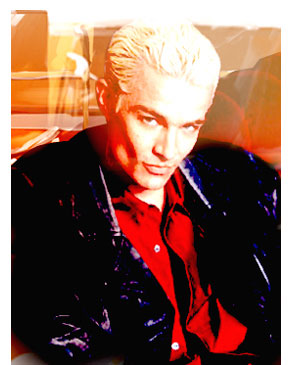
A once-good show becomes a bad one through the unexpected popularity of a posturing, vaguely thuggish minor character in a black leather jacket. In television, as in life, events tend to repeat themselves. First there was “Happy Days,” where a charming show about growing up in the ’50s was revamped to focus on the Fonz. And now there’s “Buffy the Vampire Slayer,” which has been all but destroyed by the Fonzie of our time: Spike.

As “Buffy” comes to an end, its fans are debating where to place the blame for the mediocrity of this season. Was it the introduction of a team of Slayers in Training, all of them so annoying that fans were happy to see some of them get killed? Was it the overemphasis on irrelevant new characters like Kennedy and Principal Wood? Was it the decision to build the season around a villain (the First Evil) who can’t touch anything or do anything at all except talk and talk and talk? Well, that’s part of it.

But the problems with this season can be traced to a moment at the very end of the last good episode, “Conversations With Dead People.” That’s the moment when Buffy found out that Spike, blond vampire, attempted rapist, and current possessor of a soul, had somehow been killing people despite his souled status. From that point on, the show has no longer been about Buffy and her friends, or Buffy and her mission, or anything that used to be interesting on this show. It’s been about Buffy and Spike. And that’s about all.

Look at the record. The next two episodes after “Conversations With Dead People” involved Buffy trying to find out why Spike was killing again, following which she spent two more episodes focusing her attention on freeing Spike from a dungeon. Since then, we’ve discovered that a new character (Principal Wood) has a vendetta against Spike, seen an entire episode devoted to filling out Spike’s back story, and sat through various other plot threads about Spike. Even when Spike isn’t on-screen, characters are talking about him.

Meanwhile, the characters who used to matter on this show — Willow, Xander and Giles, who with Buffy formed what is called the “core four” — are getting nothing storywise; Willow gets a token lesbian relationship, Xander gets his eye poked out, and Giles gets to look like a bad guy for wanting to kill Spike (which, on the contrary, made some of us love Giles even more). In the words of “Sep,” who recaps “Buffy” episodes for the famously snarky Web site Television Without Pity, “Watching episode after episode about Spike’s journey when Giles has become a prick and I don’t know a goddamn thing about what Willow or Xander are thinking, or even who they are anymore, and will likely never find out, breaks my heart.”

It would be less of a problem if Spike were getting brilliantly fascinating stories, but he isn’t, despite the potential inherent in the story of an evil creature trying to reform. At every turn, the “Buffy” staff has copped out on Spike’s story, whitewashing his past (a flashback in a recent episode shows that even when he was turned into a vampire, he wasn’t initially a vicious killer — something that contradicts all the previous vampire mythology on the show) and making no attempt to show that having a soul has changed him one way or the other. By the evidence of this season’s episodes, Spike is still a wisecracking punk who likes to hit women (he’s hit Buffy, Anya and Faith so far this year) and isolate Buffy from her friends, yet we’re still somehow supposed to sympathize with him, because … why? Because he got a soul in the hope that Buffy would forgive his attempt to rape her and sleep with him again. Except for a couple of throwaway lines, Spike has never been made to seek redemption for his crimes; he doesn’t even apologize to Principal Wood for having murdered his mother. The assumption appears to be that Spike doesn’t need to atone because having a soul makes him a different and better person. But the writers haven’t shown us that; all they’ve shown us is the same Fonzie figure from Seasons 5 and 6, only without the viciousness that made him moderately interesting.

And when they write a decent Spike scene, it gets cut. The second episode of this season, “Beneath You,” was originally supposed to end with a scene where Spike expresses guilt for his past crimes, admits that he got a soul for selfish reasons (he thought Buffy would love him if he had a soul), and arrives at the realization that having a soul hasn’t made him good enough for Buffy (“God hates me. You hate me. I hate myself more than ever”). But creator Joss Whedon rewrote this scene so that Spike talked mostly about the fact that Buffy “used” him for sex — just another attempt to create unearned sympathy for Spike and deemphasize his past role as a killer and sexual predator. And James Marsters, a good actor who has shown himself capable of the kind of underplaying this show used to thrive on, made matters worse by playing this scene as an over-the-top fit of lurching and moaning, like one of William Shatner’s lesser method moments on “Star Trek.” (The gratuitous shirtlessness just adds to the comparison.) Any interesting stories about a vampire with a soul have already been told on “Buffy” and “Angel”; with Spike, all we’ve been getting is a lot of half-naked posturing.

But it’s not just the overemphasis on Spike that’s the problem; it’s the way this emphasis has betrayed one of the most appealing themes of the show: that it’s OK to be uncool. “Buffy” began with a high school girl, formerly cool and popular, who discovers that she has a destiny that will prevent her from ever having a “normal” life. But she finds some comfort when she befriends people at the school who are social outcasts for other reasons: Willow, a shy computer geek; the loyal but socially awkward Xander; and Giles, head of a school library that none of the other students ever seem to visit. The bond between these four characters was the heart of the show for the first four seasons, more than anything else, even romance (there were many episodes where Buffy’s love interest, Angel, didn’t appear or was relegated to one or two token scenes). Every week, these characters proved what we’d all like to believe when we’re outcasts in high school: that the uncool kids, the ones no one takes seriously, are really the coolest and most heroic of all.

To make this clear, the monsters on the show were often portrayed as the twisted embodiment of high school coolness. In the pilot, Xander’s friend Jesse goes from “an excruciating loser” to an effortlessly cool bad boy after he is turned into a vampire. Another episode, “Reptile Boy,” made frat boys the villains. And Spike, when introduced in Season 2, was exactly the kind of smartass punk who makes high school a miserable place for geeks: Arrogant, cocky and contemptuous of anyone who wasn’t equally cool, he was a superficial, self-confident Fonzie type who deserved to get smacked down by our awkward heroes.

With the transformation of Spike into a lovable antihero, “Buffy” has stopped celebrating the uncool outcasts; instead, it celebrates the cool punk, the guy who would push the first-season Willow or Xander out of the way in the school halls. And it’s not just Spike. Willow’s new love interest, Kennedy, is a confident loudmouth with a privileged upbringing, who obnoxiously admires Willow not for her intelligence but for her power. Spike’s nemesis, Principal Wood, is described in one of the scripts as “The Coolest Principal Ever.” And Andrew, the show’s answer to “The Simpsons’” Comic Book Guy, is constantly mocked for his geekiness, because a show that was once on the side of geeks now portrays them as buffoons or villains. And whereas the early seasons usually showed the characters learning how to defeat monsters by researching them in Giles’ books, they now find everything they need on the Internet — a far cry from Giles’ wonderful first-season speech about the superiority of books over computers. It seems that on a show where an unrepentant mass murdering monster can be a hero, there’s no more room for a celebration of the power of book learning, or the nobility of uncool people.

Which brings us back to “Happy Days,” and the Fonz. Just as “Happy Days” went on for years with Fonzie even after Ron Howard left the show, there are rumors that the character of Spike may go on after the end of “Buffy” — perhaps moving to “Angel,” or perhaps to a spinoff. The character is popular; cool characters often are. But “Happy Days” was a better show in the first two years, when it was just about the uncool Richie Cunningham. And “Buffy” was a better show in the first four years, before Spike fell in love with Buffy, before Spike started taking his shirt off in every episode, and when the focus was on four uncool people and their quest to rid the world of … well, of characters like Spike.

Worst episode ever

"Simpsons" fanatics think the show's creators have betrayed America's most dysfunctional family. The writers think the fans should sign off the Net and get a life.

  • more
    • All Share Services

Worst episode ever

Milhouse: We gotta spread this stuff around. Let’s put it on the Internet!
Bart: No! We have to reach people whose opinions actually matter!

— From “The Simpsons” episode “Wild Barts Can’t Be Broken,” 1998

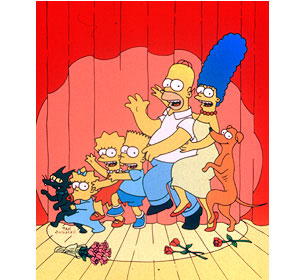
After 10 years, “The Simpsons” remains one of the most critically acclaimed shows on TV. You’ll find it on the “best” list of almost every TV critic, along with words of praise for staying irreverent and funny after all these years.

But if you turn to alt.tv.simpsons, the show’s Internet discussion group, it’s as if a different show is being talked about. New episodes are routinely panned and held up as evidence that “The Simpsons” has been vulgarized and cheapened. For example, the reviews for this season’s opening episode (the one with Mel Gibson) include phrases like “a weak offering of recycled themes,” “not many laughs” and, best of all, “I think Homer was hired as a script consultant for this episode.” (These reviews are available in capsule form in the indispensable Simpsons archive.)

The most interesting and articulate contributors to the group — the ones who can actually spell and punctuate — are the ones who argue most passionately that the show has, in the words of fan Ondre Lombard, “turned into a cold, cynical, anything-for-a-joke series with one-dimensional characters.” The harshest critics regularly open their missives with the tagline “Worst episode ever.”

Of course, all long-running shows get accused of having lost it, and nowhere more so than on Internet newsgroups. TV writers who read the newsgroups — and many of them do for the immediate feedback it provides — sometimes become frustrated with these dedicated but hyper-critical fans. For example, Larry David once said that he stopped reading “Seinfeld”-related posts when every new episode started being pointed to as a sign of the show’s decline.

The difference with “The Simpsons” is that the writers of the show have sometimes struck back — in interviews, and even on the show itself. The most obvious dig at the fans came in a scene in the episode that first aired Feb. 9, 1997. It began with the still-unnamed Comic Book Guy saying: “Last night’s ‘Itchy & Scratchy’ was, without a doubt, the worst episode ever. Rest assured that I was on the Internet within minutes, registering my disgust throughout the world.” “As a loyal viewer,” he added, “I feel they owe me.”

“What?” said Bart. “They’ve given you thousands of hours of entertainment for free. What could they possibly owe you? If anything, you owe them.”

The Comic Book Guy’s answer: “Worst episode ever.”

The scene was a hilarious, slightly cruel kiss-off from the writers to the Internet fans, one that pretty much ended any rapport that might have existed between one group and the other.

Back in 1993, writer Bill Oakley was sending friendly e-mail messages to selected “Simpsons” enthusiasts; by 1997, Oakley was telling Time Out magazine about Internet fans who “take [the show] too seriously to the point of absurdity.” And in 1998, producer Ian Maxtone-Graham, interviewed by the London Independent, referred to “the beetle-browed people on the Internet,” adding: “They see everything as part of a vast plan … That’s why they’re on the Internet and we’re writing the show.” (Some of the more bitter alt.tv.simpsons regulars have taken to calling him “Ian Haxtone-Graham” in retaliation.)

It’s hard not to be a little sympathetic to the writers on this. “The producers [of a show] need to pay attention to feedback from the viewers,” says TV programming consultant Marc Berman. “But they can’t agree with all of it.” Also, most of the feedback the “Simpsons” writers have been getting has, in fact, been positive: The ratings and the TV critics are both telling them that they’re doing a fine job. But for some of the Net fans, this success and acclaim is one of the problems with the show as it now stands; they feel it’s made the show’s creative team lazy and self-satisfied.

As alt.tv.simpsons regular Ben Collins wrote: “The staff believes its own hype. When TV Guide says ‘The Simpsons’ is better than ever … the producers run with it, and drag the show through the same rut it’s been in for two seasons.”

But why are these Internet reviewers so much tougher on the show than the professional critics? Well, what critics usually praise about “The Simpsons” is its irreverence toward everything crass and crazy in American culture, its harsh satire. The die-hard fans tend to be more interested in the characters as people than as vehicles for social criticism. While they enjoy the satire, above all they see “The Simpsons” as a character comedy, at its best when most compassionate toward the flawed-but-lovable Simpson family. Many of these fans cite the early “Lisa’s Substitute” — the Dustin Hoffman episode, and the most serious and poignant “Simpsons” episode of all — as a favorite.

It’s this element of compassion that fans find lacking in the recent flood of “wacky” episodes; to quote Lombard, in the last few seasons “the satire tends to forsake character realism. Stories these days don’t tend to deal with the … feelings of the characters.” Emotionally affecting episodes have been rare of late, as “The Simpsons” has placed more emphasis on cartoony action.

Almost every episode now seems to end with some sort of violent action climax. Already this season, Homer survived an assassination attempt by a horde of evil restaurant owners, the kids torched a pile of evil robot toys and the whole family was attacked by rampaging farm animals. Some fans point to these outlandish plots as evidence that creator Matt Groening’s original rule for the show — that “The Simpsons” would never do anything a real, non-cartoon family wouldn’t do — has been violated.

To the TV critics, what matters most is that the show is still taking on the big cultural targets; the fans are quicker to object when a joke, however nervy, gets in the way of the characterization — or worse, when characterization is violated for the sake of an easy joke. In the ninth-season episode “Bart Star,” Lisa showed up at football tryouts, expecting to stir up controversy and fight discrimination against women in sports. When she discovered that the team already had three female members, she lost interest and left; she didn’t care about football, just about taking up a new cause. It was a nice bit of self-parody, but many fans saw it as a betrayal of the character, an indication that the writers had misread Lisa’s personality, turning her from a sweet girl with a social conscience into a self-righteous, preachy troublemaker.

You could say that this kind of attitude is presumptuous for supposing that fans know more about the characters than the writers do. Certainly some of the writers have seen it that way; in one of the episode capsules, a longtime fan recalls getting a private e-mail from a “Simpsons” writer saying “that he cares more about Lisa than any ‘abject admirer of Lisa Simpson.’”

The fans could counter by pointing out that just because someone writes for a show doesn’t mean he’s necessarily in a position to understand what the show was originally like. In that notorious interview, Maxtone-Graham admitted that he had hardly ever watched “The Simpsons” before he was hired. The current executive producer, Mike Scully, didn’t join the show until the fifth season, when, in the opinion of some fans, its humor had already started to shift toward simple cartooniness, and Homer had started to dominate the show.

Which brings us to one of the most often-used phrases on alt.tv.simpsons, “Jerkass Homer.” This refers to a new characterization of Homer that has supposedly become prevalent in recent seasons, a Homer who is not simply dumb but disgusting and semi-sociopathic. This is the Homer who, in the season opener, showed Mel Gibson his wife’s wedding ring and said, “It’s a symbol of our marriage, signifying that I own her.” Fan Dale G. Abersold wrote, “This new Homer displays only three characteristics: lust, greed, and stupidity. Yes, [the] old Homer was lustful, he was greedy, he was dumb … but he was so much more. Can you imagine the current Homer thrust into the classic episodes of the first two seasons?”

Well, maybe you can, at that; despite the implication that Homer has become more boorish over the years, it’s hard to imagine a bigger jerkass than the Homer of the show’s first couple of seasons, the Homer who told Bart, “Always make fun of those different from you.” The difference, perhaps, is that the early Homer usually had to apologize for his behavior, learning how to be a better husband and father. (Even if he usually forgot these lessons by the time the next episode started.) As Homer began to replace Bart as the show’s great cultural icon, the writers seemed to become more indulgent toward his antics; follies he would once have learned a lesson from are now seen as kind of cute, by the writers and by the wider public that made Homer a TV hero of the ’90s.

You could argue, then, that the characters haven’t changed so much as the attitudes that inform the way the characters are written — that “The Simpsons” is different because the producers and the public expect different things of it. Or you could argue that nothing has changed at all, as Scully did in a recent interview: “You can sit down and watch an episode we did 10 years ago or one we did last year and the characters are still the same.”

But whatever you think, and whatever “The Simpsons” might become in the next couple of seasons, the alt.tv.simpsons regulars will keep writing, disappointed with what the show has become — still devoted to what it used to be.

Continue Reading Close