Janelle Brown

Bitter pills

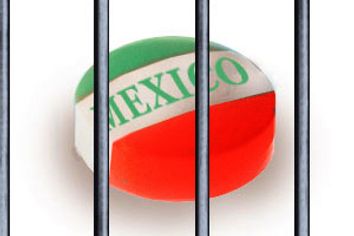
Thousands of Americans buy cheap prescription drugs in Mexico. Some end up in squalid south-of-the-border prisons.

Three years ago, Dawn Marie Wilson found herself in a cement cubby infested with cockroaches and maggots. It was a cell in a prison in Ensenada, Mexico, and it had no toilets, no showers, not even a bed: Wilson slept on the floor. Her biggest luxury was a bucket for washing, and the only way to get basic amenities like plates and forks, blankets or drinking water was to buy or beg for them. “It was disgusting,” she recalled, as she quietly sat, almost two years later, in the empty rec room of a federal prison in Dublin, California. “There was prostitution and drugs everywhere — heroin, crystal meth, marijuana. I’d be sitting at a table with someone shooting up next to me. I kept thinking it would be over at any minute. I thought, This can’t last.” But it did last. Wilson, a 49-year-old conference planner from San Diego, ultimately spent 21 months in jail in Ensenada, and another two months in a U.S. prison, for something she says she didn’t even realize was a crime: buying medicine from a pharmacy in Tijuana without a prescription from a Mexican doctor.

Wilson was one of the thousands of bargain-hunting Americans who pour across the border every day to buy pharmaceutical drugs — from Valium to Viagra, Oxycontin to Ortho Novum — at a fraction of the American price. Border pharmacies sold $800 million worth of drugs last year to Americans, according to Marv Shepherd, M.D., director of the Pharmacoeconomic Center at the College of Pharmacy at the University of Texas in Austin; the average age of the buyers was roughly 34 (about 15 percent were senior citizens). “It’s clear that there are more people coming across to buy drugs,” says Liza Davis, spokeswoman for the U.S. Consulate in Tijuana. “This is the busiest land border crossing in the world, and it’s easy. You just walk across and there are pharmacies right there.”

Few of these Americans have any idea that what they are doing is often illegal in Mexico; that may explain why in 2004, the number of Americans arrested for the crime nearly doubled, from 25 to 43 (in 2005, thanks in part to better publicity about the law, the number fell back to 26). Davis says the U.S. Consulate is unclear whether this spike in arrests happens because of a police crackdown, or simply as the result of the rising number of Americans crossing the border. But they are worried. Drug buyers who are stopped are in for a rough ride: time in a Mexican jail, hefty bribes to the police, and even, says one woman, a rape by the officer who took her into custody. “What a price to pay for doing something without even thinking!” says Wilson. “I’m a perfect example of the worst that can happen.”

- – - – - – - – - – - -

In Tijuana, 30 yards from the U.S.-Mexico border at San Diego, lies the tourist strip of Avenida Revolucion. Here, sandwiched between margarita bars catering to underage college students and the shops selling cheap sombreros, stand hundreds of pharmacies with names like Farmacia E-Z and Drug Depot. On the weekends, Americans of all ages cruise the streets to a blaring soundtrack of Mexican techno, examining hand-written signs that advertise brand-name drugs: Ritalin, Zoloft, Xanax, Meridia. Depending on the pharmacy, the drug and the customer’s talent for haggling, the cost can be 50 percent to 75 percent less than it would be in the States.

This zone of Tijuana pharmacies is where Wilson says she stopped two years ago before driving south down the coast to meet her fiancé, whose sailboat was in port in Puerto Escondido. She says she needed a three-month supply of Dilantin and phenobarbital, which she takes to control seizures she’s had since childhood. The pharmacist she visited didn’t ask to see a prescription, and drugs that would have cost her $210 back in the States cost her $30 instead.

After her errand in Tijuana, Wilson says her car broke down just outside Ensenada. The next morning, when she walked back to the mechanic at 6:30 a.m., she was stopped by the police. They rifled through her bag, found her pills and arrested her. The police confiscated Wilson’s credit cards, passport and $400 in cash; another $4,000 was charged to her credit card while she was sitting in jail.

The case quickly devolved into a matter of Wilson’s word versus the officers’. Mexican police records state that Wilson had 445 pills, including large quantities of the psychotropic drugs Valium, Xanax and Darvon, and that she readily admitted being a drug addict. Wilson says that’s nonsense. She says she had only her anti-seizure medications, a small amount of Valium her doctor had prescribed for anxiety, and a bottle of diabetes medicine she had brought with her from California to deliver to a friend in Mexico. Because American-style bail does not exist in Mexico, Wilson spent the next year and nine months in the crude Ensenada jail waiting for her case to wind through the court system. She had no translator for her trial, and her first attorney, whom she had hired through a friend, failed to even call Wilson’s doctor in the United States to confirm her prescriptions. She fired him, but by that point it was too late: She was sentenced to five years in Mexican prison for a crime that, in the United States, would have been punishable by a maximum of six months. When she heard her sentencing, “I was almost afraid to cry,” she says. “I was afraid I would reach that low point and not come back.”

Tijuana police say most Americans who are stopped for buying prescription drugs are let go after 72 hours, provided they have small quantities of drugs and can produce an American prescription for what they bought. Rogelio Guillen, the captain of the tourist division of the Tijuana police, says he primarily arrests traffickers buying thousands of dollars’ worth of drugs like Valium and Ritalin in order to take it back to the States and sell it at a profit. “Of all the people who come to Tijuana to buy drugs, only about 20 percent to 30 percent are coming to do legal transactions,” Guillen says. “We don’t have a problem with that kind of person.” But the U.S. Consulate tells a different story: Although arrests like Wilson’s are relatively rare, Americans buying prescription drugs for legitimate purposes are frequently stopped by corrupt police who demand a bribe instead. “A great many are the victims of a scam,” Davis explains. Typically, a pharmacy sells American customers medicine without a prescription, and then calls the police, sharing in the bribes that the police collect.

This, says Dana Conour, is exactly what happened to her. Conour, a 33-year-old resident of a small town in Iowa, crossed the border with her husband and 10-year-son to refill a prescription in October 2003. She was on an extended vacation in Southern California and running low on Ritalin, which her doctor had prescribed to control narcolepsy. California pharmacists wouldn’t fill her out-of-state prescription, and she’d heard that prescription drugs were easy to get across the border. She had even called the Tijuana tourist board to double-check, and they’d given her the green light. “I wasn’t naive — I knew you could get anything you wanted,” she says. “But I had no desire to do anything illegal. I wanted to get my medicine and get out.” Minutes after buying 60 Ritalin pills, the family was stopped by policemen, who ushered them into a police station just feet from the border, strip-searched them, and then demanded a $600 “fine” for having the Ritalin without a Mexican prescription — even though Conour had her American prescription with her.

While her husband and son went to the ATM with a police escort, Conour waited with the police captain, growing increasingly concerned about his aggressive behavior. He solicited her for sex; she refused. Then, she says, he pulled out his gun and raped her on the couch of his office. “I was in shock — I couldn’t believe that this was happening,” she says. “At that point, I wasn’t sure I was ever going to see my family again.” Her family returned with the bribe money just a few minutes later, and Conour didn’t tell her husband or the American authorities about her ordeal until they were safely back across the border. She’s returned to Mexico twice in order to prosecute the police captain, a process that required her to confront him face-to-face in a hearing. A year later, the police captain hasn’t been convicted, and Conour says her entire family is in counseling. “We were an outgoing family,” she says, “but that’s completely changed. We don’t travel anymore.”

- – - – - – - – - – - -

The U.S. Consulate and the city of Tijuana recognize they have a problem on their hands. In addition to the crackdown on tourists, the Tijuana police arrested 35 pharmacists in 2004 for selling to Americans without a prescription, according to Guillen. The U.S. Consulate recently created a Web site and tourist handbook, available in stores on Avenida Revolucion, which explain that it’s illegal to buy medication without a Mexican prescription. But Conour says that the dangers to Americans still aren’t clear. “If I had known there was this major problem, I never would have considered going across the border,” she says.

Even if these efforts make Americans more aware of the dangers they face when they buy drugs in Mexico, it may not do much to ease traffic on Avenida Revolucion. Many Americans can’t afford not to take the risk, says Dee Mahan, deputy director of health policy at the consumer advocate group Families USA in Washington, D.C. “It’s virtually impossible for most people to keep up [with rising drug prices],” Mahan says. “People are paying more and more, even people who have insurance.” Meanwhile, drugs are radically cheaper in Mexico, thanks to a weak peso and a lower standard of living. Not only does the government there mandate low prices to fit the income levels of the Mexican population, but many drugs sold by U.S. companies are also manufactured in Mexico, reducing distribution costs. Although the cost of drugs has been a hot-button issue in the past two presidential elections, spurring President Bush to implement the new Medicare Plan D, prices continue to rise at three to four times the rate of inflation every year. And border traffic continues unchecked.

As for Dawn Marie Wilson, she was transferred to jail in California in October 2004, as part of a long-standing prisoner-transfer program between the United States and Mexico. After two months in federal prison, she was released for time served. She had her scars — including a mangled finger, which was broken playing softball in prison and never treated by a doctor — and deep worry lines around her blue eyes. But she’s already been back to the prison in Mexico twice, bringing sewing machines as gifts for the inmates. And she does what she can to publicize the problem; during her imprisonment, Wilson and her boyfriend kept a Web page detailing their troubles and since her release she has been on CNN and other TV news channels discussing the issue. “Whatever I can do to spread the word that this can be a problem … would give meaning to the whole ordeal,” says Wilson. “I’m not the first person it’s happened to, and I won’t be the last.”

Your glow stick could land you in jail

The latest incarnation of the RAVE Act punishes drug users and bystanders alike -- and tramples civil liberties.

Last Thursday, the House and Senate almost unanimously passed the National AMBER Alert Network Act of 2003, a popular bill that will soon create a nationwide kidnapping alert system. Coming in the wake of a year of high-profile child abductions — from Elizabeth Smart (whose parents supported the bill) to Samantha Runnion — the bill was a no-brainer, destined to pass quickly and smoothly through Congress.

Surely Sen. Joe Biden (D-Del.) knew this, which explains why he cannily sneaked his own, completely unrelated legislation into the AMBER Act just two days before the vote. Piggybacked onto the act was the Illicit Drug Anti-Proliferation Act, a thinly veiled rewrite of legislation that was controversial in 2002 and failed to make it to a vote on the Senate floor. Now, club owners and partyers alike are being subjected to a loosely worded and heavy-handed law that authorities will be able to indiscriminately use to shut down music events at any time they please, assuming they find evidence of drug use. Thanks to Biden’s surreptitious efforts, a few glow sticks and a customer or two on Ecstasy could be all it takes to throw a party promoter in jail for 20 years.

The passing of the Illicit Drug Anti-Proliferation Act was sudden but not entirely out of the blue. Last year, the Illicit Drug Anti-Proliferation Act was known as the RAVE Act (the leadenly acronymed “Reducing Americans’ Vulnerability to Ecstasy Act”), a piece of legislation designed by Biden in early 2002 to put rave promoters out of business. An expansion of the crack-house statute of 1986 — which made crack-den proprietors liable for what took place in their homes, even if they didn’t deal drugs themselves — the RAVE Act threatened those who “knowingly and intentionally rent, lease, profit from, or make available for use, with or without compensation, [a] place for the purpose of unlawfully manufacturing, storing, distributing, or using a controlled substance” with 20 years in jail and $250,000 in fines.

In English, this meant that anyone who intentionally let people do drugs at their events could be held liable. It also expanded the crack-house statute in two significant ways: Now the law could be applied to one-night events — concerts, raves, parties, festivals — as well as permanent locales like nightclubs, and it added civil penalties for violations, lowering the burden of proof from “beyond reasonable doubt” to a “preponderance of evidence.”

So what “preponderance of evidence” would authorities use to determine that the people who threw these parties “knowingly” let their customers and guests use drugs? The RAVE Act offered a handy list of “findings” that authorities could use as proof — including the presence of “overpriced bottles of water” and chill rooms, and the sale of glow sticks, massage oils and pacifiers (all of which are sometimes used to enhance the effects of Ecstasy). Never mind that all of the above can also be found at everything from ‘N Sync concerts to an Earth Day festival; in the eyes of Biden and other like-minded officials and law enforcement officers (of which there are many), these are sinister drug paraphernalia that can only point to one thing.

Civil liberties groups and grass-roots activists from the electronic music community went on the defense. Infuriated ravers flooded Congress with letters, complaining that they were being singled out because of their lifestyle choices. The ACLU and the reform-minded Drug Policy Alliance convinced co-sponsoring Sens. Patrick Leahy, D-Vt., and Dick Durbin, D-Ill., that the vaguely written law could be used to limit freedom of expression and that businesses would unconstitutionally be held liable for their customers’ actions. The two senators withdrew their support, and the RAVE Act finally died in committee last fall.

But Biden was not deterred, and he reintroduced the bill in early 2003. This time, in order to nominally appease detractors, he changed the name of his bill to the less inflammatory “Illicit Drug Anti-Proliferation Act” and struck the “findings” section of the legislation. Then he swiftly tacked it on to the AMBER Act, where, without any kind of hearing and before the ACLU and grass-roots organizations could raise a stink, it finally passed.

The bill’s opponents worry that the new law (which will probably be signed by President Bush in the next few weeks) will effectively quash the electronic music community. Most ravers don’t object to the targeting of unprincipled rave promoters who do sell drugs to kids, but the law is so loosely worded that it could be used against anyone who throws parties that are unpopular with local authorities. After all, according to the new law, you don’t actually need to be directly involved in providing drugs to customers to be found guilty; all you have to do is knowingly allow drug use to take place.

The police are no doubt delighted to have a new weapon to use in their skirmishes with clubs and late-night revelers (a feud that goes all the way back to the days of Prohibition). Do the local authorities have issues with your nightclub or party? All they would need to do is find a few drug users at your event and “prove” that you endorsed this activity by pointing at, say, your overpriced bottled water or the ambulances that you keep on standby in case of emergencies (a common practice at concerts and nightclubs alike), and they could shut you down, throw you in jail, and empty your bank account.

Biden argues that this will never happen. “The purpose of my legislation is not to prosecute legitimate law-abiding managers of stadiums, arenas, performing arts centers, licensed beverage facilities and other venues because of incidental drug use at their events,” he wrote when he introduced the Illicit Drug Anti-Proliferation Act. “My bill would help in the prosecution of rogue promoters who not only know that there is drug use at their event but also hold the event for the purpose of illegal drug use or distribution.”

Unfortunately, precedents show otherwise. Biden’s bill — even with the findings removed — formalizes what has been taking place in drug-enforcement circles for several years: Since 2000, authorities around the country have moved to shut down some of the nation’s most popular dance parties, using the crack-house statue as a bludgeon and those glow sticks and chill rooms as their evidence. In many cities, such as San Diego and Fort Lauderdale, the police have even formed “Rave Task Forces” — and study DEA-provided fact sheets that detail drug paraphernalia (sports drinks! lollipops! eye drops!) — to shut down electronic music events and jail their promoters.

In New Orleans, for example, the promoters of one of the city’s most popular dance clubs, Freebass, were charged with allowing drug use to take place at their events, despite an utter lack of evidence that they were in any way involved with or aware of drug sales. The promoters plea-bargained to avoid a costly lawsuit and ended up signing an injunction that forbade the presence of glow sticks, pacifiers, massage tables and chill rooms at any future parties (as if these were somehow to blame for the drug problem). And the Department of Alcohol and Beverage Control last week moved to shut down Ten 15 Folsom, one of the largest and most popular nightclubs in San Francisco, and accused the owners of permitting drug use to take place there. Once again, investigators pointed at the presence of glow sticks, as well as emergency medical technicians (which, ironically, Ten 15 had begun providing, by court order, after several overdoses by customers) as evidence that the club owners endorsed drug use.

The backward logic of this thinking punishes club owners and rave promoters for trying to keep their customers safe. It is inevitable that some revelers at just about any kind of musical event — whether an Avril Lavigne concert or a techno dance club — are going to bring and consume drugs, no matter how diligently you search their pockets or how often you eject offenders. Club owners and party promoters are aware of this (who isn’t?) and often do everything they can to both limit this activity and prevent tragedies among those who pop pills anyway. It’s quite possible that the Illicit Drug Anti-Proliferation Act will force panicky promoters to reconsider providing ambulances or EMTs, lest those be used as “evidence” against them. Already, many parties have stopped harm-reduction groups like DanceSafe from coming to their events to pass out safety literature or anonymously test Ecstasy pills to ensure that they aren’t more lethal concoctions.

Once the president signs the bill, promoters may consider the risks and never throw parties at all. Others will simply move their parties underground to illegal locations (abandoned warehouses, empty buildings, remote fields) where they are less likely to be found by authorities but more likely to be providing an unsafe setting for their customers.

The law isn’t limited to electronic music events, either. Civil liberties experts worry that it could be used as a tool of bigotry to shut down hip-hop or gay-circuit parties. In a worst-case scenario, the DEA could even bust you for a private barbecue in your home where friends light up a bong: After all, the new law covers private residences, too. That may be unlikely, but the DEA is no stranger to badly conceived drug raids.

No one is arguing that drug use doesn’t take place at raves and nightclubs and concerts, that kids don’t sometimes use glow sticks or pacifiers to enhance their high, or that drugs aren’t harmful — occasionally lethal — for kids. But in its rush to stamp out America’s current drug demon, Ecstasy, this sweeping and illogical legislation instead violates basic civil liberties and labels entire communities as the enemy.

All these concerns may very well have come out during public debate on the law — but, of course, that never happened. Immediately after the AMBER Alert was passed, Sen. Leahy issued a press release complaining about the unrelated legislation that was piggybacked on the bill, singling out the Illicit Drug Anti-Proliferation Act as one of the worst offenders. “Business owners have come to Congress and told us there are only so many steps they can take to prevent any of the thousands of people who may attend a concert or a rave from using drugs, and they are worried about being held personally accountable for the illegal acts of others,” he wrote. “Those concerns may well be overstated, but they deserve a fuller hearing … I think we would have been well-served by making a greater effort to find out.”

Too late. Instead, yet another badly conceived piece of drug legislation, capriciously taking aim at the enemy du jour, was rammed through the system before more rational voices could discuss it. The vote took a matter of minutes and no thought whatsoever; the repercussions of the law will be felt for years.

This story has been corrected since it was first published.

Continue Reading Close

Over my dead body

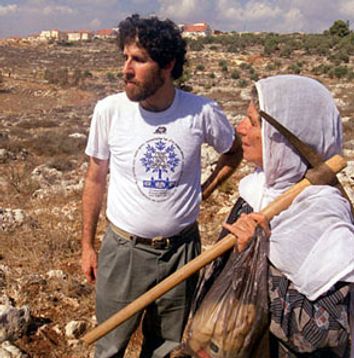
Activists are flocking to the West Bank to serve as human shields, protecting Palestinians and protesting the Israeli occupation. Are they part of the solution -- or part of the problem?

If you ask Matt Horton what he did with his summer vacation, be prepared to set aside a good part of the afternoon for his answer. Sitting on a futon couch in his apartment in Pasadena, Calif., with incense balanced carefully on a hookah and Arab singers playing on the stereo, the dreadlocked and wispily goateed 23-year-old college student launches into a two-hour speech denouncing Israeli treatment of Palestinians, the importance of nonviolent resistance, and the duty of American activists to help out their Middle Eastern brethren.

Last summer, Horton spent two months in the West Bank working as a human shield. His tasks: placing his body between Israeli soldiers and Palestinian civilians, escorting medical supplies to hospitals, occupying Palestinian homes that were due to be bulldozed, and generally trying to use his presence as a white American to protect Palestinians from what he considers Israeli brutality.

Horton had to enter Israel under false pretenses, pretending he was a backpacker going to party at the beaches. Once he got past suspicious immigration officers, he went straight to a training session with pro-Palestinian activists in Tel Aviv. There, he role-played interactions with Israeli soldiers, learned first aid and received useful military tidbits: how to tell the difference between live fire and rubber bullets, for example, or what to do if a smoke bomb goes off next to you. And then, with a group of two dozen other activists, he headed for the West Bank city of Hebron to spend two months on the front lines of the Israeli/Palestinian conflict.

Today, Horton speaks with casual aplomb about being shot at by Israeli soldiers. “You don’t know what Israeli soldiers are going to do; they are really brutal. They’ll just come into a neighborhood and start shooting, unannounced,” Horton explains. “It is shocking, and really loud. You have to take a deep breath and compose yourself. The training helps, and knowing that you are there as observers and so you do have certain privileges — that helps too. But while other people run away, you gotta hold your position out in the open and hold your hands up.”

Horton was one of nearly 2,000 activists who have gone to the occupied territories in the last year to work as human shields under the auspices of the International Solidarity Movement (ISM), a coalition of Palestinians and so-called “internationals” who fervently believe the Palestinians are being wronged by the Israelis.

The human shield movement has become increasingly popular with today’s young activists. Indeed, the movement is branching out: Many activists are planning to go to Iraq, hoping their presence will help prevent the U.S. from attacking.

“I think human shield work is the wave of the future. This is the new way to do activism,” says Mark Levine, assistant professor of modern Middle East history, culture and Islamic studies at UC-Irvine. “It will take several years for there to be an emerging paradigm for where and when to do it, but it is definitely becoming a much more powerful force, because all other directions are becoming hopeless and futile.”

The human shields activists in the Middle East have emphatically chosen sides in the most bitterly divisive foreign policy issue in America today. They believe that Israel’s presence and tactics in the occupied territories are morally unacceptable. Their critics regard them as bleeding hearts, or worse, who are defending terrorists and (literally) standing in the way of Israel’s legitimate defense needs. In April 2002, Jay Nordlinger, managing editor of the conservative National Review, denounced the human shields activists, writing that they “aren’t ‘peace activists’: They’re supporters of the Palestinian war on Israel, who want the war to succeed.”

Not surprisingly, the Israeli government is also strongly opposed to the movement, which it regards as biased and playing into the hands of Israel’s enemies. Israeli Embassy spokesman Mark Regev calls the human shields “misguided,” adding that “the ISM are so one-sided they are almost mouthpieces for Arafat’s propaganda.” Israel has cracked down on obvious activists, refusing to allow them to enter the country.

The Israeli government denies that Israeli troops and settlers are unnecessarily brutalizing innocent Palestinians, arguing that Israel’s harsh tactics in the West Bank and Gaza — including blanket closures, checkpoints, and military actions — are necessary security measures and insisting the Israeli Defense Forces (IDF) go to extraordinary lengths to spare civilians. Regev says, “If [civilians are targeted] it’s against our policy, it’s regrettable. We make every effort to hit the combatants; the civilians are not our enemies.”

Regev also criticizes the activists for not showing as much concern about Israeli lives as Palestinian ones. “From an Israeli point of view, it would be nice if they would give human shields to Israelis too. These are innocent people who are being slaughtered. I think anyone who’s looking at the Palestinian conflict in a moral way, it’s very clear there is one side that deliberately targets innocent civilians, makes no distinction between combatants and noncombatants, and another that makes distinctions.”

The activists retort that such answers ignore the basic political reality: Israel is an illegal occupying power, which undercuts its claims to be acting in legitimate self-defense when it operates outside its pre-’67 borders. (Israel captured the occupied territories, comprising the West Bank, the Gaza Strip and the Golan Heights, from Jordan, Egypt and Syria in the 1967 war.) They reject Israel’s claims that it exercises special care not to harm civilians as absurd on their face: In their view, the very nature of the Israeli military presence in the occupied territories relegates Palestinians to a wretched life. Israeli troops, they charge, routinely engage in acts that have nothing to do with self-defense and everything to do with brutalizing and humiliating Palestinians.

International human rights groups such as Amnesty International and Human Rights Watch, as well as the Israeli human rights organization B’tselem and respected Israeli journalists such as Amira Hass, support the activists’ claims, finding that the IDF has engaged in persistent human rights violations in the West Bank and the Gaza Strip, including collective punishment, assassinations, destruction of homes, indiscriminate fire directed at civilian targets, beatings, detainment of medical personnel, unjustified restrictions on movement, and other such practices. International bodies, including the United Nations, have also warned of a critical deterioration in basic standards of living in the occupied territories: Many Palestinian children are now suffering from malnutrition, sick people are often unable to get to a doctor, and education has been severely affected.

Israel has acknowledged engaging in some of these practices, including collective punishment and so-called targeted assassinations, but justified them as necessary to fight Palestinian terror. Polls have shown that a majority of Israelis are prepared to close down the settlements and give most of the occupied territories back to the Palestinians, if Israel’s security needs are met. However, the outbreak of the Al-Aqsa intifada in September 2000, following the collapse of the Barak-Clinton-Arafat peace talks, has led most Israelis to be severely skeptical about Palestinian intentions — which explains their support for hard-line Prime Minister Ariel Sharon. Many if not most Israelis now fear that the Palestinians want not only the occupied territories, but Israel proper — that, in effect, they want to re-fight not just the war of ’67, but the war of ’48, when the state of Israel came into being. The rash of suicide bombings, many inside the so-called “Green Line” that denotes the ’67 borders, has deepened this existential fear.

Human rights groups have also harshly criticized Palestinian suicide bombers, and some of the human shields activists have joined them. But other, more radical activists are less willing to condemn any tactics used by the Palestinians. Asked by e-mail whether he thought suicide bombing was a legitimate military tactic, Matt Horton took a softer line than Palestinian leader Yasser Arafat, who has publicly condemned the practice as immoral and counterproductive. “It is not my place to dictate the tactics of struggle to the Palestinian people,” Horton replied. “My place is to discuss the Israeli brutality and violence because in the end, I do not fund Palestinian fighters with my tax dollars, I fund the Israeli military, who received over 4 billion dollars in direct military aid from the United States. The blood of the Palestinians is on my hands, and this is where my responsibility lies.”

Human shield work is all about privilege: the privilege of being white or American, and by virtue of that privileged identity being a liability for the aggressors whom they encounter. For the volunteer, being a shield means giving up some of that privilege and extending it to others less fortunate. There’s a long tradition of idealistic middle-class kids making common cause with the downtrodden. But in this case, that choice carries extraordinarily high risks — which for many makes it even more attractive.

Most people who do human shield work prefer not to use the phrase “human shield” at all. They prefer vaguer terms, calling what they do “direct action,” “non-violent protest” or “solidarity and communication.” “Human shield” sounds distastefully passive and limited to them, as if all they do is put their bodies in front of a bullet. Activists are quick to tell you that human shield work encompasses a wide variety of activities, from escorting ambulances to participating in protests. Still, the basic premise of human shield work justifies the expression: The underlying rationale is that no one cares if a Palestinian dies, but if an American (or Canadian, or Brit, or Italian) is shot it will cause an uproar. The very presence of human shields can ward off bullets and draw the world’s attention. And if one of these high-profile activists dies, the world’s attention will be drawn to the situation.

As 26-year-old Huwaida Arraf, a Palestinian-American activist and one of the founders of ISM, explains, “If you have internationals in a crowd, soldiers won’t fire live ammunition in fear of killing a foreign civilian. Unfortunately, Palestinians are just numbers to people, and Israel isn’t held accountable for killing them. But killing a foreigner is a P.R. disaster.”

ISM sprang into being in early 2001 as the violence of the second intifada began to escalate. The group was the brainchild of a group of Palestinian activists who hoped to better the lives of civilians by working with the international activist community. Every few months, the idea went, a new delegation of peace activists would fly in to participate in “civil disobedience” and “direct action,” which they would then report about in the media at home. Such early “actions” included the activist occupation of the West Bank town of Beit Jala, where Israeli soldiers attempting to suppress Palestinian gunmen were shelling homes.

ISM had planned similar nonviolent civil disobedience throughout 2002 — “freedom rides” through Israeli checkpoints, rebuilding houses that had been bulldozed — but in April 2002, their plans changed. Eighty internationals, from Europe, Canada, Asia and the United States, converged in Israel the day after the Jewish state responded to a bloody Palestinian suicide bombing by launching a major military offensive in the West Bank. The ISM delegation quickly decided that there was a greater need to simply safeguard Palestinian lives.

“Human shield work was all we could do; it was too dangerous to do anything else,” says Robert Lipton, a 43-year-old activist who participated in the delegation. “We decided to split up into different refugee camps to serve as human shields and provide escort services for ambulances which were being targeted by Israelis and shot at.” (Israel denies that it has targeted ambulances, except in cases when militants have concealed weapons in them. The Israeli human rights group B’tselem asserts that the IDF has fired on ambulances without cause; human rights organizations and news organizations have reported that Israeli troops have prevented ambulances from reaching wounded victims, at times resulting in deaths.)

One ISM activist, a young American Jew named Adam Shapiro (he is married to founder Huwaida Arraf) escorted an ambulance straight into Yasser Arafat’s compound in Ramallah. Marooned there as the Israeli army opened fire on the buildings, he managed to have breakfast with the Palestinian leader, who welcomed his presence.

Shapiro’s story, and a subsequent uproar over six other international ISM delegates who were accidentally shot while participating in a march, became front-page news back home. Within weeks, the freshly trained ISM activists were returning home to the United States to propagandize in the press, give lectures in their communities, and mobilize more volunteers. By the time summer rolled around, hundreds of pro-Palestinian activists were emptying their bank accounts, booking flights, and heading out to Israel with visions of saving lives.

- – - – - – - – - – - -

Although it has been refined and vigorously promoted by the ISM activists, human shield work is not a new concept. Most human shield workers cite as their inspiration the Freedom Summer of 1964, when mostly white students flocked to the Southern states to help endangered NAACP activists register black voters. (In fact, ISM’s original “civil disobedience” plans had included 54 days of activism this July and August that organizers also had dubbed “Freedom Summer”). Others look to Latin America in the 1980s, when young people went to Nicaragua to protect the locals against the Contras during the cotton harvest. (Many activists went to the West Bank this October to protect Palestinians and their vital olive groves from Israeli settlers who were harassing them and destroying trees; one Palestinian farmer was killed by a settler.)

Other ISM activists prefer to compare their current work with Palestinians to those Americans who flew to Spain in the 1930s to fight in the civil war against the regime of Gen. Francisco Franco. The Abraham Lincoln Brigade that they formed has acquired the status of a romantic myth. As Robert Lipton puts it, “If we could do this, it would be like us going to the Spanish revolution to help out — but without the guns. It does capture people’s imaginations.”

One person whose imagination was captivated was Harmony Goldberg, a 27-year-old political activist and nonprofit worker, who had studied civil rights battles during her years at UC-Berkeley and longed for a similar opportunity to “use my privilege to help in a struggle.” Goldberg, who like a quarter of human shields activists is Jewish, had participated in marches and demonstrations, but felt helpless to make any real difference stateside.

“Things were getting so serious there and I was coming up against the barrier of how hard it is to directly impact what’s going on in Israel and Palestine from the U.S.; it’s not where things are happening,” she says. When she learned that ISM was recruiting activists to go to the occupied territories, she jumped at the opportunity.

Goldberg raised money from community members in order to afford the $2,000 bill for a three-week trip. She spent time in Ramallah, where she joined local Palestinians in a march to a building where the Israeli army kept its tanks, threw red paint on the vehicles to symbolize blood, and wrote “murderer” on police cars. She moved into the homes of the families of suicide bombers, whose houses, in accordance with Israeli policy, were slated for demolition.

“Human shield work is both a way to buffer the Palestinians and just be with them during their day-to-day lives,” she explains. “A lot of Palestinian resistance is just about trying to survive: staying in their houses, breaking curfews to go to markets.”

In fact, Shapiro’s breakfast with Arafat was something of a fluke. Volunteers mostly spend their days participating in mundane activities — sitting in houses, riding in ambulances, joining in Palestinian-organized marches. They join the Palestinians in their everyday activities, hoping their presence will keep them safe. Rarely do volunteers have opportunities to thrust their bodies between the Israeli army’s guns and Palestinian civilians.

If it did come to that moment, though, many ISM volunteers say that they would die for their cause. “No one comes to Palestine and says ‘I’m ready to risk my life now,’ but they want to come and see,” says Arraf. “But they get there and we give them training: We don’t tell anyone to expect to die, we don’t want anyone to get hurt, and we’ve been fortunate that we’ve had no deaths so far. Then people make the decision that they are willing to get beaten down and step in between an Israeli soldier and a Palestinian, to protect innocent civilians.”

Jordan Flaherty, a 29-year-old ISM volunteer, says that the possibility of death is ever present. “I’ve definitely had guns pointed at my face several times by soldiers, I’ve been shot at many times,” he says. “One of the earliest times was when I first arrived in a refugee camp in March, and the main [Jewish] settlement was shooting into the camp from a sniper tower. The week before, they shot and killed an 8-year-old girl; and when we got there they shot at us, too. Bullets landed right by me.”

Matt Horton shrugs off the danger. “A lot of people die here, in this city, every day, so I wasn’t really worried about that. What I was worried about was the people there getting killed, and if I could help de-escalate that in any way, I owed them.”

Even as bullets are fired in their general direction, many volunteers speak of feeling a curious sense of safety because of their identity. As Goldberg puts it, “In a way I felt safer doing actions there than in the United States, because the starkness of the privilege was so extreme.”

Many activists never make it to the occupied territories. For some, it’s simply a lack of money or time; others make it to Israel, only to be turned away by the Israeli government, which has a policy of not admitting obvious activists. People are now being stopped and shipped back to the States simply because of appearance. “They’ve stopped letting anyone who even had long hair, who looked like a hippie peace activist,” says Levine, the UC-Irvine professor. As a result, the need for volunteers is always greater than the number of available activists; ISM has to take whatever bodies it can get. And without extensive screening, the drama of human shield work can draw a mixed bag of volunteers.

“There’s a mentality of ‘I’m a star,’ and a lot of egotism: ‘I am the greatest person in the world because I am coming to help these poor people,’” says Horton. “Then there are the people going, like, ‘We are going to make the revolution.’ People who really endanger other people’s safety because they aren’t committed to working in consensus and listening to the community.”

Lipton says the work attracts many people he calls “danger freaks.” Some, he says, have “this idea that ‘We’re here, let me at them. I’m going to lie down in front of the tanks, the soldiers.’ They wanted to essentially be like nonviolent soldiers: They are suited up and ready for battle.”

Drawn by both compassion and the adrenaline rush of a combat zone, human shields activists evince a curious mix of idealism and self-effacement — and sometimes a willingness to see reality through one lens that can be interpreted either as reflecting naiveté or ideological blinders.

During the Israeli siege of the Church of the Nativity in Bethlehem last spring, for example, an activist who had managed to enter the church told Salon that there were no Palestinian militants in the church. Kristen Schurr, who was associated with the New York-based group Direct Action for Justice in Palestine, told Salon by phone that “there are no [militant] Palestinians in here.”

Schurr was wrong: It is undisputed that among the Palestinians who had taken refuge in the church were a number of militants, including 13 on Israel’s most-wanted list. (Negotiations resulted in their being sent into exile.) Schurr’s statement, and some activists’ refusals to condemn Palestinian terrorism, provide grist for the mill of critics who regard them as hypocritical and biased. Such critics could point out that the activists are outraged by the demolition of Palestinian houses, but have very little to say about the fact that the former inhabitants of those houses might have blown up Israeli children.

But in the spectrum of activists, some are more moderate, more prepared to condemn violence on both sides and engage in dialogue with their adversaries. In a journal entry published on the International Solidarity Movement Web site, for example, an American Jewish woman named Louisa Solomon describes a conversation with an Israeli soldier who told her he hated serving in the occupied territories and supported those soldiers who have refused to serve there (the so-called “refuseniks”) but was afraid to refuse.

“He also argued about Palestinian violence against Israelis, but was able to have a decent conversation about it until he was sent to ID people somewhere else,” Solomon writes. “The real issue for someone like that is about not understanding power relations. I mean, that’s the issue for so many people that equate Palestinian and Israeli violence. I said to him, look, do you remember Warsaw? and he said yes, so I said, we made Molotov cocktails, we threw bombs, because we were in ghettos, being killed, what choice did we have? and so he listened.

“I find that rather than calling soldiers Nazis (listen up activists who think that’s a good tactic), it is effective to address power issues from the other side, trying to get them to remember their (our) history of resistance. Trying to get them to realize what it is to be forced to use violence because the other side is OCCUPYING with tanks, and military/financial support from our very own USA. It is still possible to condemn targeting the Hebrew University, for example, or discos, but not have those incidents obfuscate the entire history of (imperialist, colonial) domination.”

Perhaps from fear of being stereotyped as fire-breathing young radicals, ISM leaders point out that their volunteers range from Israelis of high school age to 75-year-old grandmothers; from “young, anti-WTO types” to conservative Republicans. But it is an undeniably youthful movement: Roughly a third to one-half of the volunteers are in their 20s, says Arraf. Activists are present in the territories year round, but they are particularly visible during the summer, when college kids use their school vacation to work with the ISM.

Still, despite the smattering of danger rangers, egotists and revolutionaries, most ISM volunteers are more traditional liberal-to-radical peace activists; the kind of seasoned organizers you’d find running nonprofits or organizing demonstrations back in the States. In fact, many volunteers, like Harmony Goldberg, say that their interest in human shield work sprang from march fatigue.

At a deeper level, many activists are driven by a sense of personal responsibility: They feel a duty to help rectify a situation that they believe their government, as Israel’s staunchest supporter in the world, has helped create and perpetuate. As Matt Horton puts it, “I feel like I owe the people there a lot as a citizen of the United States. The U.S. basically enables what’s happening to the Palestinians to happen.”

Volunteers who come back from the occupied territories express a sense of wonder at being able to walk through the streets without fear during curfew, while the locals cower inside. “Your life is more important than theirs, but why? It’s a conflict sometimes, but one you have to use,” says Arraf. “It’s surreal to walk in a big city without a single soul in the street, with people looking at you from their windows frightened to come outside. And you’re not, only because the powers that be consider your lives more important than theirs. There’s a sense of security.”

For high-minded young progressives like Horton, even identifying as an American is problematic. Horton, the child of a law professor and a corporate attorney who had a privileged private-school upbringing in San Diego, has long refused to think of himself as either “white” or “American.” “Whiteness and white identity is basically a union of various light-skinned people from Europe to suppress and attack nonwhite people. So I don’t consider myself white, though the world system of oppression and dominance does consider me white,” he declaims. “But now the situation for Palestinians is so bad that it doesn’t matter, these stupid abstract ideas; if you can do anything to help people live it doesn’t matter whether you’re using white privilege or not.”

It’s difficult to measure the effectiveness of human shield work, because its success is defined by a negative — events that didn’t happen, shots that weren’t fired, people who weren’t killed. Most volunteers can point only to small victories: An ambulance getting through a checkpoint faster and perhaps saving a life. A local who was able to go to the market for a loaf of bread during curfew hours without being shot at. A house that wasn’t demolished while they occupied it. As Jordan Flaherty puts it, “We can’t say, ‘Tonight the soldiers didn’t come because of us,’ but we can say that soldiers have never come and demolished homes while we were there.”

“Often the soldiers were confused by us,” says Horton. “A lot of times they would stop doing what they were doing for a little while because we confused the hell out of them, they didn’t expect to see us, or know what we were going to do; and they are under orders not to kill internationals. They would check our passports and talk to us, and go back to shooting afterwards, but hopefully in a less dangerous way or something.”

Levine, himself a political delegate and activist, believes that the human shield work has had a measurable impact. “The presence of someone like Adam Shapiro in Arafat’s compound probably saved [Arafat's] life,” he says. And even if human shield volunteers aren’t always stopping bullets or bombs, Levine says, their simple presence, and their nonviolent message, inspires and educates Palestinians. “They are having a very important impact on Palestinian society, showing Palestinians that there are people from outside Palestine who are willing to risk so much to help them — but without violence. This gives credence to the Palestinian people that they need to work on nonviolent alternates to the intifada.”

From a political point of view, activists’ reporting to the outside world what they have seen may be more important than slowing down a few Israeli patrols. Some activists have succeeded in publishing stories about what is happening in the occupied territories, although mostly in small or left-leaning publications. Still, with Israel increasingly making it difficult for outsiders, including journalists, to get into the occupied territories at all, activists feel that any news is better than none. A Dec. 12 editorial in the Israeli daily Haaretz noted, “Police at the borders are meant to prevent terrorists, criminals, illegal aliens and those unlawfully seeking jobs from entering the country, but lately those police systematically harass innocent visitors — and, of course, anyone who wants to get a first-hand impression of what is happening in the territories.”

- – - – - – - – - – - -

Undiscouraged by their unwelcome status in Israel, some human shield volunteers are looking elsewhere to make a statement. Iraq, where the potential of American invasion continues to build, is the latest focus of human shield drama. Voices in the Wilderness, a nonprofit organization that for six years has coordinated delegations to Iraq to record the impact of economic sanctions, is ramping up a full-time “solidarity presence” in Iraq. Since September, 100 people have signed up to go over, says Gabe Huck, a 61-year-old veteran delegate.

Because the danger in Iraq is vastly different from that on the streets of Palestine — bombs dropping from the sky, as opposed to shots fired from guns or tanks — the utility of human shield work there will be dramatically different. An American can’t exactly stand in front of a house to protect it from a bomb; he can, however, strategize to get his eyewitness testimony about the Iraq situation in his hometown papers in hopes of swaying public opinion.

“I think people are very realistic about what can be done; most of us would understand that this is one small piece of what might deter violence,” says Huck. “This is not a bunch of martyrs.” But he still pauses, and adds, “Make your will before you go.”

The threat of danger fails to discourage most volunteers, many of whom are anxious to go back after initial forays, mostly to Israel. For his part, Horton is eager to return, though he says he’s committed to doing grass-roots mobilization in the States until he can raise money again. In fact, most activists testify vociferously that their human shield work has changed their lives: Not just because they learned the meaning of fear, and witnessed life in a war zone, but because they worked so closely with the Palestinian people. There is great psychological weight in exchanging your own body for another’s, they say, in vicariously living the dangers of war; and there is also great guilt at knowing that you can go home any time.

Which is why, Jordan Flaherty observes, a lot of human shield workers need therapy when they get back to the States. “It’s hard, really hard to get back to life here, it really transforms us,” he observes. “It’s really traumatic: traumatic to be shot at, and traumatic to be able to leave. That’s your ultimate privilege: We choose to go there and put our lives on the line, and then choose to leave. But people there can’t leave, they aren’t choosing this because they are radicals. It is their everyday life.”

Continue Reading Close

All-American soft-porn sweats with a twist

The Juicy Couture tracksuit is the height of haute in L.A., a uniform for starlet and wealthy wannabe alike.

On a recent episode of “MTV Cribs,” Hugh Hefner and one of his numerous bottle-blond live-in girlfriends (Hef: “I’m in my platinum period … like Picasso’s blue period”) walked the cameras through the Playboy Mansion’s closets. Hef’s boasted a climate-controlled glass chamber just for his smoking-jacket collection. This Playmate’s matching cabinet, however, was filled entirely with pink velour Juicy Couture tracksuits. In fact, she wore one — paired with a sequined bra — as she conducted her tour; it was her uniform for clubbing, lounging, partying, working out.

The Juicy Couture tracksuit materialized in Los Angeles at some point early last year; by the fall, it was de rigueur attire for every trendy starlet, socialite, stripper, waitress and fashionista wannabe in town. Those with deep pockets (or, in the case of Hef’s girlfriend, proximity to deep pockets) don’t own just one: Tori Spelling reportedly has one in every color. Nelly Furtado and Jennifer Lopez have worn them in music videos; Lopez loves hers so much that her J.Lo line knocked them off, as did Banana Republic and Old Navy.

The item is, for all intents and purposes, a sweat suit, unless the intent and purpose is to wear it in Los Angeles. Here the best-dressed wear warm-weather casual, appearing as if fresh from a sunny afternoon at the beach. But there are rules: The flip-flops should be Stuart Weitzman ($200), the slouchy patchwork shoulder bag made by Hogan ($795), and the kicky khaki military jacket thrown over the shoulder designed by Marc Jacobs ($650). (Local fashion police also require hair highlights to get that natural sun-bleached look, routine pedicures for those exposed toes, and, of course, pricey skin peels to rid the visage of the acne from all that smog.) In other words, West Coast low maintenance was never so high maintenance, and the Juicy Couture tracksuit is a perfect example of how the comfy casual can go so very wrong under the influence of fashion consciousness.

Without pretense, accessories or certain custom enhancements, the Juicy tracksuit is a fantastic piece of clothing: A two-piece velour sweat suit set, with a zip-front hoodie and drawstring pants, it is soft and fuzzy, and it comes in a variety of colors. For the patriotic, it could also be construed as all-American. But appearances can be deceiving: This is not your typical sweat suit. No indeed. The Juicy line is cut for the body of a 14-year-old supermodel (or, say, Lara Flynn Boyle). The hood is cropped and cut snug, so that there’s not much room to wear anything underneath except maybe a La Perla bra. As for the drawstring bottoms, they hang low on the hips, so low, in fact, that one can often tell whether the wearer of said bottoms has shaved her pubis and left her Cosabella thong at home. Expect to see approximately four inches of skin between bottom and top on the Juicy Couture gal, and be assured that she is not wearing a T-shirt underneath (there’s no room). Those without jutting hipbones and concave bellies need not apply.

The item is also off-limits to those on a budget. A velour version of the tracksuit costs roughly $200, while the more coveted cashmere version goes for $400. Although this may seem cheap compared with the latest off-the-rack Prada, keep in mind that this is a sweat suit. For an additional fee, one can get it customized (as in, the boyfriend’s name embroidered across the chest); this being L.A., the most popular option is to simply flaunt the label. Juicy tracks are often emblazoned with the word “Juicy” across the rear end, thereby enabling the wearer to be both a label whore and a cock tease at the same time.

Despite its seemingly prohibitive cost, the Juicy tracksuit line occupies an entire room of the Fred Segal boutique, a local mecca for up-to-the-minute shoppers, and the store can barely stay ahead of demand. It’s become a status label as coveted as Marc Jacobs or Miu Miu — which perhaps explains why its devotees often accessorize their jumpsuits as if they were heading for a catwalk. The traditional purpose of the tracksuit (i.e., as casual athletic wear) is somewhat negated when it is worn with Manolo Blahnik stilettos and Gucci shades, and it looks particularly silly when its owner is headed to breakfast at the local diner.

In New York, a velour sweat suit might be considered the nadir of fashion — not to mention supremely impractical for inclement weather — but in L.A., where a gym card is valued as highly as a Screen Actors Guild membership, the Juicy tracksuit ultimately serves as a badge of honor, a kind of Angeleno uniform that conveys laid-back starlet living. “Because of celebrities’ lifestyles, it’s the perfect thing to wear between their trailer and filming,” Juicy co-owner Gela Taylor (wife of Duran Duran’s John Taylor) recently told USA Today. “It’s the perfect downtime thing to wear.”

The key words in Taylor’s description are, of course, “celebrity,” “trailer” and “filming.” The beauty is that one can wear the tracksuit even if one doesn’t happen to have a part in Steven Spielberg’s next movie. One can, with the right velour and heels, look fresh from the gym (and therefore in possession of great abs) and on the way to the set. Or, in Juicy Couture as a “downtime thing,” one can convey the impression that one is between jobs, sipping lattes and waiting for Harvey Weinstein to call.

Now, I know — we all know — there is nothing inherently wrong with wearing an overpriced sweat suit, even if by doing so one demonstrates a complete lack of originality and also, very possibly, runaway pretension. (One could say the same thing about Seven jeans, and hey, I wear them.) My mother’s objection would be that it is unseemly to wear a cross between lingerie, pajamas and workout clothes in public. But Taylor would probably remind her that times have changed — sweats work as dress-up clothes. Or do they? When Playboy Playmates are accessorizing their sweats with $400 heels and spangled bras to go out dancing, perhaps it’s a sign that too many fashion boundaries have been crossed, and it’s time to reconsider the circle pin and no white shoes after Labor Day.

Until then, however, Juicy jumpsuits serve as kind of homage to — or, perhaps, unintentional parody of — American fashion. What is more American than a sweat suit, the customary outfit of stay-at-home moms, fresh-faced athletes, dads hard at work in the yard? Put a expensive label on it, sell it at Bloomingdale’s, and presto: high fashion. This is, after all, the country that gave the world Yohji Yamamoto tennis shoes and $2,000 collectible vintage Levi’s; it’s no surprise that our latest contribution to haute couture is a cashmere sweat suit with embroidery on the butt.

Personally, I’m holding out for a black-tie-optional terry-cloth robe.

Continue Reading Close

The unexamined thug life

Makers of an ill-fated indie film about L.A. gangbangers claim that a fear of unruly black audiences has prompted theater owners to shun their work.

Since filming of the movie “Gang Tapes” ended, four of its five stars have landed in trouble with the law, primarily for armed robbery. Another cast member couldn’t make it to the premiere because he was in jail. Two more actors had friends and relatives who were murdered while the film was being made.

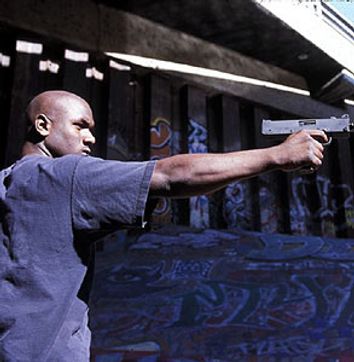
That may seem like an astonishing streak of bad luck for one movie; but given the circumstances of the casting and filming of “Gang Tapes,” the outcome is sadly typical. Shot entirely on digital video, “Gang Tapes” is the story of a group of South Central Los Angeles gang members, one of whom videotapes their activities over the course of one summer. The camera bobs and weaves around the gang as they rape, rob and deal crack, leaving a wide swath of death and devastation in their wake. Directed by a Los Angeles Police Department reserve officer, the film featured a cast of mostly novice actors and local gang members who improvised action and dialogue using their own experience as a resource. What resulted is a disturbing depiction of inner-city gang life — a fictional film that feels as real as a documentary.

“Gang Tapes” is so authentic, say its makers, that movie theaters are shying away from it, leaving what some perceive to be an invitation to violence unscreened by the general public. The film was funded by Lions Gate, a studio with a solid track record at the box office, and it’s been endorsed by many in the black community — garnering kudos from the likes of hip-hop maven Dr. Dre. But more than a decade after the rise of urban-themed breakout films like “Boyz N the Hood” and “Menace II Society” — even as films like “Brown Sugar” and “Barbershop” perform soundly at the box office — the threat of mayhem sparked by “Gang Tapes” and its gritty realism appears to have theater owners running the other way. It’s been a year since the movie made its debut at film festivals, and it seems destined to be released straight to DVD.

“I can’t help but feel that if my film was about Italian kids in the streets of New York, but otherwise the same exact film, this problem wouldn’t exist,” says “Gang Tapes” director Adam Ripp. “There is a certain amount of racism connected with black films.”

Ray Price, the vice president of marketing at Landmark Theaters, acknowledges the stereotypes about black films and black audiences. But he suggests that the fiscal realities affecting most edgy low-budget films also come into play.

“There are a lot of preconceived notions still. It’s better than it was, but for those people who are really trying to stretch and enlarge the scope of what [black films] can be, it’s a very hard job” to get distribution.

“Gang Tapes” tells the story of Kris, a 14-year-old living with his mother and little sister in Watts. Kris has acquired a video camera from older neighborhood buddies who stole it during a carjacking, and he decides to document all the illicit activities he embarks on with his friends. What unfolds, from Kris’ point of view, is the day-to-day life of a crew of Los Angeles gangbangers. The audience, through Kris’ lens, sees drive-by shootings, backyard parties, makeshift crack labs and freestyle rap sessions as well as a brutally graphic armed robbery and rape. Eventually, as Kris’ friends — mostly jail-hardened older teenagers — trigger a gang war with their rivals, the bodies start falling.

“I wanted to make the most realistic film ever made about South Central gang life,” Ripp says. “Pull-no-punches raw reality. Brutal. A true depiction of gang members that humanizes them in a way, rather than stereotypes them.”

To achieve this goal — and partly, no doubt, because of a tight $500,000 budget — Ripp cast his film with Watts locals: gang members, ex-gang members, and friends of gang members. Rather than script the film word for word, he gave his actors script guides and then let them make up their own dialogue. Thanks to the rapid-fire delivery of local slang by the film’s actors, as well as the intentionally amateurish camerawork, “Gang Tapes” feels at moments more like a grimly violent documentary than a feature film. It can also be murky and hard to follow, leaving viewers in the dust, wishing for subtitles.

Ripp grew up in Hollywood but got many of his ideas for “Gang Tapes” on the job in Los Angeles: He signed up as a reserve police officer in the late 1990s to research a movie about beat cops and has worked part time as an officer ever since. His cast members were never informed of his other job, even as they gave him insights into the gang world they came from.

“Just like how certain people are prejudiced and racist against black people, a great majority of the community of South Central believes that all police are bad,” says Ripp, who believes he was justified in withholding facts from his cast. “I knew it would be hard to convince them a white filmmaker could do this film, let alone a white filmmaker that also happens to be a police officer.”

Ripp says he received abundant support from both his cast members and Watts community leaders, one of whom became the executive producer of his film. (Most still do not know about his police work.) With their help, he shot his film in just 12 days during the summer of 2000, as a gang war raged nearby. Several times, locations had to be changed because of gang violence. (Ripp counted 30 shootings during the course of filming.)

When “Gang Tapes” hit the film festivals last summer — including the Pan-African Film Festival in Watts, San Francisco’s Black Film Festival and the New York Underground Film Festival — it got good reviews from a wide range of critics — from gang members (Crips and Bloods, Ripp says) who showed up for local screenings, to Elvis Mitchell of the New York Times.

And then Ripp hit a brick wall. Despite the sold-out festival screenings and positive reviews, no one — not theater owners, not even the studio that financed him — seemed interested in helping him get widespread theater distribution. Worse, he said, everyone blamed the lack of enthusiasm not on the quality of the film itself but on its content: It was urban, violent and destined to draw black audiences whose reactions distributors feared.

“Every major theater chain in the United States has refused to play ‘Gang Tapes,’” says Ripp. “They are fearful that the film will lead to an outbreak of violence in theaters. It is a purely racist perception that films depicting African-American gang members will cause violence in the theaters playing them.”

Ripp believes that “Gang Tapes” is so edgy that it’s a difficult film even for art houses. But the possibility that the director is reluctant to consider — that the film is simply not very good — is one that comes up in discussions with movie industry veterans.

“Something like ‘Gang Tapes’ may be having difficulty with distribution, but I would submit it’s not because of the race of the cast; I think that’s just a tough movie to sell. It’s not ‘Brown Sugar’ or ‘Barbershop,’” says Sam Kitt, president of 40 Acres and a Mule, Spike Lee’s production company. “It’s very easy to blame the powers that be, the white man, blah blah, and that’s frequently true; but for filmmakers in my experience, frankly, it’s never the film, it’s always some outside thing.”

Still, even if that’s the case here, even if “Gang Tapes” is inferior, there is a long history of similar urban films that have had distribution difficulties. Edgy films of all genres may have a hard time finding funding and distribution, but edgy films about African-Americans encounter even more stereotypes and preconceptions. The hurdles for these films are put up not just by skittish theater owners fearful of the “wrong crowd,” but also by studios who see no financial advantage in screening a movie that deviates from the profitable norm.

Take the case of “Way Past Cool,” an independent film based on Jess Mowry’s popular novel about gang life in Oakland, whose creators received film-festival awards but couldn’t sell their film to a studio. Avram Ludwig, a co-producer of the film, blames simple economics. “Sixty percent of revenue from films, on average, comes from overseas sales, and in Asia and Europe they just aren’t interested in the black urban themes,” he says. “So because these revenues are very important to make a film profitable in the U.S., there are probably a lot fewer films that are made involving [urban] themes than there are black urban moviegoers who would see them.”

Often, an urban film never makes it to theater screens simply because the studio that finances it doesn’t believe that the audience size will justify a release. Kitt points out that studios and distributors are perfectly aware of the money to be made in “black” movies these days; the problem is that they are interested in only a tiny range of these films.

“Very frequently they will refer to it as ‘the black audience,’ as if it were a monolithic thing as opposed to discrete audience segments,” Kitt says. “Because of that, and the conservative nature of the industry anyway, they tend to remake movies that have been successful in the past. So the same narrow movies get made: the upscale romantic comedy, the broad comedy.” No one knows what to do with movies that have inner-city themes, unknown black actors, or art-house aspirations, he adds.

Urban films very often do perform well on television and video, mainly because taking a film straight to video enables the studio to avoid the costs of printing, advertising and distribution. As Tom Ortenberg, the president of Lions Gate Films Releasing, explains, “If a film is perceived as having these ancillary possibilities built in, it can actually dissuade a distributor from taking it out theatrically. They think, if they already have a home run on TV and video, why risk it theatrically?”

That is exactly what happened with “Gang Tapes,” he says. Ortenberg says that “we knew the picture had great video potential and, frankly, did not want to risk a safe profit by potentially throwing good money after bad theatrically if the picture didn’t work.”

Lions Gate ultimately gave the theatrical rights back to “Gang Tapes,” which then tried to get it on screens with the help of the distribution company UrbanWorld, but to little avail. According to David Goodman, the film’s producer, booking agents were telling the distributor that the film was “too strong in its depiction of gang life and that with the style of first-person presentation, it scared [theater owners].”

Even Magic Johnson Theaters — a chain run by Loews and funded by the Magic Johnson Foundation with the hope of getting marginalized films into inner-city communities — turned him down, despite the film’s peaceful premiere in the Watts Magic Johnson Theater during the Pan-African Film Festival. Magic Johnson Theaters failed to return phone calls to comment on its rejection; other movie theaters did not explicitly cite violence as the reason they passed on “Gang Tapes.” But as Kitt puts it, “No one is going to advertise those kinds of decisions. No one will come out and say that.”

Theater owners are somewhat justified in fearing that showing “Gang Tapes” could trigger violence. A decade ago, riots ensued at the sold-out premieres of films like “New Jack City” and “Boyz N the Hood” when filmgoers showed up; “Boyz”-related violence left two dead and dozens injured in urban centers, including Los Angeles. As a result, theaters initiated a practice of opening urban-themed films on Wednesdays to avoid large opening-day crowds on weekends. Many theaters also began hiring additional security guards when a “black audience” was expected — even for a movie as benign as “Barbershop.” Violent incidents have been more sporadic since the early films depicting gang life — and no single film has triggered widespread violence.

Obviously, violence doesn’t just occur in movie houses showing urban films or films with predominantly black audiences. Kitt notes that Spike Lee’s “Do the Right Thing” was considered contentious upon its release in 1989, and both the press and theater owners anticipated that violence would break out at screenings. Instead, it was another film — “Batman” — that hosted a fatal gun battle (thanks to a dispute over a box of popcorn). “You didn’t hear about ‘Batman’ being pulled out of theaters, or anyone even suggesting it,” Kitt says.

Still, fears about black audiences stubbornly persist among theater owners. Abdul Ammott’s film “State Property,” a sex- and murder-fueled tale about Philadelphia gangbangers, starring rappers Beanie Sigal and Jay-Z and geared for hardcore hip-hop fans, managed to book a few theaters, but the film’s runs were short and tumultuous. Lions Gate also distributed this film, but found it nearly impossible to get it into theaters because of fears of violence.

“One major chain refused to play it in the beginning, but when they saw it was doing good business agreed to play it,” recalls Ortenberg. “Another major chain agreed to play the picture initially but after one [violent] incident at one theater refused to play it more nationwide. We had a tougher time getting ‘State Property’ shown than any other film we’ve ever done.”

The irony is that a film like “Gang Tapes” is intended to de-glamorize gang life. The violence in the movie, disturbing as it is, is not sexy — one main character, after all, ends up with a colostomy bag, and two others die. “If you show the realities and horrors and atrocities of war, people won’t want to go to war,” Ripp argues. “People aren’t going to want to run out and want to get involved in this violent battle because they know the repercussions. Everyone meets a negative end in the film.”

And many of the cast members met such an end in real life, serving as tragic testament to the film’s relevance. “Gang Tapes” doesn’t seem to have taught these novice actors many lessons, so maybe it is a stretch to argue that the theatrical release of the film would somehow deter gangbangers from further violence. But it also seems unlikely to trigger riots in the art-house audiences it seeks, and it is not hard to imagine that kids flirting with the gangsta life might be repelled by what they see on-screen. Unfortunately, as long as the film isn’t released, the nature of its impact is all conjecture — which is why Ripp continues to lobby for his film, even as the situation looks hopeless.

“Hopefully, theaters will step up to bat, because it’s an important film,” Ripp says. “It wasn’t made to incite violence; it was made to incite discussion.”

Continue Reading Close

Brother, can you spare a dime for my Gucci bills?

Cyber-begging fuels the new philanthropy, in which brand, beauty and instant karma matter most in raising funds.

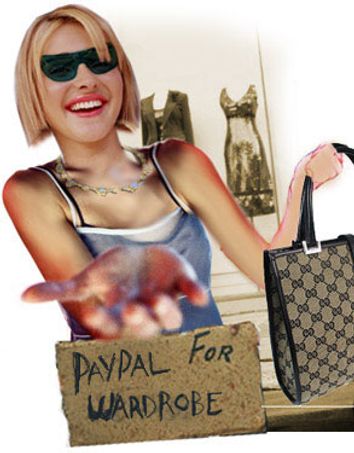
In June of this year, Karyn Bosnak bounced a $59 check at a grocery store. She was officially broke — unable to scrape up enough cash to get to work. Karyn looked rich: She was a television producer, earned $900 a week and lived in a stylish apartment in Brooklyn with a closetful of Gucci and Louis Vuitton. But she also had a $20,221.40 credit card bill (thanks mainly to the aforementioned Gucci), an empty savings account, and now, the fee for a bounced check.

That night, Karyn decided that it was time for a change. So she did what any 29-year-old, marketing-savvy woman might do if she had $20,221.40 in debt and no easy way to pay it back: She built a Web site, and simply asked people to help her out by sending her a buck or two.

Four months later, Karyn Bosnak is the world’s most successful Internet panhandler: At last count, she had paid off nearly $17,000 of her debt, thanks to donations of $1 to $1,000 from the thousands of strangers who have taken pity on her. Her Web site, SaveKaryn.com, has been visited by more than a million people; she’s been featured on the “Today” show and in People magazine; she’s been offered a book deal and a movie contract. Life is suddenly looking up for a woman who, just months ago, was “depressed and freaked out” by her financial straits.

Sitting at an outdoor cafe in Brooklyn, in a sheer DKNY peasant blouse and jean skirt, Karyn now beams with the beatific smile of the freshly famous. Her blond, highlighted bob glows in the sun; her cheeks are flushed pink with excitement. “I never in my whole life imagined this: ever ever ever,” she gushes. “I just so hit rock bottom that I didn’t know what to do, and I took a shitty situation and turned it around. I guess the lesson in that is don’t let life get you down.”

A more complicated lesson in the tale of Karyn Bosnak is that marketing is everything these days. Her radical approach to debt eradication is utterly generational, embodying all that is inspiring and much that is repugnant about the 20- and 30-somethings of the digital age — Karyn’s adventure is rich in self-entitlement, innovation, extravagant living and entrepreneurship. Her donors, most of whom come from the same demographic, practice a peculiar new form of individual philanthropy, in which donating is both a form of entertainment and a selfishly karmic activity. Karyn’s imitators, meanwhile, of whom there are many, exhibit a near-religious faith in advertising, believing that a strategy that worked well for one brand (Karyn) is bound to work for another.

“I think Karyn has succeeded in raising money because she captured people’s imaginations and is so obviously human — and because she made them laugh, which is a really powerful thing to be able to do,” says Lynette Webb, a 32-year-old media planner in London who donated $10 to Karyn’s cause. “As a general rule, I think people are so bombarded with pleas for handouts these days that a lot gets screened out. It’s only those campaigns that come along that have a personal resonance that get through — whether because it’s an issue you feel strongly about, or whether you just feel touched by the people involved.”

- – - – - – - – - – - -

The SaveKaryn.com Web site yields much information about Karyn the person: She is an open book. She is a woman who is fond of exclamations like “Nummy!” “CooCooCaChoo!” and “Yipee!” who uses “fun and light-hearted” as a mantra when describing herself and her interests. On her Web site, she makes pronouncements like, “A computer is a necessary part of being a human in today’s society. I cannot live without one. It’s kind of like undereye cream. It’s something that everyone needs.” In person, she comes off as professionally perky, easygoing, slightly gushy and, in a disarming way, winsome.

“I do not position myself as a victim because I know I got myself into it, but if I am, I think I’ve been a victim of a good economy,” Karyn explains. “I’ve been a victim of always having a nice paycheck. For me, this kind of slapped me into a reality that it’s not always sunshine and roses.”

Karyn grew up in the suburbs of Chicago, the younger of two daughters born to upper-middle-class parents who eventually divorced. She lived, she says, “a fun, great childhood,” attending a private Catholic school, spending summers on the family’s boat in Lake Michigan. Although she refuses to describe her family as affluent, she was certainly schooled in the ways of conspicuous consumption at a very young age. “In my school you just weren’t the cool kid if you had a Liz Claiborne clutch, you had to have a Gucci purse, or Louis Vuitton or something like that,” she explains. Her mother dutifully did all that she could to help her daughters fit in, buying them the necessary accessories when they were barely out of pubescence.

Karyn headed off to the University of Illinois for college, but finished up her marketing and public relations degree at Columbia and jumped quickly from a corporate job at Hyatt Hotels to a more “fun” job as an audience coach for “The Jenny Jones Show” in Chicago. The work suited her hyperactive personality: “I’ve got a lot of energy, I’m absolutely nuts; it was a great way to burn off my energy every day, clapping my hands,” she says.

By 2000, Karyn had moved to New York for a $75,000-a-year producer job at a courtroom television show called “Curtis Court.” Later she moved to a $100,000 producer job at “The Ananda Lewis Show,” a short-lived talk show featuring a former MTV VJ. When the show failed, Karyn was a casualty. By November of last year, she was unemployed, and discovering that in the post-dot-com post-9/11 economy, there weren’t a lot of jobs for TV producers or marketing types, no matter how energetic, fun or accomplished at clapping.

This might not have been such a big problem, were it not for the credit card debt that Karyn had been amassing while employed. Despite her enviable salary, she had not saved a dime. Instead, living in a $2,000-a-month apartment just blocks away from Bloomingdale’s, Karyn went on a series of extraordinary shopping sprees, charging a closetful of designer shoes and purses on her numerous credit cards. “I went kind of crazy,” she says, only slightly abashed.

Broke, unemployed and $20,000 in debt — unable even to afford a pedicure, she sighs — Karyn was a very unhappy camper indeed. “I think a lot of women, whether you’re high-maintenance or not — you identify who you are with what you look like. It was kind of like, when I couldn’t color my hair, couldn’t do all these things, I kind of got depressed for a while. I couldn’t go out and buy cute clothes, I just felt funky every time I went anywhere, in like old clothes, stuff like, ugh. It’s just weird, but it’s true!” she says, surveying her jean skirt and proclaiming that today she feels “frumpy.”

Karyn finally “snapped out of it,” and began living a frugal life — rarely going out, shopping only at Old Navy if at all, cooking for herself, moving to a shared apartment in Brooklyn. Still, even after she got a new job (for half the pay) on an Animal Planet TV show about New Yorkers and their pets, she says she was living hand-to-mouth. Finally, the fateful bounced check triggered a moment of desperation and inspiration, and SaveKaryn.com was born.

There is no subterfuge in the site that Karyn invented in June of this year — she posted a humorous plea for donations, forthrightly explaining her situation, Gucci shoes and all. “If 20,000 people gave me just $1, I’d be home free, and I’m sure there are 20,000 people out there who have been in my position who can afford to give me $1, who know how I’m feeling,” she explains. “That’s all I was thinking: that there are nice people, and if people just shared, and if all these wealthy people gave their money to people like me, the economy would be better, it’d be a better place. That’s it! If we just kind of balanced out a little bit.”

Call it incredibly naive, or incredibly optimistic, but amazingly, it worked. She added a chatty personal diary to the site that documented both the donations she received and her attempts to reduce her living expenses. She also opened an eBay site, where she began auctioning off her designer clothes. The initial trickle of donations grew as the URL was passed around — many people, apparently, found Karyn’s jaw-dropping ballsiness amusing; and then the site exploded as it began showing up in USA Today and the New York Times. The week of Aug. 18, during the peak of publicity, she received $2,630.84 in donations and $682.46 via eBay. Although most donors just chipped in a few dollars, one anonymous donor ponied up a generous $1,000.

In her closet, where the Gucci purses once sat, Karyn now keeps a large plastic bin filled with letters that people have sent her; her bathroom is overflowing with the vanity products — creams, lotions, shampoos, allergy medicine — that her adoring readers have sent as consolation. She’s received teddy bears, subscriptions to Vogue, Dunkin’ Donuts coupons, backpacks, jewelry, cat food, candles, even two free pairs of boots from Chinese Laundry. It’s hard to fathom why so many people would spend time and money to help a total stranger pay off her appallingly extravagant spending sprees, but they do: Something about Karyn’s story, or approach, or both, clearly hit a nerve.

Why do they do it? Karyn has been asked this question by dozens of reporters, and she has a pat answer ready. “I was just honest about what happened; I didn’t make up some sob story about saving the world,” she explains, shrugging. Her donors think it’s funny, and original, she argues, and view it less as a charity than as an entertainment site.

Comments from her contributors suggest that she’s right. “I donated $5 because as far as entertainment value was concerned, her site was worth at least what it would have cost to rent a DVD for the evening,” says 27-year-old Ralph Pickering, a network engineer. “It made me smile.”

It’s also revealing that so many of her donations came from young, Net-savvy people, the same demographic that, like Karyn, has been hit hard by the crash of the dot-com economy, and, as a result, can closely identify with her plight. A quick flip through her letters turns up countless donors who confess their own credit card debt, their own unemployment, and their hopes that a buck for Karyn is essentially a buck for themselves: As one woman put it in a letter, “Maybe I’ll get reciprocal karma.”

Benevolence, where Karyn is concerned, becomes a curious form of selfishness. “I truly believe that what goes around comes around, and that by doing good deeds things will work out for me in the end. It’s the ‘Pay It Forward’ theory,” says 29-year-old unemployed Stefani McMurrey, proprietor of SMartHats.com, who gave Karyn $1. Like Karyn, McMurray has maxed out her credit, and is currently living off her home equity loan; she sees Karyn as a kind of soul sister in debt. “Karyn and I would be great friends, and I’m sure we’re a lot alike,” she says.

This is a common refrain from Karyn’s contributors: She is the everywoman of a specific market share, a contrite shopper who you would want to hang out with, who you would want to be your friend. It takes a certain lack of pretentiousness to confess your mistakes to thousands of strangers; and in the age of corrupt CEOs and underhanded ethics, Karyn’s blunt approach is appealing — and familiar — to many.

“I think Karyn is filling some kind of vacuum the baby boomers have created in our society. In a country where everyone seems to blame everyone else, or offer excuses for their actions, she’s actually accepting responsibility and doing something about it. She’s admitting her errors to the world and asking nicely for help,” says Jay Konieczka, a 27-year-old research scientist who gave Karyn $2 despite being in “even more debt than she is.

“I, for one, am starved for people like Karyn,” he says.

- – - – - – - – - – - -

Karyn was not the first person to put up a Web site asking strangers for money. The practice has a name — “cyber-begging” — and one directory called the “Amazing Send Me A Dollar Webboard” had documented 69 cyber-begging sites as of last August, including a 1999 site called “Save the Suburbanites” for a couple that wanted to raise money to quit their jobs and travel for a year (they cleared a mere $61), and the “Amazing Gimme a Buck (Please) Website,” which raised $65.31 for its owner. Most sites received little traffic and even less cash, perhaps because they lacked the humor or sympathy of SaveKaryn.

Karyn’s closest compatriot online is probably Todd Rosenberg, the proprietor of the Odd Todd Web site and an earlier “Today” show darling. Last year, after losing his job at the Web site Atom Films, Rosenberg began posting cartoons online that made light of his unemployment. Like Karyn, his plight hit a nerve; through a PayPal link and “Odd Todd” merchandise, Rosenberg managed to collect $15,000. Unlike Karyn, however, he couched the solicitation as a “tip” for his cartoon, rather than an outright donation (even if fans ultimately knew that this was what it was).

Karyn, on the other hand, has made no bones about the fact that she’s simply begging for a dollar to cover her debt. And as her site has rocketed to fame, imitators have sprung up all over the Net, some with even more outrageously selfish requests. If Karyn can get $20,000 to cover her Gucci tab, why can’t some other person, say, get people to buy me a BMW, pay for my breast implants or buy me a house? There are even satirical sites like Don’t Save Karyn and Save the CEO, who purports to need money to move his company to Mexico.

Most of these sites are pale imitations of Karyn’s, and have, not surprisingly, raised little to no cash. Those that tell more sympathetic stories do slightly better. Help Me Leave My Husband, a woman who wants to go to nursing school so she can afford to raise her family after her upcoming divorce, has raised $2,173.51. And HelpJennifer, the site of a 24-year-old Canadian woman with Lyme disease, has managed to raise a little more than $4,000 to cover her $50,000 in hospital bills.

Jennifer Glasser of HelpJennifer confesses that she was inspired by Karyn’s site: “I thought if someone was willing to give her money for that, that someone must be willing to give me a hand: I didn’t get into this through shopping; it was out of my control.” Her own rather sincere site has received money primarily through readers of her blog and friends she’s met online. “I was concerned that my site wasn’t entertaining or gimmicky in some way, and maybe people wouldn’t donate because of that,” she says.

Those who have given to Jennifer, though, tend to gravitate to her simply because her needs are “worthier” than Karyn’s. Says Nicolas Lambros, a 32-year-old restaurateur who gave Jennifer $30, “I read about Jennifer only after I read about Savekaryn.com and decided Jennifer’s purpose was the better way to go.”

Lambros is not alone in his distaste for Karyn. For all of Karyn’s fans, she also has thousands of enemies; people who send her hate mail and lambaste her on Web sites; those who fought to get her removed from eBay, and who point to her as the poster child for all that is wrong with dot-com-era self-entitlement. Karyn says she doesn’t let this anger bother her: “They are probably jealous they didn’t think of it,” she explains. “Seeing someone get success out of something that seems funny, like, ‘I was the biggest screwup, and I’m getting success out of it?’ That upsets people.”

Jealousy may be a factor, but outrage fuels many, if not most, of her detractors. “What really burns us is how she got into debt: all these nice things,” says Scott Dolce, proprietor of the anti-Karyn site SaveKarynnot.com. “I wish I could go blow a lot of money on stuff, but never in a million years would I ask other people to pay it off.” Instead, his site points its visitors to charities that benefit a wider swath of the population — the March of Dimes, the Red Cross, the Salvation Army.

Yet, it is the opaque nature of these larger charities that has motivated many donors to spend money on Karyn and Jennifer. The need to know the specific impact of charitable dollars became a huge issue after Sept. 11, when donors to the Red Cross felt swindled somehow when they couldn’t find proof that their money was being given to 9/11 widows and not the average impoverished American. Donors to Karyn watch her debt diminish; donors to Jennifer feel connected to their victim of choice. Witness Karyn’s boxes of communiqués from donors, full of intimate confessions from total strangers who clearly felt some kind of personal connection to her.

This is a particularly Webby form of giving; not merely because technology like PayPal and e-mail make it easy to find and give to the needy online, but because the Net has primed its regular users to be open to connecting with strangers. “I think there is a sense of community online that makes you more inclined to believe the best of people, and be willing to help someone out,” said Lynette Webb, the London media planner who donated to Karyn. “The whole spirit of newsgroups is based on that. Also the file-sharing community.” (It’s also rather naive, considering how easily the whole thing could be a hoax; but few people seem to worry about this.)

At least one new charity has decided to capitalize on the strange dynamic of Net giving: Modest Needs, a nonprofit organization launched in May by Keith Taylor, a philanthropy-minded professor from Middle Tennessee State University, has collected some $83,000 via PayPal that Taylor, in turn, distributes to individuals who need help. If you need, say, $300 to help you through a one-time crunch or an emergency — unexpected medical bills, car accidents, school book purchases — Taylor will assess your request and dispense cash from the general fund; of the 9,395 requests he’s received, he’s been able to fund 294 of the most “legitimate.” (Credit card debt, incidentally, does not qualify.)

“Modest Needs is not about some corporation, building some hospital,” says Taylor. “All those things are good things, but when you look at requests that are actually funded, those are individuals whose lives were changed for a small amount of money. That’s solidarity.”

And instant gratification all around.

- – - – - – - – - – - -

It seems unlikely that the cult of giving that Karyn inspired is going to last long. The sites that sprung up in her wake are not bringing in nearly as much cash. And although Karyn plans to “pass the buck” once she pays off her debt — handing her site off to another person who is trying to raise money — the momentum is already dissipating, and donations have dropped dramatically in the last few weeks.

The Web, so quickly jaded, is already moving on. “It certainly is a new type of benevolence, but unfortunately for any imitators, things on the Web get old really fast,” says Ralph Pickering. “But who knows? Maybe it’ll become a new sort of addiction, like eBay is to many people. Or maybe we’ll find homeless people handing out business cards with their PayPal account details.”

In the meantime Karyn, with her own debt nearly paid off, has capitalized nicely on her experience. She’s selling the rights to her life story to a major motion picture studio, she says, and is also in the process of selling a book about her experiences to a publishing company. It’s a curious career — being famous as a beggar — but despite her critics, she’s not at all chagrined about what she did.

“A lot of people say, Where’s your pride at? You should work hard and pay it off! I have pride, but when did it become so horrible and shameful for somebody to ask for help?” she says. “I see this as a proactive thing to get rid of my debt: It’s a lot of work to upkeep the site. I’m not filing for bankruptcy and sitting on my ass. It’s a funny Web site, and I’m proud of it.”

And will Karyn “pay it forward” when her debt is retired? She’s donated some money in the past, she says, $20 here and there to the ASPCA and Catholic charities, and if she gets the book deal, part of the money will go to charities. She’s eager to help other individuals, she says: “I think of people as all good people, and if I had a lot of money and ran across some girl who was in a position I’d been in before, I’d find it funny, I’d laugh, and say, ‘Here you go,’” she explains. “That’s what I would do if I had a lot of money: I’d help someone out.”

But Karyn’s magnanimity has its limits. On the way back from coffee, when we are stopped on the street by a vaguely surly young man in jeans and sneakers who asks us for a dollar to get on the subway to “get to school,” she pauses. Ever the savvy self-marketer, she weighs her decision carefully, knowing full well that a reporter is standing next to her and waiting for her response.

“Sorry,” she finally tells the man, and walks on, glancing out of the corner of her eyes at me. “That’s going in the story, isn’t it,” she says, flatly. I ask her why she didn’t give him a dollar, and she responds with confident self-righteousness: “He was crusty, and smoking a cigarette,” she explains. “That dollar wasn’t going to go toward the subway.”

She’s probably right, but I have to wonder: If he’d confessed that the buck was really going to go toward a six-pack of beer, would she have reconsidered her decision? It seems doubtful. In the world of Karyn and her circle of friends, the generosity of strangers seems to turn on a giggle and a plight that a Web-linked peer can relate to. Crusty beggars looking for subway money just don’t have currency in Karyn’s world, where a worthy cause is a “funny” “sweet” girl with a Gucci jones. It is about branding — in all things.

Karyn heads home guilt-free with a smile on her face, knowing that today she is blessed; that when she gets home another box of letters and cash will arrive in the mail; that an offer for a book deal will be on her voice mail; that the economy is finally looking up and so is she.

Continue Reading Close

Page 1 of 62 in Janelle Brown

www.salon.com/writer/janelle_brown/index.html