Jason Bailey

“Silent House”: One movie, one shot

"Silent House" is the latest example of our growing obsession with endless takes -- and the minutiae of filmmaking

  • more
    • All Share Services

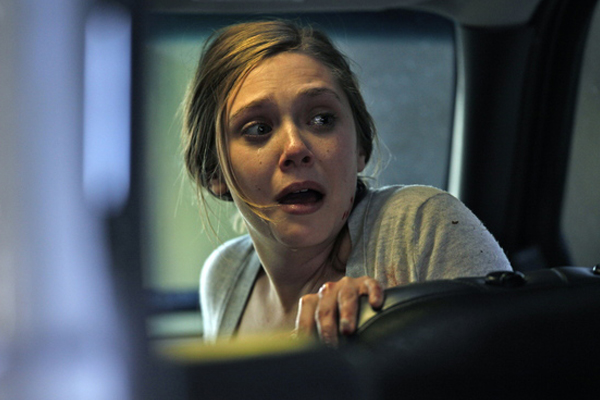
Elizabeth Olsen in "Silent House"

For the moviegoer who finds the rushed tempo, blunt force, spatial disorientation and general Michael Bay-ishness of movie editing these days depressing, it’s worth remembering that, in the beginning, the movies didn’t even have edits — they came to an end after the train had entered the station or the men had finished dancing or (more importantly) the film had run out. It wasn’t until filmmakers like Edwin S. Porter started making longer films with actual stories to tell that the idea of cutting from one action or shot to the next, changing points of view or scenes or locations, became part of the filmmaking vernacular. This was the custom for decades, but periodically, directors would decide to flex their cinematic muscles by removing from their toolbox the filmmakers’ single greatest source of audience control — the cut — and seeing how long they could make a scene go without one (while still maintaining action, movement and fluidity). Over time, long takes became an unspoken competition, each director’s long, unbroken tracking shot a little longer and a little more complicated than the last, each filmmaker proudly and breathlessly pushing further into the editless abyss.

And thus we arrive at the eventual (perhaps inevitable) destination of all that one-upmanship: Films done without cuts, entire stories told, seemingly, in one long take. The latest of these films is “Silent House,” Chris Kentis and Laura Lau’s remake of the 2010 Argentinian horror film that employed the same stunt. “When we were asked if we wanted to do this, they said single take and it was like, wow,” says co-director Kentis. “Because it’s a chance to do something differently, and give the audience something different — and it’s a challenge.”

The story concerns Sara (Elizabeth Olsen), a young woman helping her father and uncle pack and fix up their lake house, which they’re hoping to sell. Rats have eaten the electrical cabling and squatters have smashed the windows (since covered with plywood), making the domicile into a classic flashlight-illuminated movie haunted house. As the film’s 86 minutes of real time unfold, the camera follows Sara as she slowly becomes convinced that someone is in the house and out to get her, with threatening figures and scary noises just off camera. 

Is the device thematically intertwined with narrative? Maybe, maybe not. Kentis dismisses the idea that the technique is a “gimmick” (“When I think gimmick, I think scratch-and-sniff”), and says, “for this particular story, where you’re trying to inhabit and just tell it exclusively through this character’s point of view. We thought it was a good marriage.” But the film would probably get just as many scares if it were shot in a standard long/medium/close-up/shock edit form. It would also be more forgettable. As it stands, the picture’s primary subject is its style; the promotional materials give as much space to the trickery (“a tension-filled, real time journey, experienced in a single uninterrupted shot”) as they do to rising leading lady Olsen.

There will certainly be a portion of the audience that’s just looking for a good fright, who are unaware (on a conscious level, at least) of the single-shot gambit while watching the film and think nothing of it after. And Lau says that’s the goal. “If we’re successful, no one’s going to be paying attention to the fact that it’s one shot,” she says. “Movies are about story and character.  The fact that we hope that this is a different experience because of the continuous take should be something almost unconscious.” But a good chunk of “Silent House’s” viewers will bring in knowledge (and the accompanying expectations) of the artifice, and will spend the film on the lookout for possible hidden cuts. I only counted three, so I was surprised when Olsen told me there were 13 of them. “When you watch it, you try and look for it, and sometimes I would forget where we had a ‘stitch’ because it was so seamless,” she says.

Kentis and Lau acknowledge that awareness from their opening shot, an overhead angle looking straight down at Olsen, all but inviting savvy audiences to wonder how they’ll even get down from there, much less proceed to do the entire film in the one go we’ve been promised. Starting like that is an acknowledgment that we’re aware of the challenge they’ve laid out for themselves, and that they’re aware that we’re aware.

Understanding that self-awareness, and the gamesmanship and competitiveness between filmmakers, is vital to appreciating the continuing obsession with the unbroken shot. “Silent House” (in both its original and remake forms) is the film Hitchcock wanted “Rope” to be, clear back in 1948 — but Hitch’s cameras could only hold 10 minutes of film, so he had to mask his cuts with “stitches” as well. With the advent of digital video cameras (holding 90-plus minute tapes) around the turn of the century, filmmakers were suddenly able to do an entire film in one shot, and several did just that: Alexander Sokurov’s ambitious “Russian Ark,” Spiros Stathoulopoulos’ “PVC-1,” and Mike Figgis’ “Timecode,” which upped the ante by breaking the frame into four quadrants, and put an unbroken shot into each of them.

But even the filmmakers who worked extended single-shot sequences into their films were, to some degree, engaging in a visual dialectic with each other — one that was sometimes explicitly expressed. Take Robert Altman’s 1992 film “The Player,” whose opening credits run over an eight-minute unbroken shot in the parking lot and offices of a Hollywood studio, with secondary characters discussing the very type of long take that they’re currently participating in. Altman name-checks “Touch of Evil,” “Absolute Beginners,” “Rope” and “The Sheltering Sky,” and has Fred Ward note (erroneously) that Welles’ “Touch of Evil” opening went on for six and a half minutes. The shot is actually only three and a half minutes long, meaning Altman more than doubled it.

Though there had been several other memorable extended tracking shots in previous years (the march through the trench in Kubrick’s “Paths of Glory,” the Big Wheel ride in his “Shining,” the traffic jam in Godard’s “Weekend,” the languid closing shot of Antonioni’s “The Passenger“), there was a flurry of them in the 1990s, as Steadicam rigs grew more sophisticated and filmmakers grew more ambitious. The most famous came two years before “The Player,” in Martin Scorsese’s “Goodfellas.” The “Copa” sequence was justly celebrated for its technical wizardry; even viewers with only a passing knowledge of the logistics of filmmaking can guess at the complexity of this kind of on-the-go lighting and dialogue recording. (Doug Liman’s “Swingers” features a dialogue scene with group of actors marveling over the complexity of that scene, followed by a JV version of the shot they’re discussing.)

Others followed: Brian DePalma’s “Bonfire of the Vanities” begins with a virtuoso five-minute credit sequence that the filmmaker would top eight years later with the seven-minute unbroken opening shot of “Snake Eyes,” following corrupt cop Nicolas Cage from backstage to ringside to an assassination at a heavyweight championship fight. With that shot, “he steals the crown,” Roger Ebert wrote, “from the famous long takes by Martin Scorsese in ‘Goodfellas’ and Paul Thomas Anderson in ‘Boogie Nights.’” Anderson’s film came out the year before, with its memorable pool party scene, tracking from one conversation at a backyard get-together to another, ultimately following a pretty girl in a bikini right into the pool. In his audio commentary track, director Anderson admits swiping the shot directly from the 1962 Russian-Cuban long-take extravaganza “I Am Cuba.” “I feel proud that we came back up out of the pool for dialogue,” Anderson says with a laugh. “Maybe that’s our addition to it, because they didn’t.“

What’s telling about all of these scenes, and sheds at least a shaft of light on why their directors went to the trouble of crafting them, is the subtext of control in each. “The Player’s” Griffin Mill, “Goodfellas’” Henry Hill, “Bonfire’s” Peter Fallow, “Snake Eyes’” Rick Santoro, “Paths of Glory’s” Colonel Dax, and “Boogie Nights’” Jack Horner are presented (at those points in their stories, anyway) as figures of power, men in full command of their worlds, the elements around them bending to their will — much like the directors who orchestrated these sequences. Casual viewers may not be consciously aware of the intricacies of these scenes, but they are, on some level, cognizant of the fluidity of the camerawork and the complexity of the events on-screen. Film is the director’s medium; by marshaling sequences spring-loaded with opportunities for chaos and disaster with smoothness and grace, the filmmaker mirrors his protagonist by exhibiting absolute power over his environment.

They’re showing off, is what it comes down to. And that is also, to some degree, what audiences are responding to. We like bravado, and in this age of hyper-documented filmmaking, with “E!” on-set reports and directors on Twitter and copious behind-the-scenes bonus features, we’re more aware than ever of what goes into making a film. The degree to which anyone truly “loses themselves” in a film — shedding their awareness of the frame and what’s happening outside of it there (on the set, where it’s all meticulously written, rehearsed and assembled) or here (in the theater, where that frame is projected onto a screen where we’re watching it with all these other people) — is hard to gauge, and certainly varies from person to person. But from the moment that the synthesized horns of the “Entertainment Tonight” theme first blared back in 1981, our hyper-awareness of the process of making a movie has become as much a part of the experience of watching one as the popcorn and the soda (or, for that matter, the story). Even on our inaugural viewings, we’ve already seen footage of how Joe Wright staged the Dunkirk Beach scene in “Atonement,” or read about Alfonso Cuaron’s elaborate tracking shots in “Children of Men,” and when those scenes arrive, we nod appreciatively at the technique of these directorial flourishes. Maybe that’s the argument for why the trickery works in a film like “Silent House”; aware that a blown line or missed blocking cue means going back (at least a little ways) and starting all over again, we experience a sense of suspense entirely separate from the noises in the attic.

Co-director Chris Kentis insists, “We’re certainly not intending to top anybody, let alone Hitchcock. The fact is, it was a chance to try to do something new, to make a film in a different way.” As moviegoers coalesce around the familiar (sequels, remakes, “reboots,” adaptations of TV shows, adaptations of comic books, adaptations of board games, for God’s sake), one of the few ways for a filmmaker to stand out from the crowd without the advantage of one of those known quantities is to tell a familiar story — in this case, a haunted house scarefest/psychological thriller — in a unique and somewhat daring fashion. If the style occasionally overpowers the substance, it also seems that we’re more and more capable, as an audience, or appreciating (or at least acknowledging) both.

If Godard was right, if every edit is, in fact, a lie, then there is a specific and fascinating truth at play within these sequences — one where the film in question runs, simultaneously, as both an actualization of its narrative and a documentary account of that actualization. The film becomes about itself as much as it is about its story. The question, at the end of the day, is whether that adds up to an advanced level of viewer engagement, or merely an elaborately staged Brechtian alienation device.

“Reality” conquers the movies

"Devil Inside" rules the weekend box office, and points the way to a new generation of found-footage films

  • more
    • All Share Services

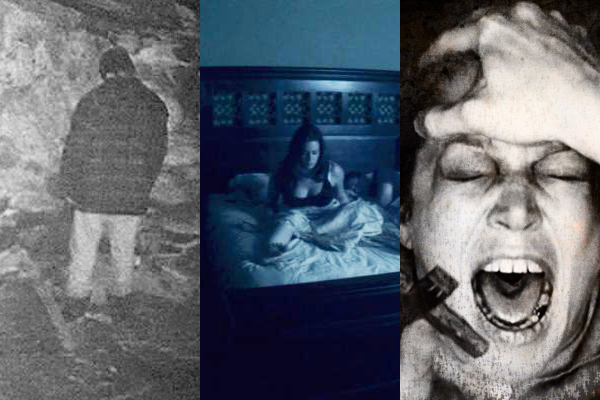
From left, "The Blair Witch Project," "Paranormal Activity" and "The Devil Inside"

Almost 13 years ago, attendees of the Sundance Film Festival left the midnight screening of a low-budget horror film called “The Blair Witch Project” and gulped in the cold Utah air, shaken and invigorated. “The lucky ones who saw it at Sundance,” Michael Atkinson wrote a decade later,  “not knowing a thing about it, at the legendary late-night showing and then (emerging) into the mountain nighttime, could make millions bottling that experience.”

The big studios certainly figured that out. This weekend, the faux documentary “Devil Inside” confounded expectations by grossing $34 million in its first three days — topping the box-office charts despite being trashed by critics (7 percent fresh on Rotten Tomatoes) and audiences (a CinemaScore rating of F). It’s the third-best January opening ever — and the film only cost Paramount $1 million to make.

It’s a very profitable way to make a movie, so the past half-decade has seen an outbreak of similarly faked “found footage films,” fictional narratives that tell their stories through scenes shot by the characters, later “unearthed” to explain the horrifying monster invasion/zombie attack/ghost haunting. The top-10 in this genre have grossed a total of $607 million in the U.S. alone; the low-fi aesthetic not only encouraged but expected by audiences means that these films can be produced for a fraction of their eventual gross. The most successful have been the Paranormal Activity films, tense ghost stories composed of staged home movies and surveillance video. The third installment of the franchise opened last fall to a gross of $52.5 million — the biggest opening weekend for an October release in movie history.

For moviegoers, the films speak in a faux-documentary visual language that has become commonplace, as the 12 years since “Blair Witch’s” theatrical release have corresponded with the all-but-unstoppable rise of reality television and advances in both portable filmmaking technology and home video streaming. Since the early days of the “direct cinema” movement, documentary filmmakers have relied on low-budget tools (hand-held 16mm cameras, early and primitive video equipment, portable sound recorders) to tell their stories. Now, television swipes the tropes of fact-based documentary filmmaking (hand-held camera, overheard conversations, talking head interviews) and twists (some would say corrupts) them into a manufactured “reality,” while the kind of quality high-definition images that doc filmmakers would’ve given their eye-teeth for less than a decade ago are tossed on consumer still cameras and even smartphones, almost as an afterthought. Those images don’t just end up in the homemade conspiratorial rants and gruesome war videos we see on YouTube; they’re in the documentary films at the local art house, the investigative films on cable, the reality shows in prime time. And they’re in the genre films at the multiplex, which reflect how we’ve ingrained in our collective subconscious the idea that truth doesn’t always come in a slick, handsomely produced package.

But as Alex Juhasz notes, “There’s always been an interest in fake found-footage films. It’s not new to our time.” A professor of media studies at Pitzer College in Los Angeles, Juhasz co-edited the book “F Is for Phony: Fake Documentary and Truth’s Undoing.” Juhasz points out examples within the work of Orson Welles, from his 1938 War of the Worlds broadcast (a kind of radio cousin to the found footage film) to the “News on the March” newsreel in “Citizen Kane” to his documentary on the very subject of fakery, “F for Fake.” The scenes of a fictional documentary crew’s murder in the notorious 1980 Italian horror film Cannibal Holocaust were so convincingly staged that director Ruggero Deodato was charged with murder, and had to produce his actors for Italian courts. There is the “mockumentary” tradition, normally employed for comedic effect (as in the films of Christopher Guest) but occasionally used for dramatic purposes (see “Laws of Gravity,” “Man Bites Dog” and “Husbands and Wives”).

So if it’s not “new,” perhaps the found footage film falls into the tradition of cinematic styles like Kino-Pravda, neorealism, cinéma vérité, and Dogme ’95 — all of which have, in varying ways, challenged and scrambled our engagement with cinematic reality. And this is where real questions of representation and perception come into play. The slickness of a film’s cinematography, the discipline of its camerawork, the transparency with which it has been blocked, rehearsed, and placed in front of a camera: does the absence of these common elements trigger some sort of reactive response? If we see a hand-held digital/cellphone camera stumbling upon a shrieking ghost, does it (consciously or not) somehow seem more “real” than if the same ghost were shot by a 35mm Panavision camera mounted on a Steadicam?

New York University cinema studies professor Dan Streible hosts a biannual symposium of home movies, amateur films and other ephemera. “Our perception of what we see as ‘real’ in a two-dimensional moving image is determined as much by convention and expectation as it is by our genuine ability to distinguish photographic reality from the visual reality in front of our eyeballs,” he says. In other words, old conventions are replaced with new ones.  In the 1960s, cinéma vérité introduced hand-held camerawork, clunky zooms, catch-as-catch-can sound recording. Those elements have been part of our visual language for so long now that they trigger an immediate response in a viewer, whether they realize it or not. “It’s coded as documentary,” Streible explains, “and even if the viewer immediately knows that it’s not real documentary, they at least are in that nonfictional realm of perception, and so they might be willing to give it more credibility.”

But that idea of credibility is where the notion of the found footage film starts to get complicated. The entire premise of these movies is that what we’re seeing is real, not staged, and it is often painstakingly presented as such, though it’s hard to imagine who is genuinely fooled anymore. The first “Paranormal Activity” begins with a solemn on-screen note that “Paramount Pictures would like to thank the families of Micah Sloat & Katie Featherstone [the main characters] and the San Diego Police Department”; the end credits flash on-screen for less than five seconds, buried after a full minute of black screen. But even those who might have bought the artifice the first time around would have to wonder, by the third film in the franchise, exactly how one family created so many spooky home movies — particularly after the most recent installment, comprising much “older” material from the protagonists’ childhood, shot with a VHS camera in the mid-1980s that somehow captured HD widescreen images.

“It used to be that everyone who wrote about cinema talked about these references to realism, and photography’s direct relationship to physical reality,” Streible says, but we’re now immersed in a digital reality. “The capture now is so entirely manipulatable, pixel by pixel, that there’s no guaranteed veracity that the image you see bears a direct relationship to the real. You’re basically trusting the source that puts it before you. So it creates a kind of skepticism.” Does the conscious effort to leave in the rough edges, to frame a film as something that could have come off your own camera, or laptop, or cellphone, seek to somehow neutralize that skepticism?

Perhaps, but there’s little evidence that it’s working. As the industry gets more digitized (and the recent reports that Panavision and ARRI are ceasing production of celluloid film cameras is another strong indication of that shift), our trust in what we see on-screen will presumably continue its decline. “There’s not even a camera necessary,” Streible notes. “We can computer-generate all imagery, whether it’s documentary imagery or completely rendered from someone’s imagination. So in that sense, all films, regardless of anything, can be seen as animation, subsets of animation … It’s an important concept for people to start accepting, especially for commercial films that we’re going to see and pay for, it’s all going to be generated off of pixels.”

So if the audience knows that what they’re seeing is no more “real” than a “Saw” movie, or a sci-fi epic, or the latest Adam Sandler comedy, the filmmakers’ motivation for bothering with the pageantry of the shaky camera, the night-vision cinematography, and the mock digital “hits” seems unclear. But Juhasz suggests that, in some strange way, it could be precisely because we’re not sure we believe in the premise. “My current belief is to suggest that that form is relatively defanged,” she says. “If you look at those movies that you’ve mentioned, you can say it’s actually a way of perceiving the world that we’re quite comfortable with at this point — where we’re not certain.”

So it almost becomes a postmodern moviegoing experience, an intellectual exercise — the viewer is engaged on a different level, beyond the artificial emotional responses that a horror film (or a tragedy, or a romance) attempts to manipulate. Instead of the right brain disconnecting as the left brain experiences fear, sorrow, or joy, the right brain is asking questions. “Is this true, is this history, did this happen, is it faked, is it about faking, when am I supposed to notice that it’s fake? That’s a question that’s very live and common for us in 2011,” Juhasz says. “We live in a time where all of us are so aware of how technology manipulates the truth, because we do it ourselves, that that skepticism is not uncommon — that skepticism is the dominant mode. It’s not the radical mode, it’s the dominant mode.”

This hasn’t always been so. When the current vogue of found-footage cinema began with “Blair Witch,” there were people who believed the events really happened. But that was 1999, when reality TV was still confined to MTV’s “The Real World,” when a Hi8 video camera would set you back $500, and online video was still confined to cumbersome QuickTime downloads.

No other modern found footage film has had “Blair Witch’s” impact. Yet the trend continues, perhaps because they’re so cheap to make, perhaps because the form builds a framework of evidence and identification and “reality” around the extraordinary and often supernatural events common to the horror genre (ghosts, alien attacks, zombie uprisings), perhaps because even if moviegoers aren’t going to be fooled in a post-”Blair Witch” world, they at least appreciate a filmmaker’s efforts to pull one over on them.

And sometimes, simply enough, the films are scary. “Like any new movie trend,” says film critic Scott Weinberg, writer/editor for Fandango, Twitch and the horror site Fear.net, “it will be abused and exploited by a wide variety of short-minded or uninspired filmmakers, but I’ve seen a large number of legitimately entertaining found-footage horror films from all around the globe. Used in moderation, I believe it’s a fantastic storytelling device, and one that lends itself particularly well to the horror genre.” As Juhasz notes, the more media-savvy members of the audience usually see through these low-budget horror flicks — and at this point in time, more members of that audience are media-savvy than ever before. “We really, as a society, are extremely afraid, delighted, curious, all of these things, about the loss of evidentiary truth,” she says. “And those movies tap into that.”

Continue Reading Close