Kathleen Sharp

Hollywood’s battle of the sexes over Arnold

Movie industry women are working to expose the actor's sexual misbehavior, while men are protecting him. Their efforts have led at least some of his victims to come forward, but will voters care?

  • more
    • All Share Services

Hollywood's battle of the sexes over Arnold

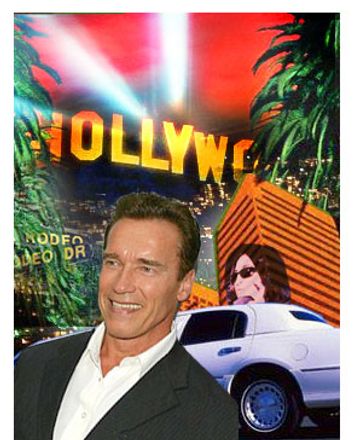
The minute Arnold Schwarzenegger announced that he was running for California governor Aug. 6, all of Hollywood knew that tales of his womanizing would make headlines again. The prospect of news cameras zooming in on Schwarzenegger’s private life was supposedly the big reason his wife, Maria Shriver, had reservations about his running. There had been plenty of stories about the actor’s high jinks even before he’d officially become a politician: In March 2001 Premiere magazine printed a now-notorious article by writer John Connolly that featured named and unnamed sources detailing instances in which the actor groped women’s breasts, bullied and humiliated assistants and crew members on movie sets, and cheated on Shriver.

Years earlier Connolly had revealed, in an October 1993 US magazine, that several women who worked for famed Hollywood madam Heidi Fleiss had auditioned for Schwarzenegger’s unsuccessful movie “The Last Action Hero.” The Los Angeles Times reported that Columbia Pictures’ parent company Sony was investigating whether these women were hired as “extras” on the overbudget movie. Around the same time, a French women’s magazine reported that one of Heidi’s women claimed the muscleman himself was a client while on the set of “Last Action Hero.” Schwarzenegger sued and won under France’s stringent libel laws, but with the actor’s sudden entry into the recall race, all the old stories were being chased again.

The whole month of August, I watched the recall story swirl around me, as a spectator, not a reporter. While many of my colleagues were covering Arnold, I was putting the finishing touches on my book, “Mr. and Mrs. Hollywood: Edie and Lew Wasserman and Their Entertainment Empire” (Carroll & Graf). It turned out that my seat on the sidelines gave me a remarkable view of one of the more riveting stories in town: how the media chased the women whom Schwarzenegger allegedly chased (or groped, fondled or harassed, depending on the source), and how a platoon of Hollywood women labored to bring forth their stories.

And once my book shipped to the printer, I got bit by the competitive bug and started chasing the story myself for a while, believing I had a line on one particular “action hero” tale (I didn’t). In no time, I was swept into a web of media plotting and intrigue. Connolly himself was back, peddling another Schwarzenegger scoop that could supposedly blow his past stories about the actor out of the water. The Los Angeles Times had a team of reporters talking to women with awful Arnold tales, but as the weeks passed, insiders fretted that the paper would never pull the trigger. Everyone from the New York Times to the supermarket tabloids had reporters chasing Schwarzenegger’s women. And suddenly, there I was, placing and taking calls from veteran actresses, Hollywood wives and Rodeo Drive hostesses, who began feeding me telephone numbers of Heidi’s girls and other women, as well as some men — big-time producers and writers and entertainment attorneys — who would supposedly tell me tales of Schwarzenegger’s misbehavior.

“I’m stuck in traffic here on Wilshire, calling you from a digital phone,” said one such cadet. She gives me a lead, just as another Hollywood helper checks in. “A lot of people want to see this news come out,” she tells me, while driving to her Chinese herbalist. Unfortunately, she adds, these people don’t want to be quoted. “There is a lot of fear and intimidation out there,” she explained. Some wives tried to persuade their husbands to go on the record with their eyewitness accounts of Arnold’s bad behavior. “I can’t do it,” one Emmy Award-winning producer told me, who said he’d been sworn to secrecy about a Schwarzenegger incident people were gossiping about. There were tense domestic dramas being played out behind green hedges above Rodeo Drive and Ventura Boulevard. But as the election approached, an uneasy détente descended on these streets. At least one actor’s-wife-turned-activist badgered her entertainment attorney friends to speak to the press, but evidently there was no percentage in their stepping forward. In Hollywood, you don’t tell secrets out of school. Many men closed ranks around the popular actor-entertainer, even as their women seethed.

Although some people, such as L.A. Weekly columnist Nikki Finke, criticized Hollywood women for remaining silent about Arnold’s notorious behavior on studio sets, many of them were in fact working behind the scenes to bring the stories to light. And of course some women, such as Candace Bergen, Cybill Shepherd and Barbra Streisand, were neither silent nor anonymous. They either spoke publicly about Schwarzenegger’s misbehavior or joined a group of celebrities in a Variety advertisement, in which they urged a “No” vote on the recall.

Despite the claims by Schwarzenegger supporters that the campaign was being orchestrated by Gov. Gray Davis, it had the feel of a grass-roots rebellion to me: women mad as hell at the way they’re treated in Hollywood — as symbolized by Schwarzenegger’s shameless groping and harassment — who weren’t going to take it anymore. Not all of the women working the cellphones were Democrats, either, although I admit I didn’t ask every person I talked to about their political persuasion.

One woman who made it her business to speak out was Heidi Fleiss herself. She was still promoting her 2002 self-published book “Pandering,” in which she spells out everything but the names in her little red Gucci address book. In 1993, Fleiss was taken in by an undercover policeman in a sting operation and charged with pandering and possession of cocaine. At the time of her arrest, Columbia Pictures was about to release the Schwarzenegger film “The Last Action Hero.” Newspapers printed the names of several men tied to that film, claiming they were clients of the madam and had allegedly hired Heidi’s “girls” as extras. The women also allegedly provided entertainment for some of the men, but if this executive perk was meant to boost the film’s box-office performance, it failed miserably. When the $80 million film was released that summer, it barely made $50 million in domestic rentals.

“She had a lot of important clients in politics, movies and government,” Fleiss’ father told me when I tracked him down. “She’s very open about it.” Indeed, Fleiss offers sexual advice on her radio show, transmitted live on KFSD in San Diego, and appears on TV shows, such as MSNBC News, to discuss America’s sexual hypocrisy. “The laws in this country are set up for men. They are patted, coddled and protected. But the women are humiliated, degraded and abused,” she told me when I found her. Fleiss also said she had a video of yet another woman — but not an ex-employee — complaining about Schwarzenegger’s bad behavior. But when I asked her to identify the woman, or provide any other details to verify the story, she was less than forthcoming. And when I asked her to confirm the stories about her girls working for “The Last Action Hero” and Schwarzenegger, she clammed up.

“I’m not going to talk about that,” she said. “To me, that’s in the past.”

The story of Fleiss girls on the payroll of “Last Action Hero” was so well known at the time that Sony, the corporate parent of Columbia Pictures, investigated it, as reported by several papers, and as recounted in the book “Hit and Run,” by Kim Masters and Nancy Griffin. Sony Corp. auditors reviewed the financial records of five films, including “Last Action Hero,” but never disclosed what, if anything, they found. Around the same time, the French magazine Voici printed an interview with one of Fleiss’ hookers, who claimed that the muscleman was indeed a customer. Schwarzenegger promptly sued the weekly women’s magazine. In 1995, a French court found that the popular magazine had violated France’s stringent libel laws, according to an item in the New York Daily News. As a result, the two parties settled. No one has ever proved that Schwarzenegger was a Fleiss client, though many have tried. Such a feat would require documentation, and as one former public prosecutor told me: “We only got those guys who were reckless or thoughtless enough to pay for services with a check or credit card.”

Although it’s illegal in California for both men and women to solicit or sell sex, few if any men have ever been convicted under state law. Indeed, the film industry is rife with rich men who misbehave, and hookers are simply an efficient way to transact business without having to engage in the niceties of social intercourse. “You pay a hooker $100 to have sex and $2,400 to leave you alone,” one man explained. But despite claims that prostitution is common in Hollywood, several executives embroiled in the “Last Action Hero” controversy were in fact tainted by the publicity about Fleiss girls auditioning as extras; at least one producer hasn’t worked much since then. But none of them returned my telephone calls about Schwarzenegger.

Meanwhile, the hunt for on-the-record sources grew more fierce inside many newsrooms. On Sept. 29, just eight days before the election, I stopped at a swank hotel in Westwood, where the Los Angeles Press Club was feting author Virginia Postrel. Amid striped cabanas and chaise longues, screenwriters, bloggers and print reporters mingled, including folks from Business Week, Playboy and Reason magazines. People are ordering martinis — “Let the vermouth blow a kiss to the gin,” one patron tells the barkeep — and everyone is discussing the recall, and the rumors of Schwarzenegger and women.

Lots of reporters here are trying to track down similar stories. Racing in the pack are ABC News, CNN and the Los Angeles Times, which a friend says is trying “to find one remaining piece to a story.” A young man from the TV show “Celebrity Justice” calls me to check out a false rumor. A few book deals are supposedly in the works, including one by John Connolly. He has uncovered something from Schwarzenegger’s past that is supposed to be so amazing that his agents at William Morris may auction the book the day of the election. A version of this tale will land on a gossipy Internet site, lukeford.net, and the Tuesday item will be repeated by several papers by week’s end — a rumor reported as news. (But in fact, Connolly’s agents would drop him a few days later, for political reasons, the writer says.)

Here, just eight days before the election, few of the dozens of reporters chasing the story had found sources who would both talk and let their name be used. By now, the terrain feels like a fox ranch at the height of pelting season. “It’s appalling to watch it unfold,” one friend confides. The story of the story has become the story. I made a few other calls and visits, including one to a movie agent on Sunset Boulevard. The agent all but tells me to throw in the towel. “A lot of young men don’t care about Arnold’s past, no matter how shocking. They just want change.” That pretty much sums up the attitude of all the men I interviewed for this piece. Not surprisingly, the Hollywood male assessment is diametrically opposed to that of the women, and the two conflicting currents will grow stronger in the days to come.

In desperation I returned to Heidi Fleiss who, once again, deflected questions about the actor being a client. When pressed, she sounds frightened. “Look. Warren Buffett is the second-richest man in the world and he’s working on Schwarzenegger’s campaign,” she said. “That’s a lot of power and money coming down on me. I don’t need that.” Instead, she directs me to the videotape that she’s been telling me about for days. It will soon be available for sale on her Web site. “Then, you’ll have a story,” she says. (When Salon finally sees the video, it turns out to feature an aspiring actress who claims to have dallied with an actor she jokingly refers to as “I’ll be back,” mocking Schwarzenegger’s accent, but there’s nothing in the video to link him to Fleiss’ women, or to anything other than consensual sex — and maybe not even that.)

On Thursday, Oct. 2, a scant five days before the election, the Los Angeles Times runs its long-awaited front-page story. A team of reporters have been researching the piece for seven weeks and their piece is based on six unnamed sources and one named figure, E. Laine Stockton, who used to be married to bodybuilder Robby Robinson, who has feuded with Schwarzenegger for years. Although the actor’s camp will characterize it as “puke politics,” the story is actually narrowly crafted — to the disappointment of many of the Times’ sources and the network of women trying to bring the stories forward. It centers not on the wild array of rumors reporters have been chasing down for weeks, but on specific incidents that could be classified as sexual harassment.

When the story comes out, a group of younger Hollywood women consider publicly condemning such behavior, but they balk at doing so. And who can blame them? Only 14 percent of the films released in 2000 were written by women and only 6 percent of those films were directed by females. “Hollywood has always been sexist,” the screenwriter William Goldman tells me. What else is new?

Schwarzenegger, meanwhile, doesn’t deny the Times’ report of his sexual harassment. Rather he offers a general apology for “behaving badly” in the past, saying, “Where there is smoke, there is fire.” He then goes on to deny that several of the specific incidents took place. He also attacks the messenger for reporting on his notorious bad behavior, calling the Times piece “trash news.”

By Friday, there’s a sense of unexpended trouble in the air. My network of Hollywood helpers has expanded in the past week to include women in Nashville, Tenn., New York and Vancouver, British Columbia. After weeks of trying to bring forth the allegations, several grande dames of Hollywood band together to denounce Schwarzenegger’s treatment of women. Peg Yorkin of the Feminist Majority, actress Polly Bergen of the National Organization for Women, and Karen Pomer of Code Pink join religious groups in a press conference Friday criticizing the gubernatorial candidate.

The New York Times winds up printing not its own sexual rumors piece, but a story about the story in the Los Angeles Times. But the Times has its own mini-scoop, taken from a book proposal by a director, this one called “The Master Plan.” It alleges that Schwarzenegger admired Adolf Hitler and incites another flurry of press conferences, allegations and denials. And on Saturday, the Los Angeles Times runs another story about Schwarzenegger’s sexual behavior, bringing forth another five women who — on the record — repeat allegations of harassement.

By Sunday, four more women have come forward in the Times to accuse the Republican candidate of groping, fondling and sexually harassing them, bringing the total to 15 females. In retaliation, about 1,000 people cancel their subscriptions to the Los Angeles Times, the paper reports. Many of those interviewed about the cancellations are men, who claim that the Times’ story was politically motivated, and that the women were cowardly to wait until now, a few days before the election, to speak out.

Far from being cowardly, though, I thought the women who told their stories were brave, given the sexism rampant in Hollywood. And in the end, I wound up admiring the network of Hollywood women who managed to wrestle the story of Schwarzenegger’s dark side into the light. It’s clear they managed to convince the last-minute tale-tellers to come forward, and to let their names be used. It’s probably not over yet — my would-be helpers were still phoning Sunday, on their way to dinner and meetings and Yom Kippur events as night fell — to talk of more news about to break.

It’s up to voters to determine if these stories of bullying and humiliation should disqualify the actor from becoming governor. I think about the agent who told me “young men don’t care” about the allegations against Schwarzenegger. But it’s clear many women do. In a normal election campaign cycle, there would be many more weeks for the story to unfold — for more women to come forward, for the actor to shoot down the stories, for the electorate to weigh the evidence and decide what to make of it. The truncated recall campaign means it all has to happen by Tuesday. But some Democrats are promising another recall if Schwarzenegger is elected. It’s hard not to believe that the stories of his “behaving badly” with women will keep unfolding in the weeks and months to come.

Death of the last tycoon

At a star-studded memorial, Hollywood bids farewell to legendary Universal head Lew Wasserman, a Mob-reared patriarch who makes today's show-biz honchos look like midgets.

  • more
    • All Share Services

When Lew Wasserman died on June 3, his wife of 66 years, Edie, didn’t want a show-business funeral. Instead, she quietly buried her husband, the former chairman of Universal Studios. Wasserman slipped from bedside to grave site in five and a half hours — surely some kind of record — and his unusual burial added to his iconic status. But it left a gaping hole in an industry that needed to mourn its patriarch’s passing.

So, earlier this week, Edie Wasserman and Universal Studios hosted a memorial inside the Universal Amphitheater. The somber event was attended by movie and political stars: Sharon Stone, Warren Beatty, Jodie Foster, Larry King, producer/director Ron Howard, investment banker Robert Strauss, Jayne Meadows (aka Mrs. Steve Allen), Suzanne Pleshette, Al Gore, Bill Clinton, California Gov. Gray Davis, House Minority Leader Richard Gephardt and about 4,000 others.

Although eight Wasserman associates eulogized him, none conveyed the scope and import of the man’s accomplishments. How could they cover seven decades in 90 minutes? Barry Diller, now chairman of Vivendi-Universal Entertainment; Sidney Sheinberg, former president of MCA Inc.; Jack Valenti, Hollywood’s lobbyist in Washington; actress Suzanne Pleshette; Dreamworks co-founders Steven Spielberg and Jeffrey Katzenberg; AFL-CIO president John Sweeney and ex-President Bill Clinton certainly tried.

Some could only describe Wasserman by alluding to the black-hearted hornswogglers who acted as CEOs of other companies in recent years — Enron’s Kenneth Lay, for example, or Global Crossing’s Gary Winnick. Both men rubbed elbows with Hollywood, and Winnick even bought MCA’s 1936 Beverly Hills headquarters, where Wasserman got his Hollywood start. But Wasserman never did like the junk-bond man’s style, not his looting of $734 million from the company’s shell nor his scooting up to his $94 million manse.

Of course, what none of the eulogists mentioned was that Wasserman had also once been in scandal’s leering eye. In the late 1950s, when he was king of the screen, his firm, MCA, was investigated by two federal agencies and one grand jury. Back then, the 45-year-old ran the world’s top talent agency with the most Hollywood stars; a production arm that created 60 percent of prime-time TV; a library of classic radio shows like “Amos and Andy”; some of the best old movies ever made, such as “Double Indemnity” and the buddy films of Bing Crosby and Bob Hope; the richest TV syndication firm, which sold reruns of “Sgt. Bilko” and others; and all the land, props and buildings at Universal, the biggest studio in the world.

What a difference half a century makes. Compared to the multinational entertainment conglomerates of today, Wasserman’s shop was a son-and-pop operation. Today, the world is dominated by six studio-based hyphenates: AOL/Time Warner, Vivendi/Universal, Walt Disney Corp., Viacom/Paramount News Corporation/20th Century Fox, and Sony Pictures/Columbia. There is little in the way of books, films, TV shows, records or magazines that is not manufactured, financed, distributed or sold by the Big Six. They are “vertically integrated” — they own most of the businesses in their industry — which at one time might have made them illegal monopolies. But no one Hollywood player has been hit with a federal antitrust investigation.

Wasserman also differed from the pack in his training and experience. He grew up in Prohibition Cleveland, home to the “Silent Syndicate,” or Jewish Mafia. These good fellows bought bootleg liquor from traders such as the Bronfman brothers. They smuggled it in from Canada and sold it for a fair price in dance halls and speak-easies. By the time Wasserman was 12, he was working in this “open” city, selling candy in a vaudeville theater, walking several miles to work and school, helping support his family. Later, he landed a well-paying job at an elegant Mob-owned nightclub where, in the back, the rich gambled illegally, knowing that the police would never raid the place without first tipping them off. When Ohio failed to legalize gambling, the Cleveland mob moved to Nevada and built the Desert Inn in Las Vegas. The mobsters grew so successful that they appeared in one of TV’s earliest dramas: Sen. Estes Kefauver’s hearings on organized crime. Modest to a fault, these men remained mum or invoked their Fifth Amendment rights.

Likewise with Wasserman’s mentor and MCA’s founder, the late Jules Stein. Stein sold bands to nightclubs on the South Side of Chicago — Al Capone’s territory — and dealt with guys named “Greasy Thumb” and “Cherry Nose.” One of Stein’s clients kept a loaded .45 automatic in his desk. Whenever Stein came to talk business, the owner would sit at his desk, prop his feet up and shoot at the sewer rats scurrying around his basement office. “You had to have steel guts to deal with those guys,” said one early MCA hire. Stein qualified. He even expanded his client services and sold laundered napkins, cocktail swizzles, bathtub gin and dancing girls — precursors to Hollywood’s packaged deals. “You got to understand those times,” said vaudevillian Rudy Horn, a former MCA client. “You had to work with the Mob in order to stay in business.”

And so it is today. The Mob may be corporate and a tad more refined. They wield MBAs and CPAs rather than automatic weapons. But they act as though they’ve got friends at the precinct and still take the Fifth. As John Sweeney said Monday: “Most of today’s CEOs have made their money by stepping on people on their way up.” But not Lew, he added: “He lifted people up.”

When William Jefferson Clinton first met Wasserman in the late 1980s, the studio chief invited him to meet a group of his studio guys. After Clinton left, Wasserman raised an eyebrow and told the group: “Keep your eyes on that young man.” And they did. Wasserman eventually raised cash for Clinton’s campaign — including $1.2 million one record-breaking evening at his home — and helped defray Clinton’s $11 million legal fees stemming from his government investigation. “Lew helped me become president. He helped me stay president, and he made me a better president,” Clinton said.

Also present was ex-first lady Nancy Reagan, who owes much to Wasserman. In 1952, her husband was a floundering actor, an MCA client and the Screen Actors Guild president. At Wasserman’s request, Ronald Reagan and the SAG board voted to waive a union rule so MCA could act as both employer and agent to actors. That prompted outcries from other agents, who were bound by union rules. Years later, the government indicted MCA for violating antitrust laws, but Wasserman settled. By 1966, SAG had elected another leader, Wasserman was studio mogul and Reagan was running for governor of California. Before his election, MCA made sure to buy Ronnie’s old movies and sell them to TV stations as reruns, where they were viewed in the crucial weeks before Reagan’s victory.

With Wasserman gone, it’s hard not to look at the other studio chiefs without measuring them against him. Disney’s Michael Eisner is nearing 60 and has been running the company for 18 years. An early apostle of “synergy,” Eisner has not been able to lift the third-place ABC network and connect it to Disney’s other assets, even though that was the point of buying the network in 1995. These days, Disney’s theme-park numbers are down; its Internet ventures, once enthusiastically launched, are dead; and 4,000 Mouseketeers have lost their jobs. Shareholders recently demanded more accountability from the executive suite, but Eisner seems isolated and oddly adrift in his $25 billion media ship.

Paramount Studios, home of “The Sum of All Fears,” has managed modest hits under the tag-team of Sherry Lansing and Jonathan Dolgen. The studio contributes about 10 percent of the revenue to its $23 billion parent. Viacom owns the MTV Network, CBS and Simon & Schuster, making it as formidable as its 78-year-old chairman, Sumner Redstone. Yet Redstone has starred in one of the year’s top boardroom comedies, fighting with his successor-turned-nemesis, the 59-year-old Mel Karmazin. Things got so bad recently that money managers pressed the carrot-topped chairman to reconcile. By then, however, the voluble Karmazin had retaliated.

Then there’s the soap opera at AOL/Time Warner. Two years ago, when the Internet portal merged with the media Goliath, its masters announced that the new media age had dawned. “Convergence is really right around the corner,” said president Steve Case. He, Robert Pittman and Richard Parsons became the Conglomerators, overseeing an e-corp valued at $155 billion. Believing in their bosses’ vision, the worker bees held on to their stock — even after Case, Parsons and Pittman sold some of their shares at high prices. AOL is still the world’s largest media company, with Warner Music, Warner Bros. Studios, WB Network, CNN and Time Inc., but the $38 billion firm has watched its shares dive. The company is now roiling, with employees openly resentful and executive headhunters searching for replacements. “Scooby-Doo” — where are you?

Septuagenarian Rupert Murdoch owns the $14 billion News Corp. With his Australian sports teams, English tabloids and in-your-face Fox network, Murdoch recently tried to buy DirecTV to catapult his company higher. But the bidding took on shades of “Star Wars: Episode II Attack of the Clones” and Murdoch lost his much-desired prize.

Sony Pictures is having perhaps the town’s best film year, what with “Spider-Man,” “Men in Black II” and “Mr. Deeds.” But its $9 billion media empire is just a tiny part of a giant Japanese electronics firm that is extremely nervous. Its Tokyo leaders are grappling with an enormous banking crisis that is squeezing Japan and all its businesses. As Suzanne Pleshette said at the Wasserman memorial, “The world today sucks.”

Even at home, show biz is under siege. Despite headlines about “boffo” box office receipts, movie-ticket sales have been flat for years. American audiences have reached a saturation point, according to EDI/Nielsen, and studio gains will come only from ticket-price increases, foreign box office and squeezing more dollars from video, TV and DVD sales. Musicians are agitating with their labels, trying to change the gangsterlike practices that once kept Sophie Tucker and Louis Armstrong tied to Syndicate nightclubs. And the new payola investigations unfolding in Washington sound eerily like those begun in the 1950s.

Meanwhile, studios are being sued in various courts for various antitrust claims. Some have alleged that studios colluded to sell videos at discount rates only to Blockbuster, which is owned by Viacom/Paramount. Thousands of independent video stores have gone out of business since the Big Six allegedly cut this deal yet, so far, the suits have had mixed results. Given the public disgust for overweening corporate interests, it could be time for the antitrust pendulum to swing back to 1958, when Wasserman ruled the land.

At the height of dot-com mania a few years ago, I visited Wasserman in his office. He was gruff, intimidating, funny and, eventually, charming and warm. We talked about the market mania, the Great Crash of 1929 and the folly of short-term moves. Although he didn’t mention it, his own dear MCA/Universal had been volleyed to and fro by traders who had no stomach for the long-term commitment. In 1990, Matsushita bought MCA but abandoned it when trouble knocked down Japan’s economy. In 1995, the Japanese sold MCA/Universal to the Canadians at Seagram Corp., owned by that old rum-running Bronfman family. Edgar Bronfman Jr. struggled to make his mark, but spent much of his time selling pieces of Universal and buying others. Ultimately, Bronfman didn’t like being a mogul and, in 2000, sold Universal to a French water company.

Whereas Wasserman used to avoid huge loans, new chief Jean-Marie Messier embarked on an 18-month-long binge, borrowing $33 billion. He shopped compulsively, formed complex financial transactions and shielded them in secrecy until Vivendi/Universal was under fire. Ironically, the shareholders who forced out Messier turned out to be the Bronfmans, whom Messier accused of “bootlegger methods.” In the end, however, what doomed Messier was his own savage display of aggressive capitalism — his “Americanization,” as the independent French media has dubbed it.

Now the conglomerate catchword is “unwind,” as though units and workers are pieces of twine to unspool. Vivendi/Universal has to offload goods from its top-heavy cart. AOL/Time Warner will certainly shed some of its wares, while no one can say if and when News Corp. and Disney will follow suit. Today’s media lords resemble nothing so much as Borscht Belt types rummaging through their pockets to make a deal: “You want a TV show? A movie? How about some records?”

The days of the global entertainment kingdom are numbered. When Redstone, Eisner, Murdoch and the others pass away or retire — as they will — or when Pittman, Parson and Case move on — which, by their nature, they must — so will their companies. No ordinary man can manage these frigate-like monstrosities, let alone steer them smoothly across the seven seas, while innovating services, mediating large personalities and recording double-digit growth rates. At some point the ship tips, the sharks circle, the crew mutinies. And the captains will retreat, well compensated, no doubt, but without any lasting legacy.

Wasserman was not perfect. And he was definitely not ordinary, especially by today’s standards. No one ever accused him of defrauding employees, and he was monklike about his fiduciary duties. That’s remarkable for a tycoon who spent 66 years at the top of an industry not noted for its honor or ethics. “When you look today at scandals unfolding at Martha Stewart, Global Crossing, Enron or Adelphia, you know that none of those would have happened under Lew Wasserman,” said Tom Pollock, former head of Universal Films.

On my last visit to Wasserman’s office, he talked and I listened. As I was about to leave, he told me a story about an MCA bookkeeper who retired in the late 1950s, after 25 years in the Beverly Hills office.

She came into Wasserman’s office crying.

He said, “Sit down. What’s the matter?”

She said, “The plan. The plan.” She was holding a copy of MCA’s retirement plan in her hand — a plan Wasserman himself had created in 1945 — but couldn’t stop crying.

Wasserman said: “Let me see the paper. Is there something wrong?” He thought the numbers were wrong, that she had been cheated.

“No,” she said, catching her breath. “I’m retiring on more income than I made when I was working.”

The story might be regarded as self-serving, although I think it’s probably true. But Lew Wasserman was the last Hollywood studio chief who could tell it — and make you believe it.

Continue Reading Close

Storming Hollywood

Wolfgang Petersen, director of "The Perfect Storm," wanted to cast Mel Gibson instead of George Clooney, and is "perfectly fine" with Salon's chilly review of his blockbuster.

  • more
    • All Share Services

Storming Hollywood

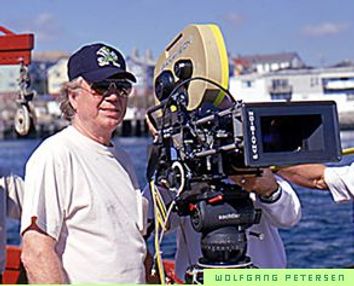
Wolfgang Petersen, 59, is the German director of “The Perfect Storm,” starring George Clooney and Mark Wahlberg. The film’s strong opening over the July Fourth weekend, and continued strength at the box office, have surprised many industry veterans, who were betting that “The Patriot,” starring Mel Gibson, would do bigger business. As it happened, “Storm” racked up $63 million over the holiday while “Patriot” brought in a paltry $35 million. Result? Petersen’s a happy man and Clooney and Wahlberg aren’t feeling so bad themselves. As for Gibson, he’s undoubtedly hanging in there.

Petersen began his directing career in German television during the 1960s. His first feature film, “One of Us Two” (1973), won the German National Film Prize for director. In 1981, he directed the acclaimed “Das Boot,” for which he was nominated for the Academy Award for best director. And after moving to the United States, Petersen wrote and directed the stylish thriller “Shattered.”

His other films include “In the Line of Fire,” “Outbreak” and “Air Force One.” We spoke a few days after the opening of “The Perfect Storm,” and the publication of Salon’s not exactly glowing review of the film — “loaded with dumb dialogue and blubbery melodrama,” wrote staff critic Stephanie Zacharek.

Petersen began our conversation by good-naturedly needling me about the review, “So this is Salon, eh? You are really big fans of my movie. I hear that Salon hated ‘The Perfect Storm.’ Why did they hate it? Who wrote the review? Did you write it?”

“No, I didn’t write it,” I was relieved to be able to tell him.

“Well,” Petersen continued, “maybe hate is too strong a word. I heard only that it was negative. [He laughs.] I’m fine about it. I’m only a little bit joking. But I thought maybe you had written it, and then I was going to have some fun with you. I’m perfectly fine about the review. Now, let’s begin.” And so we did.

What attracted you to directing “The Perfect Storm”?

Everything started with Sebastian Junger’s book because in reading the book ["The Perfect Storm"] I got into this world in Gloucester, Mass., which I found fascinating. I grew up in Hamburg, Germany, and know a little bit about the water, ships and boats. But I had no idea about the fishing industry. And the book gave me a pretty good insight into what kind of job it is, how dangerous and hard. But then, what became the most important thing to me was that here was a true portrait of a contemporary, American blue-collar world.

That became fascinating when I considered making a big movie out of it. To do that would be miles apart from what Hollywood normally portrays — you know, the more glamorous jobs. And I wanted to go with the common man or the “little people,” so to speak.

Then, of course, I could deal again with the frightening element of water. I just love that and it’s always a challenge for me to do a film that deals with that element. I did it 19 years ago [in "Das Boot"] and I was ready to do it again.

What is it with you and the water? There’s “Das Boot,” which takes place in a submarine. There’s “Shattered,” where an eerie, key scene occurs underwater. Tell me more about your fascination with water.

I grew up in a little town called Emden in Germany and, later, Hamburg. Both had harbors, ports and shipyards, although Hamburg was a very big seaport. As a boy, I was just hanging out with these people on boats and ships, and whenever I wanted to think about life and philosophy, I’d just go and sit on the shore and look out at the ocean. The sea was magical to me. As a 13-year-old, it was a place where my imagination and fantasies were transported to infinity.

Also, when I was 6 or 7 years old, during the 1940s, something powerful happened. I will never forget this. It was shortly after the war in Germany and we were very, very hungry people. All of a sudden, I remember that out of the mists of the sea came these huge ships streaming into the harbor. Again and again. They were mostly American ships, and we were looking up at these ships. Sailors onboard were throwing to us kids below all kinds of goodies, like food and chewing gum. We scurried around like little rats to grab the food. And that added to my idea of wonder coming out of the sea, that the ocean carries us to places far off, like spaceships do. These memories add to my feeling that the sea is a magical place. I’m very connected to it.

You’ve been praised for depicting working-class heroes in “The Perfect Storm” and you just told me that was a key attraction in directing the film. Do you think this struck a chord with Americans?

I’m totally shocked and surprised that the movie did so well. The so-called experts said that the big winner over the Fourth of July weekend would be “The Patriot” because of Mel Gibson and the movie’s theme of the American Revolution. Plus, there was a question mark about our film having an ending in which the main characters die. It’s not your usual Hollywood ending. Also, the polls said that “The Patriot” would be ahead of us. So we said, “OK. They will open better than we will. But let’s see who has the better legs.” That was our defensive position.

But then it happened the other way around. It was shocking in a great sense for us. We were thrilled. We will break $100 million on Monday [July 10], which is incredible after 10 days. But it’s always hard to tell what audiences really reacted to. Our thought is that perhaps this is not your typical big-time, popcorn Hollywood movie. That may be attractive to people. Also, maybe you were curious about the film because it doesn’t feature big stars. It’s working fishermen, who are out in a huge storm. It’s kind of a fresh idea.

Also, there were breakthroughs in special effects. For the first time we as filmmakers were able to get the audience into a world where they normally can’t go. We certainly never shoot in the midst of an apocalyptic storm for we would end up dead. And people might have been attracted to seeing that.

The other thing is that, right now, George Clooney and Mark Wahlberg are very hot guys. They are new, fresh and not from the older generation of movie stars. There’s a lot of interest in that. We have a strong female audience, slightly more female than male, something like 52 percent to 48 percent. That might have to do with George and Mark.

Other than that, I don’t know. Sometimes, the audience just has a strong feeling that we can’t completely figure out. I can only say I’m very happy about it.

How was it working with George Clooney?

He’s very down to earth. Extremely funny. Cracking jokes all the time. He’s really a duke. We needed each other to be on the same level. I like to have a happy set, where everybody feels good and we are having fun. I don’t like what you very often find on Hollywood sets — tension, screaming and yelling. I can’t work like that. I like so much what I’m doing, going to the stage every day and shooting a movie, and I think that’s contagious and actors feel more comfortable. And that’s exactly who George is, too. He fits in perfectly. He’s a workaholic who likes to go to work and wants to have fun.

The shoot was so tough — you probably can’t imagine it — with the enormous amounts of water these guys endured, and the rocking boat and the seasickness on the set. It was real good we had George, who kept everyone’s morale up and who cracked all these jokes and never complained. He was great.

It’s hard to imagine jokes flying on the set of a film like “Storm.” But perhaps it’s the only way you can deal with a tragic tale. How was it working with Mark Wahlberg?

Mark is a sweetheart. He was so perfect for the part. He’s from that area, he’s from a real working-class background, with eight or nine brothers and sisters. And his accent is genuine. He was really into researching the characters. He slept in the real Bobby Shatford’s room at the Crow’s Nest [bar] for a few weeks. He was there all the time, hanging out in the bar, playing pool with the guys, listening to them talk. He started deep friendships with the Shatfords and with Bobby’s mother, who was still alive at the time but who recently passed away. He really took this movie seriously. He’s great in the part and I think he has a great future. He’s only 28 or 29 years old, but he will be a big star.

Is the ocean the real star in this movie?

The real star is the storm. Originally, I was planning to cast Mel Gibson as the lead, but it didn’t work out. He was doing “The Patriot.” We had serious talks, but it was too tricky with his schedule. And there was the fact that he’s a superstar — he’s so expensive. Our movie was already so expensive [at $140 million] that we decided to go with George. In the end, I thought it was the right decision, anyway. George blends much better into the whole landscape there, into the story, and is more of an ensemble player than Mel Gibson could ever be. Mel is so much of a movie star.

The film incorporates many computer-generated special effects. How did you like directing both humans and computers at different stages of the film?

That was fascinating. It’s a great process. People may think it restricts the creativity for the director, but it actually opens it up. You are working on these images like a painter or a sculptor. I can design the whole look of the ocean, getting a higher crest on this wave here, or more wind and lightning there. Industrial Light and Magic [George Lucas' special-effects house in San Rafael, Calif.] will do whatever you want. Bit it’s not like ILM will make this look like a great storm, and then we’re done. No. It’s a laborious effort.

A lot of these scenes were shot on the boat with water drenching the actors, who were set against a blue screen. We worked on the special effects over a satellite system that linked ILM to us. They were working up north, and I was working down here, and we each had a satellite dish and a permanent link. Twice a week we’d meet [in a teleconference] with 20 or 30 people from up there, and we’d have 10 people sitting down here. I could see them [on a monitor] and they could see us. We’d both see a shot on our video monitors. Sometimes, ILM would very carefully extend our waves that we had made on the stage. But, basically, it was up to me and Stefen Fangmeier [of ILM], who would basically ask me: “What do you want to do in this scene?”

“I’d like to have a 45-feet-high wave, not 40 feet, and I want the sky a little darker,” [I'd reply]. We’d start working on one whole image and design it. It was a fascinating process in which we had complete control.

They’d send us 15 shots or so a week, all works-in-progress shots. And then we’d go through them. “What do you want here?” they’d ask. It was a very layered process. But that doesn’t mean it was done all in one sitting. I had to come back and we’d adjust and adjust, sometimes for weeks and weeks, until finally that one shot is completed. It was very elaborate, but you really do get to create your own vision of a storm.

The emphasis on special effects is one of the criticisms of “The Perfect Storm.” Are you concerned with special effects and computer wizardry in Hollywood replacing the old-fashioned elements of story, plot and character development?

There is always that danger. You can’t be too much impressed by the special-effects thing. But for the movies I do, I think it will help me, because the idea of “The Perfect Storm” is not, “Look, guys, at what great effects we have!” It’s more about telling a story of real men who go out to sea and encounter an incredible storm. It’s a real tale in a realistic world.

We tried to use all of these computer tools to tell a true story. Since I tend to do these kinds of stories anyway, these tools are absolutely wonderful for me. I can now get into territory and worlds I never could have gotten into before. You could not have done a film like “The Perfect Storm” a few years ago. Water is the most difficult thing to re-create and create in the computer and, for the first time, they’ve successfully figured out how to re-create water by working with “The Perfect Storm.”

I see this whole special-effects thing as helping tell a story in a better way — especially for films I like. And to get us to real places and situations where we normally cannot go and get out alive. But if it’s merely effects for effects’ sake, then you are in danger of losing the keys of storytelling and character. And that’s a real danger.

You were involved early on in devising the Web site for “The Perfect Storm.” Do you see the Web as a totally different form of film entertainment? Or is it simply part of a movie’s promotional efforts?

The Internet was completely new to me and I had never done this for any of my films. Three years ago, it was not as popular to have a Web site, not until “The Blair Witch Project,” which changed a lot of things here.

But we thought in order to get great publicity for “The Perfect Storm,” let’s really work on an interesting Web site. I must say, I still don’t completely understand how to measure the Web. When I hear about all these hits, these hundreds of thousands of hits, what does that really mean? How do you measure its success? It’s all so new. But I was surprised about our success over the [Fourth of July] weekend. We found that almost two out of three people wanted to see “The Perfect Storm” over “The Patriot.” And maybe part of that had to do with the fact that a lot of people saw our Web site, which was complex and well-visited. We didn’t take any chances, and designed the site as well as we could, hoping it would add to the whole promotion.

At some point, a feature-length film will be on the Internet. The big question, though, is how do you control it and make sure you’re not going to get financially ripped off?

But watching films in a theater with a big screen will never change. Everybody still loves that. Movies in theater are more popular than ever, even with DVD and videos and laser. People still go like crazy to theaters and sit with 1,000 other people, partly because it’s a tribal experience.

How different are European film audiences than American moviegoers in your experience?

Wow! How different are they? Very. Europeans are quieter and more pensive. When I first came here to America, I arrived with the typical European arrogance and went to see “Star Wars” in a huge theater with 2,000 people, who ranged in age from 8 to 88. But when the film started, they were all screaming and yelling at the action on the screen. It was unbelievable. I was shocked. Americans really talk to the screen — and they are loud. It’s like a circus. I love that. In Europe, when you go the movies, it’s like going to a temple to see art. You’d never yell at the screen.

Were you worried about “The Perfect Storm” being judged harshly by the real characters it depicted?

Oh yes, very. I was concerned and hoped they would see it and appreciate the way we did it. We screened it for the people in Gloucester and had a party afterwards and it was a very emotional time. It was a lovefest. A lot of tears but also a lot of hugging, too. “This is our life,” they said. “Thank you for a great tribute to our world.” And the people who are the closest to the Andrea Gail victims were very relieved. Chris Carter [the woman, played by Diane Lane in the film, who lost her lover to the sea] said that the film was a closure for her.

Of course, they were saddened because after eight years they had to go through it again. But they were proud, too. We tried to show the men on the Andrea Gail as good people with problems, hopes and dreams. Their world is blood, sweat and tears, but the residents are all proud of what they do. It was an unusual experience for me. Bottom line, it was great.

So what are you on to next?

It’s too early to say. This film took a lot out of me. I go to Europe and then to Japan to promote it. Then, I’ll come back and take a deep breath. And then you can call me again to ask.

Continue Reading Close

“Erin Brockovich”: The real story

In the movie, the victims in the celebrated lawsuit won big. In reality, many are wondering where the money went -- and they're mad at their lawyers.

  • more
    • All Share Services

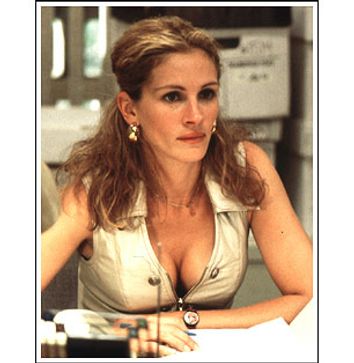
The Julia Roberts film “Erin Brockovich” is in its fourth week as one of the most popular movies in America. It’s billed as being based on a true story. But the film tells only half of it — and the half it doesn’t tell isn’t pretty.

The film is about a down-on-her-luck but defiant, twice-divorced, working-class mother of three. As a lowly clerk in a small, private law firm, she independently starts looking into a case involving pollution in the small town of Hinkley, Calif. In the movie, the foul-mouthed, full-cleavaged Brockovich travels to the town on her own initiative, investigates the case with the help of dogged smarts and a few low-cut dresses and persuades her employer to take on the case. When he joins forces with a big-time Los Angeles law firm, she defiantly resists. In time, her street smarts outbalance the incompetent, unfeeling lawyers at the downtown firm, and the residents come out with a $333 million award — and Brockovich herself gets a check for $2 million.

The truth is different. That’s not unusual for Hollywood, and doesn’t mean that the film — which has garnered favorable reviews — is bad.

But many plaintiffs in the Hinkley case say the movie misrepresents what happened. Far from being the populist victory the movie depicts, the Hinkley lawsuit was a case study in how the rise of private arbitration, as an alternative to costly public trials, is creating a two-tiered legal system that not only favors litigants who can afford it over those who cannot, but is open to potential conflicts of interest and cronyism. The case never went to trial, because Pacific Gas & Electric, the utility accused of polluting Hinkley, and the plaintiffs’ lawyers agreed to private arbitration before a panel of for-hire judges, some of whom had socialized with the plaintiffs’ attorneys.

Now, many of the townspeople who sued complain their awards were smaller than they deserved. Some have even hired lawyers to get back excessive legal fees charged to children. They say the attorneys kept their awards for six months after the settlement money was delivered, and that they didn’t receive interest on it. They complain that there was little or no apparent logic behind the varying amounts of money individual plaintiffs received; some claim that the arbitrators never even looked at their medical records.

Some of these charges and complaints are the predictable result of the sudden, uneven disbursement of a lot of money into a small town. But evaluating these charges is difficult to do, because the arbitration process is shrouded in secrecy. The formula for disbursing the money has been kept secret, as has the entire transcript of the arbitration proceeding. Had the case gone to trial, the transcript and the disbursement would be a matter of public record.

After the settlement, the Hinkley plaintiffs’ attorneys took some of the arbitrators in the case on a steeply discounted Mediterranean luxury cruise. The fraternization between the private judges and the plaintiffs’ lawyers led California Supreme Court Chief Justice Ronald George to begin a study of the business of arbitration. And while Brockovich appears on “Oprah,” some townspeople are preparing for a new round of lawsuits — this time against their former lawyers, including Brockovich’s firm.

The following report is based on interviews with scores of residents of Hinkley, and more than two dozen judges and attorneys. Every effort was made to elicit comment from the powerful attorneys who represented the residents of the town. Two were ultimately interviewed; in both cases the conversations were short and explosive and terminated abruptly by the lawyers. What comments they did make in the case are included below. PG&E, as well, declined to comment.

“The movie is mostly lies,” said Carol Smith, one of the real-life plaintiffs. “I wish the truth would come out because a lot of us are upset. I understand the movie is going to make Erin and the attorneys out to be heroes.

“But where’s the rest of our money?”

- – - – - – - – - – - – - – - – — – — – — – — – — -

That question echoes from many of the 650 plaintiffs in the case that became Anderson vs. PG&E. The tale started in Hinkley, a town of about 3,500 in the Mojave Desert about 120 miles northeast of Los Angeles. Residents here are surrounded by methamphetamine labs and live next to two Marine bases, downstream from a huge naval weapons center, and 20 miles east of Edwards Air Force Base. Over the last 15 or 20 years, many of the residents have also drunk, bathed and swam in water polluted by a chemical called chromium 6.

They suffer many physical ailments, including bloody noses, various intestinal ailments, bad backs, rotten teeth and tumors. In 1952, PG&E built a pumping station on 20 acres near town as part of its enormous gas-transmission system. The station pumped natural gas through an artery of pipes stretching from the Texas Panhandle to the San Francisco Bay Area; the system served PG&E customers in much of the state’s Central Valley.

The company used the chromium to prevent rust from corroding its water-cooling system. The chemical runoff was disposed of in unlined wastewater ponds. (After 1966, the utility lined its ponds.) In 1987, during what the company claims was a routine check, PG&E found that its chromium had leaked into the water supply. In December 1987 it reported its findings to the California Regional Water Quality Control Board, as required. The board ordered the utility to clean up the pollution.

In the early 1990s PG&E undertook a $12.5 million cleanup effort, approaching the owners of three farms and 10 houses in the area and offering to buy their properties.

Roberta Walker was one of the people approached by PG&E, which offered to buy her house (valued at $25,000 at the time) for $60,000. She said she didn’t want to sell. When the utility asked her for a figure, she blurted out $250,000. A few weeks later, the company agreed.

The quick acceptance made her suspicious. That’s when she started searching for a lawyer. Through a friend, she found Masry & Vititoe, a personal-injury firm in Westlake Village, northwest of Los Angeles. At the time, Erin Brockovich worked as a clerk at the firm. Ed Masry drove out to talk with Walker, and eventually brought Brockovich.

Other townspeople later heard about the visiting attorney and called Masry’s office. He soon placed an ad in the local newspaper, announcing a “town meeting” to collect clients to mount a lawsuit.

Masry told the residents that he believed that PG&E’s chromium had poisoned the water, and that this was responsible for their ailments. He offered to represent them in a suit against the giant utility. Throughout 1992, he and Brockovich continued to drum up clients.

During this time, Brockovich, by her own account, went to UCLA’s library and found as many as 120 articles that said chromium 6 was carcinogenic. “In each and every article, it clearly depicts that people who have exposures have chronic nosebleeds, kidney problems and colon problems,” she said during an interview.

Other scientific studies, however, from contaminated spots in China, Scotland and the United States, have failed to find cancer-causing properties in waterborne chromium 6. A toxicologist at the U.S. Department of Health and Human Services, Sharon Wilbur, says that chromium 6 in water doesn’t harm humans. “It’s very unlikely that people could die from drinking chromium 6 in the water, even over time,” she said. Because the arbitration that eventually decided the case was closed to the public, it’s unclear what sort of proof plaintiffs attorneys offered to support their claims.

By the spring of 1993, Masry had collected 47 clients. The signed retainers specified that he would collect 40 percent of any award. Masry filed a suit, claiming PG&E had discharged toxic wastewater into the area. PG&E responded by saying the complaint didn’t state sufficient facts or other legal grounds to support its claims. But the case moved forward in San Bernardino County Superior Court.

- – - – - – - – - – - – - – - – - – - – -

At this point, Masry brought in some big guns: Thomas Girardi of Girardi & Keese in Los Angeles, and Walter Lack of Engstrom, Lipscomb & Lack in Century City. Lack’s firm specializes in insurance bad faith and toxic torts; Girardi is one of the state’s best-connected and most powerful attorneys. The Wilshire Boulevard attorneys had the resources to wage what became a 650-plaintiff case, and they, too, asked clients for 40 percent of any award, plus costs. The plaintiffs agreed. “It was ‘Either play our game or forget about it,’” said resident Nola Wetterman. The plaintiffs played.

Girardi and Lack were known for having sued a slew of companies on behalf of 624 present and former Lockheed aerospace workers. In that case Girardi argued that a number of alleged carcinogens found in materials used at Lockheed’s Burbank, Calif., plant had caused his mostly elderly clients to suffer from cancer, memory loss and other ailments. Girardi broke the suit into dozens of cases — each with ex-workers grouped by length of employment, type of ailments and other factors. In 1994, the groups started winning increasingly larger awards until the fifth case went before a Los Angeles Superior Court judge in August 1998. That’s when judge and jury awarded 38 former workers $785 million — more than $20 million each.

That jaw-dropping victory catapulted Girardi and Lack into the big leagues of California litigators. Less noticed has been the fate of those awards. As early as 1992, Lockheed had dropped out of the case and paid $33 million to the plaintiffs’ attorney as a settlement; in the following years, other companies had settled as well. In 1998, a few clients began protesting that they had not gotten their money, which prompted them to complain to the California State Bar. The Citizens Against Lawsuit Abuse (CALA) also asked then-Gov. Pete Wilson, Attorney General Dan Lungren and others to look into the matter, according to a press release CALA issued Sept. 2, 1998.

But CALA never received a response from the State Bar, said spokeswoman Robin Lossing. According to bar spokesman Bill Davis, all such matters are confidential until, and unless, disciplinary action is taken. At the time, the bar had suffered deep funding cuts and is now addressing a backlog of approximately 5,000 such complaints. In a newspaper article written at the time, Girardi contended that the money had been held up on appeal; the attorney did not respond to repeated requests to be interviewed.

Meanwhile, all of the Lockheed cases have been appealed; the first verdict for $1.7 million remained intact, while portions of two other verdicts were overturned. The fourth, containing the second-largest amount of $21 million, has been completely reversed. Legal observers think it’s quite possible that the fifth case — the one with the record-breaking $785 million award — will also be reversed.

But when Girardi and Lack joined the PG&E case in 1994, the utility didn’t put up much of a fight. “We screwed up,” by not cleaning the area sooner, PG&E spokesman Gregg Pruett acknowledged in a local paper at the time.

The case started in open court in front of Judge LeRoy Simmons. But before too long, Simmons retired. (Ironically, in view of later events, he became a private arbitrator and landed a paying part in the movie playing his former self, a sitting judge.) On Aug. 5, 1994, Girardi wrote to the residents of Hinkley, explaining that it could be five more years before the case could be assigned a trial date in open court. So, on the advice of Girardi and the other attorneys, the residents agreed to voluntary arbitration. PG&E, wary of facing an unsympathetic jury and an attorney with a reputation as a skilled courtroom litigator, agreed as well.

- – - – - – - – - – - – - – - – - – - – -

Arbitration is billed as a cheap, quick and private way to resolve civil disputes. The practice gained momentum in the 1980s, when judges, bowing to pressure to alleviate overcrowded courtrooms, began encouraging litigants to resolve their disputes voluntarily. Since then, arbitration has snowballed into an unlicensed industry that’s conservatively estimated at $350 million in annual sales, according to a spokeswoman at the nonprofit American Arbitration Association.

Not everyone thinks it’s a good idea. In 1981 the late Rose Bird, then chief justice of the California Supreme Court, called private judging a “long step backward,” because it “allows those who can afford it to play by different rules” by permitting rich litigants to leapfrog past others who must wait their turn for a hearing. Eight years later, then-Chief Justice Malcolm Lucas appointed a study of the trend, which ultimately supported the practice but urged that arbitration files be kept in courthouses where the public and press could freely inspect them. That recommendation was never acted upon.

The trouble with civil arbitrations such as the Hinkley case is that public-welfare issues can in effect be decided secretly between corporations and high-powered plaintiffs’ attorneys who represent unsophisticated victims. In the wake of the PG&E litigation, for example, there is no public record of whether an enormous, publicly held utility did or did not poison a town.

“We hear a lot of complaints about these cases,” said Gerald Uelman, professor of law at the University of Santa Clara. The for-profit arbitration business is booming, especially in California, he added. “It’s upsetting to the extent that it’s a resource used by institutional litigants.”

“This is a troubling trend, especially when it concerns the public domain of toxic tort cases,” said Erwin Chemerinksy, professor of legal ethics at the University of Southern California. “It means there’s decreased public awareness of what’s going on in the public domain.”

One big reason for the boom is money. Public judges, who earn about $150,000 a year in the public courts, often retire early to become, in effect, rent-a-judges. By doing so they can earn between $100 and $500 an hour — easily doubling or tripling their salaries. Arbitration firms often have powerful attorneys or corporations as steady clients. They pay monthly retainer fees or get volume discounts. As a result, some for-profit justice firms have a vested interest in keeping their clients happy if they want the return business, which has been the topic of seminars sponsored by the California Judges Association.

“The public perception somehow exists that there is a two-track system,” said Chief Justice George during an interview. Another jurist, Appellate Court Justice Miriam Vogel, was quoted in the Los Angeles Times decrying “the growth of private judging particularly when financially strapped litigants are forced by public judges into accepting private judges, referees, arbitrators, or mediators who may charge large sums for their services.” She also criticized “the exponentially growing number of available retired judges, and a dramatic increase in hourly rates and total billings, leaving those who remain in the public system to address the problems inherent in the creation of a second, separate judicial system.”

In the PG&E arbitration, Girardi, Masry and Lack expected to settle the case against the utility for $400 million, according to a July 2, 1996, letter to their clients. The case was heard before a panel of retired judges in San Francisco and Los Angeles.

The former judges who heard the case were all employed by an Irvine arbitration company called JAMS/Endispute — one of the biggest such firms in the West. JAMS boasts about 300 arbitrators, including some of the more prominent retired judges in California. But the firm has also seen some controversy in its 21-year existence. In 1993, the then-chairman of JAMS, John Trotter, hired Michael Greer, a former San Diego County Superior Court judge who at the time was being investigated for accepting gifts from lawyers in his courtroom. Trotter publicly defended the hire, calling the allegations against Greer “inconsequential and in some cases absurd.” But in March 1996, right before the PG&E settlement, the ex-judge pleaded guilty to accepting $75,000 to rule favorably in cases before him. Greer eventually testified against two judges in one of California’s biggest judicial scandals.

The rules that apply in open court often aren’t followed in private court. No laws prevent the hired judges from accepting gifts from attorneys. Another criticism is that the arbitrators and their clients and attorneys often work together regularly. “The same judges are often employed by one side or the other,” said Uelman.

As it turned out, Girardi had ties to at least three of the private judges in the PG&E case: Jack Tenner, John Trotter and Jack Goertzen. Had this occurred in public court, judicial rules would have forced the judges to recuse themselves from the case due to a conflict of interest. But no such ethical standards bind participants in private arbitration.

Tenner, a retired Los Angeles Superior Court judge, officiated at Girardi’s second wedding, in September 1993. This was confirmed by his wife, Kathy Risner. (The pair are currently in the midst of a divorce.) When John Trotter sat down over dinner one night to convince then-Superior Court Judge William Schoettler to retire from the bench and work for JAMS, his friend Girardi came along, say both Schoettler and his wife at the time, Nancy Morgan, who was present. Schoettler also says that Goertzen has been a friend of Girardi’s for many years. Goertzen says the relationship is only professional.

Trotter, through a secretary, refused to comment on the case, citing a confidentiality agreement. (Tenner did not return a call for comment.)

Yet, as late as 1998, Tenner and Goertzen oversaw the controversial distribution of Girardi’s Lockheed awards; and at Girardi’s suggestion Goertzen arbitrated in one of Girardi’s large cases involving Exxon.

Girardi dispenses gifts as well. “Girardi is a very generous man and very kind,” said Ralph Drummond, a former judge in Monterey County Superior Court, who used to work for JAMS and now arbitrates disputes for Girardi. During the 1989 World Series, Girardi used his Gulfstream jet to fly Schoettler and Morgan to San Francisco for the games; at the time, Schoettler was a sitting judge in Los Angeles Superior Court. Schoettler stresses that such gifts never affected his judgment. “The key is if you have a significant case before you in court,” he said. He never heard a case from Girardi or Lack in his open courtroom, so his social relationship with them was not an issue, he said.

“I became aware that I should absolutely stay away from JAMS or its retired judges when it came to any dealing with Tom Girardi,” said Laurence Janssen, a partner in the Los Angeles office of Washington law firm Steptoe & Johnson. As the defense attorney in Girardi’s infamous Lockheed case, he wanted to keep his case in open court. “The common lore imparted to me was that it would be crazy to get in front of any JAMS arbitration with Girardi.”

In a short interview in which almost all his replies were shouted, attorney Lack would not comment on the arbitrators in the Hinkley case. When asked if Trotter, Tenner and Goertzen were the arbitrators in the case, he said, “You have your facts wrong.” He would not describe the case as arbitration. “It was a real case, a full trial, with rules of evidence and a court recorder,” he shouted when asked. When asked if Salon could view the transcript, he exclaimed, “It’s confidential!”

- – - – - – - – - – - – - – - – - – - – -

PG&E’s attorneys may have been wary of Girardi as well. Indeed, what happened next provides a rare glimpse into the sometimes cloak-and-dagger world of nine-figure lawsuits. During negotiations in June 1996, PG&E appeared to be stalling, Girardi told clients in the July 2 letter. Then, Girardi learned that PG&E’s outside counsel, Haight, Brown and Bonesteel of Santa Monica, had hired private investigators to snoop into his bank records and private affairs, as well as those of his clients. It’s against California law to obtain confidential private records. One of the firm’s operatives, who had just been fired, took the damning information to Girardi.

The investigator, Ben Ortiz, a retired LAPD officer, was suing his former employers at Haight, Brown and Bonesteel. Around the same time, another, unrelated, case against the firm alleged similar spying practices by Haight, Brown; it also detailed the Ortiz-Girardi snooping. Buried inside this second case, worthy of a John Grisham novel, are allegations of racketeering and collusion among judges and attorneys throughout Los Angeles County. David Sharp, the attorney in that latter case, alleges that Girardi and Lack used the Ortiz affair to pressure PG&E into making a large settlement — “part of which was used to curry favor with active and retired judges involved in that case and others,” according to Sharp. His suit is on appeal.

Ortiz and Sharp claimed that PG&E’s hired counsel routinely broke the law to gain inside information in order to win its cases. In the July 2 letter, Girardi told clients that he had confronted PG&E with the damning evidence: “This was certainly grounds for us to threaten separate litigation for invasion of privacy.”

PG&E fired its law firm and hired another. On June 12, 1996, PG&E settled the Hinkley case with Girardi for $333 million, and delivered the money a few weeks later. It was trumpeted as the largest settlement of its kind.

- – - – - – - – - – - – - – - – - – - – -

As the case unfolded, residents say, they began to feel increasingly removed from it. “We had no idea what was going on and weren’t allowed to watch,” said Lynn Tindell, a plaintiff. (The rules for viewing depend on how the lawyers and arbitrators structure each case, according to a spokeswoman at the American Arbitration Association, the State Bar and lawyers.)

Some plaintiffs attended the hearings, while others who called their lawyers’ offices to find out the location of the private trials were discouraged from attending. “They wouldn’t tell me,” said resident Ron Gonzales. When he found out, he said, the attorneys changed the venue. “I told them it was against the law to keep this stuff from me.” Plaintiffs relied on the attorneys’ letters for details of the case.

Since no law governs procedures in these closed-door cases, pretty much anything goes — even things that would not be allowed in court. There are no public records of the case. This is another troubling aspect of the system, said Chemerinsky. “In these kinds of cases, the court system has many protections — some of which are absent in arbitration.” Indeed, as the PG&E cases continued to be heard behind closed doors, the Hinkley victims felt left out of the process.

Still, many of them were delighted to hear of the settlement’s general terms, figuring that a third-of-a-billion dollars would benefit them to the tune of a half-a-million each, minus their attorney’s fees. But in August 1996 when they were informed of the amount of their award and the circumstances of their payment, many were shocked.

First, the plaintiffs were surprised when their attorneys told them they wouldn’t be getting their money for five months. Under California State Bar Rule 4-100, an attorney has to release his client’s money “promptly,” as soon as the client asks for it. Although many factors could delay the distribution of funds for a few weeks, none of the legal experts Salon interviewed understood the lengthy hold period.

A staff attorney for the California State Bar’s Professional Competency Unit, Randall Difuntorum, said that in 1997 the bar disciplined an attorney who had kept his client’s award for an unusually long time — six weeks — before releasing it. While cautioning that he did not know the full details of the complex Hinkley case, John Sprankling, a professor of legal ethics at McGeorge School of Law in Sacramento, commented, “I don’t understand the rationale for a six-month delay.”

Lack, in the interview, said, “There were 650 cases! That was record time!” But he would not explain how the process of disbursement worked.

In a separate but similarly contentious interview, Ed Masry, the attorney Brockovich worked for, would not explain the process either. “Why are you being stupid?” he said. “It was a complicated $333 million settlement. Are you an idiot?”

The Hinkley clients tried to get answers by calling Masry’s and Girardi’s offices, but suddenly, they couldn’t get through to anyone, not even Brockovich. “None of the attorneys would take our calls,” said Carol Smith.

People needed their money to pay off debts; others wanted to buy new cars and appliances. The attorneys were besieged with over 100 phone calls from clients, lenders and creditors regarding the unreleased settlement awards. It got so bad that after Aug. 21, 1996, Lack’s office wrote letters to clients telling them, “There simply isn’t time to have these conversations.”

Finally, on Jan. 2, 1997, nearly six months after PG&E had deposited the money, the attorneys mailed awards to their clients. It’s not clear where the interest the money earned went. Girardi’s office sent out a “global settlement statement” that seems to indicate that the accrued interest went into the money disbursed to residents of the town.

But some of the plaintiffs say their checks did not include interest; Tindell, Smith and others said the amount they received in January was the same amount as had been announced in August.

Many of the residents had a hard time reconciling the small amount of their checks with the enormous legal fees. Arbitrated cases are supposed to be quicker and cheaper than court trials. In this case, Masry, Girardi and Lack took 40 percent, or $133 million. The residents, of course, had agreed to this.

But then the clients were billed an extra $10 million for expenses, which weren’t detailed. “I wrote Girardi a letter, asking for a statement of his accounting of the case,” said Gonzales. But Girardi didn’t provide one.

That left $196 million for the plaintiffs, or an average of about $300,000 per victim. The amounts varied. Dorothea Montoya received $60,000; Christine Mace got $50,000; Lynn Tindell $50,000; Tiffany Oliver got $60,000. All of these people were longtime residents who had suffered presumably documented medical problems. “It didn’t make sense why my husband, who’s had 17 tumors removed from his throat, got only $80,000,” said Smith.

Since the official accounting of the money is secret, there’s no way to ascertain how much money was distributed to Hinkley residents short of a survey of all 650 clients in the case. Their suspicions aroused by the secrecy, many Hinkley residents want to know where the money went. (While Girardi would not comment for this article, he has been quoted in the Los Angeles Times contending that at least 50 Hinkley residents have written him to say that they didn’t want the disbursement made public — presumably because their awards were larger.)

Family members who’d experienced the same level, intensity and duration of chromium exposure received wildly different awards. The Gonzales family, for example, had lived close to the PG&E plant for 14 years; the father, who had a foot of his lower colon removed, received $100,000; his daughter Lydia, who has suffered skin problems, received $200,000; another daughter, Anita, who led one of the first groups of plaintiffs and who also lost some of her colon, received about $2 million; his son Daniel, who has suffered skin and other problems, received nothing. “His story wasn’t dramatic enough,” said his son Ron.

Residents were first told in the July 2, 1996, letter that their awards would be based on their medical records. Some residents say their medical records were never solicited. “But no one ever looked at my medical records,” said Smith. “I’m sure of that because my doctors told me so after I asked.” Other plaintiffs echoed the same complaint.

Otherwise, there was no mention of the criteria, formula or method by which the money would be divided. It was up to the arbitrators, Lack told his clients in a July 24, 1996, letter. “We are confident that by Aug. 15, 1996, the Judges will be in a position to announce all awards,” the letter said. “We have the utmost confidence that their awards will be fair to all parties concerned.”

Roberta Walker, who had started the case and was depicted in the movie as Donna Jensen, didn’t get the $5 million that her movie counterpart received. “It’s a big fabrication,” said Walker. “People look at $333 million and think, ‘Wow! You got that much money?’ But no.”

Nola Wetterman, who has suffered miscarriages and back problems, received many millions of dollars, sources say. Wetterman herself says it’s about $1 million.

Another older ill resident was awarded about $25,000. “He blew up at one of the attorneys, who didn’t like his attitude,” said Tommy Wetterman, Nola’s son. “He got a real bad deal.”

Pretty soon, fairly or not, some residents say they saw a pattern in the distribution method. “If you were buddies with Ed and Erin, you got a lot of money,” said Smith. “Otherwise, forget it.”

Residents also were confused about the high fees charged to the town’s 100 children. According to the California Code of Civil Procedure, the California Probate Code and case law, attorneys may take only 25 percent of the settlement money given to minors. The arbitrators allowed the attorneys to take 33-and-a-third percent.

“We were livid when we found that out,” said Smith.

Apparently, the plaintiffs’ attorneys and JAMS’s Trotter had decided that any minor who turned 18 during 1996 would be treated as an adult, according to a number of townspeople. That meant that at least three Hinkley teens whose 18th birthdays fell in calendar year 1996 were charged at the higher 40 percent rate.

When the money did come, some residents tried to complain about what they felt were unfair amounts, but they were put off. “We didn’t even get to talk to Erin and she’s the one who got us mixed up in this thing,” said Smith. Some wanted to contest the awards, but were discouraged. “We were told if we appealed the settlement, we’d get less money,” said Ron Gonzales. “It was essentially a threat.”

One plaintiff, Muriel Marcum, tried to explain to her attorneys that her medical condition merited more money. But Lack wrote back, saying he was “disgusted by such a statement, which betrays your utter lack of knowledge … The symptoms you have suffered … could be related to any number of causative events.”

Those bold enough to actually contest their awards had to pay extra. “The Judges will be charging you by the hour for handling these appeals and the charges will be deducted from your recovery,” Lack told his clients in the July 24, 1996, letter. The judges heard some of the appeals in Lack’s office, a two-hour drive from Hinkley. “If you miss your appointment, you will be charged anyway,” the letter informed clients.

One resident who did appeal was Gonzales. He was given an award of $100,000, but appealed on the grounds that he deserved more. “Ten minutes later, one of the judges offered me $250,000.” The appeal cost him $21,000 in arbitration fees.

- – - – - – - – - – - – - – - – - – - – -

In the summer of 1997 — while some of the residents of Hinkley were still fuming over what they regarded as paltry checks — Girardi and Lack, flush from their winnings and wanting to “give something back” to the California legal community, organized a weeklong Mediterranean cruise for 90 people, including 11 public and private judges. The three PG&E arbitrators were among those invited.

One judge called it “absolutely incredible.” A luxury yacht floated on azure waters; tuxedoed butlers balanced silver trays of free champagne; young bikini-clad ladies frolicked on the sun-splashed deck, according to retired Judge Schoettler, who was a guest. As another bare-chested judge remarked at the time: “This gives decadence a bad name.”

The cruise was organized under the banner of Girardi and Lack’s Foundation for the Enrichment of the Law. Girardi told the Los Angeles Times that the cruise included “an extensive professional program.” The cost was about $3,000 per person, about half the normal rate; Girardi told the Times he and Lack had received a discount for chartering the entire Cunard cruise ship. After some confusion, all of the judges on the trip paid their way, save two unrelated to the PG&E case who were invited to lecture.

The public judges claimed the cruise had been an educational seminar, allowable under both state and federal judicial rules. But Schoettler said no one he knew attended a lecture. The fact that the three PG&E judges accepted the discounted cruise from the attorneys whom they had just enriched is one reason Chief Justice George instigated a study into the business of arbitration.

The study, completed in September 1999, recommended that arbitrators disclose their relationships with parties before them, and refrain from accepting gifts from those who come before them.

- – - – - – - – - – - – - – - – - – - – -

Meanwhile, the PG&E plaintiffs grew increasingly disenchanted with the case. Roberta Walker regrets that she ever agreed to arbitration. “I wanted it to go to court. I wanted a jury to decide it.” She believes that if that had happened, PG&E’s executives might have gone to jail “for murder, for lying, for destroying the lives of thousands of people,” she said. She added that she doesn’t begrudge her attorneys their fees, but wishes that the settlement had provided her and her family free medical coverage for life.

But some of her neighbors had grown disgusted with their lawyers. “I feel like I was treated like a country hick that didn’t understand plain English,” said Tindell. “We are the ones who made those guys zillionaires.” Some residents began to take their cases to at least four other attorneys for help.

One of those was Michael Dolan, who runs a one-man practice in Bakersfield. He talked to 81 of the plaintiffs and found they received, on average, $152,000. That too fueled speculation among the town’s residents about who had gotten the money. But before Dolan took any action, Girardi, Lack and Masry went on the offensive. On June 22, 1998, the three filed a suit against Dolan. They claimed Dolan slandered them when he told Hinkley plaintiffs they had a right to sue Girardi, Lack and Masry for malpractice over the too-high minors fee, among other issues. The attorneys also charged that Dolan had interfered with their business relationship with the clients.

The suit landed on the front page of the Los Angeles Daily Journal, a legal paper, two days later. In his defense, Girardi claimed that the minors’ higher fee had been approved by arbitrator Trotter, and therefore was permissible. But under California law, a Superior Court judge had to approve the higher fees charged to the minors.

According to the PG&E settlement signed by lawyers on both sides, the settlement would not be final until a Superior Court judge approved certain aspects of the case. Dolan and others say that has not yet happened. In an interview, arbitrator Goertzen said that he assumed a Superior Court judge approved everything, since it was required.

The slander case against Dolan didn’t last long. Two weeks later, on July 7, 1998, the three attorneys quietly dropped the suit. But talk in Hinkley about the case continued. This prompted Masry to sue Dolan again in August 1998. When Dolan moved to depose Masry as part of the open court proceedings, Masry again dropped the suit, in March 1999.

The following month, Girardi, Masry and Lack refunded some money to the minors who had turned 18 in 1998. On April 26, 1999, the three wrote letters informing the teens that “computer errors” had generated incorrect awards. They added, “It is unclear under the law as to whether your fee should have charged as an adult or as a minor.” The attorneys enclosed checks amounting to the difference between 33-and-one-third percent and 40 percent, which totaled a few hundred thousand dollars, said Dolan.

The attorneys also steered some clients with large awards toward certain financial planners, one of whom was Ed Masry’s son, Louis. In May 1996, a few months before PG&E settled, Louis Masry started his own company, Sunrise Financial Services, now located in the same building as his dad’s law firm. “I had met some of the people while my father represented them, but most of my clients came from referrals,” he said in an interview. Louis Masry now represents about 100 people from Hinkley.

Girardi, Lack and Masry appeared on television shows and in newspaper stories, discussing their victory against PG&E. Yet, the attorneys repeatedly warned their clients not to talk to the press or even share information among themselves. “We again strongly urge you not to discuss your awards with anyone other than immediate family members,” the three wrote on July 24, 1996. They also said in the same letter that PG&E had the right to sue the residents if they violated the confidentiality of the agreement; a PG&E attorney was later quoted in the Los Angeles Times saying that was “ridiculous.”

Around the same time, Brockovich was arranging to sell her “true story” to Hollywood for about $100,000, according to Brockovich. With the aid of Girardi and Lack, “Universal [the movie studio] actually got ahold of the trial transcripts under a court order,” Brockovich said during an interview.

“What’s Universal got to do with this case?” asks Hinkley resident Smith. “And how come we never got a copy?”

When the studio released “Erin Brockovich” last month, Lack and Masry started fielding calls from potential clients around the country who had seen their names roll by in the film’s credits, under a “Special Thanks” heading. The three attorneys are now mounting similar cases against PG&E on behalf of townspeople in other Southwestern backwater towns.

All of which raises questions about this type of justice. “Obviously, there is something broken with our system,” said Robin Lossing of Citizens Against Lawsuit Abuse. Once the attorneys take out their enormous fee, there’s not much left for the plaintiffs, she said. “This is a lawyer-run lottery system. Who really pays for this? Consumers do.”

Indeed, one could argue that California taxpayers are already paying for it. A few months after PG&E settled the Hinkley case, in October 1996, the California Legislature gave the utility $500 million to improve the “safety and reliability” of its distribution system. And if Masry, Lack and Girardi get their way, PG&E may pay them even more money in future cases — without any way for the public to understand how or why.

Continue Reading Close