Kevin Canfield

Why everyone hates the media

Mistrust of the press is at near-historic highs. A new book argues that has dangerous public-policy consequences

  • more
    • All Share Services

Why everyone hates the mediaJonathan Ladd

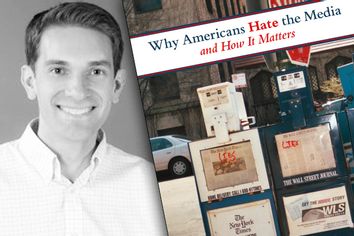
The cover of Jonathan M. Ladd’s new book shows a pair of newspaper vending boxes that have been vandalized. “Lies,” reads the graffiti scrawled across the machines.

Lots of people seem to agree with the sentiment expressed by this anonymous street-level press critic — even if most of us are more apt to express this by screaming at the TV. In his meticulous and informative “Why Americans Hate the Media and How It Matters,” Ladd cites a 1956 study that “found that 66 percent of Americans thought newspapers were fair.” Within 50 years, things would change dramatically. By 2004, he writes, “only 10 percent of Americans had ‘a great deal’ of confidence in the ‘national news media,’” according to one poll.

Speaking from Washington, where he teaches at Georgetown, Ladd discussed some of the factors that caused such a remarkable about-face — and how it affects public policy.

Early in the book you point out that “an independent, powerful, widely respected news-media establishment” only began to take root in the middle of the 1900s. Why did this happen when it did?

There were a lot of things about the mid-20thcentury that were unusual. The party system got less polarized, so you had activists with less incentive to attack each other in partisan papers. And there was less competition in journalism. The number of newspapers dropped dramatically in the early 20thcentury. Most small cities in the United States, by the mid-20thcentury, only had one dominant paper. But the (overall) readership stayed about the same, or grew — so more people were reading fewer sources. There was just less competition, so they could produce the style of news they thought was the best. You had the perfect storm for the press to become really trusted.

That’s not how journalism and politics worked in the 1800s, or during the Revolutionary era. It was unusual, so there’s no reason to think that that’s the only way politics and journalism can work well. In a lot of ways, even though the technology is new, we’ve recently adopted a media environment that is more similar to what we had in the past.

You note that FDR in the ’30s and ’40s, and Richard Nixon in the late ’60s and ’70s, often publicly criticized the press, but Dwight Eisenhower and JFK — aside from the Kennedy administration’s annoyance about the Bay of Pigs coverage — rarely did this. So here’s a chicken and the egg question: Did Eisenhower and JFK refrain from criticizing the media because the media was respected? Or was the media respected because the presidents didn’t criticize it?

My take is that a lot of the reason that the press was so respected in the ’50s and early ’60s is that Eisenhower and Kennedy, and the leaders of both parties as well, didn’t feel like they had a big incentive to attack the press so they could get their ideology out. Eisenhower wasn’t really pressing an alternative ideology that the mainstream was stifling. He had a fairly conservative take on what was the consensus ideology of governance at the time, so it wasn’t really in his interest to do that. The parties just weren’t that divided, so no one had a huge incentive to try to discredit the mainstream press. Eisenhower and Kennedy didn’t have much to gain from attacking the mainstream press like Murrow and Cronkite.

Things begin to shift in 1962, with Nixon’s California gubernatorial concession speech, and in ’64 with the rise of the Goldwater wing of the GOP, and then with Spiro Agnew and Pat Buchanan monitoring the media coverage of the Nixon White House. As you put it, “There is nothing comparable [on the Democratic side] to the prominent attacks on the media by [the Republican] presidential and vice presidential nominees.” Why has the GOP gone after the media more often than the Democrats over the last 50 years?

As the monolithic institutional news media became trusted and dominant, postwar liberalism and consensus on New Deal social programs was at its height. I suspect that if the media had become monolithic during an era of conservative rule, the press would’ve upheld whatever the elite consensus was then. I don’t think there’s anything inherently liberal about an establishment mainstream press. I think they tend to adopt the establishment line, whatever that is, and in the ’50s that was a pro-social welfare state line. But because of that historical accident, the people in the Republican Party who saw themselves as true conservatives really saw a mainstream press that was buddy-buddy with the powers-that-be as the enemy. This isn’t ingrained in [liberals’] DNA like it is among conservative activists.

What difference does it make if people hate the media?

People who say they distrust the media in general are more likely to consume news from partisan outlets, outlets that already agree with them, and this will reinforce their positions, whether those positions are right or wrong. I also find a good deal of evidence that when people who distrust the media confront information attributed to the media in general — a lot of the information we encounter we don’t necessarily get as attributed to a single source, but we know has been reported in the media in general — these people don’t absorb that information very well. They’re more likely to reject new information. They form their beliefs about how the country is going, and what’s going on in the world, based on their partisanship.

And this is a great political strategy, to gin up hatred of the media.

Yeah, because you know that people who are going to listen to partisan rhetoric are your supporters to a large degree. So if you criticize the press, you can make it so that your supporters are impervious to new information. For political leaders who want to maximize their amount of votes and ensure that their base is solidly behind them and won’t be moved by any new developments in the real world, this would be a rational strategy — to inoculate your political base against the information by telling them to distrust information that comes from anything except ideological sources.

Is this why, say, the Democrats have such a hard time putting a new healthcare law in place?

I think it might come into play more in people’s assessments of the results of the Affordable Care Act. If you don’t believe any information that’s passed along, you’re more likely to have partisan beliefs about whether healthcare reform has good consequences or bad consequences. People who distrust the media are probably going to be the last people to come to assess the Affordable Care Act based on its actual results.

Here’s a quote from the end of the book: “we should idealize neither the highly institutionalized news media of mid-twentieth century America nor the extreme of a very fragmented, unprofessional news environment toward which the United States has moved recently.” The book suggests that the most fair and healthy media environment would be a hybrid of these two forms. How would this happen?

I want to be cautious about these suggestions because there are downsides to all of these. This isn’t one of these books where I say I have all the answers. But in a more fragmented media world, the government could establish institutions that are more insulated from politics, that try to more accurately publicize the economic performance and how wars are going overseas. The CBO and the Bureau of Economic Analysis at the Commerce Department, which gathers and releases our data on economic growth. The government is quite good at professionally gathering statistics on how the country is doing in a way that’s not politicized. It’s not impossible to say the government could try to use the highly professional bureaucrats to try to publicize information more.

And as with other countries that have a diverse press, one way you can ensure that one type of media is reporting things not in a partisan or a sensational way is to subsidize more of your public media. You could try to cultivate more the public radio and public television model, so that we ensure that some form of news that adheres to the ideal of objectivity still exists.

Hmm. The government is probably trusted less than the press. And there’s a major political party that claims to believe any government is bad government. This would probably meet with lots of resistance.

I think that’s true.

How do you say “balls of gold” in French?

That's the translator's challenge, and their work is being noticed as Murakami and Larsson elevate foreign fiction

  • more
    • All Share Services

How do you say

Gavin Bowd, the English translator for Michel Houellebecq, was working on the controversial French novelist’s “The Map and the Territory” — Knopf will publish the first American edition in January — when he came to a chapter about a character who’d decided to commit suicide at a legal euthanasia clinic. As the book’s narrator put it, the clinic’s medical staff was “going to ‘se faire des couilles en or,’” Bowd recalled. “Literally: they were going to turn their balls into gold.”

Herein lies the translator’s dilemma. Bowd’s mission is stay as loyal as possible to the original text. But in this case, a strict translation would be ridiculous. “I translated: they were going to make a killing” in fees, Bowd added via e-mail from Scotland, where he teaches French at the University of St. Andrews. “In the context, I prefer that.”

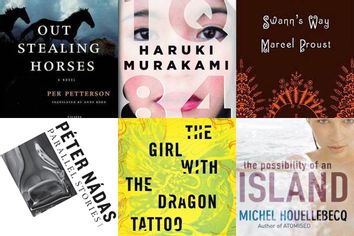
These are the kind of decisions that translators make on a line-by-line basis. Readers don’t notice these artful adjustments, but their enjoyment of literature in translation is dependent upon them. But even as the American appetite for foreign fiction — Stieg Larsson’s “Millennium trilogy” remains a bestseller, Haruki Murakami’s just-published “1Q84” is a huge hit, and the months ahead will bring big new English editions from international stars like Umberto Eco, Roberto Bolaño and Peter Nadas — the translators of these works typically labor in anonymity. Some even crave it.

“We’re lucky if we’re invisible,” said Steven T. Murray, who translated all three Swedish-language novels in Larsson’s trilogy, in an interview from his home in New Mexico. Murray was so bothered by a British publisher’s decision to rewrite much of his work that when the books started appearing in English in 2008 he replaced his credit with a pseudonym (Reg Keeland).

“It’s true in America, but it’s even truer in Britain, that there is a kind of cloud of disapproval over translators and translations,” said David Bellos, a translator of novels by Ismail Kadare and Georges Perec and the author of the new book “Is That a Fish in Your Ear? Translation and the Meaning of Everything” (Faber and Faber). “Reviews in the [Times Literary Supplement] of translated books — if they mention the translating at all, it’s to disparage it. Bit by bit over the years, I’ve come to realize that these are very effective devices for holding the foreign at bay. It’s a way of comforting yourself: ‘Oh well, I only read English, and I don’t really have to take these books from elsewhere terribly seriously because they are only translations.’”

Though he chuckles about it — “Bellyaching is part of the community, I’m afraid,” he said — Bellos has a good case when he says that translators deserve better. “A long novel — maybe you get $10,000, in dribs and drabs. A bit on signature, a bit when you deliver the manuscript, a bit when it’s published. How many of those have you got to do in a year to make that a living? More than is really conceivable to do well,” he said. “You would have to translate at 90 miles an hour and not revise. Most literary translators don’t want to do that, even if they could. You can’t really live as a literary or book translator in the English-speaking world as a full-time job and also sleep.”

But sleep doesn’t come if you’re forever working through word puzzles. And this is what translators do, day after day.

Lydia Davis, a lauded American fiction writer who has translated Proust and Flaubert, said she encountered several such riddles when working on her 2010 translation of “Madame Bovary” (Penguin). For instance, she said in a phone interview, Flaubert describes a particular purplish, black plum that grows in the Normandy region of France, one that “is only known by its French name because it’s not exported. So that really has no translation.” In the end, Davis recalled, she opted for the unadorned “black plum.”

Some translators read a text from start to finish immediately before starting a translation, but Davis said she prefers an element of surprise.

“I had last read ‘Madame Bovary’ when I was 23 years old, so that was a long time ago,” she said. “I just start at the beginning and don’t read very far ahead at all. Maybe a page but often not that much, because I actually don’t want to know exactly what’s going to happen on the next page. There have been times, say, deep in the middle of doing the Proust translation where I didn’t even read a paragraph ahead, I didn’t even read a sentence ahead. It’s simply more exciting. There’s no drawback to this, because of course you’re going to do another draft and then another draft, so there’s plenty of time to go back over your work and change things in light of what you now know.”

Philip Gabriel, who, along with Jay Rubin, translated Murakami’s “1Q84” (Knopf) into English, has a different way of working. “I usually read the book straight through, then go back and translate a rough draft of about four pages per day until it’s all done,” he said in an email. “I try to spend some time previewing the next day’s pages so I don’t get too caught up on particular passages.”

But the word puzzles still manage to appear in every chapter. As Gabriel put it, “To give you some idea of the sometimes mundane nature of the discussions translators have, I remember a long-running discussion with the editor about ‘lavatory’ vs. ‘bathroom.’”

Tiina Nunnally, who translated Peter Hoeg’s Danish-language “Smilla’s Sense of Snow” and Henning Mankell’s Swedish “Chronicler of the Winds,” said she and her husband, Larsson’s translator Murray, liken their work to that of a musician.

“You start with a text just like a musician starts with a composition, a work of music. And then your job is to play it for the listener so that they hear what the composer or the author intended. It takes a lot of practice to be able to do that,” Nunnally said. “It requires a talent for transforming words from one language into another, and doing it so that it doesn’t become apparent that the reader is reading a translation. That’s the real trick, because Americans especially have a certain wariness about reading a translated work. I can’t tell you how many people have said: ‘Well, I’d pick it up, but I could see it was a translation so I didn’t really want to read it. I knew it would sound awkward.’ That’s our goal, to make sure that it doesn’t sound awkward.”

Likewise, Don Bartlett said that he’s made “hundreds of decisions” each day as the translator for Norwegian novelist Per Petterson’s “It’s Fine By Me,” which Graywolf Press will publish next fall. “There is very little that is automatic about translation, and sometimes the simplest utterances, in a dialogue, for example, can take a long time to find a satisfactory equivalent for,” he wrote in an email. “… In terms of knotty language problems, I can remember being taxed by a woman’s name, Signe, which also means to ‘bless’, and the wordplay involved in a kind of tight, rhythmic chant to her. The English translation has the same coherence, feel and warmth, but of course not the constant repetition of ‘S/signe.’”

Not too long ago, Imre Goldstein completed a translation of Hungarian novelist Peter Nadas’ 1,100-page “Parallel Stories,” which comes out in the U.S. in November (Farrar, Straus & Giroux). Does Goldstein believe translators are appreciated, and properly compensated, for the work they do? “I do not,” he said in an email from Tel Aviv.

But, Goldstein added, “I reach back to the theater where I spent more than four decades, to draw not a conclusion but only a parallel. Potentially the most gratifying and elevating teamwork, a theatrical production, as everyone knows, requires the input of many collaborators. Often, reviewers write only about some, say, the director, the actors and the costume designer, leaving out others, such as the composer, the musicians, the lighting designer, fight choreographer and all the invisible but indispensable tech crew, without whom there would be no production. When, as a translator, I am not mentioned in a review, I console myself by assuming that the reviewer read the text as if it were the original.”

If English-language translators feel underappreciated in America, they might want to avoid Bellos’ book, in which he notes that “Japanese literary translators have much the same status as authors do in Britain and America. Many author-translators are household names, and there’s even a celebrity-gossip book about them: ‘Honyakuka Retsuden 101,’ or ‘The Lives of the Translators 101.’”

“They’re rock stars,” Bellos added as we talked on the phone.  “Maybe it’ll fade away over the next century, maybe it’s just something of a fossil. Or maybe the Japanese have got it right, and we should treat all translators as rock stars. I wouldn’t mind.”

Continue Reading Close

Can Harper Perennial reinvent publishing?

With cool young writers, low advances and sharp design, a major publisher's small imprint finds a model that works

  • more
    • All Share Services

Can Harper Perennial reinvent publishing?

Just over two years ago, an Atlanta writer named Blake Butler submitted a story to Cal Morgan’s short fiction website, Fifty-Two Stories. Morgan, the editorial director of Harper Perennial, was so taken with Butler’s voice — “I was awestruck by how brilliant, unusual and challenging it was,” he said recently — that he published the story that day. Morgan soon signed him to a two-book deal, and he was confident enough in his new find to arrange a marathon, four-night public reading of Butler’s 400-plus page novel “There Is No Year.”

Butler, 32, is young and talented; and as the editor of a popular website of his own, HTML Giant, he brings a well-established link to his readers. He’s prolific, and he writes books that manage to be both earnest and cool. And for a major publisher like Harper — part of the HarperCollins family — he’s inexpensive. Butler received just a $10,000 advance for his first novel with Perennial, he said in an interview, and $20,000 for his follow-up, out this month, “Nothing: A Portrait of Insomnia.”

“The stuff I do, I never really considered it major-house stuff… so I was surprised that he was even in to it,” Butler said. Because of Perennial’s faith in his work, Butler said he “never even really considered anyone else.”

In a sense, Butler represents everything that Harper Perennial has tried to become since it started a rebranding effort in 2005, trying to find its niche in the unpredictable world of contemporary book publishing. Like Vintage Contemporaries did in the 1980s when it published a series of novels by Jay McInerney, Bret Easton Ellis and Tama Janowitz that captured the zeitgeist, Perennial, with its line of handsome, affordable paperback originals — many of which are penned by members of Butler’s generation — is trying to establish itself as the home of a new kind of literary smarts and style. It’s almost a small press inside a much bigger one — authors get paid less than they might even from another HarperCollins branch, but still benefit from the publicity and distribution muscle.

“Some of the books we’re doing are almost avant-garde, a lot of them are by young writers, and a lot of the promotional efforts we do are online or in innovative new ways,” Morgan said in a recent interview. “But it still is all coming from this very deep-rooted sense of the physical book as our little sacred item.”

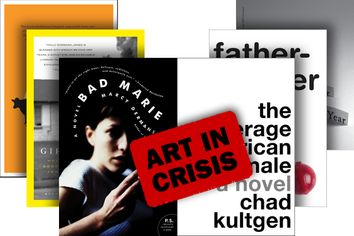
Harper Perennial’s model isn’t unique, but it’s an intriguing case study in what an imprint needs to do to distinguish itself in an increasingly stratified market. What it does is innovative and exciting, but also traditional. The imprint nurtures young writers, orchestrates creative — occasionally quite elaborate — marketing schemes, and packages its content in gorgeously designed paperback originals. There is no star system, no bidding wars, no big names — Perennial’s biggest author is not bonus baby Chad Harbach but the moderately well-known Chad Kultgen — and the imprint keeps its costs down by offering most writers modest advances for first novels and debut story collections. Nobody’s getting rich, yet the imprint fosters a sense of team spirit. In a series of interviews, more than one author described Harper Perennial as a “family.” In the best sense, Harper Perennial is selling a cutting-edge aesthetic on the cheap.

As Diana Spechler, the author of “Skinny” and “Who By Fire,” and one of the many Harper Perennial fiction writers who’s in the early part of her career, put it in an e-mail interview, “Readers seem more willing to take a chance on a new or under-the-radar author if they don’t have to spend hardcover prices.”

Perennial’s methods have caught the attention of some important people in the industry.

“They seem to be the one publisher that’s taking a lot more chances on new authors, for a major imprint,” said Gerry Donaghy, the new book purchasing supervisor at the mega-indie Powell’s Books in Portland, Ore. “There are a lot more quirky writers that sometimes you would expect to see on a much smaller press — somebody who maybe they’re only expecting to sell 2,500 or 5,000 copies of a book. And I think that’s where they’re sort of finding their niche, because they can certainly keep their doors open by cranking out copies of ‘To Kill a Mockingbird.’”

Kultgen, for one, was unknown when he came to Perennial. As he said in a phone interview this month, in 2006, “I had a book agent at the time who had sent it around to maybe like a dozen or so different publishers, who all said, ‘This is hilarious, there’s no way we can publish it, though. Good luck.’”

After the round of rejections, a new agent representing Kultgen approached Perennial, where he found a home. “It’s kind of abrasive,” he said of his work, especially his first novel “The Average American Male,” “and I don’t necessarily think this, but I’ve heard this critique of it from a lot of people: that it’s highly misogynistic. I think for the most part the publishing industry may not want to do something like that, may not want to take a chance on it. But Harper Perennial certainly did.”

At 35, Kultgen has become one of Perennial’s reliable earners; in June the New York Times reported that his debut had sold more than 100,000 copies — a figure that Morgan said was “accurate then.”

But sales figures like this are unusual for Perennial’s newer authors, who usually start small. “In an environment where we no longer have Borders as an outlet, we can start off by shipping fewer than 10,000 copies,” Morgan said.

For instance, “Bad Marie,” a 2010 novel by New York City writer Marcy Dermansky, had an initial print run of 10,000, she said in an e-mail interview. But the book, she added, “has been reprinted four times since then.” She said the continued interest in her novel is due in part to the imprint’s creative marketing ideas. “This August, Harper Perennial did an e-book promotion. Twenty books for $20. I loved that… Probably I did not make a lot on royalties with this promotion,” she said, “but I am happy that my book isn’t disappearing.”

An undeniable, if often overlooked, part of a publisher’s success is tied to the appearance of the books it publishes, and on this front few best Perennial. The imprint’s art staff, under Robin Bilardello and Milan Bozic, designs books that are pleasing to look at and equally gratifying in a tactile sense. “Reasons for and Advantages of Breathing,” a 2009 story collection by Lydia Peelle, is a good example: The sturdy, rough-hewn cover features an alluring black-and-white image of a solitary tree set against a cloudy sky, and unlike most paperbacks, it features wraparound flaps that give it a hardcover feel. With its playful reds pinks and yellows, Valerie Laken’s 2011 story collection, “Separate Kingdoms,” is no less attractive.

“I actually really love the cover art for the story collection,” Laken said, “and when they started to show me page proofs and they had all those great little graphics, I was thrilled. I was like, ‘Oh my gosh, somebody over there is really getting into this … We all like to think that stuff doesn’t matter, but of course you want to see your work presented in the most elegant and appropriate format.”

Morgan suggested that a book’s appearance might be more important than ever, given that different stores have varying visions, goals and layouts. “That means one thing for Barnes and Noble, it means a different thing for an independent bookstore, and it means a different thing still — and a very distinct thing — for a lot of the special markets that we sell into,” he said. “We’re really very focused on places like Anthropolgie and Urban Outfitters, places that do sell increasing numbers of our books every year. They look at our books as part of an extremely well-curated physical environment. If we have a book where we think the market is an Urban Outfitters consumer, we try to create a book that looks like it would make sense in their store.”

Harper Perennial publishes about “60 originals a year,” Morgan said, and the goal is to build a brand identity that transcends old-school and newer markets. Their authors include veteran underground writers like Dennis Cooper, smart young voices like Justin Taylor, new-breed Southern authors like Peelle and Holly Goddard Jones, and comic writers like Ben Greenman.

Some more traditional booksellers, however, suggest that it is hard to define a brand by being eclectic.

“Harper Perennial, it’s just been watered down to the degree that it no longer has its own identity,” Robert Contant, one of the owners of Manhattan’s St. Mark’s Bookshop, said recently. “I don’t know that there’s a certain kind of book that Harper Perennial is publishing anymore. There are some publishers — Europa (for one); they tend to be kind of small — that have a well-defined publishing list, and people will actually at least pick their books up and browse them just because of the imprint, but it’s not true for any of the major houses anymore.”

Whether or not this is true, one thing that seems beyond dispute is the loyalty that Harper Perennial breeds among its younger writers. Maybe that’s because the imprint gave many of them a shot when others publishers told them no. “It’s like a family,” said Simon von Booy, another young New York fiction writer who has published several books with Perennial. “It’s really a close-knit community. Everything people told me about publishing — they warned me away, they said be careful — I didn’t find any of that in my experience.”

Butler said he feels the same way.

“They’re such a tight-knit crew, and they’re all really good friends, and they make you feel like you’re part of that, too. I imagine it’s an anomaly in New York publishing,” he said. And he has no intention of going anywhere: “I have already got some other books that I’m finished with, and my full intention is to send them to Cal. I wouldn’t ask my agent to shop them at this point. If Harper wanted to do the book, then I would do it with them.”

Continue Reading Close

The Republican war on science is un-American

In a Salon interview, a top scientist warns the world is catching up in biotech. The GOP's hostility doesn't help

  • more
    • All Share Services

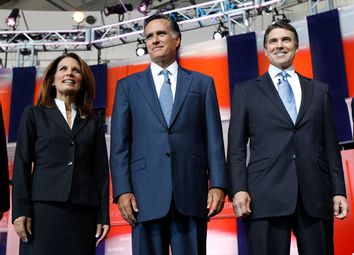
The Republican war on science is un-AmericanU.S. Republican presidential candidates, Rep. Michele Bachmann (R-Minn.), former Massachusetts Gov. Mitt Romney and Texas Gov. Rick Perry (Credit: Mario Anzuoni / Reuters)

In his new book, “The Body Politic: The Battle Over Science in America,” (Bellevue Literary Press), Jonathan D. Moreno delivers an impassioned defense of scientific study. “The alternative to experimental confirmation is, in a word, dogma,” he writes. “Dogmatic statements may have many fine qualities. They may be beautiful, inspirational, and convey a kind of wisdom, or at least the impression of wisdom. But they can never be verifiable and self-correcting in the manner of science.”

This seems like common sense. But at a time when several presidential hopefuls are tirelessly trying to demonstrate their anti-science bona fides — Republican candidates have taken strange positions on everything from vaccines to evolution and climate change — Moreno’s book offers an essential dose of logic.

A professor of science and medical ethics at the University of Pennsylvania and a member of President Barack Obama’s transition team, Moreno talked to Salon about politicians who don’t understand science, how other countries are catching up to work being done in American labs and why Mitt Romney could be called a flip-flopper on a key scientific issue.

In your book, you call yourself a “bioprogressive,” and you describe this as the “century of biology.” What does that mean?

This is not original with me, but you can see the 19th century as the century of engineering, the 20th century as the century of physics. Historically, biology has been mostly descriptive: You go out into the woods and you categorize the flora and fauna. But now we’re actually mucking around with the basic building blocks. We’re in the information age: This all creates the opportunity for vast new sources of knowledge, wealth, power. We’re talking everything from industry to national security, but it also has a symbolic weight that engineering and physical sciences don’t have, because it is about life itself.

You write about the United States’ quest to retain its edge in biotech: “China, Canada, Australia, Taiwan, Singapore and South Korea are among those that have embraced the opportunity to create new markets and new wealth based on a biotech platform.” And you say that they’re catching up to American biotech studies. Is that a concern for the United States?

I think it is. In one sense it’s a danger because we have to be useful partners in the future of science. Many people say, “We have to be able to compete.” Well, it’s not just competition anymore, it’s also collaboration. Because science is globalized, if you can’t help a (scientific) team, if you can’t provide the depth and expertise that they need, they’ll go to somebody else. I think too often we see this as a matter of competition, but to compete in science in the 21st century, you have to be able to cooperate.

Why are other countries catching up?

They’re catching up because we had a completely unique situation from the end of the Second World War on. Everybody was bankrupt, and if they weren’t, they were poor. And if they weren’t poor, they weren’t a player to begin with. So we had an open field. It’s just incredibly striking how everything worked in our favor for the decades after the Second World War. For example, after the war the White House sent teams of experts in various fields of science and technology to walk through every science lab and every industry lab. American tire makers were interested in synthetic rubber, and we knew that the Germans had made synthetic rubber that was superior to ours. And we didn’t know how.

So we borrowed it.

Unencumbered by intellectual property concerns, we just took it. One of my favorite anecdotes is the fact the Elvis Presley was able to walk into this hole-in-the-wall studio, record two songs that sucked in 1953, and they said, “Oh, this kid’s nothing. But let him do another one.” He wouldn’t have been able to do that if not for the fact that Goebbels told BASF to make something better that he could edit his speeches on. So: magnetic tape.

Science has been in the news a lot lately, especially with the Republican campaign for president. Several of the candidates say they don’t believe in climate change, and Rep. Michele Bachmann made that senseless comment about the HPV vaccine. You’d think that these factless statements would be easy to refute, but as you write, “recent surveys show that over the past few years, the more people have heard about climate change, the less they believe it is happening.” How do we fix this?

The solution that my friends in the science policy world advocate is everybody in Congress should have a Ph.D in biology. A) That’s not going to happen. B) Scientists don’t necessarily have a great record running democracies. You think about who ran the central European countries, who ran the Soviet Union. They were mostly agronomists and hydrologist, engineers. You can be really smart and clever about systems, and still not be a big small-D democrat. C) I’d argue that these are cultural questions. These are not scientific questions. When a candidate raises his or her hand and says that he or she does not believe in evolution, they weren’t reading “Origin of the Species” last night in preparation for this debate. They are identifying themselves as a certain kind of person.

But it does have an effect. The New York Times had a story a few days after Bachmann’s HPV comments that said this could scare people away from having their daughters inoculated

No doubt. And I’m not saying there’s not a heavy responsibility of political leaders to be smarter. But let’s understand the function of these statements first. They are not really statements about science or fact. They are statements about group identification — it’s a way of saying who you are. We have to grasp that, or we spin our wheels a lot.

You write that “science, understood as rational argument and demonstration, was also part of the constellation of ideas that gave the United States special promise; it is not too much to say that America is the only country founded by a group of scientists.” Yet some of the people who want to be president — people who claim to revere the Founding Fathers — are openly hostile to science. Where’s the disconnect?

I’m willing to go out on a limb and say the Founders would not approve of the statements that have been made with respect to science. Seeing science and innovation and demonstration and questioning, and coming to terms with reality — as ugly as it is, as lovely as it is, as complicated as it is — is all very American. There’s something un-American about not seeing that in the world.

Stem cell research is a core issue in the book. Maybe the last time some of us thought about this was in 2001, when President Bush discussed it in an Oval Office speech. Where are we now, both practically and politically?

In practical terms, because of what the Obama Administration has done, there are now dozens of stem cell lines that have come from embryos that have been donated with informed consent of the progenitors, which scientists will be able to work with around the world. What we’re learning about is how the earliest cells in bodies turn into all the cells in our bodies. The hope is that someday you could actually use your cells and turn them into some specific cell that you need to fix something. Will that ever be feasible? There’s a big debate about that.

Politically, I think it will not get back into the political conversation this cycle, but who the hell knows. (Republican presidential hopeful Mitt) Romney was in favor of embryonic stem cell research in Massachusetts before he was against it. Everybody’s talking about ObamaCare and RomneyCare, but one thing to look for is: Will somebody come up with a stem cell issue as a flip-flop for Mitt Romney?

Continue Reading Close

Why Bob Dylan won’t win the Nobel Prize

The odds are a changin', but that's a cheap publicity stunt, not reality. Here's why Dylan doesn't stand a chance

  • more
    • All Share Services

Why Bob Dylan won't win the Nobel PrizeBob Dylan in 1984 (Credit: Wikipedia)

According to the British bookies at Ladbrokes, Bob Dylan is suddenly a 5-1  choice to capture the Nobel Prize for literature when the Swedish Academy awards the annual honor Thursday in Stockholm.

A dark horse just a few days ago, Dylan has pulled ahead of Adonis, the Syrian poet and one-time Nobel favorite, and is now a far safer bet than fellow Americans Thomas Pynchon and Philip Roth. As one handicapper told the Guardian this week, “At first we had him down as a rank outsider but the committee have been known to spring a shock and punters the world over feel Dylan will be the beneficiary.”

Alas, something is happening here and the punters don’t know what it is. Bob Dylan is not going to win the Nobel, at least not in the foreseeable future. Here are five reasons why:

He’s too famous.

Members of the prize committee — “the eighteen,” as they’re known — have become famous for their devotion to the unheralded. As Kjell Espmark, a member of the Swedish Academy recently told a German media outlet, the committee once chose winners in part “because they wrote bestsellers.” But, he added, “After World War II, however, they favored forward thinkers like Hermann Hesse, Andre Gide, T.S. Eliot and William Faulkner — and then in the ‘70s it was about shedding light on unknown masters.”

Though the panel has recently cited known quantities like V.S. Naipaul (’01), J.M Coetzee (’03) and, last year, Mario Vargas Llosa, the prize often goes to a lesser-known writer. Since 2000, the list of laureates has included Chinese novelist Gao Xingjian (2000), Austrian novelist and playwright Elfriede Jelinek (’04) and French novelist J.M.G. Le Clezio (’08). Even Swedish Academy members have been known to chafe at the committee’s self-conscious bias for the unconventional; one panelist quit the Academy in protest of the prize awarded to Jelinek, describing her prose as ”a mass of text shoveled together, without artistic structure.” If voters want an avant-gardist, they won’t be looking Dylan’s way.

He has enough awards.

In 2008, Dylan received an honorary Pulitzer for what the prize committee termed his “profound impact on popular music and American culture, marked by lyrical compositions of extraordinary poetic power.” There’s no way in hell that the Nobel committee, which prides itself on celebrating the underappreciated, is going to play second fiddle to the Pulitzers (not to mention the Grammys, the Oscars or the Golden Globes).

He’s not as overtly political as he once was.

“Oh Mercy,” Dylan’s 1989 album, begins with the words: “We live in a political world.” Dylan once did, too. Though he began renouncing the notion that he was a protest singer as early as 1964, he continued to write about social concerns for decades thereafter. Songs like “Hurricane,” his 1975 ballad about a boxer imprisoned on flimsy evidence, and “Neighborhood Bully,” his 1983 rallying cry for Israel, are just two of scores of Dylan compositions from this era that were simultaneously provocative and entertaining.

But in recent years Dylan the lyricist has turned inward. In 2006, when he interviewed the singer for Rolling Stone, novelist Jonathan Lethem remarked upon Dylan’s evolution from that of a songwriter with explicit social concerns to one who “seems to survey a broken world through the prism of a heart that’s worn and worldly, yet decidedly unbroken itself.” Lethem added, “This isn’t to say ‘Modern Times,’ or Dylan, seems oblivious to the present moment. The record is littered — or should I say baited? — with glinting references to world events like 9/11 and Hurricane Katrina.

Meanwhile, the closest “Together Through Life” — his last non-Christmas studio album, it came out in 2009 — gets to politics is “It’s All Good.” The song compares a “(b)ig politician telling lies” and a “(r)estaurant kitchen, all full of flies,” concluding: “Don’t make a bit of difference, don’t see why it should.” It’s safe to assume that lyrics like these are meant to be at least somewhat ironic — but the Nobel folks don’t really do irony. They’re more into “cartography of structures of power” and “explorer(s) of a humanity beyond and below the reigning civilization.”

He’s from the wrong country.

Here’s the list of Nobel Lit winners. Not many Americans there.

He’s in the news for the wrong reason.

Just this week we learned that a Nobel Prize for medicine went to a scientist who had died four days earlier. Because Nobels aren’t awarded posthumously, his death technically disqualified Dr. Ralph M. Steinman as a candidate. But the committee let the decision stand because they were not aware that he had succumbed to cancer. This means that Nobel committees are forced to be at least somewhat aware of current events, and this latest round of Bob Dylan-is-an-artistic-thief accusations can’t help his candidacy. For those who missed it: Dylan is showing a bunch of his paintings at a prestigious New York City gallery, and some observers have noted that the images are quite similar to well-known photographs by Henri Cartier-Bresson and others. This isn’t the only time Dylan has been accused of appropriating the work of other artists. Let’s be clear: Bob Dylan is not a plagiarist. The allegations seem like nonsense. But in a year in which Dylan was also criticized for playing shows in repressive China, they’re not going to help him win the Nobel.

Continue Reading Close

“Can we ever really know Ernest Hemingway?”

For his masterly new biography, Paul Hendrickson tracked down Papa's brother, a living friend -- and his boat

  • more
    • All Share Services

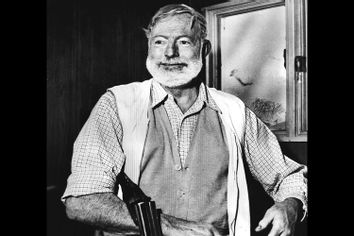
Ernest Hemingway, cradling a shotgun.

As Paul Hendrickson concedes early in his new book, “Hemingway’s Boat: Everything He Loved in Life, and Lost, 1934-1961,” the world isn’t in dire need of another Papa bio. “Ernest Hemingway,” he writes, “has been examined by so many scholars and memoirists and respected biographers and hangers-on and pretenders and doctoral students desperate for a dissertation topic that I feel sometimes we have lost all sense of who the man really was.”

So Hendrickson, a winner of the National Books Critics Circle Award for his 2003 book “Sons of Mississippi,” decided to go at his subject in a roundabout way. The result is a book that is as much about Hemingway himself as it is his relationship with Pilar, the 38-foot seafaring vessel on which he spent endless hours during the final decades of his life. On board Pilar, Hemingway wrote, loved, argued, drank and, for a time during World War II, went looking for enemy submarines. And it’s a boat, Hendrickson believes, that may have had a distinct impact on the evolution of Hemingway’s prose.

In a recent phone interview, Hendrickson talked about traveling to Cuba to see Pilar for himself; his delight in locating a still-living Hemingway contemporary; and how the book took root in a long-ago meeting with a stranger who just happened to be Ernest Hemingway’s brother.

How did you get started on the book?

This book, in a sense, goes back through at least three decades and four intervening projects. It may have been seeded in the winter of 1980, when my wife and I were fleeing the winter snows for Bimini. There, waiting to go over in a little seaplane, a 20-minute hop from Miami to Bimini, there was this man with a big Hemingway beard and tattered clothes and tennis shoes and a grocery sack under his arm. I whispered to my wife, “That’s got to be Ernest Hemingway’s little brother.” I was an amateur Hemingway student by then, and I knew about [Leicester Hemingway] “the Baron,” 16 years younger than Hemingway, whom Hemingway mostly despised. But here was this guy going to Bimini, where Hemingway had haunted and made famous. As luck would have it in this 12-passenger Grumman Goose seaplane, he took a seat right ahead of us, and I leaned forward and said, “Sir, by any chance are you Ernest Hemingway’s brother?” And there was this bared-teeth grin, and he said, “Yeah, and if you’re lucky it’ll get you a cup of coffee.” We got along fabulously. He told me that weekend some inside stories that to me were not only incredible but incredulous. Most of them turned out to be true. Other books went on, and my job at the Washington Post went on, but I never really forgot that encounter.

You write, “We’ve had far too many Hemingway biographies.” Is that why you decided to use the boat as a narrative device?

I do believe we’ve had far too many biographies and critical explanations of the man, each one contradicting the last. I didn’t want to join that group. If I was going to do something, I wanted to do something different, which would lead to point B. I can only do what I can do. When I’ve gotten in trouble with books before it’s because I have not been authentically true to who I am and what I can do. I am not a conventional biographer. I am not a thoroughgoing, date-of-birth to last day of life kind of biographer. My brain doesn’t think that way. There’s a great Emily Dickinson line starting a poem that says, “Tell all the Truth but tell it slant.” And that’s what seems to power my imagination.

Hemingway bought the boat in 1934, as his marriage is dissolving, and as he’s getting his first spate of bad reviews. This was a major period of transition in his life.

Absolutely. You could say that at the moment he gets this boat he is still the reigning monarch of American literature, but he’s already been sniped at by the critics. He’s still the king; he controls the crown. But he understood that he was beginning to have trouble. One theory about Hemingway is that he turned to a lot of journalism in the ’30s because the fictional well was starting to go dry. The first book that comes up after acquiring Pilar is this quasi-documentary, novelist, journalistic report “Green Hills of Africa,” which in its own day suffered bad reviews. Why did he write that book rather than a pure novel about Africa? I think in some sense he began to understand that he was losing some fictional power. And yet he roars back in 1940 with “For Whom the Bell Tolls,” the novel about the Spanish Civil War that, ironically and retrospectively, in the long view of history, I think is a weak novel — even though it was his largest-selling novel.

Many Hemingway detractors like to say that it was all downhill from the ’30s onward. I don’t see it that way at all. I think it’s a sine curve, like most of our lives.

He really did live a life onboard his boat. In addition to landing 500-pound marlins, he got into a dispute with the poet Archibald MacLeish that was the beginning of the end of their friendship; he wrote parts of “Green Hills” onboard; he accidentally shot himself in the legs.

While we’re talking, I just flipped open a journal. Here’s a note I wrote to myself when I was writing the previous book, “Sons of Mississippi.” The Hemingway book was festering, and here’s the note I wrote: “Hemingway’s boat. June 18, ’02. If you study what happened just on that boat you’ll get Hemingway’s whole life.”

About a third of the way through the book you write, “For the last several books and years, Ernest Hemingway’s world-famous prose style has been discernibly if subtly altering.” And you add, “I believe Pilar was a key part of the change, allowing him to go farther out, where you don’t see the shoreline.” What do you mean by that?

It’s both, in my mind, a literal and metaphorical idea. It is clear that by the mid-’30s the famous prose style of these seemingly simple-minded, declarative sentences without any subordinate clauses had begun to go by the wayside. Not entirely, but he was experimenting with other things — the sentence line was growing much, much fuller, and there were often many subordinate clauses. Why is this so? What explains it? I don’t know that anybody can quite explain it. Some people have thought it had to do, as I say in the book, with getting out of those tight, damp enclosures of Europe and, indeed, atavistically what he came from in the winters of Oak Park, Ill., and crawling out where you can be ever the bohemian, in your beard and your sandals and your raggedy beltless shorts in Key West. Does this have something to do with the expansiveness in his own writing? That’s an interesting theory that no one can ever prove. But what you do notice is the evolving change. I like to think that the acquiring of this boat and the ability of Pilar to release him from shore was doing something to him. He was no longer shore bound. It was a seagoing vessel, and you could go far enough out where you would lose sight of land. And I wonder metaphorically whether that, in its sense of adventure, in its sense of release, in its sense of freedom, didn’t help expand the sentence line.

I also found it interesting when you write, “Hemingway, a man in a solitary profession, could barely stand to be alone, no matter how much he’d curse at the world for not leaving him alone.” In that way, Pilar was his own world, wasn’t it? He could control who was onboard, and who wasn’t.

I think what you’re saying is spot-on. You’re in that beautiful environment, but when you’re in this contained little capsule you can control it, largely, because you are the captain of it. You also like being challenged, I think, by the elements, these storms that will come up that you cannot control. I think this was also part of the constant adventure that Hemingway needed to seek, needed to challenge himself against. You can control that capsule, and yet the double-edged sword: He hated being alone. His letters to the women he’s wooing, who will become his wives and then they’ll become failed marriages. Constantly the refrain is: I can’t stand to be alone, I’m so lonely. I need you. He needs people around him, and at the same time he is so angry that people are around him and taking his writing time away. So he’s shooting himself in the legs once again.

Who is Walter Houk? How did you find him and what did he do for the book?

He’s 86. He’s reading the book in its entirety now. He is one of two or three veritable, authentic living Hemingway witnesses. If I’m not a conventional biographer, I have to be true to what I can do. The journalistic nose in me instantly said, “Holy shit. You mean there’s somebody alive who knew Hemingway. My God.” I was trembling. For me to have been able to go and spend all this time with Walter Houk, who turns out to be a great old guy, not a self-aggrandizer. But a very, very astute man, who, yes, is slipping into Alzheimer’s but whose long-term memory is so brilliant and beautiful. His life suggested itself to me, “Whoa, Paul, you could make this guy a character in his own right in the story and tell a part of Hemingway through him.”

What did Hemingway do with the boat in 1942, during the war?

It’s a part that I expect to be criticized by certain critics who wish to say, “Gee, he turns Pilar into a Q-boat, a sub-hunting boat, patrolling off the north coast of Cuba. Why didn’t you do more with this?” The short answer is because my imagination took me elsewhere. And also because it has been written by others to some extent. He armed Pilar as a sub-hunting boat, and no matter how much the exercise got polluted with too much ego and too much booze and too many hangers-on, I believe that at base Hemingway had great motivations — and really did want to encounter a sub and would have been willing to blow up Pilar and himself in the cause of taking down one sub.

The boat today is in Cuba?

The prologue begins in May 2005, when I’m looking at Pilar as if it’s dying of thirst and wanting only to get into water. In the process of doing this book, the boat became restored, and I was going to close the book by going back to Cuba and seeing Pilar in her shiny, well-refurbished state. But I did not go there, because I’ve had to contend with a significant health issue in the last year-and-a-half, during the finishing of the book. The doctors did not want me to go back to Cuba, because you don’t want to land in a Cuban hospital. I wrote a different kind of epilogue and then wrote the coda.

And in the process you dispelled, at least in your own mind, the rumors that the Pilar on view in Cuba is an impostor, not Hemingway’s actual boat.

Yes, this is probably the authentic boat. But you know, I don’t care, ultimately, because that’s somebody else’s project to see if this is the absolute authentic boat. Pilar is my metaphor, my storytelling vehicle, and there’s a secret sly part of me that’s happy if we can’t know. Because that only adds to the notion of: Can we ever really fucking know Ernest Hemingway?

Continue Reading Close

Page 1 of 2 in Kevin Canfield