Lucy McKeon
Partisan death jam
The two parties aren't just making progress impossible, they're destroying our political system. An expert explains
(Credit: iStockphoto/duncan1890) If you thought the debates over the debt ceiling last year – one of the most striking examples of political dysfunction and gridlock in recent memory — were over, think again. Although Republicans agreed to a small raise and to put off discussion of the issue until after the upcoming 2012 elections, Senate Minority Leader Mitch McConnell told Fox, “We’ll be doing it all over” in 2013. Clearly, the partisan rupture that’s dividing Washington is not going to heal any time soon, but how did things get so dire to begin with?
When congressional scholars Thomas E. Mann and Norman J. Ornstein say “It’s Even Worse Than It Looks” – the title of their book – they’re being serious (subtitle: “How the American Constitutional System Collided With the New Politics of Extremism”). Mann, the W. Averell Harriman chair and senior fellow in Governance Studies at the Brookings Institution, and Ornstein, a resident scholar at the American Enterprise Institute, began the Congress Project in the midst of the 1978 midterm campaign to track the institution as it evolved. What they’ve found since hasn’t been encouraging.
In their book, Mann and Ornstein trace political dysfunction to the present, illuminating the basic incompatibility they see between the U.S. constitutional system and two highly partisan, parliamentary-like parties. Mann and Ornstein argue that the adversarial, winner-take-all climate we find ourselves in today makes it extremely hard for a majority to act in our two-party governing system. Though both parties engage in corruption, they believe the current Republican Party – which they argue is unpersuaded by fact and science, and has little in common with Reagan’s GOP – tilts the political system into “asymmetric polarization” with its refusal to support anything that might help Democrats, no matter the cost to collective interest.
Meanwhile, changes in mass media, a populist distrust of non-military leaders deemed suspiciously “elite,” and the insidious connection between money and politics join to create the terrible recipe for a truly dysfunctional political system. At a time when we’re facing serious national and global problems, they write, “The country is squandering its economic future and putting itself at risk because of an inability to govern effectively.” But there’s hope. Mann and Ornstein dedicate the second half of the book to outlining what specific institutional restructuring won’t work and what will, as well as what the public and media can do to be part of positive change.
Salon spoke with Thomas E. Mann about how the media plays into the partisan warfare, the role of the Citizens United decision in the upcoming election, and what we can do to make American politics less dysfunctional.
I’m wondering how you chose the book’s title.
It is a rather unusual title, isn’t it? We were thinking through titles and somehow we got in our minds Mark Twain’s quip about Wagner’s music, which is “It’s better than it sounds.” And so we were thinking relative to how our dysfunctional political system looks and we said, “Well, we’ve gotta say it’s worse than it looks, but that would make no sense to people who think it looks horrible already.” So we put the “even” in it – “It’s even worse than it looks.”
We are two long-time students of American politics and Congress. We’ve really become exceedingly discouraged about developments in our politics and in thought. And we’ve become frustrated by what we think is a commentary about it that ends up not being especially accurate and, frankly, reinforces the destructive dynamics of the system by leading the public to think it’s all hopeless: They’re all the same, it’s a corrupt system, it’s an utterly incompetent system, and therefore removing, in many respects, any basis on which a public could actually change that system. Instead you get a kind of visceral reaction: “Throw the bums out!” And that usually has the effect of reinforcing whatever you have now or making it worse.
How is partisan confrontation more serious today than it has been since you began studying American politics?
It’s the worst we’ve seen in our 40 years of observing up-close Congress and the presidency and the American political system more broadly. We’ve gone through very difficult periods in our politics: polarized times in the post-Reconstruction period; turn of the 2oth century; we’ve, of course, just had exceptionally traumatic times before the Civil War; and difficulties in the early 1800s as well. So we make no claim that this is the worst ever, but if we’re comparing ourselves now to the pre-Civil War period, that’s not such good news, is it? What we can say is that the parties are more polarized than they have been in over a century. We can say that the Republican Party is more conservative than it’s been in over a century. We can get that evidence from looking at behavior within the Congress and patterns of voting, but we can also see how, in many respects, that public aligns with those polarized parties.
Some people make an argument, which we believe is more myth than reality, that the public is overwhelmingly moderate, centrist, pragmatic, independent, and it’s only the elite, the partisan elite, that engage in their own wars and cause the problems – that they don’t properly represent the sentiments of voters. We think that’s wrong, that the public – at least, the public active enough to vote – and in those who do more than voting particularly, are very much a piece of this now. We’ve kind of sorted ourselves into two warring parties. We’ve done it by a choice of neighborhoods in which to reside, on the base of our own ideological dispositions. A whole host of factors have led us into areas of people with like-minded values and beliefs and preferences, and that actually encourages the developments in Washington and, frankly, in state legislatures around the country that many people bemoan. So that’s part of it, why we think it’s exceptionally bad now.
Another part is that we’re facing the most serious economic crisis since the Great Depression, and yet our political system is set up in a way in which it’s very hard for an opposition party to be open to participating in any solutions to that because that would legitimize the party in power, which would keep them from getting there. And so they are engaged now in an ever more permanent campaign to obstruct, defeat, discredit, repeal anything that is done by – usually defined as – the president’s party. And we’ve now seen a willingness to engage in hostage-taking and a game of dangerous threats, which lead to the downgrading of American currency.
You explicitly dispel the media myth that both sides are equally guilty of partisan misbehavior. What’s different about the current Republican Party?
It’s a very important piece of the argument that we’re making. I’ve already indicated to you that in ideological terms, as best as we can measure, the Republican Party is the most conservative it’s been in over a century. But I think just as importantly, it’s become a party that believes it’s essential to stick to your principles and not engage in any kind of collaboration with – negotiating or compromise with – the enemy, which is defined as the other party. That’s unusual. And then you put that together with simply no respect for facts, for evidence, for science, and add to that the willingness to simply reject the legitimacy of the other side. It’s as if we were replaying the election of 1800 and the party that eventually won wouldn’t take office because they were deemed illegitimate or vice versa. The peaceful transfer of power, the respect for the office of the presidency, the willingness to say, “We have our differences, it’s important to discuss those but in the end we’re all Americans,” and so on, that’s rejected by a whole lot of Republicans right now.
Our politics and governing system just doesn’t work very well when one of our parties has strayed – in both policy and process terms – far from the mainstream, because we have a system of separated powers, we have numerous veto points, and it really does require willingness at some point to work across the aisle. If we had a parliamentary system of government, then these parliamentary-like parties would be OK, because you would, through an election, create a majority and that majority (the government) could put its program into place and then be judged accordingly for five years later. But we don’t have that. We have a system in which a minority can frustrate the efforts of the majority, not to simply get a better negotiating position, which is the way in the past it has worked, but to literally stop the new president’s or new majority’s program dead in the water. And that together is what created our dysfunctional politics.
And how does the media contribute to all of this?
I think the “mainstream media,” that is the non-partisan or ideological press, is utterly helpless in the face of the reality that we have right now. That is, the strong journalistic norms of fairness, of balance, of getting the full story, which tends to be interpreted as both sides out, has in effect created a distorted view of what’s happening in the world, and the irony is many individual members of the press know it. So I guess the biggest problem with the press and, again, by that I’m talking about the sort of press that aspires to practice good journalism, and not simply to be a partisan or ideological participant in the political wars, that they have basically assumed that getting both sides, letting the warring parties and individuals speak, is the best way to cover the story and also provide a little safety from charges of political bias. And in so doing, they’ve actually helped to perpetuate the very problems that we have. And I say that as a friend and admirer and regular reader of many, many, many members of that press.
How do you think Obama’s election affected the dysfunctional atmosphere back in 2008?
Let me say, it’s worth looking back to the Clinton presidency, especially the first couple of years and last couple of years. Because he ran on a tax cut, but then was persuaded that he had to do something to deal with deficits and he spent most of his first year trying to do it. He never got a single Republican vote in the House or Senate for this. And he was attacked, subject to dozens of corruption investigations, most of which ended up being bogus, and in the end he was impeached! In 1998, by a Republican House that had just been dealt a setback in the election because of its talk about impeachment. So this has been in the works for some time. But I think Obama has intensified and accelerated it. Certainly his race is a consideration. But so too was the threat of a Democratic president mobilizing constituencies that are growing and potentially putting the Democratic Party in a dominant position. So all of that conspired to convince the Republicans in Congress, who’d just taken a shellacking, to develop a strategy – which is now well-documented – before Obama was inaugurated, to sit together to oppose everything.
In part two of the book, you outline many major institutional changes that you think definitely will, or definitely won’t, work. Can you speak to some of the solutions you do support?
As you say, we devote one chapter to saying what not to do. We try to pare down some horrible ideas that get great credence in the public discussion. We say we need to change our electoral system in ways to increase public participation because that would have diminished some of the intense ideological views expressed by the public as a whole. We need to change the institutional arrangements so that the routinization of the filibuster can be destroyed – it is a modern phenomenon and we have some ideas about that. But in the end, we say it’s the electorate that has to rein in the insurgent outlier, and that’s very problematic just because of the confusion of what would make for a better, more workable system. And so, the odds are, depending on what happens with the economy, that Obama will win. But Republicans could easily hold the House and take the Senate. And therefore, Republicans might be encouraged to basically have the same strategy of opposition as they have now. We argue in the book that it’s the public that produces divided government, but in times of highly polarized parties, that’s a formula for gridlock, inaction and government dysfunction.
And the individual citizens of a democracy must have a role in this change as well.
What the public could do is what democratic theory tells us they would do, which is that if one party goes too far from the mainstream of public thinking, public preferences, accepted democratic processes, they’ll be reined in by the electorate. So an overwhelming across-the-board Democratic vote would probably so shake the Republican Party that those who have been distressed within the party by recent developments would have an opportunity to come forward as a new kind of leadership with alternative programs and platforms. But that seems very unlikely to happen, so what we’re probably going to have is Obama figuring out a way to use the expiration of all of the tax cuts in the beginning of the sequestration of defense and other things as a way to force a compromise with the Republicans because, in this case, the status quo is unacceptable to them.
It’s going to be a tricky bit of maneuvering but I think that the thrust of our argument is all these so-called bipartisan or nonpartisan efforts to sort of bring the parties together and find a bipartisan solution: It’s a pipe dream. It’s ridiculous. It can’t happen. So we’re going to have to figure out, voters and politicians, how to operate in a hyper-partisan system, and hopefully get leverage at times to force action that is actually responsive to the country’s problems.
Looking ahead to the coming election, in the wake of the Citizens United decision, what sort of alternative to corrupt campaign funding do you see?
We argue that efforts on the left for full public financing of elections right now is simply impossible given the interpretations the Supreme Court has made about the First Amendment as applied to money and politics. Such systems have to be voluntary; they get overwhelmed by the independent spending group like, in its latest manifestation, the super PACs, and it’s sort of a pipe dream. There are individuals out there writing books, making the case that money is the root of all evil and if we just get it out of the system our politics will return to a healthy equilibrium. We think there are a lot of problems with money in politics, and we need to deal with them, but the problems go well beyond that. Given the composition of the court, there are only incremental things one can do: increasing transparency, trying to generate more small donations, and looking for ways to improve the process that way. The others are as much pipe dreams as those on the right calling for a balanced budget amendment.
Working the coregasm
New science sheds light on the unexpected pleasure that some women feel during exercise
(Credit: -Markus- via Shutterstock) “At the end of yoga,” my friend whispers, inching closer, “something sort of … strange happens.” A quick glance around confirms that the good patrons of Starbucks are less interested in her confession than they are in the nearby screaming banshee baby.
“I usually sit with my feet together and my knees splayed,” she continues tentatively, “for one final stretch before I take shavasana.” I nod her on. So far, I follow. “Leaning over to bring my head down to my feet, as my breath regulates I feel a sort of … tingling and pulsating down (ahem) there. And … the feeling isn’t entirely unwelcome.” She exhales, as if a great weight has lifted. “But I mean, that’s pretty weird, right?”
Continue Reading CloseRedefining “wife material”
"Mad Men" reminds us that the idea of the "marriageable woman" has evolved dramatically -- and continues to, today
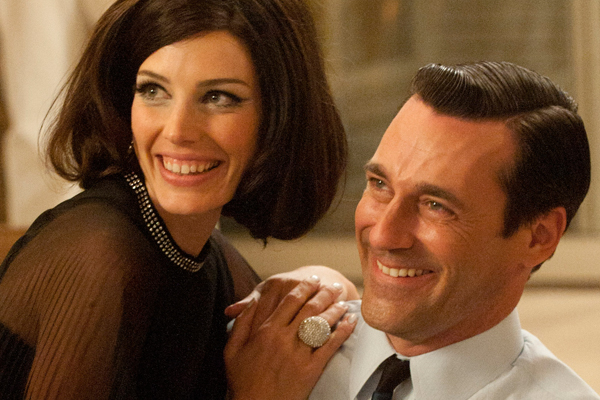
Jessica Paré and Jon Hamm in "Mad Men" (Credit: AMC) During a long train ride with an acquaintance, my female friend was recently paid the ultimate compliment. Comparing her to a woman he’s casually seeing, he looked deep into her eyes and said without irony, “but you, you’re wife material.”
I thought this antiquated expression had gone the way of “arm candy” and “trading up” as part of the second-wave agreement that likening your lady to something you consume or drive is just not cool anymore. But perhaps even in 2012, our “Mad Men”-fueled nostalgia-fest is making us long for an era of clear-cut sexist distinction, when wives were wives and mistresses, mistresses. The AMC show’s fifth season premiere explored this dichotomy, as Don Draper’s secretary-turned-wife Megan bridged the divide separating working women from their marriageable counterparts.
Continue Reading CloseMulticulturalism works
The concept is increasingly being called a "failure" -- but in many places, it's thriving. Experts explain why
A detail from the cover of "Pax Ethnica" “Multiculturalism” has become a loaded term over the last several years. Across the Western world, politicians have recently begun to attack the once widely admired concept, as mainstream conservative figures — ranging from French President Nicolas Sarkozy to German Chancellor Angela Merkel, Australian ex-Prime Minister John Howard and British Prime Minister David Cameron have all argued that the project of multiculturalism is a failure. It is, of course, difficult to bring people together while respecting their differences. In many countries, the tension between a national identity and individual cultures and beliefs can dangerously invite assimilation on the one hand, constant conflict on the other. But as the new book “Pax Ethnica: Where and How Diversity Succeeds” points out, it is, indeed, possible to make multiculturalism work.
Continue Reading CloseCruising the street view
A blog uses the Google maps function to scope out cute guys. Is it fun, art -- or a creepy invasion of privacy? SLIDE SHOW
Most people use Google Street View for practical purposes, whether to look at the façade of a building and discover how an old neighborhood has changed or to check out the looks of an one not yet visited. But a new blog has found a novel use for the Google application: checking out guys. For the last five months, Dudes From Views has been collecting images of men culled from Google Street View, with some concise commentary: “Smooth Ukranian”; “Triceps and biceps on Christopher Street.”
Continue Reading CloseOur nation of moaners
New research is shedding light on the question: Why do some people make so much noise during sex?
(Credit: Danomyte via Shutterstock) Every night in my building I’m treated to a concert of loud sex. Like clockwork, at 6:30, the soundtrack begins and “Ooh ooh ooh ooh!” rings out with the same rhythmic regularity and decibel level. Frequently – “Oh God!” – the Lord is called upon to listen too. And between the young heterosexual couple down the hall and the man who regularly visits my door to slip a miniature Bible under the crack, I sometimes feel like I’m living in a Baptist meetinghouse.
But why is it always the woman making all the noise? And is it an expression of pleasure, or something else? As it turns out, recent science offers some tantalizing hints.
Continue Reading ClosePage 1 of 2 in Lucy McKeon