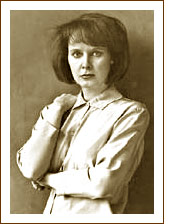
Mary Gaitskill

Personal Best: The Hunchback of Notre Dame

"The Hunchback of Notre Dame" by Victor Hugo

  • more
    • All Share Services

i picked up this book on impulse during an odd pocket of time about seven years ago. I was living alone in a very isolated area and I was having insomnia so severe that I was only sleeping one to three hours a night. On top of that, when I did sleep, I had intense nightmares, all on the theme of brutish men viciously killing and/or raping women — me for example. The dreams were terrifying, but they were also bewildering; while they could be explained by real-life fears, I felt they were more about me than anything external, and because I very much wanted to understand them, I thought a lot about them. Solitude, sleep deprivation, nightmares and self-examination are a loopy combination, and I spent my many waking hours moving in and out of an half-dream state in which the violent images from my subconscious loomed about me, leering ridiculously as I nodded off in the grocery store checkout line.

It was in this state that I saw Hugo’s classic in a bookstore, and while I had never wanted to read it previously, I had a strong, if addled, intuition to pick it up.

For anyone who doesn’t know, the story, which takes place in medieval Paris, is about Quasimodo, a deformed, barely verbal hunchback who is feared and hated by all. His only friend is Dom Claude Frollo, a stern, cerebral priest so cold he ignores the poor hunchback when he’s being publicly tortured for a crime he didn’t commit. The only thing the priest gets excited about is Esmeralda, a beautiful young gypsy he wants so badly his lust turns to hate. She is the only character to show the hunchback a moment of human kindness: at the same moment that the priest ignores him, when he is being jeered by a horrid rabble, she approaches the public stock and gives him a drink of water. Because of this, he falls fiercely in love with her, even though she is too disgusted by his ugliness to even let him kiss her hand. Meanwhile, she is obsessed with a shallow glamour-boy whom she believes once protected her.

Crazy with frustrated lust, the priest has the gypsy arrested for witchcraft and condemns her to death. As she’s being led to the gallows, Quasimodo comes down like a fiend and carries her off to the sanctuary of Notre Dame. After an uneasy respite, there’s a battle and Esmeralda is seized and hung. In despair, the hunchback kills the priest and crawls off to Esmeralda’s tomb to die with his arms around her body.

According to today’s ideas, the book is hopelessly corny; the plot moves forward with the aid of coincidences, convenient eavesdropping and the discovery of mysterious notes. The emotional tone is loud, naked and drawn in big operatic swatches. Characters fling themselves before each other and yell out their hopeless love, only to be dramatically scorned. But the mechanics of the plot are only the surface layer of the book’s heart. The characters, with their dime-store costumes and big, bald poses, are like two-dimensional conduits for an underlying psychical plot of primary depth and power.

All three characters are like parts of a single, unintegrated whole trying desperately to reunite; each of them has something the other needs. Esmeralda’s love for her fatuous playboy is like that of a teenager with a crush on a rock star — her passion is exquisite, but her choice of object makes it ridiculous. And, also like a teenager, she is trivially cruel to the priest. She is sparkling and lovely in spirit, but so lacking in discernment or intellect that she is silly and weightless. Even her kindness to the hunchback is little more than a whim; she has no concept of the deep love it has engendered in him. The priest, on the other hand, has plenty of intellectual discernment and even depth. But without the light and playful innocence that the gypsy has in such abundance, his passion is dry, warped and perverted. Quasimodo is the only one capable of real love, but he is too raw. Without the refinement present in the other two he cannot express his real beauty or even make his strength effective. He is not an ideal character — he is chaotic, vindictive and gross, baring his teeth and snarling like a wounded animal.

The priest is all brain, the gypsy girl all joy and sensuality and the hunchback all deep feeling. For, in spite of his darkness and ugliness, Quasimodo is truly the heart of the triad. In the extremity of his pain and deprivation, he is able to locate a depth and purity of being that the other two don’t have at all. And yet he is the one they cannot quite bear to look at.

Quasimodo is not a rapist. But he is a dark, powerful, violent male who looks quite terrifying. As I read about him, I thought about my nightmares: it occured to me that they were about male power gone berserk for lack of development or love or even acknowledgment. Not male power in the outside world, but in my internalized templates and ideas about men, which had become part of me. It occurred to me that these internal images looked so scary because I didn’t know them well enough, and that, under their apparent ugliness, there could be beauty and power that I did not yet understand. As I read I experienced a sense of grace unlike anything else I’ve felt before, and it moved me to tears.

It wasn’t as if the book gave me a resolution or an answer. But it helped me give definition to a very complicated and even frightening internal process by dramatic means more powerful than any therapeutic explanation. And for that, I will always love it.

My Inspiration: Vladimir Nabokov

Sorcerer of cruelty

  • more
    • All Share Services


I
n an interview, Vladimir Nabokov was once asked to comment on the popular authorial truism that one’s fictional characters can sometimes “take over” and dictate to the author the course of a story. In his supercilious dismissal of this whimsical idea, Nabokov described his characters as “galley slaves” — a comment exuding the playful, haughty spirit that drove (and still drives) some critics nuts. Such critics condemn Nabokov’s authorial voice as elitist, inhuman and finally cruel. And that is an assessment his “slaves” might well agree with, subjected as they were to excruciating and ridiculous fates delineated in exquisite language and sparkling, albeit twisted, comic narratives.

To a reader with a defensive turn of mind who is waiting to be told how to live or to be shown the Truth in a piece of fiction, the ruthless and rigorous complexity of Nabokov’s work may seem cruel simply because it does not offer either of these services. Some readers apparently interpret the very beauty of his prose as cruel — and there is a hyper-refinement, an airy, curiously high-pitched quality to its beauty that can feel cruel simply because it throws the whole beastly, mundane, plodding corporeality of human beings into such grotesque relief. Through this Apollonian oeuvre there frolic countless tiny nymphets — most famously, Lolita Haze, with her dim eyes and big, bright mouth, her narrow-shouldered, hipless, insouciant grace. And therein also stump Mrs. Haze and her 30-ish sisters, with their gross emotional needs, their dumpy legs, their ghastly hips and boobs, the unbeautiful human personified with a fastidious shudder.

What such critics forget is that a certain kind of detachment permits the most intense feeling, and that intense feeling is not always moral. It is this detached, aerial view that allows a wide range of feeling in all its unpredictable, oscillating movement. A sad person who is so involved with his sadness that he mistakes it for reality will have a hard time seeing himself as anything but sad. For him, the sadness is not a feeling that he experiences, it is him. Similarly a writer who is completely engaged with the emotionality of her characters — or even her own point of view — is in danger of writing from a very small, static and even self-righteous position.

Sometimes I write from the point of view of characters whom I would dislike as people, not as a perverse exercise, but because this cracks the story open and makes me see it in a way I would not see it naturally. Not being locked into one set of feelings which you run the risk of mistaking for the Truth, you have greater and more intense access to all feeling states, including those you would never choose to act out. Such an accepting and at times dispassionate approach to feeling allows for an understanding of both tenderness and cruelty. Alongside the refinement and the cruelty, an unspeakable tenderness permeates Nabokov’s work — even, in the end, for Mrs. Haze, who cannot, after all, help being who she is. Nabokov once remarked that art is “beauty plus pity,” and in his fiction, beauty and pity rub together mightily.

The recently-published Stories of Vladimir Nabokov (Knopf, $35.00) contains 65 samples of Nabokovia. All of them are interesting and many of them are small masterpieces, particularly those that evoke, with an exquisite interplay of flickering shadows, objects and corporeal beings, the frailty and absurdity of love and want.

From a student writer’s point of view, the most fascinating story is perhaps the early “Sounds,” less for its literary strength than for the pleasure of seeing, still gently breathing, the organic development of Nabokov’s unique hybrid of aesthetics and feeling. Or rather, for how his sense of aesthetics and emotionality breathe through each other.

With its narrator’s youthful rhapsodizing about Life, “Sounds” is about as close to the voice of a teenage Carlos Castaneda fan as Nabokov ever got (and perhaps closer than he wanted to get). But it is intelligent, finely-tuned rhapsodizing, describing an early experience of passion with a profound and glorious ambivalence. A young man enjoying a quiet love affair with a married woman suddenly realizes that “[she] alone is not my lover but the entire earth,” and experiences an intense and subtly erotic understanding of his metaphysical connection with everything that lives — all the while retaining his piquant sense of self. In such a state, even a friend’s grief becomes a source of delight — “I was radiant with his tears” — because it is “happy as any moment or radiance is happy.” Oblivious to this, his mistress tells him that she wants to run away with him. He responds with trivial talk about her cigarette case, and she realizes that he has said no. He rides off on his bike, still enrapt in his new vision, imagining that she will write to him and that he will not answer.

“Sounds” is about as close to the voice of a teenage Carlos Castaneda fan as Nabokov ever got (and perhaps closer than he wanted to get).

Superficially, this is about a blithe young man, selfishly obsessed with beauty and his own perceptions. But in a deeper way, the story is about a budding apprehension of life in all its layers, any of which can be experienced as beautiful and vital. On one hand, his desertion of the woman seems callow. But even in his detachment, he cherishes her: “It was delicious losing you. You went off, jerking angularity at the glass door. But a different you departed otherwise, opening your pale eyes under my joyous kisses.” In these lines, the story bears the seed of a parallel universe in which the woman, realizing that the entire earth is also her lover, rises out of her sorrow to meet the narrator in his place of detached perception, if only to wave goodbye.

The frisson between a large, ecstatic vision and human-scale events, and his ability to inhabit both, characterizes all of Nabokov’s work and is part of what gives it such an unusual, muscular poignancy. Far from being cold or inhuman, Nabokov’s writing is suffused with a great joy that is supremely human, and that can take in all facets of being at once — although many humans may never allow themselves to experience this. In his own words: “It is a combined sensation of having the whole universe entering you and of yourself wholly dissolving in the universe surrounding you. It is the prison wall of the ego suddenly crumbling away with the nonego rushing in from the outside to save the prisoner — who is already dancing in the open.”

Continue Reading Close

Page 2 of 2 in Mary Gaitskill