Michael Adler

“Serious concerns” shroud Iran’s nuclear program

While not a "smoking gun," the U.N. report buttresses U.S. case for tougher sanctions

  • more
    • All Share Services

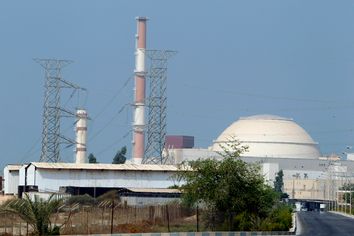
 A view of Iran's Bushehr nuclear power plant south of Tehran. (Credit: Raheb Homavandi / Reuters)

A U.N. nuclear report released Tuesday presents a damning case that Iran has a nuclear weapons program. From an alleged secret enrichment program to make the fuel for a bomb to research on the neutron trigger to set off a weapon, the International Atomic Energy Agency paints the picture of a comprehensive Iranian effort. In addition, the agency presents data that Iran has continued to work on making a weapon, despite U.S. estimates that Iran halted weaponization research in 2003. It is the first time since the IAEA began investigating Iran in 2003 that it has put so many pieces together in an official report.

The United States has already signaled that it will use this report in its continuing campaign to get tough sanctions against Iran in order to force it to negotiate on its nuclear ambitions. The report buttresses U.S. policy of isolating Iran as much as possible. Washington wants to rally the international community to put pressure on Iran, and now it has a documented report from the U.N. nuclear watchdog that Iran has done much more to obtain nuclear weapons than was previously known. The Obama administration is trying to reach a settlement that will spare it from having to choose between bombing Iran or letting Iran get the bomb. The IAEA report increases the urgency in finding such a solution.

The IAEA does not state unequivocally that Iran is making nuclear weapons, concluding only that it  has “serious concerns regarding possible military dimensions to Iran’s nuclear programme,” and that “information indicates that Iran has carried out activities relevant to the development of a nuclear explosive device.” This is a strong statement but short of the almost unambiguous assessment the IAEA made last May that a building bombed in Syria by Israeli planes in 2007 was “very likely” to have been a nuclear reactor.

The IAEA recognizes skepticism about intelligence on weapons of mass destruction after the false claims that led up to the Iraq war. The report includes a section that  lays out why it considers the information it has credible. Iran says the documents are forgeries but the IAEA says it has a variety of records including engineering drawings, videos, procurement information, financial records and “documents demonstrating manufacturing techniques for certain high explosive components.”

The report  says the information is “consistent in terms of technical content, individuals and organizations involved, and time frames.” In addition, the information came from “more than 10 member states” as well as the IAEA investigation. The agency presents a chart of how Iran has allegedly changed the organizations doing weapons work in order to avoid being detected.

Among the key points in the IAEA report:

  • Iran has blueprints for how to make the uranium metal needed for a bomb and has done dry runs, not including nuclear material, on how to make this metal.
  • Iran received “nuclear explosive design information,” or plans how to put a bomb together, and that it may have more advanced information than previously believed.
  • Iran has developed the “exploding bridgewire detonators” needed for an implosion-type nuclear device and has done a large-scale experiment to test this.
  • Iran did computer simulations on whether, based on high-explosive tests using tungsten, it could make an implosion bomb work.

The IAEA report comes at a tense time. There are press accounts of Israeli Prime Minister Benjamin Netanyahu pushing for an attack on Iran. There is the U.S. allegation of a rocambolesque Iranian plot for a terrorist attack in the U.S. capital.  But this does not necessarily portend war.  Former Mossad chief Meir Dagan and other key security figures oppose an Israeli rush to arms, especially as they feel there are non-kinetic ways, including tougher sanctions and cyber-attacks, to bring Iran to heel. And Washington is not at this point anxious for war. Israel would have to be in exceptionally dire straits before it would risk its alliance with the United States over such a key, strategic issue.

There is another key point: The hardest part of making an atomic bomb is getting the fissile material, the nuclear matter that explodes. Iran says it is only working peacefully to get fuel for yet-to-be-built power reactors.

Israel is concerned since Iran has said it will move enrichment work from Natanz, which is an underground bunker complex, to the Fordow site, near Qom, which is built into a mountain. The IAEA report says Iran has not yet done this but is working on it. This could possibly close the window on potential military action against Iran’s nuclear work.

“It’s totally different because the one [Natanz] is a basement, the other [Fordow] is under a mountain,” said one diplomat. Israeli analysts have said the time for an attack on Iran will come when the Iranians are on the verge of doing something that would make military action useless. Stocking Fordow with enrichment lines could be that something.

But we are not there at this point. The immediate fallout from the IAEA report will be a push for tougher sanctions against Iran, a policy Israel has been backing.  And if the IAEA report this month does not convince, there will be another one, with more data, in February. After that, especially if Fordow becomes an inaccessible factory for producing the enriched uranium that can power a reactor but also a bomb, the Iranian nuclear crisis may be heading for its crunch time.

The Obama White House’s Iran two-step

Two recent high-profile news stories reveal a White House grappling with conflicting imperatives

  • more
    • All Share Services

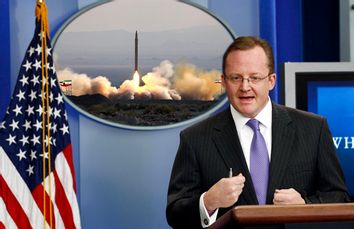
The Obama White House's Iran two-stepWhite House Press Secretary Robert Gibbs responds to a question about leaked documents during a briefing at the White House in Washington July 26, 2010. Pakistan was actively collaborating with the Taliban in Afghanistan while accepting U.S. aid, leaked U.S. military reports showed, a disclosure likely to increase pressure on Washington's embattled ally. REUTERS/Kevin Lamarque (UNITED STATES - Tags: POLITICS IMAGES OF THE DAY)(Credit: © Kevin Lamarque / Reuters)

It is the summer of 2010, and despite some dramatic developments, the almost decade-old Iranian nuclear crisis seems stuck in a predictable rut. The United Nations Security Council has levied yet another round of sanctions and the United States and the European Union have added even tougher measures on their own, but Iran continues to push ahead with nuclear work that raises fears it seeks the bomb. Will anything ever change?

Then, into this discomforting world of same-old, same-old comes a blockbuster article in The Atlantic that lays out the logic for an Israeli attack against Iran. It even sets a deadline. Jeffrey Goldberg writes that Israel’s “period of forbearance, in which (Israeli Prime Minister) Netanyahu waits to see if the West’s nonmilitary methods can stop Iran, will come to an end this December.”

What interests me in this is not so much the debate over how to rein in Iran’s atomic ambitions, but the way in which the Obama administration uses the media to keep its policy on-track. The medium is the message and in policy matters the message, how things are perceived, is substance. The Goldberg article sounded drums of war which the White House wanted both to use and to muffle at the same time.

Barack Obama came to the presidency pledging to engage Iran in talks, an openness to negotiation that his predecessor George W. Bush lacked. This played out in 2009 and resulted in — no talks. So, 2010 marks the beginning of a new phase, one of pressuring Iran with sanctions. But what next if sanctions don’t work?

Goldberg’s article reminds us that the gorilla at the table is a potential Israeli or U.S. attack on Iran. Does the administration want to downplay this? Somewhat, of course. But Obama’s people do want to make clear that force is an option, because, as U.S. officials say, a threat is often more effective than the actual action. There is no endgame without the menace of an attack, even if President Obama may be set against bombing Iran due to all the feared unintended consequences. The threat must still be there. The administration has laid the groundwork for this with both the president and Secretary of State Hillary Clinton repeating that it would not be acceptable for Iran to get a nuclear weapon. U.S. officials have also been saying that containment — that is, living with an Iranian atomic bomb — is not an option. The point is made that the dynamics in the Middle East of today are so much more volatile than was the Cold War nuclear balance between the United States and the Soviet Union. Each superpower had a well-funded system of command-and-control and more time to react than would states in the smaller and less developed Middle East.

This would seem to leave military action as the ultimate and inevitable resort to keep Iran from getting the bomb. But none of this has been decided, not in Washington and not in Jerusalem. What is important is that the threat be on the table without actually being a threat. White House Chief of Staff Rahm Emanuel and ” several National Security Council officials” clearly tried to make just this point in the Goldberg piece. When Goldberg said people doubt that  “Obama would open up a third front in the greater Middle East,” he quoted one of the officials answering: “What have we done that would allow you to think that a nuclear Iran would represent a tolerable situation?”

This is keeping the threat in play. But remember, it can not actually be a threat because that would torpedo negotiations. And this is how we get a New York Times article following on the Goldberg piece in which U.S. officials insist that the Iranian situation has not reached a critical point. They say Iran is having trouble making the fuel needed for a bomb. Iran, say the officials, is still relatively far away from the break-out point of taking enriched uranium fuel and using it to assemble a weapon. As the Times explained: “The Obama administration … has persuaded Israel that it would take roughly a year, and perhaps longer, for Iran to complete what one senior official called a ‘dash’ for a nuclear weapon.” The excesses of the Goldberg piece are now trimmed. Time is left for diplomacy.

What has the administration done with all this spin? It has kept the military option alive, hopefully worrying the Iranians, but also kept the threat theoretical and under control. It makes you wonder: Are these stories really about policy — or are they the policy itself?

Continue Reading Close