Scott Kirsner

“Don’t call it the nerd Oscars”

There's no bling, no limo gridlock and only one famous face -- but one night celebrates the techies who make our movies better.

  • more
    • All Share Services

The camera crews from “Entertainment Tonight” and “Access Hollywood” were clearly vexed: Unlike at other banquets held during the busy season leading up to the Oscars, full of famous faces, no one streaming into the International Ballroom at the Beverly Hilton on Feb. 18 was even remotely recognizable to them. Most of the attendees’ garb looked as though it was bought off the rack at Nordstrom, and no one was wearing gaudy baubles borrowed from Harry Winston. When interviewed by the TV and radio reporters positioned behind the black velvet ropes, the evening’s award winners were more likely to discourse on compression algorithms, cloth-simulation software or robotic camera mounts than to grin and gripe about the nonexistent limo gridlock outside the hotel.

The occasion was the Academy of Motion Picture Arts and Sciences’ annual Scientific and Technical Awards, which each year’s Oscar host fleetingly refers to as “a ceremony held earlier” before cueing a 30-second video summary of the event. There’s usually a grand total of one celebrity at the Sci-Tech Awards: the evening’s host. The banquet’s organizers at the academy have a solid record of landing actresses on the way up, including Charlize Theron, Kate Hudson and, last year, Scarlett Johansson. This year’s host was Rachel McAdams, seen recently in “The Family Stone,” “Wedding Crashers” and “The Notebook.”

As someone who identifies less with the international megacelebs who’ll strut into the Kodak Theatre on the first Sunday in March, and more with the working stiffs behind the scenes trying to keep the directors, cinematographers and editors happy, I’d always been curious about the Sci-Tech Awards. Did they have anything in common with Hollywood’s biggest night, aside from plastic statues of Oscar guarding every pillar?

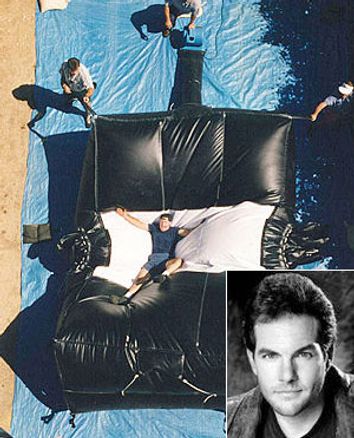
The Sci-Tech Awards celebrate the mechanics of moviemaking, recognizing “any device, method, formula, discovery or invention of special and outstanding value,” according to the academy. Awards this year went to a system that can keep a movie camera level even if it’s on a boat in the middle of a roiling ocean; the graphics research that makes the characters in Pixar movies more realistic looking; and a newly designed air bag that’s less likely to cause stunt people to bounce off and be injured when they hit it from great heights. There are no “For Your Consideration” campaigns in advance of the Sci-Tech Awards, no seat fillers in the audience and, amazingly, no time limits on speeches. “It has never been a problem,” says Rich Miller, the administrative director at the academy who has overseen the Sci-Tech Awards since 1988. “We haven’t had to install the microphone that starts descending into the floor when you’ve talked too long.”

The ballroom last Saturday wasn’t pervaded by tension or anxiety — all of the winners had been announced a month before. So everyone could enjoy the four-course dinner without worrying about going home empty-handed, and no one had to fake an “I’m so happy for that jerk who edged me out” smile. At my table were three winners, J. Walt Adamczyk, Michael Sorensen and Alvah Miller; the trio of engineers and computer scientists won for a remotely controllable camera system that can execute the exact same moves, take after take, and for “pre-visualization” software that gives directors an early, rudimentary view of how computer-generated sets and special effects will look once they’ve been integrated with the live-action footage. The rig has been used in “Lemony Snicket’s A Series of Unfortunate Events” and “Spider-Man 2.”

Miller said he’d won “five or six” Sci-Tech Awards in his career, and he’d also been a guest at the main-event Oscars. “This is better than the Oscars,” he said. “The Oscars are too long and too boring.”

McAdams took the stage after a highlight reel of her film performances had been shown. She explained apologetically that the audience was probably “more familiar with my work as a scientist. I recently abandoned my research on cold fusion, because it was just too cold.” Toothpick thin, she wore a glittery gold sleeveless gown. McAdams didn’t deviate at all from the jargon-laden script that scrolled across the teleprompter, but she did keep things moving at a good clip. (As with the other Oscars, the evening featured one painful-to-watch special performance, in the vein of Rob Lowe and Snow White singing “Proud Mary” in 1989: ventriloquist Jim Barber, direct from Branson, Mo., who trotted out dummy after dummy, and eventually had two Academy members from the audience up onstage lip-syncing to “Stop! In the Name of Love” in sequined shifts.)

The evening’s first award went to Scott Leva, a stuntman and stunt coordinator (“Superman,” “Toxic Avenger,” “Collateral”) who developed the Precision Stunt Airbag. Inflated on the ground to catch a stunt person performing a high fall, Leva’s air bag is designed to pull the performer in, whether he or she lands in the center or close to an edge. Leva said he was sorry that stuntman Paul Dallas, a friend, wasn’t alive to see him receive the award. (Dallas died in 1996, doing a fall for an episode of the TV series “L.A. Heat.”)

Winning an award alongside Pixar president Ed Catmull, Pixar programmer Tony DeRose said he was “on a mission to show kids how cool math and science can be, and this award will help get that message across.” Microsoft researcher John Platt, receiving an award for his insights into “elastically deformable models” (at the other Oscars, the term would refer to arm candy that’d had too much work done), thanked McAdams for lowering his “Kevin Bacon number” to three, and his neighbors for watching his kids. Laurie Frost, a Brit who invented a remote-controlled camera system in 1976 that allows camera operators to stay a safe distance from dangerous shots, recalled having to take out a second mortgage on his house to cover the costs of its development. (Rich Miller explained that the academy tends not to bestow awards until a new technology has been widely adopted in the industry — and, sometimes, even later.)

At the Sci-Tech Awards, there are three tiers of honors, and the process for choosing the winners involves more research — and less DVD viewing — than the other Oscars. If a nominated technology is portable enough, its inventor brings it to the academy for a demonstration; if not, a small team goes on a field trip. With Leva’s air bag, they watched as stunt performers — including a 9-year old — plummeted into it from 30 feet up. Toward the end of the year, the academy’s Scientific and Technical Awards Committee votes by secret ballot on which technologies are most worthy. A technology can win a certificate (the lowest rung of Sci-Tech Award), a plaque or an Oscar.

“We give very few Oscars,” said Miller. “They’re mostly for inventions that change the way movies are made. Steadicam is a good example. There are almost no movies made today that don’t have a Steadicam shot in them.” (Two of the most famous shots using a Steadicam, which permits a camera to remain motionless while the camera operator is walking or running, are the scene in “Rocky” where Sylvester Stallone ascends the steps of the Philadelphia Museum of Art and the five-minute shot that opens “Goodfellas.”) Miller said that only 44 Oscars have been awarded for scientific and technical achievement. None was awarded this year: Recipients instead received plaques, certificates, one honorary medallion and an honorary Oscar statuette, which technically wasn’t an Oscar Oscar.

“My impression is that the Sci-Tech Awards are generally not that political,” said Bill Warner, the founder of Avid Technology. Warner won twice for developing a digital system for editing movies — including receiving the coveted Oscar statuette in 1999. (Most Hollywood movies are now edited on an Avid system.) “I feel like it’s a meritocracy,” he said. “Some of these companies that win are really small, and some of the people are so freaking brilliant. You wonder, how did they figure out how to make that flying camera?”

The Sci-Tech Awards are like Oscar’s older, brainier brother, who isn’t very good at small talk, and spends his disposable income on outfitting his basement workshop with new oscilloscopes rather than on teeth whitening and tanning. And since they were first given out in 1930, the Sci-Tech Awards have always existed in the shadow of their flashier sibling. The Academy Awards get billboards all over Los Angeles; the Sci-Tech Awards didn’t even get a sign in the lobby of the Hilton. In the past, the Sci-Tech Awards have been doled out without a gathering to mark the occasion, or palmed off in a hurry during the commercial breaks of the televised Academy Awards. “During the commercial breaks, people don’t always sit still and pay attention,” observed Rich Miller.

But the Sci-Tech Awards this year are coming up from the basement for a bit of air: The Discovery Channel is preparing a one-hour documentary, hosted by Dave Foley, about the ceremony, the honorees and their inventions. “Science on the Red Carpet” amounts to perhaps one one-thousandth of the airtime that will be devoted to the Oscars, Oscar parties, Oscar fashion and the performance of first-time Oscar host Jon Stewart. But it’s a lot more attention than the Sci-Tech Awards have ever gotten before. (The Discovery Channel producers had to install their own patch of crimson carpet at the front door of the Hilton, though — the Sci-Tech Awards don’t usually feature a long red rug.)

Garrett Brown, the inventor of Steadicam, says he isn’t happy that the Sci-Tech Awards are often referred to as the “nerd Oscars” or “geek Oscars” by those who attend the main ceremony. “Don’t call it the nerd Oscars, OK?” he advised me. On Saturday, Brown received an award for another technology he developed — a camera suspended by four cables that can move freely through space. (It was used in films like “The Boy Who Could Fly,” “Birdie” and “Highlander.”)

“It’s kind of a shame that we’re sequestered off,” Brown says of the sci-tech bunch. “We’ll have our revenge some day.”

And if Hollywood produced a major motion picture about the group, it would surely be called “Revenge of the …”

Never mind.

Missing the hybrid moment

Fixated on an elusive hydrogen future, Detroit carmakers are letting Japan waltz in and grab a market that could explode.

  • more
    • All Share Services

Missing the hybrid moment

An invitation to visit General Motors’ main R&D facility, just north of Detroit, is like being given a ticket back to a mid-1950s World’s Fair. The General Motors Technical Center, as it is called, was designed by the architect Eero Saarinen — who would later collaborate on the IBM pavilion at the 1964 World’s Fair in New York. Saarinen’s research campus for GM features a stainless-steel water tower that resembles a spacecraft ready for liftoff, stately rectangular reflecting pools punctuated by fountains, a 65-foot-tall dome, and sprawling, low, International Style office buildings. All that’s missing as I park my rental car is the surging, glockenspiel-heavy “World of Tomorrow” soundtrack.

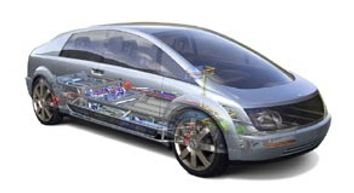
I’d come to talk to some of General Motors’ top research executives about the company’s investment in hydrogen fuel cell technology. (GM has been touting hydrogen as the fuel of the future and showing off a concept car called the Hy-wire.) But I ended up surprised at the swipes GM executives took at Honda’s and Toyota’s success with hybrid vehicles. They accused the two Japanese carmakers of selling their hybrids at a loss to generate positive environmental buzz, and argued that hybrids appeal only to a microscopic subsegment of U.S. consumers.

“You always have your early adopters,” said Alan Taub, GM’s executive director for R&D, about today’s hybrid buyers. “Toyota sells as many Priuses as we sell Pontiac Aztecs. Is that a success?” Earlier this year, at the Detroit International Auto Show, Bob Lutz, GM’s vice chairman of product development, had said that the company’s decision not to make a hybrid car “was a mistake from one aspect, and that’s public relations and catering to the environmental movement.”

It is true: Hybrids — vehicles that improve gas mileage by pairing internal combustion engines with batteries and electric motors, and recapturing some of the energy that is usually lost in braking — represent only a tiny sliver of cars sold in the United States this year. For 2004, they’ll account for about 0.52 percent of total sales, or 88,000 vehicles, according to Anthony Pratt, an analyst at JD Power and Associates. But is that a sign of a weak market, or merely the thin end of a wedge that could quickly become very, very large? Toyota recently announced that it will double the number of Priuses that it allocates to the United States next year, from 50,000 to 100,000, and Honda will introduce its third hybrid model this month, the first hybrid version of its popular Accord sedan. Pratt expects hybrids to account for 1.3 percent of all car sales in the United States next year, and other industry observers say that Toyota could surpass General Motors as the world’s biggest automaker by 2006, partly on the strength of its hybrids.

As for the question of whether the Japanese carmarkers are selling their hybrids at a loss, just to look good for P.R. purposes — well, the closer one looks, the less that seems to be true. Instead, Japanese carmakers appear to making the kind of front-end investments that pay off in the long run, with market share and eventual profits.

GM is not alone in its hybrid disdain. Its Detroit rivals have been similarly slow to warm up to hybrids. DaimlerChrysler, which is more interested in cleaner diesel engines than hybrids, did announce plans to produce a hybrid version of its Dodge Durango SUV by 2003, but that vehicle has apparently gotten lost on the way to dealerships. The introduction of Ford’s first hybrid, the Escape SUV, was delayed from 2003 to 2004. General Motors aims to be the first company to profitably sell a million hydrogen vehicles — “we measure success when it has six zeroes behind it,” Taub told me. But the company has so far introduced only two “mild hybrid” pickup trucks, which improve gas mileage by about 10 to 15 percent, in a few scattered markets. (By comparison, Ford’s hybrid Escape drives nearly twice as far as the traditional Escape on a gallon of gas.)

Back in the 1970s, the Big 3 carmakers watched in dismay as Japanese imports carved a huge swathe through their traditional markets. Is history about to repeat itself? Is Detroit missing out on a major shift in technology — and car-buyer psychology — by committing only grudgingly to hybrid vehicles? By betting big on the ever-elusive technologies of tomorrow, like hydrogen, carmakers such as GM may be letting the present slip away.

GM’s research executives work in sleek offices and conference rooms reached by ascending Saarinen’s renowned floating spiral staircase; the spaces would make ideal sets for a revival of “How to Succeed in Business (Without Really Trying).” The executives seem to view hybrids as a steppingstone on the way to hydrogen-powered vehicles, which would use fuel cells to turn hydrogen into electricity. (The problem with hydrogen is that there’s no guarantee of three important things: that hydrogen fuel will be cost competitive with gas, that it will be produced in an environmentally sensitive way and that a hydrogen fueling network will be built anytime soon. Consumers also associate the gas with an ill-fated blimp that crashed in New Jersey.)

“By 2010, we want to be ready with a commercially viable hydrogen car technology,” says Byron McCormick, GM’s executive director of fuel cell technology and commercialization. He spins out visions of hydrogen cars that could serve as electrical plants for individual homes, plugging into the garage at night to produce power. “If you had just 10 percent penetration of fuel cell cars in California, the cars would have more generation capacity than the electrical grid,” he says. The company is investing more than $1 billion in its hydrogen car development program.

But the day when 10 percent of Californians will be tooling around in fuel cell vehicles is still far off, as is the fantastical year of 2010, when teenagers will travel by personal jet pack and Christmas dinner will be packaged in a pill. Today, consumers who care about gas mileage and limiting their impact on the environment are purchasing hybrids.

General Motors’ first forays into consumer hybrids, its Chevy Silverado and Sierra pickup trucks, aren’t really in the same category as the Toyota and Ford hybrids. They’re “mild hybrids,” which seek fuel efficiency by capturing energy lost in braking and by shutting off the engine when a driver is stopped at a red light, using batteries to power accessories like the radio and air conditioning. Full hybrids like the Prius do those things, too, but they also use banks of batteries and electric motors to actually propel the vehicle when it’s moving at low speeds. GM won’t offer a full hybrid until 2007. (DaimlerChrysler has yet to start selling its first hybrid of any sort in the U.S., though now it seems that a Dodge Ram pickup will likely be first in line.)

GM’s Taub says the company is trying to “take the hype out of hybrids,” introducing the technology slowly, and in vehicles where it will have the greatest environmental impact, like trucks and SUVs, which swill more gas and emit more pollutants than passenger cars. And he adds that GM doesn’t intend to sell money-losing vehicles. “The question with hybrids is who will be the cleverest at driving down costs the fastest,” Taub says.

It’s true that hybrids will have more mass-market appeal once they’re no longer priced at a premium. (Today’s hybrids can cost $2,000 to $3,000 more than their nonhybrid doppelgangers.) But it’s also true that the Japanese carmakers, by virtue of five years of production experience, are already figuring out how to drive down manufacturing costs more quickly than their rivals in Detroit. Toyota is already producing some of its Priuses on the same assembly lines it uses to produce traditional sedans — rather than their own dedicated lines. That’s a precursor to being able to cost-effectively offer any vehicle type in one of two flavors: regular or hybrid.

“It’s natural to wonder how we can make a profit on these vehicles,” says Wade Hoyt, a spokesman for Toyota Motor Sales USA. “I would chalk it up to sour grapes. We broke even on the first-generation Prius during its model run, and the current generation will be profitable after about two years on the market, which is typical for any vehicle.” The company’s high-end Lexus division, which will start selling its first hybrid SUV next year, has tallied up more preorders for the Lexus RX 400h than any other vehicle in Lexus’ 15-year history.

Honda won’t disclose whether individual car models are profitable, but spokesman Chris Naughton says that while “some things may not be profitable from Day One, we are in the business to make money.” Naughton says Honda had its three consecutive best months of sales of the Civic hybrid last spring, when fuel prices were peaking. The company expects to sell about 20,000 of the new Accord hybrids in the coming year. “Hybrids are selling in increasing numbers as there are more available in the marketplace, and as customers understand that you don’t have to plug them in,” Naughton adds.

And neither company is ignoring hydrogen fuel cell technology, either. In 2002, Toyota and Honda were the first to begin leasing fuel cell vehicles in California. But, as Hoyt puts it, “whether or not the hydrogen market ever develops is something of a crapshoot.” Toyota isn’t giving up the bird in the hand for the one in the bush. The company is also licensing its hybrid technology to other carmakers, like Nissan and Ford, leading some analysts to compare Toyota to Intel. “They’re kind of becoming the ‘Intel Inside’ for hybrids,” says Pratt at JD Power. And it’s highly unlikely that Toyota is selling hybrid technology to its competitors without turning a healthy profit.

“There’s no question that Toyota and Honda are ahead of all the other carmakers, including the European manufacturers, when it comes to hybrids,” Pratt says.

GM and its Detroit brethren do seem to be stuck in neutral, with GM in particular obsessed by the hydrogen-powered world of tomorrow. But that could change quickly. The forecasting firm CSM Worldwide expects 20 new hybrid vehicles to be introduced by 2007. “General Motors sells about 1.2 million full-sized trucks and SUVs every year based on one platform,” says Lindsay Brooke, an analyst at CSM. “If GM prices its hybrids well, and markets them and advertises them in the right way, GM could well be the volume leader in hybrids.”

Brooke says that while the Japanese carmakers have earned bragging rights by being first to market with hybrid vehicles, it’s too early to pick a true winner. But if there is a victory in store for one of the Big 3, it’ll be one of the come-from-behind variety.

Continue Reading Close

Drive-in summer

Why I fell in love with shooting stars, vans a-rockin' and watching a big screen from the back seat.

  • more
    • All Share Services

Drive-in summer

My parents tell me that I saw my first movie at a drive-in. But the only clear memories I had of the outdoor theaters that Variety used to call “ozoners” were of the Tropicaire Drive-In in Miami, where we used to go to the flea market on Saturdays, and of John Travolta singing sullenly in front of a drive-in screen in “Grease.”

It wasn’t until late in the summer of 1999, when I was living in Boston, that I first went to a drive-in behind the wheel of my own car. I’d known for some time that the Wellfleet Drive-In was the last remaining drive-in on Cape Cod, the meandering, sandy arm of land off the southeast corner of Massachusetts. Every year, the Wellfleet Drive-In is the subject of at least one big “last of a vanishing breed” stories in a Boston newspaper or magazine. I was spending a long weekend in the fishing village of Wellfleet with my girlfriend, Amy, and another couple. We watched Steve Martin’s “Bowfinger” and the superhero parody “Mystery Men,” four of us piled into the flattened cargo area of my Jeep Cherokee, which we’d parked backward, with the gate open.

I was enthralled. At the drive-in, you could look for shooting stars when the movie bogged down, take a walk and try to spot some vans a-rockin’ or wing pieces of saltwater taffy — as we did that night — at the cars whose passengers absent-mindedly turned on the lights or tapped the brakes during the show. It was half the price of seeing an indoor movie. And the screen was 100 feet wide!

Two movies that would have felt like ponderous time wasters at a multiplex seemed light and whimsical at the drive-in. Hollywood lately seems much better at meeting lowered expectations; if it insists on flooding theaters with B-movies, why shouldn’t we see them at the drive-in, the ancestral home of the B-movie?

As this summer’s drive-in season in New England approached, I decided it would be a fun project to try to see more movies in my car than I saw at the multiplex. Later, I came up with a secondary mission: to visit all of the surviving drive-ins in Massachusetts.

- – - – - – - – - – - -

Convenience isn’t a reason you fall in love with the drive-in. None of them is within an easy drive of Boston or many other big cities. Unless you’re severely lost, you’re not likely to stumble across one. And if you do, odds are that it’s abandoned — there are only about 520 drive-ins left in the country, down from a high of 4,063 in 1958. The ones that have survived are huddled in the woods outside smaller towns like Lunenberg, Mass., or Amelia, Ohio, where real estate prices haven’t shot up too far or too fast.

But there are plenty of aesthetic and practical reasons that spurred my transformation from a denizen of the mall multiplex to a devotee of the drive-in, and nostalgia had nothing to do with it:

  • The drive-in is the perfect compromise between watching a video in the privacy of your living room, where you can make all the snide comments you want, and watching it on the big screen at an indoor theater, where you can’t avoid overhearing all of your neighbors’ snide comments.

  • I like not having to rush to eat dinner in order to get to the 9 o’clock movie at the multiplex, or hurry to get to the 7 o’clock showing and then forage for dinner afterward. No one cares if you bring food to the drive-in; some places even allow you to bring a grill and cook your meal on the premises. (Try that at the local AMC 24.)

  • At most drive-ins today, you listen to the sound over your car’s FM radio, not a battered metal speaker hooked to the door, so the volume is never too loud or too soft. And if you don’t want to sit in the car, you can bring a lawn chair; there’s usually a dedicated group of lawn-chair sitters lined up right in front of the screen.

  • You can bring young children and no one will shush them or shoot you dirty looks. You can even bring a dog. You can smoke, drink, make out and basically behave like the juvenile delinquent you never were. You can watch the sky try on different shades of blue in the last half-hour before it’s dark enough to show the movie.

  • There’s also the possibility for interplay between the environment and the screen. I was surrounded by looming pines when I watched the opening battle scene of Gladiator,” set in a forest. I saw “The Perfect Storm” just outside Wellfleet, salt air permeating the car.

    Of course, there are drawbacks. It’s not exactly convenient to drive 45 minutes or an hour each way to go to the movies, even if it is a double or triple feature. Projection quality can be iffy, and screens that aren’t well maintained can get splotched and grungy — though all of the drive-ins I’ve visited have been no worse than the less-than-pristine viewing experience you get at a chain-run indoor theater, and most have been better. The biggest inconveniences are the occasional interruption of a horn honking, a mosquito buzzing around or a pair of headlights arriving or departing the lot midmovie.

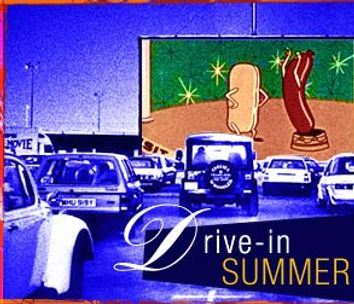
    But for me, watching that animated frankfurter reluctantly jump into the bun during intermission more than makes up for any drawbacks.

    Drive-ins in New England, and most other places with frigid winters, are open seasonally — usually May to September. This spring, I counted the days until May 19, the night that the Mendon Drive-In, the ozoner closest to Boston, was to open. But the first weekend was cold and drizzly, so Amy and I didn’t wind up making the 45-minute trek to Mendon until the next weekend.

    Mendon is a two-screen drive-in that has been open since 1954. The second screen was added more recently, in 1998. Both fields are grass and dirt, which I appreciate. Many drive-ins are paved for easier upkeep — and so that the fields can host swap meets during the day — but the unpaved ones are more pleasant, more bucolic. Mendon has a self-consciously retro snack bar that features a jukebox and an old carbon-arc projector. Most drive-ins now use the same kind of xenon-bulb projectors you find at an indoor theater, only the bulbs are much more powerful because they have to “throw” the picture longer distances and compete with ambient light — 5,000 to 7,000 watts, compared with 3,000 for a bulb used indoors.

    We watched “Gladiator” with the sound turned up real loud on the stereo. The epic looked wonderful on Mendon’s big screen. “Gladiator” was followed by the sporadically funny but forgettable Tom Green movie “Road Trip.”

    Two weekends later, we were back at Mendon with Meghan, a friend who had never been to a drive-in before. I was discovering that lots of people in their 20s and 30s aren’t aware that drive-ins still exist. The double feature that night was “Dinosaur” and “Gone in 60 Seconds,” and we watched a little bit of “Gladiator” on the other screen before we left. Two weeks later, we drove to Mendon again to celebrate my birthday with a bunch of friends.

    There were five cars altogether, parked in a cluster. We ate fruit and cheese and crackers and drank lemon soda, had some birthday cake and watched the just-released animated movie “Chicken Run.” Most of the group dissolved after the intermission ended. Some stayed for part of Woody Allen’s “Small Time Crooks,” but Amy and I had both seen that — it’s one of the two movies I saw indoors this summer — so we started the trip home early.

    The week of the July 4 holiday, we were back at the Wellfleet Drive-In, watching “The Perfect Storm” and part of “My Dog Skip.” Yes, director Wolfgang Petersen made a movie that tossed all the strengths of Sebastian Junger’s book overboard, but what he wound up with was gripping and melodramatic enough to be an ideal drive-in flick.

    It was at about this point in the summer that I decided to try to visit all of the remaining drive-ins in Massachusetts. In 1958, at the apogee of the drive-in, there had been 86 in the state. Now there were either six or seven — seven if you count the Northfield Drive-In, which I didn’t. It was on the border of New Hampshire and Massachusetts, but mostly in New Hampshire. The area code was 603, an out-of-state call. The other six ozoners were clustered in the eastern and middle part of the state, all within an hour-and-45-minute drive from Boston.

    In the sprawling middle of the summer, you can take your time getting to a drive-in, since darkness comes so late. We’d stop to eat dinner on the way out, or pick up burgers or Thai food, and there was still time to arrange the back of the Jeep, go for a walk and watch the moon rise. The Edgemere Drive-In was huge — the biggest in the state, with room for 1,000 cars — and sparsely populated, which made it seem a little eerie. There, we tried to time our arrival to avoid the first film, “M:i-2,” but failed, and caught the second half of that and all of “Scary Movie.” The Leicester Drive-In was filled with families, and the atmosphere was like a block party. We could hear laughter from the other cars as Janet Jackson tried to pull off line after line of clunky genetics terminology in “Nutty Professor II.”

    In mid-August, we orienteered our way to the Tri-Town Drive-In near Lunenberg (showing “X-Men,” a fantasy that plays perfectly at a drive-in, followed by the abominable “Hollow Man”). Roger, the courtly old gentleman in the white “Members Only” jacket who was manning the ticket booth, wasn’t impressed that we’d come from Boston. “Lots of people come to see us from all over,” he said. “There aren’t too many drive-ins around anymore.”

    After the Tri-Town, it was five down, one to go.

    As I was planning my forays around the state, I also did some reading about the history of the drive-in. In brief: A guy named Richard Hollingshead Jr. was inexplicably intrigued by the idea of being able to watch a movie from the comfort of his car. In his New Jersey driveway, he nailed a makeshift screen to some trees, perched a Kodak projector on the hood of his car and hid a radio behind the screen.

    But the patent he obtained in 1933 was for a different invention altogether: the mounds of dirt he designed to raise the front end of a parked car enough so that its occupants could see over the cars parked in front of it. The first drive-in opened in 1933 in Camden, N.J. (Sadly, no drive-ins operate today in the Garden State.) But in 1938, Hollingshead’s patent was invalidated by a Boston circuit court, which decided that mounds of dirt weren’t patentable. (Tell that to Jeff Bezos!)

    Drive-ins began replicating like pod people after the patent decision, and especially after World War II. Gas became freely available after rationing, cars were big and comfortable and taking the family out for a drive was still an important ritual. Drive-ins got big — some could hold 3,000 cars, with trains taking patrons to the concession stand. There were drive-ins that welcomed airplanes and drive-ins with hitching posts for moviegoers who arrived on horseback.

    The decline of the drive-in is well chronicled, and can be blamed on any number of factors: a fading of their novelty, smaller cars, a loss of the family businesses that drive-ins relied on, the introduction of the VCR and rising real estate prices, which forced many drive-in owners to sell out.

    But what hasn’t been written about much is that the free fall in the number of drive-ins has been arrested. The 1980s were disastrous. But in the 1990s, the trend toward closings reversed, with new drive-ins opening in places like Nebraska, South Carolina and Wisconsin. A flea market operator in Avon, near Buffalo, N.Y., decided to build three movie screens to supplement his business, and Alabama got five new drive-ins. In Virginia, neighbors in Lexington banded together and raised $25,000 to save their local drive-in, open since 1950.

    According to Jennifer Sherer, who runs the Web site Drive-Ins.com and hopes to open a new drive-in of her own near Las Vegas, 17 new drive-ins were built in the 1990s, and 49 existing ones were reopened. Then there are drive-ins, like Mendon, that have added extra screens. After a long hiatus, the industry even has its own trade group again, the United Drive-In Theatre Owners Association, and an annual convention in Orlando, Fla.

    “I don’t see the drive-in reaching another heyday or golden age,” Sherer told me, “but there will always be a small place in the market for these kinds of businesses, the anti-Wal-Marts. There’s just this romantic aspect to it, being outside, under the stars, watching a movie under a screen that makes something larger than life. Everyone I’ve met is drawn to that feeling of people outdoors having this communal experience that you can’t re-create in your living room, or in an indoor theater.”

    There’s something Brigadoon-ish about turning left when you see the battered neon sign: This is a place that shouldn’t really exist in the year 2000.

    - – - – - – - – - – - -

    I had plans that would take me to Florida for the Labor Day weekend, and I worried that that might be my last opportunity to visit my sixth and final drive-in in Massachusetts, the Mohawk Drive-In in Gardner, about 55 miles northwest of Boston. But the recorded message gave no indication when I called that the Mohawk’s season was coming to an end. I thought I was safe.

    When I returned to Boston after Labor Day, the weather had turned crisp. Fall was here, suddenly, and I was caught off balance by summer’s end. When I called the Mohawk to see what was playing that weekend, I encountered the message that I’d dreaded: Thanks for a great season, folks. See you next summer.

    I was in a funk for the rest of the week. Yes, I managed to see far more movies outdoors than indoors, but I hadn’t been to all of the state’s drive-ins, and I doubt I’ll try to repeat the whole string next year.

    As a consolation, I settled for one more visit to Mendon. It was showing “Space Cowboys” and “The Cell,” the former a solid drive-in picture, the latter a sloppily done “Silence of the Lambs” wannabe that still managed to be pretty spooky, with spectral forms roaming the field on their way to or from the snack bar.

    But a trip to the drive-in in September is different, I discovered. The sun sets earlier, so it’s a race to get there by dark, when the first movie starts. There are fewer cars and fewer kids and just a skeleton crew of employees — the ones who didn’t have to return to school. Instead of feeling like a celebration of summer, this trip felt like trying to elude fall.

    I fought the urge for a few more weeks, but eventually I returned reluctantly to the multiplex, where there are no double features or dancing hot dogs, where bad movies are just bad and where there’s nothing up above except ceiling tiles.

    See you next summer.

  • Continue Reading Close

    Old school is oddly cool

    Surprise. Stodgy Harvard Business School covers Net companies better than those screaming Net headline services.

    • more
      • All Share Services

    Old school is oddly cool

    A parade of Charles River rowers passed under the JFK Street bridge as Sterling Powell headed for her first day of orientation at Harvard Business School. It was a brilliant late-summer day, but Powell’s mind was clouded with questions: Would the two-year-long, $50,000-plus MBA program prepare her for a job in the Internet economy? Would there still be an Internet economy in two years? As a HomeRuns.com delivery truck rumbled past her on the bridge, it seemed as if the ground was shaking beneath Powell’s feet.

    At the core of the curriculum at the august Harvard Business School are case studies, written in the style of the paragraph above, that use nonfiction narratives to teach students analytical skills and decision making. “Harvard Business School brings the complex realities of business into the classroom in a variety of powerful ways,” states the school’s Web site. “Through the case method and other learning techniques, students examine problem-focused situations in ways that are managerially relevant, intellectually and emotionally engaging, and highly interactive.” The typical course at HBS examines 20 to 30 cases in a semester.

    Given how quickly the Internet is changing the business universe, and how difficult it has proved for start-ups and established firms alike to pick out a profitable path, I was curious whether HBS professors were doing a good job keeping pace with the evolution — and extinction — of various Internet business models and technologies. At a time when Web reportage and e-mail bulletins are just about the only things that seem current, and even newsweeklies like the Industry Standard sometimes read like Herodotus, how could HBS’ cases — which typically take four or five months to produce — possibly be relevant?

    To answer those questions, I read more than a dozen recently published cases on Internet companies like Priceline.com, Autobytel.com, Yahoo and Drugstore.com, and non-Internet companies developing digital strategies, like RCA Records and Staples.

    This much is clear: In the past five years, the emergence of the Internet as a mainstream medium — and business platform — has forced HBS’s professors to kick into case-writing overdrive. The school took an informal count last November and found more than 200 e-commerce cases. Tom Eisenmann, who teaches a perennially oversubscribed course called “Managing Marketspace Businesses,” wrote 13 new cases during the 1999-2000 academic year alone, on companies like Teledesic, Starmedia and CNet. Fieldwork on the Teledesic case was finished during the second week of January, and Eisenmann taught the case the following week.

    “In the old days — as recently as three years ago, when I taught a course called ‘Service Management’ — you could give students a case that was several years old, and most of the people in the room would be happy to project themselves into that time and place,” says Eisenmann. “You can’t do that anymore. Students all live and breathe this [Internet] stuff. They all know, for instance, that CNet acquired ZDNet.” So Eisenmann and other professors either write updates to existing cases or provide pointers on the HBS intranet to news articles that cover recent developments.

    But while Harvard profs have been feeling the same pressure as the mainstream media to cover the hot dot-com companies in a timely way, they haven’t made the same kind of attitudinal shift as the rest of the media, which abruptly went from composing gushy valentines to doing drive-by disembowelments. The case studies of Internet start-ups and Internet initiatives at big companies they’ve written manage to convey the excitement of exploring new terrain while always acknowledging that just about anything could go wrong.

    After all, HBS professors have been transforming real-world business scenarios into cases and using them to teach leadership skills since 1912. Plenty of promising companies whose strategic decisions had been debated in the repro-Georgian HBS buildings on the banks of the Charles River had fizzled before the Internet came along. “It’s always possible for people to get overly enthusiastic and overly pessimistic about things that are happening right now,” says professor Joe Lassiter, who teaches a course on entrepreneurial marketing. “Our job is to pick a path through the middle of that.”

    Harvard Business School cases are a genre unto themselves. They’re objective and hype-free, and they take an intensive, gastroenterological approach to explaining how a business works. The authors don’t indulge in the kind of bravado and hubris that has characterized dot-coms, but they do let executives paint their own flowery pictures, as in a case on Priceline.com in which CEO Richard Braddock is quoted as saying, “It’s obvious to everyone that Priceline is working extremely well … We’ve done a great job at building our brand.”

    But by the end, the authors always return to the kind of questions that keep company founders awake at night, which are known in HBS-speak as “trigger issues.” In Priceline’s case, for example, was it wise to plaster the Priceline brand all over groceries, gas and home mortgages, and would the company somehow be able to cut its losses and increase its margins even as it expanded into all those new categories?

    The case studies are kind enough to current management to get its representatives to come visit HBS classes in person — as they often do — but they’re also skeptical enough to prompt plenty of second-guessing in the classrooms, where the professor stands in the center of a horseshoe-shaped array of desks like an orchestra conductor, eliciting opinions from students and propelling the discussion forward.

    HBS cases often open with a novelistic attempt at scene setting. Usually, this comes off cheesily: “On a clear day in August 1999 in the new headquarters of Drugstore.com, against a backdrop of the Blue Angels flying in formation over Lake Washington …, [CEO] Peter Neupert was pleased with his company’s IPO performance.” Or, in a first paragraph that brings Tom Clancy to mind, “Lincoln Millstein, chief executive officer of Boston.com, peered out the jet window at Boston’s hazy skyline. Only two nights before, on July 16, 1999, similar conditions had contributed to the tragic crash of John F. Kennedy Jr., who had been piloting his private plane to nearby Martha’s Vineyard.” Yes, there is a point here: News of the Kennedy crash lifted traffic to Boston.com to record levels.

    The professors and research associates who produce HBS cases get unusually good access to the companies they’re writing about. Part of it is due, no doubt, to the prestige factor of being selected by Harvard Business School to illustrate some (presumably positive) aspect of how your company does business. Companies featured in cases are invited to visit HBS when their cases are presented, which many see as an opportunity to recruit some of the top MBA candidates there. There’s also likely a perception that the cases will be seen only by business school students and not the general public, which is, for the most part, true. (Those in the know can buy cases a la carte at the Harvard Business School Publishing site.)

    So HBS cases include company organizational charts, internal memos, PowerPoint slides and spreadsheets that you’d never see anywhere else. The case on Boston.com (a former employer of mine), for example, includes a breakdown of the revenue the site earns from real estate classifieds, help wanteds and auto ads — data far too granular to ever appear in a Securities and Exchange Commission document and of special interest to other newspaper sites and city guides that sell advertising in those categories. In the Autobytel.com case, HBS professor Youngme Moon did the kind of legwork that would make a Pulitzer Prize winner proud: She found a car salesman in the Boston area willing to compare the number of new- and used-car sales that Autobytel generated for his dealership each month with those generated by AutoVantage — including gross margins.

    What’s surprising about the sample of HBS Internet cases I examined is how little the day-to-day competitive jousting and bombastic announcements of new products and partnerships really affect the fortunes of a company. The HBS cases don’t ignore that market noise entirely, but they acknowledge its existence and then they filter it out to concentrate instead on the kinds of questions that rarely get answered in short order.

    In the place of screaming headlines about online drugstores’ once-astonishing market caps, their pricey advertising plays or the deals they cut with online retailers like Amazon.com, the HBS cases on CVS.com and Drugstore.com focus on their far less sexy-sounding relationships with big pharmacy benefit managers, who approve nearly 90 percent of all prescription drug expenditures for health plans. In the case of Texas grocery chain H.E. Butt, the issue is how the company can use the Net to improve supply chain management, and how it might offer services competitive with the HomeGrocers and Webvans of the world without destroying the company’s wafer-thin profit margins. In a case on online investment bank Wit Capital, the question is, How can Wit continue to provide value to stock issuers as other investment banks’ Net services become more sophisticated?

    Even when cases are a bit dated — missing some major new development — they are valuable because of their focus on the kind of foundational debates that will determine whether the company in question will wind up with a Sears Tower or a Leaning Tower. The case titled “RCA Records: The Digital Revolution,” published last fall, doesn’t contain a single mention of Napster or Gnutella, but those developments can be plugged in easily. They are simply technologies that accelerate and accentuate the central questions that the case does address: How will digital distribution impact RCA’s business model and its relationships with its artists?

    HBS case writers often add just a few splashes of new material to make a case that much more potent. A supplement to a case on the acquisition of BizTravel.com by traditional travel agency Rosenbluth International contains a sample of BizTravel’s recent advertising campaign about “The BizTravel Guarantee.” This promotional campaign, launched in the spring, promised refunds for travelers whose flights were delayed or canceled. While the case study concentrates on how the online and offline groups would cooperate, and when the online group would break even, the inclusion of the ad brings up a question that could support an entirely new case: When do brash promotions pay off in increased market share, and when do they needlessly delay the path to profitability?

    There are cases that have gone stale, of course. A 1998 case on Excite, written before its merger with @Home, makes the portal wars seem as recent and relevant as the Spanish-American War. But two things were remarkable about the cases I looked at: first, how pertinent the underlying business issues in most of them still seemed, and second, what a good job they did of balancing the adrenaline-saturated experience of sealing a crucial deal or going public with the ever-present perils that most of the media were happy to ignore. (Yes, I confess to sometimes being part of that group.) In the world of the HBS case, opportunities for strategic gaffes are much more plentiful than opportunities to do the right thing. Just like the real world.

    Cases offer the ultimate opportunity to armchair-quarterback a business situation, and part of the fun of class time at HBS is arguing over which course of action would have scored the most points or avoided the most jarring hits. (That’s hard to replicate when you’re reading them on your own, unless you’re able to hold “Crossfire”-style conversations in your head.)

    As students return to campus this week, some of the newest cases they’ll consider are those chronicling e-tailer failures. The first gathering of the popular “Managing Marketspace Businesses” course, for instance, will be a discussion about PetStore.com and Boo.com. In fact, Eisenmann had planned to teach his PetStore.com case last spring, but the company’s founders, he says, “weren’t eager to come into the class while [their company] was going off the rails.” (Eventually, PetStore was subsumed into Pets.com.)

    There are also cases in the works that will look at how dot-com survivors evaluate their flailing competitors as potential acquisitions and how companies confront stock prices that have imploded. “We’re doing our third case on Chemdex [which recently changed its name to Ventro] now,” says professor Lassiter, one-time president of Wildfire Communications. “Chemdex went public last September, and the stock went to $240. Now it’s around $14. What do they do now? Between the Internet and globalization, you’ve got to create new materials very quickly.”

    But while HBS’s professors plan to keep turning out new cases and crafting updates, they’re not likely to turn their courses into a semester-long series of autopsies. The mainstream media may be having a ball chronicling the splashdowns of a handful of well-known, and not so well-known, Net start-ups that flew too close to the sun, but Lassiter, who has just written a case on optical-networking pioneer Sycamore Networks — so far an unqualified success — says that case studies of dead dot-coms simply aren’t that rich in instructional value.

    “Yes, there is something to be gained [by] studying flameouts,” he wrote in an e-mail, “but less than you might think. There are 10,000 ways to screw up a business, and far fewer ways to make it truly succeed.” Studying success and analyzing how it was attained, Lassiter concludes, are a much more useful pedagogical approach.

    What you learn from reading a batch of HBS Internet cases is that after all the confetti has been swept away, the fundamental things still apply. Attaining success, for pure plays and established firms alike, is going to be a lengthy trek, not the jaunt to the corner many perceived it to be. The good news for future case writers: The trekkers will encounter plenty of new trigger issues along the way.

    Continue Reading Close

    Digital deprivation

    Is it possible to survive one week marooned with a $99 Internet appliance?

    • more
      • All Share Services

    Digital deprivation

    This seems to be the summer of deprivation. On PBS’s “1900 House,” a British family lives for three months without a water closet. On CBS’s megahit “Survivor,” the denizens of Pulau Tiga get by without electricity or sturdy shelter. On MTV’s latest season of “The Real World,” seven youngsters carom around a New Orleans mansion from day to day without the burden of superegos.

    In keeping with that spirit, when my Macintosh PowerBook fell prey to crippling seizures in early June, I sent it off to be repaired and resorted to using an i-opener, a stripped-down Internet appliance, for a week.

    Internet appliances have been the “next big thing” since Oracle CEO Larry Ellison started trumpeting their potential in the mid-1990s; the difference now is that they’re actually available to consumers. By Christmas, there could easily be a half-dozen different models on the market.

    Internet appliances provide a connection to the Net and some pre-loaded e-mail and browsing software, but no hard drive. They could bring Net access to the estimated 40 percent of U.S. households that don’t already have PCs, and could also serve as second computers — bare-bones surfing devices — in homes that already have a traditional PC.

    One question is how profitable the “forgotten 40 percent” — households that haven’t yet scraped together the cash for a PeoplePC, (a 400 MHz Toshiba desktop can be had for $24.95 per month) or an eMachine (a 500 MHz computer starts at $399) — will prove to marketers of Web stock brokerages, online services and home grocery delivery firms. The folks who are just now considering getting online undoubtedly will require much more support and hand-holding than earlier adopters. Another question is whether the devices will be as functional, addictive and easy-to-use as those other household favorites: the telephone and the television.

    But before long, Internet appliances will likely be given away by banks, ISPs and brokerages in order to attract and retain customers, whose monthly fees would eventually cover the cost of the devices. In late June, Intel announced the Dot.Station, a $500 Internet appliance that will be distributed exclusively through those kind of partnerships.

    Oracle is releasing its own Internet appliance, the New Internet Computer, this week, and America Online and Gateway are rumored to be on the verge of announcing something called the “Web pad,” which is expected to cost around $600, though consumers who commit to a long-term AOL subscription will undoubtedly pay much less. The MSN Companion, a device that will be available as soon as August, will be nearly free if buyers engage in a lingering lip-lock with MSN.

    Of course, much of what made the i-opener so appealing to me was its $99 price. The thing was practically disposable; it was certainly cheaper than renting a substitute PowerBook for a week. And it was easy to imagine i-openers being given as Mother’s and Father’s Day presents, or a couple of them sitting under the Christmas tree. Compared to the other Internet appliances already on the market, like WebTV and the Mailstation — the i-opener simply offered more for the money. (The Mailstation, at $99, doesnt even let you surf the Web or open e-mail attachments.)

    But after I’d got my hands on one, Netpliance unveiled a radical alteration of its pricing. The company had been hinting all along that $99 was only an introductory price, and that it would rise to $199 around Father’s Day. Instead, on June 29, Netpliance issued a press release announcing that not only was it not going to sell any more $99 i-openers, but it wasn’t going to sell any i-openers at all until this fall, when the price would rise to $399. The hardware will stay the same, and users will get a few new features, like instant messaging, stock tracking, and support for up to four e-mail accounts — but the new price could render the i-opener about as appealing as a tanning lamp on Survivor Island.

    Here’s the record of my seven-day survivalist stint with the i-opener.

    Day One
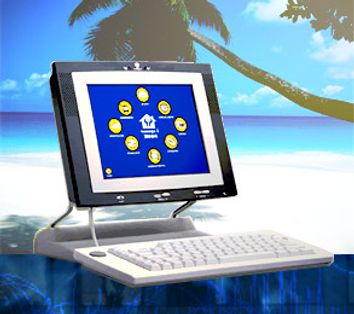
    When Netpliance introduced the i-opener earlier this year, enterprising hackers started snapping them up at $99, cracking the back of the screen and adding an external hard drive. That created a very cheap, very functional PC; the i-opener comes with a 10-inch color LCD screen, a 200 MHz processor, a USB port, a 56 Kbps internal modem, and a decent-enough keyboard with a built-in pointing device. But because that segment of consumers never activated the accompanying $21.95 a month Net service, Netpliance lost money — close to $400 on each machine.

    To combat that, Netpliance changed the rules. When I went to the Cambridge, Mass., CompUSA store to buy mine, I was informed that I had to sign up for access on the spot and provide my credit card number for billing. CompUSA staffers told me that I had to buy a year of access, but after reading a letter taped to the i-opener’s box and calling the company, I discovered that the required subscription term is only three months. (With its subsequent change in pricing, the company decided to waive its service contract — you can cancel it whenever you want, but the i-opener won’t work with any other ISP.)

    At home, setting up the i-opener took five minutes. The only technical knowledge it required was how to use a standard phone jack and where to find a power outlet. When plugged in, the i-opener turns on automatically. There are no modem squawks when it dials up to find a local access number. I was online within 10 minutes. The keyboard is full-sized, but typing on it feels a bit like using one of those fake, hollow computers you see on display in office furniture stores.

    Day Two
    Panic strikes when I discover that the “pizza” key on my i-opener’s keyboard is useless. (It takes me to the Papa John’s Web site, which informs me that none of the Papa John’s locations in my Boston neighborhood take Internet orders.) The i-opener does have its merits, though. It switches on instantly. There’s no long boot-up sequence, unless you unplug the machine from the wall. If you’re online and a phone call comes in, the i-opener automatically cedes the line, and your phone starts ringing. There’s a light built into the top of the screen that shows you when you’ve received mail, even if you haven’t logged on recently (the i-opener dials in surreptitiously.) The i-opener’s custom interface is well-designed and easy to use, and it includes the most functional and dummy-proof e-mail system I’ve ever seen.

    Day Three
    Surfing the Web with the i-opener seems more sluggish than it does with my PowerBook, even though both have 56k modems. There’s no way to discover what speed the i-opener is actually connected at, but when I listen to streaming audio through the monitor’s built-in speakers, the connection is 16 kilobytes per second — none too zippy. And the “stop” button on the Web browser doesn’t seem to be much help when downloads jam; often, the only thing that works is closing the Web browser and restarting it, or breaking the connection and then re-establishing it.

    The i-opener is also limited in what it can do on the Web. It can’t view Flash animations, for example, and many uses of JavaScript — such as opening a second browser window — befuddle it. Also, the i-opener’s browser doesn’t support strong encryption, which prevented me from gaining access to my brokerage accounts. You can listen to RealAudio streams — but no video.

    Day Four
    The first high-pressure test. The deadline for my weekly Boston Globe column is today, and I’ve been writing it using the i-opener’s e-mail application, which lets you save drafts of your mail before sending them. It’s a workable substitute for Microsoft Word, though the one feature I miss is being able to get a word count. The message gets to my editor without a snag, and is neatly filed away into the “Sent Mail” folder.

    Day Five
    There’s one mysterious, unmarked key in the bottom-left corner of the i-opener’s keyboard. Hoping that it might take me to the top-secret Los Alamos National Lab Copier Cam site, I press it repeatedly. Sadly, it does nothing. (It’s on the opposite side of the space bar from the pizza key, though, so I imagine one day it might be used to order burritos, that other staple of the computer user’s diet.)

    Day Six
    Frustration mounts. I miss the ability to toggle back and forth between a Web browser and my e-mail program. There’s no copy-and-paste ability with the i-opener, for example, so you can’t copy a URL from the Web or a section of text and e-mail it to a friend. Occasionally, my surfing is interrupted by a message that says the i-opener is running low on memory, with no suggestions about how to remedy the situation.

    When I hit the keyboard’s “Chat” button to look for other i-opener users to commiserate with, I’m told that “the Chat Channel is currently not available. When it is available your i-opener will be automatically updated with it and you may then start chatting with others.” I’m not holding my breath.

    Day Seven
    I’m ecstatic when Tyler from the repair shop calls to let me know that my Mac has been fixed sooner than expected. Using it again, I feel like I’ve traded up from a Yugo to a Ferrari. The i-opener offers a connection to the Web, sure, but it’s a connection that would seem slow and frustrating to anyone who has ever used a recently released browser on a full-featured PC. And it seems like Internet appliances will have a hard time keeping up as the Web evolves; you can’t play MP3s on an i-opener, for instance, or use any kind of new plug-in or downloadable application.

    Postscript

    With my Mac back in hand, I relegated the i-opener to second-string status. I decided it would either be a backup in case something ever goes awry with my main machine, or that I would give it to my mother, who owns a Pentium-class laptop but is fearful of using it.

    I realized I’d come to two conclusions after my week of dependence on the i-opener. First, for the forgotten 40 percent: Any access is good access, and it’s unlikely that computer neophytes would have been bothered by any of my beefs about sluggishness or missing features. Second, for people who already have experience using the Net: What would make Internet appliances really interesting is the ability to couple them with high-speed access, like DSL or a cable modem. (The i-opener only works with the company’s own dial-up service right now.) Then, appliances might be useful in the kitchen to place a grocery order, or at the breakfast table to browse the news online.

    Still, it’s tough to imagine why someone would buy a device with as many limitations as the i-opener has for $399, when a real computer can be had for little more. Some full-featured PCs already cost less — or are even free — with multi-year MSN or CompuServe contracts. Netpliance seems to be hoping that the forgotten 40 percent are more concerned with simplicity than price. (I think they’re wrong.) But one thing is for sure: As more Internet appliances debut, manufacturers’ marketing and pricing machinations will become as entertaining as “The Real World’s” bed-hopping, “Survivor’s” behind-the-back scheming and “1900 House’s” chamber pot-emptying.

    Continue Reading Close

    The insta-business plan re-strategizer!

    The market is skittish and IPOs are being postponed: Time to rejigger your B-plan! Our foolproof guide shows you the way.

    • more
      • All Share Services

    It used to be that an Internet start-up was in great shape if it could alter its strategy and its story as nimbly as a next-day tailor. But these days, the market’s so moody you’ve got to swing with the alacrity of a well-greased weathervane.

    This week the New York Times quoted Robert Lessin, the co-CEO of Wit Capital, saying, “There will never be a new stand-alone business-to-consumer dot-com created again.” The Wall Street Journal reported that Safeguard Scientifics, a venture group, had decided to stop investing in business-to-business plays in order to focus on the “next big thing”: infrastructure that supports the Web’s growth. CNET’s News.com described the “gloomy climate” for open-source companies, noting the stock slides of Red Hat, VA Linux Systems and Andover.Net, and Linuxcare’s delayed IPO.

    In case you haven’t figured it out: B2C is out. Linux is on the wane. B2B, which was white hot just a month ago, is now getting a lukewarm reception. Infrastructure is in, and so, for the moment at least, is wireless. (Just not wireless schemes that involve launching 66 satellites and selling handsets the size of a box of Cap’n Crunch.) But what early- and later-stage investors want to hear is changing as often and as dramatically as a diva during a VH-1 special. If your business plan was written back in the first week of April, or, heaven forbid, in March, it probably needs some revamping.

    You’ll need to address today’s crucial questions. What’s your broadband strategy? Now that do-gooder privacy activists have raised a ruckus about collecting too much customer information and using it “improperly,” how will you be able to find out which videos your site’s visitors rent, and whether they are unkind and do not rewind? How will you conquer the wireless market? (Note to Dr. Koop: Wireless no longer refers to radios.)

    Don’t feel bad, you’re in good company with that delayed IPO. Think of this as an opportunity. While your S-1 filing is in a holding pattern, now is the perfect time to perform some cosmetic surgery on your story.

    To help, we’ve compiled the list that follows. Think of it as Business Plan Helper. Retin-A for your road show. Weave four or five of these items into your standard PowerPoint presentation, and youll instantly make your company more appealing to skittish, lemming-like investors, without actually having to change what you do on a daily basis.

  • We’re an applications service provider (ASP). You betcha.

  • You may recall that the last time we spoke, we described our company as an “e-tailer.” Since that time, we have acknowledged the existence of a greater power (NASDAQ) and begun our recovery. We have made amends with our early-stage investors. When we feel the urge to sell to a consumer, we get in touch with our sponsor, VerticalNet. We no longer hang out with people who work at online retailers or B-to-C commerce sites. In fact, when we encounter such people at networking events, we deliberately spill drinks on their shoes.

  • Did we mention that we’re an ASP? Recurring revenue is our life.

  • Our chief executive has gray hair, indicating his/her impeccable judgment, his/her courage under fire and his/her superb ability to manage large teams. Previously, (INSERT NAME HERE) worked in the aerospace and mail-order chutney industries.

  • Our marketing plan does not involve expensive TV ads that run during the Super Bowl, the Oscars or the World Series. We’re taking a guerrilla approach - far more targeted and less expensive. In the dark of night, we prowl affluent neighborhoods, breaking into people’s houses, booting up their PCs and changing their default home page to our site.

  • Starting a business-to-business marketplace for Krazy Straws was a valuable learning experience for our company, but we always viewed it as simply one step on the way to becoming an infrastructure player. Our new offering is a communications platform and set of protocols, sold on the ASP model, that enables buyers and sellers of chocolate milk to validate freshness and choco-rific-osity.

  • We are on the verge of signing a major software distribution agreement with a New York firm. We can’t say more at this point, only that he has folding tables on both Broadway and Sixth Avenue.

  • We are in the process of applying for several important patents on our business model, our process for placing an order in exactly 23 clicks and the precise location of the hanging spider plants in our office kitchen. We believe these patents, in addition to one that has already been issued to us for a method of communicating online with our customers’ pets, will afford us a large, easily defensible competitive space.

  • Our team includes top technologists who have experience working at (or with the products made by) Netscape, Sun Microsystems, Microsoft, Oracle, Dell Computer, Sega, Radio Shack and Chevy’s Fresh Mex.

  • Our unique ad-targeting methodology allows us to charge a much higher than average CPM (cost per thousand impressions). By cross-referencing our database of online customer profiles with an existing database of nationwide sperm donors, we can display highly relevant advertisements to site visitors. For example: a site visitor who lives in a cold, northern climate and is likely to have a hyperactive child who will be required to stay indoors for much of the year would be very likely to respond to an offer to purchase bite- and scratch-proof furniture covers at a significant pre-birth discount.

    To avoid issues with privacy advocates, we have set aside several thousand shares of friends and family stock for them.

  • Forrester Research projects that by 2003, Internet start-ups will have focused so relentlessly on infrastructure that there will be no remaining actual content on the Web.

  • Jupiter Communications expects that within five years, the Pets.com sock puppet will develop cataracts and start growling at both strangers and inanimate objects.

  • We have registered for or purchased 713 individual domain names to protect our current and future brands, trademarks, product lines and advertising slogans, including “DontchaKnowIBoughtThisEasyCleaningRiceCookerOnline.com” and “HowtoCleanYourEasyCleaningRiceCookerwithJustaCanofAjaxandaPneumaticChisel.com.”

  • Like a stool, our revenue model rests on three sturdy legs: advertising, e-commerce and the vending machines we installed outside our office.

  • In order to focus more on transactions, we have discontinued our “e-zine” and disbanded our 30-person editorial staff. Several former editorial staffers have been redeployed throughout the organization as espresso-machine operators, valet parkers and masseuses, in an effort to boost morale and improve retention.

  • To get to scale, we’ve implemented a scalable architecture that reduces the cost and complexity of scaling. Scalability is our “secret sauce.”

  • Once the initial buzz on our company starts to peter out, we intend to revive it by changing our name to something that will generate scads of jokes at our expense, making us feel popular once again, like MobShop.com or Cruel World.

  • We’re deploying across multiple platforms to reach a wider audience: PCs, PDAs, cell phones, pacemakers and the wide range of “back massagers” marketed by Brookstone. A beta version enables users with electric toothbrushes to transfer funds between their checking and savings accounts, and will soon be able to facilitate stock purchases (at market only).

  • Our app is so viral, it makes the Black Death look like amateur hour.

  • Continue Reading Close

    Page 1 of 2 in Scott Kirsner