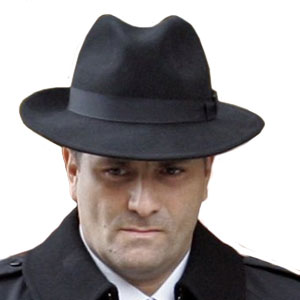
Stephen Hirsch

Did Lieberman violate Jewish law?

Now that I'm observant, too, I question the senator's public shaming of Bill Clinton.

  • more
    • All Share Services

Did Lieberman violate Jewish law?

On the Jewish calendar, the 24 hours from sundown Tuesday to sundown Wednesday constituted the 15th day in the month of Av, a little-known holiday called Tu B’Av. Coming a week after Tisha B’Av, a day of mourning on which observant Jews neither eat nor drink, Tu B’Av is a minor but joyous celebration of love. People buy each other flowers on Tu B’Av. However, for the observant Jew who just lost the U.S. Senate primary in Connecticut, it’s hard to see how it will ever be a joyous day again.

Like many of you, I first noticed Sen. Joseph Lieberman after that pompous, silly rebuke of President Clinton’s behavior from the floor of the Senate in 1998. My thoughts at the time were twofold. As a Democrat, I resented Lieberman giving any cover to what looked and felt like an attempted coup. I also wondered what the heck a U.S. senator was doing trying to give anyone lessons in morality. Politics is not a profession that makes it easy for a person to stay on a straight moral path. The fact that I heard nothing from Lieberman when Newt Gingrich’s personal life made news only confirmed my initial impression.

While my politics haven’t changed much since 1998, my lifestyle sure has. Like the good senator, I too am now an observant Jew. Like Reb Yosef, I too put on tallit (the fringed prayer shawl) and tefillin (leather boxes worn on the arm and head) each morning and pray. Like Reb Yosef, I too try my best to live by Halakha, the more than 600 rules that make up the body of Jewish religious law.

The thing about trying to live by Halakha is that there are rules for everything, from tying your shoes to fasting on Yom Kippur to avoiding gossip, and on and on. One topic that is covered in Halakha is the proper way to rebuke someone, which is certainly what Sen. Lieberman did to Clinton eight years ago.

On the religious front, the topic is particularly timely, since at this time of year all Orthodox Jews are reading from the Book of D’varim (Deuteronomy) on Saturday mornings. D’varim is basically one long, loving rebuke from Moses to the people of Israel, given right before he died. Soon, we will enter the Jewish month of Elul, with its emphasis on introspection, and then, of course, the Days of Judgment, Rosh Hashanah and Yom Kippur.

So, in the spirit of the season, let’s examine Lieberman’s rebuke of Clinton’s adulterous behavior in 1998. Below is a very short summary of how to rebuke someone.

You should have no self-interest in the rebuke

By this criterion, Lieberman obviously did not follow the Halakha. He was rewarded, and handsomely, for delivering this rebuke. He would otherwise have never been the first Jew, let alone the first observant Jew, to run on a national ticket. Surely he was aware that he was going to receive tremendous publicity and accolades from certain segments of the populace for scolding Clinton in public. He turned himself into a national figure in one bold stroke, massively increasing his influence on the various ongoing national debates. Perhaps he wasn’t aware of the Halakha. I don’t know, but based on this criterion alone — self-interest — I can’t imagine that a posek (an authority qualified to give halakhic rulings) would have given him a psak Halakha (a halakhic ruling) allowing him to make that speech.

You must believe that there is a reasonable chance that the rebukee will change his or her behavior

I can’t tell. I know neither Lieberman nor Clinton personally. The Torah considers adultery to be a serious transgression for both Jews and gentiles. Adultery is not something someone living a Torah-based lifestyle takes lightly at all.

You must not humiliate the one you are rebuking

It’s hard to imagine how much more Lieberman could have humiliated the president. His choice of a public forum was inappropriate and unnecessary. If Lieberman is truly a personal friend of Clinton’s - and they have known each other nearly 40 years — he should have taken him aside for a private chat and laid down the Law.

Now contrast Clinton’s behavior as the rebukee. While not bound by Halakha, and surely in complete ignorance of its precepts, Clinton made clear, public tshuva (repentance). He stated clearly, in public: I have sinned. Whatever his motivations may have been, that’s over and above what even an observant Jew would’ve been required to do.

Eight years later, Lieberman has received his own very public rebuke, this time by the voters of Connecticut. It’s no fun, I’m sure. By first impressions, it seems like a very middah-kinneged-middah, or measure-for-measure, punishment for his mishandling of the 1998 public rebuke.

It also doesn’t look as though he’s handling this rebuke well. His non-concession concession speech Tuesday night was cloying and self-pitying. When rebuked, Clinton was a mensch. As of this writing, Lieberman is not behaving like a mensch.

Reb Yosef, it’s time to accept the rebuke with dignity. After 18 years, you were rejected by members of your own party in your own state. The message is as clear and certain as the prophecies in your ancient namesake’s famous dreams. Reb Yosef, it’s time to step aside.

What’s in a hat?

To most people, Jack Abramoff's stylish brim says "Godfather." But if you're an observant Jew, it tells a much different story.

  • more
    • All Share Services

What's in a hat?

The picture of Jack Abramoff walking out of a federal courthouse on Tuesday wearing a distinctive fedora is by now iconic. And chances are, like Howard Fineman and Maureen Dowd, you thought he looked like a gangster. But that wasn’t my reaction. What struck me was that Abramoff was wearing my hat, a Borsalino, the ne plus ultra of Yeshiva boy caps. Tucked tight on his head, pinched even, perfectly symmetrical (if a little deep for my taste), it was immaculate.

Maybe the contrition Abramoff expressed in his statements was real. Maybe he even recited “Baruch Dayan Emes,” the blessing you make when you hear really bad news, after he went to court. Maybe he was wearing a yami (a diminutive yarmulke) underneath his fedora. While it’s no secret that he’s an Orthodox (if not Torah-observant, or frum) Jew, I’ve never seen a picture of him with either a Borsalino or yarmulke before. Why now?

As opposed to Abramoff, who I believe was raised frum from birth, I’m what is called a Baal Tshuva, a Jew who used to live a secular lifestyle, but now observes Shabbos (the Sabbath), keeps kosher, davens (prays) three times a day, etc. I wear my Borsalino every Shabbos, every Yom Tov (Jewish holiday), and at weddings and other special Jewish occasions. By wearing the Borsalino to court, I imagine that Abramoff was emotionally retreating into the safety of our insular world. I wonder if he read all the subsequent “gangster look” stories; maybe that’s why he switched to the baseball cap yesterday?

When I become friendly with non-Jews, they inevitably ask, “Why do you guys dress like that?” My answer always surprises: At the end of the day, the hat is basically a fashion statement. Religiously speaking, a Borsalino or a black felt yami is equivalent to a baseball cap, but socially, it means everything.

Observant Jews are commanded to set themselves apart from non-Jews. Indeed, the Talmud mentions that one of the reasons we were redeemed from Egypt, despite our falling into the depths of spiritual decay, is that we kept our separate style of dress. Basically, how different we look is a sign of how connected or disconnected we are from the rest of society.

During the week, I dress in normal, “weekday” American clothes, except for my yarmulke and tzitzis (a T-shirt with strings on the bottom). On Shabbos, you’ll catch me in the “I’m not a yeshiva boy but I play one on TV” look: black suit, white shirt, black felt yami under my Borsalino. Observant Jews are commanded to sanctify the Sabbath, to make it holy; this is one of the ways we do it. When you go to the synagogue and see 200 other men wearing pretty much the same uniform, it’s quite powerful. We may look like clones but we’re not. We feel as though we’re part of a team, trying to bring the Creator’s holiness down to this world.

It’s a big step, putting on the hat for the first time as a Baal Tshuva. It’s awkward. It’s uncomfortable. You gain an extra four inches or so in height, so you bump into things you never did before. However, over and above any physical weirdness is the fact that you are clearly separating yourself. You’re not like everybody else anymore. You really are frum now, or at least that’s the way the rest of the world is going to see you.

For boys who are frum from birth, the hat is also a tremendously important cultural sign. A frum boy puts on his hat when he is bar mitzvah’d. He has to start putting on t’fillin (boxes worn on the arm and top of head that symbolize our connection to the Almighty) every weekday for the rest of his life; he has to fast on Yom Kippur, Tisha B’Av, and other holy days. According to Jewish law, he is a man. The hat shows that to the world.

That the world saw Jack Abramoff wearing this hat for the first time while admitting to such grievous transgressions, that much of the world will now associate this symbol of piousness with the gangster look, is a Chillul Hashem — an act that shames the name of G_d.

Continue Reading Close