Stephen Weiss

The Roots: “Phrenology”

Their 1999 album "Things Fall Apart" ranks as one of the best hip-hop albums ever. With expectations high, the genre's only real "band" sets out in a new direction.

  • more
    • All Share Services

The Roots:

The Roots
“Phrenology”

Out now on MCA

The year was 1999 and artists were hard at work fulfilling grand dreams, releasing accomplished projects with an eye toward the new millennium. A bumper crop of genre-redefining films brought forth “The Matrix,” “The Sixth Sense,” “Being John Malkovich,” and “American Beauty.” In New York, Stephin Merritt completed the ambitious triple album “69 Love Songs,” a high-water mark in a sophisticated body of work. And down in Philadelphia, the Roots had pulled off “Things Fall Apart,” a miraculous album that ranks among the best in hip-hop history. Contemporary culture was optimistic and in full, late bloom.

“Things Fall Apart,” its title borrowed from Chinua Achebe’s gripping colonization novel (Achebe having taken it from Yeats’ famous poem “The Second Coming”), was a transcendent vision of mimesis — the manufacture of an utterly credibly hip-hop sound played on live instruments by a fully fleshed hip-hop “band.” Virtuoso drummer ?uestlove delivered mesmerizing, full-throttled beats behind Kamal’s hot, sophisticated keyboards. Black Thought’s rhymes were stylish, complex, and progressive, and Rahzel’s unique human beat box generated otherworldly scratching sounds. Together they created hip-hop marinated in jazz, soul and funk, that was from start to finish improvisational, wildly creative and oh-so-tight. The album garnered critical acclaim world-wide and a Grammy for the single “You Got Me” with Erykah Badu.

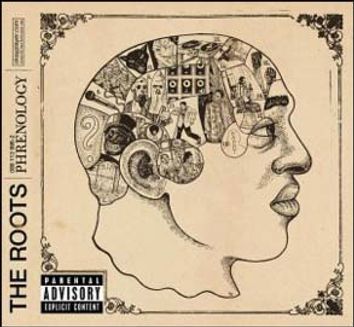
Having already made the perfect hip-hop album, the Roots deliberately set out in a new direction with “Phrenology,” their sixth release. As they undertake another Orphic journey to the underground, they return with a mix-and-match style that conflates the sounds of multiple genres. On “The Seed (2.0),” for example, Ben Kenney’s guitars and Hub’s bass invoke the Clash, Black Thought’s raps summon Tone-Loc, and the voice of guest vocalist Cody ChesnuTT is steeped in vintage Terence Trent D’Arby. Musiq’s soulful vocals on “Break You Off” make it an R & B inflected classic Roots-type single and the six-plus-minute experimental breakdown section on “Water” is the consummate headphone trip. The Roots have also made a tradition of including poetry on their albums, bringing in controversial poet Amiri Baraka, who delivers his contemplative verse with force on “Something in the Way of Things (In Town).”

?uestlove was heavily involved in the production of “Phrenology” (he also brought his talents to Common’s exceptional recent release, “Electric Circus”) and he continues to drive the group on a steady, innovative course with diverse, immaculate beats. Black Thought remains a spirited emcee and lyrical catalyst for the group. And by taking a new path with their music the Roots succeed in both staying relevant and momentous, living up to the expectation that artists continue to strive in their work under pressure and when times turn less hopeful and dim.

The Roots: “Break You Off”
Stream: Real Audio [7:30]
Stream: Real Video [4:02]

Missy Elliott: “Under Construction”

Missy has become one of the world's preeminent rappers and again scores the highest marks in flow, cleverness and style.

  • more
    • All Share Services

Missy Elliott:

Missy Elliott
“Under Construction”

Out now on Elektra

From the squeaky opening bars of “Work It,” the first single off Missy Elliott’s nearly flawless fourth album, it is abundantly clear that this talented star has done it again. Backed by her longtime collaborator Timbaland, a producer with a nose for hits brighter than Rudolph’s, Missy Elliott has truly become one of the world’s preeminent emcees.

In “Work It,” a sublime moment follows the setup to the chorus: “Is it worth it? Let me work it. I put my thang down, flip it, and reverse it.” The line sounds something like “It’s your femmy neppy thwen yet,” but what does it signify? By careful electronic manipulation, i.e., playing the song in reverse, the mystery line reveals itself to be … the previous line played in reverse. The concept is chiasmus, the inversion of the beginning of a phrase at its ending. It is a marvelous example of hip-hop cryptography, but not surprising coming from an adroit artist who has made a habit of breaking new ground.

Being queen of the hill has its numerous advantages, chief among them the right to select from the pantheon of hip-hop greats for guest appearances. To wit, Jay-Z, Ludacris and Method Man prove themselves to be good neighbors by pitching in on chart-ready numbers. “Back in the Day,” the Hova song, belongs to a genre that includes similarly nostalgic records like Notorious B.I.G.’s “Things Done Changed.” Likewise, Timbaland shows a predilection for old-school samples and beats throughout the album.

Missy scores the highest marks in the qualities shared by all gifted rappers: rhymes, flow, cleverness and style. She bends the rules with next-wave feminist lines like “Call before you come, I need to shave my cho-cha,” and especially “Pussy don’t fail me now” on the delightful R&B slow jam “P***ycat.” If men can exhaust the possibilities of their sexual prowess and endow their members with superhero qualities, why shouldn’t women do the same for theirs? Work it, Missy.

Continue Reading Close

Random Inc: “Walking in Jerusalem”

Electronic musician Sebastian Meissner creates an intelligent and timely sound homage to a cherished city embroiled in conflict.

  • more
    • All Share Services

Random Inc:

Random Inc
“Walking in Jerusalem”

Out now on Mille Plateaux

Heeding the pledge of the psalmist, “If I forget thee, O Jerusalem, let my right hand forget her cunning [...] let my tongue cleave to the roof of my mouth,” electronic composer Random Inc (aka Sebastian Meissner) has devoted two consecutive projects to the embattled holy city. For “Walking,” he assembles sound fragments from Jerusalem and the music of a host of collaborators into textured melodies of truncated notes and spliced snippets.

Like a modern-day Leopold Bloom traipsing through James Joyce’s Dublin, Meissner’s peregrinations take him across the city, moving in and out of its Israeli and Palestinian sections and absorbing them with his recording equipment and prodigious curiosity. The peripatetic theme is furthered by the elegant printing to the CD of a map of the city, marked by red numbers correlating, presumably, to the tracks of the album, each of which is named after a neighborhood.

On “Entering Jerusalem (Coming from the East),” Meissner layers particles of noise into molecules of sound, then loops them together over the whispers of passing cars and murmuring songbirds. On “Meets Electric Birds in Mamillah,” elongated beeps run alongside a slow loop that leads into a complex, deliberative composition. Each of the longer tone poems is supplemented by brief interludes of found sound such as a child talking about chocolate in Hebrew, a baby crying and an Arabic voice selling food in a market. An accompanying booklet contains a thoughtful collection of poems and short excerpts from writings on Jerusalem, each related to the district that inspires the specific tracks.

Several electronic artists contribute, but the sense that many hands are stirring the pot does not detract from this intelligent and timely work. The haunted tone that pervades the album is fitting for an accomplished homage to a cherished city embroiled in conflict.

Continue Reading Close

Various Artists: “Ultra 80′s vs. Electro”

A collection of underground dance tracks pits a new generation of electro artists (Fischerspooner) against their progenitors (Kraftwerk).

  • more
    • All Share Services

Various Artists:

Various Artists
“Ultra 80′s vs. Electro”

Out now on Ultra Records

How vital is contemporary electro? At its best, it is superbly catchy dance music — with simple lyrics and rarely changing beats — that pays homage to the underground synthetic pop of the late seventies and early eighties. Detractors claim it is derivative, a passing fad to be forgotten as quickly as the ill-conceived McDLT. Proponents, on the other hand, anticipate a breakout hit that will tip the genre into mainstream culture.

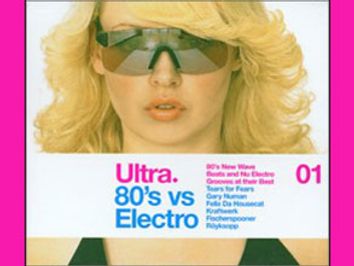
Ultra Records has carved out a niche releasing genre-specific collections of dance music. “80′s vs. Electro,” the latest installment in the label’s series, pits a new generation of electro artists against their progenitors. Hence, W.I.T. (“Touch Me, Hold Me”), whose singer Melissa Burns gazes out unflappably from behind dark shades on the album cover, shares the bill with Laidback’s “White Horse” (1984), a perennial club favorite with catty lyrics (“If you want to be rich, you’ve got to be a bitch”) that continue to inspire modern fare.

A blissful example of blending old with new is Chicago electro-house impresario Green Velvet’s “Genedefekt.” Notable for its addictive Spy Hunter-esque synth hooks, “Genedefekt” runs away with the beat of “White Horse” and mimics its facile rhymes with equally monosyllabic lines like “pills for my ills.” In more sincere tones, “White Lines (Don’t Do It)” by Grandmaster Flash & Melle Mel, a timeless anti-drug gem from 1983, serves as a reminder of the urban roots of electro and its blood ties to hip-hop.

The inclusion of ’80s pop hits by Tears for Fears (“Shout”) and M/A/R/R/S (“Pump Up the Volume”) doesn’t contradict the collection’s title but seems a tad gratuitous. They don’t fit the bill of underground electro like, for instance, Kraftwerk’s staple “Trans-Europe Express.” Well ahead of its time in 1977 and a testament to the durability of the Kraftwerk lineage, the song meshes perfectly with both the classics and the nouveau electro songs of this compilation.

Continue Reading Close

Music preview: Ladytron

On "Light & Magic," U.K.-based Ladytron deliver '80s electro designed as much for nightclubs as fashion shows. Listen in.

  • more
    • All Share Services

Music preview: Ladytron

Ladytron
Light & Magic

Out now on Emperor Norton

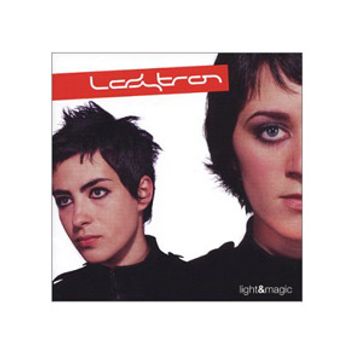
The latest installment of the ’80s electro revival comes from U.K.-based quartet Ladytron, whose new album “Light & Magic” is the follow-up to last year’s debut “604.” Ladytron are a talented troop of urbanites spanning Liverpool (Daniel Hunt and Reuben Wu), Glasgow (Helen Marnie) and Sofia, Bulgaria (Mira Aroyo).

All four members play keyboards — Marnie is a classically trained pianist — but it’s Hunt and Wu’s clever beats and fastidious melodies that lend the group their signature sound. Drum machines and synths blend seamlessly with bits and pieces of New Wave castoffs, Chicago house and international disco. Sounds squeak, pop and disappear, roboto inflections intone foreign-language mantras, and electric alerts give way to driving beats.

Ladytron belong to a genre whose proprietors are as likely to be deejaying by the runways during Fashion Week as digging through bargain record bins. In disaffected tones befitting catwalks, Marnie and Aroyo sing about blue jeans with “straight lines that cut through the seat like you want them to.” However, they also take a knowing wink at the cruelty of the fashion industry’s obsessions, singing, “They only want you when you’re 17/ When you’re 21 you’re no fun.” The final product is extremely tight, a dynamic musical score that never lingers on one theme long enough to play itself out.

Ladytron: “Cracked LCD”
Audio: Real Audio
Duration: 2:34
Continue Reading Close