Tim Fitzsimons

The army’s new photo scandal

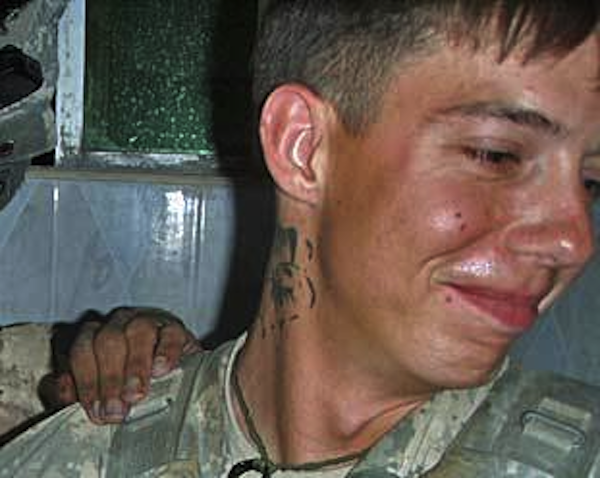
Photos released by the LA Times show American troops posing with the corpses of Afghan suicide bombers

In a cropped version of a photo released by the LA Times, a soldier from the Army's 82nd Airborne Division with the body of an Afghan insurgent killed while trying to plant a roadside bomb (Credit: Los Angeles Times)
This article originally appeared on GlobalPost.

The Los Angeles Times released photos on Wednesday showing American troops posing with the mangled corpses of Afghan suicide bombers, leading the Pentagon to issue a strongly worded statement condemning the actions in the pictures, which were taken in 2010.

Global PostThe photos were provided to the newspaper by a soldier distressed about the actions of his division. He sent 18 photos saying they pointed “to a breakdown in leadership and discipline that he believed compromised the safety of the troops,” the newspaper wrote. The Army requested the newspaper withhold the images.

In a statement, the Pentagon said, “The secretary is also disappointed that despite our request not to publish these photographs, the Los Angeles Times went ahead. The danger is that this material could be used by the enemy to incite violence against U.S. and Afghan service members in Afghanistan.” The Pentagon promised to take all measures necessary to protect troops from a public backlash.

“These images by no means represent the values or professionalism of the vast majority of U.S. troops serving in Afghanistan today,” Pentagon spokesman George Little said.

The LA Times quoted its editor, Davan Maharaj, as saying, “After careful consideration, we decided that publishing a small but representative selection of the photos would fulfill our obligation to readers to report vigorously and impartially on all aspects of the American mission in Afghanistan, including the allegation that the images reflect a breakdown in unit discipline that was endangering U.S. troops.”

The U.S. military is still reeling from the January release of a video showing Marines urinating on Afghan corpses, and riots in February following the news that troops burned copies of the Quran, Islam’s holy book. Those riots killed 30 Afghans and six Americans. In March, Army sergeant Robert Bales went on a shooting rampage and killed 17 Afghan civilians, including 9 children. Bales has been charged with 17 counts of premeditated murder, according to the Associated Press.

CNN reported that the paper told the Pentagon about the pictures in March, which resulted in a criminal investigation.

George Wright, an Army spokesman, said, “such actions fall short of what we expect of our uniformed service members in deployed areas,” according to the LA Times.

Where are Zimmerman’s injuries?

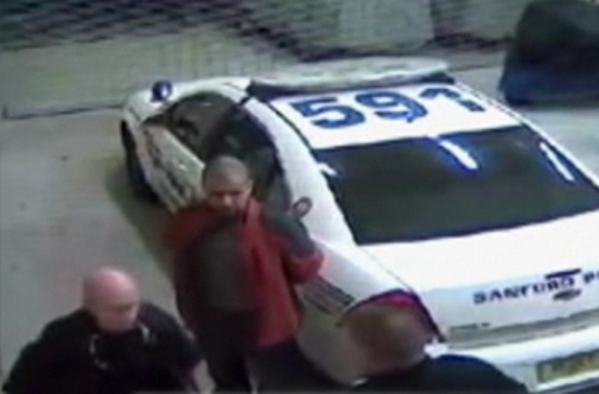
Trayvon Martin's shooter appears to have no sign of a head wound in a recently released police video VIDEO

A screengrab of a police surveillance video showing George Zimmerman after he was detained following the killing of Florida teenager Trayvon Martin
This article originally appeared on GlobalPost.

In a newly released police video, George Zimmerman, the man who killed Trayvon Martin, does not appear to have any of the injuries that he reportedly received from the 17-year-old Martin before he shot him, according to the Associated Press.

Global PostThe Orlando Sentinel reported Monday that police officials said that Martin “decked the Neighborhood Watch volunteer who eventually shot and killed the unarmed 17-year-old, then Trayvon climbed on top of George Zimmerman and slammed his head into the sidewalk, leaving him bloody and battered.”

The AP said, “Zimmerman’s attorney, Craig Sonner, has said in more than one interview that his client’s nose was broken during the fight with Martin.”

The paper continued, “That is the account Zimmerman gave police, and much of it has been corroborated by witnesses, authorities say. There have been no reports that a witness saw the initial punch Zimmerman told police about.”

Zimmerman’s attorney said the head wound, allegedly from Martin bashing his killer’s head into the sidewalk, “probably was serious enough for stitches, but he waited too long for treatment so the wound was already healing.” There is no blood visible in the police tape.

Martin’s family attorney Ben Crump said the video was “icing on the cake” that supported the family’s claim that Zimmerman was the aggresor.

See the video obtained by ABC News below.

video platform video management video solutions video player

Continue Reading Close

Wells Fargo is not your amigo

The banking giant preys on minorities while its executives donate to anti-immigration Republicans

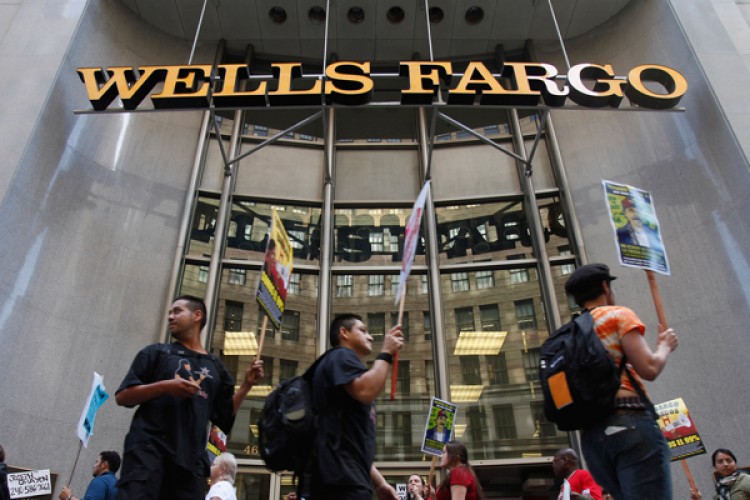
Demonstrators picket outside the Wells Fargo corporate headquarters in San Francisco. (Credit: Reuters/Stephen Lam)

After allegations of racially based predatory lending tarnished its image, Wells Fargo is making renewed efforts to increase its customer base among Latinos, the fastest-growing segment of the U.S. population. The San Franciso-based banking giant, which has long touted its support for the Hispanic community, is now embarked on a new “educational campaign” that it says will help Latino customers enter into the financial mainstream.

As part of its push for “under banked” customers, Wells Fargo has partnered with a firm called SABEResPODER (“Knowledge is Power”). In April, the two companies announced a three-month “educational campaign” to provide Spanish-language tutorials on how to access the banking system. Has Wells Fargo changed the dubious practices that generated negative news coverage? Or has it simply changed its marketing?

The answers matter. Though Wells Fargo is the smallest of America’s Big Four banks with a mere $1.2 trillion in assets, it is the nation’s top consumer lender. Behind the new advertising push lies the reality of Wells Fargo’s lending practices, investments and political contributions, which should interest anybody who banks there.

Wells Fargo has a history of targeting vulnerable communities for risky financial products. At the height of the subprime lending mania in 2006, the bank was more likely to loan subprime mortgages to Latinos and African-Americans than whites, according to a September 2009 report by the  Center for American Progress, a process known as “reverse red-lining.” For financially stable borrowers, the targeting was even starker: Middle-class blacks were four times more likely than middle-class whites to get a dangerous mortgage. Middle-class Latinos were nearly three times more likely.

This allegedly illegal, race-based lending led the city of Baltimore to file suit against Wells Fargo in 2009, claiming it had robbed the city of tax revenue by mounting a systematic campaign to push risky mortgages on African-Americans through the targeting of black churches and neighborhoods. The suit was dismissed and reintroduced many times as lawyers from both sides battled, and is still unresolved.

Former employees have gone public with concerns about Wells Fargo’s lending policies. The company “targeted African-Americans through special events in African-American communities called ‘wealth building’ seminars,” according to an affidavit in the Baltimore lawsuit submitted by former loan officer Elizabeth Jacobson. She said the seminars steered Maryland suburbanites into risky subprime mortgages they were unlikely to be able to keep up with.

Internally the company referred to these buttered-up subprime mortgages as “ghetto loans,” according to another former Wells Fargo loan officer, Tony Pachal. He described the ways in which Wells Fargo coached loan officers to push risky mortgages onto African-American homeowners. Wells Fargo – like other big banks –profited by quickly repackaging and reselling these loans into complicated mortgage-backed securities.

Even since the subprime market collapsed in 2008, Wells Fargo continues to offer risky, racially tinged financial services. It is the only one of the Big Four banks that offers payday advance loans, which it calls “Direct Deposit Advance.” The bank argues this is not a payday loan because of additional protections it provides. But like payday loans, the interest rate of this service is in the triple digits. The Center for Responsible Lending says the advance translates into “a 261% annual interest rate over a two-week pay cycle.”

Wells Fargo is also invested in the payday loan industry. The bank guaranteed lines of credit to of six of the seven top payday lender agencies, according to a 2007 report by the center. Payday lending, which offers a small cash advance with an astronomical interest rate, often traps the poorest in a cycle of debt. In 2007, Ben Popkin of consumerist.com described banks’ financing of these lenders as “kind of like finding out the hardware store owner sells crack on the side.”

Payday lenders target black and Latino communities, according to other reports from the center. In an analysis of Los Angeles area municipalities, the geographic disparity of these lenders was stark: Pacific Palisades, an extremely wealthy community that is 88.6 percent white, has zero payday lenders. Van Nuys, a middle-income community north of the Hollywood, is 60.5  percent  Latino and has 24 payday lenders.

The bank justifies such practices by saying it wants to serve the Latino community. Latinos are an “underbanked” customer pool, said Lisa Westerman, a Wells Fargo communications representative in a recent interview. She told Salon that the average Wells Fargo customer uses under six products, while the average Latino customer uses over eight.

The bank, for example, has expanded its remittance services that enable customers to send money to family and friends in their home country. Westerman said the service is not hugely profitable; she referred to it instead as a “gateway product.”

“They tend to start out with remittances and then by coming into the bank they feel more comfortable coming in … for services,” she  explained. “It’s a great way to introduce the ‘under banked’ to the banking system.

Wells Fargo has pursued the Latino market for at least a decade, says Amir Hemmat, cofounder and CEO of SABEResPODER. In 2001 the bank became the first to accept the “matricula consular,” a form of ID provided by the Mexican government to its citizens living abroad. “It is assumed that the matricula ID largely services the undocumented population,” Hemmat said.

SABEResPODER, founded as a nonprofit in 2002, is key to Wells Fargo’s efforts to attract customers. It seeks to “improve the lives of Latinos in the U.S. by providing free printed guides on select topics of interest.”

These guides are distributed in waiting rooms, places where Latinos – and, often, undocumented immigrants – spend significant amounts of time. According to SeP, these educational materials – which have expanded to include videos and interactive displays – reach more than 8 million Latinos annually as they wait for consular services, identification documents and medical treatment. Today, the nonprofit information brand that has become ubiquitous for Latino consumers across the country still provides free information — but now with product placement.

This type of advertising works particularly well for companies looking to crack the Latino market, Hemmat said.

“You have to communicate solutions in order to influence behavior,” he explained.  “Show someone who looks like them, talks like them, going through the process and achieving success.” Accessing these customers at this stage, he said, creates “generational brand loyalty.”

Hemmat says that SeP’s partnerships with companies such as Wells Fargo, Ford and T-Mobile are just that – partnerships. He insists partners have “no editorial control” over the educational materials offered by the company.

SeP is a certified “B Corporation,” which is a social responsibility rating provided by a nonprofit organization B Lab. But there is no mechanism to ensure a B Corp’s for-profit side does not surreptitiously harm its public benefit. Learning about how to buy a car from a two-minute “educational” video that flashes over 20 different photos and clips of only Ford automobiles and dealers is probably beneficial to a Latino customer who does not know the ins and outs of negotiating a car purchase in America. The benefits of a video about banking that shows a Latino customer “achieving success” at a Wells Fargo branch are more dubious given the bank’s record of selling hazardous financial products to the Latino community.

Wells Fargo does not scant when it comes to giving money to Latino groups. The bank’s press Web page  has many announcements of scholarships , donations and political alliances. Wells Fargo has even partnered with the National Council of La Raza, the national civil rights group. La Raza is working with the bank to “beef up their internal fair lending scheme,” according to Janis Bowdler, deputy director of La Raza’s Wealth Building Policy Project.

Noting that Wells “has made some investments in foreclosure prevention,” Bowdler said, “we have not seen the final product yet but it is something that they tell us they are working on.” Wells Fargo’s partnership with NCLR includes a donation, the “lion’s share” of which goes to funding 55 foreclosure prevention counselors across the country, she said.

Is the bank showing a good faith effort to improve? Or is it seeking to co-opt its critics?

Jesse Van Tol, director of communications at the National Community Reinvestment Coalition, an advocate for economically neglected communities, said Wells Fargo “weathered the storm” of the financial meltdown better than other banks. The bank also has “a huge incentive to do well. They care about their reputation and brand, so they invest heavily in doing well in those areas.”

“It’s a good thing that banks are trying to serve low-income communities,” Van Tol stressed. “The question is whether or not they are doing predatory things in the process.”

Bartlett Naylor, financial policy advocate at Public Citizen, a D.C.-based consumer advocacy group, is more skeptical. “I’d be highly suspect if these efforts were little more than window dressing.” Calling Wells Fargo “acquisitive,” he noted that such outreach efforts “can be profound or frivolous.”

The partnerships often result in testimonials from community organizations, he noted.

“If you pay them $1,000 or $100,000, they’ll sing your praises under their letterhead,” Naylor said. He advised customers to beware of feel-good outreach efforts.

“Any bank that begins a sales pitch saying, ‘Trust me, I’m here to help,’ should cause somebody to keep a tight grip on their wallet,” he said.

Wells Fargo also continues to engage in investment and donation practices at odds with the human rights of Latinos and immigrants in the United States. According to information provided by SEIU and verified by Salon, Wells Fargo’s leadership makes political contributions to vehemently anti-immigrant politicians such as Reps. Michele Bachmann and John Kline. Over the 2008 and 2010 election cycles, Wells Fargo’s PAC, executives and directors have together given $9,500 and $12,250, respectively, to the two candidates.

As Wells Fargo recovers from the shellacking its image suffered over the past decade among minority and low-income communities in America, it continues its campaign of outreach. The bank denies all charges of race-based lending.

An aide to a Democratic senator, who is not permitted to speak publicly, said he expected all the big banks, Wells Fargo included, to circumvent new regulation by inventing creative products like prepaid and business cards that “nickel and dime” consumers.

“It’s clear that minorities are targeted for any number of these bullshit products,” he said. While the Dodd-Frank bank reform bill “rooted out” a lot of predatory practices, he said, that “doesn’t mean we won’t see a new product that on its face looks good but in 10 years’ time blows up in your face.”

“It happened in the past and it continues to happen,” he said. “It’s difficult to outsmart banks.”

Continue Reading Close
www.salon.com/writer/tim_fitzsimons/index.html