I am not cool. My husband is not cool. But like a pair of nags that has somehow managed to produce thoroughbreds, we have cool children. So cool, in fact, that the older one managed to secure for himself an invitation to Google+ — Google’s new social networking space and would-be Facebook killer — on the first day it launched.
Because we have taught him to be compassionate and take pity on the uncool, he shared a Google+ invitation with me. The moment was the digital equivalent of his preschool days, when he’d arrive home to proudly gift me with a handmade object of unknown utility. “This is lovely,” I’d say, my heart swelling as I considered the lump carefully, trying to figure if it looked more like a candy dish or a paper clip holder. “What’s it for?”
When I ask the 17-year-old version of that boy what Google+ is for, he says — texts, actually — “its pretty sick, there’re a lot of cool features thatll be awesome once more people get on. like better chatting and you can really control who sees what.”
Alrighty then. Feeling positively hip, I head over, activate my invitation, upload a good-hair-day picture and type in a few simple words for my profile that seem to fit well with the spare, airy Google interface: “Writer, editor, public school advocate, parent, lover, friend, walker of dog.” So far, so good.
I click “Circles” and a lovely row of them appears for me to populate — Friends, Family, Acquaintances, Following and one helpfully left blank for me to label (Frenemies? Mean Girls? Former Crushes?) — along with a phrase in red awaiting my click: “Find and Invite (560).”
Whoa, Google+ wants to find and invite 560 of my contacts? Hold up. Even though my son would tell me, with eyes rolling, that only losers click on “find all” menu options like that, it’s a potent reminder that I’m starting down the slippery slope of adding yet another social medium into my already overwhelmed digital life.
I say that as a woman teetering on the brink of an electronic messaging meltdown. I have 150 unprocessed messages on Facebook, 258 texts on my cellphone and — I am not proud of this — 47,185 emails in my Gmail inbox.
Because I have failed to organize my 221 Facebook friends or the 551 people I follow on Twitter into any kind of order, a wave of random digital news washes over me hourly, with updates from my former high school band director, my boss’s boss’s boss, an eco-activist organization to which I once gave $10, Anthony Bourdain, my youngest brother’s former girlfriend and my dog all arriving in an unending, unedited stream. (Yes, the dog has her own Facebook page, don’t ask.) Last week a new contact on LinkedIn emailed me to helpfully point out that my Career Summary there is more than a year out of date. I’ll get right on that.
Now Google+ wants me to interact in a new, groovy way with 560 people? No no no.
My instinct is to back slowly away from the electronic messaging bar. Last call for the digitally disorganized. And yet, I can’t quite force myself to leave the room entirely. After all, Google+ is the greatest thing to hit social networking since, uh, the last great thing to hit social networking. I don’t want to be left behind if all the cool kids jump ship, do I?
Truth be told, I feel a little resentful toward Google+, even as I admire its pretty circles. It took me a long time to “get” Facebook, just as it took me a long time to get Twitter, and LinkedIn, and before that to get the hang of blogs — of just being online, in all its nuanced permutations. I work hard at being what used to be called a “good Netizen” — reading the links that people share, commenting thoughtfully on blog posts, pausing to consider honestly before I “like” something. It’s exhausting trying to keep up.
Now Google+ comes along, threatening to topple Facebook and dismantle my little world in the process. At some point in the future, a tech innovation is going to come along that I just can’t grasp. And there I’ll be, alone and pathetic, like the last MySpace user on the site.
With that specter hanging over my head, I can’t bring myself to delete my Google+ account, but neither do I have the emotional energy to start populating my circles. Instead, I hang out there by myself and putter, add a few pictures, type in a status update or two that nobody can see. It’s like having a blog that nobody reads, or scoring a backstage pass to Lollapalooza and then spending all your time hiding behind a wall of speakers. Actually, it’s oddly pleasing to hide out online, like being in a tiny, private eye of the very large storm that is the Internet. I feel happy in my cocoon — I’m there but not yet there.
Of course, it doesn’t last long. Because I’m using Google+’s default settings, people can still see my name, even if they can’t creep on my profile or read any status updates. So it’s only a matter of hours before I start seeing a trickle, and then a deluge, of notifications in my Gmail box that one person or another has added me on Google+. Sigh. Here we go again.
Still, there was a brief moment there when my digital persona was truly hip for once in my online life: “I’m so cool, I have a Google+ account that’s entirely private.” I even considered messaging that to my son — via Facebook, our preferred method of communication — but why bother? He’d moved on already.
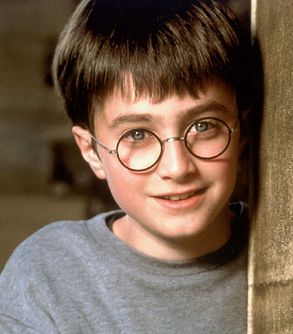
My grade-school son committed a major gaffe the other night — holding a dinner guest captive with a blow-by-blow plot synopsis of his favorite book. But because the matter at hand was urgent, I let him ramble on: Our adult visitor was wondering if she should read “Harry Potter and the Sorcerer’s Stone” before the movie comes out.
In a few days, she won’t have that choice to make anymore. The movie opens wide, as they say in the industry, on Nov. 16. It will likely be greeted by many moviegoers as a welcome respite from these past weeks of sorrow and fear. But even as we herd to the theater for a much-needed escape from reality, let’s pause for a moment and pay our respects to what Harry Potter was before it was a movie.
Just as much of the 1990s and 2000 now seem from our new perspective to be some sort of fever dream, it’s hard to imagine that a few short months ago Harry Potter was nothing but a series of books. A staggeringly successful series, but still just books. Not DVDs, not shockwaves, not JPEGs; nonprogrammable, undownloadable, noninteractive.
Now we are on the edge of something different. Warner Brothers’ huge marketing juggernaut has been cranking merchandise into the marketplace for more than a year, so you can already “get” Harry via coffee mug, sweatshirt, lightning-bolt scar stickers or mantelpiece figurine rather than getting him by reading. Thankfully, the stuff is in most cases so ugly that it helps even the youngest readers separate the wonderfully illustrated books from the movie hype.
But once the movie hits, there’ll be no going back. Reading a book is an intensely private interaction between reader and writer, and even a chart-topping book like each of the Harry Potter installments has had to win over its converts one reader at a time. But going to the movies, especially a costly, much-anticipated would-be blockbuster, is about as public an act as you can commit. And so, even before the movie’s release, our personal, intimate imaginings of quidditch, potions and chocolate frogs have been diluted by Harry on the Coke can, Hagrid in FAO Schwartz and wizards by the dozens on our Halloween doorsteps.
Film is simply too visual a medium not to worm its way into our consciousness. That the all-British cast seems reassuringly superb only exacerbates the problem. Once Dame Maggie Smith latches onto a role, who among us is strong enough to retain our own anemic vision of what Professor Minerva McGonagall is really like?
In a world as changed as ours is after Sept. 11, does any of this really matter, copies sold or box-office records broken? It might. Living in a culture that has in the past decade seemed bent on dividing the populace into ever smaller niche markets, we could do worse than to start looking at what unites us, even if it’s just our shared amusements.
J.K. Rowling’s books have connected hundreds of thousands of people all over the world, and in the process reminded at least some of them of the simple power of the paper-and-ink medium. As Americans start stockpiling bottled water and canned goods against the next unnamed catastrophe, it might be a comfort to remember that a book still works when the power is out; read aloud at bedtime, it can reassure an anxious child that all is well with the world even when that’s not wholly the case; taken up at 3 a.m., it can distract the heartsick of any age.
If the Harry Potter movie opens up the books’ shared experience to an even wider audience, then maybe it’s all for the best. Unless director Chris Columbus has screwed up the story royally, then sure, let’s all go. But let’s also remember that there was a moment, way back in the mists of the late last century, when Harry Potter was a cool club you could join only by reading. You can still join, in fact — they’re taking applications at the bookstore and the library right now. But hurry, this offer expires at midnight on Nov. 15.
Continue Reading
Close
The New Yorker weighed in last week with its list of the best young writers of the decade. Or maybe they meant the century, or perhaps even the millennium. Whatever. The implication is these 20 fiction writers are hip and now and we’ll all be hearing lots more from them in the 21st century.
I wasn’t on the list — no surprise there since I haven’t published a story in the New Yorker, or anywhere else for that matter, and in fact technically don’t even write fiction, but only think about writing it. Still, I felt a kind of sick little bump when I scanned the table of contents and realized literary fame wasn’t going to happen for me in this century.
Contributing to my momentary queasiness: Someone I know in the very vaguest sense is on the list, accompanied by a blurred-edged, overexposed picture of her in a pink silky shirt laughing it up with the rugged, arty male writers on either side of her. A year ago the same magazine ran her first story under the byline “Jhumpa Lahiri, a new author,” and now she’s essential enough to be included in its end-of-century fiction roundup.
Lahiri may be new to readers of the New Yorker, but she’s ancient history to me. We both attended a fiction workshop six years ago at Harvard University summer school. She needed the class to get enough credits to finish up an MFA at Boston University, and she presented story after polished story with a kind of exact, amiable indifference that let us all know just how important this make-up workshop was to her (not very). I was seven months pregnant with my first child and writing with the wavering intensity of the hormonally challenged. I was not the class star.
Flash-forward five years: I was 10 weeks postpartum with baby No. 2, exercising a little, easing back into work, getting enough sleep to at least survive, and even, tentatively, resuming a conjugal life with my husband. The baby was fat and extraordinarily happy, and his older brother seemed genuinely glad to have him around. We were all doing better than I had expected.
Then the new issue of the New Yorker arrived. With an infant in the house, there wasn’t time to read anything more profound or less urgent than the grocery list, but I could still flip through the cartoons and glance at the table of contents. And there she was, Jhumpa Lahiri, new author. While I was off procreating, she’d apparently managed to climb her way up the literary ladder from a wannabe fiction workshop to the top of the slush pile.
I skipped the story itself (this wasn’t about the actual art, after all) and flipped straight to the contributors’ page (thank you, Tina Brown, for adding one), where it said Jhumpa was a fellow in a Provincetown artists’ colony and coming out with her first book next year. Standing there in my kitchen with an infant idly gnawing my shoulder, I felt both heavy and hollow. Could it be I was jealous?
In the years since that workshop, I have published thousands and thousands of words under my byline, far more than could ever be in Lahiri’s debut collection of short stories. My words aren’t about secrets in the dark, sex on the beach or the mysteries of far-off continents, but rather about T1 lines, digital certificates and electronic document distribution. To report these high-technology profile pieces, I am paid a bit better than the prevailing wage for freelancers, I can — and do — work successfully out of my house and I get my ticket punched, just barely, as a working member of the ubiquitous digital society.
But when you write technology features for a living rather than short, hip fiction, nobody sends mash notes saying you’ve changed his life, nobody invites you to cocktail parties that are later chronicled in the New York papers and nobody offers you a fellowship. Not that I could pack off to Provincetown even if it were offered: For better or worse, my place right now is at home as a full-time mother and very part-time writer.
As for the new author, my emotions are equally split between honest admiration for what I remember as her precise, self-assured style and unalloyed envy over her splashy debut in the magazine that remains the Holy Grail to English-language fiction writers.
“It’s like winning a Tony for your very first Equity role,” I tried to explain to a friend and fellow stay-at-home parent who had danced off-Broadway.
She was unimpressed. “But you have your children,” she said, as if that cleared up everything.
I do indeed have my children, and I do routinely use them as my excuse for not writing fiction. But there is nothing to prevent Lahiri from someday having children as well. More to the point, I spent my entire 20s unencumbered by children, a permanent relationship or even, at times, a steady employment and still I managed to complete not a single story that I consider worthy of publication.
Maybe it’s time to come clean. I have been starting, but never quite finishing, short stories since I was 17 years old. I have a whole filing cabinet of works in progress that I have dutifully (or is that pretentiously?) moved from place to place and stage to stage in my life. As painful as it is to contemplate, perhaps I am not and will never be a writer of fiction.
But all may not be lost. Some good bits have piled up in that cabinet over the years, funny and poignant and just absurd enough to be appealing. They just need someone with more perseverance, or maybe more talent, to finish them.
The story of Lahiri’s I remember most clearly from our workshop days was perfectly crafted and undeniably exotic, nearly impossible for anyone else to have written. Her New Yorker stories are a bit less intimidating — they’re good, in places very good, but the emotional ground they cover is hardly off-limits, even to a middle-aged, middle-class,
middlebrow Yankee with a strong background in suburbia.
What with the buzz of the new millennium and the energizing prospect of a completely toilet-trained household, I may still have time to make a mark. Splashy debuts notwithstanding, writing isn’t particularly a vocation only of the young, and I don’t, after all, have my heart set on winning a gymnastics medal or making the cover of Tiger Beat magazine. And I have managed to learn a few things in the years since I shared workshop space with Lahiri: How to go on day after day with very little sleep; how to work through the despair of dense material; how to write well in short, frantic bursts late at night or early in the morning; how to push deadlines to infinity and beyond with aplomb; and how happy you can be finishing something, even if that something isn’t the most compelling or important piece ever written.
Perhaps the worst is behind me. My fiction filing cabinet, for example, has already survived its most ignoble trip yet, displaced, by the baby, from a spare room to my newest home “office” — a dim corner of the master bedroom mere inches from the bed itself. That cabinet may yet disgorge a story or two, sometime in the distant, toddler-free future. If and when that day ever comes, one thing is already obvious — any honest editor, however enthusiastic, will have a hard time by then calling me a “new” writer.
Continue Reading
Close