Wilson Diehl

“Grey’s Anatomy” makes my marriage work

Before I met my husband, my only doctor "friends" were on TV. Now the show gives me insight into his life in the ER

  • more
    • All Share Services

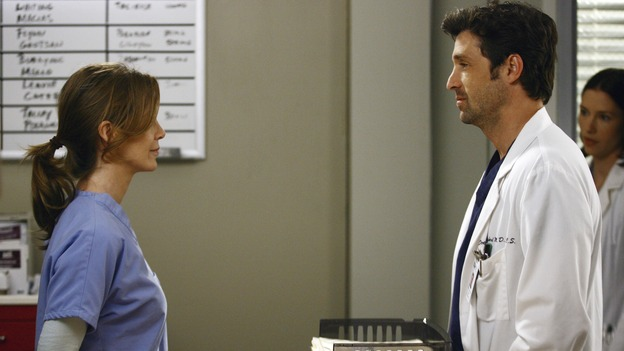
Ellen Pompeo and Patrick Dempsey in "Grey's Anatomy"

I didn’t set out to marry a doctor. If you’d asked during my Match.com days, I would have told you I didn’t even like doctors. They’re bossy, skeptical, self-important and weirdly nervous about feelings. They’re always sure they know more about your body than you do — and they’re only sometimes right. Also, they have bad taste in shoes.

When I moved to Seattle in my late 20s, I told myself I was ready to look for a mate, a viable life partner. I then proceeded to fall for an illegal Canadian alien, a 22-year-old, a married man, a more-or-less married man, and a guy who lived in Kansas. A woman I’d met at a neighborhood cafe hypothesized over coffee that doctors make “the best mates,” but I had my doubts.

The only physicians in my life were the one at the women’s clinic and the ones on “Grey’s Anatomy,” which I’d taken to watching on DVD in obsessive late-night marathons around the time I turned 30. Like any other writer (and, at the time, filmmaker) I was intrigued by the interpersonal dynamics and the minutiae — why did surgeons look down on everyone else? Why were doctors so lackadaisical about condom use? Why didn’t they ever lock the supply closet when they went there to have sex? Taking my cue from the surgical residents themselves, I’d stay up into the wee hours. But instead of trying to chase down the best surgeries, I was trying to chase away my loneliness, my heartache, my worry that I’d never get married and have a baby.

Wary as I was of actual doctors, I lusted after the fictional physicians of Seattle Grace Hospital the way a barista lusts after the perfect espresso pull or a Pacific Northwest cat lusts after just-caught salmon. I loved perfect-haired Dr. McDreamy as much as the next person, but honestly — male, female, resident, attending — it didn’t matter. If they could stay up all night having crazy sex and then perform successful heart or brain surgery on a toddler the next morning, I wanted them. Sure, they were bossy — but to each other, not to me — and they talked about their feelings quite a bit. Even when they announced they didn’t want to talk about their feelings, they sat together silently, clearly processing their feelings, which was almost as good. They were smart, sexy, a little wild and a lot sassy — who cared what their shoes looked like?

That said, they didn’t strike me as “the best mates.” They were always at work, always thinking about work, and always wanting to work. Plus, they didn’t have the best track record, fidelity-wise.

The show’s debut coincided with my move into one of Seattle’s federally subsidized low-income artist-housing units. Most of the men I met in my job as a part-time filmmaking instructor and at social functions in our building wore Utilikilts or had Asperger’s syndrome or claimed to be “born polyamorous” — or often all three. I wanted to branch out but didn’t want to necessarily have to go out. God bless the Internet. I could spend my evenings at home in my favorite leggings with my “Grey’s Anatomy” “friends” while my online profile did all the loathsome small talk and weeded out the least suitable suitors.

Given my paltry income, lack of health insurance, tendency to need therapy, and love of all things Anthropologie, I probably should have been dreaming about marrying a real-life McDreamy, but it didn’t occur to me — certainly not consciously. Trader Joe’s Three Buck Chuck wine suited me fine, and I enjoyed making art from junk I found on the street or purchased for 69 cents at Goodwill. Being “Mrs. Dr. Somebody” was not on my radar.

When I met the man who would become my husband, I didn’t know he was a doctor. His profile was brief and vague and revealed only that he had an advanced degree and had attended a Montessori preschool. From one of his pictures in hiking boots and cargo shorts on some sort of large hill, I guessed he might be a high school science teacher — the kind with a fondness for slightly-too-long nature walks and an endearing overappreciation of the life cycle of the fruit fly.

Had I known he was a doctor, there’s a chance I wouldn’t have ever agreed to go out with him. I’d met up for drinks and snacks with a doctor once, only to discover that I would be drinking and snacking solo because the doctor ate (and drank) on an every-other-day schedule ever since he’d read a study in which rats who were fed this way lived longer.

The Montessori guy took me out for a picnic dinner — of which we both partook — and at some point between the BLTs and homemade lavender shortbread I coaxed out of him the fact that he was an academic emergency medicine doctor. “Like in ‘Grey’s Anatomy’!” I chirped, displaying my vast knowledge of the American medical establishment. He was quick to inform me it’s “not like that at all.”

Of course not! A real neurosurgeon would need a nap between the crazy sex and the brain surgery.

Then it dawned on me that this guy might be my own personal Dr. McDreamy. It didn’t matter what a teaching hospital is like on television — this guy could be my own personal portal. The longer we dated, the more I would learn about the interpersonal dynamics and the minutiae.

I’d always thought my feelings of distaste for doctors was mutual. They always seem stubbornly wary of my stubborn wariness — as if by declining their samples of Prozac and asking for a recommendation for an acupuncturist, I’m calling into question the foundation of their livelihood. Which I only sort of am. But this doctor wanted to keep seeing me — over and over.

Even though he’s bossy and weirdly nervous about feelings and argues with me when I claim to have a symptom of something (You don’t have a migraine, just a tension headache… You’re not getting a cold — you’re probably just tired… You’re not PMSing — you’re just insane), I fell in love. Three years (and one baby) later, I still know almost nothing about what it’s like to be a doctor. It turns out that working in the E.R. all day is as exhausting as it looks on TV, and the last thing you want to do when you come home is to talk about it — especially about how you feel about it. Is it really that hard to tell someone they have cancer? Is it really that gross to disimpact someone’s bowel? These questions do not need to be asked. But there is a distance between my doctor husband and me — a distance created by the psychological difficulty of telling someone they’re rapidly dying, the terror of pulling a knife out of someone’s skull, the profound sadness of the heroin addicts, the entrenched alcoholics, the inexorable march of time. I want to know about these things, what it feels like to be immersed in them every day, but I’ve learned to hold my tongue — not because it’s the “right” thing to do but because peppering my husband with questions gets me nowhere good. When he comes home from what’s obviously been a hard day, I now offer him a drink and suggest — not unkindly — he go to bed early. I then don my favorite leggings and curl up on the couch to watch some other Seattle doctors provide a portal into my husband’s life. And sometimes the next morning over a cup of strong coffee he tells me what’s on his mind — unasked. The best kind of mate.

How a gross word made me feel sexy again

As a new mom, I'd started to feel invisible. Then, with four little letters, a college kid proved I wasn't

  • more
    • All Share Services

How a gross word made me feel sexy again

Two old friends and I had converged on Chicago from the coasts, gleefully leaving behind four sneezy children and three apprehensive husbands for the weekend. Thanks to the children, we had colds, too, and had to take turns coaxing each other to head down to the hotel bar instead of tucking into bed early with a bag of lozenges to watch “Glee” on Hulu.

The three of us were never exactly partiers. We met in elementary school orchestra and solidified our friendship in the early ’90s in a high school club called “Students Against Intolerance and Discrimination.” We didn’t drink, we barely danced, and only one of us dated in high school — and by “dated,” I mean she began a serious relationship with a guy who would become her husband.

It was miraculous, really, that we were all awake at 10 p.m. on a Saturday night, dressed in not-too-badly-baby-stained clothing, drinking hot toddies and engaging in an ever-so-slight flirtation with the two college guys perched on the giant leatherette ottoman opposite ours.

As the mother of a toddler, I was in serious need of flirting — even the ever-so-slight variety. It had been forever since I’d been made to feel interesting and compelling, much less kind of sexy.

The bigger and burlier of the two guys regaled us with charming tales of high school football and taught us how to use Twitter so we could become his followers. The other guy — skinnier and more metrosexual-seeming — was more reticent. Perhaps hanging out with three married 35-year-old moms from out of town wasn’t the evening he’d had in mind when he’d donned his best form-fitting Banana Republic oxford and matching tie in an elegant shade of charcoal.

I’m not sure how it happened, but before long both my traveling companions had whipped out their cellphones and were showing the guys pictures of their kids.

Mortified, I hissed at them to stop. It wasn’t like I actually wanted to hook up with one of these guys. I just wanted — needed, even — to know that I could.

Who did I think I was kidding? It’s not like these guys weren’t going to notice our wedding rings or our postpartum belly flab or the sleep-deprivation circles under our eyes and instead were magically going to assume we were single, childless and a decade younger than we actually are. Why did I think that their finding out we had children would be the end of the flirtation?

Just in case the point hadn’t been clearly made, one of my friends said, “We’re oooooooold.”

The burly guy laughed while the skinnier one communed with his cellphone.

I started feeling bad for the guys. They were sweet and semi-engaging and clearly looking to get something else from their evening, but they were too Midwestern to say anything or to simply get up and leave.

“We should stop monopolizing your time,” I said, finally. “You have places to go, girls to chase!”

The skinnier guy seemed to perk up at the idea. The burly one smiled and said with utter conviction, “No way, man! You all are MILFs!”

We smiled back at him, and one of us — I won’t say which — might have leapt across the ottoman to give him a hug.

 I was surprised at how good that weird little acronym felt. For as long as I remember, I’ve considered myself a feminist. When I was a baby and my mom asked, “Are you my girl?” I apparently replied, “No. Woman!” And yet, here I was, with a baby of my own, and I loved being called a MILF.

 - – - – - – - – - – - – -

“That was so fun!” I gushed on the way back to our room.

“They were sweet,” said one friend.

“Yeah,” said the other. “I had such an urge to put a sweater on both of them!”

“Totally!” The other friend laughed.

A sweater? We weren’t that much older than them. Was I completely desperate for enjoying the tiniest hint of sexual tension?

“He called us MILFs!” I tried again.

“Yeah … That term grosses me out,” said the friend who had once spearheaded an effort to bring an anti-apartheid exhibit to our high school. She paused for a moment and thought about it. “Maybe because I didn’t want to sleep with the guy?”

Of course not! Neither did I! He was too young, too burly, too into football and Twitter. I wasn’t attracted to him in any way other than the fact that his attentions made me swoon. It was a revelation that a cute college student might want this slightly poochy body that housed a mind whose sexiest thought of the day for the past two years has been, “Mmmmm — bed!” I didn’t want to sleep with him, but man did it feel good that he might want to sleep with me.

Somewhere along the way I’d internalized the wildly sexist notion that moms are unsexy. Maybe I could be a hot 35-year-old married lady, but a hot 35-year-old married mom? Yes, moms get to be loving and cozy and forgiving, but damn is it nice — necessary, even — to be noticed and wanted for something other than a sippy cup or a spare sweater.

Back in our hotel room, my friends and I tucked ourselves into bed, surrounded by piles of kleenex and baggies of lozenges and numerous cups of water. We turned out the lights, pulled the blankets up under our chins, and dreamed about whatever it was that each of us was needing to dream about that night. 

Continue Reading Close

TSA, keep your hands off my baby!

I don't mind being groped, fondled or humiliated at the airport, but I draw the line at frisking my 1-year-old

  • more
    • All Share Services

TSA, keep your hands off my baby!

I am not, as a rule, an irritable flier. I don’t yell at the gate agent when my plane is delayed or at the TSA people when I have to endure extra thorough screening or throw away my water bottle. I show up, set my sense of humor as high as it will go, buy a dried-out scone from Starbucks, and go on my merry way. If you want to wave a little strip of paper over my baby’s sippy cup of milk to make sure I’m not going to blow up the plane with it, be my guest. 

When a total stranger insists on feeling up my 1-year-old, though, that’s when I lose my cool.

It happened at the end of a trying — and tiring — visit to my childhood home, which has, over time, become overstuffed with the relics of my brother’s and my life as well as our parents’ and their parents’, too. For 10 days I prevented my toddling child from breaking any of a zillion pieces of crystal displayed on a glass cart in the dining room or choking on one of the various stray pills lurking in the woolly, hard-to-clean corners of the bathroom. My brother and I also managed to squeeze in the dreaded Conversation With One’s Retirement-Age Parents that goes something like, “So where exactly are you planning to live when you can’t, um, stay in the house anymore? And what are you planning to do with all this, erm, stuff?”

By the time I was making my way through the tiny Cedar Rapids airport on my way home to Seattle, pushing the stroller up to security, the last thing on my mind was what would happen if I set off the metal detector with the baby in my arms.

The first time I had to be wanded by the TSA was on the way to Hawaii for my honeymoon. I was five months pregnant — and showing all over the place. “You sure you’re not wearing a belt?” a uniformed someone barked as I set off the metal detector twice in a row. What pregnant lady wears a belt, I ask you — particularly on a six-hour flight to Hawaii? When the “female assist” was called over to wand me, she took one look at my already-formidable-before-pregnancy-and-now-borderline-obscene-cleavage and said, “It’s your bra.” Apparently 34-Hs really pack in the metal.

I’ve taken 20 or so flights since then, and my bra has set off the metal detector about half the time. Each occasion is the same — I’m asked numerous times by a disbelieving TSA guy whether I’m sure I’m not wearing a belt, carrying anything in my pockets, wearing hidden jewelry. Then much beeping, wanding and more beeping. I’ve been told by various female assists that I “shouldn’t stick my chest out so far,” that I should cross my arms over my chest as I walk through, and that only the really high-quality bras set off the machine — so at least I know my girls are well supported.

As any woman who arrived at motherhood via the traditional route will tell you, being a mom means learning to tolerate frequent intrusions. Forget about all the probes and tubes and vacuums and hands up your various orifices during labor — I’m talking about coworkers touching your belly, the mailman touching your belly, junkies on the bus touching your belly. And once your belly is no longer taut with possibility but flabby with postpartum (and leftover pre-partum) snacking, the personal questions begin. Stringy-gray-ponytailed men at the coffee shop ask whether you breastfeed. Your step-mother-in-law asks whether you breastfeed. Your 13-year-old half-brother-in-law asks whether you breastfeed.

By the time the baby’s first birthday rolls around, most of us no longer even bother closing the door when we pee. If you want to wave a wand around between my legs to make sure I’m not gong to blow up the plane with something tucked into my crotch, fine. It’s happened so many times now, I know exactly how far apart my feet should be without looking at the footprint guides on the floor.

When I flew to Iowa this past time I didn’t even bother slouching through the detector multiple times to try to get a different result. “It’s my bra,” I told the TSA guy at SeaTac, looking him in the eye as I uncrossed my arms and stuck my chest out as far as it would go. Despite having read about the new intimacy of pat-downs and despite the TSA agent saying, “I’m now going to run the back of my hand along your bra line,” I was as taken aback as everybody else has been when the TSA agent traced the underwires of my bra in their entirety — which took about 20 minutes.

So I suppose I shouldn’t have been surprised when the TSA insisted on patting down my daughter on our way back home to Seattle.

“You’re kidding,” I said.

They were not.

My husband had returned to Seattle a few days before us, and I’d never really thought about it but he’s always been the one to carry the baby through security. When I walked through the metal detector with her, naturally I set it off. “Oh, it’s just my bra,” I muttered to the TSA guy, backing up and trying it again with a slouch made awkward by the 20-pound baby in my arms. The machine beeped again, and I reached for the stroller so I could set the baby down somewhere clean while a female assist had her way with me.

The TSA guy reached out to stop me. “No, ma’am. You cannot get your items until you’ve been hand-screened.”

I asked where I should put her while I was being patted down.

He looked around anxiously for the female assist. “She has to be patted down, too.”

Some uniformed bureaucrat was going to touch my baby all over the place, including between her legs? Were they going to remove her diaper, too, just to be sure? I mean, there’s gel in those diapers and quite possibly over three ounces of liquid, too. Would they take her from me and lay her on the table for this procedure?

The mama bear in me roared instantly to life. “It’s just my bra!” I shouted, for all of eastern Iowa to hear. “Can’t I just go to the bathroom and take it off and then come through again? Or one of you could carry the baby through and I could come through again on my own. It’s not her,” I reiterated. “It’s my bra.”

“I’m sorry,” the TSA guy said, seeming more annoyed than sorry.

“I’ll take it off right here!” I said, reaching around with the hand not holding the baby to start undoing the 400 hooks in back.

The TSA guy stepped closer as if to stop me. “I’m sorry, but once you’ve been selected for extra screening we have to follow through.”

“But it’s not her fault,” I said, going from mama bear to mama’s girl as my eyes welled over at my utter inability to shield my child from injustice, from inappropriate touching, from bureaucratic incompetence and from airport floor filth — not to mention from the inevitable trials her dad and I will cause her as we age.

The female assist arrived and kindly ignored my tears. She waved a hand nearish the baby’s torso and called out, “OK, she’s good. Bring the stroller over.” She smiled at me and said, “You don’t want to put your baby down on the floor here. It’s filthy.” Then she caressed me all over the place, told me she was “so sorry,” and sent us on our merry way home to Seattle, a blessed 1,800 miles away.

Continue Reading Close

I blame Craigslist for my stinky bed frame

The website has been raked over the coals for many reasons, but my biggest gripe? Smell

  • more
    • All Share Services

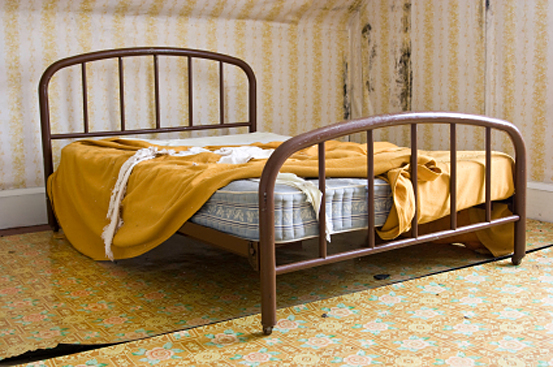
I blame Craigslist for my stinky bed frame(Credit: Unknown)

Craigslist needs stricter oversight, and I’m not talking about making it spam-proof or sheltering the squeamish among us from some of the, uh, stickier aspects of humanity. For nearly two years my husband and I have been sleeping in a mildewy bed, and I blame Craigslist.

My husband’s nose apparently can only detect the odor when I push his face right up to the frame and command him to Sniff harder, dammit!, but every night I am welcomed to sleep by the unmistakable smell of fungus from someone else’s bad storage decision. I know, honey, let’s store the old bed in that corner of the basement we never use because of all the standing water!

If Craigslist cannot be held accountable for allowing the stench to waft into our home, I have to take responsibility myself, and what self-respecting American does that? Sure, I’m the one who found the bed frame online, the one who convinced my husband it was nicer than the one we were using, the one who stood in a random Seattleite’s furnace room and forked money over for its sleigh-style splendor — but I’m not the one who created the scent-free forum that allowed the stinky item to be sold to me.

I knew something was wrong the moment we propped the pieces of the frame up against the bedroom wall. Suddenly our room smelled musty — very musty — like a swimming suit left for dead at the bottom of a locker or an umbrella that’s never been allowed to air-dry or a piece of wood furniture that’s been stored for a few years in a Pacific Northwesterner’s basement.

“Do you smell that?” I asked my husband, wrinkling my nose for emphasis as we carried the final pieces of the frame into the house. He didn’t but suggested the supposed scent might be coming from one of the towels in the bathroom or the leaves on the roof or — and this he didn’t say so much as imply — maybe it was coming from my overactive — and at the time, pregnant — imagination, some sort of olfactory hypochondria.

I’ve been plagued by a hypersensitive nose forever — long before I got pregnant. When I was 5 my family went to the new Chinese restaurant in town for dinner, and all through the meal I insisted that I smelled mints. My mom and dad were concerned, wondering what was wrong with this child who could not differentiate between mu shu and mint. But when my mom went to the cash register to pay the bill she discovered an urn of dinner mints, and with that my nose gained the respect of my parents.

My husband — an emergency room doctor and trained skeptic about any complaints short of “I have a headache from this chef’s knife lodged in my skull” — has been a harder sell. He seems to believe that if he’s not tired, no one should be tired; if the undercooked chicken didn’t make him sick then it can’t possibly be the reason you’re feeling iffy; and if he can’t smell something it doesn’t really smell.

My husband and I put the new bed frame together, and in a rare fit of expediency I summoned Salvation Army the next day to cart off the old bed — the one my husband happened to have shared with countless untold others before me, not that that was why I wanted to get rid of it — no, I just liked the new (used) one better!

That night we undressed and climbed into our new-to-us bed and snuggled in under the duvet. My husband  pulled me in close and whispered, “You’re right. This bed is definitely nicer than the old one.”

“Mmmmm,” I murmured, trying not to breathe through my nose.

When it became clear that the odor wasn’t coming from a towel in the bathroom, I convinced myself the frame just needed to air out for a few days. Or maybe a few weeks?

I’d recently bought a stroller from a nice Russian woman off Craisglist and somehow hadn’t noticed that it was infused with the aroma of piroshki until I got it into my own house — but it faded after a month or two.

After four months it became clear that wishful thinking wasn’t going to work for the bed. I tried Murphy’s Oil Soap, which was great at masking the mildew with a bouquet of chemical lemon for a few hours. Too humongously pregnant to do it myself, I made my husband swab the entire frame with a baking soda paste. This unfortunately didn’t take away the mildew scent so much as call forth an underlying essence of stale cigarettes — which was when I knew the bed needed to go for sure.

Unfortunately, I was also too humongously pregnant to assemble — or disassemble — a bed by that point, and my frugal husband who would always prefer that if money is going to be spent it be spent on having an adventure, not acquiring a thing, was not about to take the lead on buying another bed.

Soon enough we had a newborn on our hands, and for months I was too sleep deprived to even notice the smell. When I did notice, I was too tired to care.

But our baby turns a year old this month, and now that I’m starting to get caught up on sleep, I’m starting to catch more stinky whiffs of mildew again.

I should have been banned from buying used furniture long ago. Something happens to me when a stranger from Craigslist welcomes me into her home and introduces me to, say, her wheelchair-bound war-vet husband and guides me downstairs past three generations of mixed-race family portraits to the playroom where the grandchildren frolic amid family heirlooms. No matter how rickety or malodorous the item is, I become incapable of saying, “No, thanks.” I don’t even notice the fustiness or the scuffs or the chipped legs. All I require is a tiny bit of Midwestern-style “come on in and have a cup of Folgers” friendliness and suddenly I’m forking over fistfuls of 20s for furniture that a person should have to pay to have taken away.

Before the baby had arrived and I was outfitting the nursery, my husband politely requested that I stop running items past him for his approval. His e-mail in box couldn’t take the onslaught anymore. I trust you, he said — and therein lies the problem. Without him mistrusting me I end up buying, oh, say, a cheaply constructed dresser painted the exact shades of late-’80s-forest-green and fluorescent urine yellow as my junior high P.E. uniform. When I came home with this hideous — not to mention overpriced — ­monstrosity, my husband glanced up from his overflowing in box and generously observed, “The knobs are nice.”

The knobs were not nice — but at least the dresser didn’t reek.

I sighed wearily and added “Sell dresser on Craigslist” to my as-pregnant-as-I-was to-do list, just below “figure out how to give birth” and just above “make peace with sleeping on a mattress on the floor for rest of life.”

“Please don’t trust me on these things,” I beg my husband. Even he could detect the flowers-made-in-a-factory stink of Febreze on the leather club chair I bought off Craigslist when I moved into his house two years ago.

“We totally need to get rid of that thing,” he finally said yesterday as he walked past the chair for the millionth time, wrinkling his nose for emphasis. Of course we do. I’ve been wanting to get rid of it ever since it became clear that the sickly sweet stench of Febreze will dissipate from leather the day that I can no longer discern dinner mints at a Chinese restaurant or mildew on an ill-begotten bed.

Continue Reading Close

Is childbirth really like running a marathon?

I'm bad at sports. So nothing made me worry about my delivery like hearing it was an extreme athletic feat

  • more
    • All Share Services

Is childbirth really like running a marathon?The pregnant woman on the ninth month. The child will be born one of these days(Credit: Morozova Tatiana)

A year ago, I was massively pregnant and living in terror of the day I would have to somehow expel the person growing inside of me. I was scared of the pain, scared of the sweating, scared of the screaming and pushing and ripping and stitches and hemorrhoids, not to mention scared of hospitals and needles and catheters. I wasn’t scared of having someone be dependent on me for the rest of my life, but I was scared of self-absorbed doctors who would be more focused on their upcoming golf vacation than tending to my needs. And the prospect of checking into a hospital and shooting an 8-pound being out my vagina was daunting enough without every book likening the experience to running a marathon: the endurance required, the agony involved, the importance of staying hydrated, the possibility of pooping somewhere you’d rather not. If childbirth was like running a marathon, I was going to have a C-section.

I’ve never been what you could call “sporty” or “in shape.” I did once overhear my brother describing me to someone as having “an athletic build,” but that was just a polite Midwestern way of saying “kind of fat” — you know, athletic like a rugby player, not athletic like a marathoner. I do not and never have gone to the gym, worked out or owned any shorts made out of lycra, jackets made out of Gortex, or socks made out of anything that wicks. I hate sneakers that look like insects.

When it comes to anything other than typing or turning the pages of a book, my hand-eye coordination leaves something to be desired. And if someone is watching me or telling me exactly how I’m supposed to move my body, I seize up with a sensation that’s a cross between performance anxiety and that feeling you get in dreams where someone is chasing you and no matter how hard you try to run, your legs will not cooperate. Panic, I think it’s called. Run, run you tell your legs, but they do not run. Left alone, I can throw a dart pretty well, but start coaching me on how to do it better and suddenly I’m hitting the bartender in the eye and at least two people in the bar are crying.

As a drunken outdoor sports enthusiast proclaimed at a party when I told him, no, I don’t ski or snowboard or surf: “Oh! You must be one of those readers!”

A month or so before my due date I finally talked to my husband — who happens to be an emergency room doctor — about some of my childbirthing fears. He reminded me of my willingness to get an epidural and reassured me he would not under any circumstances park himself south of the border. “I’ll need you up near my face, being supportive,” I said. What I meant, of course, was, “There’s no way in hell I’m adding ‘fear that you’ll never have sex with me again if you witness a human head emerging from my lady parts’ to my list of birthing concerns.”

Emergency medicine practitioner that he is, my husband values efficiency, practicality and even-keeledness above all else. (Why he married a creative writer with a tendency toward inconsolable crying jags, I still have not figured out.) I told him that, among other things, I was nervous he would get annoyed when, in hour 36 of labor, I demanded a different flavor of popsicle or a softer roll of toilet paper or a different husband or whatever. “Don’t worry,” he said. “I know it’s not going to go quickly or easily. You’re kind of a black-cloud patient.”

Apparently during training there are residents for whom everything seems to go right — “white cloud” residents — and “black cloud” residents for whom everything seems to go wrong. “You know, a patient they’re taking care of who seems totally fine suddenly dies or something,” he cheerfully explained.

I protested that barely anything had gone wrong with my pregnancy. Aside from debilitating nausea and excruciatingly painful varicose veins in unmentionable places, everything was fine. I hadn’t even complained that much — for a pregnant lady. “So many things [pant, pant],” I huffed as we walked up a teeny tiny incline, “that could have gone wrong haven’t! [pant, pant] I’m just sensitive. [pant, pant] And I do not [pant, pant] have a black cloud [pant, pant] over [pant, pant] my [pant, pant] head!”

We then turned into the alley behind our house, and I proceeded to slip on some loose gravel and fall on my knee so hard I was pretty sure I broke it and probably the baby, too. For weeks my knee continued to kill me, both when I was using it and when it was resting. It especially hurt when I sat down or stood up and even more especially when I sat down or stood up from a low seat, such as, say, a toilet. And yes, the rumors you’ve heard are true: Pregnant women do have to pee extremely often.

By the time I felt my first labor pangs I had decided that 12 to 36 hours of labor would be nothing compared to six weeks — or 1,008 hours — of knee pain.

After I labored valiantly at the hospital without medication for, oh, about 13 minutes, an anesthesiologist was called in to administer an epidural. Dr. Wright the anesthesiologist began to regale us with tales from his recent golf vacation. I was clutching my husband’s arm while the anesthesiologist examined my spine to see exactly where to stick the giant needle and wouldn’t you know, Dr. Wright stopped talking about himself and said, “Wow. You must be a runner — or some kind of athlete!” Maybe I was going to be able to handle this birthing thing just fine.

In the end, giving birth wasn’t so much like running a marathon as going on a mildly strenuous 45-minute walk surrounded by people telling you you’re doing a great job. Compared to 20 weeks of nausea, 10 weeks of varicose veins, and 1,008 hours of knee pain, childbirth was a piece of cake with chocolate frosting and a really cute baby on top.

Epidurals do wear off eventually, however. A few days after I was safely tucked at home with my healthy and intact baby and the pain in my nether-regions had subsided, my knee pain resumed in earnest. I consulted my regular doctor (instead of my husband who kept saying from his six-years-older-than-me vantage point, “Yeah. Getting older sucks.”) My doctor recommended physical therapy, which I tried not to take as punishment for having been so clumsy as to fall on my knee in the first place. The idea of spending an afternoon in a room lined with Pilates balls and free weights freaked me out almost as much as the idea of shooting a baby out my vagina.

My physical therapist turned out to be a nice enough person, a mother herself who wore lemon-colored jeans rather than the requisite track pants and agreed that pregnancy really does take a toll on our bodies — I don’t just have a weak character, as my husband implies with his eyebrows each time I complain.

She had me walk around the room a few times, from the treadmill to the stationary bike and back, so she could analyze my gait. Increasingly uncomfortable at being watched and assessed, I joked that I felt like America’s Next Top Model. Either my comment wasn’t funny or the physical therapist didn’t believe laughter had a place at the gym. Instead of smiling she laid me down on a table and told me to “engage” my “core.”

I felt the all-too familiar uneasiness begin to rise. “You know,” I stalled. “I’ve never really known what people mean when they say that. I mean, it’s not like I’m an apple, so …”

The physical therapist suggested I tighten my stomach muscles as if I were “about to receive a blow to the belly.” Which was, you know, a super helpful metaphor because it’s something I clearly have experience with. I may be a reader, but I’m scrappy in the ring! I reiterated my uncertainties, but she waved my words away. “Never mind,” she said. “I think your abs have shut down. You’re going to have to stop cheating with your glutes, and we’re really going to have to work on your quads, which are just not strong enough at all, are they?”

At the word “glutes” my eyes began to mist over and by “quads” I was crying in earnest. “Sorry,” I sniffled, as the physical therapist handed me a Kleenex. I wanted to explain my tears, explain how in athletic situations I feel inadequate and panicky like a mute foreigner being asked directions to the nearest hospital by someone with a visible gunshot wound. But it came out as, “I’m not … all … sporty!”

The physical therapist appeared not to take offense. She changed the topic to what I’m sure she thought was safer ground, telling me that my sneakers were “street shoes” and did not provide adequate support. She sent me off to buy new ones from an establishment named Super Jock ‘n Jill.

I took one look at its wall of horrible insect-like “performance” sneakers and felt tears again spring to my eyes. “I’m kind of picky about aesthetics,” I told the 18-year-old Super Jock salesclerk, hoping he’d nod knowingly and pull a pair of supportive and attractive shoes off a high back shelf. Instead he stared at me blankly and asked if I wanted to try the Asics.

“Do you have anything not made out of mesh?” I tried again, going for the specific rather than the general. “I don’t like the feeling of air on my toes when I’m walking outside and it’s not summer and I’m not barefoot,” I said.

“Wuh?” The salesclerk squinted his eyes like our exchange was beginning to hurt his head.

Before I started to cry for real, I shoved my feet back into my hopelessly unsupportive street shoes and said, “I’m sorry — I’m a reader,” and hobbled out the door.

Continue Reading Close